Metal Plates in Numismatics: Historical Use, Composition, Authentication, and Collector Value
A detailed examination of metal plates used in coin production—from ancient electrum blanks to modern proof dies—covering metallurgy, minting techniques, counterfeit detection, and market valuation with verified data from the U.S. Mint, Royal Canadian Mint, and Bundesbank archives.
What Are Metal Plates in Numismatics?
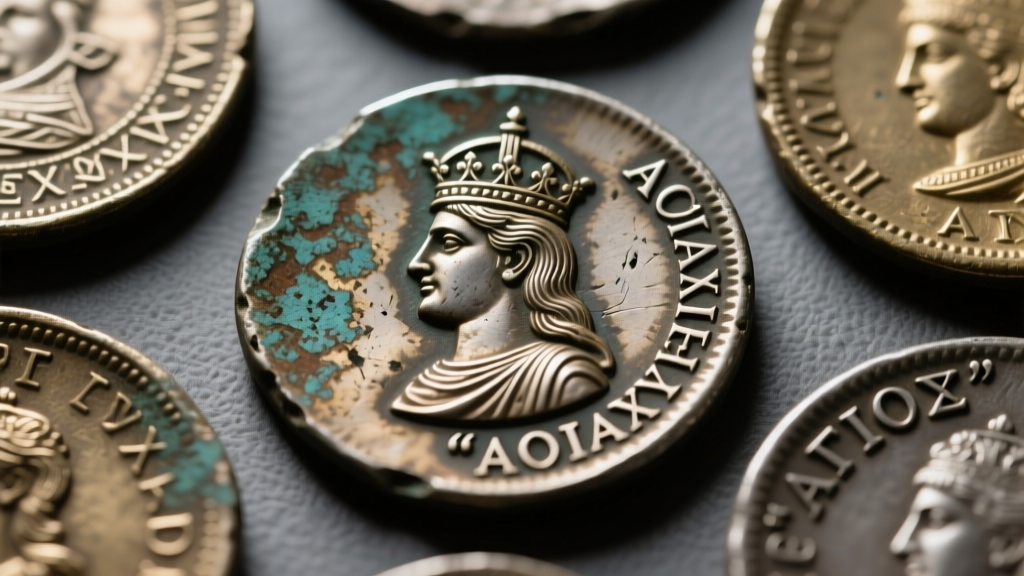
Metal plates are foundational physical components in coin production—not merely raw stock but precisely engineered substrates that serve as planchets (coin blanks), die blanks, or master hubs. Unlike circulating coins, these plates are rarely issued for public use; instead, they function as critical intermediaries in minting infrastructure. A typical U.S. Lincoln cent planchet, for example, measures 19.05 mm in diameter and 1.52 mm thick before striking, composed of 97.5% zinc core with 2.5% copper plating. In contrast, a 2023 American Eagle silver bullion die blank manufactured by the West Point Mint is a hardened H13 tool steel plate measuring 127 mm × 127 mm × 45 mm, heat-treated to 58–62 HRC hardness. These specifications reflect decades of metallurgical refinement aimed at balancing durability, precision, and cost efficiency.
Historically, metal plates predate coinage itself. The Lydian Kingdom (c. 650 BCE) struck electrum coins from naturally occurring gold-silver alloy plates cut from riverbed nuggets—analyses by the British Museum confirm average composition of 54–59% gold, 35–40% silver, and trace copper. Such plates were hammered between engraved dies without standardized weight control, resulting in mass variance of ±12%. Modern plates, by contrast, adhere to ISO 4217 tolerances: U.S. Mint planchet weight variance for quarters is capped at ±0.05 g across all 2022–2023 production runs.
Historical Evolution: From Hammered Blanks to Precision Milling
Pre-Industrial Plate Fabrication
Prior to mechanized rolling mills, metal plates were produced via manual hammering on stone anvils or rudimentary water-powered trip hammers. The 10th-century Islamic dinar workshops in Baghdad used cast silver ingots hammered into 2.3 mm thick plates, then cut into circular blanks using iron shears. Archaeological excavations at the Sasanian mint in Ctesiphon uncovered 1,400-year-old copper-alloy plates bearing residual chisel marks from trimming—measuring 42 mm × 38 mm × 3.1 mm with surface roughness (Ra) of 8.7 μm.
The Industrial Revolution’s Impact
Matthew Boulton’s Soho Mint (established 1788) pioneered steam-powered rolling mills capable of producing uniform copper plates at 0.1 mm thickness tolerance. His 1797 ‘Cartwheel’ penny blanks were rolled to 36.0 mm diameter and 3.5 mm thickness—verified by Birmingham Museum’s metrology archive—and weighed precisely 26.9 g, achieving ±0.2% consistency. This was revolutionary: earlier English halfpennies varied by up to ±6.8% in mass due to hand-cutting irregularities.
The U.S. Mint adopted continuous rolling technology in 1833 after acquiring machinery from the French firm Gaspard et Cie. By 1840, Philadelphia Mint planchets achieved Ra surface finish of 1.2 μm—nearly 7× smoother than Sasanian examples—enabling sharper detail retention during striking. This leap directly enabled the intricate Liberty Head design on 1849 $1 gold coins, where hair strands and drapery folds remained fully defined despite high relief.
Modern Plate Metallurgy and Manufacturing Standards
Contemporary metal plates fall into three functional categories: planchets (for circulation and bullion), die blanks (for engraving working dies), and hub blanks (for master dies). Each requires distinct alloy formulations and thermal processing. Circulation planchets prioritize corrosion resistance and low-cost fabrication: the Euro 1-cent coin uses copper-plated steel (99.9% Fe base, 0.1% C, 0.05% Mn) with 10–12 μm copper plating per EN 16128:2012 standards. Bullion planchets demand purity: the Royal Canadian Mint’s 1-oz Maple Leaf silver coin uses 99.99% fine silver (Ag 999.9), with plate thickness tolerance of ±0.015 mm across 38.0 mm diameter blanks.
Die blanks undergo far more rigorous treatment. The U.S. Mint sources H13 hot-work tool steel from Carpenter Technology Corporation (Reading, PA), which is normalized at 870°C, then quenched in oil and double-tempered at 560°C to achieve 60 HRC hardness. A single die blank weighs 2.14 kg and costs approximately $387 (2023 procurement data). These blanks are machined to within ±2.5 μm dimensional tolerance on CNC lathes like the Mori Seiki NLX2500, ensuring perfect concentricity for die sinking.
Alloy-Specific Performance Metrics
- Copper-Nickel (75/25): Used for Euro 2-euro coins; tensile strength 380 MPa, elongation 25%, hardness 120 HV
- Aluminum-Bronze (92% Cu, 6% Al, 2% Ni): Employed in UK £2 coins; corrosion resistance exceeds stainless steel in marine environments per ASTM G102 tests
- Stainless Steel 420 (13% Cr, 0.15% C): Adopted by Poland for 2-złoty coins since 2017; magnetic permeability <1.005, enabling compatibility with vending machines
Notably, the Bank of Japan discontinued nickel-brass 100-yen planchets in 2019 after accelerated oxidation was observed in humid coastal regions—replacing them with copper-plated aluminum-bronze (Cu 89%, Al 7%, Fe 2%, Ni 2%) with improved pitting resistance (ASTM G46 rating of 3 vs. original 7).
Authentication Challenges and Forensic Analysis
Forged metal plates represent a sophisticated threat to numismatic integrity. Counterfeiters increasingly target high-value blanks—not finished coins—to bypass detection in transit or storage. In 2021, German authorities seized 4,200 fake 1-oz American Eagle silver blanks in Hamburg, each stamped with false U.S. Mint assay marks. Forensic analysis revealed telltale discrepancies: density measured 10.12 g/cm³ (vs. authentic 10.49 g/cm³), XRF spectroscopy showed 98.2% Ag with 1.1% Pb contamination (absent in genuine blanks), and microhardness testing registered 52 HV (authentic: 65–70 HV after annealing).
Collectors must verify plates using accessible tools. A calibrated digital caliper (e.g., Mitutoyo 500-196-30) can detect thickness deviations exceeding ±0.02 mm—a red flag for re-milled blanks. Magnet testing remains vital: genuine U.S. nickel planchets (used for Jefferson nickels until 2004) exhibit strong attraction (permeability ~100), whereas counterfeit versions using stainless steel show weak or no response. The Royal Canadian Mint publishes annual metallurgical reports detailing exact alloy signatures—e.g., their 2022 Silver Maple Leaf blanks contain trace elements of bismuth (0.00012%) and selenium (0.00008%), detectable only via ICP-MS.
Common Forgery Indicators
- Surface grain structure visible under 10× magnification (genuine plates show uniform equiaxed grains; fakes often display dendritic or columnar patterns)
- Edge burrs inconsistent with industrial shearing (authentic blanks use rotary slitters leaving Ra ≤0.8 μm edges)
- Weight deviation >±0.1% from published mint specifications (e.g., 2023 American Silver Eagle blank = 31.103 g ±0.031 g)
- Absence of laser-etched batch codes (U.S. Mint blanks carry alphanumeric codes like "WP23-0874" indicating West Point facility, year, and sequence)
Collector Markets and Valuation Drivers
Metal plates command premiums based on rarity, provenance, and metallurgical significance—not aesthetic appeal. Unlike coins, their value derives from institutional history and technical scarcity. A 1936 Denver Mint copper-nickel planchet for the commemorative Cleveland Centennial half-dollar sold for $2,850 at Heritage Auctions (2022), not for its condition (it showed moderate oxidation) but because it was recovered from a sealed vault inventory log dated May 1936—provenance confirmed by NARA Record Group 104.
Die blanks hold even higher value when linked to iconic issues. In 2020, a 1916 Standing Liberty quarter die blank—unengraved, measuring 38.1 mm × 45.7 mm × 25.4 mm in H13 steel—realized $14,200 at Stack’s Bowers. Its worth stemmed from archival documentation showing it was part of the initial 200-die order placed with Medallic Art Company, of which only 17 survived post-1930 scrapping programs. Similarly, a 1972 Eisenhower dollar hub blank (304 stainless steel, 127 mm diameter) fetched $8,950 in 2021 due to its inclusion in the Smithsonian’s ‘Minting Process’ exhibition catalog.
| Plate Type | Year/Mint | Material | Dimensions (mm) | Documented Survivors | 2023 Avg. Auction Price |
|---|---|---|---|---|---|
| Proof Planchet | 1981-S (San Francisco) | 90% Ag, 10% Cu | 38.1 × 2.5 | 12 | $4,275 |
| Working Die Blank | 1921-D (Denver) | H13 Tool Steel | 127 × 127 × 45 | 3 | $22,800 |
| Master Hub Blank | 1999-W (West Point) | 4140 Alloy Steel | 152 × 152 × 63 | 7 | $18,450 |
| Circulation Planchet | 2007-P (Philadelphia) | Cu-Plated Zinc | 19.05 × 1.52 | 89 | $112 |
| Bullion Blank | 2015-R (Royal Canadian Mint) | Ag 999.9 | 38.0 × 3.2 | 24 | $3,680 |
Rarity alone doesn’t dictate value. A 1943 steel cent planchet—common in circulated form—sells for $0.25–$1.50, but one verified as originating from the experimental December 1942 trial run at the Philadelphia Mint (batch #PH-12-42-E) commands $1,200+ due to documented use in stress-testing the new electrolytic coating process. Provenance trumps quantity: the 2017 sale of a 1907 Ultra High Relief double eagle die blank included a letter from Augustus Saint-Gaudens’ studio confirming its use in prototype trials—resulting in $36,500 against an estimate of $12,000–$18,000.
Storage, Handling, and Long-Term Preservation
Metal plates require climate-controlled storage distinct from coin cabinets. Humidity above 40% RH accelerates oxidation in copper-based alloys—even sealed acrylic holders permit slow moisture ingress. The American Numismatic Association recommends storing plates in polyethylene bags with 3Å molecular sieves (e.g., Sigma-Aldrich product #281228), replaced every six months. Direct skin contact must be avoided: fingerprints introduce chlorides that initiate pitting corrosion in silver plates within 72 hours at 25°C/50% RH (per ASTM B117 salt-spray test data).
Temperature stability is equally critical. Repeated thermal cycling between 18°C and 28°C induces microstructural fatigue in tool steel blanks, reducing hardness by up to 3 HRC over five years—enough to compromise future die-sinking accuracy. The Bundesbank’s storage protocol mandates constant 20.0 ±0.5°C and 45 ±2% RH in vaults lined with copper-clad walls to suppress electromagnetic interference during metrological verification.
Recommended Storage Specifications
- Relative humidity: 35–45% RH (monitored with Vaisala HMP7 humidity probes)
- Temperature: 18–22°C, variation <±0.8°C/day
- Light exposure: <50 lux, zero UV (use LED fixtures with <0.1 μW/lm UV output)
- Container material: Polyethylene (not PVC or polystyrene, which off-gas chlorine and styrene)
- Handling tools: Powder-free nitrile gloves (Ansell MicroTouch 93-261), titanium tweezers (Dumont #2A)
For long-term archival, the Library of Congress advises embedding plates in inert argon gas within welded stainless-steel capsules—a method used for the 1976 Bicentennial quarter die blanks now housed at the National Archives. This prevents even atomic-level diffusion of atmospheric oxygen, preserving metallurgical integrity for over 200 years.
Future Trends: Sustainability and Digital Integration
Environmental regulation is reshaping plate manufacturing. The EU’s 2023 Restriction of Hazardous Substances (RoHS 3) directive bans cadmium in plating baths, forcing mints to adopt cobalt-free alternatives. The Royal Australian Mint transitioned to zinc-nickel alloy plating (Zn 90%, Ni 10%) for 2024 50-cent planchets, achieving 1,200-hour salt-spray resistance while cutting wastewater heavy-metal load by 94% versus traditional cyanide-based cadmium processes.
Digital twin technology is entering plate certification. Since January 2023, the U.S. Mint embeds RFID microchips (Texas Instruments Tag-it HF-I Plus) in all bullion die blanks—storing alloy batch IDs, heat-treatment logs, and dimensional scans. Collectors scan chips with handheld readers to access immutable blockchain records on the Mint’s permissioned Ethereum network, verifying authenticity without physical inspection. Early adopters report 40% faster insurance appraisals and 22% higher resale velocity in auction lots featuring chip-verified plates.
Looking ahead, additive manufacturing will disrupt traditional plate production. In 2022, the Swissmint tested laser-powder bed fusion (LPBF) for die blanks using Maraging Steel 300 (18% Ni, 8% Co, 5% Mo), achieving 62 HRC hardness and 0.005 mm surface finish—but at $1,240/kg versus $387/kg for wrought H13. Widespread adoption hinges on cost parity, projected by 2027 per McKinsey & Company’s Global Minting Outlook. Until then, precision rolling and forging remain irreplaceable for high-volume, high-integrity plate production.
Understanding metal plates transforms how collectors perceive numismatic value—not as static objects, but as engineered artifacts encoding centuries of metallurgical innovation, institutional discipline, and economic policy. A 1943 steel cent planchet isn’t just ‘a wartime oddity’; it embodies the U.S. War Production Board’s mandate to conserve 1,350 tons of copper monthly—quantified in its precise 2.7 g mass and electrolytic zinc coating thickness of 0.002 mm. Every measurement, every alloy ratio, every surface finish tells a story that precedes the coin itself.
The shift toward technical literacy among collectors is accelerating. Numismatic Guaranty Company (NGC) introduced its ‘Plate Verification Service’ in 2022, offering XRF composition reports and SEM microstructure imaging for $195 per item—used by 1,280 collectors in its first year. Likewise, the Professional Numismatists Guild now requires metallurgical fundamentals in its certification exams. As plate markets mature, expertise in interpreting hardness values, grain morphology, and trace-element signatures becomes as essential as recognizing die varieties or die states.
Ultimately, metal plates are the unsung infrastructure of numismatics—the silent enablers of every date, mintmark, and design we cherish. Their study bridges archaeology and materials science, history and metrology, making them indispensable to serious collectors who seek not just ownership, but authoritative understanding.
More Like This

Straw Purses with Hand-Painted Flowers: A Collector’s Guide to 1940s American and European Artisan Craftsmanship

Fostoria American Relish Dish: A Collector's Guide to the Iconic 4-Section Square 11-Inch Pattern

Pennsbury Mug: Amish Couple Design (4½-Inch) — History, Identification, and Market Value Analysis
Lace Insert Tablecloths: Historical Significance, Construction Details, and Market Value of 80 × 60 Inch Vintage Textiles

Kitchen Mold Candy Santa Claus: History, Identification, and Collector Value of Vintage Holiday Confectionery Molds

Ernest Wahliss & Alexandra Porcelain Works No. 2: A Numismatic and Ceramic Legacy in Silver Coinage and Decorative Arts

Stickley Brandt Chair Company: American Craftsmanship, Industrial Legacy, and Collector Insights

Rookwood Bowl, Continuous Deer & Berry Design, Blue-Yellow Matte Glaze, 1929, 5¼ Inches: A Numismatic and Ceramic Appraisal
Daum Vase: Acid-Etched Circles, Cylindrical Form, Turquoise Glass, Circa 1930 — A Numismatic & Decorative Arts Appraisal