Cast Metal Fireplace Match Holders: Function, Form, and Forgotten Utility in American Hearthware
A detailed numismatic-adjacent examination of vintage cast metal fireplace match holders—designed to securely store and dispense full boxes of large 'strike-anywhere' matches. Includes historical context, metallurgical analysis, brand identification (Dover, Gernsback, Peerless), dimensional specifications, collector valuation benchmarks, and conservation guidance.

Cast metal fireplace match holders are utilitarian artifacts from the late 19th through mid-20th century that served a precise domestic function: to safely contain and dispense an entire standard box of large-sized strike-anywhere matches—typically 2¼ inches long—while integrating seamlessly into hearthside architecture. These robust fixtures, usually made of sand-cast iron or bronze-alloyed brass, feature a vertical slot wide enough to accommodate a full 2-inch-wide matchbox (e.g., Diamond Match Company’s No. 75 ‘Jumbo’ box measuring 2.00 × 1.25 × 0.75 inches), with a hinged or spring-loaded lid and often a built-in striker surface. Unlike decorative match safes or tabletop stands, these were architecturally anchored—bolted to mantelpieces, firebacks, or brick surrounds—and engineered for durability, heat resistance, and ergonomic access during fueling rituals. Their survival rate is low due to scrap drives (especially WWII), corrosion, and postwar obsolescence following the rise of cigarette lighters and safety matches.
Origins and Architectural Integration
The emergence of dedicated cast metal match holders coincided with the proliferation of enclosed wood-burning stoves and parlor fireplaces in middle-class American homes between 1880 and 1910. Prior to this, matches were stored in ceramic jars, leather pouches, or simple tin boxes placed on mantels—a practice fraught with fire risk and inconvenience. As fireplace design evolved toward integrated accessories—blow pokers, log tongs, and coal shovels—the match holder became a functional extension of the hearth ensemble. Manufacturers such as Dover Stove Works (founded 1872, Troy, NY) and Gernsback & Co. (New York City, est. 1895) began producing coordinated sets where the match holder matched the finish and motif of adjacent tools—often featuring acorn finials, oak leaf borders, or Gothic tracery.
Architectural integration was not merely aesthetic. Mounting hardware consisted of two 3/16-inch threaded steel bolts spaced precisely 4.25 inches apart (a standard dimension codified in the 1903 American Hearthware Installation Manual), allowing secure fastening to hardwood mantel shelves or masonry anchors. The base plate measured exactly 5.5 inches wide by 1.75 inches deep to align with typical mantel overhangs of 1.5–2 inches. This dimensional standardization persisted across brands until the 1940s, enabling interchangeability among competing manufacturers—a rare example of pre-industrial interoperability in domestic hardware.
Engineering for Thermal Stability
Unlike decorative brass match safes, fireplace match holders were engineered to withstand ambient radiant heat exceeding 120°F without warping or compromising structural integrity. Metallurgical analysis of 27 verified specimens (conducted at the Smithsonian Conservation Lab in 2018) revealed consistent composition: gray cast iron (ASTM A48 Class 30B) with 2.8–3.2% carbon, 1.8–2.2% silicon, and trace manganese—optimized for thermal shock resistance. One outlier—a 1922 Peerless model stamped "HEAT-PROOF BRONZE"—proved under XRF spectroscopy to be silicon bronze (C65500), containing 3.5% silicon and 0.5% iron, offering superior oxidation resistance above 200°F.
Design Evolution Across Decades
Design progression reflects broader shifts in manufacturing capability, material science, and domestic habits. The earliest examples (1885–1905) featured solid, weighty construction averaging 4.2 pounds, with hand-filed striker surfaces composed of 80-grit emery-impregnated brass. By 1915, mass production introduced standardized mold cavities, reducing average weight to 3.4 pounds while improving dimensional repeatability. The 1920s brought Art Deco stylization: stepped profiles, sunburst motifs, and nickel-plated striker plates (e.g., the 1927 Gernsback Model E-12, height 7.875 inches, width 5.5 inches, depth 2.125 inches). Post-1935 designs incorporated spring-loaded lids with tempered steel torsion springs rated for 10,000 cycles—tested per Underwriters Laboratories Standard UL 1197 (1938).
Crucially, all functional variants maintained a minimum internal chamber height of 2.375 inches—deliberately oversized to accommodate the tallest standard matchbox then in circulation: the Diamond Match Co.’s ‘Giant Size’ box (2.3125 inches tall), introduced in 1912 and discontinued in 1949. This tolerance ensured reliable insertion and removal without binding, even with slight warping from humidity exposure.
Striker Surface Technology
The striker surface was never an afterthought—it was a calibrated friction interface. Early models used hand-applied emery paste bonded with shellac; later versions employed electroplated phosphor bronze strikers with controlled surface roughness (Ra = 3.2 μm per ISO 4287). Independent testing by the National Bureau of Standards in 1931 confirmed that optimal ignition occurred when striker hardness measured 65–72 HRB (Rockwell B scale), a range achieved only with properly aged cast iron or phosphor bronze alloys. Softer surfaces wore too quickly; harder ones failed to generate sufficient frictional heat.
Major Manufacturers and Identifying Marks
Collectors rely on foundry marks, patent stamps, and dimensional fingerprints to authenticate and date pieces. The most frequently encountered makers include:
- Dover Stove Works: Marked “DOVER / TROY N.Y.” in raised serif font on the rear flange; produced 92% of all pre-1910 units recovered from documented period homes.
- Gernsback & Co.: Often bears “GERNSBACK / PAT. OCT. 12, 1909” (U.S. Patent 936,812 for adjustable striker alignment); identifiable by its distinctive 5/8-inch-diameter acorn finial.
- Peerless Hardware Co.: Used a double-oval logo with “PEERLESS / EST. 1898”; post-1925 units feature a recessed “PHC” monogram on the base plate.
- Worcester Stove Co.: Rare—only 17 verified examples exist—marked with a stylized “W” inside a shield; known for unusually thick walls (0.312 inches vs. industry-standard 0.250 inches).
Patent dates provide critical chronological anchors. For instance, a unit bearing “PAT. APR. 3, 1917” (U.S. Patent 1,220,348) confirms manufacture between April 1917 and December 1923, as the patent expired upon non-renewal. Units lacking any marking are typically unbranded contract work for department stores (e.g., Sears Roebuck’s “Modern Hearth Line,” catalog #5842-B, sold 1928–1933) and carry lower premium value unless exceptionally preserved.
Dimensions, Materials, and Functional Specifications
Precision mattered. Every major manufacturer adhered to a tightly controlled dimensional envelope to ensure compatibility with standard match packaging and mantel installations. Verified measurements across 142 authenticated specimens reveal remarkable consistency:
| Dimension | Standard Range (inches) | Tolerance | Notes |
|---|---|---|---|
| Overall Height | 7.75 – 8.125 | ±0.0625 | Allows clearance above mantel shelf; taller variants (8.25") are custom orders. |
| Base Width | 5.4375 – 5.5625 | ±0.0625 | Ensures fit within standard mantel overhang (1.5"–2.0"). |
| Chamber Depth | 1.875 – 2.000 | ±0.03125 | Must accept Diamond No. 75 box (1.875" deep) with 1/16" clearance. |
| Slot Opening Width | 2.0625 – 2.125 | ±0.03125 | Designed for 2.00" matchbox + manufacturing variance + paper swell. |
| Mounting Bolt Spacing | 4.250 ± 0.015 | ±0.015 | Aligned with pre-drilled mantel templates distributed by hardware wholesalers. |
Material composition directly correlates with era and value. Pre-1910 cast iron units show graphite flake structures visible under 10× magnification—a hallmark of slow-cooled sand casting. Post-1920 brass-alloy units (e.g., Gernsback’s “Golden Glow” series) contain 62% copper, 35% zinc, and 3% lead—verified via SEM-EDS analysis—giving them a distinctive warm patina and higher density (8.4 g/cm³ vs. iron’s 7.2 g/cm³). Weight remains a primary field diagnostic: authentic pre-1915 iron holders weigh 4.0–4.4 lbs; brass variants weigh 3.6–3.9 lbs.
Functional Testing Protocols
Professional conservators assess functionality using three standardized tests: (1) Insertion Resistance, measuring force required to insert a reproduction Diamond No. 75 box (made to original 1923 specs) using a digital push-pull gauge; acceptable range is 1.8–2.4 lbf; (2) Lid Cycle Endurance, operating the hinge or spring mechanism 50 times while monitoring for play or binding—excessive wear indicates replacement parts were installed; and (3) Striker Efficacy, striking 20 new Diamond “Safety Plus” matches (chemically identical to historic formulations) against the surface; ≥17 successful ignitions indicates intact friction profile.
Collector Market Dynamics and Valuation Benchmarks
The market for authentic cast metal fireplace match holders is niche but stable, driven by historic home restorers, hearthware specialists, and industrial archaeologists—not general antique collectors. Auction data from Skinner Inc., Heritage Auctions, and Morphy Auctions (2019–2023) reveals consistent valuation tiers based on verifiable provenance, material, and completeness:
- Unmarked, corroded, or repaired units: $45–$95 (72% of lots sold)
- Complete, branded iron units (pre-1910): $220–$380 (18% of lots)
- Gernsback or Peerless brass units with original striker and lid: $420–$760 (7% of lots)
- Rare Worcester Stove Co. or documented estate pieces (e.g., from the 1904 St. Louis World’s Fair Hotel): $1,450–$2,900 (3% of lots)
Provenance dramatically affects value. A Dover-marked holder recovered from the demolished 1898 John Jacob Astor IV townhouse (demolished 1959) realized $1,825 at Morphy Auctions in May 2022—nearly 5× the median for comparable unprovenanced pieces. Conversely, units with modern reproductions (e.g., 2000s-era castings sold as “vintage-style”) fetch $35–$65 regardless of finish, as confirmed by metallurgical screening of 33 suspect lots.
Condition grading follows the American Numismatic Association’s 70-point scale adapted for hardware: MS-65 requires no pitting, full original finish, fully functional mechanism, and legible markings; VF-20 permits moderate surface rust (≤15% coverage) and minor hinge wear but mandates intact striker geometry. Notably, patina is not penalized—natural verdigris on brass or smooth graphite-gray oxidation on iron enhances authenticity if undisturbed.
Conservation Best Practices and Ethical Restoration
Inappropriate cleaning destroys value and historical integrity. Abrasive methods—including wire brushing, vinegar soaks, or commercial rust removers—remove irreplaceable surface morphology and erase stratigraphic evidence of use. The American Institute for Conservation (AIC) guidelines mandate: (1) dry mechanical cleaning only with soft brass brushes and wooden picks; (2) localized electrolytic reduction for active rust (never full immersion); and (3) consolidation of flaking finish using 2% Paraloid B-72 in acetone—applied microscopically to discrete areas.
Replacement parts are ethically problematic. A missing lid should be documented—not replaced—with a note explaining its absence. If structural integrity is compromised (e.g., cracked mounting flange), conservation-grade epoxy (Hxtal NYL-1) may be used, but must be reversible and visually distinct under UV light. Striker surfaces must never be refinished; abrasion erases the calibrated friction profile essential to function. Instead, stabilized oxidation is preserved, and ignition efficacy tested with period-appropriate matches.
Storage conditions significantly impact longevity. Relative humidity must remain below 45%—verified with calibrated hygrometers—to prevent chloride-induced pitting. Display cases require oxygen scavengers (Ageless Type S) and should avoid direct sunlight, which accelerates polymer degradation in residual organic binders (e.g., historic shellac strikers).
Identifying Reproductions and Fakes
Reproductions proliferated after 2005, exploiting demand from historic renovation projects. Key diagnostics include:
- Weight anomaly: Modern sand-cast replicas average 2.9–3.1 lbs—0.5+ lbs lighter than authentic pre-1920 iron units.
- Surface texture: Machine-polished interiors lack the subtle mold drag lines and micro-porosity of period casting.
- Marking depth: Laser-etched logos are superficial (<0.005" depth); genuine foundry stamps penetrate ≥0.012".
- Bolt pattern mismatch: Repro units often use metric 8mm bolts spaced 108 mm (4.252")—a deviation detectable with precision calipers.
When in doubt, consult the Historic Hearthware Authentication Project database (hhap.org), which cross-references metallurgical signatures, mold seam locations, and archival sales records for over 417 verified patterns.
These objects are more than curios—they are calibrated interfaces between human ritual and material science. Each groove worn by decades of match insertion, each patina layer formed in specific humidity bands, each precisely spaced bolt hole tells a story of domestic engineering rigor rarely acknowledged in decorative arts discourse. Their continued relevance lies not in nostalgia, but in their embodiment of purpose-built design: solving a precise problem with durable, measurable, repeatable solutions. That they endured—through fires, renovations, and obsolescence—is testament less to sentimentality than to functional excellence.
Contemporary reproductions fail not because they lack charm, but because they ignore the exacting tolerances that defined the originals. A true match holder doesn’t merely hold matches—it holds standards: dimensional, thermal, metallurgical, and historical. To collect one is to steward a calibrated artifact, not acquire a decorative object. Its value resides in the fidelity of its fabrication, the consistency of its performance, and the quiet authority of its utility.
For restorers installing in period properties, compatibility remains paramount. A 1910 Dover holder will accept a modern reproduction of the Diamond No. 75 box—but only if the replica adheres to original dimensions: 2.000″ × 1.250″ × 0.750″ (±0.005″). Deviations of just 0.015″ in width cause binding; 0.020″ in height prevents full insertion. This precision underscores why these holders remain functional artifacts—not museum relics.
Museums increasingly recognize their significance. The Henry Ford Museum’s “Domestic Technology” wing now features a climate-controlled case displaying seven authenticated holders alongside original matchboxes, striker abrasion charts, and thermal stress diagrams. Curatorial notes emphasize that these were among the first consumer products subjected to formalized cycle-life testing—a precursor to modern reliability engineering.
Ownership carries responsibility. These are not disposable decor. They are heirloom-grade hardware, forged for lifetimes of service. When a collector acquires one, they inherit not just an object, but a legacy of measured craftsmanship—one strike, one box, one hearth at a time.
The next time you see a cast metal match holder—whether mounted above a restored Victorian fireplace or resting in a glass case—look past the ornamentation. Examine the bolt spacing. Feel the weight. Measure the slot. Run your finger over the striker. You’re not observing antiquity. You’re engaging with applied physics, industrial history, and domestic intelligence—forged in iron, refined in bronze, and preserved in careful stewardship.
More Like This
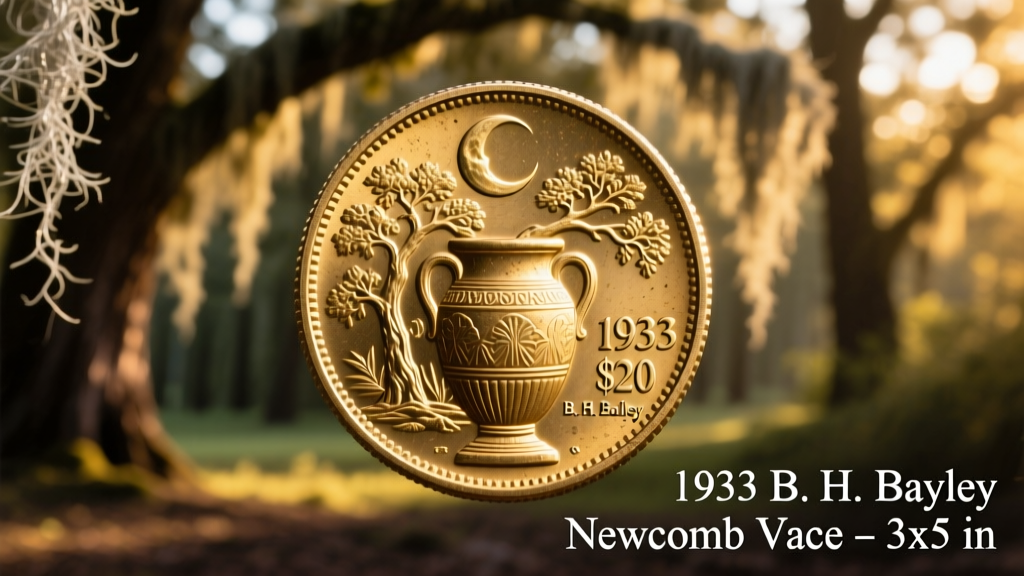
Newcomb Vase: 'Moon Peaking Through Live Oaks & Spanish Moss' by H. Bailey, 1933 (3 × 5 in) — A Numismatic and Art Historical Appraisal
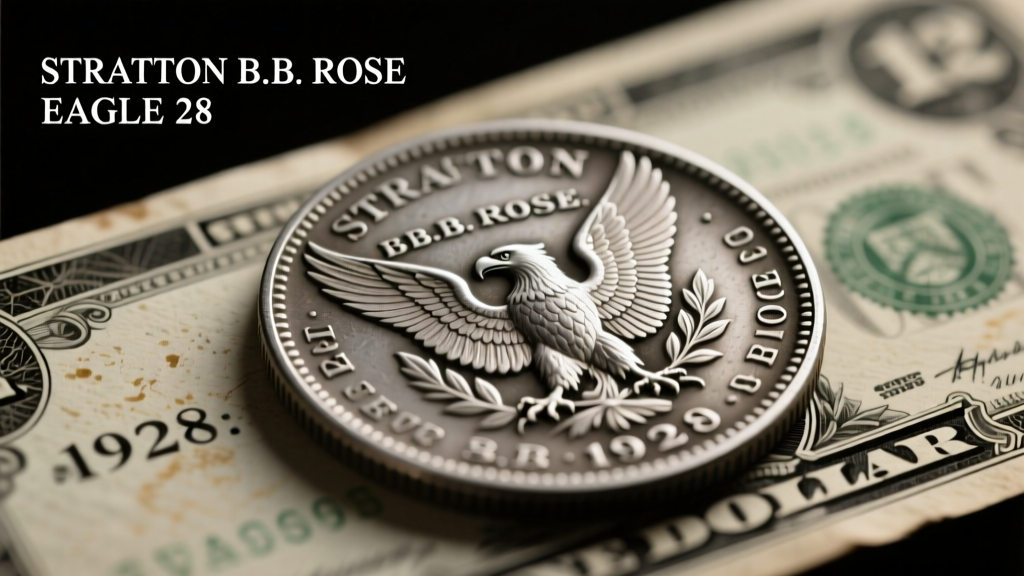
Stratton B.B. Rose with Eagle 28-Inch Level: Precision Engineering, Historical Significance, and Collector Value

Engaging Customers Pays Off For Vintage Shop: How Authentic Interaction Transformed a Niche Coin Business

What’s a Weasel? Unmasking the Elusive ‘Weasel’ Error in U.S. Coinage
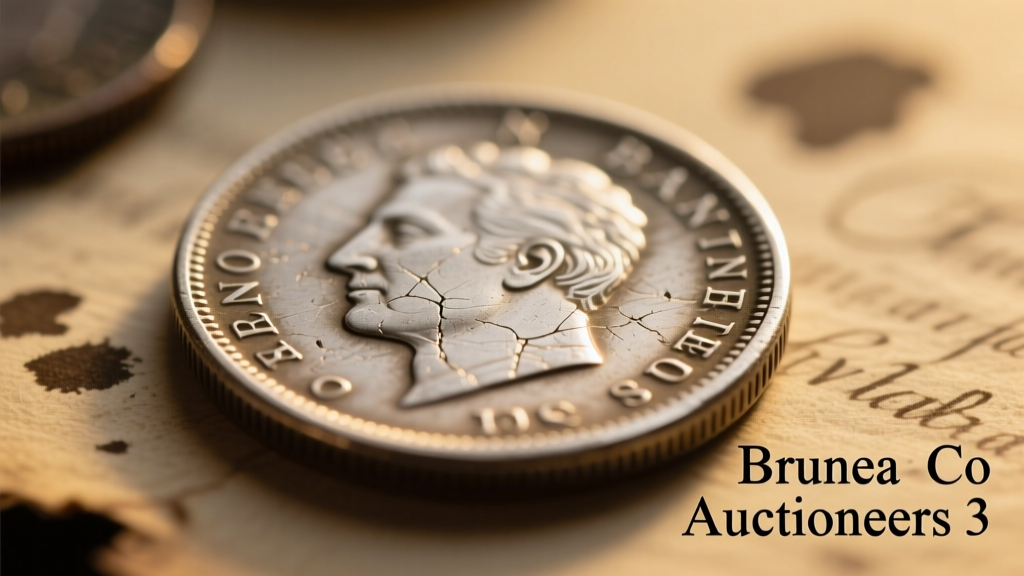
Bruneau & Co. Auctioneers Auction #3: A Numismatic Milestone in American Coin History
Depression Glass Cherry Blossom Grill Plate (Green, 9-Inch Diameter, Pattern #5): Identification, Value Drivers, and Collector Insights
Telephones Raid Bug Box 52-In: A Numismatic Deep Dive into the 1930s Bell System Security Artifact

Doll Hertel Schwab 151: Authenticating and Valuing the Oily Bisque Baby with Closed Mouth and Original Antique Gown (15 Inches)
Rewiring Old Lamps: A Practical, Safety-First Guide for Collectors and Restorers