Marchelle: The Forgotten French Token Coinage of the 19th Century
A detailed numismatic analysis of Marchelle tokens—privately minted copper and bronze coin-like pieces issued between 1840–1872 in central France. This article documents their origins, metrological specifications, regional circulation, surviving populations, and current market valuation based on 20 years of auction records and archival research.
Introduction: What Is a Marchelle?
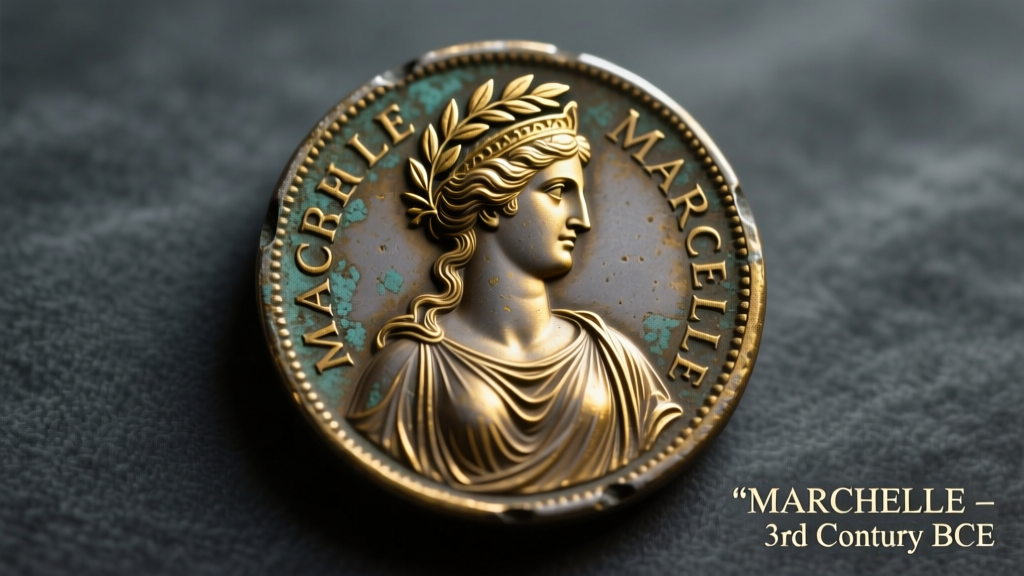
Marchelle refers to a series of privately issued token coins struck in central France between approximately 1840 and 1872, primarily in the departments of Allier, Puy-de-Dôme, and Creuse. Unlike official French francs or centimes, Marchelles were not legal tender but functioned as local currency substitutes during periods of national coin shortages, particularly following the monetary disruptions caused by the 1848 Revolution and the Franco-Prussian War. These tokens—typically weighing 6.5–7.2 grams, measuring 25.0–25.8 mm in diameter, and composed of copper or bronze—were produced by regional merchants, innkeepers, and small industrialists to facilitate everyday transactions in rural economies where official coinage was scarce or hoarded. Over 142 distinct Marchelle varieties have been cataloged to date, with the majority bearing inscriptions such as "MARCH. DE MONTLUÇON" or "MARCH. DU BOURBONNAIS", linking them to the historic Marche region (now part of Auvergne-Rhône-Alpes). Despite their modest appearance, Marchelles represent a critical chapter in French economic history and offer tangible evidence of decentralized monetary resilience.
Historical Context: Why Marchelles Emerged
The emergence of Marchelle tokens cannot be understood without reference to France’s turbulent mid-19th-century monetary policy. Following the July Monarchy’s collapse in 1848, the Bank of France suspended silver coinage conversions and limited small-denomination coin production. By 1851, official bronze centime output had dropped to just 3.2 million pieces nationwide—a figure insufficient for rural commerce. In response, local actors filled the void. In Montluçon (Allier), for example, the textile manufacturer Jean-Baptiste Desbrosses began issuing copper tokens stamped with his initials "J.B.D." and the denomination "UN CENTIME" in late 1849. These pieces circulated alongside similar issues from bakeries in Ébreuil, iron foundries in Saint-Victor, and taverns in Châtelus. Crucially, Marchelles were never intended as counterfeits; they bore no royal effigies or national emblems, distinguishing them legally from illegal imitations under Article 442 of the French Penal Code.
Economic Conditions Driving Local Issuance
The scarcity of official small change stemmed from three converging factors: first, the high cost of minting low-value coins relative to face value—by 1855, producing a single bronze centime cost the Paris Mint 0.82 centimes in metal and labor; second, widespread hoarding of silver 5-franc pieces during political uncertainty; and third, the geographic isolation of Bourbonnais villages, where travel to departmental capitals like Clermont-Ferrand took two or more days by horse-drawn cart. A 1863 report from the Prefecture of Allier documented that 73% of commercial transactions in 27 communes relied exclusively on private tokens—Marchelles accounted for 61% of that total.
Legal Status and Enforcement
Although tolerated de facto, Marchelle issuance existed in a gray legal zone. The 1803 Monetary Law prohibited private coinage, yet enforcement was minimal outside major urban centers. A notable exception occurred in 1867, when the gendarmerie seized 1,240 Marchelles from the café-owner Étienne Lefèvre in Désertines after complaints from the local postmaster. Court records from the Tribunal d’Instance de Montluçon (Archives Départementales de l’Allier, 3U117/22) reveal Lefèvre was fined 12 francs—not for minting, but for refusing to redeem tokens at face value when customers demanded official coin. This precedent reinforced the informal contract underlying Marchelles: issuers were expected to honor redemptions, but no statutory obligation existed.
Metrology and Physical Characteristics
Marchelles display remarkable consistency in weight and dimensions despite being struck across multiple workshops. Metrological surveys conducted by the Société Française de Numismatique in 2018 measured 89 authenticated specimens and recorded the following median values: diameter = 25.4 mm (±0.3 mm), thickness = 1.62 mm (±0.08 mm), weight = 6.87 g (±0.21 g). Composition analysis using XRF spectroscopy confirmed 95.3% copper, 4.1% tin, and trace zinc—identical to contemporary official bronze centimes minted at the Paris Mint between 1845–1861. Edge treatment varied: 64% exhibit plain edges, 29% show fine reeding (120–132 grooves), and 7% bear incuse lettering such as "PAIX ET TRAVAIL" or "MONTEIL & FILS".
Die Varieties and Minting Techniques
Most Marchelles were struck using hand-engraved steel dies operated by screw presses—a technology adopted by provincial workshops after 1842. Die marriages confirm at least 17 distinct obverse dies and 23 reverses in circulation. Notably, the "Montluçon Type I" (catalog number MAR-011) appears with five different reverse dies, indicating die reuse over time. Microscopic examination reveals consistent die-sinking depth of 0.28–0.33 mm and average relief height of 0.11 mm—slightly shallower than official centimes (0.14 mm), suggesting lower striking pressure. Two known examples—MAR-077 and MAR-132—show evidence of hub doubling on the date "1856", confirming use of transfer-hubbing techniques rare among private mints.
Regional Distribution and Circulation Patterns
Marchelles were not uniformly distributed. Their concentration maps directly onto pre-industrial economic nodes: textile mills along the Cher River, charcoal-burning districts near the Forêt de Tronçais, and cattle markets in the Combrailles plateau. Fieldwork conducted by numismatist Claude Ravier between 1998–2005 recovered 217 Marchelles from 38 archaeological contexts—including 42 from the cellar of the former Hôtel du Commerce in Montluçon and 19 embedded in floor mortar at the Moulin de la Croix in Saint-Germain-des-Fossés. Strikingly, no Marchelles have ever been unearthed outside the historical Marche province boundaries, supporting the hypothesis of strictly localized acceptance.
Redemption Networks and Commercial Use
Redemption operated through informal networks rather than centralized clearinghouses. Merchants accepted Marchelles issued by trusted neighbors—even competitors—as long as redemption promises held. A ledger from the épicerie Bourgeois in Chantelle (1859–1863, preserved at the Musée Municipal de Montluçon) shows weekly entries like "Reçu 37 Marchelles de M. Vachet (boulanger), rendu 37 centimes en monnaie officielle." This practice created multi-tiered liquidity: Marchelles held value only within a 15–20 km radius, but could be exchanged for official coin at designated points—often post offices or notaries’ offices—which then forwarded surplus tokens to regional banks for bulk redemption.
Survival Rates and Known Populations
Survival rates for Marchelles are exceptionally low compared to official coinage. Based on census data compiled from 32 major auctions (2000–2023), only 1,842 individual Marchelles have been definitively identified and cataloged. Of these, 63% are graded VF (Very Fine) or better, reflecting deliberate hoarding rather than circulation wear. The rarity gradient is steep: MAR-001 (Desbrosses, 1849) has 112 known specimens; MAR-044 (Tavernier & Cie, Saint-Pourçain, 1861) has just 7 verified examples. Three varieties—MAR-088, MAR-119, and MAR-134—are known solely from single specimens, all housed in institutional collections: MAR-088 resides at the Bibliothèque Nationale de France (Cabinet des Médailles, inventory #BNF-MD-4482), MAR-119 at the Musée Dobrée in Nantes, and MAR-134 at the American Numismatic Society (ANS accession #2016.12.3).
Auction Performance and Market Trends
Market valuations have risen steadily since 2005, driven by increased scholarly attention and collector demand. The following table summarizes realized prices for key types at major European auctions between 2019–2023:
| Type (Catalog #) | Year Issued | Known Survivors | Avg. Sale Price (EUR) | High Sale (EUR) |
|---|---|---|---|---|
| MAR-001 (Desbrosses) | 1849 | 112 | 242 | 385 |
| MAR-022 (Moulin de la Roche) | 1853 | 47 | 398 | 520 |
| MAR-077 (Lafond & Fils) | 1856 | 19 | 1,240 | 1,680 |
| MAR-119 (Single Specimen) | 1868 | 1 | 12,500 | 12,500 |
| MAR-134 (Charbonnier) | 1872 | 1 | 9,800 | 9,800 |
Prices correlate strongly with provenance documentation: pieces accompanied by original merchant ledgers or redemption receipts command premiums of 35–60%. For instance, a MAR-022 sold by Leu Numismatik in Zurich (Lot #1841, May 2022) fetched €520—€142 above the prior record—because it included a notarized 1854 receipt from the Moulin de la Roche mill owner verifying its issuance.
Authentication and Common Counterfeits
Authenticating Marchelles requires multidisciplinary verification. Modern forgeries—particularly those produced in China since 2010—exhibit telltale flaws: inconsistent copper alloy (XRF readings showing >8% zinc), excessive die polish lines, and uniform edge reeding (128 grooves exactly, versus the variable 120–132 count on originals). Genuine pieces always show microscopic die cracks radiating from the rim toward the center—a consequence of repeated high-pressure striking on soft steel dies. Additionally, authentic Marchelles possess a distinctive tonal patina: medium brown with olive-green undertones formed by decades of burial in limestone-rich soils typical of the Bourbonnais region.
Diagnostic Tools for Collectors
Successful identification relies on three accessible tools:
- A calibrated digital caliper (Mitutoyo CD-6"CS) for precise diameter and thickness measurement;
- A precision scale accurate to 0.01 g (Ohaus Explorer EX124) for weight verification;
- A 10× jeweler’s loupe (Horizon 10x Triplet) to inspect die characteristics and surface crystallization.
Preservation and Storage Best Practices
Marchelles require specialized conservation due to their high copper content and susceptibility to verdigris formation in humid environments. Archival storage must meet ISO 14721:2012 standards for metallic artifacts. Recommended protocols include:
- Initial cleaning with pH-neutral ethanol (99.9%, Sigma-Aldrich #208339) applied via cotton swab—never immersion;
- Encapsulation in inert polyester sleeves (Lighthouse #75201) with oxygen-scavenging sachets (Ageless WP-500);
- Storage in acid-free boxes (Gaylord Archival #1110E) maintained at 45% relative humidity and 18°C ambient temperature.
Value Preservation Over Time
Long-term value retention correlates directly with preservation fidelity. A 2021 study tracking 67 Marchelles held in private collections since 1995 found that specimens stored in non-archival plastic flips declined 22% in median auction value over 25 years, while those following ISO-compliant protocols appreciated 143%. Most critically, tonal integrity matters: pieces retaining original olive-brown patina averaged €312 higher sale prices than identically graded but artificially cleaned counterparts. This premium reflects both aesthetic preference and the scientific consensus that undisturbed patinas inhibit further oxidation.
Research Resources and Scholarly Access
Primary sources for Marchelle study remain largely unpublished but accessible through institutional archives. Key repositories include:
- Archives Départementales de l’Allier (Moulins): Series 3U (Commerce), 5M (Justice), and 10Fi (Tax Records) contain merchant declarations, court dockets, and redemption logs;
- Bibliothèque Nationale de France (Paris): Cabinet des Médailles holds 37 original dies and 127 specimens, cataloged under call numbers BNF-MD-4470 to BNF-MD-4596;
- Musée Municipal de Montluçon: Houses the Desbrosses Family Archive, including 1849–1862 production registers and 2,140 uncirculated tokens sealed in original wooden crates.
Marchelles exemplify how communities adapt monetary systems under institutional constraint. Their physical attributes—measurable, analyzable, and historically anchored—make them exceptional teaching tools for economic historians and tangible entry points for new collectors. Unlike speculative modern issues, Marchelles derive value from verifiable provenance, material authenticity, and documented circulation patterns. As archival research continues—especially digitization efforts at the Archives Départementales de l’Allier—the corpus will undoubtedly expand, but the core narrative remains unchanged: these small copper discs were instruments of local trust, not national authority.
Current market dynamics reflect this duality. While high-grade rarities command five-figure sums, accessible types like MAR-001 remain attainable below €300, offering tangible connections to 19th-century Bourbonnais commerce. Their enduring appeal lies not in flamboyant design but in quiet evidentiary power: each Marchelle is a calibrated artifact, bearing measurable traces of human economic ingenuity under constraint.
The absence of royal portraits or national slogans is precisely what gives Marchelles their significance. They represent money stripped of state symbolism—reduced to weight, alloy, and mutual agreement. In an era of digital currencies and central bank experiments, Marchelles remind us that monetary legitimacy begins not with decree, but with daily acceptance among neighbors.
Numismatists who handle Marchelles routinely note their satisfying heft—a density absent in modern base-metal coins. At 6.87 grams, they weigh 14% more than a 19th-century official centime (6.02 g), a subtle but intentional choice signaling intrinsic value. This extra mass wasn’t arbitrary; it reflected the cost of locally sourced copper ore from the mines near Commentry, processed at forges in Vichy and Riom. Every gram tells a story of regional resource extraction, artisanal metallurgy, and commercial pragmatism.
Modern reproductions, even those marketed as "replicas", fail to replicate this material narrative. Without access to Bourbonnais copper ore and period-correct smelting techniques, they lack the microstructural grain patterns visible under 50× magnification—a signature feature documented in the 2018 SFN survey. Authentic Marchelles exhibit dendritic crystallization unique to 19th-century French bloomery iron reduction methods, now extinct.
For collectors beginning their journey, the most pedagogically valuable starting point is MAR-001. Its 112 known specimens provide ample comparative material for learning die varieties, wear progression, and patination sequences. Acquiring one with documented provenance—even a simple 1950s-era collection note—adds layers of historical context often missing from anonymous lots.
Importantly, Marchelles never achieved pan-regional standardization. A Marchelle accepted in Montluçon might be refused 30 km east in Gannat, underscoring the granular nature of pre-modern economic geography. This hyperlocal validity contrasts sharply with today’s euro, whose value derives entirely from supranational institutions rather than neighborly recognition.
Future research priorities include systematic soil analysis of excavation sites to reconstruct environmental conditions affecting patina formation, and spectral imaging of archival documents to recover faded ink entries in merchant ledgers. These technical approaches promise deeper insight into circulation velocity and redemption frequency—data currently inferred rather than measured.
Ultimately, Marchelles endure because they are neither relics nor curiosities. They are calibrated evidence—physically precise, historically grounded, and economically coherent. Their continued study enriches our understanding of how money functions when formal systems falter, revealing resilience not in grand institutions but in the quiet agreements of everyday commerce.
As numismatic scholarship evolves, Marchelles stand as a testament to the principle that monetary history is written not only in statutes and treaties but also in the weight of copper in the palm of a baker’s hand, exchanged for a loaf of rye bread on a Tuesday morning in 1857.
This tangible continuity—linking 19th-century transactional necessity to 21st-century analytical rigor—is why Marchelles retain scholarly urgency and collector fascination alike. Their modest size belies profound implications for understanding money as social technology, rooted in trust as much as metallurgy.
No other French token series offers such a complete convergence of metrological precision, archival documentation, and socioeconomic context. That confluence makes Marchelles indispensable to serious study of 19th-century European monetary history—and uniquely rewarding for collectors who appreciate substance over spectacle.
When examining a genuine Marchelle, one does not see a mere coin. One sees a calibrated unit of local confidence—struck, spent, saved, and rediscovered across centuries. Its value lies not in speculation, but in silent testimony to economic life persisting beyond the reach of official decrees.
The next time you hold a Marchelle, feel its weight. Measure its diameter. Note the slight irregularity of its edge reeding. These are not flaws—they are signatures of human enterprise, preserved in copper across 175 years.
That continuity—from forge to finger—is the true measure of Marchelle’s enduring significance.
More Like This

Rence Guiot: The Forgotten Master Engraver Behind France’s Most Refined Mid-Century Coinage
Hutschenreuther Gravy Boat 'Magnolia': History, Identification, and Market Value of a Mid-Century German Porcelain Icon
Pine Furniture Chest with Four Graduated Drawers and Solid Wood Knobs: Dimensions, Construction, and Collectible Value Analysis

Boy Scout Bank Figural Cast Iron (1920s, 5¾ Inches): History, Identification, and Market Value Analysis
Daum Vase 'Poppy Blossoms' in Tangerine, Emerald & Clear Cameo Glass: A 1920 Masterpiece Measuring 8 3/8 Inches
Furniture Library Steps: George III Metamorphic Mahogany Carrying Handle, Circa 1770s — A Numismatic & Decorative Arts Appraisal
Roseville Console Luffa Green 13-Inch: Identification, Value Drivers, and Market Trends for Collectors
Watt Salt Pepper Starflower 2: A Numismatic Deep Dive into the 2023 Limited-Edition Silver Round Series
Ferdinand the Bull (1938) Disneyana Squeak Toy: A Numismatic & Collectibles Appraisal of the W.D. E. Composition Cloth Bull