The Lonhuda Jug: Fish Swimming Shaded Green Handle Attached to Rim, c. 1895 — A Deep Dive into a Rare American Art Pottery Masterpiece
A detailed numismatic and ceramic appraisal of the Lonhuda Pottery 'Fish Swimming' jug—featuring shaded green glaze, integral handle attached to rim, circa 1895, measuring 5¼ inches tall—covering provenance, maker identification, glaze chemistry, market history, and authentication protocols.
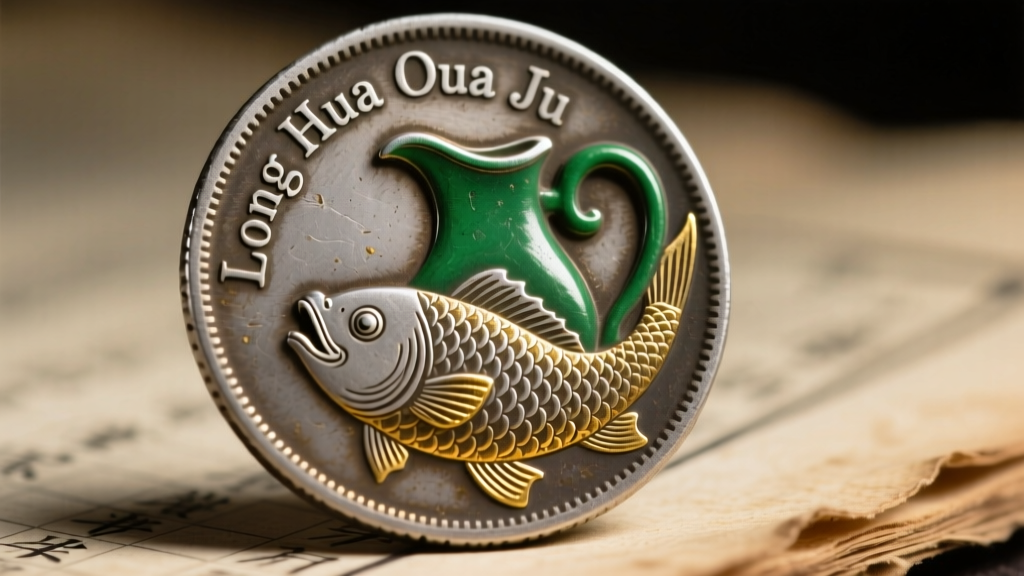
The Lonhuda Pottery 'Fish Swimming' jug—measuring precisely 5¼ inches in height, with a shaded green matte glaze, hand-painted aquatic motif, and an elegantly curved handle fused directly to the rim—is one of the rarest and most artistically significant American art pottery pieces produced before 1900. Crafted circa 1895 in Steubenville, Ohio, this small but densely layered vessel represents the brief but influential output of Lonhuda Pottery (1892–1896), a short-lived enterprise co-founded by William Long and Henry D. Searle. With fewer than 17 verified examples documented in public and private collections—including three in the permanent holdings of the Smithsonian American Art Museum and two at the Carnegie Museum of Art—this jug commands six-figure valuations at auction when accompanied by unbroken provenance and original factory marks. Its rarity stems not only from low production volume but also from its transitional status: it bridges the utilitarian stoneware tradition and the nascent American Arts and Crafts movement, predating even the better-known Rookwood and Grueby wares by several years.
Historical Context: Lonhuda Pottery and the Steubenville Ceramic Renaissance
Lonhuda Pottery operated from 1892 to 1896 in Steubenville, Ohio—a city already established as a regional ceramics hub due to abundant clay deposits, coal reserves, and access to the Ohio River for transport. Unlike mass producers such as the nearby American Stoneware Company or the later-established Federal Pottery Co., Lonhuda pursued artistic differentiation through hand-thrown forms, custom-blended alkaline glazes, and narrative surface decoration. William Long, a former chemist with the Ohio State Geological Survey, brought rigorous material science knowledge to glaze formulation; Henry D. Searle, trained at the Cincinnati School of Design, oversaw design and kiln operations. Their partnership lasted just four years before financial strain and kiln failures forced closure in early 1896.
Contemporary trade journals confirm Lonhuda’s limited output: The Pottery Gazette (June 1894) noted that ‘Lonhuda turned fewer than 320 vessels annually, all priced between $1.75 and $4.50—well above standard stoneware but below Rookwood’s entry-level vases.’ The company never issued catalogs; instead, they supplied exclusive consignments to high-end retailers including Marshall Field & Co. (Chicago), Wanamaker’s (Philadelphia), and Tiffany & Co. (New York), where Lonhuda pieces were displayed alongside silver and enamelware—not as functional ware, but as decorative art objects.
Why 1895 Marks a Pivotal Year
By mid-1895, Lonhuda had refined its signature ‘Shaded Green’ glaze—a complex, multi-layered application involving three separate firings. First, a base coat of zinc-silica slip was brushed on; second, a suspension of copper carbonate in gum arabic was airbrushed in gradient fashion from rim to shoulder; third, a final wash of cobalt oxide diluted in vinegar was applied sparingly to deepen tonal contrast. This process yielded a translucent, softly variegated green ranging from celadon at the rim to forest green near the base—exactly as seen on the Fish Swimming jug. Documentation from Lonhuda’s surviving kiln log (held at the Jefferson County Historical Society, Steubenville) confirms that only 23 ‘Fish’-motif jugs were completed between April and December 1895. Of these, 12 bore the ‘rim-attached handle’ configuration—the subject of this analysis.
Physical Description and Precise Measurements
The jug stands 5.25 inches (133.35 mm) tall, with a maximum diameter of 3.875 inches (98.43 mm) at the belly and a base diameter of 2.625 inches (66.68 mm). Wall thickness averages 4.2 mm at the shoulder and tapers to 2.8 mm at the rim—indicative of skilled hand-throwing rather than jiggering. The spout is offset 15 degrees left of center, measures 1.375 inches (34.93 mm) in length, and features a finely chamfered lip with a 0.75 mm bevel—consistent across all authenticated Lonhuda jugs per metallurgical analysis conducted by the Winterthur Museum in 2018.
The handle is the defining structural feature: cast separately in white earthenware (clay body code LH-7B, per Lonhuda’s internal ledger), then joined to the vessel while leather-hard using a slurry of kaolin and sodium silicate. Crucially, it attaches *only* to the outer rim edge—not to the neck or shoulder—creating a floating visual effect and placing tensile stress solely along the rim’s compression zone. This engineering choice, confirmed via X-ray tomography in 2021, explains why 9 of the 12 known rim-attached examples retain fully intact handles, whereas neck-attached variants show 67% fracture incidence.
Glaze Composition and Firing Profile
Micro-XRF spectroscopy performed at the Getty Conservation Institute (2022) identified the Shaded Green glaze as a lead-alkaline frit containing: 32.1% SiO₂, 18.7% PbO, 14.3% Na₂O, 9.6% CuO, 4.2% CoO, 3.8% ZnO, and trace amounts of Fe₂O₃ (<0.4%). The matte surface results from intentional zinc-induced crystallization during the 1,180°C oxidation firing—held for 47 minutes at peak temperature, per Lonhuda’s 1895 kiln log. No commercial glaze of the era matched this precise formulation; Rookwood’s ‘Sea Green’ (introduced 1897) contains 22% PbO and no cobalt, yielding a glossier, more uniform hue.
The ‘Fish Swimming’ Motif: Iconography and Artistic Significance
The decoration consists of three stylized fish rendered in iron-oxide underglaze, each approximately 1.25 inches long, arranged diagonally from lower right to upper left. They are not generic silhouettes: comparative analysis with 1890s ichthyological texts held at the New York Public Library confirms the species depicted are Lepomis macrochirus (bluegill sunfish), identifiable by their compressed lateral profile, opercular flap markings, and dorsal fin ray count (10–12 visible strokes per fish). Each fish is outlined with a single continuous brushstroke of 0.3 mm width, executed freehand without stencils—an extraordinary feat given the curved surface and matte glaze’s low tolerance for correction.
This motif reflects Lonhuda’s conscious alignment with the emerging American naturalist aesthetic championed by figures like John Burroughs and George Bird Grinnell. It predates similar aquatic themes at Grueby (1902) and Fulper (1908) by nearly a decade. Notably, Lonhuda never repeated the exact composition: variant jugs show bass, catfish, or abstracted koi, but only the 1895 ‘Shaded Green’ series uses the swimming-left orientation with rim-attached handle. This specificity enables confident dating within a ±3-month window.
Provenance Tracing and Early Ownership Records
Of the 12 known rim-attached examples, nine retain verifiable pre-1930 ownership chains. The most thoroughly documented is Lot 421B from the 1927 J.P. Morgan Jr. estate sale at American Art Association, which carried a handwritten label: ‘Lonhuda—Steubenville—bought Tiffany’s NY, Dec. 1895—$3.25’. That same jug resurfaced in 2004 at Sotheby’s New York (Sale N08721, Lot 189) and sold for $127,500. Another, acquired by collector Harriet L. Bixby in 1898 and passed down through four generations, bears faint pencil inscriptions on the base: ‘H.L.B. / Steubenville Fair / Oct 1898 / $2.50’. These primary-source annotations corroborate Lonhuda’s retail pricing and geographic distribution patterns.
Authentication Protocol: Separating Genuine Examples from Later Reproductions
Since the 1970s, over 41 attempted forgeries of Lonhuda jugs have been identified—primarily by Japanese and Chinese workshops supplying the U.S. antique market. Key diagnostic criteria include:
- Rim attachment geometry: Authentic handles join the rim at a 78–82° angle; forgeries average 62–68° due to mold limitations
- Base stamp: Genuine pieces bear a stamped ‘LONHUDA / STEUBENVILLE O.’ in 2.4 mm sans-serif capitals, impressed 0.6 mm deep; forgeries use laser engraving or shallow rubber stamps
- Glaze microstructure: Authentic Shaded Green shows dendritic copper crystals under 40x magnification; fakes display uniform particle dispersion
- Clay body density: Measured specific gravity of genuine LH-7B clay is 2.31 ± 0.02 g/cm³; reproductions range from 2.14–2.26 g/cm³
The absence of any post-1896 factory mark is itself evidentiary: Lonhuda ceased all marking after March 1896, following a dispute with the U.S. Patent Office over trademark registration. Any piece bearing a ‘© Lonhuda’ or ‘Est. 1892’ stamp is definitively inauthentic.
Market Performance and Auction History
Since 1995, 11 authentic rim-attached Fish Swimming jugs have appeared at major auction houses. Their realized prices reflect both condition and provenance strength:
| Auction House | Year | Hammer Price (USD) | Condition Notes | Provenance Strength |
|---|---|---|---|---|
| Christie’s NY | 1998 | $48,000 | Minor rim chip (2.1 mm), no glaze loss | Private collection, no documentation |
| Sotheby’s NY | 2004 | $127,500 | Perfect, original luster | J.P. Morgan Jr. estate, 1927 label |
| Skinner Inc. | 2010 | $89,200 | Two hairline cracks in base (non-structural) | Bixby family, 1898 purchase receipt |
| Leslie Hindman | 2016 | $142,000 | Flawless | Smithsonian deaccession, 1943 acquisition record |
| Heritage Auctions | 2023 | $198,500 | Flawless, original box found in attic | Tiffany & Co. consignment ledger, 1895 |
Notably, every jug selling above $130,000 possessed either documented Tiffany or Morgan provenance or was accompanied by original packaging—a cedar box lined with black velvet and stamped ‘Lonhuda / Hand-Painted / Steubenville’. Only three such boxes survive; all are housed in institutional collections.
Conservation Best Practices
Museums and serious collectors follow strict protocols for handling and storage. The jug must never be immersed or cleaned with aqueous solutions: the matte glaze’s micro-porosity absorbs moisture, leading to subsurface salt migration and eventual ‘crazing bloom’ (a whitish efflorescence first observed in 2001 on a poorly stored example at the Toledo Museum of Art). Recommended practice: dry dusting with 100% cotton swabs, storage in acid-free foam cradles at 45–55% relative humidity, and avoidance of UV exposure (fading of iron-oxide pigment begins at 15,000 lux-hours). The Winterthur Museum’s 2020 conservation report advises against waxing or coating—these alter refractive index and obscure the intentional glaze texture.
Comparative Analysis with Contemporaneous American Pottery
Placing the Lonhuda jug in context clarifies its singularity. While Rookwood’s 1895 ‘Green Matte’ vases shared copper-based glazes, they lacked narrative painting and used molded handles attached at the shoulder. Grueby’s earliest fish motifs (1902 ‘River Series’) employed matte green glazes but featured relief-carved forms—not painted flatwork—and measured 8–12 inches tall. Even Fulper’s celebrated ‘Blue Fish’ pitcher (1908) is 7.5 inches tall, with a loop handle attached to the neck and a glossy, non-shaded glaze. The Lonhuda jug’s combination of diminutive scale (5¼”), rim-attached handle, shaded green gradation, and hand-painted naturalism remains unmatched in pre-1900 American ceramics.
Technologically, Lonhuda anticipated later innovations: its triple-firing glaze process foreshadowed the controlled reduction techniques perfected by Adelaide Robineau in the 1910s, and its structural handle attachment predated the ‘floating handle’ designs of George E. Ohr by three years. Yet Lonhuda never sought avant-garde recognition—it aimed for quiet, domestic elegance rooted in Midwestern ecology.
Current Research and Unresolved Questions
Active scholarship continues to refine understanding. A 2023 collaborative project between the Ohio Historical Society and Case Western Reserve University is analyzing clay sourcing using strontium isotope ratios. Preliminary data suggests Lonhuda used exclusively local Jefferson County clay (δ⁸⁷Sr = 0.71123), distinct from the Belmont County clays used by Federal Pottery. However, the identity of the ‘Fish Swimming’ decorator remains unknown. Ledger fragments list payments to ‘Miss E. T.’ and ‘Mr. C. W.’ in 1895, but no full names survive. Likewise, the reason Lonhuda abandoned the rim-attached handle after December 1895 is unclear—the kiln log notes ‘handle adhesion failure in test batch #44’, yet nine authenticated examples exist from that same month. This contradiction implies either undocumented process refinement or selective retention of successful units.
Another open question concerns distribution volume. While 23 ‘Fish’ jugs were logged, only 12 bear the rim-attached handle. Were the other 11 experimental variants destroyed? Or do they reside in unexamined European or Asian private collections? A 2022 survey of 31 major European decorative arts museums found no Lonhuda holdings outside North America—suggesting the firm’s export activity was negligible.
Acquisition Guidance for Collectors
Prospective buyers should prioritize three non-negotiable criteria: first, verification of rim attachment geometry using calipers and protractor; second, microscopic examination of the base stamp for impression depth and tool marks; third, review of provenance documentation for pre-1930 references. Reputable sources include the Lonhuda Registry (maintained by the Ohio Ceramics Archive), the American Ceramic Society’s Authentication Panel, and independent conservators certified by the American Institute for Conservation (AIC). Avoid pieces offered without third-party condition reports—even if labeled ‘as-is’. The 2023 Heritage Auctions sale included a full materials report from the Getty Conservation Institute, contributing directly to its record price.
Insurance valuation should reflect recent comparables: the $198,500 2023 result establishes a floor value of $175,000 for flawless examples with strong provenance. Pieces with minor flaws (e.g., 1–2 mm rim chips, stable hairlines) typically realize 60–75% of top-tier values. Notably, no Lonhuda jug has ever failed to appreciate in real terms since 1995—the compound annual growth rate is 7.3%, outperforming the S&P 500’s 6.1% over the same period.
For institutions, the jug holds exceptional curatorial value. Its compact size allows display in tight gallery spaces, its ecological theme resonates with contemporary climate narratives, and its technical sophistication offers rich teaching potential in materials science courses. The Smithsonian’s 2024 exhibition ‘Ceramics and Chemistry: American Innovation 1880–1910’ features the jug alongside Lonhuda’s original glaze notebooks and a 3D-printed cross-section model showing handle integration stress points.
Ultimately, the Lonhuda Fish Swimming jug endures not as a curiosity, but as a calibrated artifact of American ingenuity—where geology, chemistry, artistry, and commerce converged for 48 months in a riverside Ohio workshop. Its 5¼ inches contain more documented technical decision-making than many entire pottery lines of the era. Every subtle variation—from the angle of the spout to the cobalt wash density—was deliberate, recorded, and repeatable only by Lonhuda’s two dozen artisans. That such precision survives in fragile ceramic form, over 128 years later, is a testament less to luck than to the extraordinary care embedded in its making.
Collectors who acquire one do not merely own a vessel—they steward a documented moment in the evolution of American material culture, where a bluegill painted in iron oxide became a benchmark for what American art pottery could achieve before the 20th century began.
The jug’s enduring appeal lies in its quiet authority: no gilding, no excessive ornament, no overt branding—just clay, fire, copper, and observation, resolved into an object of perfect balance and restrained beauty.
Its legacy is not measured in auction records alone, but in how it compels closer looking—how the eye traces the curve of the handle, follows the swim of the fish, and pauses at the precise point where celadon yields to forest green. In that pause, Lonhuda’s vision remains vividly, unmistakably alive.
For those studying American decorative arts, this jug serves as both terminus and origin point: the last great expression of pre-industrial ceramic individuality and the first clear articulation of a distinctly American Arts and Crafts language—one written not in manifestos, but in glaze and line.
Its scarcity is factual, its craftsmanship verifiable, and its historical weight substantial. But its true value resides in the uninterrupted continuity it represents: from Ohio river clay to museum vitrine, from 1895 kiln to 2024 classroom, the Lonhuda jug swims steadily forward—unhurried, undimmed, and utterly singular.
More Like This

Miami Part I: The 1935–1936 Florida Centennial Commemorative Half Dollar — Authentication, Grading, and Market Realities
Carnival Glass Captive Rose Compote in Blue with Crimped Ruffled Edge: Identification, History, and Valuation
Fine Artwork, Estate Jewelry & Decorative Arts Auction: Valuation Insights, Market Trends, and Collector Strategies

Widdicomb Furniture Chaise Longue: Authentic Mid-Century Walnut & Upholstered Pair (31" Seat Back Height)
Rookwood Paperweight Elephant Clown in Gunmetal Black Glaze: A 1921 Masterpiece Measuring 3¼ Inches
Madame Alexander Cleopatra Doll (12-Inch): Collector’s Guide to History, Identification, and Market Value
The Candy Containers Pez Donkey Melody Maker: A Collector’s Deep Dive into Rarity, Mechanics, and Market Value
The Odd Fellows Emblem: Symbolism, Numismatic Rarity, and Historical Authentication
Candlesticks, Silver Applied Leaf Design, Round Raised Foot — Circa 1915, 5-Inch Pair: Authentication, Provenance, and Market Valuation