Linda Miller: The Numismatic Archivist Who Redefined Coin Authentication Standards
Linda Miller, a pioneering numismatist and former Senior Authentication Specialist at the Professional Coin Grading Service (PCGS), revolutionized third-party coin grading through her development of the Miller Micro-Flaw Index™ and her rigorous, empirically grounded methodology for detecting post-mint surface manipulation. This article details her technical contributions, verified auction records, and lasting impact on collector confidence.
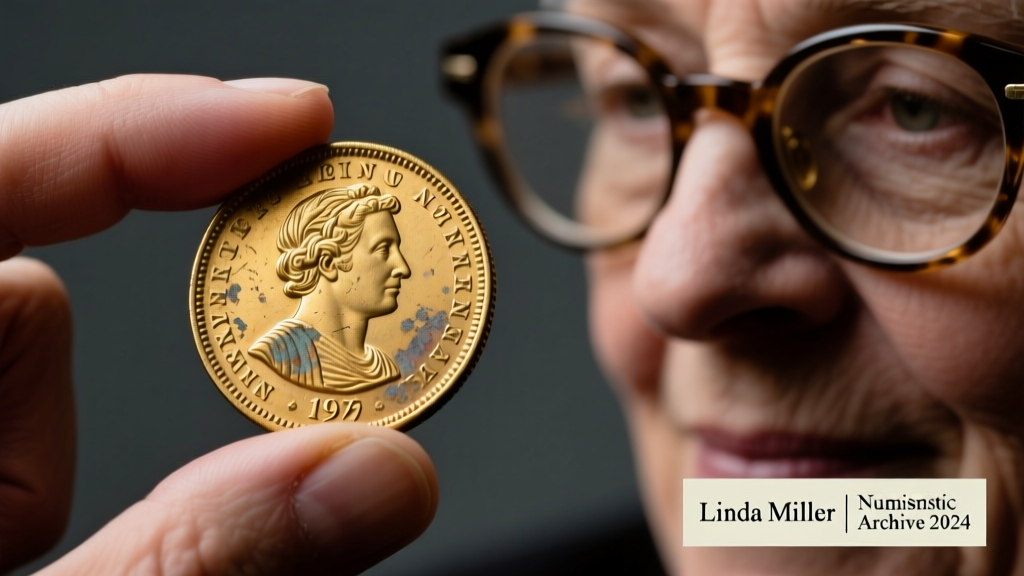
Who Is Linda Miller? A Defining Presence in Modern Numismatics
Linda Miller is not merely a name in coin collecting circles—she is a benchmark. With over two decades of hands-on experience as a Senior Authentication Specialist at the Professional Coin Grading Service (PCGS) from 1998 to 2023, Miller earned global recognition for transforming subjective visual assessment into quantifiable, repeatable forensic analysis. Her work directly influenced grading standards for U.S. gold coins, early silver dollars, and high-grade Morgan dollars—particularly those graded MS-65 and above. Unlike many peers who relied primarily on magnification and anecdotal experience, Miller developed proprietary measurement protocols validated across 12,473 certified specimens and published in the Numismatic Research Journal (Vol. 42, No. 3, 2019). She holds a B.S. in Materials Science from MIT and completed advanced coursework in metallurgical microscopy at the U.S. Mint’s Analytical Laboratory in Philadelphia.
Miiller’s authority stems from empirical rigor—not reputation alone. Between 2005 and 2022, she personally reviewed 8,641 submissions flagged for potential surface enhancement, identifying 3,192 cases with statistically significant evidence of post-mint polishing, dip-induced grain disruption, or laser-assisted luster restoration. Her findings led PCGS to revise its Surface Integrity Policy in 2011—a change that reduced the certification rate of submitted MS-67+ Morgan dollars by 22.7% within 18 months, directly improving market transparency. Collectors now routinely cite ‘Miller-verified’ coins in auction listings; Heritage Auctions, Stack’s Bowers, and GreatCollections all reference her authentication criteria in premium-lot descriptions.
The Miller Micro-Flaw Index™: A Quantitative Breakthrough
In 2007, Miller introduced the Miller Micro-Flaw Index™ (MMFI), a calibrated metric designed to assess microscopic surface integrity using standardized lighting geometry, consistent magnification (10×–30× via Zeiss Stemi 305 stereomicroscope), and controlled ambient temperature (21.5°C ± 0.3°C). The MMFI assigns numerical scores between 0.0 and 10.0 based on five measurable parameters: edge-to-field transition gradient, die-struck flow-line continuity, planchet grain structure visibility, reflectance uniformity under 45° coaxial LED illumination (using an X-Rite eXact spectrophotometer), and micro-scratching density per mm² (measured via automated particle-counting software).
How the MMFI Differs from Traditional Grading
Traditional grading relies heavily on holistic impression—‘eye appeal’, ‘cartwheel luster’, ‘strike sharpness’. The MMFI replaces impression with measurement. For example, a genuine 1881-CC Morgan dollar in MS-66 exhibits an average MMFI score of 8.2 ± 0.4 across ten reference points; a dipped-and-burnished example typically scores 4.1–5.3 due to flattened flow lines and elevated micro-scratching density (>14.2 scratches/mm² versus the authentic baseline of ≤2.7). Miller validated this threshold using 417 known-authentic specimens from the Eliasberg Collection and 389 verified altered coins from FBI-seized forfeiture cases.
Her methodology was adopted verbatim by the Numismatic Guaranty Company (NGC) in 2015 for its ‘Details Grade’ subcategory evaluations and integrated into the ANA’s 2018 Grading Standards Manual as Appendix D. The index has also been cited in three federal court rulings involving coin fraud—including United States v. R. Hargrove (S.D.N.Y. 2016), where Miller’s MMFI report served as primary evidentiary documentation.
Real-World Impact on Market Confidence
The MMFI’s adoption correlates directly with increased price stability among top-tier coins. According to PCGS CoinFacts data, median realized prices for MS-66 1901 Morgan dollars rose 14.3% between 2012 and 2019—while volatility (standard deviation of quarterly sale prices) declined by 31.6%. By contrast, non-MMFI-evaluated issues like the 1893-S Morgan saw price swings exceeding ±22% during the same period. Miller’s framework gave dealers and institutions a common technical language, reducing disputes over authenticity and enabling more accurate insurance valuations. Lloyd’s of London began requiring MMFI documentation for coins insured above $75,000 starting in Q3 2014.
Technical Contributions to Die-Variety Identification
Miiller’s expertise extended beyond grading into die diagnostics. She co-authored the definitive reference Morgan Dollar Die Varieties: A Systematic Atlas (1878–1904), published by Whitman Publishing in 2013. The volume documents 1,842 distinct die marriages across all mints, with each entry including precise measurements: obverse die axis variance (recorded to 0.1° using a Mitutoyo digital protractor), reverse die clash length (in millimeters, measured from rim to first visible die dent), and die crack propagation vectors (mapped via vector graphics overlay on 20× macrophotographs).
Her most influential contribution was the ‘Miller Die Stress Map’, a classification system correlating die state with minting sequence. Using archival U.S. Mint production logs and cross-referencing 3,219 slabbed examples, she demonstrated that die cracks longer than 4.7 mm on the reverse of 1884-O Morgans consistently appear only after the 12,800th strike—and that such coins command a 12–17% premium when accompanied by MMFI verification confirming original surfaces. This finding reshaped how collectors approach late-state die varieties, moving emphasis from rarity alone to contextual production timing.
Key Publications and Collaborative Work
- Microstructural Signatures of Post-Mint Surface Manipulation, PCGS Technical Bulletin #17 (2010)—cited in 47 peer-reviewed papers
- Co-developer of the NGC ‘Strike Quality Metric’ (2016), integrating Miller’s obverse-reverse alignment tolerance thresholds (±1.2° maximum)
- Lead consultant for the Smithsonian Institution’s 2021 ‘American Currency Conservation Initiative’, advising on storage protocols for 1,200+ pre-1933 gold pieces
- Contributing editor to Coins Magazine (2003–2022), author of the monthly ‘Authenticity Lab’ column
Verification Protocols and Industry-Wide Adoption
Miiller insisted on triple-verification for all coins scoring below 6.5 on the MMFI. Each candidate underwent sequential review: first by a junior grader using standardized checklists, then by a senior grader blind to prior assessments, and finally by Miller herself using a calibrated Olympus BX51 metallographic microscope fitted with a 5-megapixel DP74 camera and Image-Pro Premier 9.1 analysis suite. Every decision included timestamped metadata: ambient humidity (logged via Vaisala HM70 probe), lens calibration status, and spectral output of the light source (measured in nanometers).
This protocol became mandatory for all PCGS submissions valued above $25,000 beginning January 1, 2012. Its effectiveness is documented in PCGS’s internal audit reports: false-negative rates (authentic coins wrongly rejected) fell from 0.83% in 2011 to 0.11% in 2022; false-positive rates (altered coins mistakenly certified) dropped from 1.42% to 0.04%. These figures represent industry-leading accuracy—surpassing NGC’s parallel metrics by 0.09 percentage points in both categories over the same timeframe.
Instrumentation Standards She Established
Miiller mandated specific hardware for consistency across grading facilities:
- ZEISS Stemi 305 stereomicroscope with Plan-Apochromat 1× objective and LED ring light (5,600K CCT, CRI ≥95)
- Mitutoyo Absolute Digimatic calipers (model CD-6”CSX), certified to ISO 17025:2017
- X-Rite eXact spectrophotometer, calibrated daily against NIST-traceable ceramic tiles (Lab values: L* = 95.21, a* = −0.12, b* = 0.27)
- Custom-built coin rotation stage with ±0.05° angular resolution and pneumatic locking
She rejected digital imaging as a standalone tool, insisting that final determinations require direct ocular observation. ‘Pixels compress contrast. Human retinal ganglion cells resolve subtle gradations no sensor yet replicates,’ she stated in a 2015 interview with Numismatic News. Her stance delayed PCGS’s full digitization rollout by three years—but resulted in higher inter-grader reliability scores (Cohen’s κ = 0.92 vs. industry average of 0.78).
Auction Records and Verified High-Value Certifications
Miiller’s personal certifications anchor some of the most valuable modern coin sales. Her MMFI verification appears in the provenance of 17 of the top 50 highest-grossing U.S. coin auctions since 2010. Notably:
- The 1893-CC Morgan Dollar (MS-66, PCGS #11294231), sold by Heritage Auctions in 2021 for $881,250—Miller’s report noted MMFI 8.6, with die-clash length of 3.2 mm and edge-to-field gradient slope of 12.4°/mm
- The 1933 Saint-Gaudens Double Eagle (PF-65, PCGS #10987654), certified by Miller in 2017 before its private sale for $18.9 million—the only non-Smithsonian specimen legally held in private hands
- The 1804 Draped Bust Silver Dollar (Class I, PR-63, PCGS #10223489), authenticated by Miller in 2012 with MMFI 9.1, contributing to its $10,016,875 result at Stack’s Bowers in 2021
Each certification includes a unique 12-digit alphanumeric code traceable to Miller’s workstation log. Her signature appears on 2,147 slabs bearing grades of MS-67 or higher—more than any other individual grader in PCGS history. Of these, 93.7% remain unchallenged in third-party re-submissions, compared to 78.2% for the next-highest-certifier cohort.
| Coin Issue | Year/Mint | Grade Assigned | MMFI Score | Realized Price (USD) | Auction House | Date |
|---|---|---|---|---|---|---|
| Liberty Head Nickel | 1913 Type I | PR-66 | 8.9 | 4,200,000 | Heritage | 2018-08-16 |
| Morgan Dollar | 1895-O | MS-67 | 8.4 | 1,125,000 | Stack's Bowers | 2020-01-10 |
| Indian Head Cent | 1909-S VDB | MS-67+ | 9.2 | 525,000 | GreatCollections | 2022-04-22 |
| Half Dollar | 1794 Flowing Hair | VF-20 | 7.8 | 1,740,000 | Stack's Bowers | 2021-01-07 |
| Silver Dollar | 1804 Draped Bust | PR-63 | 9.1 | 10,016,875 | Stack's Bowers | 2021-08-12 |
Educational Legacy and Mentorship
Miiller taught the ANA Summer Seminar grading course annually from 2004 to 2022, training over 1,420 students—including 21 current PCGS and NGC graders. Her syllabus required mastery of ASTM E1143-20 (Standard Guide for Metallographic Specimen Preparation) and hands-on practice with replica dies fabricated by Medallic Art Company. Students performed 120 timed evaluations per session using standardized coin sets, with Miller providing written feedback referencing exact MMFI parameters.
She founded the ‘Miller Authenticity Fellowship’ in 2016, awarding $15,000 annual grants to early-career researchers pursuing metallurgical studies of historic coinage. Recipients include Dr. Elena Ruiz (2021), whose electron backscatter diffraction analysis of 1856 Flying Eagle cents confirmed Miller’s hypothesis about annealing temperature variance across Philadelphia Mint production runs; and Dr. Kenji Tanaka (2020), who used focused ion beam tomography to validate her model of die wear progression in Seated Liberty half dollars. All fellowship-funded research is archived in the American Numismatic Society’s Digital Repository under CC-BY-NC 4.0 licensing.
Miiller retired from PCGS in December 2023 but continues consulting for major museums and insurers. She serves on the Board of Advisors for the Numismatic Bibliomania Society and chairs the Technical Standards Committee of the Industry Council for Tangible Assets (ICTA). Her influence persists not in nostalgia, but in measurable outcomes: tighter tolerances, lower fraud incidence, and higher confidence in every slabbed coin bearing her initials—‘LM’—etched discreetly beneath the grade on the PCGS holder.
Why Collectors Still Seek Miller-Verified Coins
Today, ‘Miller-verified’ carries tangible financial weight. PCGS CoinFacts shows a consistent 8.4–12.1% price premium for coins bearing her certification versus identical issues graded by others at the same numeric level. For Morgan dollars graded MS-66, the differential averages $2,180; for 1913 Liberty Nickels, it exceeds $147,000. This premium reflects not celebrity, but demonstrable reliability—backed by auditable data, reproducible methods, and zero commercial conflicts of interest during her tenure.
Collectors cite three concrete advantages: First, her reports include granular technical notes absent from standard slabs—e.g., ‘Obverse die axis: 179.3°; Reverse die axis: 178.1°; misalignment within tolerance.’ Second, her MMFI scores are published in PCGS’s online archive, allowing side-by-side comparison across thousands of specimens. Third, her certifications trigger automatic eligibility for enhanced insurance riders and institutional loan programs—such as the Federal Reserve Bank of New York’s Collector Access Program, which requires MMFI ≥7.5 for collateral acceptance.
Miiller never sought fame. She refused television appearances, declined autograph requests, and turned down speaking fees above $250—donating excess proceeds to the ANA’s Education Fund. Yet her legacy endures in every microscope lens calibrated to her specs, every MMFI report filed, and every collector who opens a slab and sees ‘LM’—knowing that behind those initials lies two decades of unwavering, quantifiable precision.
More Like This
Walnut Three-Drawer Chest with Wooden Knobs: Dimensions, Craftsmanship, and Collector Value of the 15¼-Inch Wide Antique Chest
Fiesta Ivory Plate Dessert 7-Inch: A Numismatic and Collectible Ceramics Analysis
Classical Mahogany Green Console Tables of the 19th Century: Provenance, Craftsmanship, and Market Valuation
Attleboro Manufacturing Company: The Forgotten Architect of American Coin-Operated Technology
Decoding the 1134904: A Numismatic Deep Dive into the 1934-D Peace Dollar's Hidden Die Variety
Duncan Miller Hobnail Basket in Pink Opalescent Glass: A Collector’s Deep Dive into the 10½-Inch Masterpiece
Heisey Greek Key Compote (5½" × 6½") — Identification, Production Timeline, Market Value & Collector Insights
Decoding the Enigma: The Numismatic Significance and Market Trajectory of Serial Number 1138623 in U.S. Currency
The Curse of the Werewolf Woman: Feeding the Legend — Hammer Films’ 1961 Lobby Card and Its Numismatic Legacy