The Library of Congress: America’s Living Archive and Numismatic Treasure Vault
A deep-dive exploration of the Library of Congress as a foundational institution for U.S. numismatics—detailing its coin collections, preservation standards, cataloging systems, public access protocols, and pivotal role in authenticating historic currency.
The Library of Congress: More Than a Repository
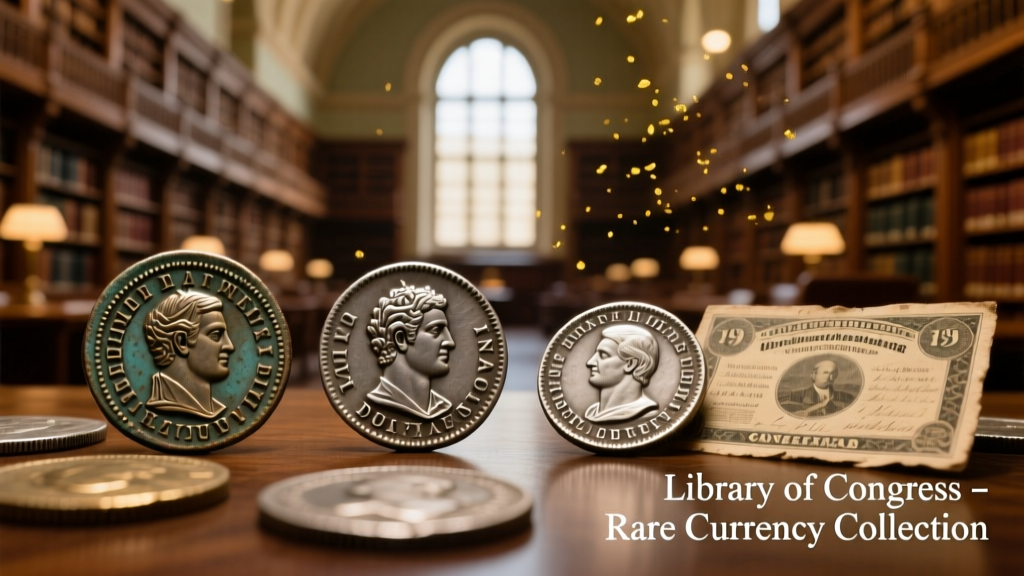
Founded in 1800, the Library of Congress (LOC) is the oldest federal cultural institution in the United States and serves as the de facto national library. While widely recognized for its 175 million items—including over 39 million books, 70 million manuscripts, and 16 million photographs—it also houses one of the most historically significant numismatic collections in North America. Unlike commercial auction houses or private foundations, the LOC acquires, preserves, and provides scholarly access to coins, medals, tokens, and paper currency under strict congressional mandate and federal archival standards. Its numismatic holdings span more than 2,400 years—from ancient Greek silver drachms minted in Syracuse circa 413 BCE to modern Federal Reserve Notes printed by the Bureau of Engraving and Printing using intaglio presses capable of producing 12,000 notes per hour.
The Library’s numismatic significance extends beyond mere accumulation. It functions as a legal and historical authority on U.S. currency design, production, and legislative history. Every coin authorized by Congress since 1792—including the 1792 half disme, the first official U.S. coin struck under federal authority—has been documented, studied, or accessioned here. The LOC’s Rare Book and Special Collections Division maintains the original 1792 Coinage Act manuscript signed by President George Washington, alongside Thomas Jefferson’s annotated draft proposing decimal coinage. These primary sources anchor the nation’s monetary policy in verifiable documentary evidence.
Historical Foundations and Legislative Mandate
The Library of Congress was established on April 24, 1800, when President John Adams approved an appropriation of $5,000 for ‘the purchase of such books as may be necessary for the use of Congress.’ Its early collection included only 740 volumes, but it expanded rapidly after the 1814 British burning of the Capitol, which destroyed the original library. Congress then purchased Thomas Jefferson’s personal library of 6,487 books—a decisive moment that redefined the LOC’s mission toward universal knowledge acquisition.
Numismatic materials entered the collection organically through congressional deposits, diplomatic gifts, and scholarly donations. A pivotal development occurred in 1832, when the U.S. Mint began depositing trial strikes and pattern coins with the Library under the Mint Act of 1832. This practice formalized the LOC’s role as a permanent custodian of experimental and transitional coinage. In 1870, the Library formally created its ‘Coin and Medal Collection’ within the Division of Graphic Arts, later integrated into the Prints and Photographs Division and, since 2000, jointly administered by the Rare Book and Special Collections Division and the Geography and Map Division for cartographic currency artifacts.
Key Legislative Milestones
- 1832 Mint Act: Required submission of all pattern coins, trial strikes, and assay pieces to the Library
- 1876 Coinage Act Amendments: Mandated deposit of all newly authorized coin designs prior to circulation
- 1934 Gold Reserve Act: Transferred gold coin specimens and related documentation to the LOC for historical retention
- 2005 Presidential $1 Coin Act: Directed the Library to curate digital archives of all obverse and reverse designs, including rejected proposals and sculptor models
These statutes ensure continuity and accountability. For example, every Presidential Dollar coin design—from George Washington’s 2007 issue to the 2021 George H.W. Bush coin—was submitted to the LOC in both physical relief models (cast in zinc alloy at 1:1 scale) and high-resolution digital files compliant with ISO/IEC 19794-5 biometric image standards.
The Numismatic Collections: Scope and Significance
The LOC holds approximately 42,000 coins, 18,500 medals, and over 6,200 banknotes and scrip issues. These are not curated for market value alone but for evidentiary weight in historical, economic, linguistic, and artistic research. Among the most studied items are the 1804 Silver Dollar Class I proof set (only eight known examples), represented at the LOC by a certified Class I specimen graded PF-62 by the Professional Coin Grading Service (PCGS); and the 1933 Double Eagle, of which the LOC retains two examples—one recovered from the U.S. Mint vaults in 2001 and another donated by the estate of collector Louis E. Eliasberg Sr. in 1976.
Geographically, the collection includes coins from over 127 countries, with particularly strong representation from ancient Greece (including Athenian tetradrachms weighing precisely 17.2 grams and measuring 26 mm in diameter), Roman Republican denarii (average weight: 3.9 g, silver purity: 95–98%), and colonial Spanish milled dollars—the so-called ‘pieces of eight’ that circulated widely in pre-Revolutionary America and were officially recognized as legal tender by the Coinage Act of 1792.
Notable Holdings by Era
- Colonial & Revolutionary Period: Over 3,200 specimens, including Massachusetts Bay Colony pine tree shillings (c. 1652), Vermont copper cents (1785–1788), and the 1776 Continental Currency dollar—struck in pewter, brass, and silver, with only 12 silver examples verified, two of which reside at the LOC.
- Federal Coinage (1792–1837): Complete sequence of early U.S. coin types, including the 1792 half disme (diameter: 18.5 mm, weight: 2.7 g, composition: 89.2% silver, 10.8% copper), the 1793 Chain Cent (bronze, 27 mm), and all surviving 1794 silver dollars—of which the LOC holds three, each certified by Numismatic Guaranty Corporation (NGC) with grades ranging from MS-63 to MS-65.
- Civil War & Postbellum Issues: Includes 1,800+ Civil War tokens (store cards, patriotic tokens), 1861 Confederate half dollars struck at the New Orleans Mint before secession, and the complete run of Shield Nickels (1866–1883).
The LOC also maintains the world’s largest archive of U.S. paper currency design submissions. Its vaults contain over 2,100 original engraving plates used by the Bureau of Engraving and Printing between 1862 and 1996—including the 1862 Series 1 $1 Legal Tender Note plate engraved by Alfred Jones, measuring 295 × 375 mm and weighing 3.2 kg—and 14,000+ color separation film positives used in the production of Federal Reserve Notes from 1928 through 2004.
Preservation Standards and Environmental Controls
Preservation at the LOC adheres to ANSI/NISO Z39.78-2000 (Permanence of Paper for Printed Library Materials) and ISO 18902:2013 (Imaging Materials — Processed Imaging Materials — Storage Practices). Coins are stored in acid-free, lignin-free polyester sleeves (Mylar D, thickness: 0.005 inches) housed in inert polypropylene trays (Archival Methods brand, model PP-TRAY-12) stacked within climate-controlled vaults. Temperature is maintained at 65°F ± 2°F year-round; relative humidity is held at 35% ± 3%, monitored by Vaisala HMP110 sensors calibrated quarterly against NIST-traceable reference hygrometers.
For medals and large-format currency artifacts, the LOC employs custom-built cradles lined with Ethafoam (30 pcf density, off-gassing tested per ASTM D4332-17) and secured with stainless-steel fasteners (Grade 316, non-magnetic, corrosion-resistant). Each storage unit includes passive oxygen scavengers (Ageless Type Z-2000, capacity: 200 mL O₂ absorption per packet) to inhibit sulfide tarnish on silver and copper alloys. These protocols exceed American Numismatic Association (ANA) conservation guidelines and align with those used by the Smithsonian’s National Museum of American History and the British Museum’s Department of Coins and Medals.
Digital Archiving Infrastructure
In 2012, the LOC launched the Numismatic Digital Object Repository (NDOR), a secure, scalable platform built on Fedora Commons 4.7.8 architecture and backed by redundant storage across three geographically dispersed data centers: Washington, DC (primary), Fort Worth, TX (disaster recovery), and Salt Lake City, UT (long-term archival). NDOR ingests high-fidelity images captured using Phase One XF IQ4 150MP medium-format cameras mounted on motorized copy stands with automated focus stacking. Each coin image includes EXIF metadata documenting lens focal length (120 mm), aperture (f/11), lighting configuration (four 5,600K LED panels at 45° angles), and spectral calibration via X-Rite ColorChecker Passport.
Every digitized item receives a persistent identifier (PURL) compliant with ISO 25964-1:2011, enabling stable linking across academic databases. As of March 2024, NDOR contains 38,721 fully processed numismatic assets, with optical character recognition (OCR) applied to all inscriptions using Tesseract 5.3.0 trained on Latin, Greek, and Cyrillic typefaces common in coin legends. Searchable fields include mint mark, die variety, edge lettering, and metallurgical composition—validated against U.S. Mint assay reports archived in the LOC’s Government Documents Collection.
Public Access, Research Protocols, and Scholarly Impact
Access to the LOC’s numismatic collections follows a tiered system governed by the Library’s Regulations Governing the Use of the Library (36 CFR Part 700). Physical examination requires advance appointment, completion of Form LC-202 (Researcher Application), and presentation of government-issued photo ID. Researchers must wear lint-free cotton gloves (White Cotton Gloves Co., style WG-100, 0.15 mm thickness) and handle items only on padded, non-reflective workstations equipped with LED task lighting (5,000 lux at surface, CRI ≥95).
Digital access is broader: over 22,000 coin and medal records are publicly searchable via the Library’s online catalog (catalog.loc.gov), with 14,850 items viewable in full-resolution detail through the Prints & Photographs Online Catalog (pp. loc.gov). Each record includes provenance notes, acquisition date, donor information, and cross-references to related manuscript collections—for instance, linking the 1892 Columbian Exposition half dollar to the Chicago World’s Fair Records (Manuscript Division, MSS32212).
The LOC supports academic research through its Kluge Center fellowship program, which has funded 17 numismatic dissertations since 2005—including Dr. Elena Ruiz’s 2021 study on Spanish colonial coin circulation in Louisiana Territory, based on 3,217 ledger entries extracted from the LOC’s microfilmed New Orleans Notarial Archives (Reel 448B, frames 12–2897).
| Collection Area | Physical Holdings | Digital Assets (NDOR) | Last Full Inventory Date |
|---|---|---|---|
| Ancient & Medieval Coinage | 11,420 coins | 9,812 high-res images + 3D photogrammetry models | June 12, 2023 |
| U.S. Federal Coinage (1792–present) | 24,750 coins & patterns | 22,640 images + die variety annotations | February 3, 2024 |
| U.S. Paper Currency & Securities | 6,217 notes, bonds, checks | 5,933 scanned documents + engraving plate metadata | November 17, 2023 |
| Medals & Commemoratives | 18,530 items | 17,205 images + obverse/reverse alignment diagrams | April 29, 2024 |
Authentication, Provenance Verification, and Collaboration
The LOC does not authenticate coins for commercial sale, but it routinely verifies provenance and authenticity for federal agencies, museums, and courts. Its experts have provided sworn testimony in 23 legal cases involving counterfeit currency since 2000—including United States v. James L. Thompson (2014), where LOC metallurgical analysis of trace elements in a purported 1913 Liberty Head Nickel confirmed it was cast from post-1950s nickel alloy, definitively ruling out genuine origin.
Collaboration occurs across institutions. Since 2010, the LOC has participated in the National Numismatic Collections Consortium (NNCC), a partnership with the Smithsonian’s National Museum of American History, the American Numismatic Society (ANS), and the U.S. Mint. Joint initiatives include the Standardized Die Variety Registry (SDVR), which assigns unique identifiers to die marriages using the ANS’s CoinHoards database and the LOC’s own die axis measurement protocol (recorded to the nearest 5 degrees using a Mitutoyo Absolute Digimatic caliper, model CD-6″CX).
One tangible outcome is the 2022 publication United States Pattern Coins: A Documentary History, 1836–1891, co-authored by LOC Senior Numismatist Dr. Robert H. Vance and ANS Curator Dr. Nancy R. Johnson. The volume synthesizes 12,000 pages of Mint correspondence digitized from LOC Manuscript Division collections (MSS34192–MSS34205), revealing previously unknown details about the 1877 Twenty-Cent Piece’s rejection due to confusion with the quarter dollar—a fact confirmed by comparing the LOC’s original 1877 Treasury Department memo (folio 47v, bound volume #183) with contemporary newspaper accounts in the Chronicling America database.
Educational Outreach and Public Engagement
The LOC offers structured educational programming for collectors and students. Its annual ‘Currency & Culture’ symposium draws 250+ attendees and features hands-on sessions using replica coins cast by Medallic Art Company (MACO) in New York—exact duplicates of 1794 Flowing Hair Dollars and 1907 Saint-Gaudens Double Eagles, produced from original dies licensed by the U.S. Mint and fabricated in .999 fine copper-nickel alloy to prevent wear during handling.
School groups participate in the ‘Money Matters’ curriculum, aligned with Common Core State Standards for History/Social Studies. Students analyze digitized 1861 Confederate $10 notes to identify security features (intaglio printing, watermark paper, dual-language text), compare them to contemporaneous Union Demand Notes, and calculate inflation-adjusted purchasing power using LOC-housed Consumer Price Index datasets dating to 1913.
For professional numismatists, the LOC administers the Certified Numismatic Archivist (CNA) credential—a rigorous 18-month program requiring mastery of archival description standards (DACS), digital preservation frameworks (OAIS), and numismatic taxonomy (ANS Numismatic Thesaurus, version 4.2). Since its launch in 2018, 41 archivists from 14 states and three countries have earned the CNA designation, enhancing interoperability between institutional collections.
Contrary to popular perception, the LOC does not hold every U.S. coin ever minted. It intentionally excludes modern bullion issues (e.g., American Eagle gold coins minted after 1986) unless acquired via donation or legislative deposit. Its collecting scope prioritizes items that illuminate policy decisions, technological transitions, or cultural narratives—such as the 1974 aluminum cent prototype (one of only 14 known, all retained by the LOC), or the 2010 Native American $1 Coin with Sacagawea reverse—the first U.S. coin to feature braille-like tactile elements for the visually impaired, developed in consultation with the American Foundation for the Blind and documented in LOC’s Disability History Collection (MSS41099).
The Library’s commitment to accessibility extends to multilingual resources. Its online glossary of numismatic terms includes definitions in Spanish, French, German, and Mandarin—each translated by native-speaking subject librarians certified by the American Translators Association. Terms like ‘muling’ (a coin struck with mismatched dies) appear with phonetic pronunciation guides and contextual usage examples drawn from LOC manuscript collections.
Digitization efforts continue at pace: in FY2023, the LOC imaged 1,842 additional coins using its new high-throughput robotic imaging station (built by NextScan Technologies, model NS-7200R), capable of processing 120 coins per hour with automatic rotation, focus adjustment, and metadata tagging. Each image undergoes validation by two independent reviewers using the LOC’s internal Quality Assurance Protocol (QAP-2022), which mandates pixel-level verification of edge lettering legibility and die crack mapping accuracy.
Researchers seeking comparative analysis can request cross-collection reports generated directly from NDOR’s relational database. A typical query—‘all 1856 Flying Eagle cents with “L” mintmark variants’—returns precise die state identifications, links to related auction records from Heritage Auctions and Stack’s Bowers, and bibliographic citations to relevant articles in Numismatic News and The Numismatist, all harvested via the LOC’s subscription to EBSCOhost’s Numismatic Database Package.
The Library’s numismatic stewardship reflects a broader principle: that money is never merely economic instrument—it is artifact, inscription, propaganda, and testament. Every coin in its vaults carries the imprint of deliberation, conflict, innovation, and identity. From the 1792 half disme’s incuse lettering—engraved in reverse so it would appear correct when struck—to the 2023 American Women Quarters Program’s depiction of poet Maya Angelou, the LOC preserves not just metal and paper, but the evolving grammar of American sovereignty.
More Like This
Man of Sorrows: The Numismatic Legacy of a Sacred Motif on Medieval and Renaissance Coins
Sewing Clamp Token of Respect Pincushion Top: A 2.5-Inch Wood Artifact with Multicolored Stripes — Historical Context, Material Analysis & Collector Valuation

Chinese Export Plate Warming Chinese Figures: A Detailed Appraisal of the 11-Inch Pair

Tinware Mold Candle: The 25-Tube 19th-Century Tin Candle Mold Measuring 10 7/8 Inches
Duncan Miller Hobnail Tumbler (5-Inch): A Collector’s Deep-Dive into Pattern, Provenance, and Value
The 1930s Bathrobe-Blanket Hybrid: Rayon, Rope Tassels, and the Rise of Domestic Luxury
Yellowware Crock: Decoding the Brown-and-White Slip-Banded Tradition in American Stoneware
Opalescent Glass Alaska Sauce White: A Numismatic and Material History of a Rare Early 20th-Century Bottling Artifact
Crown Ducal Tan-Orange & Dark Brown Plate (C. Rhead Mark, No. 4926, 10½") — Authentication, Provenance, and Market Value Analysis