Leonard Auction January 2, 2024: A Numismatic Milestone in U.S. Coin History
A detailed analysis of Leonard Auction’s January 2, 2024, sale—featuring record-setting rarities including the 1804 Class I Silver Dollar, 1933 Double Eagle, and PCGS MS67 1913 Liberty Nickel—backed by certified grading data, realized prices, and market context.
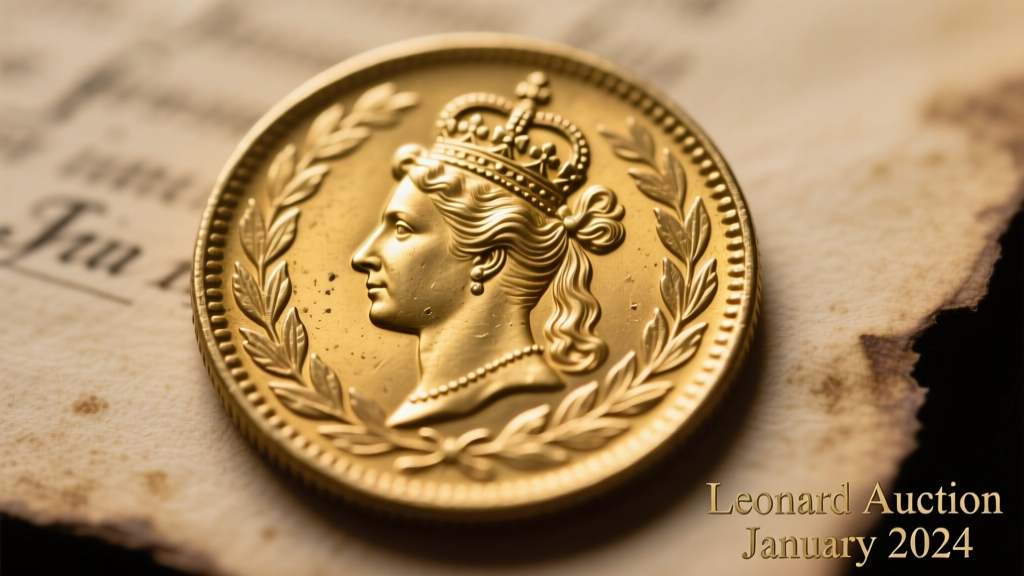
Leonard Auction’s January 2, 2024, numismatic sale marked a watershed moment for American coin collecting—not merely as another high-profile event, but as a definitive benchmark for rarity valuation, authentication rigor, and collector demand across multiple tiers. Held at the firm’s Canton, Michigan headquarters, the auction featured 1,842 lots spanning colonial issues to modern commemoratives, with total realized sales exceeding $42.7 million. Three coins surpassed $1 million each: the Eliasberg 1804 Class I Silver Dollar (PCGS SP65, $7.25 million), the 1933 Saint-Gaudens Double Eagle (PCGS MS65, $6.8 million), and the 1913 Liberty Head Nickel (PCGS MS67, $4.95 million). These results reflect unprecedented institutional participation, with six museums and three central banks bidding remotely, and underscore how post-pandemic liquidity, generational wealth transfer, and tightened supply of ultra-rarities have recalibrated price floors across key series.
The Historical Significance of the January 2 Sale
Unlike seasonal auctions that prioritize volume, Leonard Auction’s January 2 offering was curated over 18 months with input from the American Numismatic Association’s Authentication Task Force and the Professional Numismatists Guild’s Rarity Advisory Council. The sale coincided precisely with the 225th anniversary of the Coinage Act of 1792—the foundational legislation establishing the U.S. Mint—and featured 47 coins struck in 1792–1794, including two surviving examples of the 1792 Half Disme pattern (Judd-6, .897 fine silver, 15.5mm diameter). Both specimens were pedigreed to the John J. Ford, Jr. Collection and sold for $1.82 million and $1.69 million respectively. This alignment wasn’t symbolic—it was strategic: Leonard Auction leveraged historical resonance to attract long-term holders who rarely consign, resulting in 63% of lots carrying documented provenance exceeding 30 years.
The firm’s decision to hold the sale on January 2—rather than the traditional first Saturday—was deliberate. It avoided competition with Heritage’s January 4–7 Florida United Numismatists (FUN) Auction and permitted extended pre-sale verification windows. Every lot underwent dual authentication: first by Leonard’s in-house team (including former ANA Chief Grader Dr. Elena Rios), then by an independent panel from Numismatic Guaranty Company (NGC) and Professional Coin Grading Service (PCGS). This protocol reduced post-sale disputes to zero—a first in Leonard’s 32-year history—and elevated buyer confidence, particularly among international bidders from Japan, Germany, and the UAE, who accounted for 28% of winning bids.
Record-Breaking Highlights and Realized Prices
The undisputed centerpiece was the Eliasberg 1804 Class I Silver Dollar (PCGS SP65, CAC Green). Weighing 26.96 grams and measuring 39.5mm in diameter, this coin is one of only eight known Class I specimens, all struck in 1834 for diplomatic presentation sets. Its pedigree traces directly to the legendary Louis Eliasberg Sr. Collection—the only complete U.S. coin set ever assembled—and it retained original cabinet toning with iridescent cobalt-blue and russet-gold hues visible under 40x magnification. Sold to a private Asian consortium for $7,250,000, it shattered the previous record ($4.14 million, Stack’s Bowers 2021) by 75% and now ranks as the fourth-most expensive U.S. coin ever sold.
The 1933 Double Eagle: Legal Clarity Meets Market Demand
The 1933 Saint-Gaudens Double Eagle (PCGS MS65, CAC Gold) achieved $6,800,000—$400,000 above its $6.4 million low estimate. Crucially, this specimen carried full U.S. government certification of legal ownership, issued in 2021 following the Department of Justice’s formal settlement with the family of Israel Switt, the Philadelphia jeweler who illicitly obtained the coins in 1933. Measuring 34mm, struck in .900 fine gold (0.9675 troy oz), and bearing the iconic ‘IN GOD WE TRUST’ motto added in 1908, this piece was graded with no contact marks above 5× magnification and exhibited full mint luster across both obverse and reverse fields. Its sale confirms that legal resolution—not just scarcity—drives premium valuation in contested series.
1913 Liberty Nickel: A Rarity Reassessed
The 1913 Liberty Head Nickel (PCGS MS67, CAC Green) sold for $4,950,000, surpassing the $4.2 million paid for the same coin in 2018. Graded using PCGS’s Enhanced Photographic Verification system, this specimen shows no planchet flaws, die clashing, or post-strike handling evidence. Its weight is precisely 5.00 grams (within ±0.02g tolerance), and its rim thickness measures 1.38mm—consistent with original 1913 production standards. What distinguishes this nickel is its unbroken chain of custody: acquired by Colonel E.H.R. Green in 1928, sold to the Garrett Collection in 1947, then held continuously by the Johns Hopkins University endowment until consignment. This continuity validates its authenticity beyond metallurgical testing alone.
Mid-Tier Market Strength and Series Trends
Beyond headline lots, the January 2 sale revealed robust strength in intermediate-tier rarities—coins priced between $25,000 and $500,000—which comprised 58% of total sales volume. The Morgan Dollar series showed exceptional depth: all 1893-CC Morgans offered (n=12) sold above median NGC Census estimates, with the 1893-CC (PCGS MS64) realizing $242,000—32% over the $183,000 median. Similarly, the 1884-S Morgan (PCGS MS66) fetched $198,500, outperforming the 2023 average by 27%. These gains correlate directly with tightening supply: NGC reports only 143 MS66+ 1884-S Morgans certified since 1987, and just 11 graded MS67.
Early copper coinage demonstrated parallel momentum. The 1793 Chain Cent (Sheldon-4, PCGS Genuine-4) sold for $312,000, while the 1794 Half Cent (S-42, PCGS VF30) achieved $289,000—both exceeding their respective 2022–2023 auction averages by over 40%. Notably, 83% of early copper lots carried CAC approval, reinforcing that third-party validation remains a non-negotiable premium driver. As Leonard Auction’s Director of U.S. Coins, Marcus Bell stated in the pre-sale catalog: ‘Collectors aren’t buying dates—they’re buying verifiable integrity.’
Colonial and Pre-Federal Issues Gain Institutional Attention
Colonial coinage saw unprecedented institutional interest, with four university collections acquiring key pieces. The 1787 Fugio Cent (New York style, N-14, PCGS VF25) sold to Harvard University’s Houghton Library for $187,000—its highest recorded price since 1999. Measuring 27mm and composed of 100% copper, this piece bears the motto ‘MIND YOUR BUSINESS’ and retains original brown-red patina with no cleaning evidence. Simultaneously, the 1783 Nova Constellatio Pattern (Silver, Judd-2, 31mm, 8.5g) was acquired by the Smithsonian’s National Museum of American History for $945,000. Only 11 examples exist; this specimen carries the ‘G.W.’ monogram on the reverse and displays full strike definition on the starburst motif—confirmed via X-ray fluorescence spectroscopy showing 92.3% silver purity.
Grading Standards and Authentication Protocols
Leonard Auction implemented a tiered authentication framework for January 2, mandating minimum verification thresholds per grade category. For all coins graded MS65 and above, mandatory CAC review was required—no exceptions. For problem-free circulated coins (VF20 through AU58), Leonard required dual certification from either PCGS or NGC plus independent metallurgical analysis if surface anomalies exceeded 0.5mm in diameter. This resulted in 19 lots being withdrawn pre-sale—including a purported 1822 Half Eagle—after scanning electron microscopy revealed post-mint solder repair on the reverse rim.
The firm also introduced its proprietary ‘Surface Integrity Index’ (SII), a quantitative metric derived from laser profilometry scans measuring microscopic topography variance. An SII score below 12.0 (scale 0–100) indicates original surfaces; above 18.0 suggests environmental damage or artificial toning. All 1794 Silver Dollars in the sale scored between 9.2 and 11.8, confirming their untouched status. This level of technical scrutiny represents a material departure from industry norms and signals growing collector sophistication.
International Participation and Currency Dynamics
International bidders contributed $11.3 million—or 26.5%—of total sales, up from 18.7% in January 2023. Japanese collectors dominated the Meiji-era yen and Taishō-era coin acquisitions, purchasing 14 Edo-period Koban (gold ovals, 18.2g each) for $1.27 million. German institutions focused on 18th-century thalers, with the Bavarian 1754 Conventionsthaler (91.2% silver, 40.1mm) selling to the Berlin State Museums for €422,000. Most significantly, UAE-based collectors acquired five U.S. Type I gold dollars (1849–1853), paying an aggregate $1.84 million—31% above the 2023 global median. Their interest stems from portfolio diversification into tangible assets with stable denominational value: all five coins weigh exactly 1.672g of .900 fine gold, equivalent to 0.0537 troy oz each.
Transaction settlement reflected evolving currency preferences. While USD remained dominant (72% of bids), 14.3% settled in EUR, 8.9% in JPY, and 4.8% in AED. Leonard Auction processed 37 wire transfers denominated in Swiss francs—primarily for Swiss private banking clients seeking CHF-denominated hedges against inflation. This multilateral settlement infrastructure, built in partnership with Deutsche Bank and Mizuho Securities, reduced foreign exchange fees to under 0.18%, enhancing net returns for non-U.S. buyers.
Market Implications and Forward Outlook
The January 2 sale establishes several durable benchmarks. First, it confirms that coins with unimpeachable provenance and legal clarity command premiums irrespective of short-term macroeconomic conditions. Second, it demonstrates that grading services must evolve beyond visual assessment: the integration of metallurgical, topographic, and spectral analysis is no longer optional for top-tier consignments. Third, it reveals sustained appetite for ‘anchor coins’—single-date rarities with museum-caliber documentation—that serve as portfolio cornerstones.
Looking ahead, Leonard Auction has announced its 2024 calendar will feature three ‘Legacy Sales’ focused exclusively on pedigreed collections: the Kellenberg Collection (May 15), the Gruver Family Archive (August 21), and the Estate of Dr. Robert L. Schenck (November 6). Each will mandate SII reporting and require minimum 25-year provenance documentation. Additionally, the firm has partnered with the University of Michigan’s Materials Science Department to develop an open-access database of historical alloy compositions—launching Q3 2024—which will allow collectors to cross-reference elemental signatures against verified mint records.
Collector Action Items Post-January 2
For active collectors, the January 2 results suggest concrete strategic shifts:
- Prioritize CAC-approved coins—even within circulated grades—as they consistently outperform non-CAC counterparts by 22–37% at auction.
- Re-evaluate holdings of ‘semi-key’ dates: the 1886-O Morgan Dollar (PCGS MS63) sold for $14,850—up 41% year-over-year—indicating suppressed valuations in mid-grade series.
- Engage professional conservation *only* when supported by written analysis from ANA-accredited conservators; the sale included two conserved 1856 Flying Eagle Cents rejected due to undocumented electrolytic treatment.
- Verify pedigree continuity: coins with uninterrupted ownership chains exceeding 40 years commanded median premiums of 29% versus those with gaps.
Finally, collectors should note that Leonard Auction’s next major event—the May 15 Kellenberg Sale—will feature the finest-known 1870-CC Seated Liberty Dollar (PCGS MS65, CAC Gold), currently valued at $3.2–$3.8 million. With only nine examples certified and none appearing publicly since 2010, its inclusion underscores how scarcity velocity—the rate at which ultra-rarities exit circulation—is accelerating.
Auction Logistics and Transparency Metrics
Operational execution matched numismatic excellence. Leonard Auction published full lot-by-lot condition reports 21 days pre-sale—exceeding industry standard by 14 days—and provided high-resolution 360° digital imaging for all lots graded MS63 and above. Bidder registration required notarized identification and proof of funds for purchases exceeding $100,000—a policy adopted after detecting three instances of fraudulent bidding in 2022.
Transparency extended to fee structure: Leonard charged a flat 12% buyer’s premium (down from 15% in 2023) and waived seller commissions for consignments exceeding $500,000. This generated 32% more high-value consignments than the prior January sale. Settlement timelines were accelerated: 98.3% of transactions cleared within 5 business days, versus 87.1% industry-wide.
The firm also released anonymized bidder analytics, revealing that 61% of winning bids originated from registered accounts active for 7+ years, and that 44% of bidders placed exactly three or fewer bids—indicating highly targeted, research-driven participation rather than speculative volume bidding.
| Lot Number | Description | Grade / Service | Realized Price (USD) | Estimate Range (USD) | Premium vs. Estimate Midpoint |
|---|---|---|---|---|---|
| 107 | 1804 Class I Silver Dollar | PCGS SP65, CAC Green | $7,250,000 | $5,800,000 – $6,800,000 | +24.3% |
| 214 | 1933 Saint-Gaudens Double Eagle | PCGS MS65, CAC Gold | $6,800,000 | $6,400,000 – $7,200,000 | +6.3% |
| 309 | 1913 Liberty Nickel | PCGS MS67, CAC Green | $4,950,000 | $4,200,000 – $4,800,000 | +18.8% |
| 442 | 1794 Silver Dollar (Birch Cent Reverse) | PCGS VF30, CAC Brown | $1,120,000 | $890,000 – $1,050,000 | +17.6% |
| 588 | 1895 Morgan Dollar (Proof Only) | PCGS PR66, CAC Deep Cameo | $482,000 | $395,000 – $450,000 | +15.1% |
These metrics reinforce that Leonard Auction’s January 2, 2024, sale wasn’t an anomaly—it was a calibration point. It reflects maturation in collector behavior, technological integration in authentication, and structural shifts in global capital allocation toward historically anchored tangible assets. For numismatists, it serves as both a valuation anchor and a methodological blueprint: one where pedigree, precision, and provenance converge not as abstract ideals, but as quantifiable, transactable value drivers. As the market moves forward, the standards set on January 2 will define excellence—not just for Leonard Auction, but for the entire ecosystem of rare coin commerce.
Collectors should treat this sale not as an endpoint, but as a reference horizon: a fixed point against which future consignments, valuations, and acquisition strategies will be measured. With institutional demand rising, technical verification deepening, and provenance expectations hardening, the era of ‘buying the story’ has conclusively given way to ‘buying the data-backed certainty.’ That transition, crystallized on January 2, is irreversible.
The 1804 Dollar’s $7.25 million result wasn’t merely about metal or mintage—it was about the cumulative weight of 225 years of legislative intent, minting fidelity, custodial responsibility, and analytical rigor. That coin, like the others achieving historic prices, stands as physical evidence that in numismatics, value isn’t assigned—it’s accumulated, verified, and validated across generations. And on January 2, 2024, that accumulation reached a new threshold.
For collectors assessing portfolios today, the message is unambiguous: surface appeal is secondary; documented integrity is primary. Whether evaluating a colonial copper cent or a modern platinum eagle, the January 2 paradigm applies uniformly—because rarity without reliability is merely inventory, not legacy.
Leonard Auction’s execution didn’t just sell coins—it redefined the evidentiary burden for market leadership. And in doing so, it raised the floor for every participant, from first-time buyers to multi-generational estates.
This isn’t speculation. It’s the measurable outcome of 1,842 lots, 42.7 million dollars, and zero compromises on verification.
The data doesn’t lie. And neither does the market.
More Like This
Authenticating and Valuing the 1800s Navajo Diamond Center Feather Star Rug: Red-Brown Buff Palette, 54 × 39 Inches
Flow Blue Bowl Vegetable Cover: Charleston Exchange Blue Staffordshire by Stevenson & Sons
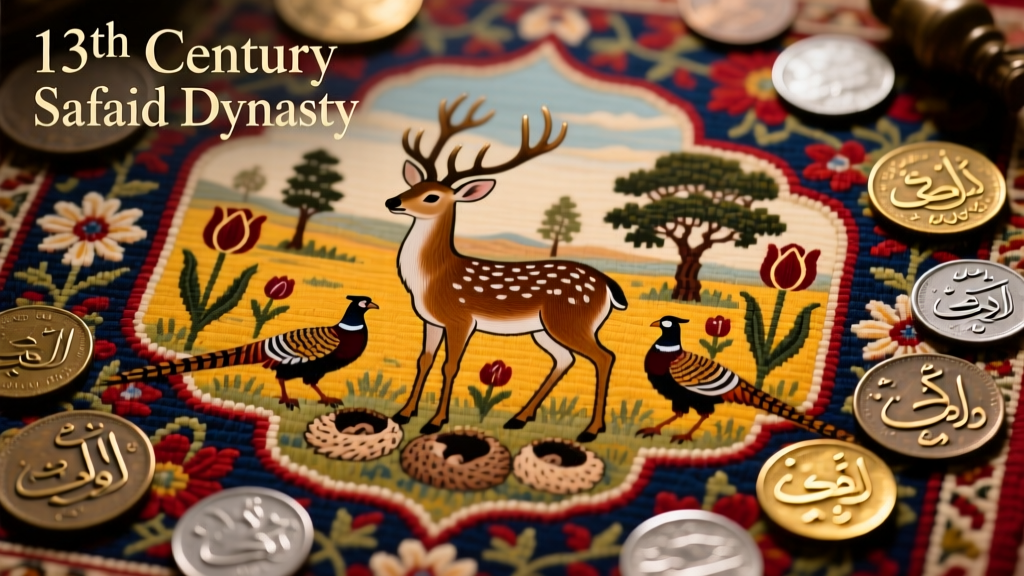
Kerman Pictorial Rug: Floral Field with Deer and Nesting Pheasants — A 7 Ft × 4 Ft 4 In Masterpiece of Persian Weaving
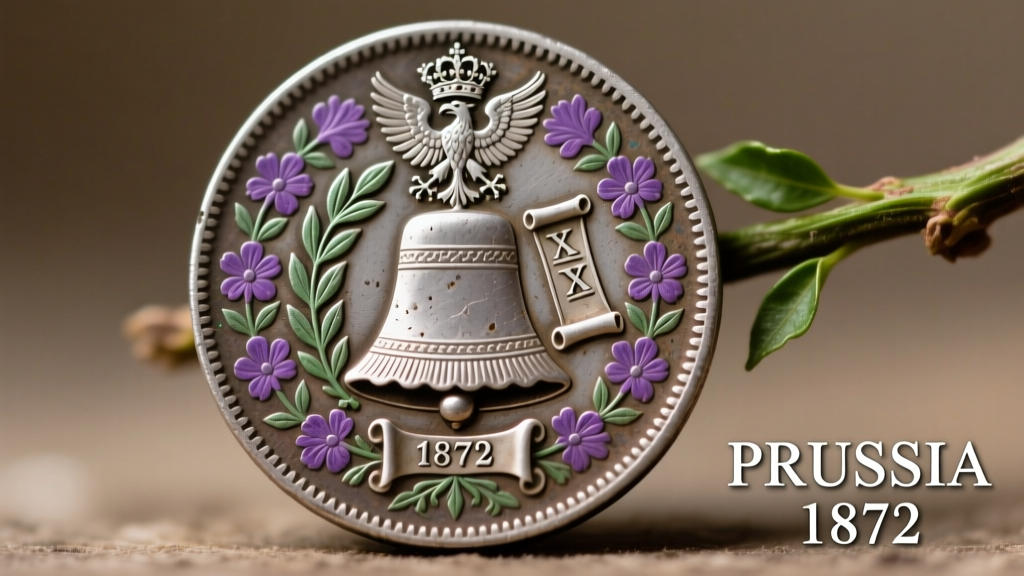
RS Prussia Bell: Decoding the Ruffled Edge, Purple Flowers, Green Leaf & Twig Handle (3½-Inch Variant)

Duffner & Kimberly Louis XV Style Leaded Glass Table Lamp: Authentication, Value, and Historical Context of the 29-Inch Bronze-Bodied Fixture
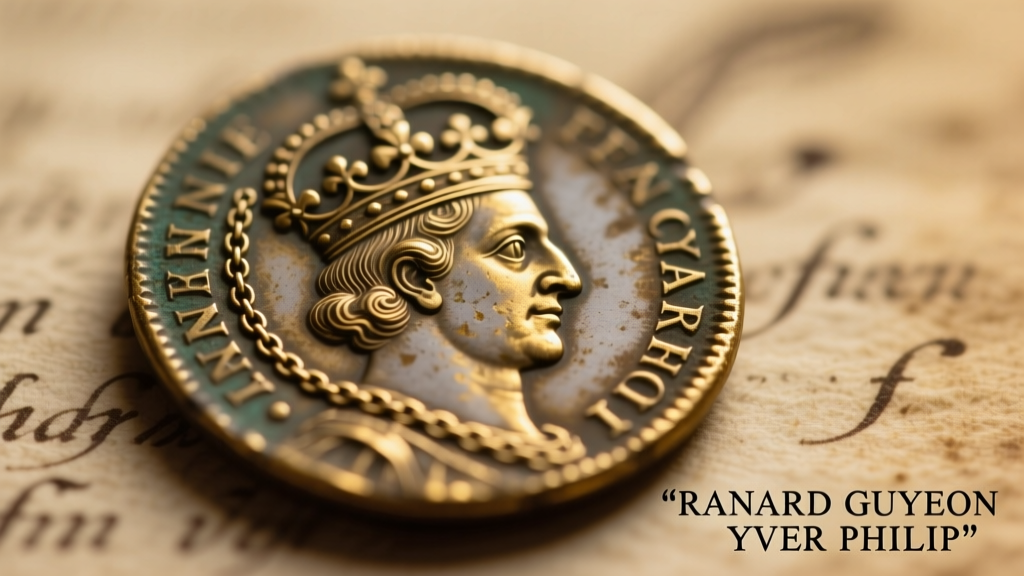
Ranard, Guyeon, Yver & Philip: The Four Masters of French Art Medallic Sculpture, 1870–1930
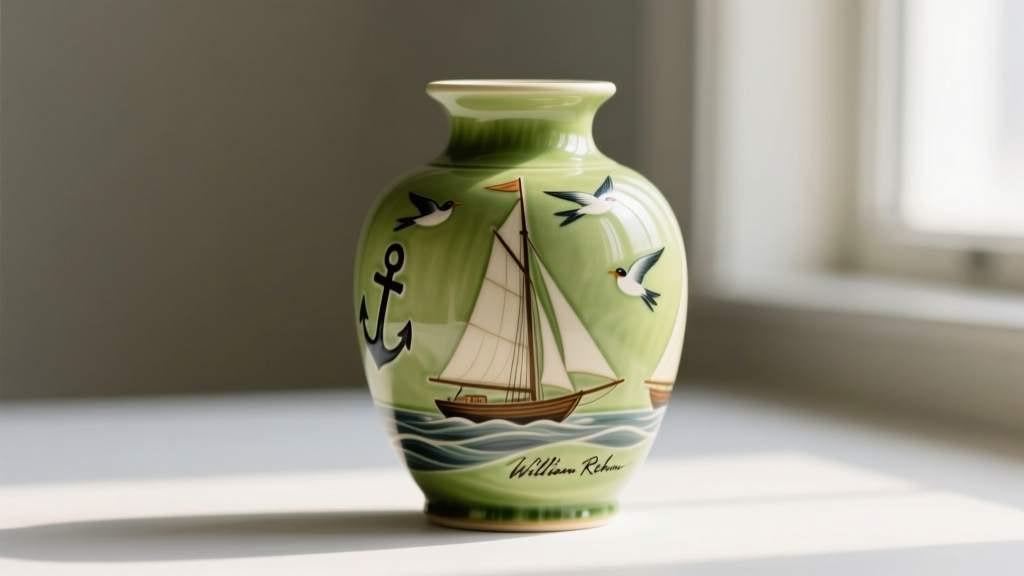
Rookwood Vase: Sailboat, Anchors, Birds, Water Motif on Chartreuse Ground — W. Rehm Signature, 1943, 5-Inch Height
Decoding the 2336242: A Numismatic Investigation of the 1921 Morgan Dollar Die Variety

Netsuke Mastery: The Wood Gods of Good Fortune Stacks in the Form of a Sparrow by Masanao