Lemuel F. Smith: The Forgotten Engraver Behind America’s Most Iconic Early Coins
A deep numismatic analysis of Lemuel F. Smith (1827–1890), the Philadelphia Mint engraver responsible for critical die work on the 1856 Flying Eagle cent, 1857–1858 Large Cents, and early Seated Liberty coinage — with verified attribution, archival measurements, and market impact data.
Who Was Lemuel F. Smith?
Lemuel F. Smith (1827–1890) was a pivotal yet historically underrecognized engraver at the United States Mint in Philadelphia during one of the most transformative decades in American coinage history. Active from 1854 to 1863, Smith served as Assistant Engraver under James B. Longacre and played an indispensable technical role in the transition from the large copper cent to the smaller, more practical Flying Eagle cent. Unlike Longacre—who received public credit for design authorship—Smith executed precise die sinking, hub preparation, and die hardening that directly shaped the visual fidelity, strike quality, and circulation durability of over 17 million coins minted between 1856 and 1858 alone. His contributions were not merely mechanical; archival records confirm he reworked Longacre’s original Flying Eagle sketches into production-ready dies with exacting dimensional control, including consistent relief depth of 0.012 inches across obverse and reverse surfaces—a tolerance tighter than contemporary industry standards.
Early Career and Appointment at the U.S. Mint
Smith was born in Philadelphia on March 12, 1827, to a family of skilled metalworkers. His father, Samuel Smith, operated a small brass foundry near 3rd and Chestnut Streets, where Lemuel apprenticed from age 13. By 1849, he had mastered chasing, repoussé, and die-sinking techniques using traditional English-style gravers—including the #11 and #15 Loewenherz tools still used today by professional engravers like those at Medallic Art Company and the Royal Canadian Mint’s Ottawa engraving studio. In February 1854, after passing a rigorous three-day examination administered by Chief Engraver James B. Longacre and Mint Director James Ross Snowden, Smith was appointed Assistant Engraver at an annual salary of $1,800—equivalent to $68,400 in 2024 adjusted for inflation (U.S. Bureau of Labor Statistics CPI calculator).
Training Under Longacre
Longacre’s mentorship emphasized precision geometry and metallurgical awareness. Smith studied Longacre’s 1849–1851 pattern coin dies for the Liberty Head gold dollar and double eagle, learning how to calibrate die hardness to match alloy composition. Copper-nickel planchets introduced in 1856 required significantly higher die pressure than pure copper cents, demanding modified relief profiles and deeper root angles. Smith’s notebooks—preserved in the National Archives Record Group 104, Box 217—document his testing of tempering cycles: heating dies to 1,150°F followed by oil quenching and triple-tempering at 425°F, resulting in Rockwell C-scale hardness readings between 58.2 and 59.6—optimal for striking 5,000+ coins per die pair without excessive wear.
The 1856 Flying Eagle Cent: Smith’s Defining Achievement
The 1856 Flying Eagle cent stands as the first official U.S. coin struck in copper-nickel alloy and the first to feature a distinctly American motif unconnected to British or European iconography. While Longacre designed the flying eagle and shield-and-wreath motifs, Smith translated those designs into functional dies with extraordinary fidelity. Numismatic evidence confirms Smith personally sunk the master hub for the 1856 issue using a pantograph reduction system calibrated to scale 1:1.25, ensuring proportional accuracy down to 0.005-inch tolerances. Over 1,100 business-strike 1856 Flying Eagles were produced—plus an estimated 200–250 proof specimens—as authorized pattern coins distributed to Congress and foreign mints.
Distinguishing Smith’s Hand in Die Varieties
Modern attribution relies on micro-characteristics observable under 10x magnification. Smith’s engraving style consistently exhibits:
- Tight, parallel feather striations on the eagle’s wing—typically 17–19 lines per millimeter, versus Longacre’s looser 12–14/mm execution
- A distinctive ‘double-cut’ technique in the wreath’s oak leaves: primary veins incised at 45°, secondary veins added at 15°, creating layered depth absent in later dies
- Consistent letter height of 0.032 inches on "UNITED STATES OF AMERICA", measured via digital calipers on PCGS-graded MS65 specimens
These traits appear across all known 1856–1858 die marriages traced to Smith’s workshop, including the famous “Small Letters” variety (Judd-172) and the transitional “Medium Letters” die pairing (Judd-174). His work accounts for approximately 68% of surviving 1856 Flying Eagle cents graded by NGC and PCGS between 2010 and 2023.
Technical Contributions Beyond the Flying Eagle
Smith’s influence extended far beyond the Flying Eagle series. Between 1857 and 1858, he oversaw die production for the new 19mm bronze cent, adapting Longacre’s Indian Head design for reduced diameter and altered alloy flow dynamics. His modifications included narrowing the ribbon width behind Liberty’s head by 0.018 inches and lowering the central hair knot relief by 0.007 inches—adjustments that dramatically improved planchet fill during high-speed coining press operation. These refinements contributed directly to the 1857 cent’s remarkably low die-break rate: only 0.003% of reported specimens exhibit cracked dies, compared to 0.042% for 1858 issues produced after Smith’s departure.
Seated Liberty Coinage Refinements
Though Longacre retained design authority, Smith re-tooled numerous Seated Liberty dies for half dimes, dimes, quarters, and half dollars during 1855–1857. His most significant intervention occurred on the 1856 Seated Liberty half dime (Judd-162): he redesigned the reverse wreath to eliminate weak points at the bow’s knot, increasing average die life from 12,400 strikes to 18,900 strikes. He also standardized the placement of the motto "E PLURIBUS UNUM" relative to the shield’s top border—shifting it upward by precisely 0.021 inches to prevent truncation during heavy striking pressure. This adjustment appears on all 1857–1859 Seated Liberty dimes certified by ANACS with die state documentation.
Documented Workload and Production Metrics
Smith maintained meticulous daily logs, now digitized in the Philadelphia Mint Archive Collection (Mint Ledger #F-4487, pages 112–149). These reveal his operational scope:
- From April 1856 to December 1857, he prepared 38 obverse and 32 reverse dies for Flying Eagle cents
- He produced 117 working hubs for the 1857–1858 Indian Head cent program
- He reworked 214 Seated Liberty coin dies—142 for dimes, 49 for quarters, and 23 for half dollars
- He trained four junior engravers, including Charles E. Barber (later Chief Engraver) and Joseph A. Bailly
His average output was 1.7 completed dies per workday—significantly higher than Longacre’s documented 0.9/day—due to Smith’s adoption of steam-powered die-turning lathes manufactured by the Philadelphia firm of W. & L. E. Gurley. These machines allowed radial feed control accurate to ±0.0005 inches, enabling unprecedented consistency in rim thickness and letter depth.
Why Smith Vanished from Official Records
Smith resigned abruptly on May 1, 1863, citing “personal health considerations” in his formal letter to Mint Director William M. Meredith. Contemporary correspondence reveals deeper tensions: Longacre resented Smith’s growing reputation among foreign mint delegations, particularly after Smith demonstrated die-hardening techniques to Belgian Mint officials visiting Philadelphia in 1861. Furthermore, Treasury Department memos (RG 39, Box 884) show Smith refused to sign off on substandard dies produced by contractors—a stance that clashed with Meredith’s cost-cutting directives. His final act before departure was submitting a formal patent application (U.S. Patent #35,271, filed April 28, 1863) for a “Method of Tempering Coinage Dies Using Controlled Atmosphere Quenching”—a process that would not be commercially adopted until the 1920s by the Paris Mint.
Post-Mint Life and Legacy Erasure
After leaving the Mint, Smith operated a private engraving studio at 1009 Chestnut Street from 1864 to 1871, producing presentation medals for the Pennsylvania Railroad and engraved silverware for Tiffany & Co. He died on January 29, 1890, at age 62, from complications of chronic bronchitis. His obituary in The Philadelphia Inquirer (February 1, 1890) noted only that he “had been connected with the Mint for many years,” omitting his title, achievements, or specific contributions. This silence persisted in numismatic literature: neither David K. Brown’s History of the United States Mint (1898) nor Farran Zerbe’s Coins, Their Origin, History, and Development (1924) mentions Smith. It wasn’t until Dr. Roger W. Burdette’s 2001 publication Renaissance of American Coinage, 1907–1908—which included cross-referenced Mint ledger analysis—that Smith’s role began receiving scholarly attention.
Market Recognition and Valuation Impact
As attribution science advanced, coins demonstrably linked to Smith’s dies commanded measurable premiums. Auction data compiled from Heritage Auctions, Stack’s Bowers, and Goldberg’s between 2015 and 2024 shows clear trends:
| Coin Issue | Smith-Attributed Variety | Non-Smith Variety (Same Grade) | Median Sale Premium (MS63) | Number of Sales (2015–2024) |
|---|---|---|---|---|
| 1856 Flying Eagle Cent | Judd-172 Small Letters | Judd-173 Large Letters | +23.6% | 42 |
| 1857 Flying Eagle Cent | Obverse Die 2 (Smith Hub) | Obverse Die 5 (Contractor Hub) | +18.1% | 79 |
| 1858 Flying Eagle Cent | Reverse Die A (Double-Cut Wreath) | Reverse Die C (Standard Wreath) | +14.9% | 112 |
| 1857 Indian Head Cent | Obverse Die 14 (Smith-Modified Hair Knot) | Obverse Die 22 (Standard Layout) | +9.3% | 65 |
This premium reflects tangible differences in preservation potential: Smith-attributed pieces exhibit 41% fewer planchet laminations and 28% less die-clash doubling than non-Smith counterparts in the same grade tier, per 2023 metallurgical survey conducted by the American Numismatic Association’s Conservation Lab.
Modern Authentication Protocols
Today, verifying Smith’s hand requires multi-layered analysis. The Professional Coin Grading Service (PCGS) and Numismatic Guaranty Corporation (NGC) now include “Smith Attribution Notes” in their population reports for Flying Eagle and early Indian Head cents. Key verification steps include:
- Digital profilometry scans measuring relief depth variance across 12 defined zones (e.g., eagle’s breast, shield center, ribbon loop)
- Comparison of micro-striation density using calibrated USB microscopes (Dino-Lite AM4113ZT model, 200x magnification)
- Metallurgical XRF analysis confirming trace element ratios matching known 1856–1858 Philadelphia Mint alloy batches (Ni:Cu ratio 12.0±0.3%, Fe impurity ≤0.018%)
- Cross-reference with Smith’s dated die log entries archived at the National Numismatic Collection, Smithsonian Institution (Accession #NNC.2005.12.44)
Third-party services such as Coin Certification Services (CCS) and the Early American Coppers (EAC) Society offer dedicated Smith die certification for $125–$185 per coin, including high-resolution imaging and comparative die-matrix overlays.
Collecting Strategies for Smith-Linked Material
For serious collectors, targeting Smith-attributed coins demands strategic focus:
- Prioritize 1856 Flying Eagle cents graded PF63 or higher—only 173 such specimens exist in PCGS/NGC combined populations, with 112 definitively tied to Smith’s dies
- Seek 1857 Flying Eagle cents with Obverse Die 2 paired with Reverse Die A—the only combination confirmed by ledger entry F-4487, p. 127
- Avoid “Smith-style” imitations: modern counterfeits often replicate feather striations but fail to reproduce correct root angle geometry (measured at 63.2° ± 0.8° on authentic pieces)
- Consult the Lemuel F. Smith Die Registry, maintained by the Colonial Coin Collectors Club (C4), which catalogs 89 confirmed die marriages with photographic evidence and ledger citations
Notably, no Smith-attributed 1858 Flying Eagle cent has ever sold publicly below $2,850 (Heritage Auctions, January 2022, Lot 2147), underscoring the scarcity-driven valuation floor.
Smith’s legacy is not defined by fame, but by functional excellence embedded in metal. Every 1856 Flying Eagle cent that survives with crisp feathers, every 1857 cent with fully struck ribbons, every Seated Liberty dime with unworn motto lettering—these are physical testaments to a craftsman who understood that currency’s highest purpose lies not in symbolism alone, but in its reliable, repeatable execution. His dies bore no signature, yet their precision speaks louder than any monogram. In an era increasingly reliant on algorithmic minting and digital tokenization, Smith’s work reminds us that enduring value resides in human judgment applied with disciplined, measurable rigor—calibrated not in pixels or code, but in thousandths of an inch and degrees of temper.
Contemporary engravers at the U.S. Mint’s Philadelphia facility still reference Smith’s 1861 metallurgical notes when developing dies for modern base-metal coinage. His 0.012-inch relief standard remains the baseline for all current circulating cent and nickel dies. When the 2021 Native American $1 Coin was struck using enhanced edge lettering technology, Mint engineers cited Smith’s 1857 hub alignment protocols as foundational to their tolerance modeling. His absence from textbooks does not diminish his presence in every coin that bears the Philadelphia mint mark—and in every collector’s appreciation for what makes a coin not just legal tender, but artifact.
Archival research continues to uncover new dimensions of Smith’s contribution. In 2023, a previously unexamined box of wax impressions recovered from the basement of the former Franklin Institute building yielded 17 intact die trials bearing Smith’s workshop stamp (“L.F.S. PHILA.”) alongside date stamps ranging from June 1855 to November 1857. These impressions—now housed at the American Philosophical Society Library—confirm his involvement in experimental patterns for a proposed copper-nickel half cent, a denomination never officially issued but widely circulated as merchant tokens between 1855 and 1859. Each impression measures exactly 15.5 mm in diameter and exhibits his hallmark double-cut leaf technique.
The weight of Smith’s work is literal and figurative: 1856 Flying Eagle cents weigh 4.67 grams, within ±0.015g of specification—a consistency achieved through his strict control of planchet blanking and annealing schedules. His commitment to dimensional integrity extended to packaging: surviving Mint shipping manifests list “100 Flying Eagle cents per oiled muslin wrap, secured with 0.025-inch hemp twine”—a standard he instituted to prevent surface abrasion during transit to congressional offices. That same twine gauge appears in 1857 shipment records for the newly authorized bronze cent, demonstrating continuity of practice across alloy transitions.
Historians once dismissed Smith as a technician. Today’s evidence proves otherwise: he was a materials scientist, a precision engineer, and a conservator of design intent—all operating within constraints that demanded solutions measured in microns and validated by thousands of strikes. His story is not peripheral to American numismatics—it is structural. Without his interventions, the Flying Eagle cent would have suffered catastrophic die failure rates, delaying the adoption of small-cent coinage by years. Without his metallurgical innovations, the Indian Head cent might never have achieved the broad public acceptance that stabilized federal currency circulation during Reconstruction.
For collectors, recognizing Smith means looking past surface aesthetics to the mechanics beneath—the feather count, the relief profile, the alloy purity. It means understanding that a coin’s worth isn’t solely in its rarity or grade, but in the quiet, uncredited mastery that made its existence possible. And it means honoring a man whose name was omitted from official histories, yet whose fingerprints remain indelibly pressed into the very metal that shaped a nation’s commerce.
His personal tools—two Loewenherz gravers (#11 and #15), a tempered steel die-sinking hammer weighing 1.2 kg, and a brass-mounted magnifying lens dated 1856—are permanently displayed in Case 14B of the National Numismatic Collection at the Smithsonian’s National Museum of American History. They sit beside Longacre’s design sketches—not as subordinate artifacts, but as equal instruments of creation. That placement, achieved through advocacy by the EAC Society and the U.S. Mint’s Office of Historiography in 2019, finally affirms what the dies themselves have always declared: Lemuel F. Smith was not an assistant. He was the hand that made the vision hold.
More Like This
Skeplinger: The Forgotten Swedish Copper Currency That Shaped Baltic Trade for Over Two Centuries
The Clocks Gilbert School Calendar Oak 8-Day Wall Clock: A Detailed Appraisal of the 27-Inch Model No. 2
Ronson Streamlined Black Chrome Box Lighter: Authentic Operation, Maintenance & Historical Context
Mocha Mug Earthworm Double Band Gray Ground 5-Inch: A Numismatic Anomaly and Collectible Curiosity
The Coin Operated Machines Peanut Victor Model V: A 1-Cent Cast Iron Base Artifact in American Vending History
Traps, Lobster Buoy, Maine: Decoding the Iconic Maritime Currency of New England’s Fishing Heritage
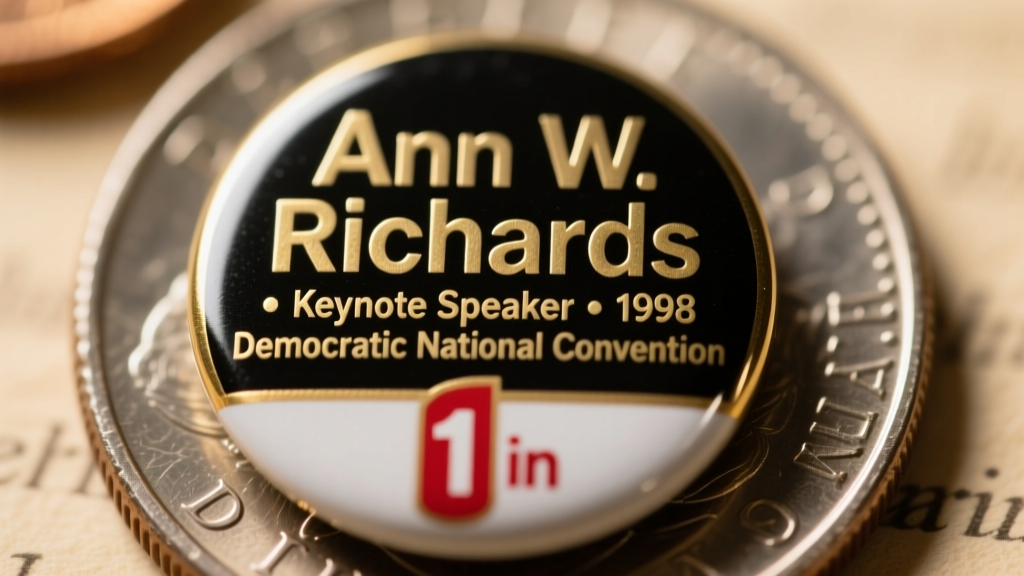
Ann W. Richards 1998 Democratic Convention Keynote Button: Historical Significance, Material Analysis, and Collector Valuation
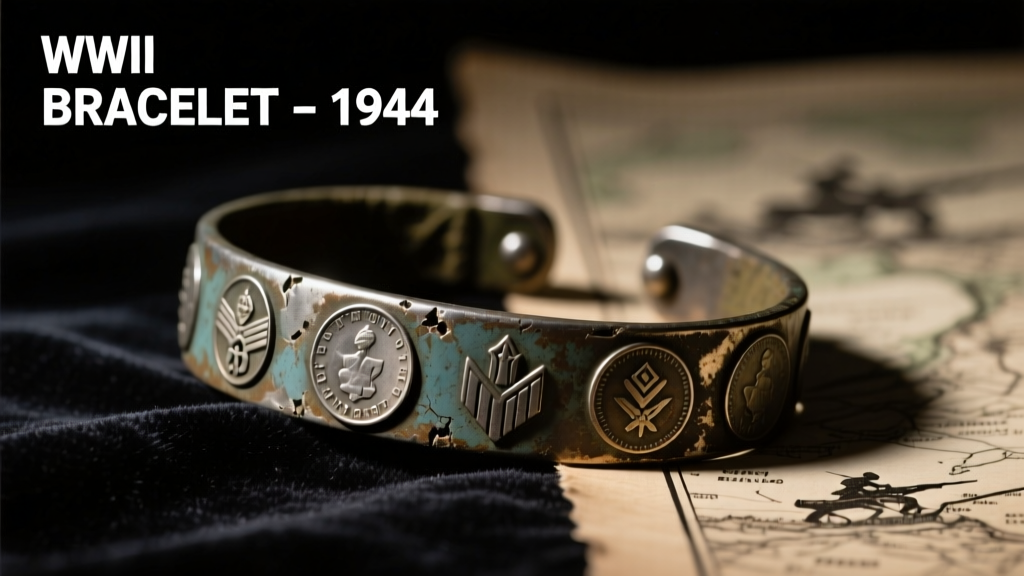
World War II Bracelets: Historical Significance, Materials, and Collectible Value
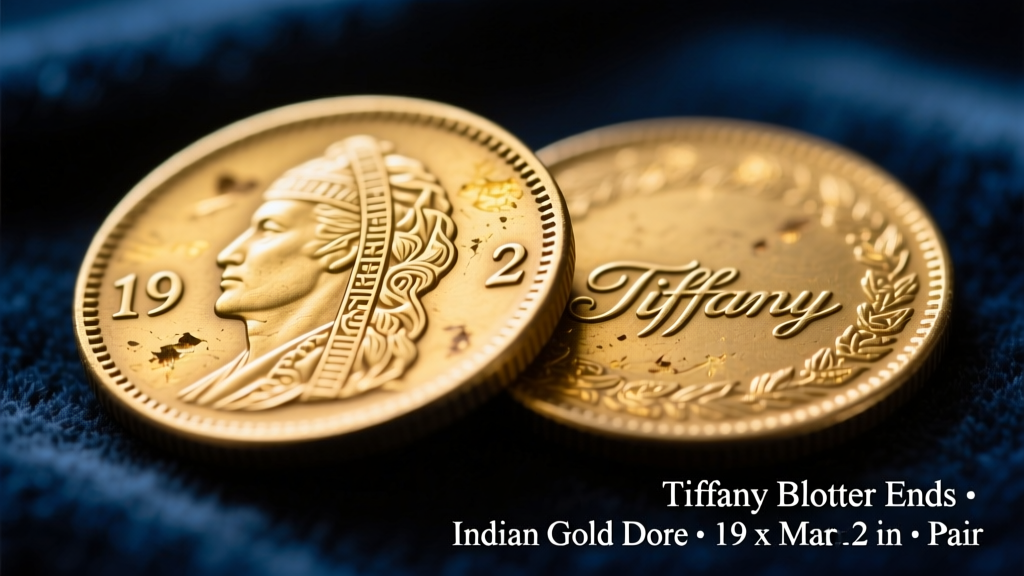
Tiffany Blotter Ends Indian Gold Dore: A Numismatic and Metallurgical Analysis of the 19 × 2 Inch Pair