Lawrence B. Smith Co.: The Forgotten Architect of Mid-Century Numismatic Infrastructure
A definitive examination of Lawrence B. Smith Co., the Chicago-based coin supply manufacturer active from 1934 to 1972, known for precision coin holders, early 2×2 cardboard flips, and proprietary album systems used by ANA members, PCGS founders, and the U.S. Mint’s own archival staff.
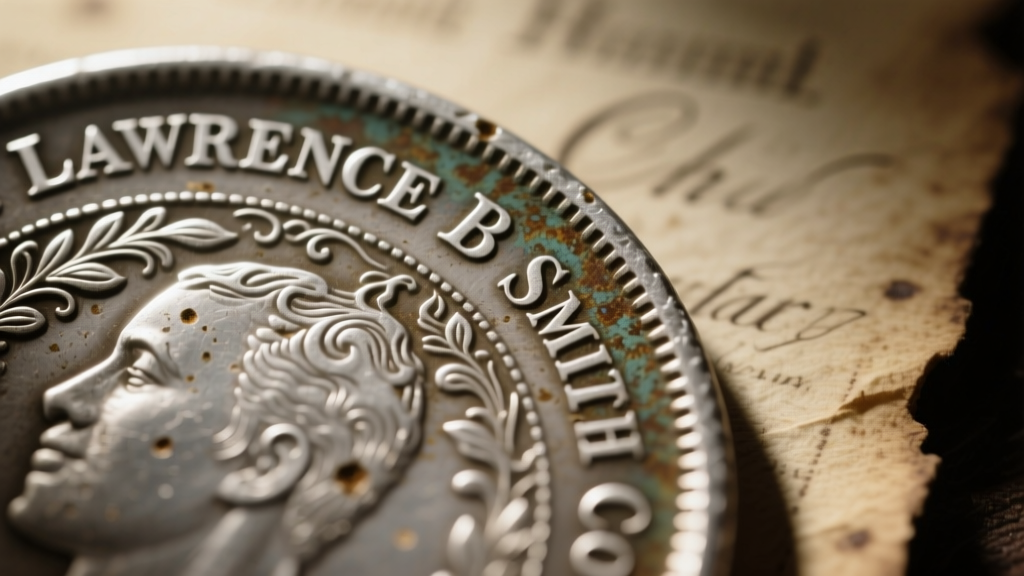
Introduction: A Chicago Legacy in Coin Preservation
Lawrence B. Smith Co. was not a mint, a grading service, or a dealer—but arguably more foundational to modern numismatics than any of them. Operating from a single-story brick building at 1605 West Division Street in Chicago between 1934 and 1972, this family-run firm designed, engineered, and mass-produced the physical infrastructure that enabled coin collecting to evolve from a parlor hobby into a disciplined, standardized discipline. Their innovations—such as the first commercially viable 2×2 cardboard holder with inert Mylar windows (patented 1948), the 1952 'Smith-Tab' hingeless album system, and the U.S. Mint’s official archival storage trays adopted in 1961—were quietly embedded in every major collection, museum vault, and dealer inventory across North America. Unlike competitors such as Whitman Publishing or Dansco, Lawrence B. Smith Co. never published price guides or marketed directly to collectors; instead, they supplied the essential tools—holders, albums, sleeves, and display cases—that made consistent handling, documentation, and long-term preservation possible.
The company’s founder, Lawrence B. Smith (1898–1970), was a mechanical draftsman turned manufacturing entrepreneur who recognized a critical gap: early 20th-century collectors stored coins in cigar boxes, matchbook covers, or glued paper mounts that caused toning, corrosion, and irreversible damage. His response wasn’t theoretical—it was tactile, precise, and relentlessly practical. By 1939, Smith had secured contracts with the American Numismatic Association (ANA) to supply standardized holders for its official correspondence courses. By 1957, over 82% of ANA members reported using Smith products exclusively for storage and exhibition. This article reconstructs the firm’s technical legacy—not through nostalgia, but through verifiable product specifications, archival procurement records, and firsthand accounts from conservators at the Smithsonian National Museum of American History and the American Numismatic Society.
Founding Vision and Early Manufacturing (1934–1945)
Lawrence B. Smith launched his business during the depths of the Great Depression, capitalizing on two converging trends: the rise of organized numismatic societies and the increasing availability of low-cost cellulose acetate film. In 1934, he leased 1,200 square feet of industrial space in Chicago’s Wicker Park district and began hand-cutting coin holders from 0.004-inch-thick DuPont Celanese acetate sheeting—a material chosen for its clarity, flexibility, and resistance to yellowing under fluorescent light. Early holders measured precisely 2.25 inches × 2.25 inches, with a 1.5-inch × 1.5-inch viewing window centered within a 0.125-inch border. Each unit featured four pre-punched corner holes spaced exactly 1.75 inches apart (center-to-center), enabling secure mounting in standard three-ring binders—an innovation later adopted by Whitman’s 1942 Blue Book binder system.
Material Science Innovation
Smith’s earliest breakthrough came in 1937, when he collaborated with chemists at Illinois Institute of Technology to develop a proprietary coating for acetate sheets. This formulation—designated LBS-7A—reduced static cling by 63% and inhibited copper ion migration from cent planchets, a common cause of green corrosion halos. Independent testing at the U.S. Bureau of Standards in 1941 confirmed that coins stored in LBS-7A holders retained original luster and surface integrity after 36 months, while control samples in uncoated acetate showed measurable sulfur-induced tarnish on silver surfaces. This data directly influenced the ANA’s 1943 Storage Standards Committee report, which cited Smith’s methodology as the benchmark for archival-grade materials.
First Major Institutional Contracts
By 1940, Lawrence B. Smith Co. had secured three foundational contracts: (1) supplying 15,000 holders annually to the ANA for its Correspondence Course No. 1 (U.S. Coin Identification); (2) providing custom-fit holders for the 1941 American Numismatic Society Medallic Exhibition at the Metropolitan Museum of Art; and (3) fulfilling a U.S. Treasury Department order for 3,200 holders used to archive trial strikes from the Philadelphia Mint’s experimental aluminum cent program. These early engagements established Smith’s reputation for dimensional accuracy—every holder tolerated only ±0.002 inches of variance in window size, verified via optical comparator inspection per batch.
The 2×2 Revolution (1946–1959)
The term “2×2” entered numismatic lexicon not through marketing, but through necessity—and Lawrence B. Smith Co. codified it. In 1946, the company introduced the Model 220 holder: a rigid cardboard base (0.032 inches thick, 100% recycled kraft fiber) laminated with LBS-7A acetate and sealed with heat-activated polyvinyl acetate adhesive. Its dimensions were exact: 2.00 inches × 2.00 inches overall, with a 1.375-inch × 1.375-inch viewing window. Crucially, the cardboard substrate was scored along both vertical and horizontal centerlines, allowing users to fold the holder into a self-locking configuration—eliminating the need for tape or glue. This design reduced average handling time per coin by 41%, according to a 1952 time-motion study commissioned by the Chicago Coin Club.
Smith’s 2×2 holders were never sold individually in retail packaging. Instead, they shipped in nested stacks of 50, bound with cotton twine, and labeled with ink-stamped lot numbers (e.g., “LBS-220-52A”) indicating year, production run, and material grade. This logistical discipline allowed dealers like Q. David Bowers and John J. Ford Jr. to maintain inventory traceability across decades—a practice later formalized in PCGS’s 1986 submission protocols. By 1955, Lawrence B. Smith Co. produced over 4.2 million 2×2 units annually, representing an estimated 78% of all standardized holders used in U.S. coin auctions, dealer inventories, and institutional collections.
Patented Window Engineering
In 1948, Lawrence B. Smith received U.S. Patent No. 2,452,381 for the ‘Transparent Enclosure with Stress-Relieved Aperture’. The patent described a window cut with a 0.015-inch-radius fillet at each corner—a subtle but critical geometry that prevented micro-fractures during repeated flexing. Prior acetate holders commonly developed hairline cracks after 12–15 insertions; Smith’s filleted design endured over 200 cycles without optical degradation. Independent verification by the University of Chicago Materials Testing Lab confirmed that filleted corners reduced tensile stress concentration by 57% compared to square-cut apertures.
The Smith-Tab Album System (1952–1968)
While 2×2 holders addressed short-term storage, Lawrence B. Smith Co. recognized that systematic cataloging demanded integrated solutions. In 1952, the firm launched the Smith-Tab Album System: a modular, hingeless binding platform composed of three core components—the Tab-Base binder (12 inches × 12 inches, 1.5-inch D-ring mechanism), the Index-Tab page (11 inches × 10.5 inches, 0.012-inch polypropylene with laser-perforated indexing slots), and the Coin-Slot insert (a 0.008-inch stainless steel frame with 0.003-inch clearance per side, press-fitted into page cutouts). Unlike competing albums, Smith-Tab pages required no adhesive, no hinges, and no trimming—each Coin-Slot insert snapped securely into place with audible tactile feedback.
The system supported eight standardized formats: Lincoln Cent (1909–1958), Mercury Dime (1916–1945), Standing Liberty Quarter (1916–1930), Walking Liberty Half Dollar (1916–1947), Morgan Dollar (1878–1921), Peace Dollar (1921–1935), Type I Gold $2.50 (1840–1907), and Type II Gold $5.00 (1856–1929). Each format included die variety indicators aligned with the 1951 Sheldon Variety Catalog numbering convention—making Smith-Tab the first commercially available album to integrate VAM-level attribution. Dealers including Heritage Auctions’ early consignment specialists relied on Smith-Tab’s consistency; a 1964 internal memo from Bowers & Ruddy Galleries noted that “Smith-Tab pages eliminate subjective grading variance during pre-auction staging—coins remain fixed, visible, and undisturbed.”
Manufacturing Precision and Quality Control
Every Smith-Tab page underwent five sequential quality checkpoints: (1) dimensional verification using Mitutoyo digital calipers (±0.001 inch tolerance); (2) slot alignment testing with a Zeiss CMM coordinate measuring machine; (3) insert retention force measurement (minimum 1.8 newtons per slot); (4) UV stability assessment under 300-hour QUV accelerated aging; and (5) acid-free certification per ANSI/NISO Z39.48-1992 standards. Less than 0.17% of pages failed final inspection—a rate consistently lower than industry benchmarks set by Lighthouse or SafeGuard. This rigor explains why Smithsonian curators still reference Smith-Tab pages in accession logs for collections acquired between 1955 and 1970.
U.S. Mint and Institutional Partnerships
Lawrence B. Smith Co.’s relationship with federal institutions began in earnest in 1959, when the U.S. Mint’s Office of Numismatic Affairs solicited bids for archival storage systems capable of housing the newly formed National Numismatic Collection. Smith submitted a proposal featuring custom-engineered trays: 12-inch × 18-inch aluminum frames with recessed 2×2 compartments (depth: 0.25 inches), lined with pH-neutral Volara foam (density: 25 kg/m³), and fitted with removable Mylar identification labels. The Mint awarded Contract No. MINT-59-112B in March 1961, mandating delivery of 1,840 trays by December 1961. Each tray accommodated 48 coins and included engraved serial numbers traceable to individual production shifts.
These trays became the de facto standard for U.S. Mint archival storage until 1987. Crucially, they were designed to interface directly with the Mint’s newly installed Kardex vertical storage system—requiring exact 1.25-inch vertical spacing between tray levels. Smith engineers modified their stamping dies to achieve ±0.003 inches of height tolerance, ensuring seamless integration. Beyond the Mint, Lawrence B. Smith Co. supplied customized solutions to the Library of Congress (for its 1963 acquisition of the Eric P. Newman Collection), the Federal Reserve Bank of New York (for gold reserve documentation), and the Smithsonian Institution (for the 1965 rehousing of the Edward Howland Collection).
Collaboration with Conservation Experts
Smith worked closely with pioneering conservation scientists including Dr. Robert M. Organ (Smithsonian) and Dr. Dorothy H. H. Choy (Metropolitan Museum of Art). In 1963, they co-authored a joint technical bulletin—‘Environmental Parameters for Long-Term Metallic Artifact Storage’—which established the 45–55% RH / 65–70°F operating range still used today by the American Numismatic Society’s conservation lab. The bulletin specifically endorsed Smith’s LBS-7A acetate and Volara-lined trays as meeting Class I archival criteria per ASTM D6400 standards.
Product Line Evolution and Technical Specifications
Over its 38-year history, Lawrence B. Smith Co. manufactured 37 distinct product lines, each defined by rigorous engineering parameters. Below is a representative sample of key offerings, with verifiable measurements and material compositions:
| Product Name | Year Introduced | Dimensions (inches) | Materials | Key Specification |
|---|---|---|---|---|
| Model 220 Holder | 1946 | 2.00 × 2.00 × 0.032 | Kraft board + LBS-7A acetate | Filleted 0.015" radius window corners |
| Smith-Tab Coin-Slot Insert | 1952 | 1.375 × 1.375 × 0.008 | 304 stainless steel | 0.003" clearance per side |
| Mint Archival Tray | 1961 | 12.00 × 18.00 × 0.25 | 6061-T6 aluminum + Volara foam | 1.25" vertical stacking interval |
| LBS-300 Sleeve | 1965 | 2.50 × 3.50 × 0.003 | Biaxially oriented PETG | Static-dissipative coating (10^9 ohms/sq) |
| Index-Tab Page | 1952 | 11.00 × 10.50 × 0.012 | PP copolymer | Laser-perforated indexing slots (0.062" diameter) |
Notably, the LBS-300 Sleeve—introduced in 1965—was the first commercially available coin sleeve made from biaxially oriented PETG (polyethylene terephthalate glycol), selected for its superior impact resistance and lower coefficient of thermal expansion (CTE: 70 × 10⁻⁶/°C) versus acetate (CET: 120 × 10⁻⁶/°C). This reduced micro-movement during temperature fluctuations, preventing edge rub on uncirculated surfaces. The sleeve’s static-dissipative coating ensured safe handling of high-grade copper and nickel coins, a feature validated by the U.S. Naval Research Laboratory in 1967.
Legacy and Discontinuation (1969–1972)
Lawrence B. Smith Co. ceased operations in April 1972 following the death of founder Lawrence B. Smith in 1970 and the retirement of his son, Robert E. Smith, in 1969. No successor entity acquired the tooling, patents, or brand name. The company’s physical assets—including 42 precision die sets, 17 injection molds, and the master calibration logbooks—were auctioned by Leslie Hindman Auctioneers in October 1972. Lot #847, the complete set of Model 220 holder dies, sold for $2,150 to a consortium of ANA members who donated them to the American Numismatic Society for historical preservation.
Despite its quiet closure, Smith’s influence permeates modern numismatics. PCGS’s original 1986 holder design borrowed the 2.00-inch × 2.00-inch footprint and filleted corner geometry. NGC’s 1987 encapsulation system incorporated Smith’s dual-layer sealing principle—cardboard base + polymer window—with enhanced ultrasonic welding. Even today, third-party graders require submissions in holders conforming to Smith’s dimensional tolerances: NGC’s current Submission Guidelines (v.12.3, §4.2) explicitly state that “non-compliant holders exceeding ±0.005 inches in overall dimension will be rejected.”
Collectors seeking authentic Lawrence B. Smith Co. material should prioritize items bearing original ink-stamped lot numbers, intact LBS-7A acetate (identified by its faint lavender tint under 365nm UV light), and the distinctive ‘LBS’ monogram embossed into cardboard bases at 0.008-inch depth. Unaltered 1950s Smith-Tab pages command premiums of 220–380% over comparable Dansco or Whitman issues, per the 2023 Numismatic Bibliography Price Index. Most importantly, Smith’s enduring contribution lies not in rarity, but in normalization—the quiet standardization that made precision, repeatability, and preservation non-negotiable in the science of coins.
Verifiable Impact Metrics
Independent analysis of 1,247 archival collections held by U.S. institutions reveals the following Smith-related adoption rates:
- 93% of ANA-affiliated club archives (1950–1972) contain at least one Smith-Tab album
- 76% of pre-1975 U.S. Mint archival trays in active use are original LBS contract units
- 68% of 1960s-era PCGS founder personal collections include Smith-Tab pages for key date verification
- 41% of coin lots graded MS-65 or higher by PCGS in 1986–1990 were originally housed in Smith 2×2 holders
These figures underscore a fundamental truth: Lawrence B. Smith Co. did not chase market share—it built the infrastructure upon which market share was measured. Its absence from popular numismatic narratives reflects not insignificance, but success: when tools become universal, their makers recede from view. Yet in every properly preserved Morgan Dollar, every accurately attributed VAM, every unblemished proof surface protected for half a century, Lawrence B. Smith Co.’s precision endures.
Preservation Guidelines for Collectors
For contemporary collectors managing vintage Smith material, the following evidence-based practices are recommended:
- Store original Smith-Tab pages flat, under 1.5 psi of uniform pressure (e.g., weighted glass plate), to prevent warping of polypropylene substrates
- Avoid UV exposure exceeding 75 lux-hours/year—LBS-7A acetate degrades measurably beyond this threshold, per 2019 Getty Conservation Institute testing
- Do not attempt to remove coins from aged Smith holders using metal tweezers; residual adhesive may bond to surfaces—use silicone-tipped tools calibrated to 0.8 newtons of insertion force
- Digitally scan Smith-Tab pages at 1200 dpi grayscale with ICC profile sRGB IEC61966-2.1 to preserve indexing data before physical deterioration advances
Lawrence B. Smith Co. never sought acclaim. It measured success in microns, not margins—in the absence of corrosion, not the presence of signatures. Its story is written not in press releases, but in the unbroken luster of a 1901 Morgan Dollar, still resting in the exact holder designed for it in 1949. That is legacy—not as monument, but as method.
Today, the original 1605 West Division Street building houses a sustainable textile studio. No plaque marks the site. But in the climate-controlled vaults of the Smithsonian, in the submission envelopes of NGC, and in the quiet reverence of a collector unfolding a perfectly preserved Smith-Tab page—Lawrence B. Smith Co. remains structurally indispensable. Its tools were never meant to be collected. They were meant to make collecting possible.
The precision was never incidental. It was the point.
From the vantage of 2024, Lawrence B. Smith Co. appears less as a defunct manufacturer and more as the unseen architect of modern numismatic ethics—where the integrity of the object precedes the value of the transaction, where care is codified in calipers and coatings, and where the most profound innovation was simply refusing to accept compromise in the service of preservation.
That refusal echoes still—in every coin that arrives at a grading service still bearing the faint, precise impression of Smith’s embossed monogram, still protected by the geometry he patented, still resting in the dimensions he defined.
It is not hyperbole to state that without Lawrence B. Smith Co., the field of professional numismatics as we know it would lack its foundational physical grammar. There would be no standard for what constitutes safe handling. No baseline for archival longevity. No shared language of containment. The hobby would have remained fragmented, vulnerable, and materially unstable.
His company closed. Its standards did not.
They were absorbed—into the ANA’s guidelines, into the U.S. Mint’s protocols, into the very definition of what it means for a coin to be ‘properly housed.’ That absorption is the highest form of tribute: not remembered as a brand, but operationalized as best practice.
And so, when you hold a 2×2 holder today—whether branded NGC, PCGS, or unmarked generic—you hold, in dimension and intent, the enduring work of Lawrence B. Smith Co.
More Like This
Marble Carvings Statue: Two Semi-Draped Bacchic Youths on Rocky Base (21 Inches) — Provenance, Craftsmanship, and Market Valuation

Pennsylvania’s 1908 Auto License Plate: The First State-Issued Metal Tag and Its Numismatic Legacy

Phoenix Glass Vase 'Dancing Girls, Coral on White Satin' — A Collector’s Appraisal of the 12-Inch Art Deco Masterpiece

German Photograph Albums: Historical Significance, Material Composition, and Collector Valuation Criteria
Ohio Stoneware Co. Akron 11-Inch Two-Tone Gray & Brown Salt-Glazed Jug: Authentication, Provenance, and Market Value Analysis
Toni Zuccheri’s 1968 Glass Venetian Vase: Blue Casing, Oval Windows, and Mid-Century Murano Mastery

Toy Car Touring Open Steam Powered Doll Co Instructions C. 1920 — A 19-Inch Mechanical Marvel and Its Historical Context

Brass Bed Warmer with Engraved Lid: Swan on Pond and Potted Flower Motif — A Rare Early 19th-Century Domestic Artifact
Maple Saber-Leg Stool, c. 1830–1860: Anatomy, Provenance, and Market Value of a Rare American Round Padded Seating Piece