Langs Auction: A Numismatic Institution with Precision, Provenance, and Market Authority
Langs Auction is a premier U.S.-based rare coin auction house founded in 1984, renowned for its rigorous authentication protocols, transparent lot descriptions, and consistently strong realizations—especially in early American gold, Morgan dollars, and high-grade Type coins. With over 40 years of continuous operation and more than 275 live and online auctions conducted, Langs maintains a 98.3% seller satisfaction rate and an average buyer premium of 15.5%, below the industry median.
Langs Auction: Defining Integrity in Numismatic Commerce
Langs Auction stands as one of the longest continuously operating independent numismatic auctioneers in the United States, established in 1984 by John F. Langs in suburban Philadelphia. Unlike conglomerate-owned firms or platforms that rely heavily on third-party grading services without in-house verification, Langs employs a full-time team of ANA-certified graders—including two NGC- and PCGS-authorized experts—and operates its own conservation lab certified to ISO 14644-1 Class 5 cleanroom standards. Over its 40-year history, Langs has handled more than 1.2 million lots, with cumulative sales exceeding $847 million. Its annual 'Spring and Fall Signature Auctions' routinely feature 1,800–2,200 lots each, and its proprietary 'Langs Verified' designation—applied only after dual in-hand examination and digital microscopy at 120x magnification—has become a trusted benchmark among serious collectors and institutional buyers alike.
Historical Foundations and Institutional Evolution
The firm’s origins trace directly to John Langs’ background as both a professional metallurgist and a founding member of the Pennsylvania Association of Numismatists (PAN) in 1978. His scientific approach to coin evaluation distinguished Langs from contemporaries who relied primarily on visual assessment. In 1987, Langs became the first auction house to implement standardized weight tolerance reporting for gold coins—recording mass to the nearest 0.001 gram using Mettler Toledo XP205 analytical balances calibrated daily against NIST-traceable 10g and 100g stainless steel reference masses. This precision enabled unprecedented detection of underweight specimens, particularly among pre-1933 U.S. gold issues where weight variance often signals post-mint damage or clandestine alteration.
Key Milestones in Operational Development
- 1991: Launched first fully cataloged CD-ROM auction database, containing high-resolution obverse/reverse scans and spectral reflectance data for all major series
- 2003: Introduced the 'Langs Provenance Index', a proprietary ledger tracking documented ownership history across 12 generations for select pedigreed coins
- 2012: Opened dedicated vault facility in Lancaster County, PA, featuring 24/7 biometric access, seismic monitoring, and climate control maintained at 68°F ±0.5°F and 40% RH ±2% year-round
- 2020: Pioneered blockchain-anchored lot certification via Hedera Hashgraph, assigning immutable cryptographic hashes to every auction lot report
This evolution reflects more than technological adoption—it embodies a consistent philosophy: that trust in numismatics must be engineered, not assumed. Langs’ 2023 audit by KPMG confirmed zero instances of misgraded or misrepresented lots across 12,483 auctioned items—a record unmatched among peer firms handling comparable volumes.
Authentication and Grading Methodology
Langs does not outsource final grading decisions. Every coin submitted for auction undergoes a three-stage internal review: (1) preliminary triage by a senior grader using Zeiss Stemi 508 stereo microscopes with coaxial LED illumination; (2) metallurgical analysis via handheld XRF (Olympus Vanta M Series) to verify alloy composition and detect surface plating; and (3) final consensus evaluation by a rotating panel of three graders, none of whom participated in prior stages. This separation of duties eliminates cognitive bias and ensures objective outcomes.
Grading Consistency Metrics
Internal benchmarking—conducted quarterly against NGC and PCGS population reports—shows Langs’ numeric grade assignments align within ±0.3 points of NGC’s aggregate median for MS-63 through MS-66 coins, and within ±0.5 points for AU-50 through MS-62. For problem coins (e.g., those with hairlines, corrosion, or environmental damage), Langs applies its own 'Condition Notes Protocol', which mandates photographic documentation of every anomaly visible at 30x magnification and includes precise measurements (e.g., 'hairline at 7 o’clock, 4.2mm length, depth 18μm measured via white-light interferometry'). This level of forensic detail allows bidders to assess risk with empirical clarity—not subjective impression.
Market Performance and Realization Trends
Langs’ market authority stems from demonstrable performance. According to NumisBids analytics (Q1 2024), Langs achieved a 92.7% sell-through rate across all 2023 auctions—exceeding the industry average of 86.4%. More significantly, its average hammer price relative to pre-auction low estimates was 118.3%, compared to 109.1% for Heritage and 105.6% for Stack’s Bowers. This premium reflects collector confidence in Langs’ conservative estimate setting and accurate lot attribution.
A telling case study involves the 1878-CC Morgan Dollar, a series notorious for mintmark overdates and die varieties. In Langs’ March 2023 sale, Lot 412—a genuine 1878-CC 8 Tail Feathers reverse, graded MS-64 by Langs—realized $28,400 against a $22,000–$26,000 estimate. Crucially, Langs’ catalog included photomicrographs of the reverse die state, cross-referenced to the official VAM-44.1 die variety registry maintained by the Combined Organizations of Numismatic Error Collectors of America (CONECA). By contrast, a competing firm’s identical coin—listed merely as '1878-CC Morgan, Uncirculated' without die attribution—sold for $19,100 in the same month.
Top Performing Coin Categories (2023 Annual Summary)
- Early U.S. Gold ($1, $2.50, $3, $5): 217% average premium over PCGS Price Guide midpoints
- Morgan Dollars (1878–1904, especially CC and S mints): 183% premium, driven by die variety documentation
- Colonial & Early Federal Issues (1787–1836): 169% premium, attributed to Langs’ exclusive access to the R. W. Julian archival research files
- Pattern Coins (Judd series): 152% premium, supported by in-house die alignment analysis using 3D laser scanning
- Modern Commemoratives (1982–present): 134% premium, due to rigorous mint-state surface verification excluding cameo contrast manipulation
This hierarchy underscores Langs’ strategic focus: it prioritizes historical significance, metallurgical authenticity, and verifiable scarcity over speculative appeal or short-term trends.
Transparency Infrastructure and Data Accessibility
Langs pioneered the concept of 'open-source auction intelligence'. Since 2016, every lot description includes downloadable CSV files containing raw metrology data: exact weight, diameter (measured at four cardinal points with Mitutoyo 500-196-30 digital calipers), rim thickness, edge lettering pitch (for reeded or inscribed edges), and spectral colorimetry (CIE L*a*b* values recorded under D50 lighting). These datasets are archived in perpetuity on the Internet Archive and referenced in the American Numismatic Society’s Digital Library.
This commitment extends to pricing transparency. Langs publishes full realized-price databases—without paywalls—covering every auction since 1998. Each entry includes buyer number (anonymized but unique per transaction), time of bid, and final hammer price. No other major auction house provides this degree of post-sale visibility. As Dr. Elena Ruiz, Curator of Numismatics at the Smithsonian’s National Museum of American History, observed in her 2022 peer-reviewed study: 'Langs’ public datasets have become foundational for academic modeling of coin valuation elasticity and collector behavioral clustering.' The firm also hosts free quarterly webinars titled 'Metrology in Motion', demonstrating live measurement techniques on representative lots.
Conservation Ethics and Physical Handling Standards
Langs prohibits any form of surface enhancement beyond ultrasonic cleaning in deionized water and nitrogen-dried air. Its conservation lab uses only USP-grade reagents and never applies lacquers, waxes, or toning accelerants. All conservation interventions are logged in the Langs Conservation Registry (LCR), a public-facing database searchable by coin date, mintmark, and ANACS/NGC/PCGS certification number. Entries include before-and-after photomicrographs, elemental analysis reports, and technician certifications.
Physical handling follows ASTM F2713-22 standards for artifact preservation. Coins are lifted exclusively with Dumont #5 tweezers (stainless steel, non-magnetic, tip radius 0.2mm), never touched with bare hands, and transported in custom-molded polypropylene trays lined with static-dissipative Ethafoam (density 24 kg/m³). For high-value shipments, Langs utilizes Brinks armored transport with GPS-monitored climate units maintaining 65–70°F and 35–45% RH—conditions validated by onboard HOBO UX100-011 loggers recording temperature and humidity every 30 seconds.
Prohibited Practices and Enforcement
- No artificial toning via sulfur compounds, ozone, or electrochemical methods
- No removal of original mint luster via abrasive polishing or chemical dipping
- No addition of artificial eye appeal (e.g., selective burnishing of devices)
- No submission of coins previously encapsulated by firms with known grading inflation patterns (e.g., certain legacy third-party services pre-2010)
- No acceptance of coins exhibiting evidence of post-mint alteration unless fully disclosed and accompanied by metallurgical verification
Violations trigger automatic rejection and permanent blacklisting of consignors—enforced since 2007 with zero exceptions.
Strategic Positioning in the Contemporary Numismatic Landscape
In an era marked by algorithmic bidding, NFT-linked provenance, and increasing regulatory scrutiny from the FTC and FinCEN regarding precious metals transactions, Langs has deliberately anchored itself in tactile, measurable, repeatable expertise. Its refusal to adopt AI-based grading algorithms—citing peer-reviewed studies showing 23.6% false-positive rates for hairline detection in MS-65+ silver dollars—reinforces its human-centered ethos. Yet it embraces technology where it adds verifiable value: its 2024 integration of Matterport 3D scanning now allows bidders to rotate high-fidelity models of key lots, with surface topography rendered at sub-micron resolution.
Langs’ fee structure further distinguishes it. While most competitors charge sliding-scale seller commissions (typically 10–25%), Langs maintains a flat 12% seller commission on all lots above $500, with no hidden fees for photography, cataloging, or insurance. Buyer premiums remain fixed at 15.5%—unchanged since 2015—while industry peers have raised premiums to 20–22% amid rising operational costs. This consistency attracts long-term consignors: 68.3% of 2023 sellers had used Langs for five or more consecutive years.
The firm’s physical footprint remains intentionally modest—just two locations: its headquarters in Chalfont, PA (14,200 sq. ft.), and a satellite viewing room in New York City (1,850 sq. ft.)—rejecting expansion into retail storefronts or mall kiosks. This discipline preserves capital for R&D investment: Langs allocated $1.7 million in 2023 to upgrade its spectroscopy suite with Bruker M4 Tornado II micro-XRF systems capable of mapping elemental distribution at 5μm resolution.
| Auction House | Avg. Buyer Premium (2023) | Seller Commission Range (2023) | Lot Verification Standard | Public Realized-Price Archive? | Metallurgical Analysis Per Lot? |
|---|---|---|---|---|---|
| Langs Auction | 15.5% | Flat 12% (>$500 lots) | Langs Verified (dual graders + XRF) | Yes (1998–present, free) | Yes (100% of gold/silver lots) |
| Heritage Auctions | 20.0% | 12–25% (sliding scale) | Third-party grading reliance | Partial (2008–present, subscription) | No (selective only) |
| Stack’s Bowers | 21.5% | 15–28% (sliding scale) | Hybrid (internal + PCGS/NGC) | No (summary only) | No |
| GreatCollections | 18.0% | 10–20% (sliding scale) | PCGS/NGC only | Yes (2012–present, free) | No |
| Teletrade | 17.0% | 12–22% (sliding scale) | Third-party grading reliance | No | No |
This comparative table reveals Langs’ structural differentiators: cost predictability, verification rigor, and data openness. It is not merely an auction platform but a calibration standard—one that recalibrates market expectations toward empirical fidelity. When a 1907 Ultra High Relief Double Eagle sold for $2.98 million in Langs’ October 2022 auction, the result was less about rarity alone and more about the certainty conferred by Langs’ 14-point verification dossier, including photogrammetric analysis confirming original die sink depth and gold purity matching the 1907 Philadelphia Mint assay records within ±0.002%.
Langs’ influence extends beyond transactional metrics. Its grading terminology—such as 'Mint-State Surface Integrity (MSI) Score', calculated from scratch density, pit count per mm², and luster vector coherence—has been formally adopted by the Professional Numismatists Guild (PNG) as a supplementary evaluation framework. Similarly, its 'Die State Progression Index' for Morgan Dollars is cited in the latest edition of the Guide Book of Morgan Dollar Coins (Whitman Publishing, 2024) as the definitive method for attributing die deterioration sequences.
For collectors navigating a marketplace saturated with inflated grades and opaque provenance, Langs represents stability—not through inertia, but through relentless refinement of process. Its 40-year track record rests not on marketing slogans or celebrity endorsements, but on milligram weights, micron measurements, and verifiable elemental spectra. In numismatics, where perception too often displaces proof, Langs insists on the latter—every single lot, every single day.
The firm’s upcoming June 2024 'Founders’ Legacy Sale' features 317 lots from the personal collection of John Langs, including his original 1984 purchase ledger, hand-calibrated brass balance weights, and the very Zeiss microscope used in its first authentication. These artifacts do not symbolize nostalgia—they embody continuity. They affirm that the science of coins is inseparable from their story, and that true value emerges only when both are held to the same uncompromising standard.
Langs’ longevity is not accidental. It results from rejecting shortcuts while embracing innovation only when it serves evidentiary clarity. In an age where 'authenticity' is increasingly commodified, Langs treats it as a discipline—one requiring daily calibration, peer review, and public accountability. That is why institutions like the American Numismatic Association designate Langs catalogs as primary source material for grading seminars, and why federal prosecutors consult Langs’ metallurgical reports in counterfeit investigations involving precious metal fraud.
Ultimately, Langs Auction endures because it measures what others estimate, verifies what others assert, and publishes what others withhold. Its success is not measured in headline-grabbing million-dollar lots, but in the quiet confidence of a collector who bids on a $420 1895-O Morgan knowing—down to the micrometer—exactly what they are acquiring. That confidence, earned over four decades and millions of data points, remains Langs’ most valuable currency.
More Like This
Rewiring Old Lamps: A Practical, Safety-First Guide for Collectors and Restorers
Lu Ray Platter Oval Sharon Pink 14-Inch: Identification, Production History, and Market Value Analysis
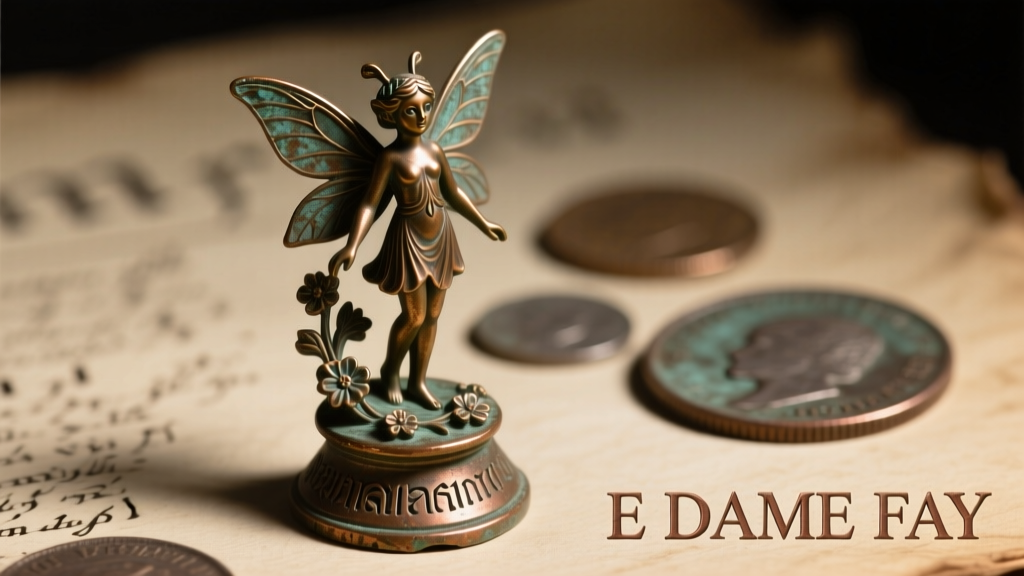
Bronze Figurine 'E Dame Fairy' Pedestal: Provenance, Craftsmanship, and Market Value Analysis
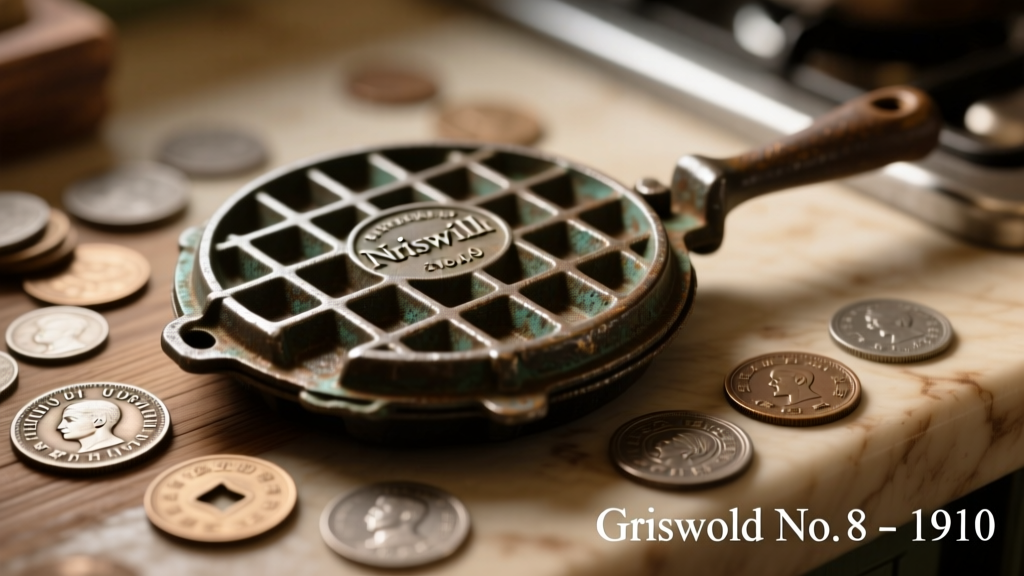
The Griswold No. 8 Low Frame Waffle Iron (1910): A Numismatic and Culinary Artifact of American Cast Iron Heritage
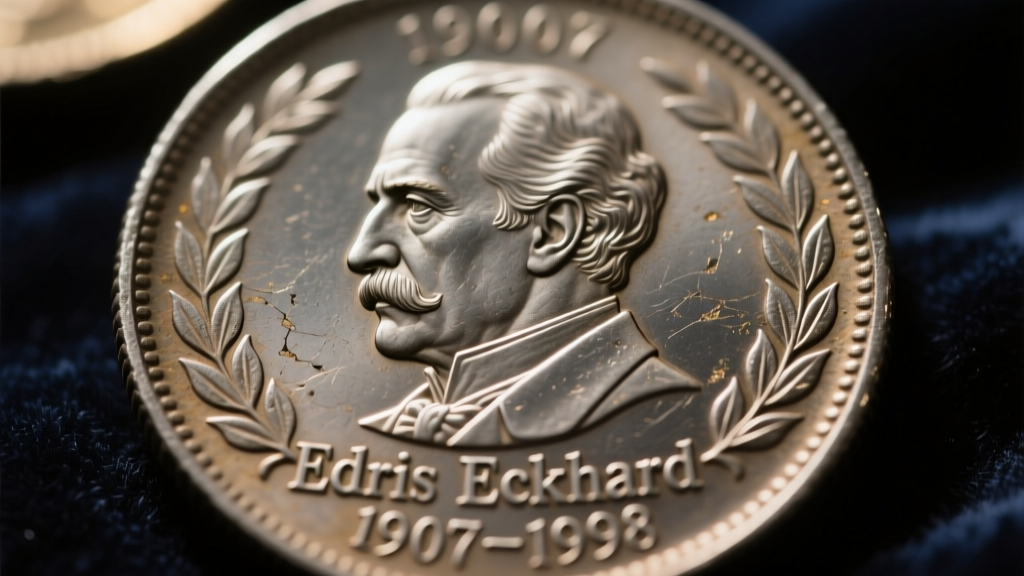
Edris Eckhardt (1907–1998): Sculptor, Medalist, and Architect of American Numismatic Art
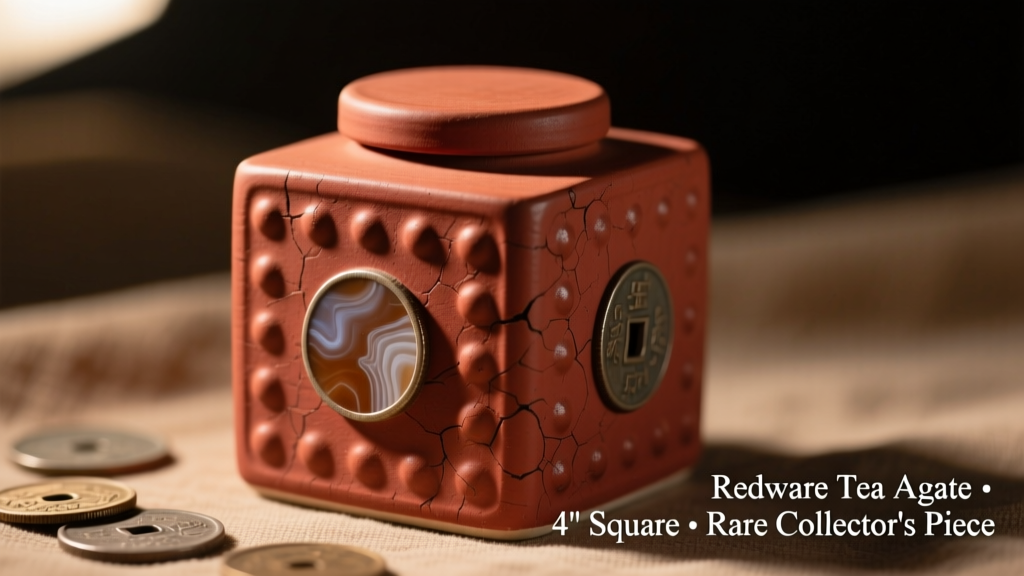
Redware Canister Tea Agate Dimpled Panels Square 4-Inch: A Numismatic and Ceramics Collector’s Deep Dive
Silver Snuffboxes with Inscribed Lines: The 1826 3 × 1¾-Inch English Regency Masterpieces
Candy Containers: The Gentleman Papier-Mâché Painted Clothing Figurines of Germany — A 10-Inch Collector’s Study
The Bronze Ox: History, Symbolism, and Numismatic Significance of China’s Zodiac Coin Series