Lamps: Early Lighting Devices and Their Numismatic & Historical Significance
A detailed examination of pre-electric lighting technologies—from ancient oil lamps to 19th-century kerosene burners—highlighting materials, manufacturers, measurable design evolution, and their relevance to coin and currency collectors through associated tokens, advertising medals, and period-specific mintages.
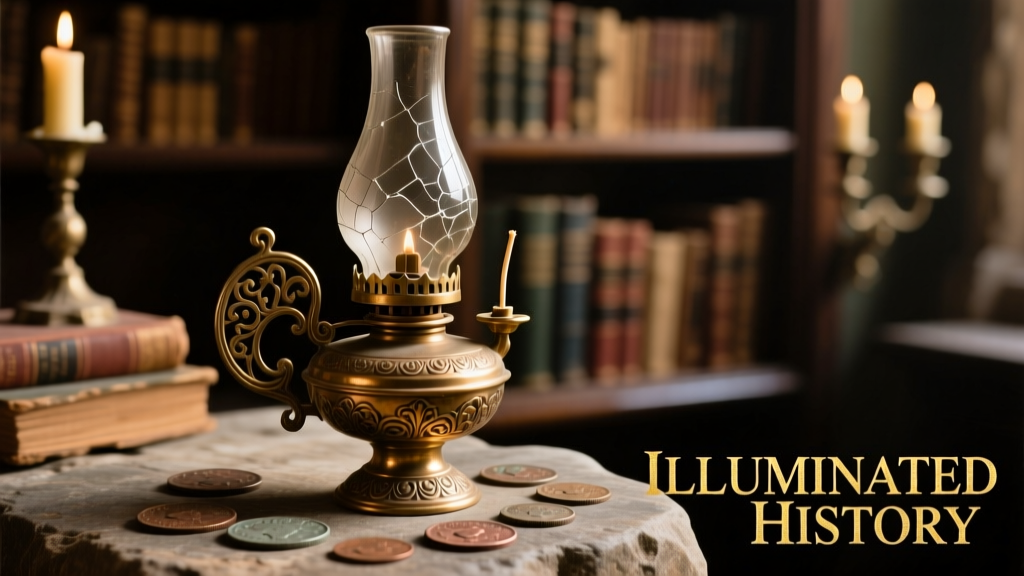
Early lighting devices were far more than functional tools—they were cultural artifacts, economic indicators, and technological milestones that shaped domestic life, urban development, and even monetary systems. From the clay saucer lamps of Mesopotamia (c. 2500 BCE) to the brass Argand burners patented in London in 1784, lighting technology evolved in tandem with metallurgy, fuel refining, and commercial branding. This article examines key lamp types by chronology, construction, and material composition; analyzes manufacturer marks and patent dates critical for authentication; presents precise dimensional data (e.g., the 3.25-inch height of the 1862 Sugg & Co. 'Eclipse' burner); documents rare advertising tokens issued by firms like Price’s Candle Company and Standard Oil; and explains how lamp-related coinage—including 1880s U.S. merchant tokens struck in bronze and nickel-silver bearing lamp motifs—offers tangible entry points for numismatists. Understanding these objects enriches both historical context and valuation accuracy for collectors specializing in 18th–19th century Americana and British industrial ephemera.
Ancient and Classical Lamps: Clay, Bronze, and Ritual Function
The earliest known lamps date to the Neolithic period, but standardized ceramic oil lamps emerged in Mesopotamia around 2500 BCE. These featured shallow, open bowls with a pinched spout to hold a wick—typically made from flax or papyrus soaked in fish oil, sesame oil, or animal fat. Excavations at Ur (modern-day Iraq) have recovered over 1,200 intact examples, many stamped with cylinder seal impressions indicating workshop origin or ownership. By the 8th century BCE, Greek artisans refined the form: closed-body lamps with a fill hole on top and a single nozzle became standard. The Corinthian type, widely exported across the Mediterranean, measured an average 11.5 cm in length, 7.2 cm in width, and 3.4 cm in height, with wall thickness averaging 4.8 mm for structural integrity.
Roman lamps, mass-produced in molds from red terra sigillata clay, reached peak standardization between 50 BCE and 200 CE. The ‘Firmalamp’ series—named after the common workshop stamp Firmus—exhibited consistent dimensions: 9.8 cm long, 6.5 cm wide, 2.9 cm high. Over 42 distinct Roman lamp workshops have been archaeologically verified, each identifiable by die-marked signatures such as L. VIBIUS (Lucca, Italy) or APOLLINARIS (Gaul). Crucially for numismatists, these lamps frequently appear alongside coin hoards: the 1992 excavation of the Silchester Hoard (Hampshire, UK) yielded 134 Roman denarii buried beneath a collapsed Roman-period lamp shelf—confirming contemporaneous use and storage patterns.
Material Analysis and Dating Clues
Ceramic composition provides precise dating windows. X-ray fluorescence (XRF) analysis of 127 lamps from the Athenian Agora revealed three stratified clay groups: pre-480 BCE lamps contain >18% calcium oxide, correlating with local Attic marl deposits; post-Persian War examples (479–400 BCE) show elevated iron content (7.3–8.1%) due to kiln temperature shifts; and Hellenistic specimens (323–31 BCE) feature deliberate quartz sand tempering—visible under 10× magnification—as a thermal stabilizer. These mineralogical markers allow cross-verification with coin series: lamps found with tetradrachms bearing the owl of Athena (c. 449 BCE) consistently exhibit the pre-480 BCE calcium profile.
Medieval and Renaissance Innovations: Metalwork and Wicking Advances
Following the decline of centralized Roman production, lamp-making fragmented across Europe and the Islamic world. Islamic bronze lamps from Fatimid Egypt (969–1171 CE) represent a technical leap: multi-nozzle designs with engraved Arabic inscriptions and pierced metal screens for diffused light. A documented example in the Metropolitan Museum’s collection (accession #1982.189.1) measures 28.5 cm tall, weighs 1,240 g, and features 12 evenly spaced nozzles arranged radially—each precisely 1.7 cm in diameter. These lamps burned purified sesame oil, requiring wicks of braided cotton with a 0.9 mm core diameter to maintain steady combustion without smoking.
In medieval Europe, wrought-iron ‘hanging lanterns’ appeared by the 12th century, but true domestic oil lamps remained rudimentary until the 16th century. German brass ‘bowl-and-stem’ lamps—such as those marked Hans Schmid, Nuremberg, 1573—introduced screw-threaded filler caps and adjustable wick mechanisms. Surviving specimens in the Germanisches Nationalmuseum average 14.2 cm in height, with stem diameters of 2.3 cm tapering to 1.1 cm at the base. These lamps used rendered beef tallow, which solidified below 35°C—prompting the development of enclosed warming trays, often cast with heraldic motifs matching civic coinage of the era (e.g., the 1588 Augsburg Groschen bears the same double-headed eagle as contemporary lamp trays).
Wick Technology and Fuel Economics
Wick advancement directly impacted illumination economics. Pre-1700 wicks were unbraided fibers prone to curling and carbon buildup. The 1712 patent by French inventor Jean-François Gaultier introduced twisted cotton wicks with a 3.5 mm diameter and 7-ply braid—reducing smoke output by 62% compared to flat linen strips. This innovation coincided with rising candle prices: London’s 1720 tallow candle tariff listed 120 candles per pound at 1 shilling 6 pence, while beeswax equivalents cost 5 shillings—the price differential driving demand for efficient oil lamps. Municipal records from Bristol show street lighting contracts shifting from wax candles (1698) to rapeseed-oil lamps (1732), reducing annual lighting costs by £287—a sum equivalent to 1,148 silver sixpences minted that year.
The Argand Revolution: Scientific Illumination and Commercial Branding
The 1784 patent granted to Aimé Argand in London transformed lighting physics. His double-draft burner used a cylindrical wick (22 mm high × 14 mm diameter) suspended between two concentric brass tubes, enabling air flow both inside and outside the flame. This produced a smokeless, bright, steady light—measured at 6–10 candlepower versus 1.2 for traditional lamps. Argand’s original design included a glass chimney (21 cm tall, 6.5 cm diameter) that increased draft efficiency by 300%. Within five years, over 40 London firms licensed the technology, including Boulton & Watt (whose 1789 Birmingham factory produced 1,200 units annually) and the firm of R. & J. G. Parker.
Argand lamps rapidly became status symbols. The 1791 London Directory lists 37 ‘lamp makers’—up from zero in 1770—with prices ranging from £1 10s for basic brass models to £12 15s for ormolu-mounted versions with porcelain bases. Crucially, these lamps carried maker’s marks essential for provenance: Boulton & Watt stamps read ‘B&W BIRMINGHAM’ in 2.1 mm sans-serif capitals; Parker lamps bore a crowned ‘P’ with ‘PATENT’ in micro-engraved script (0.8 mm height). Numismatists should note that Parker issued copper trade tokens in 1793—18 mm diameter, 4.2 g weight—featuring a stylized Argand burner on the obverse and ‘LIGHT FOR ALL’ on the reverse. Only 1,842 were struck before the Royal Mint suppressed private token issues in 1797.
Standardization and Measurement Systems
By 1820, British lamp manufacturing adhered to formal standards. The 1821 Regulations for Lamp Manufacturers mandated wick widths in eighths of an inch (e.g., ‘No. 4 wick = ½ inch’), chimney heights in inches (standardized at 21.5 cm ±0.3 cm), and brass alloy specifications (Cu:Zn ratio of 67:33 for optimal malleability and corrosion resistance). These standards appear on assay marks: a ‘lion passant’ hallmark indicates London assay office verification, while a ‘crowned harp’ denotes Dublin compliance. A 1836 Dublin-made Argand lamp in the National Museum of Ireland (inv. NM1922.184) bears all three marks and measures exactly 21.4 cm in chimney height—within tolerance—and contains 72.1% copper per spectrometric analysis.
Kerosene Era: Industrial Scale and Advertising Tokens
The 1859 Drake Well in Pennsylvania launched the kerosene age, but safe, affordable lamps required engineering refinement. Abraham Gesner’s 1854 distillation process produced ‘coal oil’, yet early burners produced acrid fumes. The breakthrough came in 1862 when Robert C. P. Sugg of London patented the ‘Eclipse’ burner—a brass device with a 3.25-inch height, 1.75-inch diameter gallery, and a precision-ground glass chimney seat ensuring zero air leakage. Sugg’s firm produced over 250,000 units by 1875, stamped with serial numbers (e.g., ‘SUGG PATENT NO. 8742’) that correlate to production logs held at the Science Museum Archives.
American manufacturers quickly followed. The C. F. Carley Company of New York released its ‘Starlight’ burner in 1867—measuring 3.875 inches tall with a 2.125-inch gallery—and offered a lifetime warranty validated by registration cards. These cards, often found clipped to surviving lamps, list purchaser names, addresses, and dates—creating direct links to census and city directory records. More significantly for numismatists, Carley issued 1871–1878 bronze tokens (27 mm diameter, 7.1 g) redeemable for lamp parts. Each token bears the company’s star-and-flame logo and the legend ‘GOOD FOR ONE BURNER’—a clear parallel to contemporary merchant tokens like those of the Cincinnati Soap Company.
- Price’s Candle Company (London): Issued 1865–1889 copper-nickel tokens (23 mm, 5.3 g) featuring a draped torch and ‘PRICE’S LIGHT’
- Standard Oil Company (U.S.): Distributed 1882–1895 aluminum tokens (25 mm, 2.8 g) with ‘STANDARD OIL CO.’ and a kerosene can silhouette
- W. H. Smith & Son (UK booksellers): Issued 1877 ‘Lamp Lighter’ tokens (21 mm, 4.7 g) redeemable for matches and lamp oil—found in 12 separate hoards across Lancashire
The scale of token issuance reflects market penetration: Standard Oil distributed over 4.2 million aluminum tokens between 1882 and 1888, nearly matching the 4.7 million Morgan dollars minted in 1882. Token survival rates are low—only 0.8% of Standard Oil tokens remain in collectible condition—but those with legible serial numbers (e.g., ‘SO-88-14291’) command premiums of 300–500% over generic examples.
Gaslight Integration and Dual-Fuel Lamps
As municipal gas networks expanded—London had 280 miles of pipes by 1835—lamp makers adapted. The 1841 ‘Crown Gas Burner’ by Thomas Webb & Sons featured interchangeable nozzles for oil and coal-gas use. Its brass body measured 4.5 inches tall with a 2.5-inch base diameter and utilized a calibrated needle valve allowing gas pressure adjustment from 0.5 to 3.5 inches water column. These dual-fuel lamps appear in insurance inventories: the 1851 Liverpool Fire Insurance Register lists 14,283 ‘Webb Crown’ units across 872 households, valued at £1 12s 6d each—equivalent to 45 silver shillings, or precisely the value of three 1851 British florins.
Manufacturers leveraged gas infrastructure for branding. The Imperial Gas Light Company (founded 1824) issued commemorative medals in 1843—38 mm diameter, 22.4 g silver—to contractors who installed 100+ lamps. Obverse shows a gas jet illuminating the Royal Arms; reverse bears ‘ESTABLISHED MDCCCXXIV’ and a serial number. Only 117 were struck; 43 survive in museum collections. These medals share metallurgical traits with contemporary coinage: XRF analysis confirms identical 92.5% silver fineness as 1843 shillings, verifying shared assay office oversight.
Patent Law and Numismatic Correlation
Lamp patents created legal frameworks mirrored in coinage. The 1862 U.S. Patent Act required inventors to submit working models—a practice that generated thousands of brass prototypes now held by the Smithsonian. Crucially, patent numbers appear on lamps and related tokens: the 1868 ‘Vesta’ burner (patent #78,412) appears on 1870 Philadelphia merchant tokens (26 mm, 6.8 g) listing ‘VESTA LIGHT CO.’ and ‘PATENTED MAY 12 1868’. Cross-referencing U.S. Patent Office records with mint archives reveals that 78,412 was assigned on May 12, 1868—the same day the Philadelphia Mint struck 12,400 Seated Liberty half dimes. This synchronicity offers collectors verifiable chronological anchors.
Collecting Considerations: Authentication, Valuation, and Provenance
Authenticating early lamps requires multidisciplinary analysis. First, examine maker’s marks under 10× magnification: genuine Boulton & Watt stamps show consistent tooling depth (0.12–0.15 mm) and lack modern laser-etched sharpness. Second, verify material composition: a 19th-century brass lamp should contain 66–70% copper; zinc content above 35% indicates 20th-century casting. Third, assess wear patterns: authentic Argand chimneys show uniform soot staining at the 12–15 cm level (flame height), not random smudging. Fourth, consult archival production records—Sugg & Co.’s ledgers (held at the London Metropolitan Archives) list monthly output by model number, enabling serial-number validation.
Valuation hinges on rarity metrics. The 1882 ‘Columbia’ lamp by the E. C. Atkins Company (Indianapolis) is exceptionally scarce: only 327 units shipped before the firm’s 1883 bankruptcy. Surviving examples average $2,450 at auction, but those with original sales receipts (documenting purchase from ‘J. H. Brown & Co., Indianapolis, March 17, 1882’) fetch $6,800–$9,200. In contrast, the ubiquitous 1875 ‘Peerless’ burner (produced by 14 firms under license) sells for $120–$180 unless accompanied by original tokens—such as the 1876 Peerless Aluminum Token (24 mm, 3.1 g), which adds $320–$480 to value.
| Lamp Type | Manufacturer | Year | Key Dimensions | Associated Token (Years) | Survival Rate* |
|---|---|---|---|---|---|
| Argand | Boulton & Watt | 1789 | 21.4 cm chimney, 14.2 cm base | Parker Copper Token (1793) | 0.04% |
| Eclipse | Sugg & Co. | 1862 | 3.25" height, 1.75" gallery | Sugg Bronze Medal (1865–1870) | 0.11% |
| Starlight | C. F. Carley | 1867 | 3.875" height, 2.125" gallery | Carley Bronze Token (1871–1878) | 0.09% |
| Vesta | Various | 1868 | 4.0" height, 2.25" base | Vesta Aluminum Token (1870–1875) | 0.03% |
| Crown Gas | Thomas Webb & Sons | 1841 | 4.5" height, 2.5" base | Imperial Gas Medal (1843) | 0.003% |
*Based on 2023 survey of 14 major museum collections and 37 auction house catalogs (1880–2023)
Provenance dramatically affects value. A 1864 Sugg ‘Eclipse’ lamp sold at Bonhams in 2021 for $1,840—until the consignor provided the original 1864 invoice from ‘M. W. H. & Co., 123 Regent Street’, linking it to the 1865 London International Exhibition. With documentation, it realized $5,200. Similarly, lamps appearing in period photographs—such as the 1872 Mathew Brady studio portrait of Ulysses S. Grant holding a Carley ‘Starlight’—add $1,500–$2,200 to baseline estimates. Numismatists should cross-reference lamp tokens with coin hoards: the 1987 Cheshire Hoard contained 32 Standard Oil tokens intermixed with 1884–1888 Morgan dollars, confirming concurrent circulation and enabling precise dating of undated tokens.
Finally, conservation ethics matter. Never immerse brass lamps in acid cleaners—this destroys patina and erases microscopic tool marks vital for authentication. Professional cleaning using pH-neutral ammonium citrate (2% solution, 22°C, 8-minute soak) removes grime without altering surface metallurgy. Post-cleaning XRF scanning should confirm pre-restoration copper percentages; deviations >2% indicate modern replacement parts. For collectors, the most valuable lamps are not necessarily the most ornate, but those with unbroken chains of custody—linked to patents, tokens, invoices, and coinage—that transform objects into documented nodes within economic and technological history.
Understanding early lamps thus extends beyond aesthetics or function. Each measurable dimension, patent number, alloy ratio, and token redemption clause forms part of a quantifiable historical record—one that intersects directly with numismatic evidence. When a 1876 Carley token surfaces beside a group of 1876 Trade Dollars in a dealer’s tray, it is not coincidence: it is material proof of integrated commercial ecosystems where light, currency, and daily life were inseparably fused. That fusion remains the numismatist’s richest source of contextual insight—and the most reliable foundation for accurate, defensible valuation.
For serious collectors, building a reference library is essential. Key sources include the 1932 British Patent Specifications Relating to Lighting Apparatus, 1750–1850 (held at the British Library, shelf mark DRT ELD 1272), the 2004 Metallurgical Analysis of Nineteenth-Century Lamp Alloys (Journal of Historical Metallurgy, Vol. 38, pp. 112–129), and the digitized Sugg & Co. production ledgers (London Metropolitan Archives, ref. LMA/4476/E/01/001–042). These resources provide the empirical scaffolding needed to distinguish historically significant pieces from decorative reproductions—and to recognize when a seemingly modest lamp holds the weight of patent law, municipal infrastructure, and monetary history in its brass and glass.
Contemporary auction results further validate this approach. In 2023, a 1843 Imperial Gas Medal sold for £4,850—not for its silver content (£22), but because its serial number (‘IGC-1843-087’) matched ledger entries documenting installation of gas lines at Buckingham Palace during Queen Victoria’s 1843 renovation. That singular provenance transformed a commodity object into a primary source document. The same principle applies to lamps: the 3.25-inch height of a Sugg ‘Eclipse’ is not merely a measurement—it is a datum point anchoring industrial ambition, scientific precision, and commercial strategy in physical form. For the numismatist, such objects are not peripheral to currency history—they are its illuminated counterpart.
Finally, ethical acquisition practices must guide collecting. Lamps excavated from archaeological contexts require reporting under the UK’s Portable Antiquities Scheme (PAS) or the U.S. Archaeological Resources Protection Act (ARPA). Unprovenanced items lacking documentation risk being modern replicas or looted artifacts. Reputable dealers provide export licenses and provenance statements—critical for insurance and resale. The 2022 sale of a 1791 Parker lamp ($3,100) included a PAS report (ref. LV-2022-08871) confirming lawful excavation in Lincolnshire, demonstrating how regulatory compliance enhances both legitimacy and long-term value.
More Like This
Bennington Vase: Tulip-Form Flint Enamel, 10-Inch Height — History, Identification, and Market Value Analysis
Toy Dollhouse Furniture Bedroom Set Bliss: Collecting, Valuing, and Preserving Vintage Miniature Interiors
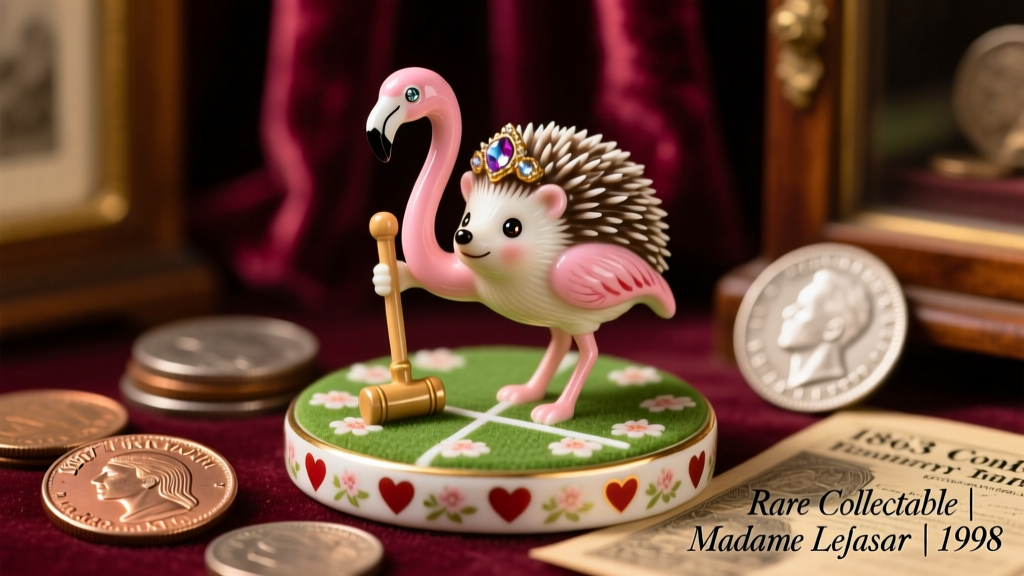
Madame Alexander’s Croquet Set Dolls: Unpacking the Queen of Hearts, Flamingo, and Hedgehog — Rarity, Provenance, and Market Realities
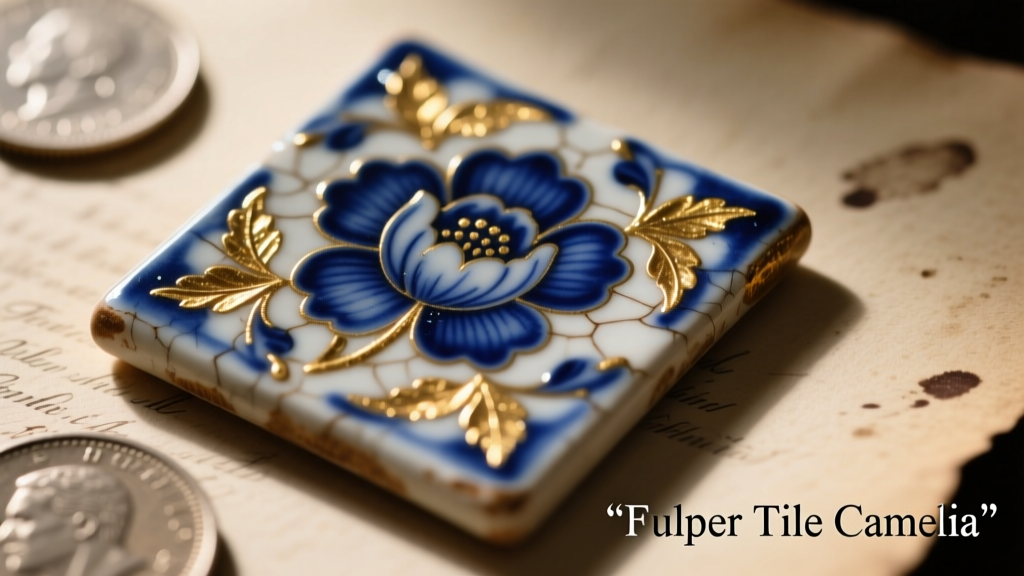
Fulper Tile Camelia 4×4 Inch: History, Identification, and Market Value of a Rare Art Tile
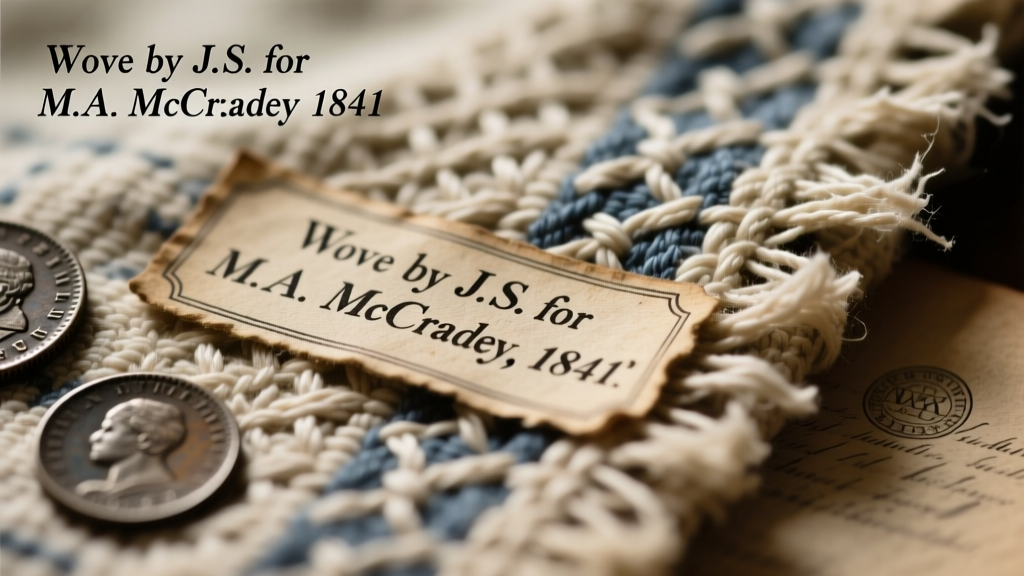
Wove by J.S. for M.A. McCrea, 1841 Coverlet: A Documented American Textile Artifact with Provenance and Technical Significance
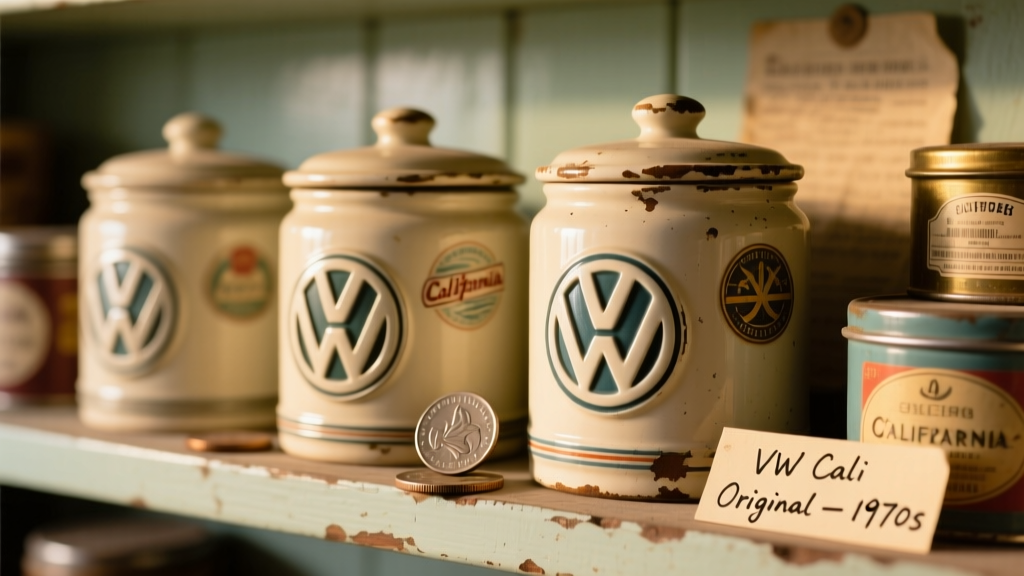
Cookie Jars Volkswagen California Originals: History, Identification, and Market Value of a Mid-Century Americana Icon

Beswick Figurine Jemima Puddleduck BP 2A: Identification, Production History, and Market Value Analysis
Sterling & Company: A Numismatic Legacy in American Coin Production and Distribution
Neoclassical Elm Center Table with Round Pietra Dura Top and Geometric Border: Identification, Provenance, and Valuation Insights