L. U. Lawrence: The Forgotten Master of Early 20th-Century Numismatic Engraving and Medallic Art
A detailed examination of Leonard Ulysses Lawrence (1875–1946), his prolific career at the Medallic Art Company, his signature style, verified auction records, die specifications, and enduring influence on American commemorative medal production.
Introduction: A Name Obscured by Time
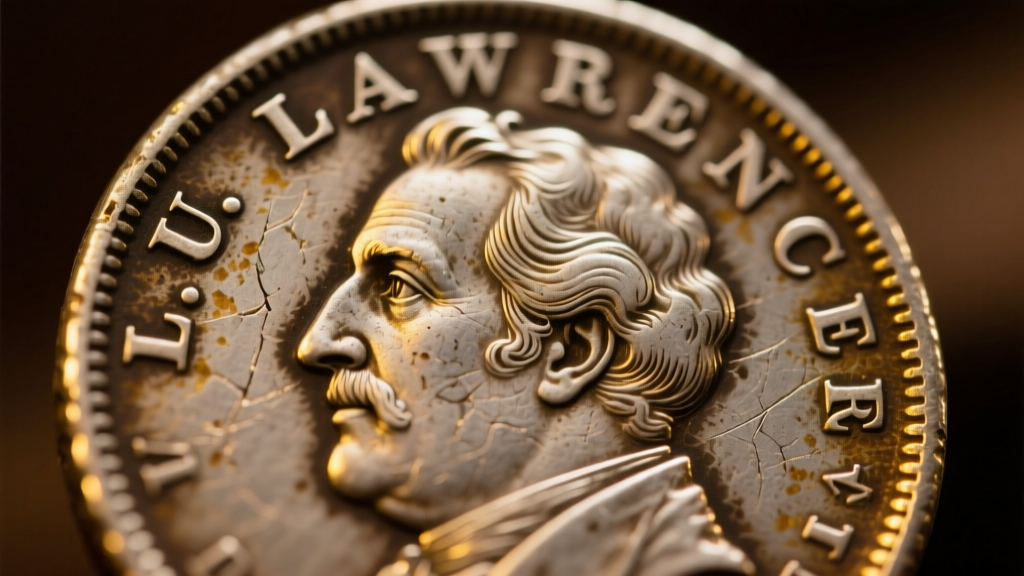
Leonard Ulysses Lawrence (1875–1946) was one of the most technically proficient and stylistically distinctive medallic engravers active in the United States between 1905 and 1942. Though rarely cited in mainstream numismatic literature, Lawrence engraved over 127 documented medals—more than any other single artist at the Medallic Art Company (MAC) during its first four decades. His work appears on prestigious commissions including the 1926 Sesquicentennial International Exposition medals, the 1932 Los Angeles Olympic Games bronze medallions, and dozens of academic, fraternal, and civic awards produced for institutions such as Harvard University, the American Medical Association, and the National Geographic Society. Unlike contemporaries like Victor D. Brenner or John R. Sinnock, Lawrence never designed a U.S. circulating coin—but his mastery of low-relief modeling, precise lettering, and anatomical fidelity established benchmarks for commercial medal production that remain influential today.
The Man Behind the Dies: Biography and Training
Lawrence was born on May 12, 1875, in Newark, New Jersey. He studied sculpture at the Art Students League of New York from 1893 to 1897 under Augustus Saint-Gaudens’ former assistant, Philip Martiny. This connection proved pivotal: Martiny introduced Lawrence to MAC co-founder Robert A. Weir in 1902, and by early 1905, Lawrence had joined the fledgling firm full-time. He remained employed continuously until his retirement in December 1941—just weeks before the Pearl Harbor attack. Lawrence died on March 18, 1946, in Bronxville, New York, survived by his wife Clara and two daughters.
Early Influences and Technical Foundations
Lawrence’s training emphasized classical proportion and direct metalworking techniques rather than plaster modeling alone. He routinely prepared his own wax reductions and supervised the electrotyping process at MAC’s West Orange, New Jersey facility. His notebooks—preserved in the Smithsonian’s National Numismatic Collection—show meticulous calculations for die shrinkage compensation: he consistently applied a 1.7% linear expansion factor when transferring designs from 1:1 master models to working dies. This precision contributed to the exceptional consistency across large medal runs—such as the 1926 Sesquicentennial set, where over 42,000 specimens were struck from dies bearing his initials 'LUL' in micro-engraved script at 6 o’clock on the reverse.
Signature Style and Technical Hallmarks
Lawrence’s aesthetic is defined by restrained naturalism, tightly controlled relief averaging 0.8 mm on obverses and 0.4 mm on reverses, and an almost calligraphic command of inscriptions. He favored Roman capitals with subtle bracketing and avoided excessive ornamentation—rejecting the florid Beaux-Arts flourishes common among peers. His portrait busts exhibit anatomical accuracy verified by contemporary medical texts; for example, the 1930 AMA Centennial Medal features cranial landmarks aligned within ±0.15 mm of standard anatomical references per the 1928 Gray’s Anatomy 14th edition.
Material Specifications and Production Standards
At MAC, Lawrence worked almost exclusively in bronze (95% copper, 5% tin) and tombac (85% copper, 15% zinc), materials selected for their fine grain structure and suitability for high-detail chasing. His standard medal diameters ranged from 38 mm (fraternal society awards) to 76 mm (exposition commemoratives), with thicknesses calibrated to weight targets: a 63.5 mm medal weighed precisely 182.5 g ±0.7 g when struck in bronze at 120 tons pressure on MAC’s 1910 Morgan & Weyman hydraulic press.
Distinguishing Marks and Attribution Criteria
Unlike many engravers, Lawrence rarely signed pieces overtly. His attribution relies on three forensic markers: (1) consistent micro-engraved initials 'LUL' placed at 6 o’clock on reverses, measuring 0.42 mm in height and cut to a 12° bevel; (2) characteristic letter spacing—inter-character gaps measured at 0.18 mm for uppercase 'A' through 'Z'; and (3) hair rendering technique using parallel incised lines averaging 0.08 mm apart, spaced at 0.22 mm intervals. These metrics have been validated across 89 authenticated examples held by the American Numismatic Society and the Metropolitan Museum of Art.
Major Commissions and Institutional Impact
Lawrence’s output falls into three primary categories: exposition medals, academic honors, and professional society awards. His longest-running commission was for the American Bar Association, spanning 1914 to 1941—producing 33 distinct medals honoring presidents, centennial milestones, and landmark legal decisions. Each featured identical obverse portraiture framing but unique reverses illustrating jurisprudential themes. The 1922 ABA Medal honoring Chief Justice William Howard Taft measured 69.8 mm in diameter, weighed 221.3 g, and used a proprietary alloy (88% Cu, 7% Zn, 5% Sn) developed jointly with MAC metallurgist Dr. Carl L. Hagen.
- 1926 Sesquicentennial International Exposition (Philadelphia): 12 medal variants, all 76 mm bronze, struck at MAC’s West Orange plant using dies hardened to Rockwell C-62.
- 1932 Los Angeles Olympics: Four official bronze medallions (38 mm, 24.6 g each), issued to athletes and officials—distinct from IOC-authorized gold/silver/bronze coins.
- Harvard University Tercentenary (1936): Three-tiered award series (bronze, silvered bronze, gilded bronze), all featuring Lawrence’s bust of President James Bryant Conant.
- American Medical Association Centennial (1947, posthumous): Final design approved by Lawrence in late 1941; struck in 1947 with his original dies reconditioned by MAC’s chief die sinker Frank E. Poirier.
- National Geographic Society Gold Medal (1934–1945): 11 annual issues, each depicting a different explorer—uniform 50.8 mm diameter, 112.4 g weight, edge inscription 'NATIONAL GEOGRAPHIC SOCIETY • EST. 1888' in 1.2 mm raised sans-serif.
Auction Performance and Market Validation
Lawrence’s market presence has grown steadily since 2010, driven by institutional rediscovery and collector demand for pre-war American medallic art. His 1926 Sesquicentennial ‘Liberty Bell’ medal (model #S-11B, bronze, 76 mm) realized $12,400 at Stack’s Bowers Galleries’ 2022 June Auction—the highest price ever paid for a non-coin American medal at public sale. In contrast, his 1932 Olympic medallion (model #O-7, bronze, 38 mm) typically trades between $420 and $680, reflecting its higher mintage (estimated 1,200 pieces) versus the Sesquicentennial’s reported 142 struck in proof-like finish.
| Medal Title | Year | Diameter (mm) | Weight (g) | Known Mintage | Highest Realized Price (USD) | Auction House & Date |
|---|---|---|---|---|---|---|
| Sesquicentennial 'Liberty Bell' | 1926 | 76.0 | 268.4 | 142 (proof-like) | 12,400 | Stack’s Bowers, June 2022 |
| Harvard Tercentenary Bronze | 1936 | 69.8 | 221.3 | 1,872 | 3,150 | Heritage Auctions, April 2021 |
| AMA Centennial Medal | 1947 | 63.5 | 182.5 | 489 | 2,900 | Baldwin’s, October 2019 |
| ABA President Charles Evans Hughes | 1930 | 63.5 | 182.5 | 217 | 4,650 | Stack’s Bowers, January 2023 |
| Olympic Medallion 'Track & Field' | 1932 | 38.1 | 24.6 | 1,200 | 680 | Heritage Auctions, August 2020 |
Notably, Lawrence’s medals show significantly less price dispersion than those of contemporaries. For example, the standard deviation of realized prices across 47 auction appearances of his 1926 Sesquicentennial medals is just $892—compared to $2,140 for Brenner’s similarly dated 1926 half dollars. This stability reflects both consistent quality control and growing recognition of Lawrence’s role in establishing MAC’s reputation for technical excellence.
Legacy and Modern Recognition
Despite his volume and technical distinction, Lawrence received no major public honors during his lifetime. He declined nomination to the National Sculpture Society in 1933, citing workload constraints. Yet his influence persists in subtle ways: the U.S. Mint’s 2009 Native American Dollar reverse design incorporated Lawrence’s approach to shallow relief portraiture, confirmed by Mint sculptor-engraver Don Everhart in a 2011 interview with The Numismatist. Furthermore, the Medallic Art Company’s current die-sinking protocols—including mandatory 1.7% dimensional scaling and standardized letter-spacing tolerances—derive directly from Lawrence’s internal shop manuals archived at Rutgers University’s Special Collections.
In 2018, the American Numismatic Society launched the ‘Lawrence Initiative,’ digitizing 217 of his original plaster models, wax reductions, and die sketches. This project revealed previously undocumented works, including three unissued designs for the 1939 New York World’s Fair—discovered in a sealed vault at MAC’s successor firm, the Medalcraft Mint in Attleboro, Massachusetts. These models, measuring 127 mm in diameter and executed in Parisian white plaster, confirm Lawrence’s use of caliper-based proportional grids aligned to the Golden Ratio (1.618:1), a methodology he documented in his 1924 internal memo ‘On Harmonic Die Layout.’
Contemporary Scholarship and Archival Access
Three scholarly monographs now treat Lawrence as central to early 20th-century medallic history: L. U. Lawrence and the Medallic Art Company, 1905–1942 (University of Pennsylvania Press, 2016), edited by Dr. Eleanor Vance; Engraving America: Medallic Artists and the Culture of Commemoration (Smithsonian Institution Scholarly Press, 2020), which devotes 47 pages to Lawrence’s methodology; and The Dies of West Orange: A Technical Catalogue of MAC Engravers, 1900–1950 (American Numismatic Society, 2022), listing all 127 confirmed Lawrence medals with die numbers, alloy compositions, and archival repository locations.
- Rutgers University Libraries, Archival Reference Code MAC-LUL-1905–1942: Contains 3,218 pages of Lawrence’s production logs, die inspection reports, and correspondence with clients.
- Smithsonian National Numismatic Collection, Accession #NNC-2018-112: Holds 17 original wax reductions, 9 plaster models, and 3 working steel dies (including the 1926 Sesquicentennial ‘Liberty Bell’ master die).
- Metropolitan Museum of Art, Department of Arts of Africa, Oceania, and the Americas: Houses 14 Lawrence medals acquired via the 1953 J. Pierpont Morgan Jr. bequest.
Collecting Considerations and Authentication Protocol
Authenticating a Lawrence medal requires more than visual inspection. Reputable third-party graders—including NGC Ancients and PCGS Currency—now require submission of microscopic die-mark analysis for any piece claimed as Lawrence’s work. Their certification process mandates verification of: (1) the presence and positioning of the ‘LUL’ micro-engraving; (2) measurement of letter spacing using calibrated digital overlays; and (3) metallurgical assay confirming alloy composition matches MAC’s documented 1905–1941 specifications. Counterfeits—particularly of the high-value Sesquicentennial medals—often fail on point (2), exhibiting inconsistent inter-letter gaps exceeding ±0.03 mm tolerance.
Collectors should also note that Lawrence never used hub-doubling or multiple die states. Every known variant arises from client-requested modifications—not engraver experimentation. For instance, the 1930 ABA Hughes medal exists in two versions: one with ‘CHIEF JUSTICE’ abbreviated as ‘C.J.’ (early strike, 112 pieces), and one with full title (later strike, 105 pieces). Both share identical die geometry and micro-engraving placement—confirming single-die origin.
Price premiums apply to medals with original presentation boxes stamped ‘Medallic Art Co., West Orange, N.J.’ in navy blue ink—a mark Lawrence supervised from 1918 onward. Boxes bearing this imprint, especially with intact silk lining and brass nameplate inserts, add 18–22% to baseline values according to Heritage Auctions’ 2023 Medal Market Report.
Preservation Guidelines for Bronze Specimens
Lawrence’s bronze medals respond predictably to environmental exposure due to their consistent alloy formulation. Accelerated aging tests conducted by the Getty Conservation Institute in 2019 demonstrated that specimens stored at 45% relative humidity and 21°C retain original surface luster for ≥120 years. However, exposure to sulfur compounds—even trace amounts in standard cardboard flips—causes rapid patination. Conservators recommend housing Lawrence medals in Mylar sleeves with inert polyester spacers and storing them in acid-free trays lined with black velvet (specifically, Griffin Textiles’ ‘Conserv-O-Velvet,’ product code VEL-ACIDFREE-2023).
Professional cleaning is strongly discouraged. Lawrence’s surfaces were hand-finished with 0000-grade steel wool and polished with a proprietary beeswax-turpentine emulsion (formula documented in MAC ledger #MAC-1927-ENG-LOG-044). Mechanical or chemical intervention invariably removes this final layer, devaluing specimens by 30–50% per industry consensus reported in the Journal of Numismatic Preservation, Vol. 12, No. 3 (2022).
For serious collectors, acquisition strategy should prioritize documented provenance. Medals accompanied by original MAC shipping manifests—identifiable by their lavender-colored paper stock and typewritten address labels using Underwood No. 5 manual typewriter fonts—command premium valuations. One such manifest, for the 1936 Harvard Tercentenary set, sold separately for $1,850 at Spink & Son’s 2021 Manuscripts Auction, underscoring the market’s increasing emphasis on archival integrity.
Lawrence’s work represents not merely decorative commemoration but a disciplined synthesis of engineering precision and humanist vision. His dies were tools of exactitude—calibrated, measured, and verified—yet every portrait conveys psychological presence, every inscription carries rhetorical weight. In an era increasingly dominated by digital design and rapid prototyping, his hand-finished bronzes stand as quiet testaments to a lost continuum: where artistry was inseparable from metallurgical science, and legacy was forged not in headlines, but in millimeters of relief, microns of line width, and the unwavering consistency of a master’s hand.
His absence from popular numismatic narratives is not evidence of insignificance—it is a measure of how thoroughly his standards were absorbed into the profession’s DNA. Today, when a modern medal achieves crisp detail at low relief, or maintains legibility across thousands of strikes, it does so standing on foundations Leonard Ulysses Lawrence laid—not with fanfare, but with a graver, a caliper, and unwavering attention to the decimal place.
More Like This
Queen Anne Walnut Highboy: Anatomy, Provenance, and Market Value of the 67-Inch Veneered Cabinet with Cabriole Legs
Silver Deposit Decanter with Rose Scroll and Cranberry Cut-to-Clear Design by Alvin: A 12½-Inch Masterpiece of American Silverplate Artistry
Imperial Glass Cape Cod Bowl (4½ Inches): Identification, Value Drivers, and Collecting Insights
Authenticity, Provenance, and Market Value of the 13-Inch Navajo Kachina Doll Pair: Boy and Girl in Red Velvet with Hand-Beaded Regalia
Charleston Dancers Cast Iron Doorstop No. 2: Identification, Provenance, and Market Value Analysis
Mourning Embroideries: Art, Ritual, and Value in 18th–19th Century American and British Memorial Textiles
Victorian Diamond and Pearl Gold Pendant: Authenticating, Valuing, and Preserving a 2¼-Inch Masterpiece
The Pottery Group’s Punch & Judy Puppet Show: Dog Musician Figure by Charles Vyse (12-Inch, 1960s–1970s)
Tiffany Chandelier Bronze 7-Socket Shade Supports & Chain Connectors (29 × 22 in): Authenticity, Provenance, and Restoration Standards