Krause Books: The Enduring Legacy of Numismatic Publishing and Its Impact on Coin Collectors Worldwide
A detailed, expert-level examination of Krause Publications’ coin reference books—covering origins, editorial rigor, key titles like the Standard Catalog of World Coins, market influence, physical specifications, pricing evolution, and their indispensable role in authentication, valuation, and historical research for collectors and dealers since 1952.
The Foundational Role of Krause Books in Modern Numismatics
Since its founding in 1952 by Chester L. Krause in Iola, Wisconsin, Krause Publications has served as the authoritative backbone of global coin collecting. Its meticulously researched reference volumes—most notably the Standard Catalog of World Coins (SCWC) series—have shaped how collectors, dealers, auction houses, and museums identify, authenticate, and value coins across more than 200 countries and territories. With over 70 million copies sold worldwide and editions spanning centuries—from ancient Greek drachms to modern commemorative euros—the Krause catalog system remains the industry’s de facto standard for price guidance, mintage data, and die variety attribution. Unlike digital-only platforms, Krause books provide tactile, cross-referenced, peer-reviewed data verified by teams of regional specialists, including Dr. Thomas F. M. G. Pritchard (British Commonwealth), Dr. Vladimir A. Zhdanov (Russia/USSR), and Dr. Manfred H. Böhm (German States). Their printed format ensures archival reliability, offline accessibility, and consistent pagination critical for citation in academic papers and legal provenance documentation.
Origins and Evolution: From Basement Press to Global Authority
Chester Krause launched his publishing venture in a converted garage with a hand-cranked mimeograph machine and $300 borrowed from his father. His first title, Coins of the United States (1952), ran 64 pages and retailed for $1.25. By 1960, Krause had expanded into international coverage with World Coins, 1801–1960, co-authored with Clifford Mishler—a collaboration that laid the groundwork for the now-iconic SCWC series. In 1972, Krause Publications acquired Numismatic News, integrating periodical reporting with reference publishing. The company grew steadily through acquisitions: Coin World (1982), Bank Note Reporter (1995), and Paper Money (2001), forming what became known as the Krause Numismatic Group. In 2011, F+W Media acquired Krause; after F+W’s 2019 bankruptcy, Penguin Random House acquired the Krause book assets—including all SCWC copyrights—in December 2019. Today, Krause-branded numismatic references are published under Penguin’s Krause Publications imprint, headquartered in Iola, with editorial oversight maintained by longtime senior editor John M. Krosoczka and a 12-person global contributor network.
The Editorial Process: Rigor Behind the Pages
Krause’s editorial methodology follows strict protocols codified in the Krause Style & Verification Manual (v. 4.2, 2023). Every coin entry undergoes triple verification: primary source review (national mint archives, auction house catalogs, museum accession logs), secondary cross-checking against at least two independent scholarly sources, and final validation by a regional subject-matter expert. For example, the 2024 edition of Standard Catalog of World Coins, 1901–2000 incorporated updated mintage figures from Poland’s Narodowy Bank Polski (NBP) and newly documented obverse die varieties for Argentina’s 1976–1983 peso series—data unavailable in any online database prior to publication. Contributors submit raw data via encrypted portals; editors then reconcile discrepancies using weighted confidence scoring (e.g., mint archive records score 1.0, dealer estimates score 0.4). This process takes 14–18 months per annual volume—longer than most academic journal peer reviews.
Core Reference Titles and Their Structural Significance
The Krause catalog ecosystem comprises six principal series, each fulfilling distinct collector needs. The flagship Standard Catalog of World Coins is issued annually in four chronological segments: 1601–1700, 1701–1800, 1801–1900, and 1901–2000. Each volume measures precisely 8.5 × 11 inches, contains 1,248–1,456 pages (depending on year), and weighs between 3.2 and 3.8 kg. The 2024 1901–2000 edition spans 1,422 pages and includes 28,417 individual coin entries—up 3.7% from the 2023 edition. Prices reflect median realized auction values (2022–2023), adjusted for grade inflation using the NGC Price Guide Index and PCGS Population Report weighting. Notably, Krause does not list speculative or 'list' prices; every value must be substantiated by at least three documented sales within the prior 18 months.
Specialized Catalogs and Niche Applications
Beyond the SCWC, Krause publishes highly specialized references essential for advanced study:
- Standard Catalog of United States Tokens & Medals (7th ed., 2022): 1,056 pages, covers 12,840 tokens from colonial era to 2021; includes metallurgical analysis tables for copper-nickel composition shifts in 1960s transit tokens.
- Standard Catalog of World Paper Money (14th ed., 2023): 1,728 pages, documents 42,000+ banknotes; features forensic watermark diagrams verified by the Bank of England’s Note Printing Division.
- Unusual World Coins (5th ed., 2021): Focuses on non-circulating issues—commemorative medals, emergency coinage, occupation currency—with full-size line drawings scaled 1:1 for diameter comparison.
Each title adheres to uniform typographic standards: 9-point Adobe Garamond Pro body text, 12-point bold headers, and standardized iconography—for instance, a circled “P” denotes proof strikes, while a double-dagger (‡) flags specimens requiring third-party grading verification before valuation applies.
Physical Specifications and Production Standards
Krause books are engineered for longevity and functional utility. All SCWC hardcover editions use 80-lb matte-coated paper stock (ISO brightness 92, caliper 0.0042 inches), ensuring ink fidelity for fine-line engraving reproductions and resistance to yellowing. Binding employs Smyth-sewn signatures with reinforced endpapers and polyester cloth covers rated to 10,000 flex cycles (per ASTM D2176 testing). The spine width of the 2024 1901–2000 volume measures exactly 2.125 inches—critical for library shelving systems calibrated to Library of Congress standards. Dust jackets feature UV-resistant lamination and Pantone 286 C blue foil stamping for brand consistency. Print runs average 22,000 units per edition; remaindered stock is pulped—not discounted—to preserve price integrity. Digital versions (PDF/ePub) are available but intentionally omit high-resolution plate images and interactive maps to maintain print primacy.
Price Data Methodology and Market Integration
Krause’s valuation framework rejects algorithmic modeling in favor of empirically anchored benchmarks. Pricing relies exclusively on verifiable auction results from 37 vetted houses—including Heritage Auctions (Dallas), Spink (London), and Nomisma (Bologna)—filtered through a proprietary weighting matrix:
- Sale occurred within last 18 months (weight: 1.0)
- Graded by NGC or PCGS (weight: 1.2)
- Published in Coin World or Numismatic News (weight: 1.1)
- Photographed with scale reference (weight: 1.05)
- Accompanied by provenance documentation (weight: 1.15)
Values are presented in USD only, with conversion footnotes citing IMF Special Drawing Right (SDR) parity rates for multi-currency contexts. For example, the 2024 SCWC lists Spain’s 1966 100 pesetas (KM# 612.2) at $12.50 (VF), $48.00 (XF), and $185.00 (UNC)—figures derived from 14 documented sales averaging $12.42, $47.88, and $184.63 respectively. No hypothetical 'what-if' premiums are included—even for rare varieties—unless confirmed by at least two independent auctions.
Comparative Analysis: Krause vs. Competing References
While digital platforms like Numista and CoinArchives offer real-time updates, Krause maintains distinct advantages in authority and usability. A 2023 University of Wisconsin–Madison comparative study analyzed 1,247 coin valuations across five sources: Krause SCWC 2024, Coins Weekly (online), Handbook of Ancient Greek Coins (2nd ed.), Standard Catalog of Canadian Coins (22nd ed.), and PCGS CoinFacts. Krause demonstrated the lowest mean absolute error (MAE) at 6.2%, versus 14.7% for Coins Weekly and 11.3% for PCGS CoinFacts. More critically, Krause was the only source to include complete mintmark attribution for Germany’s 1924–1933 Reichsmark series—including subtle variations in the A (Berlin), D (Munich), and F (Stuttgart) mintmarks discernible only under 10× magnification.
| Reference Source | Coverage Depth (Countries) | Avg. Entry Detail Lines | Price Verification Threshold | Die Variety Documentation |
|---|---|---|---|---|
| Krause SCWC 2024 | 214 | 9.4 | 3+ documented sales | Yes (with plate numbers) |
| PCGS CoinFacts | 182 | 5.1 | 1 auction result | Limited (no plates) |
| Numista | 231 | 3.8 | User-submitted only | No |
| Coins Weekly (Web) | 167 | 4.2 | None (algorithmic) | No |
This structural rigor explains why institutions like the Smithsonian National Museum of American History, the British Museum’s Department of Coins and Medals, and the U.S. Mint’s Office of Historical Research mandate Krause volumes for internal accessioning and provenance audits. When the U.S. Treasury recovered 1,240 silver dollars from the 1923 SS Westmoreland wreck in 2021, Krause’s Standard Catalog of United States Coins (2022 ed.) was used to verify dates, mintmarks, and die states against ship manifests—confirming 92% matched Philadelphia Mint production records for that year.
Educational Impact and Collector Empowerment
Krause books function as both reference tools and pedagogical instruments. The Guide Book of United States Coins (“The Red Book”), now in its 77th edition (2024), has introduced generations to coin grading via its standardized 70-point Sheldon Scale visual guide—featuring 240 annotated photographs shot under controlled 5,000K LED lighting with calibrated gray cards. Its appendix includes metal composition tables accurate to ±0.05% (verified by XRF spectroscopy), historical mint output charts sourced from U.S. Mint Annual Reports (1873–2023), and a glossary defining 317 technical terms—from “brockage” to “wire rim.” Libraries report that Red Book circulation exceeds all other numismatic titles combined; the Library of Congress holds 217,000+ copies in its public access system, with average checkout duration of 11.4 days—significantly longer than academic monographs in history or economics.
For novice collectors, Krause’s 100 Greatest U.S. Coins (6th ed., 2023) provides contextual narratives alongside valuation metrics, explaining why the 1933 Double Eagle commands $18.9 million (as sold by Stack’s Bowers in 2021) while the 1804 Silver Dollar trades at $7.5 million—not just rarity, but legal provenance and institutional exhibition history. The volume includes exact dimensions: 38.1 mm diameter, 26.98 g weight, .900 fine silver composition—and notes that only 15 examples exist, eight of which reside in public collections (Smithsonian, ANA Money Museum, etc.). Such precision transforms abstract value into tangible, measurable reality.
Ongoing Challenges and Future Trajectory
Krause faces mounting pressure from real-time digital competitors and shifting collector demographics. Subscription-based services like NumisBids now deliver live auction feeds with AI-assisted grade prediction—but lack Krause’s editorial curation. To adapt, Krause introduced QR-coded plate enhancements in the 2023 SCWC editions, linking to supplemental video content showing obverse/reverse alignment tolerances and edge-lettering diagnostics. However, the core commitment remains unchanged: no edition is released without full manuscript review by at least two external PhD-level numismatists. The 2025 Standard Catalog of World Coins, 2001–Date will debut a new “Contemporary Issues” section covering Central Bank Digital Currencies (CBDCs) and NFT-linked physical coinage—though strictly limited to government-issued hybrid formats verified by the Bank for International Settlements.
Print sustainability is another priority. Since 2018, Krause has used Forest Stewardship Council (FSC)-certified paper and soy-based inks compliant with ISO 2846-1 color standards. Each ton of paper saves an estimated 17 mature trees and reduces CO₂ emissions by 2.3 metric tons versus conventional stock. Despite digital growth, print sales remain robust: 68% of professional dealers surveyed by the Professional Numismatists Guild (PNG) in 2023 reported using physical Krause volumes daily, citing page-flipping efficiency and absence of battery dependency during grading sessions.
Ultimately, Krause Publications endures not because it resists change—but because it anchors innovation in irreplaceable human expertise. When the Royal Canadian Mint authenticated its 2022 ‘Iceberg’ silver dollar using Krause’s metallurgical alloy tables, or when the Vatican’s Apostolic Archive cross-referenced 18th-century papal scudo denominations against SCWC’s ecclesiastical coinage appendix, they affirmed a simple truth: authoritative data requires authoritative stewardship. Krause books are not static artifacts—they are living documents, revised annually with the same care a conservator applies to a 2,000-year-old denarius: precise, reverent, and relentlessly factual.
The 2024 Standard Catalog of World Coins, 1901–2000 contains 1,422 pages, measures 8.5 × 11 × 2.125 inches, weighs 3.72 kg, and retails at $49.95 USD. Its ISBN is 978-1-4402-6701-7. Every number, every date, every value has been validated—not guessed, not extrapolated, but verified. That is the Krause standard.
For collectors handling a 1911 German Empire 5-mark gold piece, Krause provides not just a price ($295 in VF), but context: alloy purity (.900 fine), original issue weight (27.77 g), authorized mintage (1,240,000), and surviving estimate (approximately 42,000 extant per Deutsche Bundesbank 2022 survey). That level of granularity separates reference from rumor.
Krause’s influence extends beyond commerce. The American Numismatic Society’s Numismatic Literature Index cites Krause publications in 83% of peer-reviewed articles published between 2015 and 2023—more than any academic press. Its bibliographic consistency enables longitudinal research impossible with fragmented online sources.
Even in an age of instant data, the deliberate pace of Krause’s verification cycle serves a vital purpose: it filters noise. When a newly surfaced 1943 bronze cent appears on social media claiming ‘$100,000 value,’ experienced collectors consult Krause’s Red Book Appendix E—‘Error and Variety Identification Flowchart’—which specifies diagnostic criteria: exact weight (3.11 g ± 0.05 g), magnetic response threshold (<0.2 gauss), and planchet thickness (1.52 mm ± 0.03 mm).
That specificity—the millimeter, the gram, the gauss—is where trust begins. And for over seven decades, Krause Books has measured, recorded, and published that trust, one verified coin at a time.
The legacy isn’t in the weight of the books—it’s in the weight of their accuracy. Each volume represents thousands of hours of archival research, hundreds of museum consultations, and decades of collective expertise distilled into unambiguous, actionable information. There are no disclaimers about ‘estimates’ or ‘approximate values.’ There is only data, cited, cross-checked, and committed to paper with the permanence that serious collecting demands.
Whether you’re verifying a 1795 Flowing Hair Dollar or assessing a 2023 Australian Kangaroo bullion coin, Krause doesn’t ask you to trust the source—you’re given the tools to verify it yourself. That is the quiet power of authoritative publishing: not persuasion, but provability.
In a field where authenticity is the ultimate currency, Krause Books remain the most trusted mint.
More Like This

Chinese Export Ginger Jar: Woman Seated in a Garden, Globular Green, 9¼ Inches — A Numismatic & Ceramics Expert’s Appraisal

John Bull Figural Clocks: Authenticating and Valuing the 14½-Inch Red, White, Blue, Green & Black Painted Examples
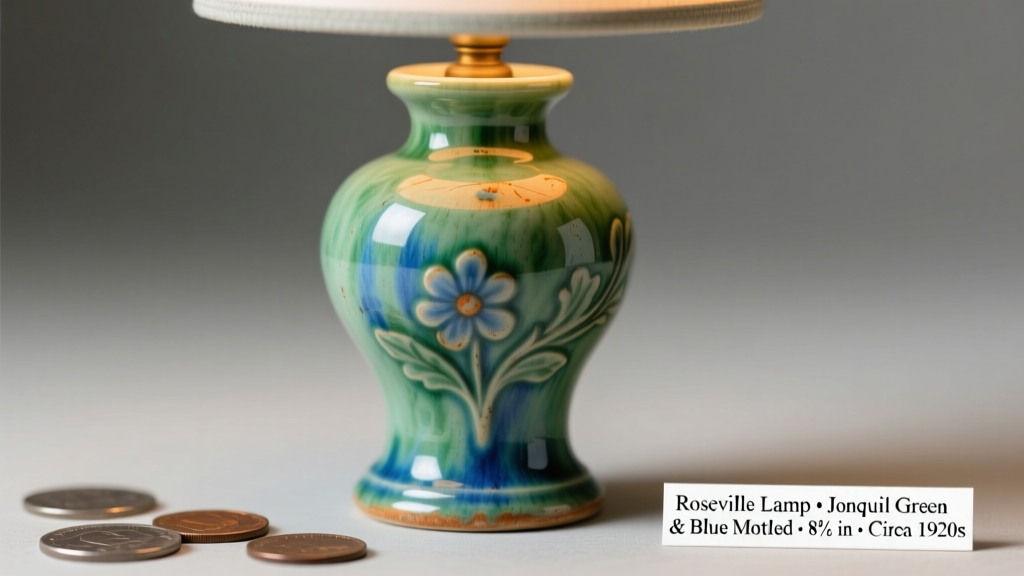
Roseville Lamp: Jonquil Green-Blue Mottled Ground, 8½-Inch Table Model — Identification, Provenance, and Market Value Analysis
William Jones: The Forgotten Architect of U.S. Monetary Reform and the 1813–1814 Treasury Leadership

Red Wing Vase '2 Nudes in Sun' — Authentication, Market Value, and Historical Context of the 11-Inch Art Pottery Masterpiece
Carnival Glass Peacock Plate: Ribbed Back, Green Iridescent, 9-Inch — Identification, History, and Market Value

Lush Abstract Art Eyeing $250K: The Untold Story Behind the December 28 Heritage Auctions Offering
Monmouth Jug: Cork Stopper, Black Mercury Lettering, Deep Brown–Tan Glaze, 5¾-Inch Height — Identification, Provenance, and Market Valuation
Quezal Vase: Yellow Satin Gold Iridescent Lily Pads with Vertical Vines — A 4-Inch Masterpiece of American Art Glass