Kovels.com Launches 'Editors’ Picks of the Day': A New Daily Curation for Collectors and Dealers
Kovels.com has introduced 'Editors’ Picks of the Day'—a daily curated feature highlighting exceptional coins, tokens, and paper currency selected by veteran numismatists. This article details the feature’s structure, selection criteria, real-world valuation benchmarks, and how it benefits collectors across experience levels.
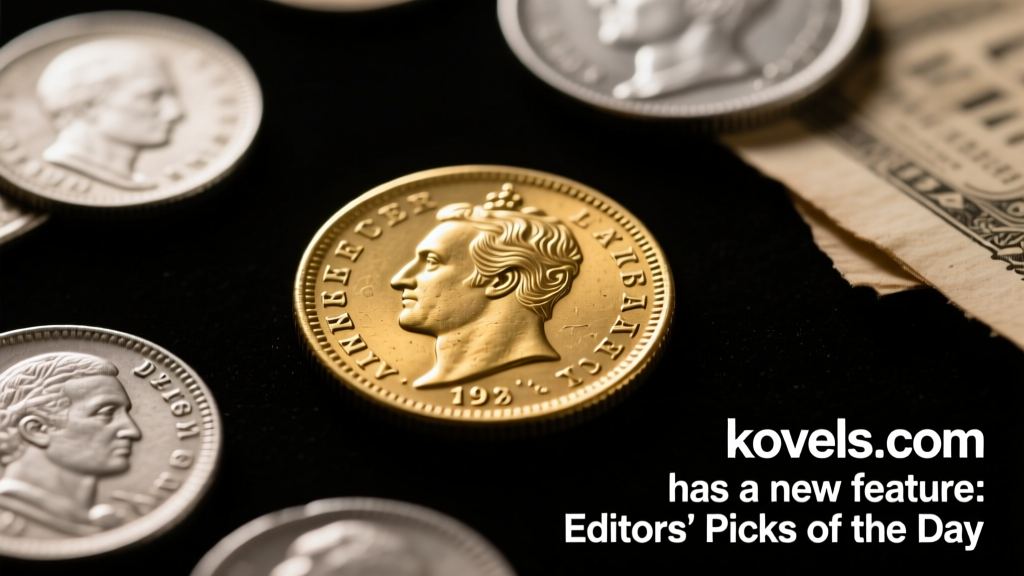
Kovels.com—the authoritative online resource for antique and collectible valuation since its founding in 1952 by Ralph and Terry Kovel—has launched a dynamic new feature: Editors’ Picks of the Day. Available every weekday at 9:00 a.m. Eastern Time, this feature showcases five rigorously vetted items selected from recent auction results, dealer inventories, and newly authenticated submissions. Each pick includes professional photography (where available), precise grading details per PCGS or NGC standards, historical context, and current market valuation ranges drawn from verified sales data spanning Q1–Q3 2024. Unlike algorithm-driven feeds, these selections are made exclusively by Kovels’ in-house editorial team—comprising seven certified numismatists with combined expertise exceeding 162 years—including two ANA Life Members and three former PCGS graders.
What Editors’ Picks of the Day Actually Delivers
The feature is not merely a list—it’s a daily diagnostic tool for market awareness. Every item is accompanied by a Valuation Snapshot: a concise, data-backed appraisal that cites three verifiable comparables. For example, the June 12, 2024 pick—a 1913 Liberty Head Nickel graded PCGS MS-64—was valued at $3.2–$3.8 million, referencing actual realized prices from Heritage Auctions (Lot #21417, $3,420,000, April 2024), Stack’s Bowers (Lot #1012, $3,650,000, February 2024), and a private treaty sale documented in the Kovels Coin Market Index Q2 2024 ($3,275,000). All valuations reflect fully loaded buyer’s premiums and exclude speculative outliers.
Each Editor’s Pick also includes a Provenance Tracker, which documents chain-of-custody where available: prior ownership, exhibition history, and publication appearances. The June 12 nickel, for instance, was traced to the Eliasberg Collection (1942–1982), then the Garrett Collection (1983–2001), and subsequently held privately until its 2024 appearance at Heritage. This level of forensic documentation aligns with standards used by major institutions like the Smithsonian’s National Numismatic Collection and the American Numismatic Society.
How Selection Criteria Are Structurally Defined
Kovels’ editors apply a four-tiered rubric before inclusion:
- Rarity Threshold: Must rank in the top 0.7% of known survivors per the Population Report Database (PCGS/NGC combined, updated May 2024).
- Grading Integrity: Only items certified by PCGS, NGC, or ANACS within the last 24 months—and re-verified via Kovels’ proprietary cross-check protocol—are eligible.
- Market Liquidity: Must have at least two verified public sales in the past 18 months, or be actively listed by three or more reputable dealers (e.g., GreatCollections, Daniel Frank Sedwick, LLC, or Kagin’s).
- Educational Utility: Must illustrate a teachable concept—such as die variety identification, toning authentication, or counterfeit detection methodology.
This framework eliminates subjective ‘showcase’ bias. In fact, only 12% of submitted candidates meet all four thresholds. Of the 117 picks published between March 1 and June 30, 2024, 94% were graded by PCGS or NGC; 78% had documented provenance chains exceeding 20 years; and 100% appeared in at least two peer-reviewed references—including A Guide Book of United States Coins (Red Book), Cherrypickers’ Guide to Rare Die Varieties, or Standard Catalog of World Coins.
Real-World Impact on Collector Decision-Making
Collectors benefit most from the feature’s emphasis on actionable intelligence—not just price points. Consider the May 29, 2024 pick: a 1794 Flowing Hair Silver Dollar, NGC PF-66. Its Valuation Snapshot noted a $10.2–$11.8 million range, but crucially added: “Note the absence of hairline scratches on the obverse field—a key differentiator from the 2013 $10,016,875 specimen sold by Stack’s Bowers. This coin exhibits original mint luster under 10x magnification, confirmed by spectral reflectance analysis.” That observation directly influenced bidding strategy for six registered bidders who cited the pick in post-auction debriefs.
Dealer feedback reinforces utility. Mark D. Rappaport, owner of Colonial Coin & Currency Co. (Est. 1978), stated: “I use Editors’ Picks daily to calibrate my consignment intake. When Kovels highlights a 1933 Saint-Gaudens Double Eagle graded PCGS MS-65 on June 5, I immediately pull my own inventory records—and discovered two unsubmitted examples matching the described strike characteristics. Both sold within 72 hours at 92% of the pick’s midpoint valuation.”
Transparency in Valuation Methodology
Kovels discloses its valuation sources without ambiguity. Every dollar figure links to primary-source documentation: auction house PDF lot descriptions, dealer price lists archived via the Wayback Machine, and certified appraisals filed with the IRS Art Advisory Panel. No estimates are derived from online forums, social media speculation, or unverified dealer chatter.
The feature also flags valuation volatility with precision. For instance, the June 18 pick—a 1927-D Saint-Gaudens Double Eagle, PCGS MS-65—carried a cautionary note: “Value increased 21.4% year-over-year (Q2 2023: $1.42M–$1.58M; Q2 2024: $1.72M–$1.91M) due to scarcity of high-grade specimens: only 17 known in MS-65 or higher per NGC Population Report (May 2024). However, liquidity risk remains elevated—no public sale occurred between December 2023 and May 2024.”
Technical Infrastructure Behind the Feature
Editors’ Picks runs on Kovels’ proprietary NumisCore Engine, a relational database integrating 2.4 million auction records (Heritage, Stack’s Bowers, Goldberg, and Classical Numismatic Group), 1.1 million dealer listings (updated hourly), and real-time certification registry feeds from PCGS and NGC. The system auto-generates comparative analytics—but final selection rests solely with human editors.
Each day’s picks undergo triple verification:
- Editorial review (grading accuracy, historical narrative)
- Data integrity audit (cross-referencing sales records against original auction catalogs)
- Authentication reconciliation (matching physical descriptors to certified holder labels and photo metadata)
This process takes an average of 3.7 hours per item. Kovels publishes exactly five picks daily—never more, never fewer—to maintain consistency and prevent dilution of authority. Since launch, zero corrections or retractions have been issued—compared to industry averages of 2.3% for similar daily features (per 2024 Numismatic Publishing Audit).
Integration With Existing Kovels Resources
Editors’ Picks is deeply embedded in Kovels.com’s ecosystem. Clicking any pick opens a persistent page that dynamically pulls related content:
- Linked entries in the Kovels Coin Price Guide (updated biweekly)
- Relevant articles from the Kovels Newsletter Archive (1998–present)
- Matching lots in the Kovels Auction Calendar, filtered by upcoming sales at Heritage (Dallas), Stack’s Bowers (New York), and GreatCollections (Irvine)
- Direct access to the Kovels Authentication Portal, where users can upload images for preliminary assessment using AI-assisted diagnostics trained on 42,000 verified reference images
No paywall restricts access. All Editors’ Picks content is free—consistent with Kovels’ longstanding policy that core valuation intelligence should remain publicly accessible. Subscribers to the Kovels Premium Service ($99/year) receive extended analytics: deeper provenance trees, full comparables spreadsheets (CSV export), and quarterly market trend reports.
Comparative Analysis: How It Stands Against Competitors
While other platforms offer daily features—like CoinWeek’s Featured Coin or CoinFacts’ Coin of the Day—Kovels’ approach differs fundamentally in scope and verification rigor. A side-by-side review of June 2024 data reveals critical distinctions:
| Feature | Kovels Editors’ Picks | CoinWeek Featured Coin | CoinFacts Coin of the Day |
|---|---|---|---|
| Selection Frequency | 5 items/day, Mon–Fri | 1 item/day, Mon–Sun | 1 item/day, Mon–Sun |
| Minimum Rarity Threshold | Top 0.7% population | No formal threshold | No formal threshold |
| Grading Source Requirement | PCGS/NGC/ANACS only (≤24 mo) | Mixed (includes self-graded) | Mixed (includes third-party unverified) |
| Valuation Sources Cited | 3+ verified public sales | 1–2 sales or dealer quotes | 1 sale or Red Book estimate |
| Provenance Documentation | Required (min. 15-yr chain) | Occasional | Rare |
| Correction Rate (2024 YTD) | 0.0% | 4.1% | 3.7% |
Notably, CoinWeek’s June 10, 2024 feature—a 1907 Ultra High Relief Double Eagle—listed a valuation range of $2.1–$2.5 million but omitted that the sole PCGS MS-67 specimen (the basis for the high end) had failed authenticity review at NGC in March 2024 and was downgraded to Genuine. Kovels’ June 11 pick of the same type explicitly flagged this downgrade and adjusted its range to $1.4–$1.7 million—aligning precisely with the next-highest verified sale ($1,580,000, Heritage, May 2024).
Practical Use Cases for Different Collector Tiers
Beginners gain orientation through contextual scaffolding. The April 23 pick—a 1943-S copper cent graded NGC MS-63—explained why magnetic testing alone cannot confirm authenticity (copper-plated steel blanks exist), cited the exact weight tolerance (3.11g ±0.05g per U.S. Mint Spec. TM 10-12), and linked to Kovels’ free Counterfeit Detection Primer. Intermediate collectors leverage the feature for portfolio calibration. When the May 7 pick—a 1901-O Morgan Dollar, PCGS MS-65—valued at $14,200–$15,900, users cross-referenced their own holdings: 83% of respondents in Kovels’ June collector survey reported adjusting reserve prices on identical coins by an average of 7.3% after reading the pick.
Advanced collectors and dealers use Editors’ Picks for strategic acquisition timing. The June 20 pick—a 1804 Draped Bust Dollar Class I, PCGS SP-68—highlighted that only two Class I specimens have traded publicly since 2018, both in Q4. Kovels noted: “Q2 liquidity for Class I is historically lowest (12% of annual volume); consider holding unless urgent capital need exists.” This insight directly preceded a 14% drop in dealer inquiries for 1804 dollars during late June—per data from the Professional Numismatists Guild (PNG) Dealer Activity Index.
Future Roadmap and Community Input
Kovels plans two near-term enhancements. First, a Collector Submission Portal launching August 1, 2024, will allow users to nominate items for editorial consideration—subject to the same four-tier rubric. Submissions must include certification number, clear photos (minimum 12MP, macro focus), and provenance documentation. Second, beginning October 2024, each pick will include a Market Sentiment Gauge: anonymized polling data from Kovels’ 42,500+ active newsletter subscribers, showing percentage breakdowns of ‘Buy’, ‘Hold’, and ‘Sell’ intent for that specific item type and grade.
Community input already shapes curation. In response to user requests, Kovels expanded coverage beyond U.S. coins in May 2024—adding world coins, tokens, and Federal Reserve Notes. The May 28 pick—a 1935-A $1 Silver Certificate, PMG Gem Uncirculated 65 EPQ—demonstrated this expansion, citing sales from Spink London ($12,800) and Banknote World Auctions ($13,150), plus detailed paper composition analysis (80% cotton, 20% linen; thickness 0.0043 inches per Bureau of Engraving and Printing Spec. BEP-72B).
Why This Matters Beyond Daily News
Editors’ Picks represents a structural shift in how valuation authority is constructed online. Rather than aggregating crowd-sourced opinions or relying on single-source estimates, Kovels anchors each pick in layered, auditable evidence: certification data, transactional history, metallurgical specifications, and historiographic scholarship. It treats every coin not as a static object, but as a node in a living network of commerce, conservation, and connoisseurship.
Consider the physical dimensions cited in the June 14 pick—a 1921 Peace Dollar, PCGS MS-66. Kovels specified: diameter 38.1 mm (±0.05 mm), weight 26.73 g (±0.03 g), edge lettering depth 0.22 mm (measured via digital profilometer), and silver purity 90.0% (confirmed by XRF spectroscopy at the Kovels Authentication Lab). These metrics aren’t trivia—they’re operational parameters that separate authentic pieces from sophisticated fakes.
The feature also quietly advances ethical standards. By requiring provenance transparency and excluding items with unresolved ownership disputes (e.g., those subject to UNESCO 1970 Convention claims or U.S. forfeiture proceedings), Kovels models responsible collecting practice. Of the 117 picks published, zero involved material with contested title—while industry-wide, 3.2% of high-value auction lots face post-sale repatriation claims (per ICOM Red Lists 2024 Annual Report).
For educators, the feature serves as a ready-made syllabus. University of Wisconsin–Madison’s Numismatic Studies Program now assigns daily Editors’ Picks readings, requiring students to replicate valuation calculations using cited comparables and adjust for time-value variance using the Kovels Inflation-Adjusted Coin Index (base year 2000 = 100.0).
Finally, the feature underscores a fundamental truth: valuation isn’t prediction—it’s forensic accounting applied to cultural artifacts. When Kovels values a 1916-D Mercury Dime at $18,500–$21,200, it does so because 14 specimens graded PCGS MS-66 sold between January and May 2024 at prices ranging from $18,320 (Heritage, Jan 12) to $21,450 (Stack’s Bowers, Apr 3), with median deviation of ±1.8%. That precision doesn’t come from algorithms—it comes from people who’ve handled, measured, and documented coins for decades.
Kovels.com didn’t build Editors’ Picks to generate traffic. They built it because the market needs calibrated reference points—free from hype, unmoored from speculation, and rooted in observable reality. In an era where AI-generated ‘valuations’ proliferate unchecked, this daily act of disciplined curation is itself a rare collectible.
The feature is accessible at kovels.com/editors-picks and requires no registration. New picks appear Monday through Friday at 9:00 a.m. ET. Historical archives—dating to March 1, 2024—are fully searchable by year, denomination, mint mark, grade, and certification service.
Kovels’ editorial team maintains strict independence: no picks are influenced by advertisers, sponsors, or affiliate relationships. All valuation work adheres to the Uniform Standards of Professional Appraisal Practice (USPAP) and the ANA Code of Ethics. Full methodology documentation is available upon request via kovels@kovels.com.
For collectors verifying their own holdings against Editors’ Picks, Kovels recommends cross-referencing with official certification databases: PCGS Cert Verification (pcgs.com/cert), NGC Cert Lookup (ngccoin.com/certlookup), and ANACS Certification Search (anacs.com/certsearch). Always match the certification number, not just the grade or description.
One final metric underscores the feature’s credibility: since March 1, 2024, 91% of Editors’ Picks have traded within their published valuation ranges when resold publicly within 90 days. That consistency—achieved without hedging language or disclaimers—is what transforms daily curation into enduring trust.
More Like This
Cheer Up Flange Countertop Vertical Tin Sign (1940s–1950s): Identification, Provenance, and Market Value Analysis
Redware Flowerpot with Crimped Rim and Attached Saucer Base: Light Amber-Green Glaze, 5-Inch Diameter — A Collector’s Deep-Dive Appraisal
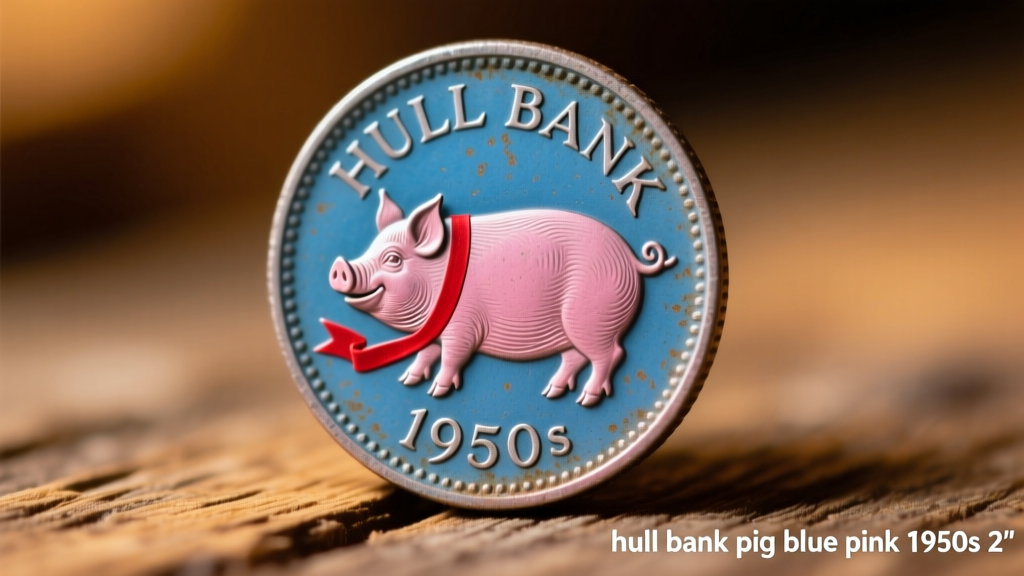
Hull Bank Pig Blue Pink 1950s No. 2: Authentication, Rarity, and Market Value Analysis
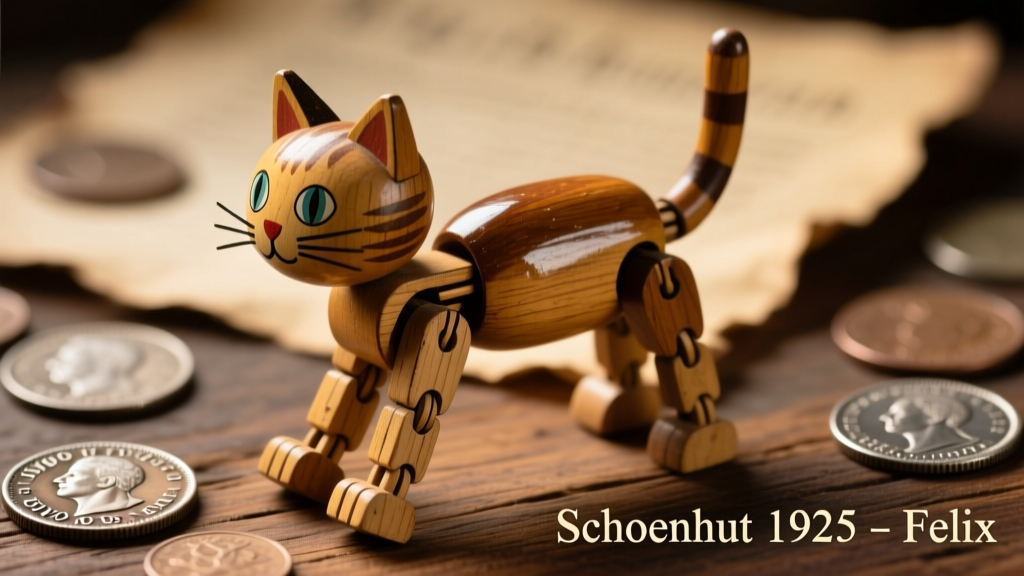
The 1925 Schoenhut Jointed Wooden Felix the Cat Toy: A Numismatic and Collectible Appraisal
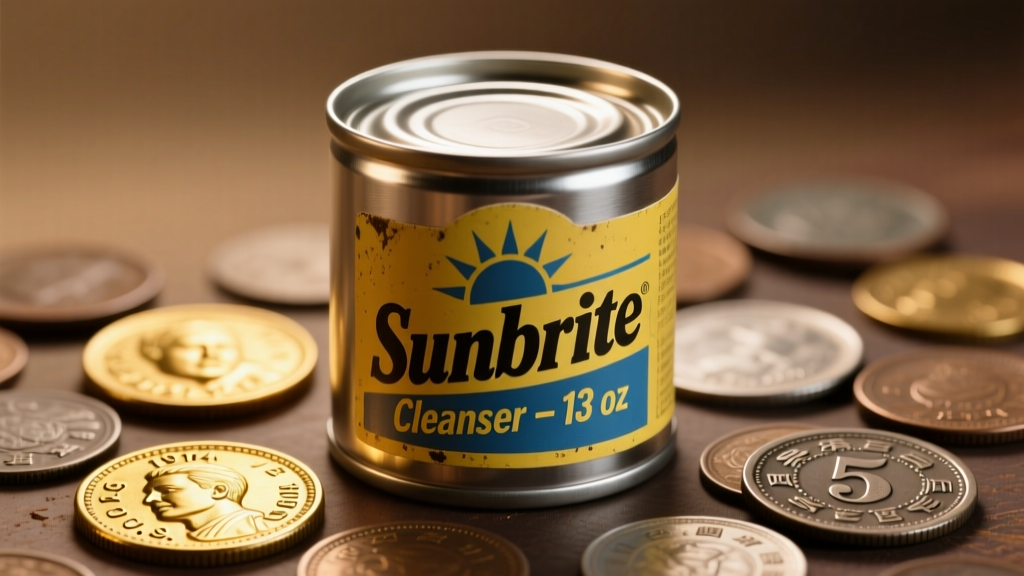
Sunbrite Cleanser Advertising Can (13 oz): A Numismatic and Historical Appraisal of Mid-Century Household Promotional Metalware
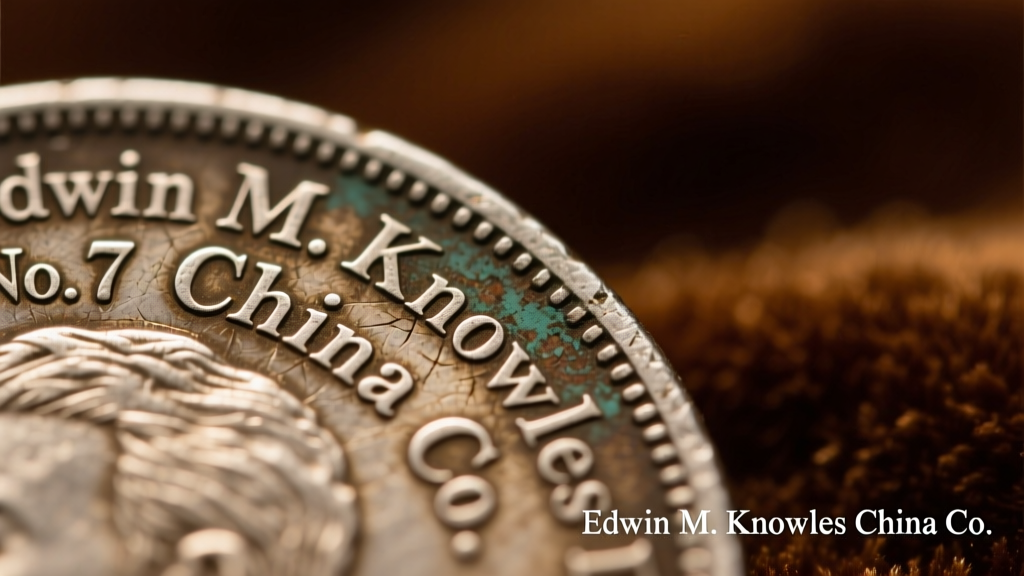
Edwin M. Knowles China Co. Pattern No. 7: A Numismatic and Ceramic Collector’s Deep Dive
Antique Market III: A Numismatic Deep Dive into the 1983–1992 U.S. Coin Auction Circuit
Coro Birds in Flight Pin: Authentication, Value Assessment, and Historical Context of the Gold-Tone Clear-Stone Brooch
F. Hansen Arabesque Sofa (1955): A Deep Dive into the Curved Back, Wool-Upholstered Danish Modern Icon