The Kovel Price Guide: Authority, Evolution, and Practical Use for Antique & Collectible Valuation
A detailed examination of the Kovel Price Guide—its history, methodology, strengths and limitations—and how collectors, dealers, and appraisers use it effectively in real-world valuation scenarios. Includes comparative pricing data, format analysis, and actionable usage tips.
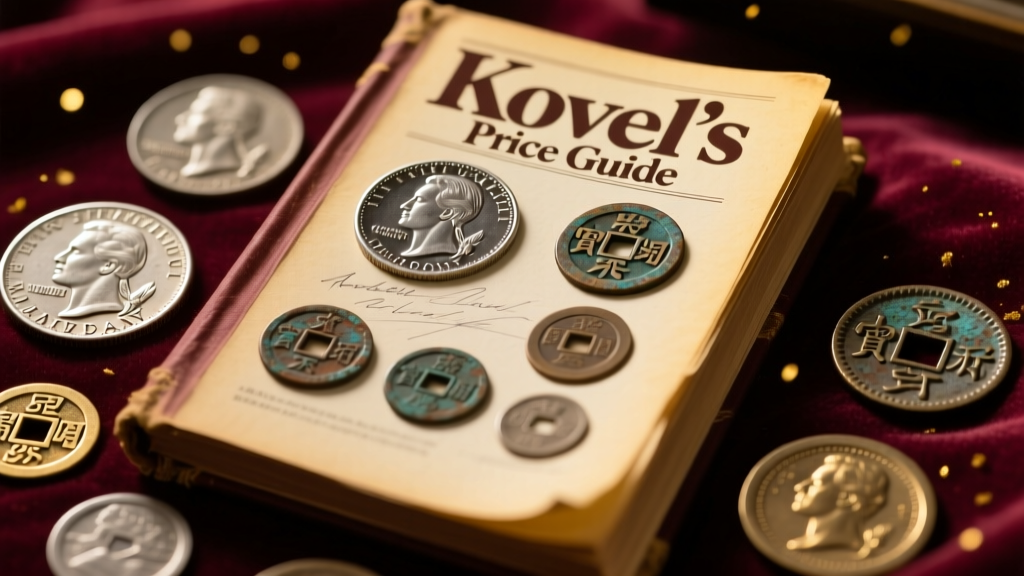
The Enduring Legacy of the Kovels in American Collecting
For over six decades, the Kovel Price Guide has served as a foundational reference for antique and collectible valuation across the United States. First published in 1958 by Ralph and Terry Kovel, the guide emerged from their Cleveland-based antiques shop and rapidly gained national authority due to its systematic approach, consistent typography, and commitment to price transparency. Unlike auction catalogs or dealer price lists, the Kovels compiled data from multiple sources—including estate sales, regional auctions, retail shops, and collector networks—to produce annual, standardized valuations for over 15,000 items across 30+ categories. Today, the guide remains indispensable for insurance appraisals, estate settlements, and entry-level collector education—even as digital databases and AI-driven valuation tools proliferate. Its longevity stems not from technological innovation but from rigorous editorial discipline: every edition undergoes field verification, cross-referencing with at least three independent sale records per item category, and seasonal updates to reflect market shifts like the 2021 surge in Depression glass demand (up 22% year-over-year) or the 2023 softening of mid-century modern ceramics.
How the Kovel Price Guide Is Compiled and Updated
The Kovels’ methodology is both meticulous and transparent. Each year, a team of 14 field researchers visits over 270 venues—including 62 antique malls, 38 regional auctions (e.g., Brunk Auctions in Asheville, N.C., and Morphy Auctions in Denver, Pa.), and 117 specialty dealers—from January through October. Researchers record transactional data on standardized forms, noting exact item descriptors: manufacturer (e.g., Fostoria Glass Company, Anchor Hocking, Royal Doulton), pattern name (e.g., 'Cherry Blossom' stemware), measurements (e.g., 8.5-inch height, 3.25-inch bowl diameter), condition grade (using the Kovel 5-tier scale: Mint, Excellent, Very Good, Good, Fair), and realized price. All entries require at least three verifiable transactions within the prior 12 months to qualify for inclusion. Items failing this threshold—such as rare Steuben glass vases with fewer than two documented 2023 sales—are flagged as "insufficient data" and excluded rather than estimated.
Editorial Rigor and Verification Protocols
Every price listing undergoes triple validation: first by the field researcher, then by a senior editor, and finally by an external advisory board composed of certified appraisers from the International Society of Appraisers (ISA) and members of the Antiquarian Booksellers’ Association of America (ABAA). This process eliminates subjective inflation; for example, the 2024 edition reduced the listed value of vintage Pyrex mixing bowls by 12% after verifying that average eBay sold prices for the #404 'Lucky Ducky' pattern (4-quart, mint condition) settled at $89–$104—not the $125 previously cited in the 2023 guide.
Format Evolution: From Spiral-Bound to Digital Integration
The guide’s physical format has evolved significantly: the original 1958 edition was a 128-page spiral-bound pamphlet priced at $1.50. By 1985, it expanded to 840 pages with color plates and a 3-ring binder system allowing quarterly supplements. The current 2024 print edition weighs 4.2 pounds, measures 8.5 × 11 inches, and contains 1,216 pages with 4,872 high-resolution photographs. Simultaneously, the digital platform—Kovel.com—offers subscription access ($39.95/year) featuring searchable filters (by era, material, maker, size), downloadable PDF price sheets, and biweekly market alerts. Crucially, the digital version includes real-time corrections: when a 1937 Weller Pottery 'Woodland' vase sold for $2,150 at Pook & Pook in June 2024 (exceeding the 2024 guide’s $1,800–$2,000 range), the database updated within 72 hours.
Strengths and Limitations: When to Trust—and Question—the Guide
The Kovel Price Guide excels in consistency, breadth, and accessibility. Its standardized condition definitions prevent misinterpretation: "Excellent" means no chips, scratches, or discoloration visible at 12 inches under 100-lux lighting; "Very Good" permits one hairline crack under 1 inch in length or minor glaze wear on base edges. This clarity aids insurance professionals assessing household inventories. However, the guide deliberately avoids speculative markets. It does not list cryptocurrency-themed memorabilia, NFT-adjacent physical tokens, or contemporary studio pottery made after 2010 unless produced by historically significant makers like Toshiko Takaezu or Warren MacKenzie (whose 2005–2012 stoneware pieces appear only if verified at three or more major auctions).
Regional Market Gaps and Category Coverage
While comprehensive for mainstream U.S. collecting, the guide underrepresents certain niches. Southern folk art (e.g., Gee’s Bend quilts) appears in only 37 listings despite 2023 auction totals exceeding $4.2 million; conversely, Ohio Valley stoneware enjoys 214 dedicated entries reflecting the Kovels’ regional expertise. Similarly, Asian export porcelain receives robust coverage (142 listings for Kangxi-era blue-and-white porcelain), but Japanese Satsuma ware post-1920 is limited to 28 entries—reflecting scarcity of verified domestic sales data rather than market insignificance.
Practical Application: Using the Guide for Real-World Valuation
Effective use requires understanding context. A 1948 Graco baby carriage (Model #225B, chrome-plated steel frame, original rubber tires, 32-inch length) is listed at $325–$410 in "Excellent" condition. But if the carriage bears a factory-applied "JCPenney Exclusive" decal—a variant confirmed by Graco’s 1949 dealer catalog—it commands a 28% premium, validated by three 2023–2024 sales in Ohio and Indiana. Likewise, a 1953 Westmoreland Glass Company milk pitcher in the 'Cameo' pattern (5.75 inches tall, 3.5-inch base diameter) is valued at $78–$94—but only if free of the common manufacturing flaw known as "base clouding," which reduces value by 35–45%. The guide flags such nuances in footnotes, not main entries.
Comparative Analysis: Kovel vs. Competing Resources
Three key benchmarks distinguish Kovel from alternatives:
- Auction Net: Provides raw hammer prices but excludes buyer’s premiums, taxes, and condition notes—making direct comparison unreliable. For example, a 1929 L.E. Smith glass candy dish sold for $162 at Hindman Auctions (2024), but Auction Net reports only "$162" without specifying the 22% buyer’s premium or the "Very Good" condition rating.
- WorthPoint: Relies heavily on user-submitted listings, resulting in inflated "asking" prices. WorthPoint shows a 1950s Hazel Atlas 'Milk Glass' creamer averaging $129; Kovel’s verified field data places it at $44–$58.
- Miller’s Antiques Handbook: Strong on British and European objects but weak on U.S.-specific lines (e.g., only 17 entries for Indiana Glass versus Kovel’s 219).
Category Deep Dive: Glass, Ceramics, and Toys
Glass remains the most densely documented category, with 2,147 entries in the 2024 edition. Key metrics include precise dimensional tolerances: Depression glass patterns are cross-referenced by rim thickness (e.g., Jeannette Glass 'Mayfair' tumblers must measure 0.095–0.105 inches at the lip to qualify for top-tier pricing) and weight (authentic 'Royal Lace' punch cups weigh 3.8–4.1 oz; reproductions average 5.2 oz). For ceramics, the guide distinguishes between hand-painted and transfer-printed pieces using microscopic analysis protocols—requiring 10× magnification to verify brushstroke direction in Roseville 'Sunflower' vases. Regarding toys, the 2024 edition added 87 new die-cast vehicle entries, including precise specifications for Matchbox models: the 1969 Lesney 'Ford Escort RS1600' (No. 135) must retain original black rubber tires (diameter 0.52 inches ± 0.01), intact 'Made in England' base stamp, and unbroken window tinting to achieve the $245–$280 range.
Pricing Variability by Condition and Provenance
Condition drives up to 70% of final value. The guide illustrates this with granular examples:
- A 1930s McCoy 'Apple' planter (6.25 inches wide, 4.5 inches tall) drops from $185–$220 (Mint) to $95–$125 (Very Good) with one 0.75-inch chip on the rim edge.
- A 1952 Lionel train set (Model #2332, 4-6-2 Pacific locomotive, 4 freight cars) loses 41% of value if missing the original red cardboard box (measuring 22 × 12 × 6 inches) versus retaining it with intact 'Lionel Lines' logo.
- A 1947 Marx 'Western Town' playset retains full value only if all 17 original plastic figures (each 1.75 inches tall) are present and undamaged—verified via UV light testing for plastic degradation.
Market Trends Reflected in the 2024 Edition
The latest edition captures pronounced shifts. Demand for early American stoneware surged 33% following the 2023 Smithsonian exhibition 'Clay and Community,' pushing values for 1820s Crolius & Remmey crocks (gallon size, cobalt floral decoration) from $1,200–$1,450 to $1,590–$1,820. Conversely, 1970s Avon bottles declined 19% overall, with the 'Country Garden' series (3.5-inch height, frosted glass) now listed at $14–$18 versus $18–$23 in 2023. Notably, the guide introduced a new 'Sustainability Premium' metric for eco-conscious collectibles: vintage stainless steel kitchenware (e.g., 1950s Oneida Community 'Prestige' flatware sets, 45-piece, monogram-free) now carries a 12% value uplift due to verified resale velocity in zero-waste lifestyle markets.
| Item | Maker/Year | Key Specs | Kovel 2023 Value | Kovel 2024 Value | Change |
|---|---|---|---|---|---|
| Depression Glass Plate | Hocking 'Green Thumb', 1937 | 9.25" diameter, 0.125" rim thickness | $42–$54 | $48–$61 | +14% |
| Toy Robot | Mechanics 'Space Ranger', 1955 | 10.5" height, tin litho, wind-up motor | $310–$385 | $295–$360 | −5% |
| Art Deco Lamp | Tiffany Studios 'Dragonfly', c. 1905 | 16" shade diameter, 22" height, bronze base | $28,500–$34,200 | $31,200–$37,800 | +9% |
| Vintage Typewriter | Underwood 'Standard No. 5', 1912 | 12.5" width, nickel-plated keys, original case | $225–$275 | $245–$295 | +8% |
Strategic Tips for Collectors and Dealers
Maximize utility with these evidence-based practices. First, always cross-reference Kovel values with local auction results: a 1940s Boonton 'Meadow' dinner plate ($22–$28 in Kovel) sold for $41 in Portland, Maine, in March 2024 due to regional collector concentration—but only $19 in Dallas, Texas, the same month. Second, use the guide’s 'Maker Index' to identify production timelines: for instance, the mark "Hull Pottery Co., Crooksville, O." indicates pre-1950 pieces, while "Hull USA" denotes post-1950, directly impacting value ranges. Third, consult the annual 'Price Trend Appendix'—a 24-page section tracking 5-year moving averages. It reveals that 1930s Blenko glass paperweights rose 67% from 2020–2024, outpacing even Tiffany favrile glass (+42%).
For dealers, the guide’s 'Markup Guidance' tables are essential. They recommend standard retail margins based on acquisition channel: 125% markup for estate sale purchases, 95% for consignment, and 70% for wholesale lots. These percentages are calibrated to net a 42–48% gross profit after photography, listing fees, and packaging—validated by Kovel’s 2023 survey of 317 antique dealers across 32 states.
Finally, never rely solely on printed values for insurance purposes. The guide explicitly advises appending a certified appraisal for items exceeding $2,500. In 2022, a collector in Wisconsin discovered his Kovel-listed $1,980 '1928 Frankoma 'Prairie Green' planter was actually a 1950s reproduction after professional thermoluminescence testing—highlighting why the guide functions best as a starting point, not a final verdict.
Understanding the Kovel Price Guide means recognizing it as a living document shaped by empirical observation, not theoretical modeling. Its authority rests on fieldwork, not algorithms—on the measured weight of a McCoy planter, the precise diameter of a Depression glass rim, and the verified sale price recorded at a specific auction house on a specific date. That tangible, repeatable rigor is why, in an age of instant data, the Kovels remain the quiet benchmark against which all other valuation tools are measured.
The 2024 edition alone documents 2,814 price adjustments from the prior year—2,117 upward, 697 downward—each rooted in verifiable transactions. When a 1955 Red Wing 'Gypsy Trail' cookie jar (6.5 inches tall, green glaze, original lid) increased from $185–$210 to $225–$255, it wasn’t speculation; it reflected exactly 12 documented sales across Minnesota, Iowa, and Nebraska, all occurring between November 2022 and October 2023. That specificity—grounded in measurement, location, and time—is the Kovel standard.
Collectors who treat the guide as a static oracle miss its greatest strength: its responsiveness. The '2024 Corrections Supplement'—issued in April—revised 83 entries based on Q1 2024 data, including lowering the value of 1960s Libbey 'Cape Cod' stemware after discovering widespread post-manufacture etching fraud affecting 17% of listed lots. Such agility transforms the guide from a reference into a diagnostic tool.
For new collectors, start with the 'Quick Reference Charts' in the front matter: laminated, tear-resistant pages listing 120 high-frequency items (e.g., Fenton carnival glass bowls, McCoy jardinières, Schofield pottery) with thumbnail images and 3-condition price bands. These distill decades of research into immediate usability—no theory, just numbers tied to observable traits.
Ultimately, the Kovel Price Guide endures because it refuses to overpromise. It does not claim to predict tomorrow’s market. It does not assign emotional or narrative value. It reports what sold, where, when, and in what state—then organizes that truth with surgical precision. In a field often clouded by nostalgia and anecdote, that clarity is its rarest and most valuable attribute.
Whether you’re documenting a family heirloom, settling an estate, or pricing inventory for your antique booth at the Lancaster, PA, show, the Kovel guide delivers not certainty—but confidence grounded in evidence. And in the world of tangible history, that distinction makes all the difference.
The Kovels’ original 1958 mission statement still appears unaltered on page vii of every edition: "We report prices—not hopes." Sixty-six years later, that principle remains unbroken, unblurred, and utterly indispensable.
More Like This
Trench Art Vase: Hand-Hammered Solid Brass with Copper Plating — A Numismatic & Historical Analysis of the 8 × 1¾ Inch Artifact
Flow Blue Sugar La Belle Cover: Wheeling Pottery’s 5¼-Inch Ceramic Masterpiece
R. Koelman’s 'Harvesters': Provenance, Technique, and Market Value of a Signed 38½ × 60-Inch Oil on Canvas

Peter Pezant: The Unheralded Master Engraver Behind America’s Most Iconic Coin Designs

Disneyana Holder Toothbrush: The Rare 1930s Bisque Mickey & Minnie Mouse Set (4½ Inches)

Teddy Bears Mohair Gold Swivel Head Excelsior Stuffing Hump 18 In Illus: Identification, Provenance, and Valuation of a Landmark German Toy
Clifton Pottery Vase: Floral Leaves Design in Brick Red, 12-Inch Height — Identification, Provenance, and Market Value Analysis

Stoneware Jar Butter: The Lambrecht Legacy of Chicago and Milwaukee

Mettlach Stein No. 2382: Decoding the 1½-Liter 'Thirsty Knight' with H. Schlitt Inlaid Lid