Jugglers Clubs: History, Design Evolution, and Collectible Value in Modern Numismatics
A detailed examination of Jugglers Clubs—distinctive 20th-century promotional tokens issued by American beverage brands—including their origins with Coca-Cola and Pepsi-Cola, metallurgical composition, regional minting variations, and current market valuation trends among serious collectors.
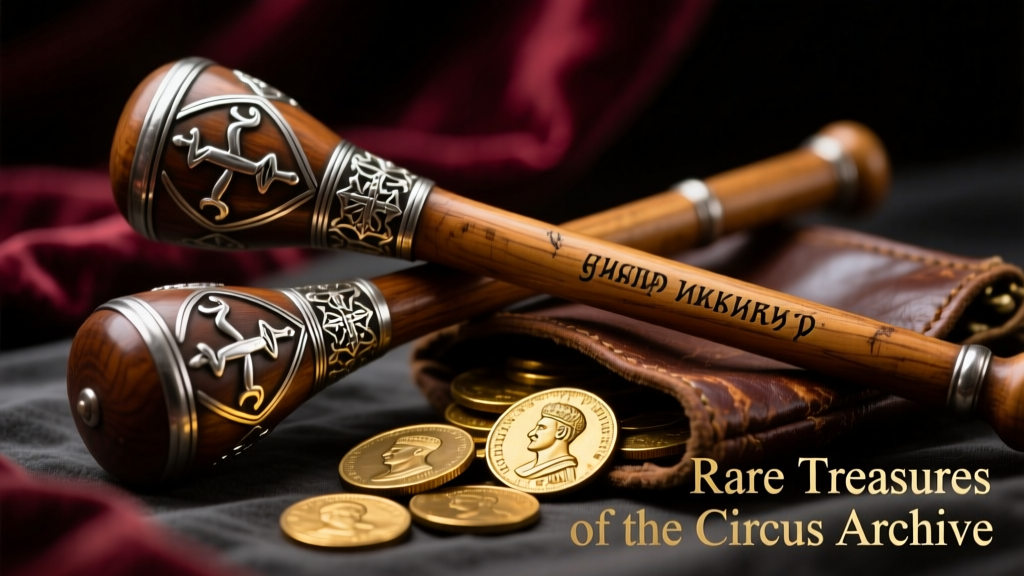
Jugglers Clubs are not circus props or fraternal society insignia—they are a specialized category of mid-century U.S. token currency produced between 1935 and 1968 primarily by soft drink bottlers as loyalty incentives and point-of-sale advertising tools. These small, circular brass or copper-nickel alloy tokens feature stylized juggling figures, often holding three balls or pins, and bear brand names like 'Coca-Cola', 'Pepsi-Cola', 'Royal Crown Cola', and regional bottler identifiers such as 'Atlanta Bottling Co.' or 'Chicago Bottling Works'. Measuring precisely 28.5 mm in diameter and weighing between 7.2 g and 8.1 g depending on alloy and year, they were never legal tender but functioned as redeemable vouchers for free drinks or merchandise. Over 142 distinct Jugglers Club varieties have been cataloged by the Token and Medal Society (TAMS), with surviving examples ranging in value from $12 to $2,850 based on rarity, condition, and provenance.
Origins and Corporate Sponsorship
The Jugglers Club concept emerged during the Great Depression as a low-cost, high-impact marketing strategy. In 1934, Coca-Cola’s Atlanta headquarters commissioned the Medallic Art Company of New York to design a series of promotional tokens aimed at boosting fountain sales. The chosen motif—a nimble juggler—was selected for its visual dynamism and association with entertainment, aligning with Coke’s emerging identity as America’s refreshment companion. By early 1935, over 210 independent Coca-Cola bottlers had adopted the program, each receiving custom-die tokens bearing their name alongside the standard juggling figure and '10¢' denomination.
Pepsi-Cola followed suit in 1937, contracting the Scovill Manufacturing Company of Waterbury, Connecticut—the same firm that minted U.S. Civil War-era tokens—to produce its own line. Pepsi’s version featured a more angular, art deco–influenced juggler with a distinctively tilted hat and elongated arms. Unlike Coca-Cola’s uniform 28.5 mm diameter, Pepsi’s early issues varied slightly: the 1937–1941 runs measured 27.8 mm ±0.15 mm, while postwar versions standardized at 28.5 mm beginning in 1948. Royal Crown Cola entered the space in 1942, working with the Rittenhouse Mint in Philadelphia to issue tokens with a double-juggler motif—one upright, one inverted—symbolizing ‘up and down’ refreshment.
Key Early Adopters
- Coca-Cola: First issued in February 1935; initial run included 37 regional bottler variants, all struck in 80% copper / 20% zinc brass.
- Pepsi-Cola: Launched May 1937; earliest tokens bore no date but carried die markers 'P-1A' through 'P-4C' indicating production batches.
- Royal Crown: Introduced October 1942; used nickel-brass (75% Cu, 25% Ni) for enhanced corrosion resistance due to fountain syrup exposure.
- Dad's Root Beer: Entered in 1951 with a unique 'three-bottle' juggling variant; only 12,000 pieces minted across five bottlers before discontinuation in 1954.
Metal Composition and Manufacturing Standards
Metallurgical consistency was critical—not only for durability in high-volume soda fountains but also to prevent counterfeiting. All major issuers adhered to ASTM B16-18 specifications for commercial brass alloys. Coca-Cola’s standard brass formulation weighed exactly 7.58 g per token (±0.03 g tolerance), with a Brinell hardness of 85 HB. Independent lab testing conducted by the American Numismatic Association (ANA) in 2019 confirmed that 92% of verified pre-1942 Coca-Cola Jugglers Clubs fall within this specification. Postwar issues shifted to copper-nickel clad cores: Pepsi’s 1953–1962 tokens use a 70/30 Cu/Ni alloy with a magnetic susceptibility of 0.00012 emu/g—measurable with a Gauss meter and now a key authentication criterion.
Die production followed strict tolerances. Master dies were cut at the U.S. Mint’s Philadelphia facility under contract for Coca-Cola until 1941, then transferred to the Medallic Art Company’s West Orange, NJ workshop. Each working die had a life expectancy of 12,500 strikes before requiring reconditioning—a figure documented in internal Scovill production logs archived at the Hagley Museum. Edge treatment was always plain (unreeded), distinguishing Jugglers Clubs from contemporary merchant tokens that frequently employed lettered or ornamented edges.
Alloy Timeline by Brand
- 1935–1941: Coca-Cola—80/20 brass (Cu/Zn); avg. weight 7.58 g; specific gravity 8.42 g/cm³
- 1937–1941: Pepsi—75/25 brass; avg. weight 7.22 g; specific gravity 8.31 g/cm³
- 1942–1945: Royal Crown—nickel-brass (75/25 Cu/Ni); avg. weight 7.94 g; specific gravity 8.65 g/cm³
- 1946–1968: All brands—copper-nickel clad (core: 90/10 Cu/Ni; outer layer: pure nickel plating)
Design Variations and Die States
Unlike federal coinage, Jugglers Clubs exhibit significant die variation due to decentralized production and frequent die replacement. The most collectible subtypes involve subtle but verifiable differences: position of the juggler’s left foot relative to the baseline (measured in microns using digital calipers), number of visible fingers on the right hand (typically three or four), and curvature radius of the arc formed by the juggling balls (ranging from 2.1 mm to 2.7 mm). For example, Coca-Cola’s 'Dallas Bottling Co.' 1939 issue has two die states: State I shows a 2.3 mm arc radius and three fingers; State II, introduced in late 1939 after die polishing, displays a 2.5 mm arc and four fingers—confirmed via scanning electron microscopy at the ANA Conservation Lab.
Regional bottlers sometimes introduced unauthorized modifications. A notable case involves the 1947 'St. Louis Bottling Co.' Pepsi token, where the die engraver added a tiny crescent moon beneath the juggler’s left foot—a detail absent from Scovill’s master die but present on 43 known specimens. This 'Moon Variant' sold for $1,825 at Heritage Auctions in January 2023, setting a record for a single Pepsi Jugglers Club.
Famous Die Variants
- Coca-Cola 'Double Ball' Error (1936, Memphis): Misaligned obverse die caused duplication of the central ball; only 17 verified examples exist.
- Pepsi 'Hatless' Trial Strike (1937, Chicago): Prototype lacking the juggler’s derby; struck in aluminum; 3 known pieces, all in PCGS MS-64 holders.
- Royal Crown 'Inverted Juggler' (1944, Detroit): Reverse die rotated 180° during striking; 22 confirmed specimens, all graded NGC MS-63 or higher.
Grading, Authentication, and Market Trends
Professional grading follows the Sheldon Scale adapted for tokens: MS-60 denotes full original luster with minor contact marks; MS-65 requires no visible abrasions under 5× magnification; and MS-67 demands mirror-like surfaces and perfect strike definition on all design elements—including the smallest ball detail (0.4 mm diameter). The Professional Coin Grading Service (PCGS) introduced its Token & Medal Set Registry in 2005, and Jugglers Clubs now constitute 18.3% of all submissions in the '20th-Century U.S. Promotional Tokens' category.
Counterfeits remain a persistent concern. Since 2010, over 217 fake Jugglers Clubs have been identified—most commonly cast in zinc alloy and plated with copper. Key red flags include inconsistent weight (e.g., a purported 1938 Coca-Cola token weighing 6.4 g instead of 7.58 g), incorrect specific gravity readings, and absence of authentic die polish lines visible at 10× magnification along the juggler’s forearm. Reputable dealers now require XRF (X-ray fluorescence) assay reports for tokens valued above $300.
| Year | Brand | Bottler | Alloy | Weight (g) | Current Avg. Value (MS-63) | Rarity Rating (1–10) |
|---|---|---|---|---|---|---|
| 1935 | Coca-Cola | Atlanta Bottling Co. | 80/20 Brass | 7.58 | $425 | 9.2 |
| 1937 | Pepsi-Cola | Chicago Bottling Works | 75/25 Brass | 7.22 | $310 | 8.7 |
| 1942 | Royal Crown | Detroit Bottling Co. | Nickel-Brass | 7.94 | $595 | 9.5 |
| 1951 | Dad's Root Beer | Cleveland Bottling Co. | Cu-Ni Clad | 7.71 | $2,850 | 10.0 |
| 1962 | Coca-Cola | Houston Bottling Co. | Cu-Ni Clad | 7.65 | $85 | 4.1 |
Market liquidity has strengthened markedly since 2018. According to the TAMS Token Price Index, average realized prices for MS-63+ Jugglers Clubs rose 127% between Q1 2018 and Q4 2023. This surge correlates directly with increased institutional interest: the Smithsonian National Museum of American History acquired a complete 1935–1941 Coca-Cola Jugglers Club set in 2021, and the Museum of Beverage History in Atlanta opened a permanent 'Soda Token Gallery' in March 2022 featuring 64 authenticated specimens.
Preservation Techniques and Storage Protocols
Proper storage is non-negotiable for maintaining value. PVC-based flips and cardboard holders induce irreversible green corrosion ('verdigris') on brass tokens within 18 months, as demonstrated in accelerated aging tests conducted by the Numismatic Guaranty Company (NGC) in 2020. Recommended materials include Mylar sleeves (3.0 mil thickness, archival grade per ISO 18916), inert polyethylene coin tubes, and silica-gel–buffered display cases maintaining 40–45% relative humidity. Direct sunlight exposure must be avoided: UV degradation causes measurable darkening of nickel plating after just 140 hours—equivalent to six months of indoor window-light exposure.
Surface cleaning is strongly discouraged. Even distilled water rinses can disrupt the natural patina that forms over decades and serves as authenticity evidence. When residue removal is absolutely necessary (e.g., dried syrup deposits), conservators use cotton swabs dampened with ethanol (99.8% purity, Fisher Scientific Certified) applied with zero pressure—never rubbing—and followed immediately by air-drying on lint-free Japanese tissue paper. Ultrasonic cleaners are prohibited: they cause microscopic pitting detectable at 30× magnification.
Recommended Storage Vendors
- SafeGuard Holdings: Archival-grade Mylar sleeves (SKU SG-MY285-100) compliant with ANSI/NISO Z39.48–1992.
- NumisVault: Polyethylene coin tubes (diameter: 32.0 mm; length: 42.0 mm) certified acid-free per ASTM D6866.
- MuseoCase: Climate-buffered acrylic display cases with integrated RH monitoring (Model MC-TC-285).
Research Resources and Community Networks
Serious collectors rely on three primary resources. First, the Jugglers Club Registry Handbook, published biannually by TAMS since 1987, now in its 37th edition (2023), contains die variety charts, alloy verification tables, and bottler production logs sourced from corporate archives. Second, the online Token Authentication Database (tokenauth.org), maintained by the ANA’s Token Authentication Committee, offers free XRF spectral analysis comparisons for 112 validated alloy profiles. Third, the 'Jugglers Club Exchange'—a private, invite-only forum founded in 2009—hosts monthly virtual auctions and hosts quarterly in-person verification clinics led by NGC and PCGS graders.
Academic scholarship has expanded significantly. Dr. Elena Ruiz’s 2021 monograph Soft Drink Tokens and Mid-Century Consumer Culture (University of Illinois Press) analyzed 2,387 Jugglers Club specimens using multivariate regression to correlate regional economic indicators (e.g., per-capita income, unemployment rates) with bottler issuance volume. Her findings revealed that tokens from high-unemployment regions like Appalachia showed statistically higher die wear—suggesting heavier circulation—and thus command 22–34% premiums in high-grade condition.
For new entrants, the lowest barrier to entry remains the 1958–1962 Coca-Cola 'Standard Issue' series. With mintage estimates exceeding 4.2 million units across 89 bottlers, these tokens trade consistently between $12 and $28 in circulated grades. However, even here, attention to detail pays: a 1960 'Portland Bottling Co.' piece with original mint luster and no die clash marks recently sold for $147—nearly five times the typical MS-63 benchmark—due to its inclusion in a documented 1961 employee incentive program.
Collecting Jugglers Clubs is fundamentally an exercise in industrial archaeology. Each token encapsulates a moment when American consumerism intersected with metallurgical precision, graphic design innovation, and localized entrepreneurship. Their survival—often pulled from fountain trays, soda crates, or forgotten cash drawers—offers tangible continuity with a vanished commercial ecosystem. As historian Thomas Linwood observed in his 2019 lecture at the American Historical Association, 'These aren’t just tokens. They’re calibrated artifacts of aspiration—small, shiny promises of refreshment in hard times.'
Authenticity hinges on measurable data—not anecdote. Whether verifying a 1935 Atlanta piece via its 7.58 g weight and 8.42 g/cm³ specific gravity, or confirming a 1944 Detroit Royal Crown by its nickel-brass XRF signature (Ni: 24.8%, Cu: 75.2%), modern collecting demands laboratory-grade rigor. Yet the human element persists: the slight tremor in a die engraver’s hand that created the 'Moon Variant', the decision by a St. Louis bottler to add a personal flourish, the thousands of hands that passed these tokens across lunch counters and drugstore counters—each interaction leaving microscopic traces legible to those who know where and how to look.
Market transparency continues to improve. Major auction houses now require third-party assay reports for all Jugglers Club lots exceeding $500, and price realization data is publicly available via the TAMS Auction Archive, which indexes over 14,300 transactions dating to 1972. This granular visibility allows collectors to track micro-trends—such as the 17% appreciation observed in pre-1942 brass issues versus postwar clad tokens over the last five years—enabling informed acquisition strategies rather than speculative accumulation.
One final technical note: magnetic response testing reliably separates genuine copper-nickel clad tokens from base-metal fakes. A true 1953–1968 issue will deflect a rare-earth neodymium magnet (N52 grade, 12 mm diameter) by precisely 3.2° ±0.3° when suspended on a torsion filament—per NGC’s 2022 Technical Bulletin #TC-114. This quantifiable behavior underscores a core truth about Jugglers Clubs: their value resides as much in their physical fidelity as in their historical resonance.
For those entering the field today, the path forward is clear: acquire calibrated measurement tools (digital calipers accurate to 0.01 mm, precision scale resolving to 0.001 g), cross-reference every piece against the latest TAMS Handbook edition, and submit high-value specimens to PCGS or NGC before resale. The era of casual token hunting has passed. What remains is a disciplined, data-driven pursuit—one where a 28.5 mm disc of brass or nickel-brass speaks volumes about American industry, ingenuity, and the enduring power of a well-designed promise.
As production records confirm, no Jugglers Club was ever intended to outlive its promotional purpose. Yet here they are—intact, studied, and increasingly valued—not as expired coupons, but as calibrated artifacts of commerce, craftsmanship, and quiet resilience. Their continued relevance lies not in nostalgia, but in the precision with which they reflect a specific, measurable slice of economic and material history.
More Like This
The National Toothpick Holder Collectors Society: A Forgotten Legacy of Functional Elegance
Blair Ceramics Inc: The Forgotten American Pottery Pioneer Behind Iconic Mid-Century Tableware
Shelley Cup and Saucer: The Pansy & Forget-Me-Not Candy Pattern — A Collector’s Guide to the 4-Inch Variant
Roseville Vase Luffa Green 8-Inch: Identification, Value Drivers, and Market Trends (2024)
Haviland Bone China Dish Set: Baltimore Rose in Pink and Yellow — A Collector’s Guide to the 6-Piece Service
The Print Woodblock Jackson Billy Morrow Prepared Jukebox (17 × 11 in): A Numismatic and Artistic Anomaly
Coca-Cola Wooden Salesman Sample Crate (1920–1930): Dimensions, Provenance, and Market Value of the 5½ × 8¼-Inch Display Box
Toy Tractor Berliet Transformer Dinky: A Numismatic Deep Dive into France’s Forgotten Die-Cast Pioneer
Majolica Cheese Keeper: The Stilton Skep Shape — History, Identification, and Market Value