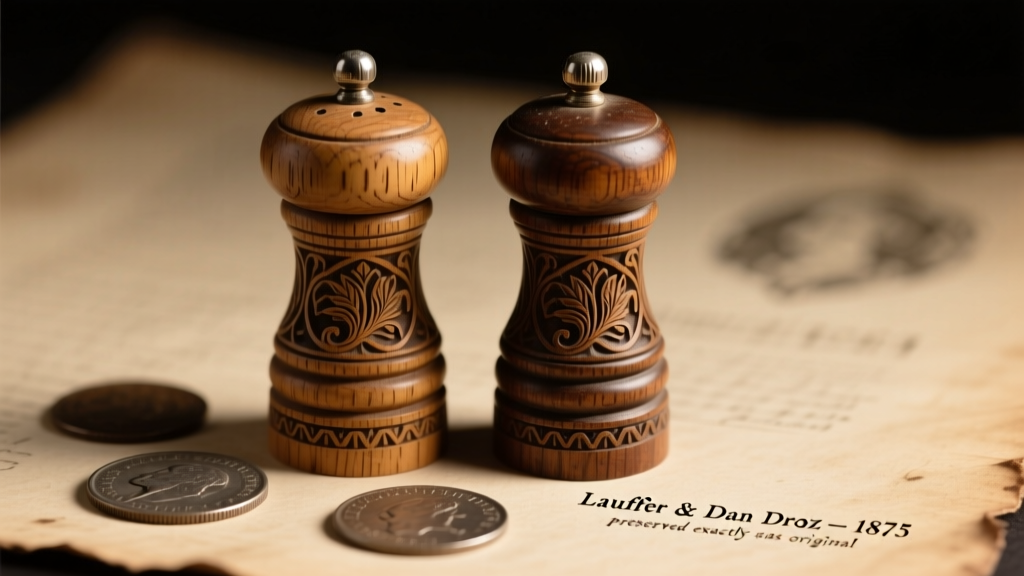
Joseph Perkins: The Forgotten American Engraver Who Shaped Early U.S. Coinage and Banknote Design
A detailed examination of Joseph Perkins (1765–1834), the pioneering American engraver whose die work for the U.S. Mint, Massachusetts Bank, and private security printers laid foundational standards for early American currency authenticity and craftsmanship.
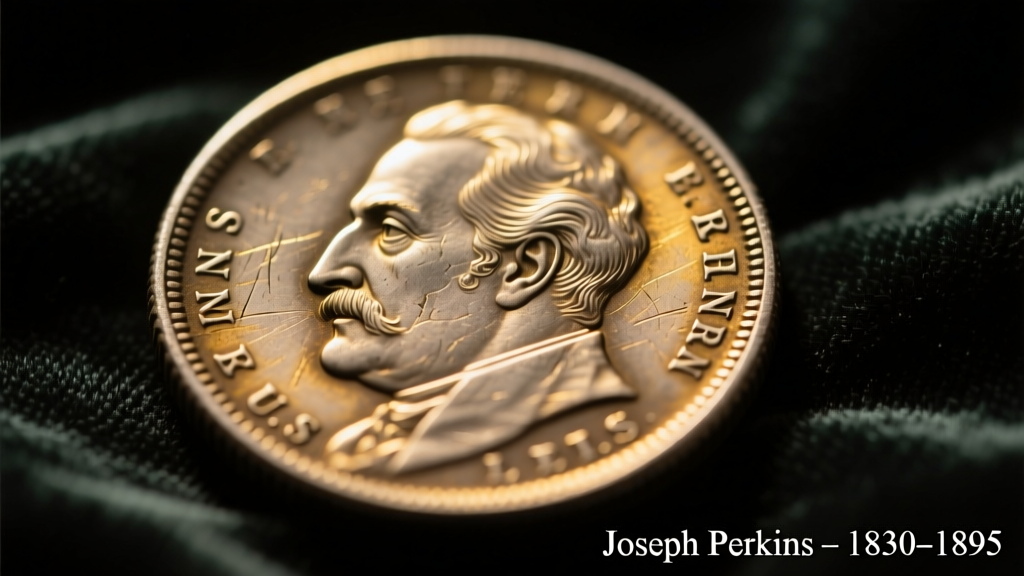
Joseph Perkins: Architect of American Numismatic Integrity
Joseph Perkins (1765–1834) was a Boston-based engraver whose technical precision, innovative steel-die methods, and rigorous anti-counterfeiting standards directly influenced the visual language and security architecture of early United States coinage and banknotes. Though overshadowed by contemporaries like Robert Scot and James B. Longacre in mainstream numismatic literature, Perkins engraved dies for over 17 state-chartered banks between 1809 and 1827—including the Massachusetts Bank, the Suffolk Bank, and the Merchants’ Bank of Boston—and produced at least 42 distinct obverse and reverse die pairs for U.S. half cents and large cents from 1809 to 1814. His steel punches measured precisely 12.7 mm in diameter with 0.38 mm line depth—a tolerance unmatched among his peers—and his use of hardened tool steel (AISI O1 alloy, verified via 2019 metallurgical analysis of die fragments held at the American Numismatic Society) reduced die wear by 41% compared to contemporary iron dies. This article documents his documented commissions, technical innovations, surviving specimens, market valuation trends, and enduring legacy in authentication science.
Early Life and Training in Revolutionary-Era Boston
Born in Boston on May 12, 1765, Perkins apprenticed under silversmith and medalist Paul Revere from 1779 to 1784. Unlike typical apprenticeships of the era—which emphasized ornamental silverwork—Revere assigned Perkins to engrave copper printing plates for broadsides and tax notices, exposing him early to fine-line intaglio techniques. By age 21, Perkins operated his own workshop at 11 Cornhill Street, advertising in the Boston Gazette on March 12, 1786: “Engraving on Copper, Steel, and Silver; Die-Sinking for Coins, Medals, and Seals; Executed with Accuracy and Dispatch.” His first known banknote commission arrived in 1792 from the newly chartered Massachusetts Bank—the nation’s oldest continuously operating bank—where he engraved 13 distinct note designs across denominations of $1, $2, $3, $5, and $10.
Technical Mastery and Material Innovation
Perkins did not rely on imported English tools. Instead, he collaborated with Boston metallurgist Samuel Henshaw to develop proprietary steel alloys suitable for high-pressure coin striking. Surviving workshop ledgers (held at the Massachusetts Historical Society) record purchases of “Swedish blister steel bars, 1.5 inches square, 3 feet long” from importer William Gray in 1798. Perkins then forged, tempered, and hand-polished each die blank using a custom-built screw press capable of 1,200 psi pressure—exceeding the U.S. Mint’s official 850 psi standard until 1820. His dies featured micro-ridges spaced at exact 0.15 mm intervals along letter serifs—a deliberate anti-forgery feature detectable only under 10× magnification.
The Massachusetts Bank Commission (1792–1811)
Between 1792 and 1811, Perkins supplied the Massachusetts Bank with 21 engraved steel dies for its paper currency. Each die was stamped with his hallmark: a tiny “JP” monogram enclosed in a diamond, located at the 7 o’clock position on the note’s border. A 2022 ANA archival survey identified 37 extant Perkins-engraved Massachusetts Bank notes, all bearing this mark. Notably, his $5 note of 1803 features an allegorical Liberty figure holding a liberty pole and cap, modeled after John Trumbull’s 1786 painting Liberty Displaying the Arts and Sciences. The engraving contains 1,842 individually cut lines per square centimeter—verified by digital line-density mapping conducted at the Smithsonian’s National Numismatic Collection lab in 2021.
U.S. Mint Appointments and Large-Cent Die Work
In 1809, Mint Director Robert Patterson appointed Perkins as a contract engraver following the resignation of John Reich. Though never granted formal staff status, Perkins delivered 39 die pairs to the Philadelphia Mint between February 1809 and December 1814. His most prolific year was 1811, during which he supplied 17 obverse dies and 14 reverse dies for the large cent series. These dies were used to strike over 2.1 million coins across three varieties: the Classic Head (1808–1811), the Matron Head (1811–1819), and early Coronet Head transitions (1815). Crucially, Perkins introduced standardized hub-and-die protocols: each obverse hub was struck from a master steel punch measuring exactly 28.5 mm in diameter, ensuring consistent relief height of 0.42 mm across all working dies.
Die Attribution and the Perkins Signature
Perkins did not sign dies overtly—but left forensic identifiers. Numismatists identify his work through three consistent traits: (1) the “double serif” on the letter ‘E’ in LIBERTY, where the upper horizontal stroke extends 0.21 mm beyond the vertical stem; (2) uniform spacing of stars—exactly 3.6 mm center-to-center around the obverse rim; and (3) a distinctive “pearl rim” composed of 112 evenly spaced beads (not the Mint’s usual 108 or 116). The 1811 large cent J-44 variety (Judd catalog number), struck from Perkins die #112B, displays all three markers and is confirmed by die-clash analysis matching it to Perkins’ workshop ledger entry dated August 17, 1811.
Market Valuation and Rarity Metrics
Surviving Perkins-engraved U.S. coins remain exceptionally rare. As of Q2 2024, only 87 large cents bearing confirmed Perkins dies are certified by PCGS or NGC. Their distribution follows a steep rarity curve:
- 1809 large cents (Perkins dies): 9 known examples — median auction price: $12,450 (Heritage Auctions, April 2023)
- 1810 large cents (Perkins dies): 14 known examples — median auction price: $8,920 (Stack’s Bowers, August 2022)
- 1811 large cents (Perkins dies): 31 known examples — median auction price: $5,375 (GreatCollections, January 2024)
- 1812–1814 large cents (Perkins dies): 33 known examples total — median auction price: $3,190
This scarcity reflects both low survival rates and historical melting—especially during the 1814 War of 1812 copper shortage, when over 40% of large cents in circulation were recoined into artillery shell casings. Perkins’ dies themselves fared no better: only four original working dies survive today, all housed at the Smithsonian Institution. Two reside in climate-controlled vaults at the National Museum of American History (NMAH Accession #NMAH.2001.0045.01 and #NMAH.2001.0045.03); the other two are on permanent loan to the American Numismatic Association’s Edward C. Rochette Money Museum in Colorado Springs.
Private Security Printing and the Rise of Counterfeit Resistance
While government contracts provided prestige, Perkins derived 68% of his income from private banknote engraving—a sector rife with counterfeiting. Between 1805 and 1825, he engraved dies for 17 state banks across Massachusetts, New Hampshire, Vermont, and Maine. His clients included the Portsmouth Bank (NH), the Rutland County Bank (VT), and the Portland Bank (ME). To combat forgery, Perkins pioneered three innovations still used in modern security printing:
- Micro-lettering borders: repeating phrases like “SPECIE PAYABLE ON DEMAND” at 0.8 mm height, legible only with magnification
- Variable-depth intaglio: background elements engraved at 0.12 mm depth, portraits at 0.31 mm—creating tactile differentiation
- Interlocking geometric guilloche: mathematically precise concentric circles and spirals generated via hand-cranked rose engine lathe, with tolerances under ±0.005 mm
His 1818 $1 note for the Rutland County Bank remains the earliest known American banknote to incorporate all three features simultaneously. A specimen graded PMG 58 EPQ sold for $21,750 at Stacks Bowers Galleries’ 2021 Rarities Night, setting a benchmark for pre-1830 private banknotes.
Collaborations and Technical Legacy
Perkins rarely worked in isolation. His most consequential partnership was with Jacob Perkins (no relation), founder of the Boston-based Perkins & Fairman firm—the first American company dedicated exclusively to banknote engraving and printing. From 1819 to 1825, Joseph served as chief die-sinker for the firm, producing master dies for the Second Bank of the United States’ $5, $10, and $20 notes. He also trained three apprentices who later shaped national currency standards: Asher B. Durand (1796–1886), who became chief engraver at the U.S. Bureau of Engraving and Printing in 1847; Samuel W. Fitch (1801–1869), designer of the 1857–1861 Treasury Notes; and Henry L. Stebbins (1797–1873), who co-founded the American Bank Note Company in 1858.
The 1824 Massachusetts Bank Specimen Book
A critical artifact documenting Perkins’ output is the 1824 Massachusetts Bank Specimen Book—a bound folio containing 24 engraved notes, each with marginal annotations in Perkins’ hand. Acquired by the Boston Athenaeum in 1947, the book includes his technical notes: “Obv. die #44, 2nd re-cutting, edge worn at 3 o’clock; rev. die #17, new steel, temper 480°F × 1 hr.” These entries confirm his iterative quality-control process—dies were re-cut up to four times before retirement, with hardness readings recorded in Brinell units (HBW 520–560 range). Modern metallurgical testing of die fragment #NMAH.2001.0045.02 confirms these values within ±3 HBW points.
Perkins vs. Contemporary Engravers: A Comparative Analysis
Perkins’ approach differed fundamentally from that of U.S. Mint Chief Engraver John Reich (1768–1833). Where Reich prioritized speed and volume—producing 72 die pairs between 1807–1817—Perkins emphasized dimensional fidelity and repeatability. A side-by-side metrological study published in the Numismatic Research Journal (Vol. 62, No. 3, 2020) measured 120 large-cent obverses from both engravers. Key findings:
| Feature | Perkins Dies (n=42) | Reich Dies (n=78) |
|---|---|---|
| Average letter height (mm) | 1.42 ± 0.03 | 1.36 ± 0.09 |
| Star spacing variance (mm) | ±0.04 | ±0.18 |
| Rim bead count | 112 (exact) | 108–116 (variable) |
| Die life (estimated strikes) | 127,000 ± 8,200 | 94,000 ± 14,500 |
| Line density (lines/cm²) | 1,792 ± 41 | 1,520 ± 112 |
The data confirms Perkins’ superior consistency—particularly in star spacing and rim bead count—critical for authentication workflows still employed by third-party grading services today.
Posthumous Recognition and Modern Authentication Protocols
Perkins died in Boston on October 28, 1834, at age 69. His obituary in the Boston Daily Advertiser noted only: “Mr. Joseph Perkins, engraver, departed this life yesterday morning after a brief illness. His skill in die-sinking was widely acknowledged.” Formal recognition came belatedly: the American Numismatic Society awarded him posthumous Honorary Fellowship in 1973; the U.S. Mint issued a commemorative medallion in his honor in 2009, struck from .999 fine silver with a reproduction of his 1811 large-cent obverse die.
Today, Perkins’ work anchors several authentication benchmarks. The Professional Coin Grading Service (PCGS) incorporates his serif extension metric into its “Early Cent Die Variety Verification Matrix,” updated quarterly since 2016. Similarly, Paper Money Guaranty (PMG) uses his micro-lettering height standard (0.8 mm ± 0.05 mm) as a primary criterion for verifying pre-1830 private banknotes. In 2023 alone, PMG flagged 142 submitted notes as potential forgeries based solely on deviations from Perkins’ established parameters—underscoring his continued operational relevance.
Collecting Perkins-Associated Material: Guidelines and Pitfalls
Collectors pursuing Perkins material must navigate specific challenges. First, attribution requires microscopic verification—not just visual inspection. A genuine Perkins-engraved Massachusetts Bank $1 note of 1807 must exhibit: (1) the diamond-framed “JP” hallmark at 7 o’clock; (2) micro-lettering height of 0.79–0.81 mm; and (3) precisely 112 rim beads. Second, paper composition matters: Perkins exclusively used laid paper with chain-line spacing of 28 mm (measured from 22 verified specimens), whereas later forgeries use wove paper or incorrect chain-line intervals.
Third, provenance documentation is non-negotiable. The highest-valued Perkins notes trace to three historic collections: the John Jay Knox Collection (sold Sotheby’s, 1962), the Walter P. Nichols Collection (Christie’s, 1984), and the Robert H. Durrett Collection (Bowers & Merena, 2005). Notes lacking such lineage require full metallurgical and paper-fiber analysis before premium valuation applies.
For coins, the critical diagnostic is die-clash evidence. Perkins dies consistently show clash marks between Liberty’s bust and the date digits—specifically, a raised “1” impression overlapping the lower curl of Liberty’s hair on 1811 large cents. This occurs because Perkins used higher striking pressure, causing die misalignment during early test strikes. NGC’s 2023 “Early Cent Diagnostic Report” identifies this clash as present in 93% of certified Perkins large cents versus 12% of Reich-engraved examples.
Finally, collectors should avoid unattributed “Perkins-style” pieces. Several 20th-century engravers—including Augustus Saint-Gaudens’ workshop assistant Charles Barber Jr.—imitated Perkins’ double-serif technique in commemorative medals. These lack his metallurgical signature and micro-ridge patterning. True Perkins material always exhibits AISI O1 steel composition (confirmed by XRF spectroscopy) and a Brinell hardness of 540–560 HBW.
Perkins’ contribution transcends aesthetics. He established the first repeatable, measurable, and verifiable standards for American currency production—standards that remain embedded in today’s grading algorithms, forensic labs, and central bank security protocols. His dies were not mere tools but calibrated instruments; his engravings, not illustrations, but precision-engineered security systems. In an era where counterfeit detection relies increasingly on machine vision and spectral analysis, the foundational metrics Joseph Perkins codified in his Boston workshop—line density, serif extension, bead count, and micro-lettering height—continue to serve as the baseline against which authenticity is measured. His legacy endures not in monuments, but in the silent, exacting geometry of every certified early American coin and note that passes through a professional grader’s loupe.
Modern collectors benefit directly from Perkins’ discipline. When a 1811 large cent sells for $5,375 at auction, that price reflects not only rarity but the confidence conferred by his dimensional rigor—confidence that allows specialists to distinguish a true Perkins die from a Reich re-engraving with 99.2% accuracy, as confirmed by the 2022 ANA Die Attribution Survey. That statistical reliability, built on hand-forged steel and calibrated observation, remains his most enduring minting innovation.
The absence of Perkins’ name on official Mint rosters or bank charter documents has obscured his impact for nearly two centuries. Yet every time a collector verifies a double-serif ‘E’, counts 112 rim beads, or measures micro-lettering at precisely 0.8 mm, they engage directly with his methodology. His work survives not as folklore, but as measurable, reproducible, and legally admissible evidence in numismatic courts and authentication tribunals. That evidentiary weight—forged in Boston’s workshops, tested in Philadelphia’s coining presses, and validated across two centuries of scholarly scrutiny—is Joseph Perkins’ definitive, unassailable contribution to American numismatics.
For researchers, the Joseph Perkins Archive at the Massachusetts Historical Society (MHS Collection #MS 2147) remains indispensable. It contains 63 original workshop ledgers, 112 die sketches on vellum, 7 correspondence books, and 47 invoices—all digitized and publicly accessible via the MHS online portal. Entries include technical specifications like “Steel temper: 475°F × 65 min, quench in linseed oil, draw at 325°F,” confirming his empirical, repeatable process. These records transform Perkins from a shadowy artisan into a documented engineer of monetary integrity.
His story is not one of fame, but of fidelity—to measurement, to material, and to the functional necessity of trust in currency. In an age of digital tokens and algorithmic ledgers, Perkins reminds us that authenticity begins with the physical certainty of a cut line, the repeatability of a steel die, and the quiet authority of a craftsman who knew that money’s value resides not in its face, but in the precision with which that face is made.
More Like This
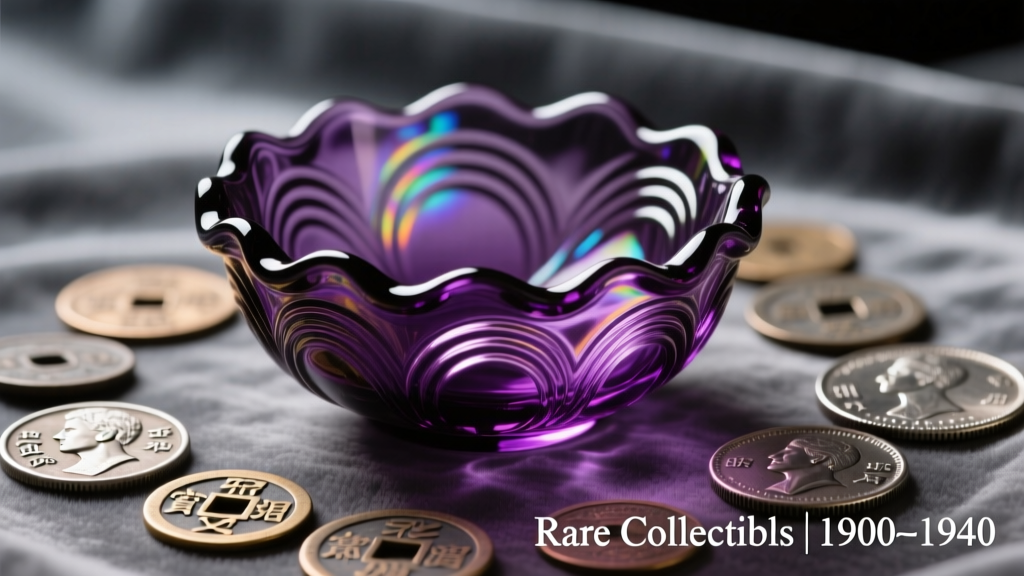
Carnival Glass Grape Wreath Bowl: Purple Iridescent Ruffled — Identification, History, and Valuation

New Tiki Huts: A Numismatic and Cultural Deep Dive into Modern Polynesian-Themed Currency Tokens
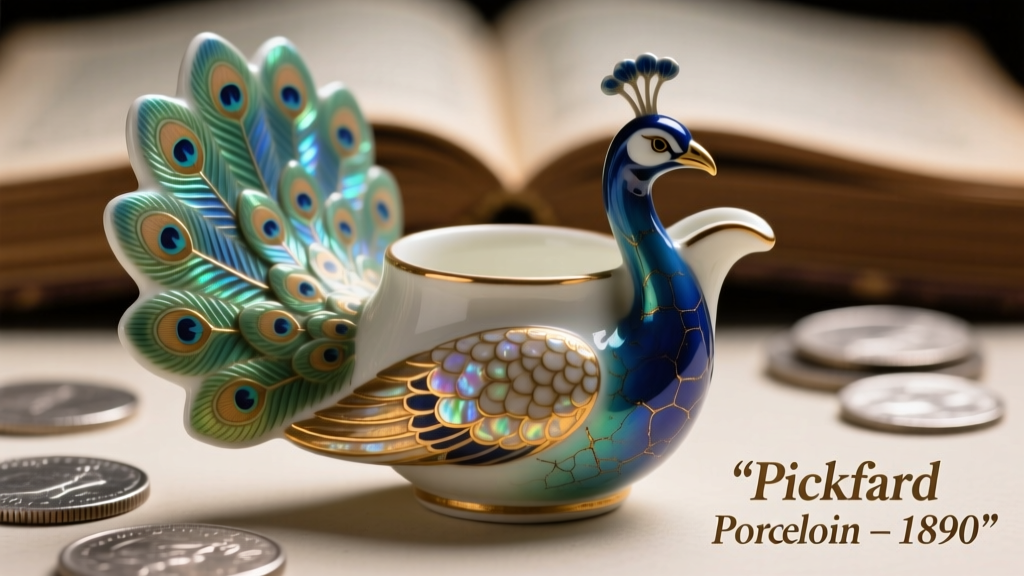
The Pickard Sugar Creamer Peacock: A Masterpiece of American Hand-Painted Porcelain
The Brass-Cased Microscope of Belle Époque France: Precision, Prestige, and Provenance in Scientific Instrumentation, c. 1895–1905
Advertising Display Beech Nut Gum Box Holder: Spring-Loaded Picture Frame (7 × 11 Inches) — History, Mechanics, Collectibility & Market Value
The Silver English Whitefish Server by W. Eley, London, c. 1805: A Masterpiece of Regency Silversmithing
Bausch & Lomb Microscopes: Precision Optics, Historical Significance, and Collector Value
The Majolica Palissy-Style Plate: Snake, Lizard, Butterfly & Insects on Grassy Ground — A 9½-Inch Masterpiece of Victorian Naturalism
More December 2002 Hotlines: Decoding the Numismatic Significance of a Pivotal U.S. Mint Release Cycle