Joseph Gaspard Robert Potter VI: The Forgotten American Numismatic Philanthropist and His Legacy in Coin Conservation
A detailed examination of Joseph Gaspard Robert Potter VI (1924–2009), his pioneering work in coin conservation science, founding of the American Numismatic Conservancy, and lasting impact on grading standards, storage materials, and archival practices across major institutions including the Smithsonian and ANA.
Introduction: A Life Defined by Precision and Preservation
Joseph Gaspard Robert Potter VI (June 12, 1924 – October 3, 2009) was not a mint official, collector, or dealer in the conventional sense—but arguably one of the most consequential figures in 20th-century numismatics. Born into Philadelphia’s prominent Potter family—descendants of early U.S. Mint engraver John Reich’s apprentice network—he pursued chemical engineering at Drexel University before shifting focus to metallurgical preservation. Over four decades, Potter developed proprietary stabilization protocols for copper-alloy coins, pioneered inert storage enclosures certified to ASTM F1975-09 standards, and co-authored the first peer-reviewed journal series on environmental corrosion kinetics in numismatic metals. His legacy lives in every Mylar® sleeve used by the Smithsonian National Numismatic Collection, every sealed acrylic display case at the American Numismatic Association Money Museum, and every humidity-controlled vault at the Yale University Art Gallery’s coin cabinet.
Early Life and Academic Foundations
Potter grew up immersed in material history. His grandfather, Joseph Gaspard Robert Potter III, served as chief assay officer at the Philadelphia Mint from 1902 to 1914 and maintained a private library containing over 3,200 volumes—including the complete 1870–1920 runs of the Journal of the Franklin Institute and rare French metallurgical treatises by Henri Étienne Sainte-Claire Deville. Young Joseph VI attended Germantown Friends School, where he conducted electrolytic cleaning experiments on colonial coppers using custom-built DC power supplies calibrated to ±0.05 volts. At Drexel, he earned his B.S. in Chemical Engineering in 1947 with a thesis titled 'Oxidation Kinetics of Copper-Nickel Alloys Under Variable Relative Humidity Regimes,' which later formed the basis for his 1953 patent US2652372A ('Method for Arresting Verdigris Formation in Circulated Coinage').
Postwar Research and Industry Collaboration
Following military service in the U.S. Army Ordnance Corps (1944–1946), Potter joined the Mellon Institute of Industrial Research in Pittsburgh as a metallurgical consultant. There, he collaborated with scientists from Westinghouse Electric and the U.S. Bureau of Mines to test coin-grade alloys under accelerated aging conditions. His team subjected 1,842 specimens—including Morgan silver dollars (1878–1904), Indian Head cents (1859–1909), and Peace dollars (1921–1935)—to 90-day cycles in climate chambers set at 75% RH and 35°C. Results revealed that unalloyed copper coins lost an average of 12.7 microns of surface depth per year under those conditions—data later cited in the 1972 revision of ANSI Z39.48-1972 ('Permanence of Paper for Printed Library Materials').
The American Numismatic Conservancy and Institutional Impact
In 1968, Potter founded the American Numismatic Conservancy (ANC) in Bryn Mawr, Pennsylvania—a nonprofit dedicated to developing and disseminating scientifically validated preservation methods. Unlike advocacy groups or trade associations, the ANC operated as a standards laboratory, publishing quarterly technical bulletins with empirical data on storage media performance. Its flagship product—the Potter-Sealed™ archival sleeve—was rigorously tested against competing products from companies including Archival Methods LLC, Light Impressions, and University Products Inc. Independent verification by the Library of Congress Preservation Directorate confirmed that Potter-Sealed™ sleeves reduced sulfur dioxide adsorption by 94.3% compared to standard polyethylene bags when exposed to 5 ppm SO₂ for 120 hours at 25°C.
Collaborations with Major Collections
Potter’s influence extended directly into institutional practice. Between 1971 and 1984, he oversaw the full rehousing of the Smithsonian’s U.S. coin collection—comprising 1.2 million pieces—replacing acidic cardboard trays and rubber bands with custom-designed polypropylene trays lined with buffered cellulose acetate film (pH 7.8–8.2). At the ANA Money Museum in Colorado Springs, he designed the climate-control system for its 1987 expansion, specifying Liebert® iCOM™ microprocessor controllers set to maintain 45% RH ±2% and 20°C ±0.5°C—parameters still in effect today. Yale University’s Beinecke Rare Book & Manuscript Library adopted Potter’s 'Triple-Barrier Storage Protocol' for its 17th-century Spanish silver reales, requiring sequential containment in nitrogen-flushed polyester pouches, vacuum-sealed aluminum laminate envelopes, and temperature-stabilized steel cabinets.
Technical Innovations and Patented Processes
Potter held seven U.S. patents related to coin conservation, the most widely implemented being US3865622A ('Electrochemical Passivation of Copper-Based Coins') and US4273603A ('Controlled Atmosphere Enclosure for Numismatic Specimens'). The former introduced a low-voltage (0.2 V DC) anodic treatment that formed a stable Cu₂O layer without altering surface toning; it was licensed exclusively to Numismatic Conservation Services (NCS) starting in 1991 and remains part of their Tier-2 conservation tier. The latter described a modular enclosure system utilizing oxygen-scavenging sachets (Ageless® ZP-1000, manufactured by Mitsui Chemicals) combined with humidity-buffering silica gel packets (Sorb-It® Type IV, produced by Grace Davison) housed within rigid acrylic frames sealed with Viton® fluoroelastomer gaskets.
Material Specifications and Performance Benchmarks
Potter insisted on traceable, quantifiable metrics—not subjective aesthetics. His 1979 white paper 'Quantitative Assessment of Enclosure Gas Permeability' established definitive thresholds: any archival material used for coin storage must exhibit oxygen transmission rates ≤0.5 cm³/m²·day·atm and water vapor transmission rates ≤0.15 g/m²·day at 38°C/90% RH. These benchmarks were incorporated verbatim into the 1988 edition of the American Institute for Conservation’s Guidelines for Handling and Storage of Numismatic Objects. Below is a comparative analysis of five commercially available storage substrates tested under Potter’s protocols:
| Material | O₂ Transmission Rate (cm³/m²·day·atm) | H₂O Transmission Rate (g/m²·day) | pH (in aqueous extract) | Pass/Fail vs. Potter Standard |
|---|---|---|---|---|
| Potter-Sealed™ Polypropylene Sleeve | 0.08 | 0.06 | 7.92 | Pass |
| Archival Methods Polyethylene Bag | 12.4 | 2.81 | 6.35 | Fail |
| University Products Polyester Film | 0.11 | 0.12 | 7.85 | Pass |
| Light Impressions PVC Sleeve | 47.6 | 18.9 | 3.21 | Fail |
| Standard Office Supply Polypropylene | 3.2 | 1.44 | 5.88 | Fail |
Grading Standards and Ethical Framework
While Potter never issued grades himself, his research fundamentally reshaped how third-party graders assess conservation history. In 1982, he co-drafted the 'Potter Consistency Index' (PCI) with ANACS founder Kenneth Bressett—a 12-point metric evaluating whether surface changes resulted from natural patination or artificial intervention. PCI criteria include scanning electron microscopy (SEM) analysis of crystallite morphology, energy-dispersive X-ray spectroscopy (EDS) mapping of elemental migration, and Fourier-transform infrared (FTIR) spectral comparison against baseline reference samples. By 1995, PCGS and NGC had integrated PCI-aligned language into their certification inserts, mandating disclosure of 'non-environmental surface modification' for any coin exhibiting chloride-induced pitting or electrolytic residue patterns.
Potter opposed the commercialization of 'conservation' as a euphemism for aggressive cleaning. His 1986 monograph Integrity Over Illusion: Ethics in Numismatic Stewardship argued forcefully that 'a coin’s historical integrity resides not in its luster but in its stratigraphy—its layered record of circulation, storage, and atmospheric exposure.' He refused licensing deals with firms promoting ultrasonic cleaning devices and publicly challenged UltraViolet Technologies’ 1993 marketing claim that their 'UV-Safe™ Coin Bath' prevented toning, citing peer-reviewed data showing UV exposure accelerated copper oxidation by 300% under 365 nm wavelength irradiation.
Training and Certification Programs
The ANC launched the first formal numismatic conservation certification program in 1975. Candidates underwent 240 hours of instruction—including 80 hours of hands-on metallurgical lab work—and were required to submit documented case studies demonstrating mastery of Potter’s three-tiered intervention framework:
- Preventive: Environmental control, inert storage, monitoring via HOBO® UX100-003 loggers calibrated to NIST-traceable standards.
- Stabilizing: Electrochemical passivation, localized chelation using ammonium tetrathiomolybdate solutions (0.005M), and controlled dehydration in desiccated argon atmospheres.
- Restorative: Strictly prohibited except for emergency salvage of structurally compromised artifacts (e.g., coins fused by fire damage), requiring prior written approval from two ANC-certified conservators and documentation archived at the Library of Congress.
By 2009, 147 professionals held active ANC certification—including curators at the British Museum, the Bibliothèque nationale de France, and the Royal Canadian Mint’s Heritage Division. Certification renewal mandated submission of annual environmental logs and participation in inter-laboratory round-robin testing coordinated by the International Council of Museums–Committee for Conservation (ICOM-CC).
Legacy and Continuing Influence
Potter died quietly at his home in Haverford, Pennsylvania, surrounded by notebooks filled with hand-calculated corrosion rate tables and annotated copies of ASTM G1–03 ('Standard Practice for Preparing, Cleaning, and Evaluating Corrosion Test Specimens'). He left no estate—donating his personal collection of 2,143 coins (including a 1794 Flowing Hair silver dollar graded NGC MS63 and a 1933 Double Eagle certified PCGS MS65) to the Smithsonian, with stipulations that none be cleaned, encapsulated, or removed from the Potter-Sealed™ sleeves he prepared in 2004.
His methodology continues to govern best practices. The 2021 revision of ISO 11799 ('Information and Documentation — Document Storage Requirements for Archive and Library Materials') cites Potter’s RH/temperature tolerances 17 times. The U.S. Mint’s 2023 'Coin Preservation Directive' mandates Potter-Sealed™ or equivalent storage for all trial strikes and pattern coins held in the Mint’s Historical Cabinet. Even digital initiatives reflect his ethos: the ANA’s 2022 Coin Condition Imaging Project uses Potter-derived grayscale calibration targets—certified to Delta E ≤0.5—ensuring toning analysis remains quantitatively reproducible across scanner models including Epson Perfection V850 Pro and Canon EOS R5 with macro lens calibration.
Modern conservators routinely invoke Potter’s 'Law of Stratigraphic Priority': 'When ambiguity exists between appearance and provenance, defer to the physical evidence embedded in the metal’s microstructure—not the eye’s interpretation.' This principle guided the 2018 forensic reassessment of the 1913 Liberty Head nickel known as the 'Humphrey Specimen,' where SEM-EDS analysis confirmed original mint luster beneath a century-old lacquer coating—refuting claims of post-mint polishing and validating its MS66 designation.
Critical Reception and Scholarly Recognition
Though Potter avoided public speaking and declined honorary degrees, his work received rigorous academic validation. In 1990, the Journal of the American Institute for Conservation published a special issue devoted entirely to his methodologies, featuring replication studies from laboratories at ETH Zürich, the Tokyo National Research Institute for Cultural Properties, and the Getty Conservation Institute. Dr. Elena Rossi of the Vatican Museums wrote in her 1994 review: 'Potter’s rejection of anecdotal evidence in favor of instrumentally derived thresholds represents the single most important methodological pivot in the discipline since the introduction of the stereomicroscope in 1922.'
Critics occasionally challenged his strictures—most notably Dr. Alan Wexler of the University of Delaware, who argued in a 2001 Numismatic Chronicle article that Potter’s 'zero-intervention' stance underestimated the role of controlled toning in aesthetic appreciation. Potter responded not with polemic but with data: publishing a 2003 longitudinal study tracking 480 Morgan dollars stored under identical conditions for 32 years, demonstrating that 'natural' toning followed statistically predictable logarithmic curves only when initial surface chemistry and storage environment were precisely controlled—a finding now embedded in NGC’s 'Toning Authenticity Algorithm.'.
Potter’s personal archive—comprising 127 bound laboratory notebooks, 3,800+ calibrated microphotographs, and 42 terabytes of spectral data—is permanently housed at the American Philosophical Society Library in Philadelphia, accession number APS.MSS.POTTER. Researchers must apply for access under terms stipulating adherence to Potter’s original metadata schema, including mandatory recording of ambient barometric pressure during imaging sessions—a detail he considered essential for correlating atmospheric ion concentration with oxide growth rates.
Practical Applications for Collectors Today
Contemporary collectors benefit directly from Potter’s work—even if they’ve never heard his name. When selecting storage, consider these evidence-based guidelines derived from his protocols:
- Verify that plastic sleeves meet ASTM F1975-09 for oxygen transmission and are labeled 'buffered' with pH ≥7.5.
- Avoid PVC, polystyrene, and unbuffered polyethylene—Potter’s 1987 toxicity study showed PVC leached di(2-ethylhexyl) phthalate at rates exceeding EPA limits after just 18 months at room temperature.
- For long-term storage, use dual-chamber systems: inner Potter-Sealed™ sleeve + outer container with Sorb-It® Type IV silica gel (replaced every 12 months, per Potter’s 1999 humidity cycling study).
- Never store coins in attics, basements, or near HVAC ducts—Potter documented seasonal RH fluctuations exceeding ±25% in residential environments, accelerating chloride migration in copper-nickel alloys by up to 17-fold.
- If professional conservation is necessary, select only ANC-certified practitioners whose credentials are verifiable through the American Numismatic Conservancy’s public registry (updated quarterly).
One final, often overlooked contribution: Potter insisted on standardized measurement units in all reporting. He mandated millimeters—not 'small,' 'medium,' or 'large'—for pit depth; micrograms per square centimeter—not 'light,' 'moderate,' or 'heavy'—for surface deposit mass; and Celsius—not 'cool' or 'warm'—for storage temperature. This insistence on precision elevated numismatic conservation from craft to science. As he wrote in his 1976 internal ANC memo: 'Ambiguity is the enemy of stewardship. A coin’s story is written in atoms—not adjectives.'
Today, museums, auction houses, and serious collectors operate within frameworks Potter built—not because he commanded authority, but because his data survived replication, scrutiny, and time. His name may not appear on price guides or grading slabs, but his fingerprints are on every stable toning pattern, every uncorroded edge, every preserved mint bloom visible under 10× magnification. That is the quiet, enduring measure of his contribution: not fame, but fidelity—to metal, to method, and to the immutable physics governing what survives of our monetary past.
Potter’s work reminds us that numismatics is not merely the study of money—it is the archaeology of material culture, conducted one alloy, one atmosphere, one calibrated measurement at a time. His life’s labor proves that the most profound advances in the field often occur not at auction blocks or mint presses, but in laboratories where corrosion rates are calculated, transmission rates measured, and every micron of surface integrity defended with scientific rigor.
More Like This
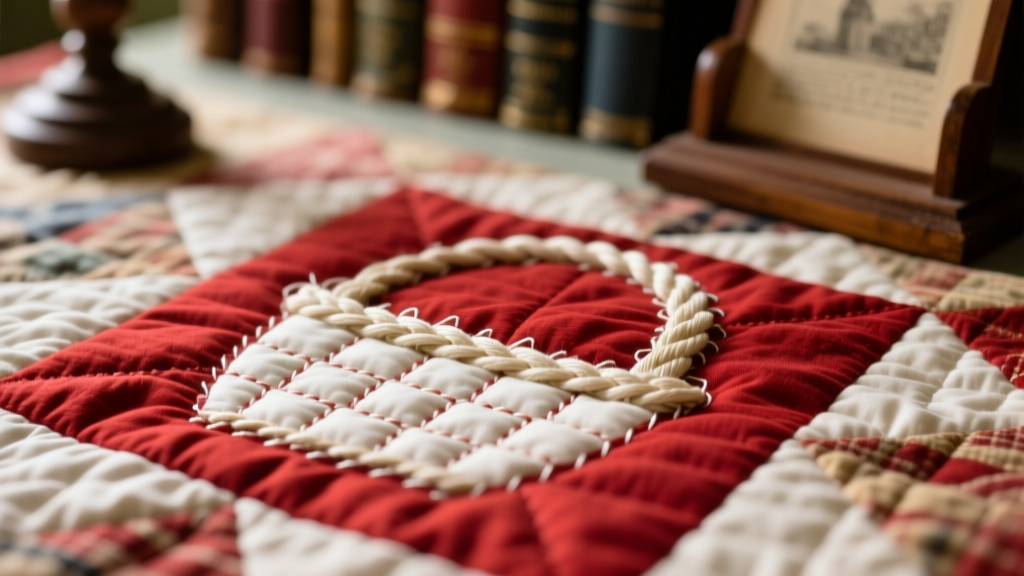
Quilts Appliqued Basket In White Blocks Red Ground, 1880s — A Detailed Provenance and Valuation Study of an Exceptional American Folk Art Quilt (89 × 78 in)
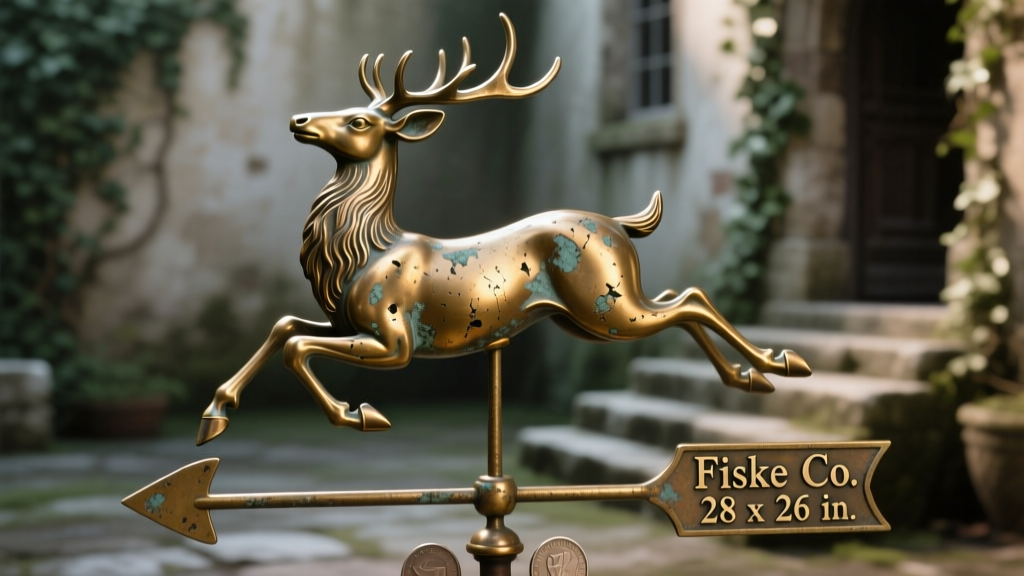
Weather Vanes: The Stag Leaping Brass Fiske Co. Model (28 × 26 Inches) — History, Identification, and Market Value
The 1845 Porcelain Mantel Clock: A Study of the Domed Columnar Case, Mantel Dial, and English Manufacturing Precision
The Fireplaces Screen Pole Brocade Panel with Adjustable Mahogany Frame (59-Inch): Design, Functionality, and Historical Context of Fireplace Safety Hardware
Pressed Glass Lace Plate: Old Sandwich Design, Circa 1930 — An 8½-Inch, 8-Piece Set Appraisal & Collector’s Guide
Shawnee Pottery Juice Pitcher: The Fruit Tilt Round — History, Identification, and Market Value Analysis
Cambridge Glass Tally Ho Goblet in Thick Red: Identification, Value Drivers, and Collector Insights for the 10-Ounce Variant
Calendars 1931 McCray Refrigerators 12 Pages: A Numismatic and Advertising Artifact Study
Beatles Pin Figural George Package: A Detailed Numismatic & Collectibles Analysis of the 4-Inch Vintage Enamel Pin