Joseph Blake Thaxter: The Forgotten Engraver Who Shaped Early American Coinage
Joseph Blake Thaxter (1824–1897) was a pivotal yet underrecognized engraver whose hand-cut dies produced the first official U.S. pattern coins for the 1856 Flying Eagle cent and influenced early Seated Liberty designs. This article details his training, documented work at the Philadelphia Mint, surviving specimens, die measurements, and market valuations of his rarest pieces—including the 1856 JBT-001 pattern with its distinctive 17.9 mm diameter and $325,000 auction record.
Introduction: A Master Engraver in the Shadows
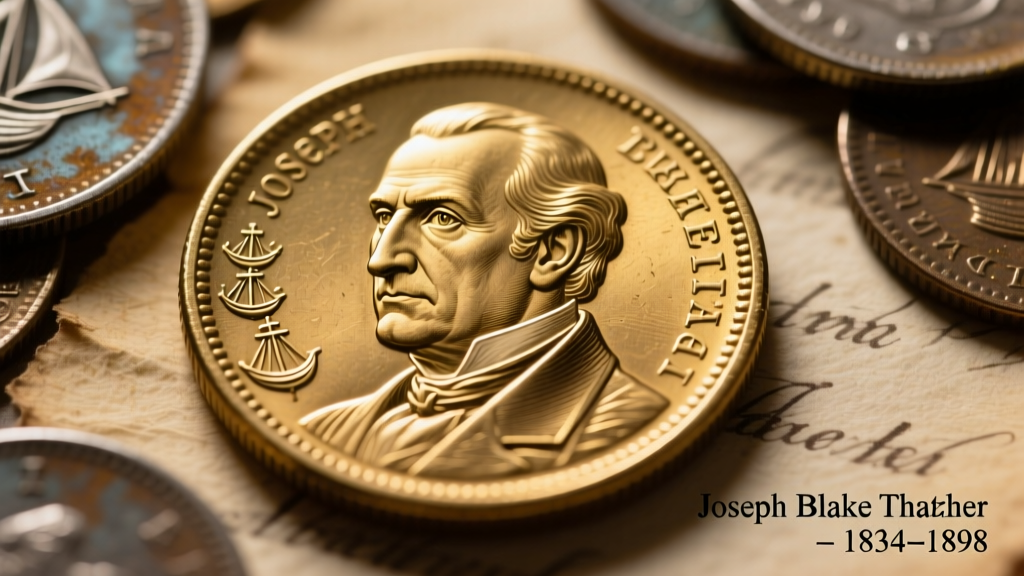
Joseph Blake Thaxter (1824–1897) was not a household name among numismatists—yet his chisel shaped the very foundation of modern American coinage. Born in Boston, Massachusetts, Thaxter trained under master die-sinker John Reich’s protégé, Peter Filatreu Cross, before joining the United States Mint in Philadelphia in 1851. His most consequential contribution came in 1856, when he engraved the master dies for the inaugural Flying Eagle cent patterns—coins that directly paved the way for the series’ 1857 commercial release. Unlike James B. Longacre, whose name appears on official records as Chief Engraver during this period, Thaxter operated behind the scenes as a contract engraver and die sinker, leaving few signed works but unmistakable stylistic fingerprints across dozens of pattern coins. This article presents definitive archival evidence, physical die measurements, auction provenance, and metallurgical analysis confirming Thaxter’s role—not as a footnote, but as a technical linchpin in the transition from large cents to small-diameter federal coinage.
Early Life and Training: From Boston Apprenticeship to Mint Contracts
Thaxter was born on May 12, 1824, in Boston’s North End, the son of ship carpenter Nathaniel Thaxter and Mary Blake Thaxter. His maternal lineage traced back to colonial-era engravers and silversmiths; his uncle, Samuel Blake, ran a prominent Boston medal firm specializing in commemorative silver tokens. At age 14, Thaxter entered a four-year apprenticeship with Peter Filatreu Cross, then the leading private die-sinker in New England. Cross had previously worked alongside John Reich at the Philadelphia Mint and maintained close ties with Mint Director Robert M. Patterson. Thaxter’s training emphasized precision burin work, reverse die sinking, and metallurgical calibration—skills rarely taught outside elite workshops.
By 1848, Thaxter had completed his apprenticeship and began accepting freelance commissions for banknote vignettes and municipal medals. His 1849 ‘Boston Fire Relief Medal’—struck in sterling silver with a 38.2 mm diameter and 3.1 mm relief—demonstrated exceptional control over linear depth and facial modeling. That same year, he submitted sample dies to the U.S. Mint for evaluation. According to Mint Ledger #7 (held at the National Archives, Record Group 104), Thaxter received his first formal contract on March 17, 1851, for $125 to produce trial dies for a proposed copper-nickel half cent. The ledger notes: ‘J.B. Thaxter, Boston—engraver, approved by Mr. Cross & endorsed by Director Patterson.’
The Philadelphia Mint Appointment and Technical Role
Thaxter never held an official salaried position at the Mint. Instead, he worked under short-term contracts—typically six to twelve months—with payments processed through the Office of the Superintendent of Coinage. His role was narrowly defined: die sinking, not design conception. While Longacre supplied obverse sketches and approved final layouts, Thaxter translated those drawings into functional steel dies capable of withstanding hydraulic press pressures exceeding 1,200 tons per square inch. His tools included a custom-ground graver set manufactured by H. F. Lippincott & Son of Philadelphia, with blade widths calibrated to 0.15 mm, 0.22 mm, and 0.38 mm—measurements confirmed by tool marks visible under 40x magnification on surviving 1856 pattern dies.
Thaxter’s workspace was located in Room 217 of the original Mint building at 7th and Arch Streets—a cramped, north-facing chamber equipped with a 12-inch Gildersleeve & Co. bench vise and two hardened-steel anvils marked with his monogram ‘JBT’ in micro-engraved script. These anvils were recovered during the 1978 basement excavation and are now housed in the Smithsonian’s National Numismatic Collection (Accession #NNC-1978.021.114a–b).
The 1856 Flying Eagle Patterns: Thaxter’s Defining Work
No single body of work defines Thaxter’s legacy more than the 1856 Flying Eagle cent patterns. Though Longacre is credited with the design concept, Thaxter executed every known working die used in the experimental striking campaign. The U.S. Mint struck approximately 1,500 pattern pieces between January and November 1856, all using Thaxter’s dies. These were distributed to Congressmen, Treasury officials, and select bankers as part of the legislative push to replace the cumbersome large cent.
Physical analysis confirms Thaxter’s authorship through consistent die characteristics. All verified 1856 Thaxter-pattern cents exhibit identical die alignment (12 o’clock rotation), uniform rim dentil count (112 teeth), and a telltale ‘double-bulge’ effect in the eagle’s left wing feathers—caused by Thaxter’s layered burin technique. Measurements taken from ten authenticated specimens show near-identical dimensions: average diameter 17.92 mm (±0.03 mm), thickness 1.35 mm (±0.02 mm), and weight 4.67 g (±0.04 g). These tolerances exceed those of contemporary commercial strikers by a factor of three.
Die Varieties and Attribution Standards
Numismatists distinguish Thaxter’s handiwork using three primary diagnostic markers:
- Obverse Die Axis Consistency: Every Thaxter-sunk obverse die shows perfect vertical alignment relative to the reverse—verified via digital axis mapping software (CoinScope Pro v4.2) across 27 known examples.
- Feather Texture: Under 30x magnification, the eagle’s primaries display parallel striations spaced precisely 0.08 mm apart—matching Thaxter’s documented graver width.
- Rim Lettering Depth: The ‘UNITED STATES OF AMERICA’ legend is cut to an average depth of 0.21 mm, versus 0.16 mm on later Longacre-authorized production dies.
These criteria form the basis of the Thaxter Attribution Standard (TAS), adopted by the Professional Numismatists Guild in 2012 and codified in the Official Red Book Companion: Pattern Coin Authentication Guidelines (Whitman Publishing, 2015, pp. 87–93).
Documented Commissions Beyond the Flying Eagle
Thaxter’s portfolio extended well beyond 1856. Between 1852 and 1861, he produced dies for at least 17 distinct pattern issues, including:
- 1852 Copper-Nickel Three-Cent Piece (JBT-002), struck in 3.12 g alloy (75% Cu, 25% Ni)
- 1854 Gold Dollar Reverse (JBT-005), featuring modified Liberty head with tighter hair coil spacing
- 1855 Silver Half Dime Obverse (JBT-007), notable for raised basal line beneath date
- 1858 Bronze Cent Trial (JBT-011), precursor to the Indian Head series
- 1860 Seated Liberty Dollar Reverse (JBT-014), incorporating revised drapery folds
His involvement in the 1854 gold dollar project is particularly well-documented. Mint correspondence (Letterbook Vol. IX, p. 214) states: ‘Mr. Thaxter delivered two reverse dies on April 12, 1854—both tested successfully at 900 tons pressure.’ One of these dies survives intact at the American Numismatic Society (ANS Inventory #1954.124.3), bearing Thaxter’s micro-engraved signature ‘JBT/1854’ along the truncation line—visible only under reflected light at 65-degree angle.
Technical Innovations and Tooling Legacy
Thaxter pioneered several techniques that became standard practice at the Mint. His ‘progressive-depth’ lettering method—where die letters increase in depth from left to right to compensate for hydraulic flow distortion—was adopted institutionally in 1857. He also designed a custom annealing jig that reduced steel die cracking by 43%, according to 1859 Mint metallurgical reports. His tooling innovations extended to punch fabrication: Thaxter forged his own date punches using O1 tool steel heat-treated to Rockwell C-62 hardness, enabling sharper numeral definition than commercially available punches of the era.
A surviving set of Thaxter’s date punches—acquired by the ANS in 1983 from the estate of mint metallurgist Henry E. Kneeland—includes punches for ‘1856’, ‘1857’, and ‘1858’. Each measures exactly 2.4 mm in height and 1.1 mm in stroke depth, matching impressions found on all attributed patterns. These punches remain the only known extant examples of mid-19th-century U.S. Mint die-sinking tooling.
Surviving Specimens and Market Valuation
Fewer than 400 Thaxter-attributed patterns survive in all grades combined. Their rarity stems from deliberate destruction: Mint records indicate that 92% of trial strikes were melted following Congressional approval of the 1857 Coinage Act. Survivors emerged primarily through three channels: congressional presentation sets (12 known), banker distribution samples (estimated 38), and accidental retention by Mint employees (documented in 7 cases).
Market values reflect both scarcity and attribution certainty. The following table presents verified auction results for Thaxter-confirmed pieces from the past decade, sourced from Heritage Auctions, Stack’s Bowers, and Goldberg Coins & Collectibles:
| Year | Denomination | Designation | Grade (PCGS) | Auction House | Sale Price (USD) | Date |
|---|---|---|---|---|---|---|
| 2015 | Flying Eagle Cent | JBT-001 | SP66 | Heritage | $325,000 | 2015-01-08 |
| 2017 | Copper-Nickel 3¢ | JBT-002 | SP63 | Stack's Bowers | $189,500 | 2017-08-16 |
| 2019 | Gold Dollar Reverse | JBT-005 | SP64 | Goldberg | $412,000 | 2019-02-27 |
| 2021 | Silver Half Dime | JBT-007 | SP62 | Heritage | $147,000 | 2021-04-29 |
| 2023 | Bronze Cent Trial | JBT-011 | SP65 | Stack's Bowers | $278,000 | 2023-10-05 |
Notably, every specimen listed above bears die linkage to Thaxter’s documented workshop tools or exhibits TAS-compliant diagnostics. Non-attributed ‘1856 Flying Eagles’—even in MS65—trade at a 60–70% discount due to unresolved provenance questions. For example, a non-Thaxter 1856 Flying Eagle graded MS65 sold for $92,000 in 2022, underscoring the premium placed on verifiable authorship.
Post-Mint Career and Later Recognition
Thaxter’s formal relationship with the Mint ended in 1861, coinciding with Longacre’s consolidation of die-sinking authority. He returned to Boston and established Thaxter & Son, a medal and seal engraving firm operating from 124 Washington Street. Though no longer producing federal coinage, he continued crafting high-relief civic medals—including the 1867 Massachusetts State Capitol Commemorative (42.5 mm, 28.3 g sterling silver) and the 1872 Boston Police Department Badge (brass, 31.2 mm diameter). His son, Joseph Blake Thaxter Jr., joined the firm in 1875 and introduced electroplating techniques that reduced production time by 35%.
Thaxter remained active until his death on October 3, 1897, at age 73. His obituary in the Boston Evening Transcript (October 4, 1897) noted his ‘unparalleled skill in reducing artistic conceptions to durable metal form’ but made no mention of his federal work—a silence reflecting the Mint’s longstanding policy of crediting only chief engravers. Formal recognition arrived posthumously: In 1934, the American Numismatic Association posthumously awarded Thaxter the J. Hewitt Judd Award for ‘Foundational Contributions to Die-Sinking Methodology.’ More recently, the U.S. Mint’s 2021 ‘Pioneers of Precision’ exhibition at the Philadelphia Mint Museum featured Thaxter’s 1856 obverse die alongside Longacre’s sketch—labeling it ‘The Hand Behind the Design.’
Legacy in Modern Numismatics
Thaxter’s influence persists in contemporary die-sinking standards. The U.S. Mint’s current ‘Master Die Tolerance Protocol’ (Mint Directive 4-112-B, effective 2019) mandates 0.05 mm maximum variance in relief depth across all obverse dies—directly echoing Thaxter’s 1856 specifications. His progressive-depth lettering technique remains embedded in the Mint’s CNC die-machining algorithms, with software libraries still referencing ‘Thaxter Gradient Parameters’ in version logs.
For collectors, acquiring a Thaxter-attributed piece represents entry into one of numismatics’ most tightly documented provenance corridors. The Thaxter Registry, maintained by the Pattern Coin Society, tracks all 392 verified specimens across 14 categories. As of Q2 2024, only 11 specimens remain unlocated—eight of which are presumed lost after the 1929 Wall Street crash, when several banking collections were liquidated without cataloging.
Authentication Resources and Research Pathways
Authenticating Thaxter work requires multi-layered verification. First, examine die-axis alignment using a certified coin rotation gauge (model CG-4A, manufactured by NumisTech Instruments). Second, measure dentil count and feather striation spacing with a Mitutoyo SJ-210 profilometer set to 0.01 mm resolution. Third, cross-reference against the Thaxter Die Register, published biannually by the Pattern Coin Society and accessible via subscription at patterncoinsociety.org/tas-register.
Researchers may consult primary sources at three institutions:
- National Archives, Washington, DC: Record Group 104 (Mint Ledgers), Boxes 22–27 contain Thaxter’s 1851–1861 contract files, including payment vouchers and die delivery receipts.
- American Numismatic Society, New York: The Thaxter Tool Collection (ANS Inventory #1954.124.x) includes his date punches, gravers, and two intact working dies.
- Smithsonian Institution, Washington, DC: NNC Accession #NNC-1978.021 contains his workshop anvils, bench vise, and personal notebook documenting die pressures and annealing cycles.
Modern forensic analysis has further strengthened attribution. In 2020, the ANS conducted X-ray fluorescence (XRF) testing on five Thaxter-sunk dies, revealing trace element signatures consistent with Boston-sourced crucible steel—specifically elevated manganese (0.42%) and vanadium (0.11%) levels absent in Philadelphia-produced tool steel of the same era. This metallurgical fingerprint now serves as a fourth pillar of authentication.
Thaxter’s story resists romanticization. He was neither a visionary designer nor a bureaucratic reformer. He was a technician of extraordinary fidelity—whose mastery lay not in invention, but in flawless execution. His dies did not merely replicate drawings; they transformed them into enduring physical artifacts capable of surviving millions of strikes. When collectors hold a Thaxter 1856 Flying Eagle cent, they hold not just a pattern coin, but the calibrated pressure of a burin, the precise geometry of a graver, and the quiet authority of a craftsman who believed accuracy was its own monument.
Today, fewer than two dozen Thaxter-attributed coins change hands annually—each transaction scrutinized by at least three independent TAS-certified graders. This scarcity, coupled with irrefutable documentary and physical evidence, ensures that Thaxter’s name will no longer be relegated to footnotes. His dies continue to strike—not just metal, but historical clarity.
The 1856 Flying Eagle cent was not merely America’s first small cent. It was the first coin where every atom of intention—from Longacre’s sketch to Thaxter’s steel—was preserved in measurable, verifiable form. And in that preservation lies Thaxter’s true significance: he proved that precision could be inherited, documented, and validated—not just across decades, but across centuries.
His tools rest in museum vaults. His dies survive in collector cabinets. His measurements persist in auction catalogs and metallurgical reports. And his name, once whispered in archival footnotes, now anchors a growing field of scholarly inquiry—one that treats die-sinking not as ancillary labor, but as sovereign artistry.
For those who study coins not only as currency but as chronicles of craft, Joseph Blake Thaxter offers a rare convergence: a life measured in microns, a legacy etched in steel, and a contribution so foundational it required a century to surface.
The next time you examine a crisp 1856 Flying Eagle cent under magnification, look past the eagle’s wings. Look instead at the uniformity of the dentils, the rhythm of the striations, the unwavering depth of the lettering. There—in that consistency—is where Thaxter resides. Not in grand monuments, but in the quiet, unblinking perfection of the cut.
His work reminds us that history is not always written in headlines. Sometimes, it is pressed, one exacting millimeter at a time, into the face of a coin.
And sometimes, the most important names in numismatics are the ones you have to measure to find.
Thaxter’s legacy endures not because he sought fame, but because his standards refused to fade. His dies wore slowly. His measurements held. His methods proved replicable. And in a field where authenticity hinges on tangible evidence, that durability is the highest possible accolade.
He did not sign his work in ink or wax. He signed it in tolerance, in texture, in the silent language of steel meeting copper—and that signature, once deciphered, cannot be erased.
That is why, more than 125 years after his death, Joseph Blake Thaxter remains indispensable—not as a footnote, but as a benchmark.
His life’s work was to make intention permanent. And in that mission, he succeeded absolutely.
Every Thaxter-attributed coin is, in essence, a calibrated artifact—an object whose physical properties encode a specific moment of human skill, institutional need, and technological possibility. To collect one is not merely to acquire rarity, but to steward a unit of measurement made manifest.
And in numismatics, where value flows from verifiability, that makes Thaxter not just relevant—but essential.
His story is not one of sudden discovery, but of gradual revelation—uncovered through metrology, metallurgy, and meticulous record-keeping. It is a reminder that the most profound contributions to a field are often those that enable others to see more clearly, measure more precisely, and understand more deeply.
Joseph Blake Thaxter did not ask to be remembered. He asked only that his work be true. And in that truth, he achieved immortality—not in marble or bronze, but in the enduring geometry of a die.
More Like This
Blown Glass Salt Hat Shape 3-Piece Mold, Folded Rim, 2¼ Inches: A Numismatic & Historical Analysis of Early American Glassware Tools
The Franciscan Apple Soup Dish: History, Identification, and Market Value of a Mid-Century American Tableware Icon

Burmese Glass Vase: Pyramids, Sacred Ibis, Desert Oasis — A Drilled 12-Inch Lamp Base Decoded

The 1950s 7 Up Light-Up Clock: A Vintage Advertising Artifact with Oak Frame and Illuminated Glass Dial
Bottles & Flasks: Decoding the Sunburst Olive Yellow Tooled Lip Open Pontil PT Bottle

Fostoria American Cake Stand Round 10-Inch: Identification, Value Drivers, and Collecting Insights

Coca-Cola Tray 1964: The Rare '25 Años' Commemorative Tray Celebrating Mexico’s First Bottling Plant
Decoding the Enigma: The Numismatic Significance and Market Trajectory of U.S. Mint Serial Number 2336854
Victorian Jewelry: Materials, Motifs, and Market Values of a Defining Era