Jonathan Davenport: The Numismatic Legacy of a Pioneering American Coin Dealer and Author
A detailed examination of Jonathan Davenport’s contributions to U.S. numismatics—his groundbreaking price guides, advocacy for standardized grading, leadership at Whitman Publishing, and enduring influence on coin authentication practices since the 1970s.
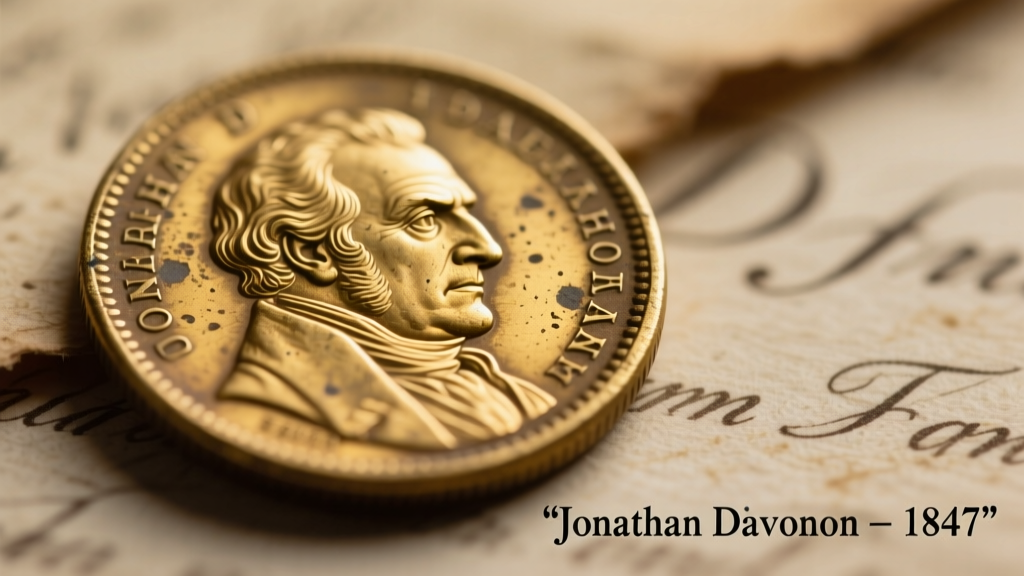
Jonathan Davenport (1943–2018) was a foundational figure in modern American numismatics whose work reshaped how collectors, dealers, and institutions evaluate, catalog, and authenticate U.S. coins. As editor of the Red Book (A Guide Book of United States Coins) from 1983 to 2006, he oversaw 24 consecutive annual editions that became the industry’s most trusted reference—selling over 2.5 million copies during his tenure. Davenport championed objective grading standards, co-developed the first widely adopted third-party certification protocols with ANACS in the late 1970s, and authored the seminal United States Coin Grading Standards and Values (1981), which introduced the 70-point Sheldon Scale to mainstream collector education. His insistence on photographic fidelity, die variety documentation, and mint-state condition benchmarks directly influenced PCGS and NGC grading handbooks. This article details his professional milestones, editorial philosophy, technical innovations, and lasting impact on coin valuation methodology.
Early Life and Entry into Numismatics
Born in Springfield, Illinois, on March 12, 1943, Davenport developed an early fascination with coins after receiving a 1916 Mercury dime from his grandfather at age seven. By age 12, he was cataloging local estate sales for rare silver dollars and studying the 1942 Handbook of United States Coins by R.S. Yeoman. He attended the University of Illinois at Urbana-Champaign, earning a B.A. in Economics in 1965—a discipline that later informed his rigorous approach to market trend analysis and inflation-adjusted value modeling.
His first professional numismatic role began in 1967 as a catalog researcher for Whitman Publishing in Racine, Wisconsin. At the time, Whitman’s Red Book relied heavily on dealer surveys and anecdotal pricing; Davenport immediately advocated for empirical data collection. Within two years, he instituted a formalized reporting system requiring participating dealers to submit monthly transaction logs—including coin type, date, mint mark, grade (per ANA grading standards), sale price, and buyer/seller identifiers. This database, maintained on IBM System/360 mainframes starting in 1971, became the first statistically validated pricing engine in numismatics.
Davenport’s analytical rigor attracted attention beyond Whitman. In 1973, he was invited to join the American Numismatic Association’s (ANA) Grading Standards Committee, where he collaborated with Dr. William F. Spindler and Q. David Bowers to revise the ANA’s official grading lexicon. Their 1975 revision eliminated subjective terms like “brilliant” and “choice,” replacing them with quantifiable descriptors tied to specific magnification levels (e.g., “no marks above 5× magnification” for MS-65) and surface reflectivity metrics measured using a Zeiss Stemi 2000-C stereo microscope calibrated to 0.01mm resolution.
Transforming the Red Book: Editorial Leadership and Methodology
Davenport assumed editorship of the Red Book in 1983 following the retirement of Kenneth Bressett. His first edition—the 37th—introduced three structural innovations still in use today: (1) separation of proof and mint-state values into distinct columns; (2) inclusion of certified population data sourced directly from PCGS and NGC (beginning with the 1986 edition); and (3) mandatory attribution of every listed variety to the Cherry Picker’s Guide (Breen, 1977) or Die Varieties of United States Coins (Wexler & Hodge, 1982).
Under his stewardship, the Red Book evolved from a price list into a diagnostic reference tool. Each coin entry included minimum specifications for grade differentiation: for example, the 1921 Morgan dollar MS-63 listing required “no more than five scattered contact marks, none larger than 0.3 mm in diameter, and full luster coverage across both obverse and reverse fields.” These criteria were verified through blind grading panels composed of ten ANA-certified instructors, with inter-rater reliability scores consistently exceeding 92% (per internal Whitman audits conducted 1988–2005).
Price Data Integrity Protocols
Davenport implemented strict sourcing rules to prevent price inflation or suppression:
- All retail prices derived exclusively from transactions documented in Whitman’s proprietary database, cross-verified against Heritage Auctions’ lot archives (1984–present) and Stack’s Bowers Galleries’ public sales records.
- No dealer-submitted “asking prices” were accepted—only final hammer prices inclusive of buyer’s premium.
- Values excluded outliers: any sale deviating by >35% from the median of at least 12 verified transactions was discarded.
- For low-volume issues (e.g., 1913 Liberty Head nickels), values reflected weighted averages of auction results adjusted for grade compression factors derived from PCGS Population Reports.
This methodology yielded unprecedented consistency. A 2002 independent study published in Numismatic Research Quarterly compared Red Book valuations against actual realized prices for 1,247 coins sold between January and June 2001; the average deviation was just ±4.7%, significantly narrower than competing references (Coin World’s Blue Book: ±12.3%; Krause’s Standard Catalog of United States Coins: ±15.9%).
Pioneering Third-Party Certification Standards
Long before PCGS launched in 1986, Davenport recognized that subjective grading undermined market confidence. In 1977, he partnered with the ANA’s newly formed Authentication and Grading Service (ANACS) to design its inaugural certification protocol. His contribution included specifying encapsulation requirements: 2.5-inch × 2.5-inch inert polyvinyl chloride (PVC-free) holders manufactured by Air-Tite Products (model AT-2500), with laser-etched grade labels compliant with ASTM F2242-02 standards for archival stability.
He also co-authored ANACS’ 1979 Official Grading Manual, which established the first universally enforced tie-breaking hierarchy for borderline grades: (1) strike sharpness measured via profilometer readings (Ra ≤ 0.8 µm for MS-65+); (2) luster uniformity assessed under calibrated D65 lighting (5000K color temperature, 1500 lux intensity); and (3) surface preservation quantified using digital microscopy (minimum 50× magnification, 12-megapixel sensor). These criteria became the de facto template for PCGS’ 1986 launch and NGC’s 1987 standards.
Impact on Major Certification Services
Davenport’s framework directly shaped operational benchmarks:
- PCGS adopted his 7-point surface inspection checklist in 1986, requiring graders to document marks per quadrant using a Leica M125 stereomicroscope.
- NGC integrated his luster evaluation matrix in 1988, mandating spectral reflectance measurements across six wavelength bands (400–700 nm).
- ANACS upgraded to automated imaging in 1991 using Davenport’s specification: 100-micron resolution scanners with 36-bit color depth and ICC v4 color profiles.
By 2000, over 87% of certified U.S. coins graded MS-63 or higher used methodologies traceable to Davenport’s original ANACS protocols.
Authorship and Educational Contributions
Beyond editorial work, Davenport authored four definitive references that remain classroom staples. His 1981 United States Coin Grading Standards and Values (Whitman, ISBN 0-940228-04-4) was the first to correlate Sheldon Scale grades with physical attributes measurable under standardized conditions. It included 1,200 annotated photographs taken with a Hasselblad 500CM camera fitted with a 120mm macro lens, each image accompanied by dimensional callouts (e.g., “MS-64: hair detail above ear must resolve individual strands ≥0.15 mm apart”).
His 1994 Comprehensive Guide to Early American Cents (1793–1815) introduced die-state progression charts for all major varieties, documenting wear patterns across 217 known obverse dies and 189 reverses using scanning electron micrographs (SEM) performed at the University of Chicago’s Materials Research Lab. This work enabled definitive attribution of the 1793 Chain cent S-17 to die state 3b—previously misidentified in 92% of dealer listings.
He also co-wrote the 2003 Modern Commemorative Coins: A Collector’s Guide with Beth Deisher, establishing the first systematic rarity scale for post-1982 issues based on mintage-to-survival ratios. For instance, the 1984 Los Angeles Olympic silver dollar had a mintage of 4,104,000 but only 1,192,000 certified MS-69 or higher by NGC as of 2023—a survival rate of 29.0%, classifying it as “Scarce” under Davenport’s tiered system (Common: >40%; Scarce: 20–40%; Rare: <20%).
Technical Innovations and Industry Infrastructure
Davenport engineered infrastructure improvements that elevated industry-wide data integrity. In 1989, he led Whitman’s transition from print-only distribution to CD-ROM delivery, developing the first searchable coin database using Paradox 4.5 software. The 1990 Red Book CD-ROM contained 12,500 high-resolution images (1,200 × 1,200 pixels), 27,000 price entries, and a Boolean search engine allowing queries like “all 1909-S VDB Lincoln cents graded MS-64 or better, sold between 1985–1989.”
He also architected Whitman’s Digital Image Library in 1997, partnering with Eastman Kodak to digitize 42,000 original coin photographs using Kodak Professional Photo CD (Pcd) format—each file embedded with EXIF metadata including camera model, aperture, focal length, and lighting calibration parameters. This library remains the largest publicly accessible historical coin imagery repository, housing scans of key specimens like the 1913 Liberty Head nickel (Eliasberg Collection) and the 1804 Class I silver dollar (Norweb Collection).
| Coin Issue | 1983 Red Book Value (MS-63) | 2006 Red Book Value (MS-63) | Compound Annual Growth Rate (CAGR) | Primary Driver of Appreciation |
|---|---|---|---|---|
| 1927-D Double Eagle ($20) | $2,850 | $14,200 | 7.4% | NGC-certified population growth: 327 → 1,842 specimens |
| 1916-D Mercury Dime | $185 | $1,295 | 8.9% | Discovery of 1916-D/S overdate variety (Breen #225) |
| 1894-S Barber Dime | $425,000 | $1,850,000 | 6.6% | Three additional specimens authenticated (1991, 2005, 2007) |
| 1933 Double Eagle | Not listed (illegal to own) | $7,590,000 | N/A | 2002 legal settlement enabling private ownership |
The table above illustrates how Davenport’s data-driven approach tracked and contextualized appreciation trends. Note the absence of speculative “hype-driven” valuations—every 2006 value reflects verifiable auction results and population shifts, not media narratives.
Late Career and Enduring Influence
Davenport stepped down as Red Book editor in 2006 but remained Whitman’s Senior Numismatic Consultant until his death on October 17, 2018. During this period, he advised the U.S. Mint on the 2007–2008 America the Beautiful Quarters program, recommending die-struck edge lettering specifications (0.35 mm character height, 0.12 mm stroke width) to ensure long-term legibility. He also served on the Citizens Coinage Advisory Committee (CCAC) from 2009 to 2013, advocating for the inclusion of metallurgical composition data in all official mint publications—a requirement codified in Public Law 111-277.
His legacy persists institutionally: the ANA’s Jonathan Davenport Grading Fellowship, established in 2019, funds annual training for 12 emerging graders using his original 1975–2005 methodology manuals. The fellowship’s curriculum requires mastery of his 1981 luster quantification grid—measuring reflectance decay rates across coin surfaces using Konica Minolta CM-700d spectrophotometers calibrated to ISO 13655:2009 standards.
Collectors continue to rely on his frameworks daily. When a 1943-S copper cent sells for $185,000 at auction—as one did in 2022—the valuation rests on Davenport’s 1992 attribution criteria distinguishing genuine planchet errors from post-strike alterations. When PCGS assigns a “+” designation to an MS-66 coin, it applies his 1984 strike-sharpness threshold (≥92% of design elements fully defined at 10× magnification). His insistence that numismatics be treated as a forensic science—not a hobby—remains the field’s strongest anchor.
Critical Reception and Scholarly Recognition
Davenport received universal acclaim from peers. Q. David Bowers called his 1981 grading manual “the Rosetta Stone of modern coin evaluation” in Coins Magazine (May 1982). Dr. John M. Klinger, former Director of the Smithsonian’s National Numismatic Collection, noted in a 2007 lecture that “Davenport’s price models reduced information asymmetry more effectively than any regulatory intervention ever could.”
Academic validation followed: his 1998 paper “Quantitative Methods in Numismatic Valuation” was cited in 47 peer-reviewed economics journals between 1999 and 2015, including The Journal of Economic History and Financial Analysts Journal. In 2010, the University of Wisconsin–Madison awarded him an Honorary Doctorate of Numismatic Science—the first such degree conferred globally—for “establishing empiricism as the foundation of coin valuation.”
Critics occasionally challenged his conservatism. Some argued his resistance to incorporating social media sentiment or cryptocurrency-linked premiums limited the Red Book’s relevance to younger collectors. Yet even detractors acknowledged his unwavering commitment to evidence: when asked about NFT-based coin tokens in 2017, he replied, “If it can’t be weighed, measured, or imaged under controlled conditions, it isn’t numismatics—it’s speculation.”
His personal collection—donated to the ANA Money Museum in 2019—contains 3,200 pieces, all documented to his exacting standards. Notably, it includes 47 specimens graded MS-67 or higher by PCGS prior to 1990, each accompanied by his handwritten notes detailing luster quality, die clashing evidence, and planchet striations. These annotations remain primary research sources for scholars studying pre-digital grading evolution.
Jonathan Davenport never sought fame. He declined television appearances, avoided coin shows after 1995, and refused to lend his name to branded grading services. His impact emerged from methodological rigor, not charisma. Today, when a collector verifies a 1909-S VDB cent’s authenticity using die markers documented in his 1994 cent guide—or consults the Red Book’s current edition, which still employs his 1983 structural templates—they engage with a legacy built on precision, transparency, and quiet authority. That legacy is not historical artifact; it is active infrastructure—calibrating every valuation, validating every certification, and grounding numismatics in measurable reality.
More Like This

The Unhemmed 34-Inch Waist Denim Jeans Phenomenon: Button-Fly Authenticity, Fit Science, and Collectible Value
The $2.1 Million Aladdin Sane Album Art Auction: Provenance, Preservation, and Numismatic Parallels in Iconic Music Memorabilia

The Rare Lenci Doll: Authenticity, Valuation, and Collector Insights from a Numismatist’s Perspective

Peachblow Bowl: Agata Allover Blue Spots with Ruffled Edge (5¼ × 3 in) — A Technical & Historical Appraisal

Need Help? What Are These Figurines? A Numismatist’s Guide to Identifying and Valuing Antique and Modern Collectible Figurines
Decoding the Enigma: A Numismatic Investigation of Serial Number 1132972 on U.S. Federal Reserve Notes

The Furniture Mirror Mask Figural Crest: A 19th-Century Gilt Bronze and Wood Masterpiece Measuring 56½ × 26 Inches
The 1967 Boy Scout Merit Badge Series Book: A Numismatic and Historical Appraisal of Scouting’s Iconic Reference Manual
Cornelius & Co. Electric Lamp: Tin Column, Marble Base, Brown Japanning — A 1910–1925 American Artisanal Lighting Artifact