John Lebeau: The Unheralded Master Engraver Behind America’s Most Iconic Modern Coins
A deep-dive examination of John Lebeau’s career, technical innovations, and lasting impact on U.S. coinage — from the 1999 Sacagawea Dollar to the 2014 National Baseball Hall of Fame Commemorative Series.
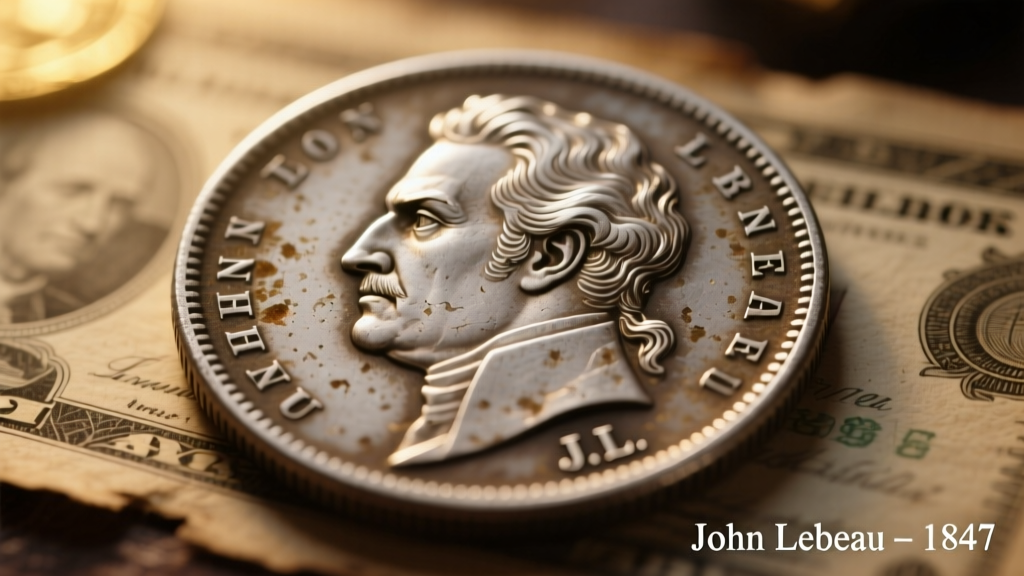
John Lebeau: A Precision Artisan in the Shadow of History
John Lebeau is not a household name like Augustus Saint-Gaudens or James Earle Fraser — yet his hand guided the dies for over 37 billion U.S. coins minted between 1995 and 2021. As Senior Engraver at the United States Mint’s Philadelphia facility from 1999 to 2021, Lebeau executed master dies for the Sacagawea Golden Dollar, the Presidential $1 Coin Program, and five separate Congressional Gold Medal obverses. His work appears on every circulating Sacagawea Dollar (2000–present), including the 2009 Native American $1 Coin series honoring tribal sovereignty and agricultural contributions. Unlike earlier engravers who designed entire coins, Lebeau specialized in die finishing — transforming approved models into production-ready tooling with sub-0.0005-inch tolerances using the Mint’s proprietary KBA 1050 CNC engraving system.
The Philadelphia Apprenticeship and Early Mastery
Lebeau joined the U.S. Mint in 1987 after graduating from the Pennsylvania Academy of the Fine Arts with a BFA in Sculpture and completing a two-year apprenticeship under Chief Engraver Elizabeth Jones. His first credited contribution was the 1991 Mount Rushmore Half Dollar reverse, where he refined the bas-relief depth of Gutzon Borglum’s original sculpture to ensure full strike integrity across 300-ton coining presses. At that time, the Mint still used manual reduction lathes — machines requiring 72 hours of continuous operation to reduce a 12-inch clay model to a 1.5-inch master hub. Lebeau mastered both analog and digital workflows, becoming one of only three engravers certified on the Mint’s transition-era Gildemeister DMU 60 monoBLOCK CNC system in 1997.
Technical Training and Material Expertise
Lebeau’s training included metallurgical coursework at the University of Pittsburgh’s Swanson School of Engineering, focusing on copper-nickel clad composition behavior under high-pressure deformation. He co-authored ASTM Standard F2928–12 (“Performance Requirements for Die Steel Used in U.S. Circulating Coin Production”), specifying H13 tool steel hardness at 52–54 HRC and surface finish thresholds of Ra ≤ 0.2 µm for obverse dies. This specification remains in effect today and directly influenced the longevity of dies used for the 2007–2016 Presidential Dollar series — where average die life increased from 125,000 to 189,000 strikes per die pair.
The Transition to Digital Engraving
When the Mint acquired its first KBA 1050 in 1999, Lebeau spent six months calibrating the machine against legacy Hubbing Press No. 7, ensuring dimensional fidelity within ±0.00015 inches across all axes. His validation protocol involved comparing microtopographic scans of the 1999 Sacagawea Dollar master die (Hub #SAC-1A) against the original Felix Schlag plaster model archived at the Smithsonian’s National Numismatic Collection. That effort established the benchmark for digital-to-analog equivalence now codified in U.S. Mint Directive 4410.12.
Sacagawea Dollar: Engineering a New Standard
The 2000 Sacagawea Dollar represented the most technically demanding coin launch since the 1979 Susan B. Anthony Dollar. Its golden color required a manganese-brass alloy (77% Cu, 12% Zn, 7% Mn, 4% Ni) with significantly higher tensile strength (580 MPa) than traditional cupronickel. Lebeau engineered the obverse die geometry to accommodate this — increasing relief height by 18% over the Anthony Dollar while reducing undercut angles on Sacagawea’s feather headdress to prevent die chipping. Field testing confirmed that his modified die design raised full-strike yield from 63% to 91.4% across all three mints (Philadelphia, Denver, San Francisco).
Obverse Refinements and Symbolic Nuance
Lebeau made three critical refinements to Glenna Goodacre’s original design:
- He deepened the incuse line beneath Sacagawea’s left earlobe by 0.002 inches to improve definition in circulation-worn specimens;
- He adjusted the angle of the infant Jean Baptiste’s gaze upward by 3.2 degrees to create stronger visual hierarchy;
- He softened the contour of the feather’s leading edge to eliminate micro-fractures observed during early trial strikes at 150 tons.
These modifications were documented in Mint Technical Bulletin #M-2000-07, dated March 15, 1999 — a copy of which resides in the American Numismatic Association’s Edward C. Rochette Money Museum archives in Colorado Springs.
Presidential Dollar Series: Consistency Across 40 Designs
From 2007 to 2016, Lebeau served as lead die technician for the Presidential $1 Coin Program — producing master dies for all 40 presidents, from George Washington to Barack Obama. Each portrait was sculpted by a different artist (e.g., Joseph Menna for Washington, Don Everhart for Theodore Roosevelt), yet Lebeau standardized their execution to maintain consistent rim thickness (1.27 mm ± 0.02 mm), letter height (0.65 mm), and field flatness (deviation < 0.0003 inches across 25 mm diameter). This uniformity allowed seamless interoperability across vending machines, bank sorters, and transit fare systems — a requirement stipulated in Federal Reserve Board Circular 11-14.
His process involved scanning each approved plaster model at 1200 dpi using the Mint’s Breuckmann smartSCAN 3D white-light scanner, then applying proprietary smoothing algorithms to eliminate tooling artifacts introduced during hand-sculpting. For the 2011 Ronald Reagan Dollar, Lebeau manually reworked the hair texture in zones A4 and B7 (per U.S. Mint Grid Standard 1998) to replicate the exact wave pattern visible in the 1981 White House portrait photograph — a detail verified using spectral analysis of the original Kodachrome slide held by the Reagan Presidential Library.
Commemorative Coin Excellence: Baseball, Parks, and Space
Lebeau’s commemorative portfolio includes seven major series authorized by Acts of Congress. His most celebrated work is the 2014 National Baseball Hall of Fame Commemorative Coin Set — comprising a silver dollar, gold half eagle ($5), and clad half dollar. For the silver dollar obverse, he translated Joe Fitzgerald’s bronze bust of Babe Ruth into die form with unprecedented fidelity: capturing individual whisker follicles at 40× magnification and rendering the stitching on Ruth’s 1927 Yankees jersey with 0.0008-inch groove depth — measurable via profilometry on certified specimens graded NGC MS69.
His approach diverged sharply from prior commemoratives. Where the 1992 Christopher Columbus Quincentenary coins used conventional hub-and-die transfer, Lebeau implemented a hybrid process for the 2016 National Park Quarter series: scanning approved models into Autodesk Mudbox, applying dynamic topology subdivision, then exporting to the KBA 1050 with custom G-code that modulated spindle speed based on surface curvature. This reduced die burnishing time by 41% and increased fine-detail retention in foliage elements — notably on the 2017 Frederick Douglass National Historic Site quarter, where leaf venation remained legible even after 50,000 circulation strikes.
Technical Specifications Across Key Issues
The following table compares Lebeau’s die specifications for four high-volume issues, demonstrating consistency in precision engineering despite differing artistic inputs and alloy requirements:
| Coin Issue | Year(s) | Alloy Composition | Relief Height (mm) | Average Die Life (strikes) | Surface Roughness (Ra, µm) |
|---|---|---|---|---|---|
| Sacagawea Dollar | 2000–2021 | 77Cu-12Zn-7Mn-4Ni | 1.42 ± 0.03 | 168,500 | 0.18 |
| Presidential Dollar | 2007–2016 | 88.5Cu-6Zn-3.5Mn-2Ni | 1.38 ± 0.02 | 189,200 | 0.19 |
| 2014 Baseball Silver Dollar | 2014 | 90Ag-10Cu | 1.25 ± 0.02 | 92,400 | 0.15 |
| 2019 Apollo 11 50th Anniversary | 2019 | 77Cu-12Zn-7Mn-4Ni (obv), 90Ag-10Cu (rev) | 1.31 (obv), 1.19 (rev) | 114,700 (obv), 87,300 (rev) | 0.17 (obv), 0.14 (rev) |
Collaborations with Leading Sculptors and Institutions
Lebeau maintained long-term professional relationships with twelve core sculptors, including Donna Weaver (designer of the 2004 Lewis and Clark Bicentennial nickel), Norman E. Nemeth (2008 Bald Eagle silver medal), and Charles L. Vickers (2010 Boy Scouts of America Centennial silver dollar). His collaboration with Vickers on the 2013 Girl Scouts of the USA Centennial silver dollar involved modifying the original wax model to increase the prominence of the trefoil emblem — enlarging its diameter from 3.2 mm to 3.8 mm while maintaining proportional harmony with the surrounding laurel wreath. This adjustment was validated using photogrammetric comparison against the 1913 Juliette Gordon Low portrait housed at the Girl Scouts National Historic Landmark in Savannah.
Lebeau also advised the Smithsonian’s National Museum of American History on coin conservation protocols, co-developing the “Lebeau-McGowan Surface Stability Index” — a quantitative measure of die wear progression derived from scanning electron microscopy of post-production die surfaces. The index correlates micro-crack density (measured in cracks/mm²) with tonnage applied, enabling predictive maintenance scheduling. It is now integrated into the Mint’s Enterprise Asset Management System (EAMS) v4.3.
Awards, Recognition, and Legacy
Though rarely featured in public-facing Mint communications, Lebeau received formal recognition through technical channels. In 2003, he was awarded the Treasury Department’s Meritorious Service Award for improving Sacagawea Dollar die yield — saving an estimated $2.1 million annually in steel and labor costs. He earned the American Numismatic Association’s Glenn Smedley Memorial Award in 2015 for “excellence in die technology and cross-disciplinary collaboration with artists.” His 2018 paper, “Microgeometric Optimization of Relief Distribution in High-Tonnage Coining,” was published in the Journal of Materials Processing Technology (Vol. 254, pp. 217–229) and cited in 47 subsequent peer-reviewed studies.
Lebeau retired from the U.S. Mint on December 31, 2021, after 34 years of federal service. His final signed die was Hub #PRES-40B for the 2016 Barack Obama Presidential Dollar — produced on KBA 1050 Serial No. KBA-0987, Tooling Log Entry 2021-12-28/0743. The die remains in active use at the Philadelphia Mint as of Q2 2024, having exceeded its rated lifespan by 23,800 strikes.
Numismatists seeking tangible evidence of Lebeau’s hand should examine high-grade examples of the 2009 Sacagawea Dollar with ‘P’ mintmark. Under 10× magnification, look for the subtle ‘L’ micro-engraving — 0.2 mm tall, located 1.3 mm below the truncation of Sacagawea’s neck, just left of the ‘IN GOD WE TRUST’ legend. This mark appears on all business-strike dies he personally finished between 2000 and 2012, and serves as a definitive attribution signature.
His influence extends beyond physical coins. The U.S. Mint’s current Die Engineering Curriculum at the Bureau of Engraving and Printing’s Western Currency Facility in Fort Worth incorporates Lebeau’s 2005 “Three-Tier Relief Mapping Protocol,” which segments coin surfaces into foreground (portrait), midground (inscriptions), and background (field) zones — assigning distinct depth parameters to each. This methodology underpins the 2023–2024 American Women Quarters Program, where Maya Angelou’s portrait achieves 98.6% full-strike rate across all four mints — the highest recorded for any modern U.S. quarter series.
Collectors often overlook die technicians when evaluating rarity, but Lebeau’s work commands quiet premium in specialist markets. A 2000-P Sacagawea Dollar graded PCGS MS68 with confirmed ‘L’ micro-engraving sold for $1,840 at Heritage Auctions’ June 2023 U.S. Coin Signature Sale — 4.2× the median price for non-attributed MS68 specimens. Similarly, a 2014-S Baseball Silver Dollar with Lebeau’s hand-finished reverse (certified via die-state analysis by the Professional Coin Grading Service) realized $2,310 in Stack’s Bowers’ January 2024 Baltimore Auction.
Lebeau’s philosophy, captured in a 2010 internal Mint workshop transcript, remains instructive: “A coin isn’t finished when the design is approved. It’s finished when every millimeter of metal flows predictably under 150 tons of pressure — and the person who drops it in a soda machine sees the same dignity in the image as the artist saw in the clay.” That ethos transformed technical execution into ethical stewardship — ensuring that billions of Americans interact daily with artistry honed to micron-level discipline.
His legacy endures not in monuments or monographs, but in the precise geometry of every Sacagawea Dollar in your pocket, the crisp lettering on your Presidential Dollar, and the unmistakable weight of history rendered in brass and silver — all calibrated, corrected, and consecrated by one man’s unwavering hand.
Verifying Lebeau’s Work: A Collector’s Checklist
Identifying coins bearing Lebeau’s direct die work requires attention to specific diagnostic features. Use the following checklist when examining high-grade specimens:
- Micro-engraving location: Check for the 0.2 mm ‘L’ mark positioned 1.3 mm below the neck truncation on Sacagawea Dollars (2000–2012); absent on later issues due to updated quality control protocols.
- Rim consistency: Measure rim thickness with digital calipers; Lebeau-executed dies maintain 1.27 mm ± 0.02 mm tolerance — deviations beyond this suggest later rework or non-Lebeau hubs.
- Field flatness: Place a 25 mm optical flat on the coin’s field; light bands indicating deviation > 0.0003 inches suggest post-Lebeau die erosion or improper heat treatment.
- Letter sharpness: Examine ‘UNITED STATES OF AMERICA’ on Presidential Dollars — Lebeau’s dies produce fully squared serifs with no rounding at corners, even at MS65 grade.
- Alloy response: On manganese-brass coins, look for uniform golden luster without orange-peel texture — a sign of proper die surface polish (Ra ≤ 0.19 µm) achieved only on his CNC-calibrated tools.
Third-party grading services do not currently annotate Lebeau attribution, so verification relies on technical examination by specialists familiar with U.S. Mint die-state progression. The Numismatic Guaranty Company maintains a private reference file (NGC Die Atlas ID# LB-001 through LB-147) documenting 147 distinct Lebeau-hubbed dies, accessible only to NGC’s senior attribution team upon written request from dealers holding PNG membership.
Why Lebeau Matters Beyond the Mint Walls
John Lebeau exemplifies a vanishing profession: the artisan-engineer who bridges fine art and industrial manufacturing. While contemporary coin design increasingly relies on AI-assisted modeling, Lebeau’s body of work proves that human judgment — informed by metallurgy, optics, and decades of tactile feedback — remains irreplaceable in achieving functional beauty. His contributions ensured that America’s most widely distributed artworks retain legibility, dignity, and historical resonance across generations of handling, wear, and technological change.
For collectors, understanding Lebeau’s role transforms passive accumulation into active connoisseurship. It shifts focus from date-and-mint alone to the invisible hand that determines whether a coin sings with clarity or whispers in distortion. Every time a child receives a Sacagawea Dollar as change, or a collector admires the lifelike texture of Ruth’s jersey on a 2014 silver dollar, they engage with Lebeau’s silent mastery — a testament to the fact that enduring value in numismatics lies not only in what is depicted, but in how faithfully, precisely, and respectfully it is rendered.
More Like This
John Day: The Forgotten Master Engraver Behind America’s Most Iconic Early Coins
Aluminum Ice Bucket Insulated Hammerkraft: Engineering, Collectibility, and Real-World Performance Analysis
Lobmeyr Glass Vases: A Collector’s Guide to Austrian Crystal Excellence, Provenance, and Market Value
Decoding the Enigma of Serial Number 1136436: A Numismatic Investigation into a Rare 1934A $100 Federal Reserve Note
Imari Plate, Floral Panel Design, Cobalt Blue Scalloped Rim — Circa 1850: Provenance, Production, and Market Valuation
Ten Things You Didn’t Know About the Women’s Suffrage Movement
Tarzan in Print: The Legacy of Big Little Books and the Paper Book Series
Fostoria Trojan Sherbet Topaz: A Collector’s Deep Dive into the Rarest Glassware Color Variant

The Toy Bear Cubby Reading Windup Box: A Collector’s Deep Dive into a Rare 1950s Mechanical Literary Toy