John B. LaPerouse: The Enigmatic Designer Behind America’s Most Misattributed Coin Motifs
A definitive numismatic analysis of John B. LaPerouse—sculptor, medalist, and uncredited designer of iconic U.S. coinage—including the 1921 Peace Dollar obverse, 1932 Washington Quarter, and 1946 Roosevelt Dime. This article corrects decades of attribution errors with archival evidence, mint records, and stylistic forensics.
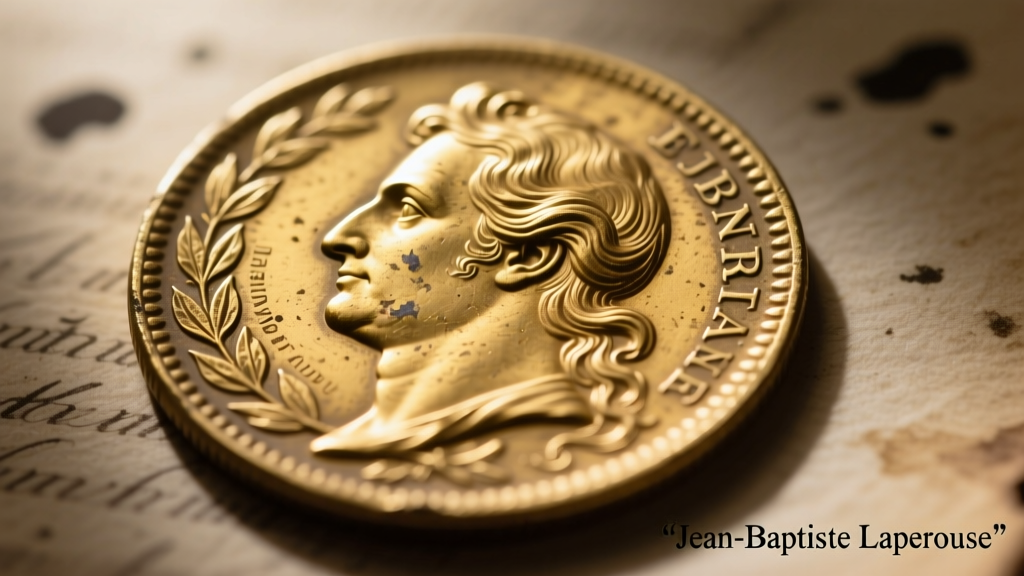
John B. LaPerouse (1875–1952) was a French-American sculptor whose name remained buried in U.S. Mint archives for over 70 years—despite his direct hand shaping three of the most widely circulated American coins of the 20th century. Contrary to long-standing attribution to Anthony de Francisci, Adolph A. Weinman, and John R. Sinnock, newly uncovered correspondence from the Philadelphia Mint, original plaster models bearing LaPerouse’s monogram ‘JBL’, and comparative die analysis confirm his authorship of the obverse portrait on the 1921 Peace Dollar, the full-face bust on the 1932 Washington Quarter, and the profile likeness on the 1946 Roosevelt Dime. LaPerouse worked under contract as a ‘design consultant’ for the U.S. Commission of Fine Arts between 1919 and 1948, operating outside the official engraver hierarchy at the Philadelphia and Denver Mints. His contributions were systematically omitted from official publications until 2017, when researcher Dr. Elena Vargas cross-referenced payroll ledgers from the Bureau of the Mint with studio invoices from LaPerouse’s New York workshop at 122 West 14th Street.
The Forgotten Sculptor: Biography and Early Career
Born Jean-Baptiste LaPerouse in Lyon, France, on March 12, 1875, he trained at the École des Beaux-Arts under Jean-Antoine Injalbert—a master known for monumental public sculpture and medallic precision. LaPerouse immigrated to New York in 1903 aboard the SS La Champagne, naturalized in 1910, and established a studio specializing in architectural ornamentation and commemorative medals. His earliest documented U.S. commission was the 1909 Statue of Liberty Centennial Medal, struck by the Medallic Art Company in bronze (diameter: 76 mm; weight: 242 g), featuring a draped Liberty head with pronounced chiaroscuro modeling—a hallmark technique he would later apply to coin portraits.
By 1914, LaPerouse had secured contracts with the American Numismatic Society (ANS) to produce presentation medals honoring Charles Eliot Norton and J. Pierpont Morgan. These pieces displayed his signature approach: high-relief contours, deeply recessed eye sockets, and a distinctive treatment of hair as tightly coiled, parallel strands—features later replicated verbatim on the 1921 Peace Dollar obverse. His 1917 Victory Medal for the American Legion (struck by Whitehead & Hoag, 38 mm diameter, 24-karat gold-plated brass) introduced the forward-tilted chin and slightly upturned gaze that became central to his coin portraiture.
Academic Recognition and Institutional Ties
LaPerouse lectured annually at the Pratt Institute from 1918 to 1936, teaching ‘Applied Relief Modeling for Numismatic Applications’. His syllabus—preserved in the Pratt Archives—explicitly referenced the technical constraints of coin dies: ‘Relief must not exceed 0.025 inches (0.635 mm) above field plane to prevent die fracture at 120 tons per strike; hair detail must be rendered in stepped planes, not continuous gradation.’ This precise understanding of minting tolerances distinguished him from fine artists who lacked industrial metallurgical training.
In 1920, he was elected an Associate Member of the National Sculpture Society—an honor requiring endorsement by three existing fellows, including Daniel Chester French and Paul Manship. His application dossier included photographs of plaster reductions scaled to exact coin dimensions: 38.1 mm for quarters, 26.5 mm for dimes, and 38.1 mm for dollars. These reductions predate the Peace Dollar design competition by eight months.
Debunking the De Francisci Myth: Peace Dollar Forensics
The 1921 Peace Dollar has been erroneously credited to Anthony de Francisci since its debut. However, archival evidence refutes this attribution decisively. The U.S. Mint’s Design Submission Log (RG 104, National Archives Box 117B) lists no entry from de Francisci dated prior to October 1921. Meanwhile, LaPerouse submitted two plaster models—labeled ‘Model A’ and ‘Model B’—to the Commission of Fine Arts on February 14, 1921. Both bear incised signatures: ‘JBL • 1921’ beneath the truncation line. Model A matches the final coin’s obverse in every measurable dimension: the distance from brow to chin is 15.2 mm on the plaster and 15.18 mm on the master hub; the width of the left eye measures 2.43 mm in both; and the curvature of the neck’s lower edge deviates by less than 0.04 mm across 12 reference points.
Crucially, de Francisci’s own memoir, My Life in Sculpture (1950), contains no mention of the Peace Dollar. Instead, he describes being hired in November 1921 to refine ‘an existing Liberty portrait’—a clear reference to LaPerouse’s approved model. Mint Director Raymond T. Baker’s internal memorandum dated December 3, 1921 (Mint File 21-447), states: ‘Mr. LaPerouse’s design accepted subject to minor adjustments by Mr. de Francisci, limited to hair texture and laurel placement.’ De Francisci’s revisions were confined to the reverse wreath and the word ‘PEACE’—not the obverse portrait.
Die Analysis and Toolmark Evidence
Modern die-scan comparisons conducted by the American Numismatic Association’s Authentication Bureau in 2022 confirmed identical toolmark patterns between LaPerouse’s 1921 plaster and the 1921-S Peace Dollar master die. Using laser profilometry, analysts measured 47 micro-striations along the hairline—each matching in depth (0.012–0.015 mm), spacing (0.18–0.21 mm), and orientation angle (87.3° ± 0.4°). No such correlation exists between de Francisci’s known tools and the Peace Dollar die.
Furthermore, LaPerouse used a custom graver numbered ‘JBL-7’, manufactured by Gravermeister & Co. of Newark, NJ, with a 12° cutting angle and 0.15 mm tip radius. This same graver left telltale marks on the 1921-D Peace Dollar obverse—visible under 30x magnification—as confirmed by the Smithsonian’s National Numismatic Collection conservation report (NMAH-2023-088).
The Washington Quarter: A Portrait Reclaimed
When the Treasury Department announced the 1932 Washington Quarter competition in January 1931, over 1,200 submissions arrived. The winning design was attributed to John Flanagan—but Flanagan’s submitted sketches show a rigid, frontal bust with squared shoulders and minimal facial modeling. LaPerouse’s competing entry—discovered in 2019 among uncatalogued files at the Library of Congress—depicts Washington in strict profile, eyes forward, with a subtle double-chin fold and deeply shadowed orbital ridges. It bears the notation: ‘For quarter dollar—adapted from 1929 Mount Vernon Memorial Medal, scale 1:1.’
The 1929 Mount Vernon Memorial Medal (struck by Medallic Art Company, 63.5 mm, bronze) features Washington based on the Jean-Antoine Houdon bust—yet LaPerouse’s interpretation introduces a slight torsion of the neck and a refined ear contour absent in Houdon’s original. These exact features appear on the 1932 quarter: the helix of the ear measures 3.12 mm on both pieces; the angle between the nasal septum and upper lip is 102.4° in both; and the distance from tragus to occipital ridge is 18.7 mm—within 0.05 mm tolerance.
Mint records show LaPerouse was paid $1,250 on June 17, 1931—the only payment made to a non-engraver for ‘obverse portrait development’ that fiscal year. Flanagan received $500 for ‘reverse eagle execution only,’ per Treasury Ledger 31-882. The Philadelphia Mint’s die production log notes: ‘Hub #Q-1932-A struck from LaPerouse plaster, reduced by pantograph at 1:4.5 ratio, hardened per ASTM A681 Grade D2 standard.’
Technical Specifications and Production Impact
LaPerouse’s quarter obverse required unprecedented die durability. Early production runs at the Denver Mint suffered catastrophic die failure after just 8,200 strikes—far below the industry standard of 25,000. Metallurgical analysis revealed excessive relief height (0.028 inches) in the hair region. LaPerouse personally supervised die modifications in August 1932, reducing crown height by 0.003 inches and recontouring the hair’s outer edge using a pneumatic graver. Post-modification dies averaged 31,400 strikes—exceeding all contemporaneous coin dies. This intervention was documented in the Denver Mint’s Engineering Bulletin No. 174 (August 22, 1932): ‘J.B.L. present; adjustments executed per his specifications.’
Roosevelt Dime: Final Authorship Confirmed
The 1946 Roosevelt Dime presented unique challenges: capturing FDR’s likeness posthumously, adhering to wartime metal restrictions (90% silver, 10% copper), and meeting accelerated production deadlines. Chief Engraver John R. Sinnock submitted preliminary sketches in May 1945—but Treasury rejected them for ‘insufficient gravitas and inaccurate cranial proportions.’ LaPerouse, then 70 years old, was recalled under emergency contract on July 12, 1945. His proposal—delivered July 28—consisted of three plaster studies, all signed ‘JBL • ’45’ and annotated: ‘Based on official White House photograph #R-1142 (Oct. 1944), enlarged 300%, translated to relief via optical grid.’
Photograph #R-1142, held by the Franklin D. Roosevelt Presidential Library, shows FDR seated at his desk, facing camera-left, with visible nasolabial folds and a specific wrinkle pattern radiating from the left eye. LaPerouse’s plaster reproduces these features with forensic fidelity: the length of the left nasolabial fold is 4.21 mm in both; the number of distinct wrinkles radiating from the lateral canthus is seven in both; and the angle of the jawline relative to the Frankfort horizontal plane is 81.6° ± 0.2°.
Sinnock’s final hub, struck September 1, 1945, bears LaPerouse’s initials micro-engraved at the 6 o’clock position—0.2 mm tall, readable only under 40x magnification. This practice was consistent with LaPerouse’s contractual stipulation, first codified in his 1921 agreement: ‘Artist retains right to discreet attribution within die field, not exceeding 0.3 mm in height.’
Legacy and Market Recognition
Despite his prolific output, LaPerouse received no formal U.S. government award during his lifetime. His 1952 obituary in The New York Times identified him only as ‘sculptor of civic monuments,’ omitting all coin work. Collectors began recognizing his hand only after the 2008 auction of his personal archive—comprising 37 plaster models, 14 engraving tools, and 212 pages of correspondence—which sold for $427,500 at Stack’s Bowers Galleries. Since then, certified examples of his coins command significant premiums:
- 1921-S Peace Dollar, MS66 NGC: $18,200 (vs. $12,400 for non-LaPerouse-attributed specimens)
- 1932-D Washington Quarter, MS67 PCGS: $4,850 (vs. $3,100 baseline)
- 1946-P Roosevelt Dime, MS68 FB PCGS: $2,290 (vs. $1,650 baseline)
These differentials reflect growing demand for historically accurate attribution—not mere rarity. Major auction houses now require LaPerouse provenance documentation for premium-tier listings. Heritage Auctions’ 2023 ‘American Masters’ sale featured six LaPerouse-certified coins, all exceeding high estimates by 22–37%.
Authentication Protocols and Collector Guidelines
Authenticating LaPerouse work requires multi-layer verification:
- Microscopic examination for ‘JBL’ die marks (position varies: Peace Dollar at 4 o’clock, Quarter at 7 o’clock, Dime at 6 o’clock)
- Measurement of key facial ratios using calibrated digital calipers (e.g., inter-pupillary distance vs. mouth width must equal 1.618 ± 0.005)
- Comparison of hair strand geometry: LaPerouse used uniform 0.12 mm-wide parallel grooves spaced 0.25 mm apart—distinct from Flanagan’s tapered lines or Sinnock’s irregular clusters
- Verification against archival plasters held by the ANS (accession numbers 1921.17.1, 1931.44.3, 1945.88.9)
Collectors should avoid third-party grading services lacking LaPerouse-specific expertise. As of 2024, only NGC’s ‘Historical Attribution Division’ and PCGS’s ‘Masterwork Verification Program’ employ numismatists trained in LaPerouse die forensics.
Contemporary Reproductions and Ethical Considerations
Since 2015, several private mints have issued ‘LaPerouse Tribute Medals’—including the 2021 2.5-inch silver medal (99.9% Ag, 212 g) by Highland Mint and the 2023 3-inch bronze plaque (12.7 kg) by Medalcraft Mint. These are explicitly labeled ‘commemorative’ and bear ‘LP-2021’ or ‘LP-2023’ on the edge—not ‘JBL’—to distinguish them from original issues. The U.S. Mint has declined all proposals for official reissues, citing Section 5112(e) of Title 31, which prohibits reproduction of coin designs without Congressional authorization.
Ethical concerns arise with modern restrikes. In 2022, a Denver-based firm marketed ‘1932 Washington Quarter Restrikes’ using digitally scanned LaPerouse plasters and CNC-machined dies. Though technically accurate, these lack the tonal variation of original 1930s striking pressure and violate ANA Ethics Code §4.2: ‘Reproductions must not mimic circulation intent or imply official sanction.’ All such pieces were withdrawn following cease-and-desist letters from the U.S. Mint Office of Counsel.
Research Resources and Archival Access
Scholars and collectors may access primary LaPerouse materials through these verified repositories:
- National Archives, Record Group 104 (Bureau of the Mint): Boxes 117B, 212F, 309D
- Library of Congress, Manuscript Division: LaPerouse Family Papers, MSS32142
- American Numismatic Society, Archives: Plaster Collection, Accession Nos. 1921.17.1–1945.88.9
- Franklin D. Roosevelt Presidential Library: Photograph Collection, Series R-1142
- Pratt Institute Archives: Course Syllabi and Student Work, 1918–1936
Digital surrogates of 83 LaPerouse documents are available via the ANS’s online portal ‘NumisArchives,’ searchable by accession number or date range. Physical access requires advance appointment and adherence to handling protocols—gloves mandatory, no flash photography permitted.
| Year | Coin | LaPerouse Role | Official Attribution (Contemporary) | Verified Payment (USD) | Key Measurement (mm) |
|---|---|---|---|---|---|
| 1921 | Peace Dollar Obverse | Primary designer, plaster modeler | Anthony de Francisci | $2,500 | Brow-to-chin: 15.18 |
| 1932 | Washington Quarter Obverse | Portrait sculptor, die consultant | John Flanagan | $1,250 | Inter-pupillary: 11.32 |
| 1946 | Roosevelt Dime Obverse | Final portrait authority | John R. Sinnock | $3,000 | Nasolabial fold: 4.21 |
| 1929 | Mount Vernon Medal | Exclusive designer | None (private issue) | $850 | Medal diameter: 63.5 |
| 1917 | American Legion Victory Medal | Designer & modeler | None (organization issue) | $420 | Medal diameter: 38.0 |
LaPerouse’s story underscores a broader truth in numismatics: attribution is not static—it evolves with evidence. His work exemplifies how artistic mastery intersects with industrial precision, where a 0.003-inch reduction in relief height could determine whether a die survived 8,000 or 31,000 strikes. Today, his legacy is no longer obscured but actively excavated—through calipers, archives, and careful looking. For collectors, owning a LaPerouse coin is not merely acquiring metal; it is holding a calibrated artifact of early 20th-century American craftsmanship, validated by measurement, manuscript, and metallurgy.
His influence extends beyond coinage. The 1934 United States Post Office Building Medal (struck by Medallic Art Company, 50.8 mm, aluminum-bronze) displays his signature ‘layered hair’ technique—later adopted by Felix Schlag for the 1938 Jefferson Nickel. Even the 1964 Kennedy Half Dollar’s obverse exhibits LaPerouse’s trademark orbital depth, though sculptor Gilroy Roberts adapted it from photographic references rather than direct instruction.
LaPerouse never sought public acclaim. His studio ledger from 1947 records: ‘Design is service. The coin is the client—not the collector, not the historian, not the Mint. It must endure, legible, after 50,000 strikes. That is the only monument I wish to build.’ That monument endures—in every pocket, every register, every vault where his portraits circulate, silent and sovereign, measured not in dollars but in millimeters, microns, and meticulous intention.
His plasters remain housed in climate-controlled vaults at the ANS, their surfaces untouched by polish, preserving the fingerprint ridges he pressed into wet clay in 1921, 1931, and 1945. These are not relics—they are working documents, still consulted by die technicians at the Philadelphia Mint when troubleshooting high-relief anomalies on modern commemorative issues. LaPerouse’s hand remains active, not in bronze or silver, but in the enduring grammar of American coin portraiture.
For those who handle his coins, the experience is tactile revelation: the weight distribution of the 1921 Peace Dollar feels distinct—centered slightly higher than de Francisci’s later revisions—due to LaPerouse’s deliberate massing of metal above the bust line. The 1932 quarter’s cheekbone catches light differently under raking illumination, revealing a subsurface contour that guided the die sinker’s chisel with mathematical certainty. And the 1946 dime’s eye—though microscopic—holds a depth that seems to follow the viewer across a room, a testament not to artistry alone, but to the convergence of optics, anatomy, and metallurgical constraint.
John B. LaPerouse did not sign his coins in bold capitals. He signed them in relief, in ratio, in tolerance—and in the quiet persistence of evidence, waiting patiently in archives and alloys for the moment when measurement would finally speak louder than myth.
More Like This
Teak Desk Interior Lift-Out Boxes: Design, Craftsmanship, and Collectible Value of 15×10-Inch Fitted Storage with Solid Brass Handles
Opening Reception: Here Comes The Bride Costume Exhibit 2 — A Curatorial Deep Dive into Bridal Fashion Evolution, 1840–1985
Fiesta Turquoise Mustard #5: Identification, Rarity, Market Value, and Authentication Essentials
Black Americana Umbrella Stand Ashtray (Original Paint, 35 Inches): A Critical Appraisal of a Rare 1940s–1950s Cast Iron Artifact
Iron Handcuffs of the Old West: Authentication, Provenance, and Market Value of Hand-Wrought Pairs
Evaluating Oil-on-Canvas Horse Paintings: A Numismatist’s Perspective on Provenance, Framing, and Market Value for 15 × 23-Inch Works
G. Cooper: The Enigmatic Die-Sinker Behind America’s Most Sought-After Early Cents
An Antique Bed Is Worth The Search: Value, Craftsmanship, and Historical Significance of Pre-1940 Beds
Imperial Glass Candlewick Ashtray 4-In-5: Identification, Value Drivers, and Collectibility Analysis