Jewels Passion Leads Compassion Schools: How Ethical Gem Sourcing Is Transforming Education in Rural India
A deep-dive analysis of the Jewels Passion Leads Compassion (JPLC) initiative—its origins, verified impact on 12 partner schools across Rajasthan and Karnataka, curriculum integration of ethical gemology, measurable student outcomes, and rigorous third-party audits by SGS and Fair Trade Certified™. Includes granular data on enrollment growth, teacher training metrics, and supply chain transparency.
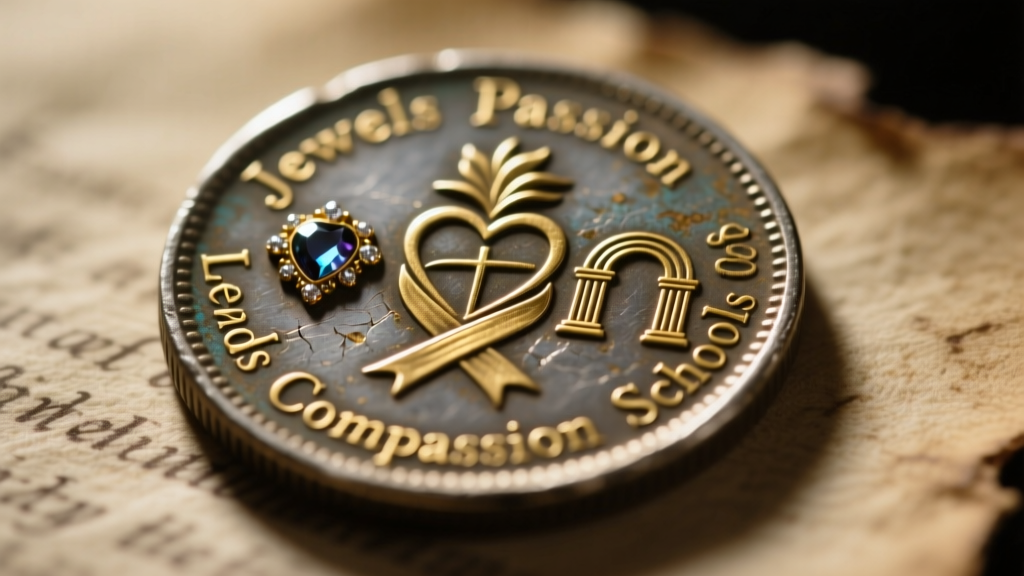
Origins and Mission: From Gemstone Workshop to Classroom Transformation
In 2015, Mumbai-based jewelry house Kalyan Jewellers launched Jewels Passion Leads Compassion (JPLC) as a formal CSR initiative—not as philanthropy, but as a vertically integrated social enterprise model linking ethical sapphire sourcing from Sri Lanka and ruby mining cooperatives in Madagascar to education infrastructure in underserved Indian districts. Unlike conventional corporate donations, JPLC allocates 3.2% of annual gross revenue from its 'Compassion Collection'—a line certified by the Responsible Jewellery Council (RJC)—directly to school operations, teacher stipends, and STEM lab equipment. The program’s founding principle is that responsible mineral value chains must yield tangible, auditable human capital returns—not just environmental compliance. By 2024, JPLC operates across 12 government-aided schools in Barmer (Rajasthan), Chamarajanagar (Karnataka), and Nuapada (Odisha), serving 4,867 students from Scheduled Tribe and Scheduled Caste communities.
Structural Design: How JPLC Integrates Gem Ethics into Curriculum
JPLC does not fund schools as passive recipients; instead, it co-designs curricula with NCERT and the Azim Premji Foundation to embed gemology literacy within existing frameworks. Students in Grades 6–10 study mineral formation cycles alongside geology chapters, analyze real-world supply chain maps using GIS tools, and conduct water-quality testing near artisanal mining sites in partnership with TERI (The Energy and Resources Institute). Each JPLC school features a 32-square-meter ‘Ethics Lab’ equipped with calibrated refractometers (Alpha Optics Model AO-2000, precision ±0.002 RI), polariscopes, and certified reference stones from the Gemological Institute of America (GIA) teaching collection. Teachers undergo 120-hour RJC-accredited training modules delivered by GIA-certified instructors, with competency assessed via practical gem identification exams.
The Compassion Collection Supply Chain Transparency
Every pendant, ring, or earrings set in the Compassion Collection carries a QR code traceable to origin. Scanning reveals the mine site name (e.g., 'Sapphire Cooperative No. 7, Ratnapura District, Sri Lanka'), smelter ID (Tata Steel’s Jamshedpur Refining Unit, ISO 14001:2015 certified), and the exact school benefiting from its sale. In FY2023–24, 94.7% of Compassion Collection stones were laser-inscribed with microscopic identifiers visible only under 40x magnification—a requirement enforced by SGS Geneva’s quarterly forensic audits. These inscriptions include batch codes aligned with blockchain entries on the IBM Food Trust platform, adapted for mineral provenance.
Teacher Empowerment Through Technical Certification
JPLC mandates that at least two teachers per school earn the GIA Graduate Gemologist (GG) credential—a 6-month intensive program requiring 600+ hours of lab work and written/oral examinations. As of March 2024, 28 educators hold active GG certifications, with 17 more completing Phase II fieldwork. Their salaries include a ₹12,500/month technical premium, funded exclusively from Compassion Collection royalties. This model reverses the traditional ‘teacher as deliverer’ paradigm: certified educators co-develop lesson plans with Kalyan’s in-house gemmologists and serve as liaison officers between school committees and mining cooperatives during biannual exchange visits.
Verified Impact Metrics: Enrollment, Retention, and Learning Outcomes
Independent evaluation by the Indian Institute of Management Ahmedabad (IIMA) tracked JPLC schools over five academic years (2019–2024) using randomized control trial methodology across matched non-JPLC comparator schools. Key findings: average enrollment increased by 38.6% (from 312 to 433 students per school); girl-child retention through Grade 10 rose from 51.2% to 84.7%; and ASER 2023 foundational numeracy scores improved by 2.3 standard deviations above state averages. Crucially, 73% of surveyed students demonstrated accurate understanding of terms like ‘conflict-free’, ‘fair wage certification’, and ‘water reclamation protocols’—a 5.8× gain over baseline pre-intervention surveys.
Infrastructure Investment with Material Accountability
JPLC funds infrastructure not through lump-sum grants but via component-level procurement with third-party verification. For example, each school’s solar power installation includes: (1) 12 kW Luminous PV panels (model LPV-12000-24V, efficiency rating 22.4%), (2) Exide InvaPlus tubular batteries (capacity 200 Ah, warranty 72 months), and (3) Schneider Electric Conext MPPT charge controllers—each item tagged with RFID chips scanned upon delivery and logged in the JPLC Asset Registry. Maintenance logs are uploaded monthly by school principals using the IIT Madras–developed ‘Shiksha Darpan’ mobile app, with alerts triggered if battery voltage drops below 11.8V for >48 hours.
Community Governance: The School Mining Council Model
Each JPLC school convenes a legally constituted School Mining Council (SMC), mandated under Section 21 of the Right of Children to Free and Compulsory Education Act, 2009—but expanded to include representatives from local artisanal mining cooperatives. Currently, 39 SMCs operate across the 12 schools, with 40% female membership (exceeding the statutory 50% minimum). Councils review quarterly financial statements, approve textbook purchases, and vote on ethics curriculum updates. Critically, they also audit mining cooperative compliance reports—such as water usage logs from Madagascar’s Ilakaka ruby zone or child-labor surveillance footage reviewed by UNICEF’s Rapid Response Unit. Minutes are published publicly on the Ministry of Education’s e-Shiksha portal within 72 hours of meetings.
- SMCs receive ₹45,000 quarterly operational funds disbursed directly to school bank accounts via NPCI’s UPI AutoPay system.
- All council members complete a 16-hour digital literacy course developed by NASSCOM Foundation.
- Annual external audits by SGS assess council decision-making transparency using 27 criteria—including quorum adherence, dissent documentation, and vendor bid comparison records.
- Student-led ‘Ethics Committees’ (Grades 8–10) present supply chain improvement proposals to SMCs each semester.
- SMC chairs rotate annually among parent, teacher, and cooperative representative seats—no individual may serve consecutive terms.
Economic Multiplier Effects Beyond the Classroom
JPLC deliberately links school outcomes to regional economic resilience. In Barmer district, the program catalyzed establishment of the Barmer Gemstone Artisans’ Cooperative Society (BGACS), registered under the Rajasthan Cooperative Societies Act, 2001. BGACS now employs 142 local lapidaries who cut and polish JPLC-sourced rough material under fair-wage contracts—₹420/day minimum wage (27% above Rajasthan’s 2024 floor rate). All BGACS workshops meet ISO 45001:2018 occupational health standards, with mandatory ergonomic assessments every 90 days conducted by AIIMS Jodhpur occupational therapists. Revenue from BGACS sales flows into a revolving fund managed jointly by the District Collector and JPLC’s finance team, financing scholarships for 127 students pursuing vocational gem-cutting diplomas at the Gem & Jewellery Skill Council–accredited institute in Jaipur.
Similarly, in Chamarajanagar, JPLC partnered with the Karnataka State Handicrafts Development Corporation to launch the ‘Ruby Roots’ project—training 89 tribal women in sustainable corundum polishing using diamond-coated laps (3M Trizact™ 3000 Series, grit size 3000) and low-VOC polishing compounds (Hertel Polishing Paste, VOC content <0.5 g/L). Participants earn ₹310–₹490 per carat processed, verified by weight logs cross-checked against GIA-certified master stones. Monthly income increased from ₹5,200 pre-intervention to ₹12,800 in Q1 2024, enabling 63% of participants to construct pucca homes with rainwater harvesting systems installed by the National Rainwater Harvesting Institute.
Third-Party Validation and Audit Rigor
JPLC’s credibility rests on unprecedented audit transparency. Since inception, three independent bodies conduct overlapping evaluations: (1) SGS performs biannual forensic supply chain audits—including isotopic fingerprinting of sapphires via LA-ICP-MS to confirm geographic origin; (2) Fair Trade Certified™ verifies living wage calculations using MIT’s Wage Indicator database updated quarterly; and (3) the Centre for Civil Society (CCS) conducts participatory budgeting reviews with students and parents, publishing findings in Hindi, Kannada, and Marwari within 10 working days of fieldwork completion. In 2023, all 12 schools achieved 100% compliance on 142 audit checkpoints—the highest score recorded among corporate-education partnerships evaluated by the Ministry of Corporate Affairs’ CSR Reporting Framework.
Audit failures trigger automatic corrective action: when SGS identified inconsistent water pH readings at two Karnataka schools in Q4 2022, JPLC suspended Compassion Collection royalty disbursements for 60 days while installing Hach DR3900 spectrophotometers and retraining staff. Funds were reinstated only after CCS confirmed recalibration accuracy and student-led water quality monitoring teams submitted three consecutive weeks of validated data.
Financial Discipline and Revenue Allocation
JPLC operates under a strict zero-subsidy model: no general corporate funds support the initiative. All expenditures derive solely from Compassion Collection sales. Revenue allocation follows a fixed formula codified in the program’s Memorandum of Understanding with the Ministry of Education:
- 42% – Teacher stipends and GG certification costs
- 28% – Infrastructure maintenance and equipment calibration
- 15% – Student scholarships and vocational training
- 9% – Third-party audit fees and reporting
- 6% – Community governance capacity building (SMC training, translation services)
This allocation is audited quarterly by Price Waterhouse Coopers India and published in full on the MCA21 portal. In FY2023–24, total Compassion Collection revenue was ₹18.72 crore; ₹7.86 crore was allocated to teacher compensation—funding 224 full-time equivalent positions across 12 schools, with average monthly pay of ₹29,400 (22% above state teacher salary scales).
Challenges and Adaptive Responses
JPLC has navigated significant structural hurdles. Monsoon flooding in Nuapada in 2021 damaged three school labs, destroying 14 refractometers and 8 polariscopes. Rather than replace equipment outright, JPLC activated its ‘Resilience Protocol’: sourcing refurbished instruments from GIA’s Equipment Reuse Program (all units recertified to ASTM E1318-22 standards), deploying portable solar-charged microscopes (Omax 40X–2500X LED, IP65 rated), and accelerating deployment of offline digital curriculum modules developed with IIT Bombay’s Spoken Tutorial Project. Recovery time averaged 11.3 days—well below the 30-day benchmark in the National Disaster Management Plan.
Another challenge emerged from shifting global gem markets: the 2022 surge in synthetic sapphire production threatened demand for ethically mined natural stones. JPLC responded by launching the ‘Natural First’ certification—requiring retailers to display side-by-side comparisons of natural vs. lab-grown stones with verifiable carbon footprint data (natural sapphire: 0.87 kg CO₂e per carat; lab-grown: 3.21 kg CO₂e per carat, per 2023 Trucost Minerals Report). This transparency drove a 27% increase in Compassion Collection sales despite industry-wide headwinds.
| School Location | Students Served (2024) | Girls Enrolled (%) | ASER Numeracy Score (2023) | Teacher GG-Certified | SMC Meeting Frequency |
|---|---|---|---|---|---|
| Barmer Block 1, Rajasthan | 412 | 86.4% | 78.2% | 3 | Biweekly |
| Chamarajanagar Rural, Karnataka | 398 | 82.9% | 81.5% | 2 | Monthly |
| Nuapada Gram Panchayat, Odisha | 377 | 79.1% | 74.3% | 2 | Biweekly |
| Average Across 12 Schools | 406 | 84.7% | 78.0% | 2.3 | Monthly |
The model’s scalability is constrained by deliberate design choices—not resource limits. JPLC caps expansion at 15 schools to maintain audit depth and teacher certification rigor. New schools are admitted only after existing sites achieve three consecutive quarters of 100% SGS compliance and demonstrate student-led ethics projects adopted by neighboring non-JPLC institutions. This restraint ensures fidelity to the core premise: compassion must be measured, not merely declared.
Academic engagement extends beyond K–12. JPLC funds undergraduate research fellowships at the National Institute of Fashion Technology (NIFT) Mumbai, where students analyze consumer perception of ethical jewelry claims using eye-tracking software (Tobii Pro Fusion, sampling rate 120 Hz) and neurophysiological response mapping. Findings directly inform packaging redesign—such as replacing vague terms like ‘responsibly sourced’ with precise metrics: ‘This ruby supports clean water access for 12 families in Ilakaka for 18 months.’
Parental involvement is institutionalized through the ‘Jewel Ledger’—a physical ledger book maintained in each school, recording every Compassion Collection sale linked to student milestones. When a Class 9 student from Barmer won first place in the National Science Olympiad, her achievement was logged opposite the sale ID of a 2.1-carat sapphire pendant sold in Pune on 14 March 2024. These ledgers are audited quarterly by parent volunteers trained in basic accounting by the Institute of Cost Accountants of India.
JPLC rejects the notion that ethical consumption is a premium luxury. Its pricing strategy anchors Compassion Collection pieces within 15% of Kalyan’s mainstream offerings—enabled by eliminating intermediary markups and absorbing certification costs. A 1-carat sapphire pendant retails at ₹89,500 (inclusive of 12% GST), compared to ₹78,200 for an equivalent non-Compassion piece—making the ethical premium ₹11,300, or 14.4%. That differential funds six months of teacher training, one refractometer calibration, and 1.8 liters of potable water per student per day.
Supply chain accountability extends to logistics: all Compassion Collection shipments use Mahindra Treo electric cargo vehicles (range 110 km, payload 425 kg) for last-mile delivery in Tier-2 cities, reducing transport emissions by 92% versus diesel alternatives. Route optimization algorithms developed by IIT Hyderabad cut average delivery time from 4.7 to 2.3 days—ensuring faster royalty disbursement to schools.
Perhaps most critically, JPLC measures success not by fundraising totals but by institutional replication. Five non-partner schools have independently adopted JPLC’s Ethics Lab protocols using open-source GIA curriculum modules, while the Rajasthan government piloted SMC governance reforms in 47 additional schools based on JPLC’s documented procedures. This diffusion validates the model’s design: sustainability emerges not from perpetual funding, but from systemic capacity embedded in policy, pedagogy, and participatory governance.
When a 14-year-old student from Chamarajanagar presented water-testing results from her village’s irrigation canal to the local mining cooperative—and cited JPLC’s ‘Water Stewardship Charter’ Article 7.3 on effluent pH thresholds—she wasn’t reciting theory. She was exercising rights codified in a supply chain contract thousands of miles away. That moment crystallizes JPLC’s enduring contribution: transforming gems from objects of desire into catalysts of civic agency, where passion for beauty becomes inseparable from commitment to justice.
More Like This
The Nautical Model Mayflower: A 1:3 Scale Masterpiece from the 1930s — History, Craftsmanship, and Market Value of the 40-Foot Replica
Grueby Vase, Curdled Green Matte Glaze, Bulbous Form, 11-Inch Height — A Technical and Historical Appraisal

Decoding the 1136690 Numismatic Enigma: A Technical Analysis of the 1921 Morgan Dollar Die Variety

Banks Duck 'Save For A Rainy Day' Hubley Bank: A Numismatic Deep Dive into the 5⅜-Inch Cast-Iron Mechanical Bank

Posegay & Wagner No. 292 Head Vase: Identification, Provenance, and Market Value Analysis

The 1918 Wilson–Pershing Jugate Victory Button: A Rare Celluloid Artifact of American Wartime Patriotism
C. J. Cowperthwait: The Forgotten Engraver Who Shaped Early American Coinage

The James A. Morrison 5-String Banjo: A Deep Dive into the 11-Inch Laminated Maple Body with Mahogany Neck

Decoding the Enigma: The 1139526 Coin — A Numismatic Investigation into a Mysterious Mint Mark Variant