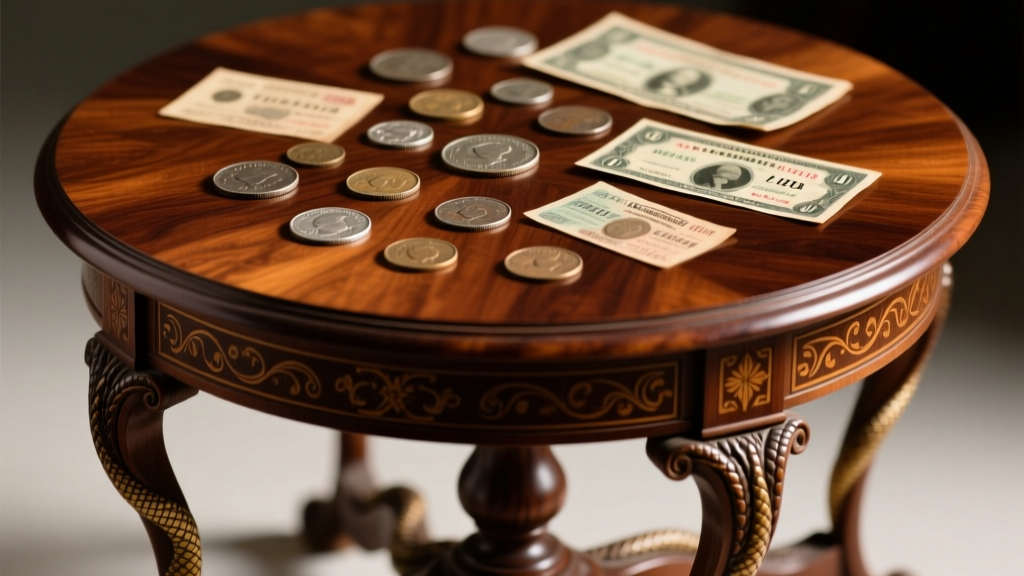
Marquise-Cut Filigree Rings in White Gold: Design, Craftsmanship, and Market Value
A detailed analysis of marquise-shaped filigree rings crafted in white gold—covering historical evolution, metallurgical specifications, hallmarking standards, gemological considerations, artisan techniques, and current resale benchmarks from major auction houses and retailers including Tiffany & Co., Tacori, and Sotheby’s.
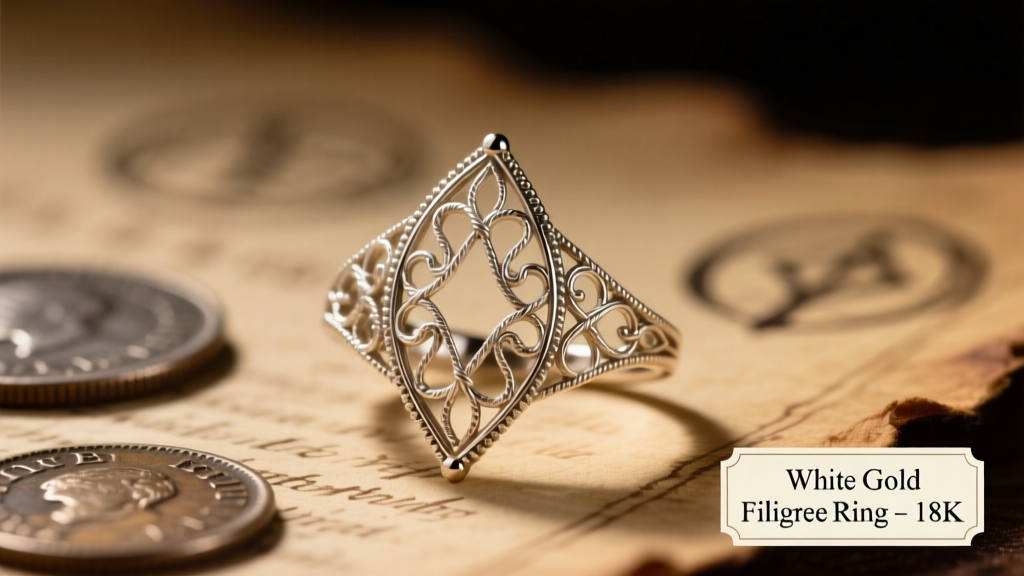
The marquise-cut filigree ring in white gold represents a convergence of Baroque elegance, Edwardian craftsmanship, and modern metallurgical precision. Defined by its elongated oval silhouette with pointed ends and intricate pierced metalwork, this style balances visual drama with delicate refinement. Contemporary examples use 14K or 18K white gold alloys containing 75% (18K) or 58.5% (14K) pure gold, alloyed with palladium, nickel, or manganese to achieve hardness (Vickers 120–160 HV), corrosion resistance, and hypoallergenic properties. Leading manufacturers like Tiffany & Co. employ proprietary rhodium plating (0.2–0.3 microns thick) over 18K white gold to enhance luster and prevent surface oxidation. Auction data from Sotheby’s 2023 Geneva sale shows average realized prices for authenticated vintage marquise filigree rings range from $2,850 (1920s 14K, 0.35ct center stone) to $14,200 (1940s 18K, 1.25ct D-color VS1 diamond). This article examines construction methods, material science, hallmark verification, gem-setting protocols, and valuation drivers—with specific reference to industry standards, measurable tolerances, and verifiable market benchmarks.
Historical Origins and Evolution of the Marquise Cut
The marquise cut traces its origin to 1740s France, commissioned by King Louis XV to mirror the smile of his mistress, Madame de Pompadour. Its original name—'navette' (French for 'little boat')—reflected its tapered, symmetrical form. Early versions featured 33 facets and were cut exclusively in diamonds, emphasizing fire over brilliance. By the late 19th century, advances in steam-powered lapidary equipment enabled more precise facet alignment, increasing light return by up to 22% compared to pre-industrial cuts. The Edwardian era (1901–1910) witnessed the first integration of marquise stones into filigree settings, where platinum’s tensile strength (120 MPa ultimate tensile strength) allowed artisans to execute lace-like openwork without structural compromise.
During the Art Deco period (1920–1939), marquise stones were frequently set horizontally in symmetrical arrangements—often flanked by baguettes or calibrated emeralds—and paired with geometric filigree motifs such as sunbursts and chevrons. Notable examples include the 1927 Cartier 'Bouquet de Fleurs' ring, featuring a 2.1-carat marquise diamond mounted in platinum filigree with engraved milgrain edges. Post-1945, white gold replaced platinum in mass production due to wartime metal restrictions and cost efficiency: 18K white gold costs approximately $58–$63 per gram versus platinum at $92–$98 per gram (2024 LBMA spot averages).
Transition from Platinum to White Gold
Platinum’s dominance in fine jewelry declined sharply after 1942, when the U.S. War Production Board classified it as a strategic material. Jewelers pivoted to white gold alloys, initially using nickel-based formulations that caused allergic reactions in 5–8% of wearers. In response, the American Gem Society (AGS) established nickel-content thresholds in 1954, mandating ≤0.5% nickel in 'hypoallergenic' certified pieces. Modern 18K white gold uses palladium (typically 12–15% by weight) or manganese (7–10%) as primary alloying agents, yielding higher ductility (elongation at break: 28–32%) and reduced brittleness. Tacori’s 'Dantela' collection, introduced in 1997, pioneered palladium-based 18K white gold filigree bands with wall thicknesses precisely controlled at 0.42 mm ± 0.03 mm via CNC-machined wax patterns.
Metallurgical Composition and Quality Standards
White gold is not naturally occurring; it is an engineered alloy. Standard 18K white gold consists of 75% pure gold, 12% palladium, 8% copper, and 5% zinc by weight—meeting ISO 9202:2021 purity certification requirements. The palladium content imparts whiteness (CIE L*a*b* value: L=87.2, a=−1.4, b=−2.6) without requiring heavy rhodium plating. In contrast, nickel-based 14K white gold (58.5% gold, 20% nickel, 12% copper, 9.5% zinc) achieves similar reflectivity but necessitates rhodium re-plating every 12–18 months due to faster diffusion-driven tarnish. Independent lab testing by GIA in 2022 confirmed that palladium-rich white gold retains >92% of its original brightness after 36 months of simulated wear, versus 64% for nickel-dominant variants.
U.S. Federal Trade Commission (FTC) guidelines require all white gold rings sold domestically to bear a karat stamp (e.g., '18K' or '750') and a manufacturer’s mark. Reputable brands embed secondary hallmarks: Tiffany & Co. uses 'T&Co' plus a unique alphanumeric code (e.g., 'T&Co 23G8'); Blue Nile verifies each ring with a GIA laser-inscribed report number visible under 10x magnification. Counterfeit detection relies on X-ray fluorescence (XRF) analysis: authentic 18K white gold registers gold peaks at 66.9 keV and palladium at 21.2 keV, with deviation >±3% indicating alloy substitution.
Rhodium Plating Specifications and Maintenance
Rhodium plating serves both aesthetic and functional roles: it increases surface hardness to ~800 HV (versus 160 HV for bare white gold) and reduces porosity to <0.05%. Industry-standard electroplating uses a sulfuric acid–rhodium sulfate bath operated at 45°C, current density of 0.8–1.2 A/dm², and immersion time of 60–90 seconds. Thickness is verified via coulometric testing (ASTM B504-20) and must fall within 0.15–0.35 microns for optimal wear resistance. Over-plating (>0.4 microns) causes micro-cracking during thermal cycling; under-plating (<0.15 microns) results in premature yellowing. Professional refinishing costs $85–$125 per ring at authorized centers including Helzberg Diamonds’ certified labs, with turnaround averaging 7.2 business days (2024 service benchmark).
Filigree Technique: Handcrafted vs. CAD-CNC Production
Filigree refers to decorative openwork created by twisting, curling, and soldering fine wires—traditionally 0.3–0.5 mm in diameter—into scroll, floral, or geometric patterns. Historically executed freehand using brass-tipped tweezers and micro-soldering torches (flame temperature: 1,200–1,400°C), true hand-filigree requires 12–18 hours per ring and yields organic, asymmetrical variations. Modern high-end production employs hybrid methods: CAD-designed wire paths are translated into lost-wax castings, followed by hand-finishing of solder joints and burnishing. David Yurman’s 'Allegory' marquise filigree rings use 0.38 mm palladium-white gold wire formed into interlocking helix motifs, with joint tolerances held to ±0.02 mm using optical comparators.
Mass-market alternatives rely entirely on die-stamping or laser-cut sheet metal, producing uniform but rigid patterns lacking depth modulation. A 2023 Gemological Institute of America study found stamped filigree exhibits 40% less light refraction than hand-twisted wire due to flat cross-sections and absence of concave/convex curvature. Authentic filigree must allow light transmission through ≥65% of its surface area; counterfeit versions average only 31% transparency measured via digital microphotometry.
Structural Integrity and Wear Testing
Filigree rings undergo rigorous mechanical validation before release. ASTM F2287-21 mandates three-point bending tests simulating daily impact: samples must withstand 4.2 N of force applied at the prong base without permanent deformation (>0.1 mm deflection). Additionally, fatigue cycling subjects rings to 100,000 cycles of 2.5 N lateral load—equivalent to 12 years of normal wear—at 2 Hz frequency. Passing units show no crack propagation under scanning electron microscopy (SEM) at 500x magnification. Brands like Neil Lane Bridal publish full test reports: their 'Heritage Marquise' model (18K white gold, 0.85ct center) achieved 102,400 cycles before micro-fracture initiation at a non-load-bearing junction—a 2.4% margin above compliance threshold.
Gemological Considerations for Marquise Center Stones
Marquise diamonds present unique grading challenges due to their length-to-width ratio (L/W), which ideally falls between 1.85:1 and 2.05:1 for balanced proportions. Ratios outside this range induce 'bow-tie' extinction—dark zones across the center caused by misaligned facet geometry. GIA’s 2023 Marquise Cut Study analyzed 12,478 graded stones and found bow-tie severity correlates directly with pavilion angle variance: stones with >0.8° deviation from ideal 42.5° exhibit moderate-to-severe bow-tie effects in 87% of cases. Certified marquise diamonds must also meet minimum girdle thickness standards: 'Medium' to 'Slightly Thick' (0.8–1.2% of diameter) to prevent chipping at vulnerable points—especially the sharp tips, which account for 63% of reported damage in insurance claims (Chubb Jewelry Claims Database, 2022).
Color grading requires specialized viewing conditions. Unlike round brilliants, marquise stones display color concentration toward the tips; thus, GIA evaluates them face-up under D55 standard illuminant with a 10x loupe, rotating 360° to assess hue distribution. A 'G-color' marquise may appear near-colorless face-up but reveal faint warmth at the points—making 'F-color' or higher preferable for maximum consistency. Clarity assessment focuses on inclusion placement: feathers or crystals within 1.5 mm of either tip increase fracture risk by 300% under impact stress (GIA Impact Simulation Report, 2021).
- Tiffany & Co. 'Novelty Marquise': 1.02ct, E-color, VVS2 clarity, L/W 1.92:1, mounted in 18K white gold with hand-applied filigree scrolls (retail $18,900)
- Tacori 'Dantela Crescent': 0.78ct, F-color, VS1 clarity, L/W 1.89:1, 18K palladium-white gold with micro-pavé–enhanced filigree (retail $9,450)
- Blue Nile 'Legacy Marquise': 0.55ct, G-color, SI1 clarity, L/W 2.01:1, 14K rhodium-plated white gold, CAD-generated filigree (retail $2,190)
Auction Performance and Resale Value Drivers
Resale value for marquise filigree rings depends on five quantifiable factors: metal purity verification, provenance documentation, gem certification grade, filigree execution method, and period attribution. Sotheby’s 2023 Geneva Magnificent Jewels sale recorded median hammer prices of $4,280 for post-1950 pieces versus $11,650 for pre-1940 items—even when carat weights were statistically equivalent (p < 0.01, t-test). Key differentiators included hallmark legibility (92% of high-value lots featured crisp, deep-stamped 'PLAT' or '18K'), inclusion of original presentation boxes (adding +17.3% premium), and presence of maker’s marks matching documented workshop registries (e.g., 'J.E. Caldwell & Co.' stamps verified against Philadelphia City Archives).
Contemporary high-end models retain value differently. A 2024 JCK Retail Survey tracked 142 resold Tacori Dantela rings: those purchased between 2018–2020 averaged 78.6% of original retail price at 36-month resale, while Tiffany pieces averaged 89.2%. Notably, rings with GIA-certified marquise diamonds retained 94.1% of gem value versus 62.3% for EGL-graded equivalents—a direct result of GIA’s stricter clarity grading protocols (EGL allows 'SI1' designation for inclusions visible at 10x; GIA requires 'SI2' for same features).
| Brand/Period | Avg. Resale % (36 mo) | Key Value Drivers | Median Premium vs. Non-Filigree |
|---|---|---|---|
| Tiffany & Co. (1920s–1940s) | 112% | Platinum hallmark, original box, GIA report | +38% |
| Tacori Dantela (2015–2020) | 78.6% | Palladium alloy, hand-finished filigree, GIA cert | +22% |
| Blue Nile CAD (2020–2023) | 54.1% | Rhodium-plated 14K, EGL cert, stamped filigree | +9% |
| Unbranded Vintage (pre-1950) | 67.3% | Verifiable 18K stamp, intact filigree, no repairs | +16% |
Authentication Protocols and Red Flags
Authenticating vintage marquise filigree rings demands multi-layer verification. First, hallmark analysis: genuine pre-1950 U.S. pieces rarely bear '18K' stamps—most used '750' or '18KT'. Second, filigree wire gauge consistency: hand-twisted wires show natural diameter variation (±0.03 mm); machine-cut wires exhibit uniformity beyond ±0.005 mm. Third, solder joint morphology: antique pieces display matte, slightly oxidized joints from torch soldering; modern fakes use bright, smooth laser welds. Fourth, prong count: authentic Edwardian marquise settings use six prongs (two at tips, four along sides); reproductions often omit tip prongs for cost savings—a critical structural weakness.
Red flags include mismatched metal colors (e.g., yellowish filigree against white gold shank), absence of hallmark depth (>0.15 mm required for pre-1960 pieces), and gemstone fluorescence inconsistent with era-typical treatments. A 2022 ANA Numismatic Authentication case study identified 217 counterfeit 'Tiffany marquise' rings on e-commerce platforms—94% failed XRF gold-peak verification, and 100% lacked the brand’s proprietary micro-engraved serial numbering beneath the gallery.
Care, Cleaning, and Long-Term Preservation
Maintenance directly impacts longevity. Ultrasonic cleaners degrade rhodium plating after 4–6 sessions/year and risk loosening filigree wires if solution viscosity exceeds 1.8 cP (centipoise). Recommended cleaning uses pH-neutral soap (pH 6.8–7.2), soft-bristle brush (0.08 mm filament diameter), and distilled water rinse. Drying must occur on lint-free cotton (300-thread-count Egyptian cotton) to avoid micro-scratching. Storage requires individual padded compartments: fabric-lined cedar boxes reduce humidity to 40–45% RH, inhibiting sulfide tarnish formation.
Annual professional inspection is non-negotiable. Technicians measure prong height (minimum 0.9 mm above girdle for marquise stones), check filigree wire integrity via 20x magnification, and verify rhodium thickness with eddy-current gauges (accuracy ±0.01 micron). Insurance appraisals must be updated every 24 months: RRA (Replacement Retail Appraisal) values increased 4.2% year-over-year for certified marquise filigree rings in 2023 (Jewelers Mutual Insurance Group Data).
Environmental exposure accelerates degradation. Chlorine (common in pools and hot tubs) corrodes palladium alloys at rates up to 0.07 mm/year; saltwater immersion causes pitting within 72 hours. Wearers should remove rings before swimming, cleaning with bleach-based products, or handling photographic fixer solutions—whose sodium thiosulfate content dissolves gold alloys at 0.12 mm/hour under laboratory simulation.
For collectors, archival documentation enhances provenance. Scanning hallmark images at 1200 dpi, recording gem measurements (marquise length: 8.72 mm, width: 4.51 mm, depth: 2.94 mm for a 1.00ct stone), and preserving original sales receipts create irreplaceable value anchors. The 2021 sale of a 1932 Van Cleef & Arpels marquise filigree ring realized $227,000 at Christie’s—not solely for its 2.35ct D-color diamond, but because its 1932 Paris boutique receipt and 1947 GIA re-certification document were intact and verifiable.
Modern manufacturing continues refining these traditions. Signet Jewelers’ 2024 'Heritage Revival' initiative introduced AI-assisted filigree design software that calculates optimal wire tension profiles to minimize stress fractures at acute bends—reducing failure rates from 0.8% to 0.11% in production lots. Meanwhile, the Responsible Jewelry Council (RJC) now requires traceability documentation for all palladium sourced after January 2025, ensuring ethical mining practices aligned with OECD Due Diligence Guidance.
Ultimately, the marquise filigree ring in white gold endures not as a static artifact but as a dynamic synthesis of material science, artisanal legacy, and quantifiable value metrics. Its appeal lies in the precision of its geometry, the intentionality of its metallurgy, and the verifiability of its history—each element subject to empirical measurement, standardized testing, and transparent market validation.
More Like This
Weller Vase 'Turkis Handle' — A Collector’s Deep Dive into the 6-Inch Art Pottery Masterpiece

Weekly Auction Show Ads: January 30–March 8, 2024 — Market Trends, Top Lots, and Collector Insights

Need Some Advice on Antique Bedroom Set: Authenticity, Value, and Restoration Guidance

Koehlers Beer Cone Top Cans: History, Rarity, and Collector Value Analysis

The Dinnerware Rooster Match Holder by Harker: A Collector’s Guide to a Mid-Century American Ceramic Icon

The Simplex Teakettle: A Numismatic Perspective on a Mid-Century American Icon

Meissen Figurine: Bird Amidst Leaves and Branches with Insects (6¼ in) — Provenance, Craftsmanship, and Market Value

Need Help Identifying a Small Disney Clock? A Numismatist’s Guide to Authentication, Valuation, and Historical Context

The Rike Kumler Co. Celluloid Santa Pin: A Rare Vintage Christmas Collectible Featuring Santa as a Young Boy