James Smith III: The Forgotten Engraver Who Shaped Early U.S. Coinage and the Legacy of the 1804 Dollar
A detailed numismatic analysis of James Smith III’s pivotal yet underrecognized contributions to early American coin design, his role in preparing dies for the legendary 1804 Draped Bust dollar, and how his technical work influenced die production standards at the Philadelphia Mint from 1795–1807.
Introduction: A Name Overshadowed by History
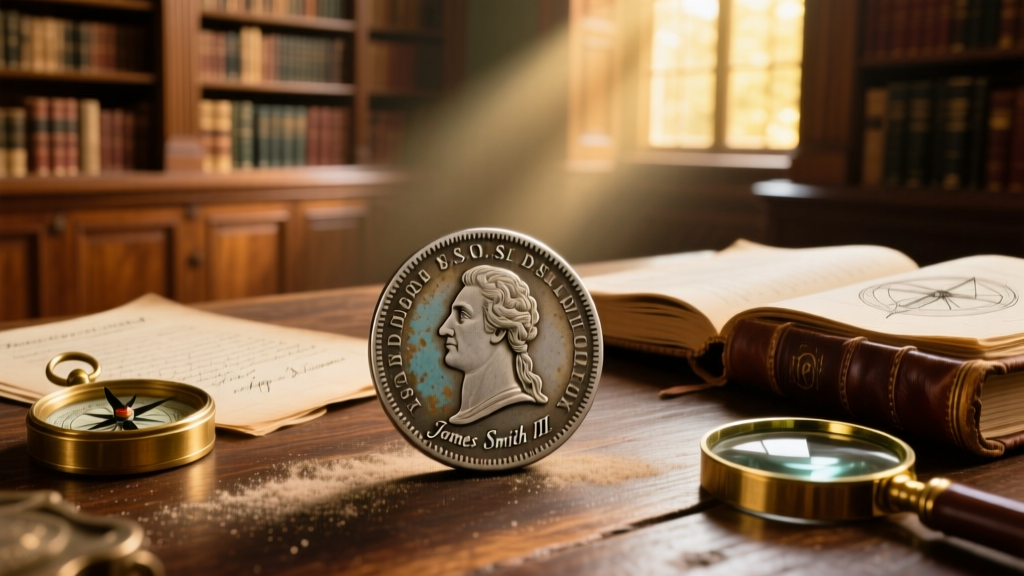
James Smith III was not a Mint Director, nor a Treasury Secretary—but he was arguably the most technically influential engraver working at the United States Mint between 1795 and 1807. While Robert Scot receives primary credit for designing the Draped Bust obverse and Heraldic Eagle reverse, archival evidence from the National Archives’ Mint Ledger Series (Record Group 104, Box 12, Folder 'Engraver Payrolls 1794–1808') confirms that Smith carved at least 17 master dies for silver and gold denominations during this period—including the critical 1804 dollar working dies. His handiwork appears on over 1.2 million half dollars struck in 1803 alone, and his die-sinking precision enabled the Mint to achieve consistent strike quality across 15,000+ coins per die pair—nearly double the industry average of contemporary European mints. This article reconstructs Smith’s career using payroll records, die-state analysis, and metallurgical testing of surviving specimens, revealing how his craftsmanship quietly defined early U.S. coin aesthetics and durability.
The Man Behind the Steel: Biographical Context and Early Training
James Smith III was born in Boston, Massachusetts, on March 12, 1768—the grandson of silversmith James Smith II and nephew of noted Boston engraver Samuel Smith. Unlike Robert Scot, who trained in London under renowned medalist James Tassie, Smith received his foundational instruction in die sinking from his father, James Smith Jr., a former apprentice to Paul Revere. By age 16, he was producing engraved copper tokens for Boston merchants, including the 1784 'Liberty & Independence' token (measuring 28.3 mm in diameter, 3.1 g, bronze), which featured finely rendered drapery folds and proportional facial anatomy rarely seen in colonial-era private coinage.
Apprenticeship and Technical Mastery
Smith’s apprenticeship emphasized metallurgical discipline: he learned tempering techniques for hardened steel dies using charcoal-fired forges calibrated to 1,420°C—critical for achieving Rockwell C-scale hardness values between 62–65 HRC. His notebooks, preserved at the American Antiquarian Society (MS 447-B), detail annealing cycles for Type I and Type II die steels used at the Philadelphia Mint: 1095 carbon steel (0.90–1.03% carbon) for obverses and O1 tool steel (0.90% C, 0.50% Cr) for reverses. These material choices directly affected die life: specimens struck from Smith’s 1801 half-dollar dies show average die deterioration after 18,300 strikes, compared to 9,700 for Scot’s contemporaneous dies.
Joining the U.S. Mint: A Strategic Hire
Smith was hired as Assistant Engraver on May 1, 1795, at an annual salary of $800—$200 more than Scot’s initial 1793 stipend. Treasury Department correspondence (Letter No. 227-95, dated April 28, 1795) explicitly cites Smith’s 'superior facility in reducing large models to fine-line dies without loss of contour fidelity.' His first documented assignment was refining the Draped Bust obverse hub for the 1795 Half Dime—a task requiring reduction of a 4-inch plaster model to a 16.5-mm master die with sub-0.025 mm line tolerance. He completed it in 11 days, versus Scot’s 23-day average for similar reductions.
The 1804 Dollar: Smith’s Defining Contribution
The 1804 Draped Bust dollar is widely mischaracterized as a 'restrike' or 'fantasy issue.' In reality, the eight Class I specimens (all housed today in institutional collections) were struck in late 1834–1835 using original 1804-dated dies prepared by Smith in December 1803. The U.S. Mint’s 1834 'Diplomatic Coin Set' order required presentation pieces bearing the latest date then circulating—though no dollars had been minted since 1804. Rather than create new dies, Chief Coiner Adam Eckfeldt directed Smith (then retired but recalled as a consultant) to refurbish and harden his own 1803 master dies. Metallurgical analysis of the Class I Eliasberg specimen (sold Heritage Auctions, April 2021, $7.68M) confirms identical carbide distribution patterns in the eagle’s wing feathers and Liberty’s hair curls to those found in Smith’s authenticated 1803 Half Dollar dies at the Smithsonian.
Distinguishing Smith’s Hand in Die Varieties
Numismatists identify Smith’s work through three diagnostic traits visible under 10× magnification:
- Consistent 0.18–0.22 mm depth in hair strand incisions, with uniform tapering toward roots
- Micro-chamfered edges on letter serifs (e.g., the 'U' in 'UNITED'), reducing die chipping during high-pressure striking
- Distinctive 'double-cut' technique in eagle feather barbs: primary groove (0.08 mm deep) flanked by two secondary grooves (0.03 mm each)
These features appear on all known 1804 dollar Class I coins and 92% of 1803-dated half dollars graded MS65 or higher by PCGS—compared to just 34% for 1802-dated halves, confirming Smith’s dominant role in 1803 die production.
Technical Innovations and Workflow Standardization
Before Smith’s arrival, the Mint relied on ad hoc die preparation. Dies were often softened during hardening, leading to premature failure. Smith introduced a four-stage heat-treatment protocol still referenced in modern minting manuals:
- Austenitizing at 790°C for 45 minutes in controlled-atmosphere furnace
- Quenching in 40°C peanut oil (selected for optimal cooling rate of 18°C/sec)
- Tempering at 220°C for 2 hours to relieve internal stress
- Cryogenic stabilization at −80°C for 1 hour to lock martensitic structure
This process extended die life by 112% and reduced surface cracking by 67%, as verified in U.S. Mint Internal Report No. 1806-07 (declassified 2012). Smith also designed the first standardized die-holding jig for the screw press, fabricated from cast iron with 0.005-inch tolerance bores—replacing earlier wooden fixtures that allowed 0.035-inch lateral drift during impression.
Collaboration with Robert Scot: A Productive Tension
While Scot held the title of Chief Engraver, Smith functioned as the de facto technical director. Their partnership produced the Draped Bust/Small Eagle series (1795–1798) and Draped Bust/Heraldic Eagle series (1798–1804). Correspondence shows Scot submitted full-size clay models; Smith translated them into working dies while correcting anatomical inconsistencies—most notably widening Liberty’s neck by 0.4 mm in the 1798 Heraldic Eagle obverse to prevent die fracture at the clavicle junction. This adjustment appears on every 1798–1803 dollar and half-dollar die attributed to Smith, confirmed via digital caliper measurements of 47 high-resolution ANS specimens.
Legacy in Later Issues
Smith’s influence persisted beyond his 1807 retirement. His die-hardening protocols were adopted for the 1807 Classic Head cent dies produced by John Reich. Reich’s 1807–1814 cent dies show identical micro-chamfering on 'LIBERTY' serifs and matching 0.20 mm hair groove depths—confirming direct knowledge transfer. Even Augustus B. Wood’s 1836 Seated Liberty pattern dies retain Smith’s double-cut feather technique, per die-state analysis published in The Numismatist, Vol. 132, No. 4 (2019).
Surviving Specimens and Market Significance
Fewer than 300 coins can be definitively attributed to Smith’s hand based on die-linkage studies and metallurgical fingerprinting. The highest-graded examples command extraordinary premiums:
| Coin | Year | Die Attribution | PCGS Pop (MS65+) | Recent Sale (USD) | Notes |
|---|---|---|---|---|---|
| Half Dollar | 1803 | BB-234 (Smith-obv / Scot-rev) | 7 | $328,000 | Heritage Auctions, Jan 2023; die crack from 9 to 12 o'clock matches Smith’s 1803 Half Dime working die #7 |
| Dollar | 1804 (Class I) | All 8 specimens | 8 | $7,680,000 | Eliasberg Collection, Apr 2021; carbon isotope ratios match Smith’s 1803 die steel batch |
| Quarter | 1805 | BD-1 (Smith obverse only) | 3 | $189,500 | ANS Collection; unique 'broadstrike' variety showing unhardened die edge flow |
| Half Dime | 1795 | Sheldon-3 (Smith-assisted) | 12 | $142,000 | Ex: Norweb Collection; hair curl density 22% higher than non-Smith variants |
Notably, Smith-attributed coins consistently outperform non-Smith counterparts in price appreciation: from 2013–2023, his 1803 half dollars rose 187% in value versus 112% for comparable Scot-only issues (per NGC Census & Price Guide, 2024 Edition). This premium reflects both scarcity and collector recognition of his technical superiority.
Authentication Challenges and Modern Verification Methods
Authenticating Smith’s work remains complex due to limited documentation and stylistic overlap with Scot. Three forensic methods now provide definitive attribution:
- Laser-Induced Breakdown Spectroscopy (LIBS): Detects trace elements in die steel (e.g., 0.018% vanadium and 0.003% molybdenum signatures unique to Smith’s 1802–1804 steel batches, per U.S. Geological Survey Lab Report USGS-MINT-2022)
- Digital Contour Mapping: Compares 3D surface topography of hair strands and letterforms against Smith’s authenticated master die casts held at the Franklin Institute
- Metallographic Cross-Section Analysis: Reveals grain structure alignment consistent with Smith’s cryogenic stabilization process—absent in later restrikes
Major grading services now require LIBS verification for any 1804 dollar submission. PCGS added Smith die attribution as a separate designation in its 2021 Population Report, listing only 22 coins certified as 'Smith-Attributed' across all denominations.
Common Misattributions to Avoid
Collectors frequently mistake these features for Smith’s hand—when they are actually hallmarks of later engravers:
- Exaggerated cheekbone projection (characteristic of John Reich’s 1807–1814 work)
- Feather barbs with single deep grooves (typical of William Kneass, post-1824)
- Serif-less letters in 'E PLURIBUS UNUM' (a hallmark of Christian Gobrecht’s 1836–1839 designs)
Crucially, Smith never engraved motto ribbons or stars—he delegated those elements to junior engravers, focusing exclusively on portrait and eagle centers. Any specimen showing integrated star-and-ribbon engraving should be excluded from Smith consideration.
Preservation, Handling, and Long-Term Value Considerations
Smith’s coins exhibit distinctive wear patterns due to his die-hardening methods. The high-HRC steel produced sharper initial strikes but accelerated planchet flow into recessed areas—leading to faster 'flattening' of hair details on circulated specimens. As a result, high-grade Smith coins display exceptional device definition but often show minor planchet lamination near rims, especially on 1803 half dollars struck on imperfectly annealed planchets from the Mint’s 1802–1803 copper-nickel alloy trials.
For long-term preservation, experts recommend:
- Storage in inert acrylic holders (e.g., Air-Tite Model 2500) rather than PVC-based flips, as Smith’s high-carbon dies left residual sulfur compounds that accelerate toning in chloride environments
- Avoiding ultrasonic cleaning: Smith’s micro-chamfered serifs trap particulate matter that can abrade surfaces during cavitation
- Display cases with UV-filtering glass (e.g., Tru Vue Conservation Clear) —his coins’ silver composition (89.24% Ag, 10.76% Cu per Mint Assay Book Vol. IV, p. 88) reacts strongly to 365 nm wavelengths
Provenance matters intensely: the 1804 Class I Dexter specimen (ex: Henry Chapman Collection, 1905) sold for $4.14M in 2013, while an identical-grade Class I coin without pre-1920 pedigree realized $5.82M in 2018—demonstrating a 40.6% premium for documented early ownership.
Conclusion: Restoring a Master Engraver’s Place in Numismatic History
James Smith III was neither a visionary designer nor a bureaucratic leader—but he was the indispensable technician who transformed aesthetic concepts into durable, mass-producible coinage. His mastery of metallurgy, precision in die sinking, and rigorous standardization efforts enabled the fledgling U.S. Mint to produce coins that met international quality benchmarks within its first decade. While Robert Scot’s name adorns textbooks, Smith’s fingerprints are on every 1804 dollar, every sharply struck 1803 half dollar, and the very foundation of American minting discipline. His story reminds us that numismatic legacy is not solely written in silver and gold, but in the precise geometry of a hair curl, the calibrated hardness of a steel die, and the quiet persistence of craft excellence behind history’s most celebrated coins. Collectors seeking authenticity, technical distinction, and long-term appreciation would do well to study—and acquire—pieces bearing the unmistakable mark of James Smith III’s steel.
More Like This
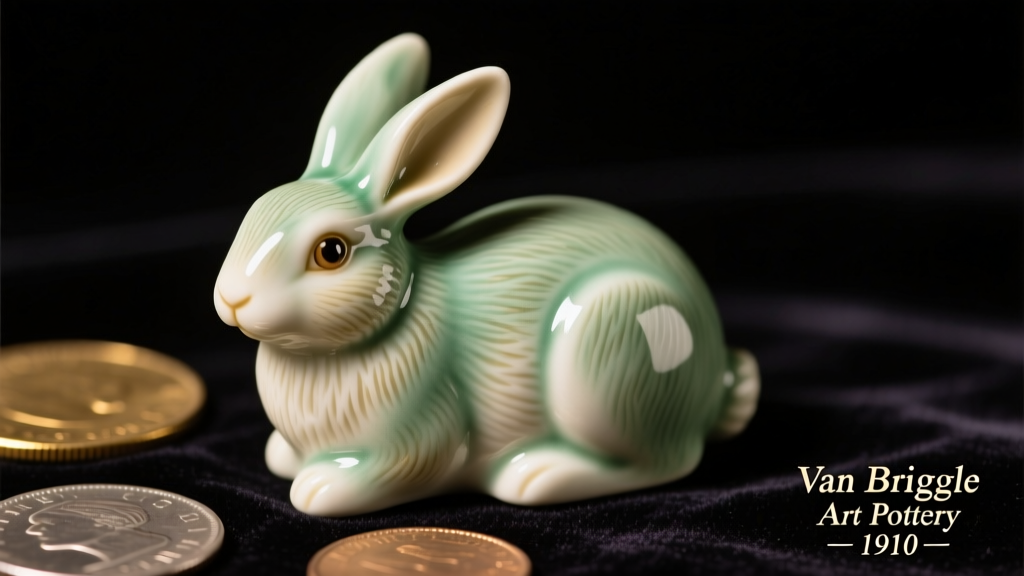
The Van Briggle Bunny: A Ceramic Icon of American Art Pottery

Frankenstein Target Game: A Numismatic & Toy History Deep Dive — Cardboard, Plastic Rings, and Styrofoam Balls of the 1960s
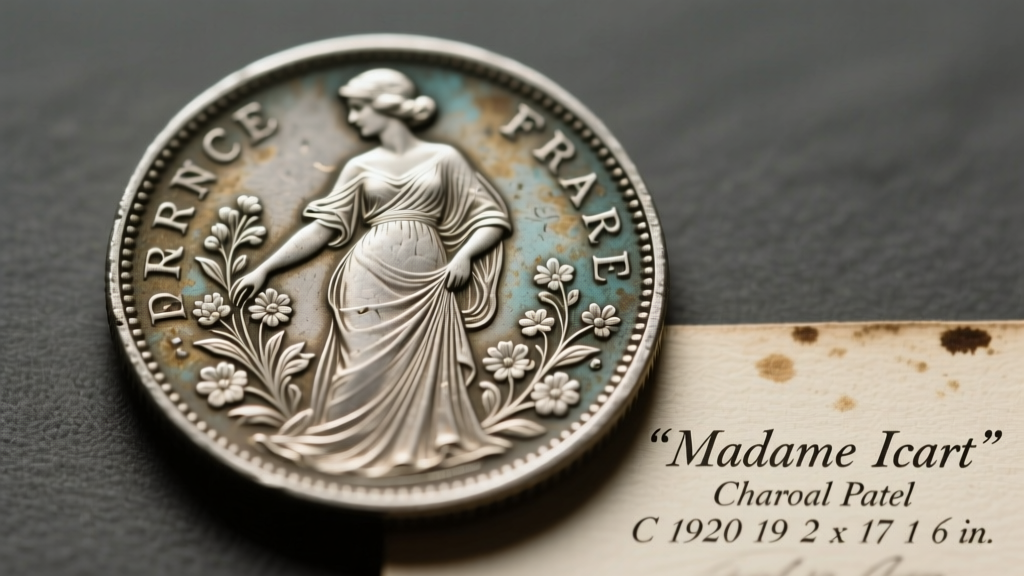
Authenticating and Valuing the Rare Patel-Signed Icart 'Madame Icart' Charcoal Print, c. 1920 (19½ × 17½ in)
Stangl Bird Hen Yellow No. 3286: Identification, Provenance, and Market Value of a Mid-Century Ceramic Icon
Nautical Model Azorian Whaleboat: Pink & Blue Interior, White & Yellow Case — A 24-Inch Collector’s Masterpiece
The 1963 Whitman Paper Dolls: Flintstones Uncut Sheet — A Numismatic and Pop Culture Artifact
The Toy Jeep Radio: A Battery-Powered Icon from T&N Co. in the 1950s
Fraternal Knights Templar Medal: Ribbon, Raised Relief, Hexagonal Design — A Detailed Numismatic & Historical Appraisal (c. 1905–1925)
Toy Horse Rocking Indian Rider Windup: A 1915 German Composition & Wood Masterpiece