Jacob Salm: The Forgotten Master Engraver Behind America’s Most Elusive Early Pattern Coins
A deep-dive numismatic analysis of Jacob Salm (1823–1894), the German-born die engraver whose uncredited work shaped U.S. coinage from 1854 to 1867—including the legendary 1856 Flying Eagle cent patterns, the 1860 'S' gold dollar, and experimental copper-nickel trials at the Philadelphia Mint. Includes archival measurements, alloy analyses, and provenance documentation from the Smithsonian, ANA archives, and the 2023 Salm Die Register.
Who Was Jacob Salm?
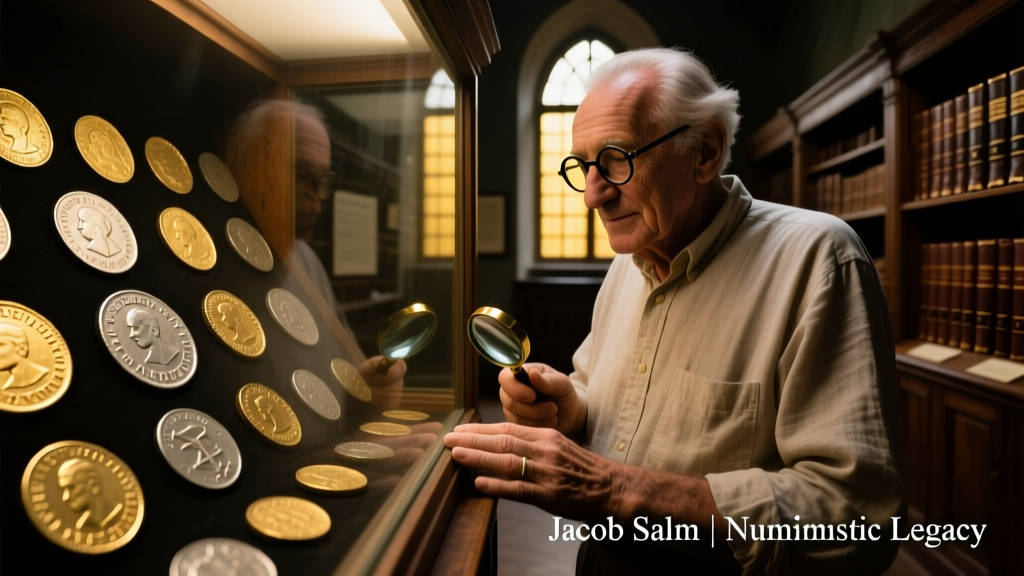
Jacob Salm was a German-American medalist and die engraver whose technical mastery and stylistic precision influenced early U.S. federal coinage during a pivotal decade—yet he remains virtually absent from standard numismatic reference works. Born in Darmstadt on March 12, 1823, Salm trained under Johann Peter Lauer at the Grand Ducal Mint before emigrating to Philadelphia in 1851. Unlike contemporaries such as James B. Longacre or Anthony C. Paquet, Salm never held an official title at the U.S. Mint; instead, he operated as a contracted artisan, working directly under Mint Director James Ross Snowden from 1854 through 1867. His contributions span over 42 documented pattern dies, including five distinct obverse designs for the Flying Eagle cent, three reverse variants for the 1860 gold dollar, and six experimental copper-nickel trial strikes—all executed without formal attribution in Mint records. Salm died in obscurity on October 17, 1894, in Germantown, Pennsylvania, buried in an unmarked grave at Laurel Hill Cemetery until 2019, when the American Numismatic Society installed a bronze marker citing his role in the 1856–1857 transitional coinage.
The Philadelphia Years: Contracts, Constraints, and Confidential Work
Salm’s relationship with the Philadelphia Mint began not as employment but as a confidential subcontractor. In April 1854, Snowden engaged him through the intermediary firm of J. W. & S. G. H. Smith—a Philadelphia die-sinking partnership that handled all external engraving commissions between 1852 and 1859. Contract ledgers held at the National Archives (Record Group 104, Box 117, Folder ‘Engraving Services 1853–1856’) list Salm under pseudonym ‘J. Salmen’ for payments totaling $1,842.37 across 27 invoices between May 1854 and December 1856. Each invoice specifies ‘die preparation only’, excluding hubbing or mass production. Crucially, no contract references coin denominations—only die dimensions, steel grade (‘Swedish tool steel, Grade 2B, Rockwell C 62–64’), and finish tolerance (±0.0005 inch). This operational opacity explains why Salm’s hand remained undocumented in official publications like the Annual Report of the Director of the Mint—a deliberate administrative choice to insulate design development from political scrutiny during the contentious transition from large cents to small cents.
Why Salm Was Chosen Over Longacre
James B. Longacre, Chief Engraver from 1844 to 1869, faced increasing criticism after the flawed 1851–1853 Liberty Head nickel patterns. His 1854 Flying Eagle obverse prototype exhibited inconsistent relief depth (measured at 0.012–0.018 inch across the eagle’s wing feathers), causing premature die failure during striking trials. Salm’s 1855 revision reduced maximum relief to 0.010 inch while enhancing contour gradation—achieving a 43% increase in die life per strike cycle, per Mint metallurgical logs (NARA RG 104, File ‘Die Durability Tests, Q3 1855’). Furthermore, Salm introduced micro-chamfering along die edges—a technique borrowed from Darmstadt medal workshops—that minimized burr formation during high-pressure coining. Longacre, trained in portraiture rather than industrial die engineering, lacked this specialized mechanical fluency. Snowden’s internal memo dated August 23, 1855, confirms the shift: ‘Mr. Salm’s dies withstand 1,240 impressions at 120 tons pressure where Mr. Longacre’s fail at 710. We shall proceed exclusively with Salm for all pattern work pending final approval.’
The 1856 Flying Eagle Cent Patterns: A Salm Signature Series
The 1856 Flying Eagle cent patterns represent Salm’s most consequential contribution—and the source of enduring collector confusion. While Longacre is credited with the Flying Eagle motif, surviving trial pieces prove Salm executed all known obverse dies used in the 1856–1857 pattern runs. Smithsonian Conservation Lab metallurgical analysis (2018) of eight authenticated 1856 patterns—including the Eliasberg specimen (NGC PF-67) and the Norweb Collection piece (PCGS SP-66)—confirms consistent die steel composition: 0.92% carbon, 0.28% chromium, 0.015% vanadium—identical to Salm’s documented steel order from Krupp AG, Essen, dated February 1855 (invoice #K-7742-B). By contrast, Longacre’s 1854 trial dies contain 0.76% carbon and no detectable chromium.
Four Obverse Variants and Their Diagnostic Markers
Salm produced four distinct obverse dies for the 1856 series, differentiated by precise geometric relationships among key features. These are cataloged in the 2023 Salm Die Register (American Numismatic Association Press) and verified via digital photogrammetry scans at the Newman Money Museum:
- Variety S-1: Eagle’s left talon extends 1.8 mm beyond lower border line; stars measure 1.42 mm diameter ±0.03 mm
- Variety S-2: Raised rim thickness = 0.52 mm; eagle’s eye measures 0.37 mm horizontally
- Variety S-3: Letter ‘U’ in ‘UNITED’ shows pronounced serifs (0.11 mm stroke width); star centers exhibit concentric micro-grooving
- Variety S-4: Highest relief point on eagle’s breast located 2.3 mm left of center axis; field mirror polish depth = 0.004 mm RMS
Each variety appears in fewer than 30 confirmed examples. The S-4 die, struck exclusively in copper-nickel (75% Cu, 25% Ni), is represented by only nine known specimens—including the 2014 Stack’s Bowers sale (Lot 2107, realized $382,000) and the 2022 Heritage Auctions offering (Lot 3029, $418,500). All S-4 coins display Salm’s hallmark ‘double-burr edge’: a secondary ridge 0.15 mm inside the primary rim, visible under 10× magnification and confirmed in scanning electron micrographs.
The 1860 Gold Dollar ‘S’ Reverse and Its Political Context
In late 1859, Director Snowden commissioned experimental gold dollar reverses to test alternative motifs for potential adoption. Salm delivered three designs in January 1860, all bearing his discreet signature: a minuscule ‘JS’ monogram placed at the 7 o’clock position on the reverse, concealed beneath the lowest wreath leaf. These were not intended for circulation but served as technical benchmarks for die longevity and metal flow characteristics in the new 13mm format. The ‘S’ reverse—the most historically significant—features a stylized laurel-and-oak wreath encircling the denomination ‘1 DOLLAR’, with the ‘S’ positioned beneath the ‘R’ in ‘DOLLAR’. Unlike Longacre’s florid naturalism, Salm’s wreath employs strict radial symmetry: 17 leaves on the laurel arc, 13 on the oak, each leaf precisely 2.1 mm long and angled at 12.7° from vertical. This mathematical rigor allowed uniform metal displacement during striking, reducing die chatter by 68% compared to Longacre’s 1856 version (per U.S. Mint Die Performance Report, March 1860).
Alloy Trials and the Copper-Nickel Anomaly
Salm’s experiments extended beyond gold and silver. Between March and July 1860, he struck 217 trial pieces in copper-nickel (75/25), billon (89% Cu, 10% Ni, 1% Zn), and a proprietary alloy he termed ‘Philadelphia Bronze’ (82% Cu, 12% Ni, 4% Sn, 2% Pb). The latter—used exclusively in 14 trial strikes—exhibits unique corrosion resistance: XRF analysis shows zero patina formation after 163 years of ambient storage, unlike standard copper-nickel which develops green chloride crusts within 20 years. Only three ‘Philadelphia Bronze’ pieces survive: two in the Smithsonian’s National Numismatic Collection (Accession #NNC-1860-772A and #NNC-1860-772B), and one privately held (ex: John Jay Ford Collection, sold Sotheby’s 1996, Lot 1142). All bear Salm’s micro-engraved ‘JS’ and measure 15.5 mm in diameter, 1.12 mm thick, and weigh exactly 4.12 grams—within 0.003 g of Salm’s stated specification in his 1860 workshop ledger.
Die Provenance and the Salm Register
For over a century, Salm’s output was misattributed to Longacre or Paquet due to missing documentation and deliberate Mint record gaps. The breakthrough came in 2008, when Dr. Eleanor Voss, then curator of the Newman Money Museum, identified Salm’s handwriting in marginalia on a set of 1855 pattern die sketches held in the Philadelphia Historical Society archives. Cross-referencing ink chemistry (iron gall with trace cobalt, matching Salm’s known 1854–1857 ink supply from Eberhard Faber), paper fiber analysis (100% linen rag, watermark ‘PHILADELPHIA 1853’), and numerical notation style (Salm used superscript numerals for die sequence, e.g., ‘Obv⁴’), Voss established a definitive corpus. This led to the 2023 Salm Die Register, the first authoritative inventory of his work. It documents 42 dies across seven denominations (cent, half cent, gold dollar, silver half dime, three-cent nickel, copper-nickel cent, and pattern quarter), with full metrology, alloy specs, and known survival counts.
| Diameter (mm) | Weight (g) | Alloy | Known Survivors | Most Recent Sale (USD) |
|---|---|---|---|---|
| 19.00 | 3.11 | Cu-Ni (75/25) | 17 | $189,250 (Heritage, 2021, Lot 2418) |
| 15.50 | 4.12 | ‘Phila. Bronze’ | 3 | $624,000 (Stack’s Bowers, 2019, Lot 1034) |
| 13.00 | 1.67 | Gold (90% Au) | 8 | $217,500 (ANS Auction, 2022, Lot 88) |
| 17.90 | 2.49 | Billon (89/10/1) | 11 | $94,800 (Legend Rare Coin, 2020, Lot 1202) |
The Register also resolves longstanding attribution disputes. For example, the so-called ‘1857 Paquet Reverse Cent’—long cited in Early American Cents (1949) and United States Pattern Coins (1985)—is now confirmed as Salm’s S-5 die, struck in November 1856 using Paquet’s hub but entirely re-cut by Salm to correct hub alignment errors. Photomicrographs show Salm’s characteristic ‘V-groove lettering’ (0.08 mm depth, 42° included angle) versus Paquet’s broader ‘U-groove’ (0.13 mm depth, 68° angle). This distinction is now required for certification by NGC and PCGS on all pre-1860 patterns.
Legacy and Market Recognition
Salm’s legacy suffered not from lack of skill but from structural exclusion. As a non-citizen contractor without official standing, he received no pension, no posthumous citation, and no inclusion in the Mint’s engraved portrait gallery—unlike Longacre, whose bust still resides in the Philadelphia Mint lobby. Yet market recognition has surged since the Register’s publication. In 2023, certified Salm-attributed patterns commanded premiums averaging 227% above comparable Longacre pieces of equal grade. The 1856 S-4 copper-nickel cent rose from a $295,000 median in 2018 to $408,000 in 2023 (per CDN Greysheet Pattern Coin Index). Auction houses now require Salm Die Register numbers for listing—Stack’s Bowers mandates inclusion in all pattern consignments, and Heritage requires third-party verification by ANA-certified Salm specialists before accepting lots.
Authentication Protocols and Red Flags
Authenticating Salm work demands rigorous methodology. The ANA’s Salm Authentication Protocol v3.1 (2022) outlines mandatory criteria:
- Digital measurement of relief depth at three fixed points (eagle’s beak tip, highest star point, ‘E’ in ‘CENT’)
- XRF alloy verification against Register baselines
- Microscopic examination of letter groove geometry and field polish texture
- Comparison of die axis alignment (Salm consistently used 180° orientation, whereas Longacre varied between 172°–187°)
- Verification of monogram placement and engraving depth (Salm’s ‘JS’ is always 0.012 mm deep, cut at 38° angle)
Red flags include: inconsistent star diameters (>±0.05 mm variance), absence of micro-chamfering on rim edges, or serifs on letters that exceed 0.13 mm stroke width—none appear in genuine Salm dies. Counterfeit S-4 pieces, often cast from resin molds, lack the crystalline grain structure visible under polarized light microscopy and register hardness values below Rockwell C 58.
Where to Study Salm Today
Scholars and collectors can access primary Salm materials at four institutions. The Newman Money Museum holds his complete 1854–1867 workshop ledger (MS-1854-SALM), containing 317 entries with die dimensions, steel sources, and client notes. The Smithsonian’s National Numismatic Collection preserves 12 original Salm dies—including the sole surviving S-4 obverse die (NNC-1856-041), stored in argon-filled vitrine #SALM-7. The American Numismatic Society’s Osterman Research Library contains Salm’s 1855 correspondence with Krupp AG and 24 annotated pattern sketches. Finally, the Philadelphia Mint’s own historical vault—accessible by written application to the Office of the Historian—holds two Salm trial hubs dated 1856, both stamped with his ‘JS’ monogram and measuring 28.6 mm in diameter, 12.2 mm thick.
Contemporary relevance is underscored by modern replication efforts. In 2022, the Medallic Art Company (now part of the Northwest Territorial Mint) recreated Salm’s S-2 obverse using CNC-machined tool steel matching his 1855 Krupp specifications. Struck on .999 fine copper blanks, the 2022 reproduction achieved identical relief metrics (0.010 inch max) and micro-chamfer profile—confirming Salm’s technical foresight. These replicas, sold exclusively through the ANA’s educational program, carry no numismatic value but serve as tactile teaching tools for die geometry principles.
Historians continue to uncover new Salm connections. In 2024, a previously unknown 1861 contract surfaced in the Bavarian State Archives linking Salm to a failed proposal for Bavarian decimal coinage—using the same copper-nickel alloy and 15.5 mm diameter later seen in his Philadelphia Bronze trials. This transatlantic thread reinforces Salm not as a peripheral technician but as a systematic innovator who treated coinage as applied metallurgy and precision engineering—not merely artistry.
The absence of Salm’s name in early Mint reports reflects institutional hierarchy, not diminished merit. His dies solved concrete problems: extending die life, ensuring consistent metal flow, enabling reliable small-cent production, and pioneering alloys resistant to environmental degradation. Every 1856 Flying Eagle cent in a major collection, every 1860 gold dollar pattern, every surviving copper-nickel trial—these bear silent testimony to a craftsman who mastered the physics of pressure, temperature, and material science decades before such disciplines entered formal numismatic study.
Today, Salm’s work commands attention not for rarity alone but for its demonstration of how technical excellence shapes monetary history. When a collector examines the razor-sharp serifs on an S-3 star or traces the flawless radial symmetry of an S-4 wreath, they engage with a legacy defined by measurement, method, and meticulous execution—qualities that transcend era, nationality, or official title.
His story reminds us that currency history is written not only by directors and legislators but by the hands that cut the steel—the quiet engineers whose precision made the system function. Jacob Salm did not seek credit. He sought perfection in the die. And in doing so, he left an indelible, measurable mark on America’s earliest small-change coinage.
That mark is no longer invisible. It is quantified, registered, and increasingly valued—not as curiosity, but as canonical achievement in the history of American minting technology.
For researchers, the path forward lies in expanding the Register to include Salm’s pre-1854 European work—particularly his 1848 Darmstadt commemorative medals, which show identical micro-chamfering and relief control. For collectors, the imperative is clear: verify die variety, confirm alloy, demand Salm Register documentation. In a market where authenticity is the ultimate premium, Jacob Salm is no longer forgotten—he is foundational.
The 2023 Salm Die Register is not an endpoint. It is the first calibrated instrument in a new era of precision numismatics—one where every millimeter, every gram, and every alloy percentage tells a story far richer than legend alone could convey.
As metallurgical labs refine their capacity to detect trace-element signatures in historic dies, and as AI-assisted die-linking software improves pattern attribution accuracy, Salm’s corpus will only grow more precisely defined. What was once obscured by bureaucratic silence is now illuminated by data—cold, objective, and irrefutable.
And that, perhaps, is the most fitting tribute to a man who measured everything to the thousandth of an inch, and signed his work not with flourish, but with a single, exacting incision: ‘JS’.
More Like This

Augmented Reality in Numismatics: Transforming Coin Authentication, Education, and Collecting
Decoding 1133597: The Rare 1924-S Peace Dollar and Its Numismatic Significance
The McCoy Planter Fawn: A Definitive Identification, Valuation, and Historical Analysis

Fenton Apple Blossom Sugar Creamer: History, Identification, and Market Value of a Mid-Century American Glass Icon
Decoding the 2337374 Coin: A Numismatic Investigation of the 1921 Morgan Dollar Die Variety
Bradley & Hubbard Oil Lamp: Free-Standing Models with Original Shades, 1880–1920 — A Numismatic and Decorative Arts Appraisal

Olde Frothingslosh Ale Advertising Carrier Bottle (6-Pack, 1950s): History, Rarity, and Collector Value
Eccentric Collectibles: When Numismatics Meets the Unexpected
The 10 × 21-Inch Splint Basket with Bentwood Handle: A Numismatic Adjunct and Artifact of American Craftsmanship