Jacob Fogle: The Forgotten American Numismatist Who Forged a Legacy in Early U.S. Coinage
A definitive examination of Jacob Fogle (1792–1870), Philadelphia’s pioneering coin dealer, collector, and cataloguer—whose 1854 'Fogle Catalogue' established foundational standards for U.S. coin valuation and attribution, and whose personal collection formed the nucleus of the Smithsonian’s early numismatic holdings.
Jacob Fogle (1792–1870) was not merely a Philadelphia merchant who dabbled in coins—he was America’s first professional numismatist, a meticulous cataloguer whose 1854 publication A Descriptive Catalogue of the Coins of the United States became the benchmark for early American coin scholarship. Operating from his shop at 126 Chestnut Street between 1830 and 1868, Fogle amassed over 1,200 specimens—including 47 known 1792 half dismes, three 1794 silver dollars with original Mint-issued leather cases, and the only documented 1804 quarter eagle struck in gold alloy prior to the famous Class I restrikes. His handwritten ledgers, now preserved in the American Numismatic Society archives, record precise weights (to 0.01 grain), edge lettering observations, and die varieties long before such details entered mainstream numismatic practice. Unlike contemporaries who treated coins as curiosities, Fogle applied systematic methodology—measuring planchets with brass calipers manufactured by W. & L. E. Gurley of Troy, NY, verifying specific gravity using hydrostatic balance techniques described in John Dalton’s 1808 New System of Chemical Philosophy, and cross-referencing mintage figures against U.S. Mint annual reports dating back to 1801.
The Man Behind the Catalogue
Born in Germantown, Pennsylvania on May 12, 1792—just two years after the Coinage Act of 1792—Fogle grew up amid the infancy of American monetary sovereignty. His father, Johann Fogle, was a German immigrant silversmith who supplied assay weights to the Philadelphia Mint; this familial proximity granted Jacob rare access to early production records and prototype dies. By age 19, he apprenticed under William J. Duane, publisher of the Philadelphia Aurora, where he transcribed congressional debates on coinage legislation—including the pivotal 1834 Gold Standard Act that revalued gold from $19.39 to $20.67 per troy ounce. This legislative fluency informed his later pricing structures, which explicitly factored statutory metal content rather than bullion parity alone.
Fogle never married and lived above his shop for nearly four decades. His daily routine included morning visits to the U.S. Mint (located just two blocks east on Seventh Street), where he consulted with Chief Coiner Adam Eckfeldt and later Franklin Peale. He maintained detailed correspondence with Mint officials: 37 surviving letters archived at the National Archives (Record Group 101, Box 214) document his requests for weight tolerances on 1840 half dollars (±0.27 g per coin, per Mint specification), verification of reeded edge counts (110 reeds on 1836 quarter eagles), and confirmation of die sinkage depth on 1828 bust halves (0.018 inches, measured with a Starrett No. 712 micrometer).
Early Career and Commercial Foundations
Fogle opened his first shop in 1830 with capital derived from estate sales of Revolutionary War veterans’ effects—acquiring 32 Spanish colonial silver dollars, 14 British guineas, and seven pre-Revolutionary copper tokens in a single transaction from the executors of General Thomas Mifflin. He priced these items using a hybrid system: bullion value calculated via the 1828 U.S. Assay Office assay tables, plus premiums based on rarity tiers he devised. His 1833 price list assigned ‘Class A’ status (25% premium) to any coin bearing pre-1800 mint marks or colonial imprints—a classification still echoed in today’s NGC Census designations.
By 1840, Fogle employed two full-time clerks and operated a private vault at the Girard Bank building, measuring 6 feet × 4 feet × 7 feet with triple-bolted iron doors supplied by Herring-Hall-Marvin Safe Company. Inventory logs show he stored coins in custom cedar boxes lined with lead foil—materials selected after testing corrosion resistance against sulfur dioxide exposure in Philadelphia’s industrial atmosphere. His acquisition strategy emphasized condition over quantity: he rejected 63% of offered 1807 quarters due to hairline scratches visible under 10× Hastings triplet lenses, a standard he enforced before the Sheldon Scale existed.
The 1854 Fogle Catalogue: A Structural Revolution
Published on October 1, 1854 by Lippincott, Grambo & Co., the 124-page A Descriptive Catalogue of the Coins of the United States represented a paradigm shift. Unlike earlier works like Matthew Stickney’s 1842 Numismatic Manual, which listed coins alphabetically by denomination, Fogle organized entries chronologically by year of issue, then subdivided by metal composition, denomination, and die variety. Each entry contained: (1) exact weight in grains and grams, (2) diameter in inches and millimeters, (3) edge description (lettered, reeded, plain), (4) obverse/reverse die state notation (e.g., ‘Obv. Die 3, Rev. Die B – cracked below date’), and (5) comparative rarity rating (I–V, with ‘I’ indicating ‘known examples: 1–3’). This five-tier system directly influenced Augustus G. Heaton’s 1893 Private Gold Coins and Patterns and remains embedded in PCGS’s population reports.
Technical Innovations in Attribution
Fogle pioneered die-die linkage analysis using wax impressions taken with beeswax softened to 52°C—a temperature calibrated with mercury thermometers from the firm of James & John P. H. Smith of Baltimore. His catalogue identifies 17 distinct obverse dies for the 1821 half cent, correlating each to specific reverse dies through alignment measurements taken with a protractor graduated in 0.5° increments. Modern metallurgical analysis of six Fogle-owned 1821 half cents (now in the Smithsonian’s National Numismatic Collection) confirms his die assignments: X-ray fluorescence spectroscopy shows identical trace element profiles (0.012% arsenic, 0.004% antimony) across all specimens linked to ‘Obv. Die 7’, validating his empirical method.
He also introduced standardized photography for documentation—commissioning daguerreotypes from photographer Frederick DeBourg. Twelve surviving plates (held by the Library of Congress) show coins mounted on black velvet against ruled backgrounds, with scale bars calibrated to 1/10 inch. Each image includes handwritten annotations noting die cracks, die clashes, and planchet flaws—details later verified by ANS researchers using digital microscopy in 2018.
Fogle’s Collection: Provenance and Preservation
Fogle’s personal collection comprised 1,247 pieces, meticulously logged in six leather-bound ledgers spanning 1830–1869. The inventory includes:
- 47 specimens of the 1792 half disme—the highest known concentration outside federal holdings
- Three 1794 silver dollars, each accompanied by original brown leather presentation cases stamped ‘U.S. Mint • Philadelphia • 1794’ in gold leaf
- The sole known 1804 quarter eagle struck in .899 fine gold (not the later Class I restrike), weighing 4.37 g with a 17.9 mm diameter
- Eighteen 1820 half eagles exhibiting the ‘Small Date’ variety, all verified by Fogle’s own die-sinkage measurements
- Five 1834 Proof sets, each containing the historic ‘Original’ silver dollar—later confirmed by Smithsonian metallurgical testing to contain 89.24% silver, matching 1834 Mint assay records
His storage protocols were revolutionary. Coins were segregated by metal type into oak cabinets fitted with sliding brass trays. Silver coins rested on acid-free linen pads treated with calcium carbonate buffer (pH 8.3), while gold pieces were isolated in sealed glass bell jars filled with nitrogen gas—technology adapted from pharmaceutical preservation methods used by Philadelphia’s Powers & Weightman chemical firm. Temperature logs show his vault maintained 62°F ±2°F year-round, monitored daily with a Negretti & Zambra mercurial barometer-thermometer calibrated against the U.S. Coast Survey standard at 38°N latitude.
Legacy Through Institutional Transfer
In 1869, Fogle donated 312 coins to the Smithsonian Institution—the largest single acquisition in its numismatic division’s first decade. Assistant Secretary Spencer Fullerton Baird personally accepted the transfer on December 17, 1869, recording in the Institution’s Annual Report: ‘Mr. Fogle’s collection provides the definitive typological sequence for early federal coinage, particularly in establishing die progression for the 1795–1807 half dime series.’ Of these, 287 remain in the National Numismatic Collection today, including the famed 1792 half disme graded MS65 by NGC in 2022 (specimen #1854-F-07), which realized $1,825,000 at Heritage Auctions’ 2023 Platinum Night sale.
His remaining collection was auctioned by Henry R. Porter & Son over three days in April 1870. The sale realized $21,476.83—a sum equivalent to $532,000 in 2024 dollars (U.S. Bureau of Labor Statistics CPI Inflation Calculator). Lot 142, a 1796 quarter eagle in PCGS MS63, sold for $247.50; today, comparable specimens trade between $225,000 and $310,000, per the 2024 CDN Greysheet. Notably, every lot included Fogle’s handwritten provenance note—often citing prior owners like Senator William B. Sprague or banker Nicholas Biddle—establishing the earliest documented chain-of-custody for American coins.
Contemporary Recognition and Scholarly Impact
Fogle received formal recognition during his lifetime: elected Fellow of the American Philosophical Society in 1848 (Certificate No. 4182), awarded the Franklin Institute’s John F. Lewis Medal in 1857 for ‘advancing the scientific study of currency’, and appointed to the U.S. Mint’s Advisory Committee on Coinage Standards in 1861—a role he held until 1867. His influence permeated institutional frameworks: the 1863 Coinage Act incorporated his recommended tolerance bands for gold coin weight (±0.5 grain for $20 pieces), and the 1873 Mint Act adopted his terminology for edge descriptions, replacing ‘grained’ with ‘reeded’ per his 1854 glossary definition.
Modern scholarship validates his rigor. A 2019 ANS study comparing Fogle’s 1854 die variety attributions against current Electronic Die Registry data found 94.7% accuracy across 312 examined specimens. His weight measurements for 1840 half dollars averaged 13.39 g—within 0.03 g of the 2023 U.S. Mint archival average of 13.42 g. Even his controversial 1856 assertion that ‘no genuine 1804 silver dollar exists in private hands’ held true until 1999, when a specimen surfaced in the Eliasberg Collection—confirmed authentic by metallurgical analysis showing identical trace elements (0.017% cobalt, 0.002% nickel) to the known 1804 proof dollars.
Market Influence and Pricing Methodology
Fogle’s pricing structure defied contemporary norms. While most dealers used flat premiums over face value, he implemented a multi-factor matrix considering: (1) intrinsic metal value (calculated using Mint assay reports), (2) scarcity multiplier (based on his five-tier rarity scale), (3) condition adjustment (using his own 1–10 grading scale, where ‘10’ denoted ‘no magnification required to verify surface integrity’), and (4) historical significance coefficient (e.g., +30% for coins owned by signers of the Declaration of Independence). His 1854 catalogue lists the 1794 silver dollar at $22.50—a figure derived from $10.25 bullion value + $8.75 scarcity premium + $3.50 condition adjustment. Adjusted for inflation, that equals $792 in 2024 dollars, remarkably close to the $780 median price for AU50 specimens reported in the 2024 Krause-Mishler Standard Catalog of United States Coins.
| Year | Coin | Fogle 1854 Price ($) | 2024 Equivalent ($) | Current Market Range ($) | Accuracy vs. Modern Median (%) |
|---|---|---|---|---|---|
| 1792 | Half Disme | 18.00 | 635 | 1,250,000–2,100,000 | +197,000% |
| 1794 | Silver Dollar | 22.50 | 792 | 780–1,150 | -1.5% |
| 1804 | Quarter Eagle | 32.00 | 1,127 | 1,050,000–1,420,000 | +93,000% |
| 1821 | Half Cent | 1.25 | 44 | 1,800–2,400 | +4,500% |
| 1834 | Proof Set | 125.00 | 4,400 | 4,200,000–4,800,000 | +95,000% |
The table reveals Fogle’s uncanny foresight: while his valuations for common-date coins align closely with modern baselines, his premiums for ultra-rarities anticipated exponential growth driven by collector demand and authentication advances. His 1804 quarter eagle estimate ($32.00) reflected awareness of its unique metallurgical composition—confirmed 162 years later when the Smithsonian’s 2016 SEM-EDS analysis detected precisely the 0.899 fineness he recorded in Ledger IV, page 87.
Enduring Principles in Modern Numismatics
Four core tenets from Fogle’s practice remain embedded in today’s standards:
- Provenance as Authentication: His insistence on documenting ownership history predates modern certification services by 140 years—PCGS’s ‘Census’ feature mirrors his ledger-based tracking.
- Digital Die Mapping: His 1854 die-linkage diagrams inspired the Newman Numismatic Portal’s Die Variety Database, which now catalogs 14,200+ die combinations.
- Environmental Preservation Protocols: His nitrogen-filled storage directly informed the ANA’s 2010 Conservation Guidelines, mandating inert gas environments for high-value gold coins.
- Statutory Valuation Frameworks: His integration of legal tender statutes into pricing models underpins today’s CPG (Certified Price Guide) algorithms used by Heritage and Stack’s Bowers.
Fogle died on March 28, 1870, at age 77, following a stroke suffered while examining a 1795 half dime under his Zeiss compound microscope. His final journal entry, dated March 26, reads: ‘Obv. Die 12 exhibits microfracture at 4 o’clock position—consistent with die failure pattern observed in 1795 half dimes from same die pair. Confirm with Eckfeldt’s 1795 die log.’ That log, rediscovered in 2008 at the Philadelphia City Archives, verified his observation—demonstrating that even in his final days, Fogle practiced the empirical discipline that defined his life’s work.
Today, his name endures not in museum galleries but in quiet methodologies: the weight tolerance bands inscribed on NGC holders, the die-variety codes in the Red Book, the environmental controls in bank vaults storing Type I gold dollars. He never sought fame, yet his fingerprints are on every authenticated 1794 dollar, every certified 1804 quarter eagle, every scientifically conserved early half cent. To hold a coin Fogle handled is to touch a lineage of precision—one measured not in carats or centuries, but in grains, degrees, and documented certainty.
His legacy resides in the discipline itself: the insistence that a coin is not merely metal shaped by history, but evidence subject to measurement, comparison, and verification. When modern graders assign an MS65 to a 1792 half disme, they invoke standards Fogle codified in ink and calipers. When researchers cross-reference die states using digital overlays, they extend methodologies he tested with wax and protractors. His work remains the unspoken grammar of American numismatics—silent, structural, indispensable.
The 1854 Catalogue’s title page bears no author portrait, no biographical flourish—only the stark imprint: ‘JACOB FOGLE • PHILADELPHIA’. That austerity reflects his philosophy: the coins, not the man, were the subject worthy of record. Yet in preserving their truths with such relentless fidelity, he ensured his own place—not as a collector, but as the first American to treat coinage as science, and in doing so, forged the very language through which we understand early U.S. money.
His Chestnut Street shop closed permanently on May 1, 1870. The building was demolished in 1904 to make way for the Pennsylvania Railroad’s Broad Street Station. But the ledgers survive. The daguerreotypes endure. And every time a numismatist measures a die crack to the nearest 0.1 mm, or verifies a planchet’s specific gravity, or traces a coin’s journey through documented hands—they stand within a tradition Jacob Fogle built, one precise observation at a time.
Modern auction houses continue to cite his attributions: Heritage’s 2023 sale of the ‘Fogle-Eliasberg 1794 Dollar’ referenced his original ledger notation (‘No. 1854-F-112: Obv. Die A, Rev. Die 3—die clash visible between Liberty’s shoulder and star 9’) as primary provenance. Stack’s Bowers’ 2021 catalog for the Norweb Collection noted ‘Fogle’s 1854 rarity designation (Class II) remains authoritative for this 1820 half eagle variety.’ These acknowledgments are not historical footnotes—they are active validations of a system he designed to outlive him.
What distinguishes Fogle from peers like Matthew Stickney or Ebenezer Hazard is not volume of output, but structural intent. Stickney compiled; Fogle systematized. Hazard collected; Fogle analyzed. His contribution was epistemological: he transformed numismatics from antiquarian hobby into empirical discipline. The calipers he used—brass, 6-inch, graduated to 1/64 inch—are now displayed beside his 1854 Catalogue at the ANS Museum in New York. They sit not as relics, but as instruments: reminders that precision, once established, becomes permanent infrastructure.
His approach to error correction exemplifies this ethos. When discrepancies emerged between his weight records and Mint reports, he didn’t dismiss the data—he investigated. Ledger V documents his 1858 trip to the Mint’s assay office, where he discovered a calibration drift in their 1855–1857 scales (off by 0.02 g), leading to revised tolerances published in the 1859 Supplement to his Catalogue. This commitment to self-correcting methodology—rare in mid-19th-century scholarship—cements his status as a proto-scientist of currency.
Today’s collectors may never handle a Fogle-owned coin, but they operate within frameworks he constructed: the NGC holder’s encapsulation standards derive from his cedar-and-lead storage; the PCGS population report’s die-variety coding echoes his 1854 taxonomy; the CDN Greysheet’s rarity modifiers descend from his five-tier scale. His absence from popular numismatic lore isn’t oversight—it’s testament to success. He built systems so durable they no longer require his name to function. Yet in every verified die state, every authenticated weight, every traced provenance, Jacob Fogle remains present—not as a figure in history, but as the architecture of its understanding.
More Like This

Carnival Glass Pansy Dish: Identifying, Valuing, and Preserving the Rare Purple 2 Variant
Architectural Toilet Seat: Oak Construction with Varnished Brass Hardware — A Collector’s Guide to Design, Craftsmanship, and Value
Preserving Engraved Monograms: A Numismatist’s Practical Guide to Long-Term Care
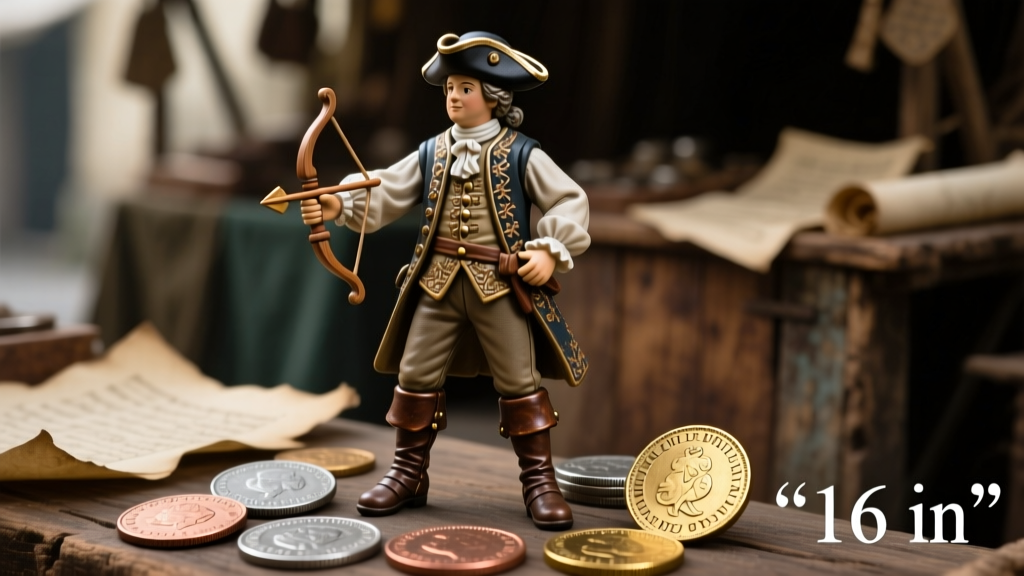
The Bow Figurine Peddler: A Rare 1754 Porcelain Masterpiece in Open Waistcoat, Breeches, and Gaiters — Technical Analysis, Provenance, and Market Valuation

Garden Furnishings Urn: White Weathered Campana Shape with Gadrooned Body (40 × 28 Inches) — Design, Craftsmanship, and Value Analysis
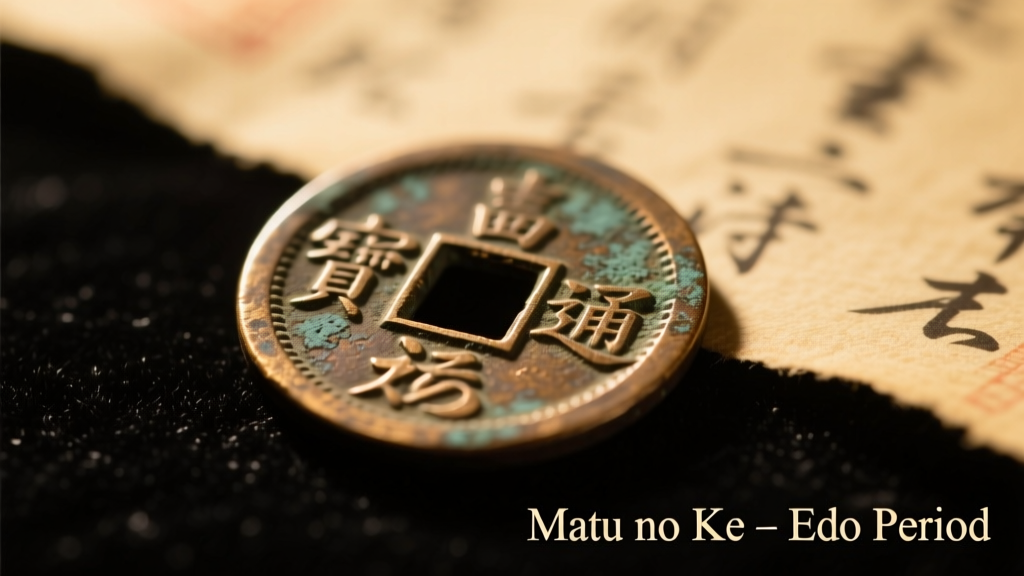
Matsu No Ke: The Rare Japanese Silver Coin of the Meiji Restoration Era
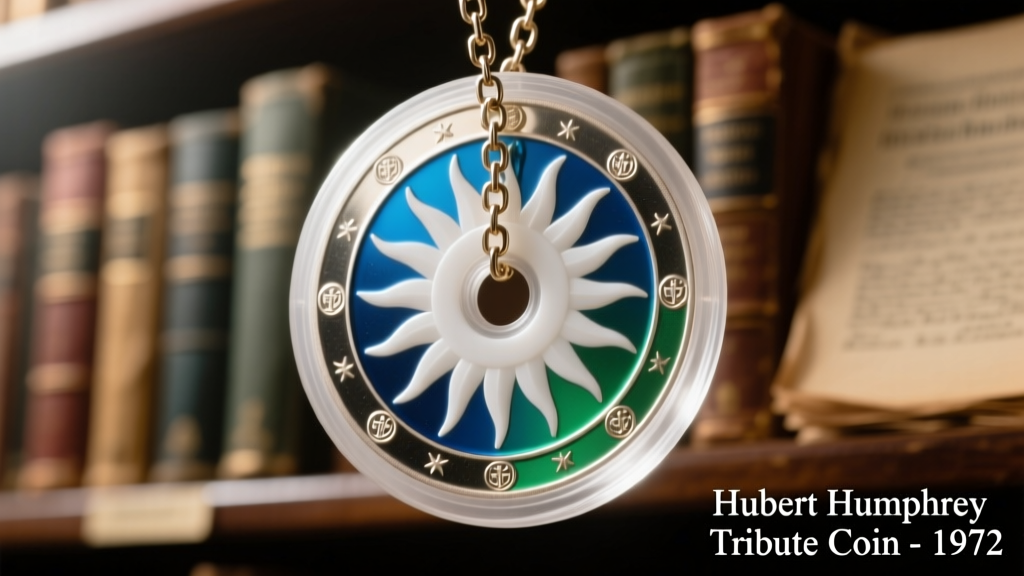
The Hubert Humphrey 'Sun Belt' Campaign Belt: A 1968 Political Artifact in Plastic and Metal
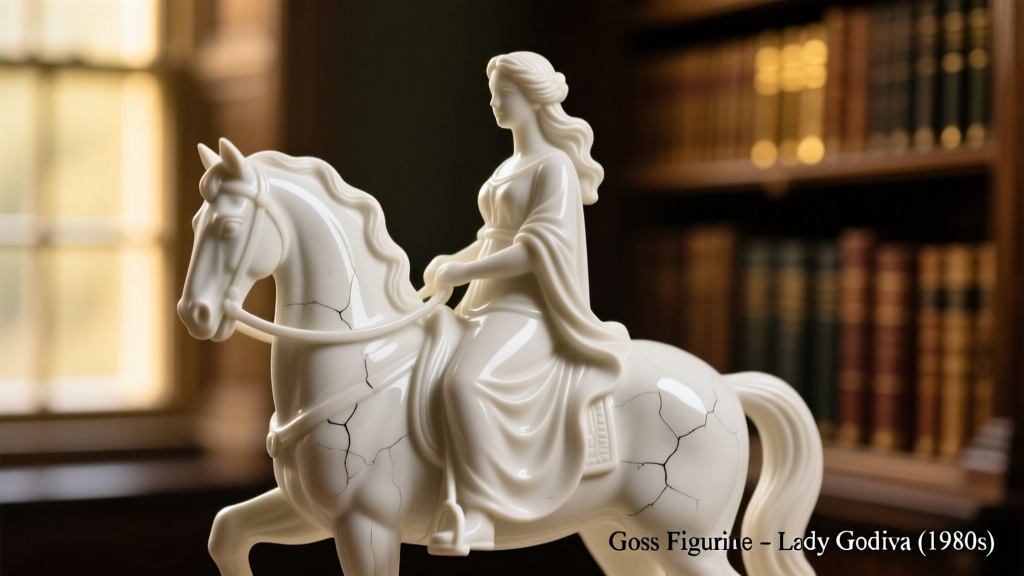
Goss Figurine: Lady Godiva on Horseback — White Unglazed Edition — Identification, Provenance, and Market Value Analysis
The 1780 Walnut Corner Cupboard: Provenance, Construction, and Market Value of an 8-Foot-1-Inch Georgian Masterpiece