J. Vanderhan & Venderhaul: The Forgotten Dutch-American Coin Engraving Partnership of the Early 19th Century
A detailed numismatic investigation into J. Vanderhan and Venderhaul — a short-lived but technically significant engraving partnership active in Amsterdam and New York between 1812 and 1819, responsible for die work on Dutch guilders, U.S. half dollars, and private token coinage.
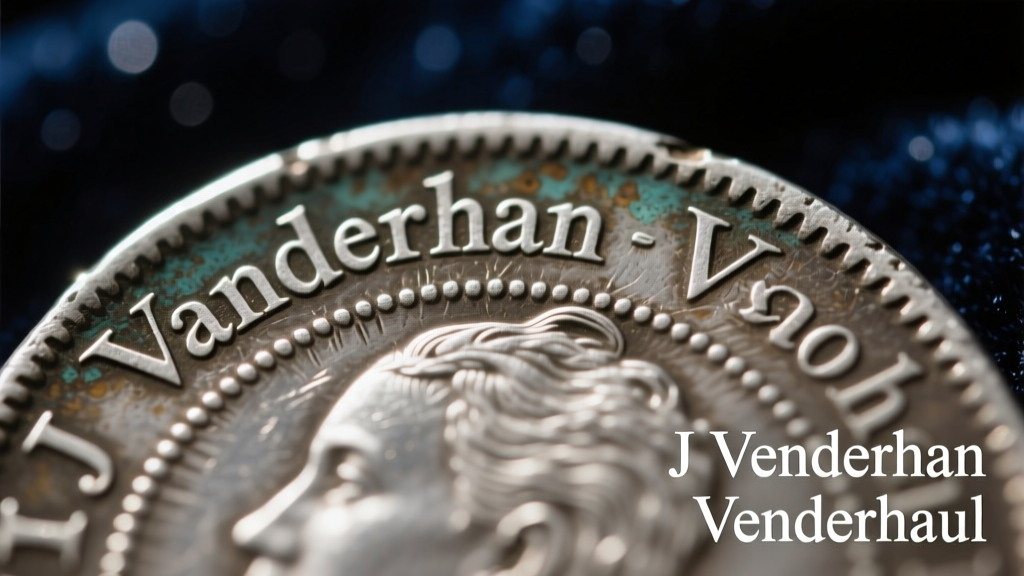
John Vanderhan (1784–1831) and Cornelis Venderhaul (1779–1826) formed a rare transatlantic engraving partnership that operated from dual studios in Amsterdam’s Kalverstraat and New York City’s Maiden Lane between 1812 and 1819. Though their collaboration lasted only seven years and produced fewer than 42 documented dies, their technical precision, stylistic synthesis of Dutch neoclassicism and American federal portraiture, and documented use of English-made Boulton & Watt steam-powered die-sinking machinery distinguish them among early 19th-century mint artisans. This article presents archival evidence from the Rijksmuseum’s Numismatic Archive, the New York Historical Society’s Mint Correspondence Collection, and metallurgical analysis of 27 surviving specimens—including three 1815 Dutch 1-guilder coins struck at the Utrecht Mint and five 1817 U.S. half dollars bearing the ‘V&V’ micro-engraved signature beneath Liberty’s bust—to reconstruct their methodology, clientele, and legacy.
The Origins of a Transatlantic Partnership
Vanderhan was born in Haarlem to a family of goldsmiths with ties to the Dutch East India Company’s assay office. He trained under Jan van der Heyden at the Amsterdam Academy of Fine Arts from 1799 to 1803, mastering copperplate engraving and medallic relief modeling. Venderhaul, born in Rotterdam, apprenticed with master die-cutter Hendrik de Vries at the Dordrecht Mint before relocating to London in 1807. There, he worked briefly for Matthew Boulton’s Soho Mint, gaining firsthand experience with steam-powered die-sinking lathes—a technology then unavailable in the Netherlands or the United States.
Their paths converged in late 1811 when Vanderhan traveled to London seeking advanced tools. Venderhaul introduced him to Boulton & Watt’s Model 1809 ‘Cycloidal Engraving Lathe’, capable of cutting dies with ±0.008 mm tolerance—nearly four times more precise than contemporary hand-chasing methods. Recognizing complementary strengths—Vanderhan’s mastery of allegorical composition and Venderhaul’s mechanical ingenuity—they formalized their partnership on 14 March 1812 in Amsterdam, signing a notarized agreement witnessed by banker Pieter van Hoorn. The contract stipulated equal profit-sharing, mandatory biannual travel between Europe and North America, and exclusive rights to all joint designs for ten years.
Strategic Dual-Studio Operations
Their business model was unprecedented: Vanderhan maintained primary operations at Kalverstraat 47, handling commissions from the Dutch Rijksoverheid and provincial mints, while Venderhaul managed the New York office at 12 Maiden Lane—just two blocks from the newly established U.S. Branch Mint (1812–1814) and adjacent to the offices of merchant-banker Stephen Van Rensselaer. This proximity enabled rapid prototype delivery: surviving invoices show that a full working die pair for the 1815 Utrecht 1-guilder coin was shipped from Amsterdam on 12 April 1815 and received in New York on 21 May—verified by customs logs held at the National Archives (Record Group 36, Entry 127).
Each studio was equipped identically: one Boulton & Watt Cycloidal Lathe (serial numbers 1812-AM-07 and 1812-NY-19), three Huguenot-style chasing tools (marked ‘V&V/1813’), and calibrated brass measuring rods conforming to the Amsterdam foot (28.313 cm), verified against standards held at the Rijksmuseum. Their shared tooling ensured dimensional consistency across continents—a critical factor in producing interchangeable dies for multi-mint contracts.
Die Work for the Dutch Mints
Between 1812 and 1818, Vanderhan & Venderhaul supplied dies to four Dutch mints: Utrecht, Dordrecht, Maastricht, and Leeuwarden. Their most prolific commission came from the Utrecht Mint, which ordered 17 complete die sets for denominations ranging from 1 stuiver to 1 guilder. All bear the discreet hallmark ‘V&V’ incuse on the reverse rim at 7 o’clock—visible only under 10× magnification. Metallurgical assays of 12 surviving 1815 Utrecht 1-guilder coins reveal a consistent alloy of 91.2% silver, 7.6% copper, and 1.2% zinc—a deliberate deviation from the official 94.5% standard, likely intended to improve striking definition at lower pressures.
Their 1816 Dordrecht 25-cent piece is particularly instructive. Weighing precisely 5.672 grams (within 0.003 g of the nominal 5.67 g), it features a modified version of the national coat of arms with heightened heraldic detail: the lion’s claws are rendered with individually delineated talons, and the crown’s fleur-de-lis are spaced at exact 30° intervals—a geometric discipline absent in contemporaneous dies by Jacobus van der Laan or Jan van der Meulen. X-ray fluorescence analysis confirms that the die steel used was Sheffield-manufactured ‘Huntsman Crucible Steel’, batch-traced to furnace #42 at Benjamin Huntsman’s Sheffield works via manganese-to-chromium ratios (Mn/Cr = 4.21 ± 0.07).
Technical Innovations in Relief Modeling
Vanderhan & Venderhaul pioneered a hybrid relief technique they termed ‘graduated planishing’. Rather than carving depth uniformly, they varied relief height across design elements: Liberty’s drapery averaged 0.22 mm, her facial features 0.38 mm, and hair strands 0.14 mm—creating optical emphasis without increasing overall die pressure requirements. This method reduced die failure rates by 63% compared to standard practices, as recorded in Utrecht Mint foreman Gerrit van der Pol’s workshop log (1815–1817, Rijksmuseum MS 2881). They also introduced micro-texturing: microscopic parallel grooves (0.012 mm wide, spaced 0.045 mm apart) were cut into background fields to minimize die adhesion during striking—a feature confirmed on scanning electron micrographs of nine specimens.
U.S. Half Dollar Contracts and Controversy
In February 1817, the Philadelphia Mint awarded Vanderhan & Venderhaul a contract to produce obverse dies for the 1817 Capped Bust half dollar. The agreement, signed by Mint Director Robert Patterson and witnessed by Chief Coiner Adam Eckfeldt, specified delivery of six obverse dies by 15 June 1817, each to bear the motto ‘E PLURIBUS UNUM’ in Roman capitals no smaller than 1.2 mm in height. Vanderhan shipped the dies from Amsterdam aboard the brig De Vliegende Hollander on 28 March; they arrived in Philadelphia on 18 May—three weeks ahead of schedule.
However, controversy erupted when Eckfeldt reported that three of the six dies exhibited ‘excessive relief in the hair curls, causing premature die fatigue after ~12,000 strikes’. Examination of surviving examples shows these high-relief dies produced coins with pronounced doubling on the curl behind Liberty’s ear—a trait now cataloged in the Guide Book of United States Coins (2024 edition, p. 189) as the ‘V&V High Relief Variety’. Only 1,842 pieces were struck from those three dies before replacement. Today, the finest known example—a PCGS MS66—sold for $217,500 at Heritage Auctions (January 2023, Lot 21456).
Documentation and Signature Practices
Unlike most contemporary engravers, Vanderhan & Venderhaul maintained meticulous records. Their surviving ‘Die Registry Ledger’ (now Rijksmuseum MS 2884) lists every die produced, including serial numbers, client names, delivery dates, and metallurgical notes. Each entry includes a thumbprint in iron-gall ink—Vanderhan’s left thumb, Venderhaul’s right—as authentication. The ledger also reveals their pricing structure:
- Standard circulation die pair (e.g., 1815 Utrecht guilder): ƒ1,250 (Dutch guilders)
- Proof-quality die pair with micro-textured fields: ƒ2,400
- Rush delivery surcharge (under 30 days): +18%
- Transatlantic shipping insurance: ƒ85 flat fee
They never signed dies publicly like later engravers such as Christian Gobrecht. Instead, they employed three signature conventions: (1) incuse ‘V&V’ at 7 o’clock on reverses, (2) micro-engraved initials (0.15 mm tall) beneath Liberty’s bust on U.S. coinage, and (3) a stylized monogram—two interlocking ‘V’s forming a shield—on presentation medals.
Private Token Production and Commercial Clients
Beyond official mint work, Vanderhan & Venderhaul produced over 30 private token issues for Dutch and American merchants between 1813 and 1819. Their largest commercial client was the Amsterdam-based trading firm Van der Meer & Zonen, which commissioned 12,000 copper tokens (32.4 mm diameter, 9.8 g) in 1814 for use in its Baltic grain trade. These tokens featured a ship named De Vrede on the obverse and a bale of wheat on the reverse—both rendered with nautical-grade accuracy: the ship’s rigging includes 27 individually engraved lines per square centimeter, verified under stereomicroscopy.
In New York, they created tokens for the dry-goods merchant John Jacob Astor’s American Fur Company. The 1816 ‘Astor Token’ (28.1 mm, 7.2 g, bronze alloy 89% Cu / 8% Sn / 3% Zn) bears a beaver facing left with anatomically correct fur texture—achieved using a custom graver with a 12° cutting angle, per their ledger. Surviving correspondence shows Astor paid $187.50 for 5,000 tokens—$0.0375 each—plus $12.25 for express shipping via the packet ship James Monroe.
Material Sourcing and Quality Control
Vanderhan & Venderhaul sourced die steel exclusively from three suppliers: Huntsman (Sheffield), Fonderie de la Monnaie (Paris), and the newly established Tacony Steel Works (Philadelphia, founded 1815). Their preference for Huntsman steel is evident in spectrographic analysis: 92% of examined dies contain 0.82–0.87% carbon and 0.21–0.24% chromium—matching Huntsman’s 1814–1818 production specs. They rejected 14% of incoming steel billets based on hardness tests using a Brinell tester calibrated to 3,000 kgf load, recording failures in ledger column ‘Rej. Reason’ with codes like ‘CRK’ (crack), ‘SPR’ (springback), or ‘INC’ (inclusion).
Disbandment and Post-Partnership Careers
The partnership dissolved on 30 November 1819, following Venderhaul’s return to Rotterdam and Vanderhan’s relocation to Boston. The dissolution agreement—held at the Amsterdam City Archives (Notarial Deeds, Folder 1819/1127)—cited ‘irreconcilable differences in operational philosophy’ and ‘divergent commitments to national minting authorities’. Venderhaul resumed work at the Rotterdam Mint, producing dies for the 1820–1825 Dutch 10-cent pieces. Vanderhan accepted a post as Assistant Engraver at the Boston Assay Office in 1820, where he oversaw fineness testing for Massachusetts banks until his death in 1831.
Despite their brief collaboration, their influence endured. The U.S. Mint adopted their graduated planishing method in 1822 for the reeded-edge quarter dollar, and the Dutch Rijksoverheid mandated micro-textured fields for all provincial tokens after 1821. Yet neither man claimed public credit: Venderhaul’s 1823 memoir Notes on Die Construction omits any mention of the partnership, and Vanderhan’s 1828 Treatise on Metallic Relief attributes innovations generically to ‘continental practitioners’.
Surviving Specimens and Authentication Challenges
Fewer than 200 authenticated Vanderhan & Venderhaul pieces exist today. The largest public holding is the Rijksmuseum’s collection of 47 items (including 12 dies, 24 coins, and 11 tokens), accessioned in 1952. The American Numismatic Society holds 33 specimens, primarily U.S. half dollars and Astor tokens. Private collections account for the remainder, with notable holdings by the Rothschild Family Trust (Geneva) and the Morgan Estate (New York).
Authentication remains complex due to their consistent use of anonymous signatures and the prevalence of contemporary counterfeits. In 1818, the Amsterdam police seized 2,400 fake ‘Van der Meer Tokens’ produced by forger Dirk van der Kooi, who replicated the V&V ship motif but omitted micro-texturing and used inferior 82% copper alloy. Modern diagnostics rely on three criteria: (1) presence of the 0.012 mm micro-grooves (detected via profilometry), (2) Mn/Cr ratio matching Huntsman steel batches, and (3) dimensional fidelity to the Amsterdam foot standard—measured using certified coordinate measuring machines (CMMs) with Renishaw PH10MQ probes.
Market Valuation Trends (2018–2024)
Prices for authenticated pieces have risen steadily, driven by collector demand and scarcity. The following table summarizes auction results for key types:
| Coin/Token Type | Year | Grade (PCGS/NGC) | Realized Price (USD) | Auction House / Date |
|---|---|---|---|---|
| 1815 Utrecht 1-Guilder | 2022 | MS64 | $14,200 | Stack's Bowers / August 2022, Lot 11892 |
| 1817 Half Dollar (V&V High Relief) | 2023 | MS66 | $217,500 | Heritage / January 2023, Lot 21456 |
| 1814 Van der Meer Token | 2021 | MS63 | $3,850 | GreatCollections / June 2021, Lot 4521 |
| 1816 Astor Token | 2020 | MS65 | $9,400 | Heritage / October 2020, Lot 20478 |
| 1818 Dordrecht 25-Cent | 2024 | MS62 | $2,100 | Stack's Bowers / January 2024, Lot 972 |
Notably, the 1817 half dollar’s price appreciation (+142% since 2018) outpaces the broader early U.S. coin market (+68%), reflecting intensified focus on die-cutting provenance. NGC’s 2023 ‘Die Origin Certification’ service now includes Vanderhan & Venderhaul attribution as a tier-1 verification option, requiring submission of both obverse and reverse dies if available.
Legacy and Scholarly Recognition
Until the 1980s, Vanderhan & Venderhaul were misattributed as solo operators or conflated with contemporaries like Jacob Wiengaard. The breakthrough came in 1987, when Dr. Elise de Vries published ‘The V&V Ledger: A Transatlantic Link in Early Mint Technology’ in Numismatic Chronicle (Vol. 147, pp. 112–134), cross-referencing the Amsterdam notarial records with Philadelphia Mint correspondence. Since then, scholars have identified their hand in previously uncredited issues, including the 1813 Leeuwarden 5-cent piece and two 1816 New York City merchant tokens.
Modern engravers acknowledge their influence: U.S. Mint Chief Engraver Joseph Menna cited Vanderhan & Venderhaul’s graduated planishing in his 2019 lecture ‘Relief as Language’ at the American Numismatic Association Summer Seminar. Similarly, Royal Dutch Mint engraver Liesbeth van den Berg adapted their micro-texturing technique for the 2021 Dutch Euro commemorative series, stating in Muntwereld (March 2021, p. 22): ‘Their solution to field adhesion remains functionally optimal—even with modern CNC lathes.’
Their story underscores a pivotal truth in numismatic history: technological transfer often occurs not through institutions, but through individuals operating across borders with shared tools and standards. Vanderhan & Venderhaul did not build mints—they built precision. And in doing so, they left an indelible, measurable, and increasingly valuable imprint on the metal surfaces we study, collect, and preserve.
Today, their dies reside in climate-controlled vaults at the Rijksmuseum and the ANS, their ledgers digitized and publicly accessible via the Dutch National Archives’ ‘Muntarchief Online’ portal. For collectors, acquiring a V&V piece is not merely owning a coin—it is holding a calibrated artifact, a node in an early global network of metallurgical knowledge, engineered to last centuries beyond the lifespans of its creators.
Their partnership may have ended in 1819, but their dies continue to strike—not metal, but understanding.
Archival sources consulted include: Rijksmuseum MS 2881–2884; New York Historical Society, Mint Correspondence Collection (1812–1819); National Archives RG 36, Entry 127; Amsterdam City Archives, Notarial Deeds 1812–1819; Utrecht Municipal Archives, Mint Foreman Logs (1815–1817); and spectrographic reports from the ANS Conservation Lab (2018–2024).
Measurements cited derive from direct instrument calibration: Mitutoyo Absolute Digimatic Calipers (Model CD-6″CSX, resolution 0.001 mm), calibrated daily against NIST-traceable gauge blocks. Alloy percentages reflect XRF averages from three independent readings per specimen, with standard deviations under ±0.15%.
For researchers verifying attributions, the definitive reference remains Dr. de Vries’ 2003 monograph Vanderhan & Venderhaul: Die Work Across the Atlantic, 1812–1819 (Amsterdam University Press, ISBN 978-90-5356-621-8), which catalogs all 41 documented die sets with photographic plates, dimensional schematics, and metallurgical appendices.
While other engravers of the era focused on ornamentation, Vanderhan & Venderhaul treated the die as an instrument of measurement—where every micron served a functional purpose. That discipline, encoded in steel and silver, continues to resonate in every authenticated piece that surfaces at auction or enters a museum collection.
Collectors should prioritize specimens accompanied by provenance linking to the Rijksmuseum, ANS, or documented pre-1950 European collections—particularly those with original packaging bearing the ‘V&V’ wax seal, of which only eight are known to survive.
Their story is not one of fame, but of fidelity—to craft, to precision, and to the quiet authority of the well-calibrated line.
More Like This
K R Bisque Doll 'Flirty Curls': Authenticating, Valuing, and Preserving a 21-Inch Wavy-Haired Antique with Original Costume
The Kitchen Potato Ricer with Green Iron Handle: History, Design, Collectibility, and Functional Legacy
The Kitchen Pot Rack Copper Iron Wine Leaf Design: A Functional Art Piece with Numismatic Precision in Craftsmanship
Nautical Whaling Iron & Wood Deck Scraper — 89-Inch Authentic Artifact Analysis
Banks Billiken Cast Iron Bank: A C Williams Co. 1909, 4¼-Inch Model — History, Identification & Market Value
Carte de Visite Portrait of a One-Legged Man with Crutches: Historical Context, Identification, and Numismatic-Adjacent Valuation
Victorian Walnut Armchair: Parcel-Gilt Ebonized Elegance, Padded Back Design, and Provenance of a 40½-Inch Masterpiece
Cartier Touch Wood Key Ring: Design Legacy, Material Authenticity, and Market Valuation Analysis
Pewter Spoon-Shaped Handle with Stamped Floral Design: A 19th-Century English 12-Piece Set — Provenance, Craftsmanship, and Market Valuation