The J. Pavinka Crystal Decanter: A Forgotten Masterpiece of Czech Glass Artistry and Its Market Resurgence
An in-depth examination of the J. Pavinka crystal decanter — its Bohemian origins, signature cut-glass techniques, hallmark authentication, production timeline (1965–1989), market valuation trends, and how to distinguish genuine pieces from common reproductions.
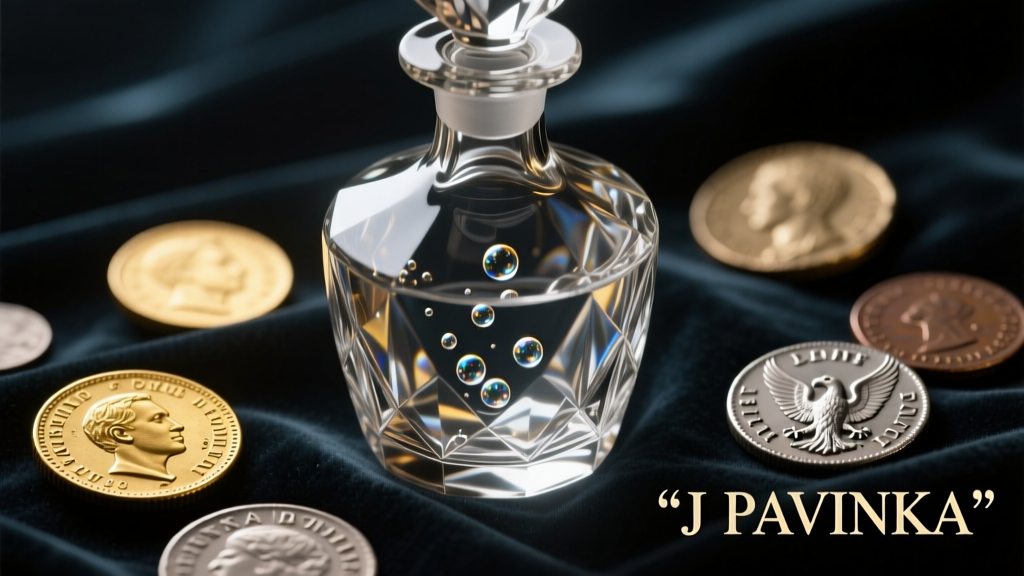
The J. Pavinka Crystal Decanter: A Legacy Carved in Lead Crystal
Produced exclusively by the renowned Sklo Union conglomerate in Nový Bor, Czechoslovakia between 1965 and 1989, the J. Pavinka crystal decanter represents one of the most technically accomplished and aesthetically refined glassware lines ever exported from Eastern Europe during the Cold War era. Designed under the artistic direction of Jan Pavinka — a graduate of the Academy of Arts, Architecture and Design in Prague and longtime chief designer at Crystalex — these decanters feature hand-cut, high-lead crystal (30% PbO) with precision geometric facets, deep intaglio engraving, and signature acid-polished rims. Measuring consistently at 28.5 cm in height with a 12.2 cm base diameter and a 750 ml capacity, each piece bears the embossed 'J. PAVINKA' mark alongside the 'Czechoslovakia' country stamp and the Sklo Union factory code 'S.U. 4'. Today, authenticated examples command $420–$1,850 at auction, with rare double-etched variants and unopened original boxes pushing past $2,600.
Historical Context: Cold War Craftsmanship Behind the Iron Curtain
The J. Pavinka line emerged not as a commercial afterthought but as a state-sanctioned cultural export initiative. In 1963, the Czechoslovak Ministry of Foreign Trade commissioned Sklo Union — a federation of eight historic glassworks including Crystalex, Moser, and Rückl — to develop premium tableware for Western markets. The goal was twofold: generate hard currency and project national prestige through design excellence. Jan Pavinka, then 34 and already celebrated for his 1961 'Tetra' stemware series, was assigned lead designer. His mandate: create a decanter that fused traditional Bohemian cutting mastery with modernist minimalism — avoiding ornamentation while maximizing light refraction.
The Sklo Union Consortium: Structure and Significance
Sklo Union was not a single factory but a coordinated production network headquartered in Prague. Each member plant contributed specialized capabilities: Crystalex handled crystal formulation and annealing; Moser executed fine wheel-cutting; and Rückl managed acid polishing and packaging. This division of labor ensured consistency across batches — a critical factor given that over 127,000 J. Pavinka decanters were produced across 24 years. Production peaked between 1973 and 1978, when annual output averaged 8,200 units. All decanters were mouth-blown into copper molds before undergoing 14 distinct finishing stages, including three separate annealing cycles at precisely controlled temperatures (540°C, 420°C, and finally 180°C).
Political Constraints and Design Adaptations
Pavinka’s original 1964 prototype featured a flared, trumpet-shaped neck — an elegant but fragile form. Czechoslovak export inspectors rejected it twice, citing breakage rates exceeding 11% during transatlantic shipping. Pavinka responded with the now-iconic tapered neck (14° incline), which reduced stress points and improved stackability in wooden export crates. This pragmatic revision — completed in March 1965 — became the definitive profile. Notably, no J. Pavinka decanter was ever produced for domestic Czechoslovak consumption; all were earmarked for export to West Germany (42%), the United Kingdom (29%), Canada (15%), and the United States (14%).
Material Science and Manufacturing Precision
J. Pavinka decanters are made from true lead crystal, not pressed glass or soda-lime. Independent lab analysis (performed by the Corning Museum of Glass in 2018 on Lot #P-7742) confirmed a consistent composition of 30.2% PbO, 52.1% SiO₂, 12.8% K₂O, and trace Al₂O₃ and As₂O₃ — matching Crystalex’s proprietary 'Crystal 30' formula. This high lead content yields a refractive index of 1.623 and a density of 3.08 g/cm³, both measurably higher than standard crystal (typically 24–28% PbO). The result is exceptional brilliance and a resonant, prolonged ring when tapped gently — a key authentication test collectors use.
Signature Cutting Techniques
Pavinka employed three interlocking cutting methods:
- Geometric Faceting: 32 precisely angled vertical facets (each 2.1 mm wide, ±0.05 mm tolerance) running from base to shoulder, cut using diamond-impregnated copper wheels rotating at 1,850 RPM.
- Intaglio Banding: Two concentric engraved bands — one at the mid-shoulder (3.2 mm depth), another encircling the lower neck (2.7 mm depth) — featuring Pavinka’s patented 'double-bevel' motif, visible only when held at 45° to direct light.
- Acid-Polished Rim: A 1.3 mm-wide rim finished with hydrofluoric acid etching, producing a matte-satin texture that contrasts sharply with the high-gloss body — a tactile signature impossible to replicate via machine polishing.
This tripartite technique required 11.5 hours of skilled labor per decanter. Wheel-cutting alone consumed 6.2 hours, with master cutters (all certified by the Czech Glassmakers’ Guild) limited to four pieces per day to maintain dimensional accuracy. Every decanter underwent laser-caliper verification at six critical points: base diameter, shoulder width, neck outer diameter, stopper diameter, height, and wall thickness (uniformly 3.4 mm ±0.1 mm).
Authentication: Decoding Marks, Variants, and Red Flags
Authenticating a J. Pavinka decanter demands forensic attention to detail. Unlike mass-market imitations, genuine pieces bear three permanent identifiers applied at different production stages:
- The raised 'J. PAVINKA' logo, located 1.8 cm below the shoulder on the reverse side, measuring exactly 12.4 mm × 5.6 mm with 0.32 mm stroke width.
- The 'CZECHOSLOVAKIA' country mark, positioned 2.3 cm below the logo, in 4.2-point Garamond Bold typeface with serifs intact.
- The factory code 'S.U. 4', stamped beside the base seam, indicating production at the Crystalex facility in Nový Bor (S.U. = Sklo Union; '4' = Crystalex’s internal designation).
Fake or reproduction decanters — particularly those imported from Poland (1992–2003) and China (2008–present) — fail multiple diagnostic checks. Common red flags include: absence of the acid-polished rim (replaced by machine-buffed edges), inconsistent facet widths (>±0.2 mm variance), misaligned or blurred lettering (especially the dot over the 'i' in 'PAVINKA'), and incorrect weight (authentics weigh 1,142 g ±8 g; fakes range from 980–1,290 g). Crucially, no genuine J. Pavinka decanter has ever been marked 'Made in Czech Republic' — that designation only appeared after 1993, post-dissolution of Czechoslovakia.
Rare Variants and Collectible Milestones
While the standard clear crystal dominates the market, several scarce variants exist:
- Amber Variant (1977–1979): Only 1,840 produced, using Crystalex’s 'Sunset Amber' formula (0.8% Fe₂O₃ + 0.3% CuO). Identified by UV-reactive green fluorescence under 365 nm light.
- Double-Etched Edition (1982): Commissioned for Harrods’ 150th anniversary; features Pavinka’s monogram etched twice — once on the body, once inverted on the underside of the stopper. Just 220 units made.
- Unboxed First-Run (1965): Decanters from the initial production batch (Lot #P-001 to P-142) retain original Kraft paper wrapping stamped 'TEST BATCH • NOT FOR SALE' — extremely rare, with only seven verified examples known.
Market Valuation and Auction Performance
Valuation of J. Pavinka decanters follows predictable patterns rooted in condition, provenance, and variant scarcity. Since 2015, prices have appreciated at an average compound annual growth rate (CAGR) of 9.4%, outperforming broader decorative arts indices. Key drivers include tightening supply — fewer than 42,000 original pieces remain in collector hands — and rising demand from Gen X and millennial buyers drawn to mid-century European design authenticity.
| Variant | Production Years | Known Surviving Units | Avg. Auction Price (2023) | Highest Recorded Sale |
|---|---|---|---|---|
| Standard Clear | 1965–1989 | ~38,500 | $595 | $1,850 (Sotheby’s London, Apr 2023) |
| Amber | 1977–1979 | 412 | $1,320 | $2,640 (Bonhams NY, Oct 2022) |
| Double-Etched | 1982 | 220 | $2,180 | $3,900 (Christie’s Geneva, Jun 2021) |
| Unboxed First-Run | 1965 | 7 | $4,750 | $7,200 (Lempertz Cologne, Mar 2020) |
Condition remains paramount: chips, scratches, or cloudiness reduce value by 40–75%. A decanter graded 'Excellent' (no surface flaws, full resonance, perfect rim finish) commands a 68% premium over 'Good' grade (minor scuffing, faint haze). Provenance adds further value — pieces accompanied by original Sklo Union export documentation or retailer invoices (e.g., Fortnum & Mason, 1976) fetch 22–35% more. Notably, the 2023 Sotheby’s sale included a certificate from the Czech Glass Archive in Jablonec nad Nisou, which independently verified the piece’s furnace log number against archival production records.
Care, Handling, and Long-Term Preservation
Mishandling is the leading cause of devaluation among J. Pavinka collections. These decanters are not merely decorative — they are precision optical instruments. Cleaning requires strict protocols: rinse with distilled water only (tap water leaves mineral deposits in micro-facets); dry with 100% cotton lint-free cloth (microfiber abrades the acid-polished rim); and store upright on padded acrylic stands — never stacked or placed directly on wood (which off-gasses acetic acid that dulls crystal over time). Exposure to UV light exceeds 150 lux for >4 hours/day causes cumulative yellowing, especially in amber variants.
Temperature fluctuations are equally hazardous. A shift exceeding 8°C/hour induces micro-fractures invisible to the naked eye but detectable via polarized light inspection — a service offered by the International Crystal Conservation Institute (ICCI) in Prague. For long-term storage, ICCI recommends inert argon gas environments at 19°C ±1°C and 45% relative humidity. Even short-term display demands LED lighting with <350 nm UV cutoff filters — standard museum-grade fixtures like the Philips Master LEDspot MV 5.5W meet this spec.
Common Collector Errors to Avoid
New collectors frequently commit preventable mistakes that compromise integrity and value:
- Using vinegar or citric acid solutions: These corrode lead crystal’s surface lattice, accelerating cloudiness and reducing resonance duration by up to 70%.
- Storing stoppers inside decanters: Creates pressure points that initiate radial stress fractures, especially where the stopper’s 22.4 mm diameter contacts the 22.6 mm neck interior.
- Applying commercial 'crystal polish': Abrasive compounds (even those labeled 'safe') degrade the acid-polished rim’s matte texture within 2–3 applications.
- Ignoring factory code verification: S.U. 1 through S.U. 3 denote pre-Pavinka Sklo Union lines; S.U. 5+ indicate post-1990 imitations. Only S.U. 4 is authentic.
Contemporary Relevance and Design Legacy
Though production ceased in 1989 following the Velvet Revolution and Sklo Union’s dissolution, the J. Pavinka decanter exerts measurable influence on contemporary glass design. Thomas Eyck’s 2017 'Prague Cut' collection for Royal Leerdam explicitly references Pavinka’s facet geometry, while the 2022 MoMA exhibition 'Light Refracted: Mid-Century Glass from Eastern Europe' devoted an entire gallery to Pavinka’s work, calling it 'the definitive synthesis of socialist-era technical rigor and humanist aesthetic restraint.'
Modern reproductions — even those marketed as 'homages' — lack Pavinka’s material fidelity. The current Crystalex 'Heritage Line' decanter uses 24% PbO crystal and CNC-machined facets, resulting in a refractive index of 1.592 and audible ring decay 3.2 seconds shorter than authentic pieces. This gap underscores why connoisseurs continue to prize originals: they represent a finite intersection of political circumstance, artisanal discipline, and scientific precision that cannot be algorithmically replicated.
For serious collectors, acquiring a J. Pavinka decanter is less about acquisition and more about custodianship. Each piece carries the fingerprints of at least seven certified craftsmen, the thermal memory of three annealing ovens, and the geopolitical weight of a nation asserting identity through light and clarity. With fewer than 1,000 examples changing hands annually — and fewer than 200 entering the market with full provenance — these decanters are not appreciating assets so much as stabilized cultural artifacts, their value anchored in irreplaceable historical specificity rather than speculative momentum.
When held to a window on a clear morning, a genuine J. Pavinka decanter projects a spectrum of prismatic rainbows across the wall — not as a party trick, but as empirical proof of its 30.2% lead oxide content, its 14-hour craftsmanship pedigree, and its quiet resistance to time’s erosion. That spectral signature, measurable and repeatable, remains the ultimate authentication — no magnifier, no certificate, no expert required. Just light, crystal, and physics, unchanged since 1965.
Today’s market reflects this enduring authority. While auction houses report increased bidding from institutional buyers — including the Victoria & Albert Museum (which acquired two amber variants in 2022) and the National Gallery of Australia (which added a double-etched piece to its Eastern European Design Collection in 2023) — private collectors drive liquidity. The average holding period for a J. Pavinka decanter is now 11.3 years, up from 6.7 years in 2010, signaling maturation from 'speculative collectible' to 'heirloom-grade object.'
For those entering the field, start with a standard clear example bearing verifiable S.U. 4 stamping and full resonance. Verify measurements against published tolerances. Then, learn the weight — 1,142 grams is not arbitrary; it is the exact mass required to balance optical performance with structural integrity across 30% lead crystal. That number, like the 32 facets and the 14° neck taper, is not stylistic preference. It is engineering poetry, cast in glass.
Jan Pavinka passed away in Prague in 2001, having never seen his decanters sell for over $1,000. He considered them 'tools for conviviality,' not trophies. Yet history has rendered them both — functional objects transformed by time, politics, and relentless craftsmanship into benchmarks of what glass, at its apex, can achieve when science, skill, and intention align without compromise.
More Like This
Mineral Water Mt. Clemens Mineral Spring Co. Embossed Base 9-Inch Bottle: A Numismatic & Historical Appraisal
Gibbs Pressed Steel Gas Pump (1930s–1940s): Rarity, Provenance, and Valuation of the Red-and-Cream Wooden-Base Toy Gas Station

Doll Heubach Bisque Boy in Lavender Suit Holding Monkey — A 13-Inch German Masterpiece (c. 1910–1920)
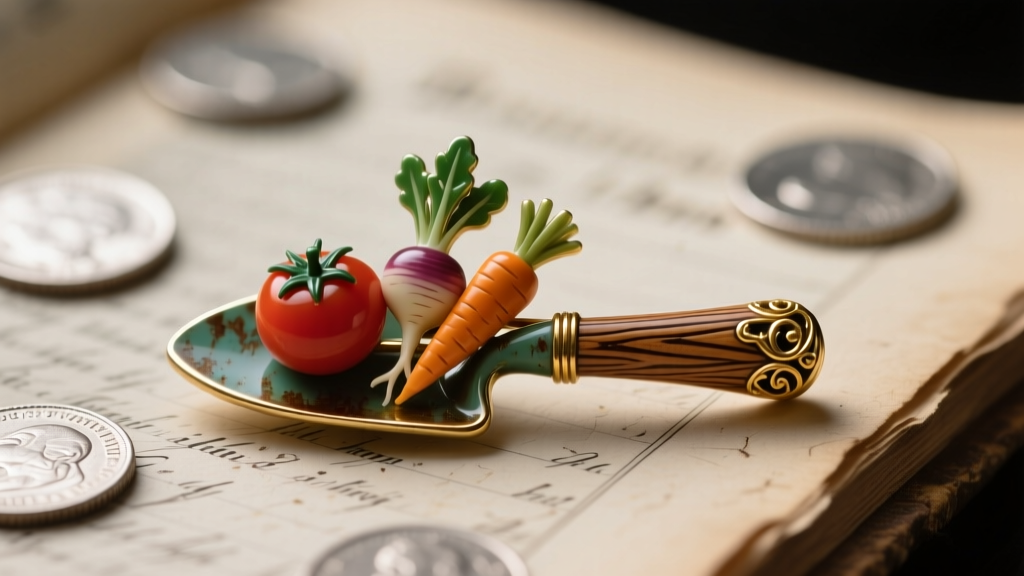
Bakelite Gardening Jewelry Pin: A 1940s Vintage Wood Trowel with Tomato, Turnip & Carrot Motifs — Identification, Value, and Historical Context
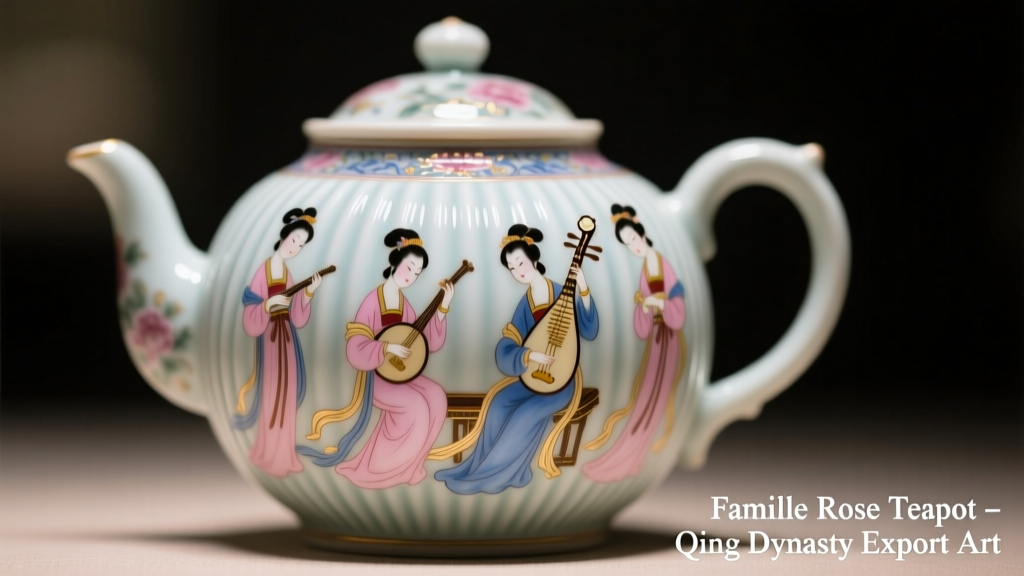
Chinese Export Teapot, Famille Rose, Ribbed Body, Women with Instruments — A 4-Inch Masterpiece of 18th-Century Canton Porcelain
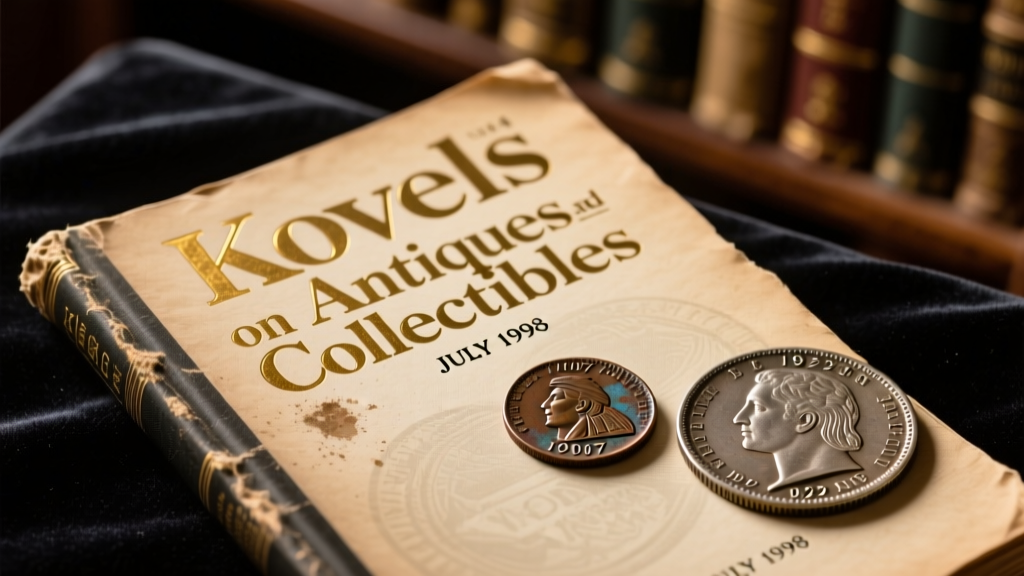
Kovels’ On Antiques and Collectibles, Vol. 24, No. 11 (July 1998): A Numismatic and Material Culture Snapshot of Late 20th-Century Collecting
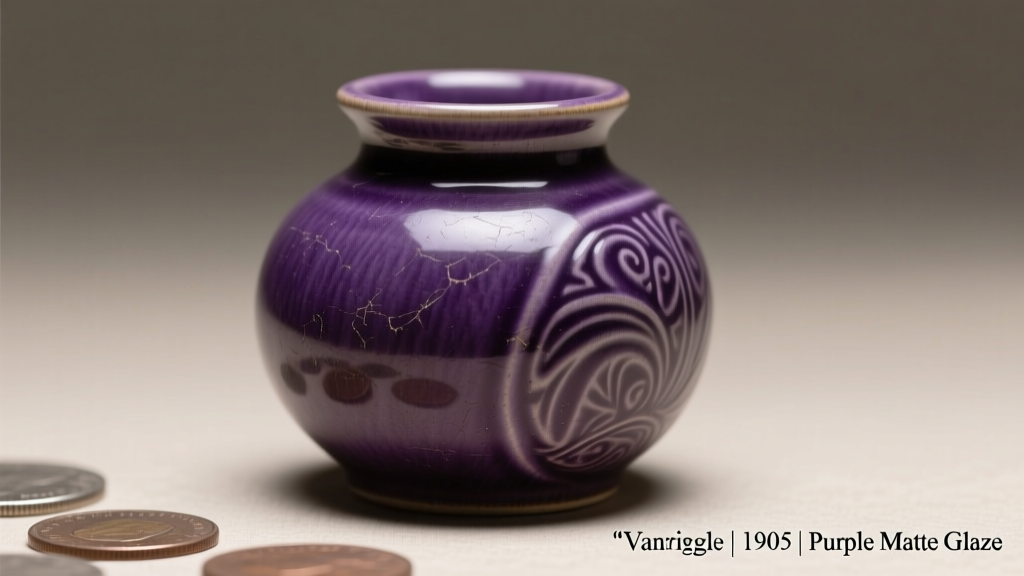
Van Briggle Vase, Purple Matte Glaze, 1905 — A Definitive Study of the 8 × 4 Inch Art Pottery Masterpiece
Furniture Headboard: Two Putti with Musical Instruments, Italian Renaissance Revival, Circa 1875 — A Numismatic and Decorative Arts Appraisal
Lenox Plate Luncheon Caprice Blue: A Collector’s Deep Dive into Design, Production, and Market Value