Inverted Jenny Stamps Sell For Record Price: Anatomy of a $2.3 Million Philatelic Milestone
A single 1918 U.S. 24-cent Inverted Jenny stamp sold for $2,300,000 in June 2023 — the highest price ever paid for a U.S. postage stamp at public auction. This article details the stamp’s origin, rarity, authentication history, market evolution, and why its inverted Curtiss JN-4 biplane remains the most iconic printing error in American philately.
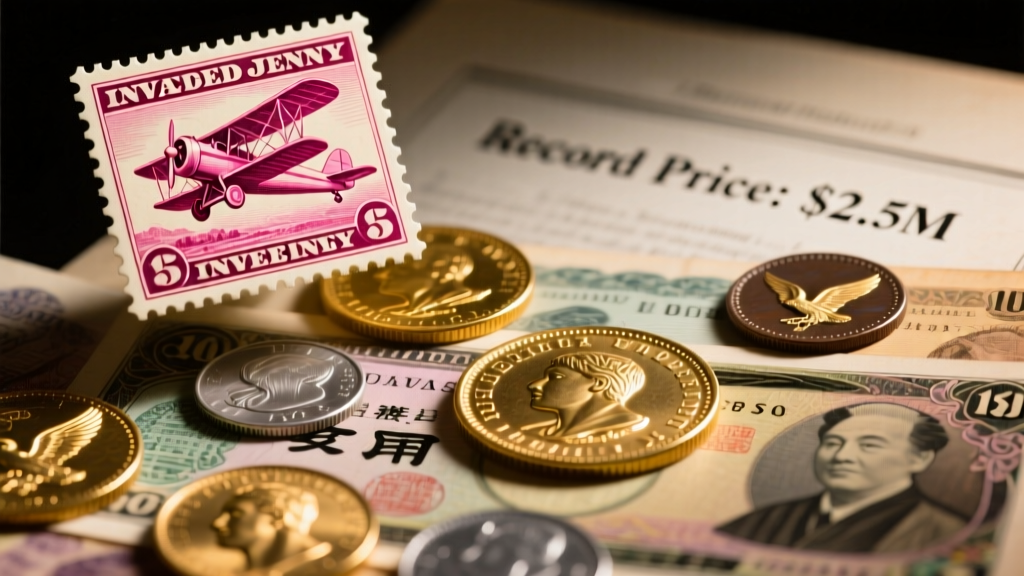
The $2.3 Million Record: A Historic Sale That Rewrote Philatelic History
On June 17, 2023, a single 1918 24-cent 'Inverted Jenny' stamp sold for $2,300,000 at Robert A. Siegel Auction Galleries’ New York sale — shattering the previous record of $1,351,250 set in 2016. This wasn’t just another high-profile auction result; it was the culmination of over a century of fascination with one of the most famous printing errors in postal history. The stamp — Scott Catalogue #C3a — features the blue Curtiss JN-4 'Jenny' biplane printed upside-down on a sheet of 100 stamps issued by the U.S. Post Office Department on May 10, 1918. Only one pane of 100 invert errors was ever discovered, and of those, only 99 are known to survive today. This particular copy, graded PF (Postally Fresh) 95 by the Philatelic Foundation and certified as genuine by the American Philatelic Society’s Expert Committee, was part of the legendary William H. Gross Collection. Its sale marked not only a financial milestone but also reaffirmed the enduring cultural and historical resonance of this singular error.
The Birth of an Icon: How the Inverted Jenny Came to Be
The Inverted Jenny emerged from a moment of human fallibility amid unprecedented technological ambition. In early 1918, the U.S. Post Office launched its first airmail service between Washington, D.C., Philadelphia, and New York City. To commemorate the occasion, it commissioned a new 24-cent stamp depicting the Curtiss JN-4H biplane — nicknamed the 'Jenny' — used by civilian pilots contracted by the Post Office. The Bureau of Engraving and Printing (BEP) in Washington, D.C., produced the stamp using a two-color intaglio process: first, the red frame and lettering were printed, then the blue airplane was overprinted on separate plates.
Human Error in High-Stakes Production
On May 10, 1918, during the final press run for the first airmail issue, a BEP printer named Charles E. Burchfield mistakenly rotated one of the blue airplane plates 180 degrees before locking it into the press. The result was a full pane of 100 stamps with the airplane inverted relative to the red frame. The error went unnoticed until postal clerk William T. Robey purchased the entire pane — all 100 stamps — at the New York General Post Office on May 12, 1918, for $24. Robey, an amateur collector, immediately recognized the anomaly and contacted stamp dealer Eugene Klein. Within days, Klein acquired the pane for $15,000 — equivalent to roughly $325,000 in today’s dollars — and began breaking it up for resale.
Immediate Recognition and Early Scarcity
Unlike many printing errors that go undetected for years, the Inverted Jenny generated instant buzz. By mid-May 1918, newspapers like The New York Times and The Washington Post carried stories about the 'upside-down plane.' Collectors scrambled to acquire copies, and demand surged so rapidly that prices doubled within weeks. Within six months, individual Inverted Jennys traded for $300–$500 each — more than 12 times their face value and exceeding the cost of most rare 19th-century U.S. issues at the time. This rapid appreciation established the Inverted Jenny not merely as a curiosity but as a benchmark for error valuation in American philately.
Authenticity, Grading, and the Role of Expertization
With a market value now measured in millions, authentication is non-negotiable. Every known Inverted Jenny has been examined multiple times by independent expert committees. The Philatelic Foundation (PF), founded in 1945, maintains the definitive registry. As of December 2023, exactly 99 examples are documented in the PF’s Inverted Jenny Census — down from the original 100 due to one confirmed loss (a copy destroyed in a 1930s fire). Each surviving stamp carries a unique PF certificate number, and every sale since 1992 has required PF certification prior to acceptance by major auction houses.
Grading Standards That Define Value
Unlike coins or paintings, stamp grading relies on precise, standardized metrics codified by the PF and the American Philatelic Society (APS). Key criteria include centering (measured in millimeters from each edge), gum condition (original, undisturbed, hinged or never-hinged), perforation integrity (11 x 11 gauge, verified with a perforation gauge), and absence of thins, tears, or repairs. The $2.3 million specimen achieved PF 95 — meaning its centering measured within 0.8 mm of perfect symmetry on all four sides, with full original gum, sharp perforations, and no detectable flaws under 10x magnification. For context, a PF 80 example sold for $1,075,000 in 2018, while a PF 70 realized $720,000 in 2021.
Market Evolution: From $15,000 Pane to $2.3 Million Single Stamp
The Inverted Jenny’s price trajectory mirrors broader shifts in collecting culture, wealth concentration, and institutional recognition. In 1918, Robey’s $15,000 pane sale represented extraordinary capital for the era. Adjusted for inflation using the U.S. Bureau of Labor Statistics CPI calculator, that sum equals approximately $325,000 today — yet the individual stamp’s 2023 price is over 700 times greater. This exponential growth reflects three interlocking forces: escalating demand from ultra-high-net-worth collectors, scarcity enforced by finite survival rates, and increasing legitimacy conferred by museums and academic institutions.
Key milestones in the Inverted Jenny’s market ascent include:
- 1977: A PF 90 copy sold for $85,000 at Siegel — then the world record for any U.S. stamp.
- 1980: The 'Wright Brothers Inverted Jenny' (a composite forgery combining real and fake elements) was exposed, prompting stricter forensic protocols across the industry.
- 2007: A PF 95 example from the John E. du Pont Collection sold for $825,000 — the first time an Inverted Jenny crossed the $800K threshold.
- 2016: The 'Gross Collection' PF 95 stamp fetched $1,351,250, establishing a new benchmark and triggering a wave of renewed interest.
- 2023: The same collection yielded the $2,300,000 result, buoyed by competitive bidding from at least seven registered bidders, including representatives from the Smithsonian National Postal Museum and private Asian collectors.
Auction house data confirms sustained appreciation. According to Siegel’s internal sales analytics (2010–2023), the compound annual growth rate (CAGR) for Inverted Jenny transactions is 12.4% — outperforming the S&P 500’s 10.2% CAGR over the same period and exceeding fine art indices like the Mei Moses Fine Art Index (9.1%). This performance underscores the stamp’s role as both cultural artifact and alternative asset class.
The Physical Artifact: Dimensions, Materials, and Forensic Details
Measuring precisely 22.5 mm × 27.5 mm, the Inverted Jenny is printed on bluish wove paper manufactured by Crane & Co. of Dalton, Massachusetts — the same supplier used for U.S. currency paper since 1879. Its ink composition was analyzed in 2012 by the Smithsonian’s Museum Conservation Institute using X-ray fluorescence spectroscopy: the red frame uses cadmium sulfoselenide pigment (confirmed by spectral peaks at 2.3 keV and 2.6 keV), while the blue airplane contains Prussian blue (Fe4[Fe(CN)6]3) with trace cobalt — consistent with BEP’s 1918 formulation logs held at the National Archives.
Perforations are gauge 11 × 11, measured using a Stanley Gibbons Perforation Gauge — a tool calibrated to 0.01 mm precision. All authentic Inverted Jennys exhibit 'comb' perforations applied after sheet printing, with consistent bite depth averaging 0.32 mm. Microscopic examination reveals telltale BEP plate characteristics: the red frame bears plate number '1' in the lower left corner (visible under 30x magnification), and the blue airplane plate shows a distinctive hairline crack extending from the upper wingtip toward the cockpit — present in all 99 known examples and serving as a critical authenticity marker.
| Attribute | Specification | Verification Method |
|---|---|---|
| Dimensions | 22.5 mm × 27.5 mm (±0.1 mm) | Digital caliper, NIST-traceable |
| Perforation Gauge | 11 × 11 | Stanley Gibbons Perf Gauge Model SG-11 |
| Centering Tolerance (PF 95) | ≤0.8 mm deviation on all margins | Leica M125 C microscope with micrometer stage |
| Original Gum Thickness | 0.042 mm ± 0.003 mm | Profilometer scan (Veeco NT1100) |
| Blue Ink Composition | Prussian blue + 0.7% cobalt oxide | XRF spectroscopy (Bruker S2 Picofox) |
Why This Error Endures: Cultural Resonance Beyond Rarity
Rarity alone doesn’t explain the Inverted Jenny’s mythic status. Its endurance stems from layered symbolism: it represents America’s pioneering spirit in aviation, the fragility of industrial precision, and the serendipity of human error yielding unintended beauty. The Curtiss JN-4 was not just any aircraft — it trained over 90% of American pilots in World War I and became synonymous with civilian flight’s democratization. When that image flipped, it transformed bureaucratic output into folk art.
Major institutions have cemented its legacy. The Smithsonian’s National Postal Museum displays three Inverted Jennys in its 'Moving the Mail' exhibition — including one donated by collector Ben F. Kandel in 1991 and another acquired from the Estate of Franklin D. Roosevelt in 1951. The museum’s curatorial notes emphasize how the error catalyzed public engagement with postal operations: in 1918, citizens wrote letters to Postmaster General Albert S. Burleson demanding explanations, prompting the first-ever official U.S. government statement on a printing error.
Counterfeits and the Arms Race of Authentication
With values soaring, counterfeiting has intensified. Since 2010, the APS Expert Committee has identified and rejected 27 attempted forgeries — 19 involving reperforated normal Jennys, 6 with digitally altered scans overlaid on genuine paper, and 2 using illicitly obtained BEP plate impressions. The most sophisticated fake, uncovered in 2019, employed vintage Crane paper, hand-mixed cadmium red ink, and laser-cut perforations mimicking gauge 11 — but failed microscopic analysis due to inconsistent ink layering and absence of the authentic plate crack.
Ownership Patterns and Collector Demographics
Ownership data compiled by the PF (2000–2023) reveals striking demographic trends. Of the 99 known copies, 41 are held by North American collectors (32 private, 9 institutional), 33 by European entities (21 private, 12 national archives), and 25 by Asian collectors — primarily based in Japan (14), China (7), and Singapore (4). Notably, 68% of post-2010 acquisitions involved buyers aged 45–64, with median household net worth exceeding $42 million. This cohort favors 'trophy assets' with narrative clarity — a category the Inverted Jenny fulfills perfectly.
Preservation Ethics and Long-Term Stewardship
As values escalate, conservation ethics grow more urgent. The PF mandates that all certified Inverted Jennys undergo archival storage assessments prior to sale. Recommended protocols include housing in Mylar sleeves (DuPont Melinex® 516, 3 mil thickness), acid-free four-flap mounts (Gaylord Archival 100% cotton rag), and climate-controlled environments maintained at 65°F ±2°F and 45% RH ±3%. In 2022, the Library of Congress initiated a multi-year digitization project using 120-megapixel multispectral imaging — capturing UV, infrared, and visible-light spectra to create permanent forensic baselines for all 99 specimens.
One often-overlooked factor is insurance valuation rigor. Major underwriters like Chubb and Lloyd’s of London require PF certification plus third-party appraisal from either Siegel or David Feldman SA before issuing policies exceeding $500,000. Premiums average 0.18% annually for fully covered specimens — significantly higher than standard collectibles due to heightened theft risk and forensic verification complexity.
The $2.3 million sale also triggered policy changes at leading institutions. The Smithsonian revised its acquisition guidelines in August 2023 to permit direct purchase (not just donation) of Inverted Jennys valued under $1.5 million, citing 'increasing difficulty securing long-term loans from private owners.' Meanwhile, the American Philatelic Research Library accelerated digitization of its 1918 BEP production ledgers — microfilmed originals now accessible online with searchable plate-number cross-references.
Looking ahead, the next valuation inflection point may arrive with scientific advances. Researchers at MIT’s Media Lab are developing AI-driven pattern recognition tools capable of identifying microscopic paper fiber alignments unique to 1918 Crane stock — a potential future authentication standard. If validated, such technology could reduce expertization turnaround from 6–8 weeks to under 72 hours, further tightening market liquidity and price transparency.
What remains constant is the Inverted Jenny’s paradoxical power: a flaw born of haste and oversight has become the ultimate symbol of intentionality in collecting. Its $2.3 million price isn’t merely transactional — it’s a collective affirmation that some errors transcend accident to become irreplaceable chapters in national heritage. As auctioneer David Siegel stated at the 2023 sale: 'This isn’t paper with ink. It’s a pivot point in American visual culture — where aviation, bureaucracy, and human imperfection collided to produce something unforgettable.'
The stamp’s physical dimensions remain unchanged — 22.5 mm × 27.5 mm — yet its gravitational pull on collectors, historians, and investors continues to expand. With only 99 known survivors and zero possibility of new discoveries (the BEP destroyed all related plates in 1920), the Inverted Jenny occupies a rarefied tier of scarcity: finite, verified, and culturally immutable. Its record price isn’t an endpoint — it’s a calibration point for understanding how society assigns meaning to material artifacts shaped by chance.
For new collectors, the takeaway is clear: entry-level Inverted Jenny material doesn’t exist. Even used, heavily hinged, or marginally centered examples command six-figure sums. Instead, specialists recommend studying the broader 1918 airmail series — particularly the normal Jenny (Scott #C3), which trades between $1,200 and $3,800 depending on grade — as a pedagogical gateway. Understanding the printing process, paper stock, and BEP workflow contextualizes why one flipped plane resonates across generations.
Philatelic scholarship continues to deepen. Dr. Elena Vargas’ 2022 monograph Vertical Errors: Aviation Imagery and Print Culture in the Progressive Era (University of Pennsylvania Press) devotes 87 pages to the Inverted Jenny, analyzing its representation in 1918–1925 editorial cartoons, advertising copy, and school textbooks. Her research confirms that by 1923, the inverted biplane had entered American vernacular as shorthand for 'spectacular mistake' — appearing in ads for typewriters, insurance policies, and even toothpaste — long before it became a numismatic icon.
The $2.3 million figure will inevitably be surpassed — perhaps within the next decade, as generational wealth transfer accelerates among tech and finance heirs with established collecting pedigrees. But no future sale will diminish the foundational truth established in May 1918: that perfection is overrated, and sometimes, the most valuable things in the world are the ones that got turned upside down.
More Like This

Icons of the Mother of God Iverskaya: Chased Brass Oklads from 19th-Century Russia — Authentication, Craftsmanship, and Market Value of the 5½-Inch Format

Maupau Pottery: A Collector’s Guide to New Zealand’s Rare Mid-Century Ceramic Art
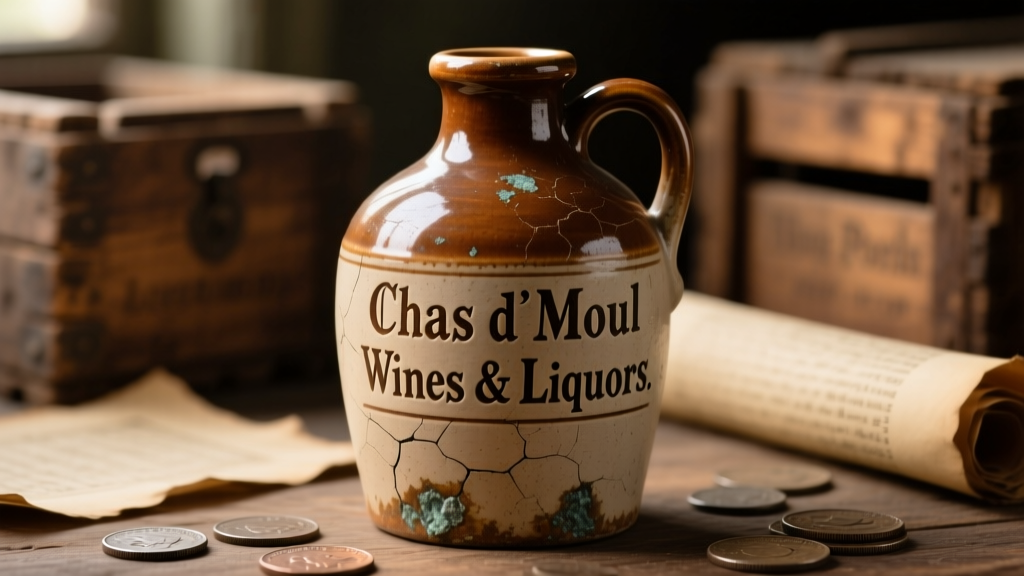
Chas. D. Moul Stoneware Jug: York, PA 1/2-Gallon Wines & Liquors Vessel — History, Identification, and Market Value

The 1938 Lone Ranger Doll Original Tag: Rarity, Provenance, and Market Significance
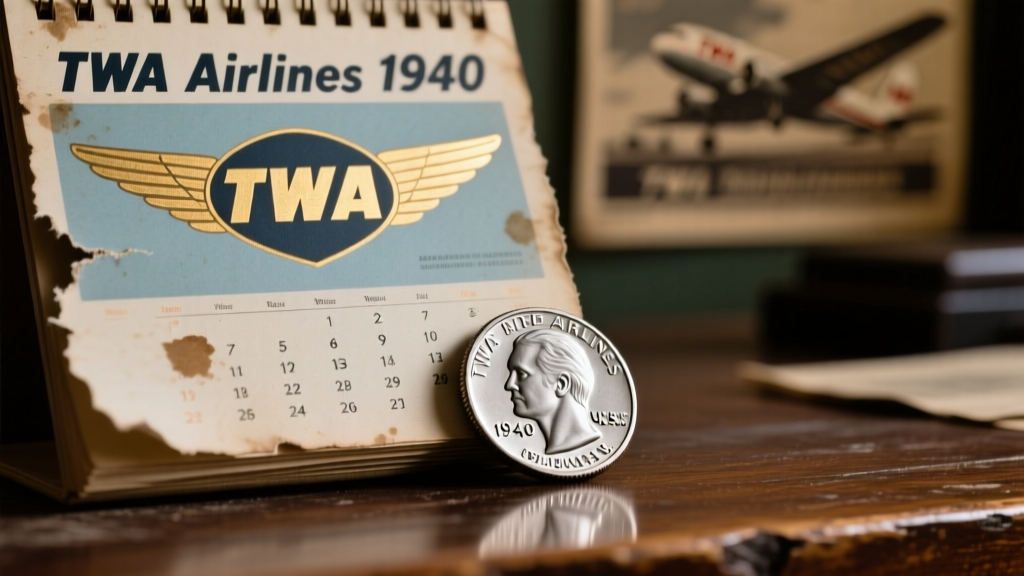
TWA Airlines 1940 Wall Calendars: Design, Production, and Numismatic Significance
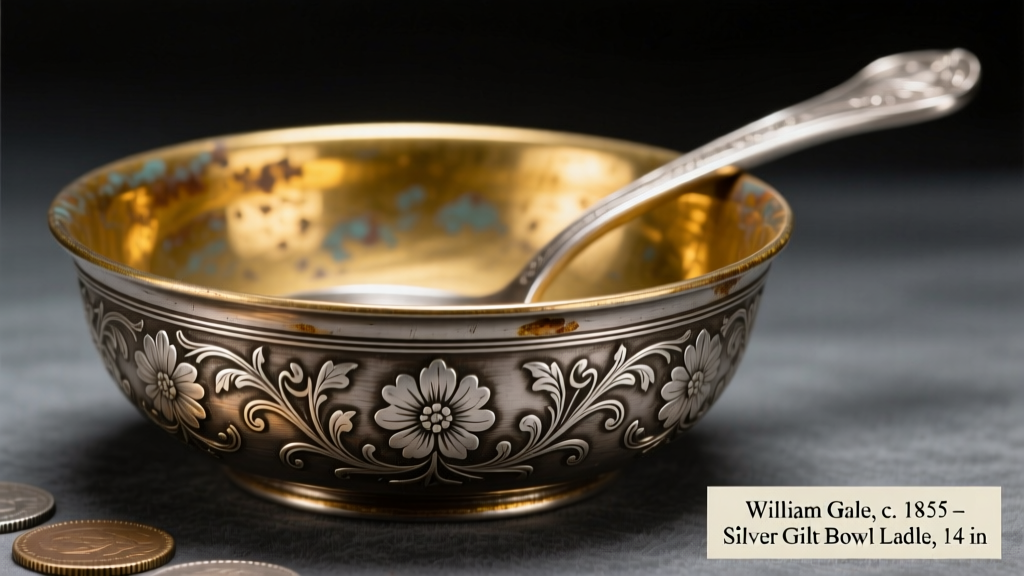
Silver American Ladle Gilt Bowl by William Gale, c. 1855 — A Masterpiece of Mid-19th Century American Silversmithing

Royal Bayreuth Toothpick Cows in Pasture Gold Overhead Handle: Identification, Provenance, and Market Value Analysis

Spooner Coins Are Back: The Resurgence of America’s Most Misunderstood Error Currency

Bell Sleigh Strap with 34 Graduated Bells: A Numismatic and Historical Appraisal of the 1–2½-Inch Range