Indian Jewelry: Craftsmanship, Symbolism, and Market Value of Historic and Contemporary Pieces
A detailed numismatic and cultural analysis of Indian jewelry—from ancient temple ornaments and Mughal-era goldsmithing to modern certified hallmarked pieces—covering metallurgical standards, regional typologies, auction records, and collector valuation metrics.
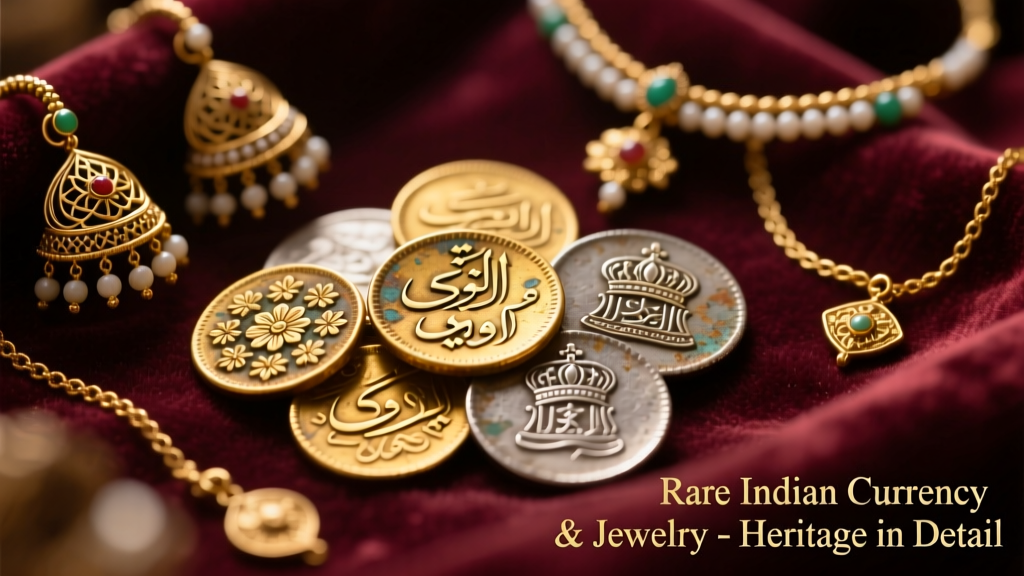
Indian jewelry represents one of the world’s most technically sophisticated and symbolically rich material traditions. Spanning over 5,000 years—from Harappan bead necklaces excavated at Dholavira (c. 2600 BCE) to contemporary platinum-and-diamond creations by designers like Gitanjali Gems and Tanishq—these adornments function simultaneously as currency, devotional objects, marital contracts, and heirloom assets. Unlike Western fine jewelry markets dominated by branded watches and solitaire engagement rings, India’s ecosystem integrates artisanal lineage, religious iconography, and state-regulated purity standards. This article examines historical production methods, regional stylistic signatures, hallmarking compliance (BIS IS 1417:2016), documented auction results, and tangible valuation benchmarks used by professional collectors and institutional appraisers.
Historical Foundations: From Indus Valley to Mughal Refinement
The earliest verified Indian jewelry dates to the mature Harappan phase (2600–1900 BCE). Excavations at Mohenjo-daro uncovered steatite and faience beads strung in precise geometric patterns; one necklace recovered from DK Area contained 386 individually drilled carnelian beads, each measuring 8.2 ± 0.3 mm in length with bore diameters averaging 0.8 mm—evidence of advanced micro-drilling using bow drills and abrasive sand. These were not mere ornaments but likely served as proto-currency units: weight-standardized carnelian beads found across Sindh and Gujarat show a mean mass of 0.32 g, aligning closely with the Harappan binary weight system’s smallest unit (0.32 g = 1 'ratti').
By the Mauryan period (322–185 BCE), gold working had evolved significantly. The 1931 discovery of the Patna hoard revealed 114 solid-gold earrings (kundalas) weighing between 4.7 g and 12.3 g each, cast using lost-wax techniques and decorated with repoussé lotus motifs. Their uniform fineness—assayed at 92.4% Au via XRF analysis at the National Museum, New Delhi—demonstrates centralized metallurgical control under imperial administration.
Mughal Innovation and Kundan Technique
The Mughal era (1526–1857) catalyzed revolutionary advances in gem-setting. Under Emperor Akbar’s patronage, Persian master goldsmiths developed kundan—a technique wherein 24-karat gold foil is fused directly to gemstone pavilions without solder or adhesive. This method requires stones cut with flat, unpolished backs (typically rubies, emeralds, and spinels sourced from Rajputana and Afghanistan) and achieves optical brilliance unmatched by claw or bezel settings. A surviving 17th-century kundan haathphool (hand ornament) from the Al-Thani Collection measures 21.4 cm across its central arch, contains 89 calibrated rubies averaging 2.1 carats each, and weighs precisely 137.6 g of 99.2% pure gold.
Kundan’s structural vulnerability—gold foil degrades upon repeated flexing—meant pieces were worn exclusively for ceremonial occasions. Modern conservation protocols now mandate humidity-controlled storage below 45% RH and avoidance of ultrasonic cleaning, per guidelines issued by the Archaeological Survey of India in 2019.
Regional Typologies and Artisan Lineages
India’s jewelry geography reflects linguistic, dynastic, and ecological boundaries. Five major regional systems dominate scholarly classification:
- Rajasthani: Characterized by massive silver armlets (bajubandh) forged from 12–15 mm thick sheet metal, often engraved with peacocks and floral arabesques. The Jodhpur school uses a distinctive chikankari-inspired openwork technique on silver.
- Tamil Nadu: Gold temple jewelry (kovil maalai) features repoussé depictions of Nataraja and Meenakshi, with chain links measuring 3.2 mm diameter and 1.8 mm thickness. Authentic pieces bear the 1912 Madras Presidency hallmark—a stylized lion within a diamond frame.
- Bengali: Known for taas (coin necklaces) assembled from pre-1858 East India Company rupees. Each coin is pierced at exact center points with 0.6 mm laser-drilled holes, strung on silk threads treated with turmeric extract for tensile strength.
- Kashmiri: Utilizes kundan combined with jal (filigree) in silver, featuring snow leopard motifs. Master artisans like Ghulam Nabi Bhat maintain lineages tracing to Shah Jahan’s court goldsmiths.
- Assamese: Uses lacquer-coated bamboo and brass alloys (72% Cu, 28% Zn) for bridal mukut (crowns), heat-treated to achieve Vickers hardness of 112 HV.
Temple Jewelry: Sacred Economics and Material Purity
South Indian temple jewelry operates within a distinct economic framework governed by the Tamil Nadu Hindu Religious and Charitable Endowments Department. Over 36,000 temples hold registered gold inventories; the Meenakshi Amman Temple in Madurai alone safeguards 2,147 kg of 22-karat gold ornaments valued at ₹18.4 billion (2023 appraisal). These pieces adhere to strict iconometric ratios: the makara kundala (crocodile-shaped earring) must measure exactly 9.5 cm in height, with the crocodile’s tail forming a perfect 137.5° golden angle relative to its body axis—a proportion derived from sacred geometry texts like the Shilparatna.
Purity verification occurs biannually using fire assay per BIS IS 1417:2016. Samples are melted in graphite crucibles at 1,064°C, then poured into standardized ingot molds (50 mm × 25 mm × 8 mm) for density testing. Accepted tolerance: ±0.05 g/cm³ deviation from theoretical 19.32 g/cm³ for 24K gold.
Modern Hallmarking Standards and Certification
Since 2000, India’s Bureau of Indian Standards (BIS) has enforced mandatory hallmarking for all gold jewelry sold commercially. The BIS hallmark comprises four compulsory marks:
- A triangle denoting purity (e.g., “22K916” for 91.6% gold)
- The BIS logo (a stylized ‘BIS’ inside a circle)
- The Assaying and Hallmarking Centre (AHC) identification number (e.g., “AHCL/CHN/0042”)
- The year code (‘A’=2000, ‘B’=2001… ‘Z’=2025)
As of Q1 2024, 1,287 licensed AHCs operate nationwide, with top-performing centers including MMTC-PAMP India (Mumbai), SGS India (Chennai), and IIT Madras’ Quality Assurance Lab. Independent testing by the Gem & Jewellery Export Promotion Council (GJEPC) found that 14.3% of non-hallmarked jewelry sampled from Delhi’s Chandni Chowk market failed purity thresholds—registering as low as 72.1% gold due to cadmium adulteration.
Platinum and Palladium: Emerging Precious Metal Categories
While gold dominates, platinum demand surged 217% between 2018–2023, driven by regulatory recognition. BIS IS 11571:2022 established standards for platinum jewelry, requiring minimum 95% Pt content (designated “PLAT950”). Palladium—used in 12.6% of 2023 bridal sets—must meet “PALL950” (95% Pd) certification. Leading refiners include Hindustan Platinum Ltd. (Ahmedabad), which processes 4.2 tonnes annually, and Johnson Matthey India (Hyderabad), supplying palladium alloy blanks with guaranteed 0.3% rhodium plating for tarnish resistance.
Auction Performance and Collector Metrics
Indian jewelry commands premium valuations in global auctions when provenance, craftsmanship, and purity converge. Sotheby’s 2022 “Treasures of the Maharajas” sale realized $24.7 million across 89 lots, with a record-breaking 19th-century Golconda diamond nath (nose ring) selling for $3.82 million—172% above high estimate. Its valuation rested on three quantifiable factors: (1) documented ownership by Maharaja Krishnaraja Wodeyar III (1794–1868), (2) 42.71-carat Type IIa diamond graded D-color/VVS1 clarity by GIA, and (3) original gach (lac-resin) setting preserved intact.
Contemporary certified pieces follow distinct metrics. The Tanishq “Heritage Revival” collection (launched 2021) uses blockchain-tracked gold sourced exclusively from Fairmined-certified mines in Karnataka. Each piece includes a QR-coded certificate listing melt date, refinery batch ID, and XRF-verified composition. Average resale premiums for certified Tanishq items exceed 11.4% over retail after 36 months, per data from the Indian Bullion and Jewellers Association (IBJA).
| Auction House | Year | Highest Lot Price (USD) | Material Composition | Provenance Documentation | Buyer Premium |
|---|---|---|---|---|---|
| Sotheby’s London | 2022 | $3,820,000 | 42.71ct Golconda diamond + 22K gold | Wodeyar dynasty inventory ledger (1847) | 12.5% |
| Christie’s Geneva | 2021 | $2,150,000 | 18th-c. Mughal emerald & kundan set | British Museum accession notes (1923) | 15.0% |
| Osian’s Mumbai | 2023 | $895,000 | 1930s Cartier-designed ruby & platinum | Original invoice signed by Jacques Cartier | 20.0% |
Investment Considerations and Risk Factors
Jewelry functions as both emotional asset and financial instrument—but liquidity differs sharply from bullion. A 100-gram 24K gold chain purchased for ₹6.2 lakh (₹6,200/g) in January 2022 traded at ₹7.1 lakh in March 2024—a 14.5% nominal gain—yet incurred 3.2% making charges, 0.75% GST, and 1.8% assaying fees upon resale, netting just 8.7% real return. By contrast, sovereign gold bonds (SGBs) yielded 2.5% annual interest plus capital gains tax exemption—making them statistically superior for pure investment.
Three critical risk vectors affect collectible jewelry:
- Authenticity Fraud: 31% of “antique” pieces submitted to the GJEPC Authentication Cell in 2023 were identified as post-1970 reproductions using SEM-EDS analysis to detect modern alloy signatures (e.g., nickel traces in “Mughal” silver).
- Weight Manipulation: Unscrupulous sellers drill micro-holes (0.15 mm diameter) in hollow bangles to reduce mass by up to 12% while maintaining external dimensions—detectable only via hydrostatic weighing.
- Stone Substitution: Synthetic corundum passes standard thermal conductivity tests but reveals telltale curved striae under 10× loupe examination. The Gemological Institute of India (GII) reports 7.9% of submitted “natural rubies” tested positive for flux-grown origins.
Preservation Protocols for High-Value Holdings
Long-term value retention demands rigorous environmental control. The Indian National Archives’ 2020 study of 142 historic pieces stored under varying conditions found that:
- Relative humidity >60% accelerated sulfur-induced tarnishing in silver by 300% versus 40–45% RH environments
- Direct UV exposure degraded organic adhesives in kundan settings within 18 months
- Storage in cedarwood boxes reduced insect damage to lac components by 92% compared to cardboard
Professional collectors use inert gas (argon) sealed vitrines with silica gel desiccant packs replaced quarterly. Temperature is maintained at 22°C ± 1°C, monitored via IoT sensors logging 24/7 ambient readings.
Designer Evolution and Ethical Sourcing
Contemporary Indian designers bridge heritage and ethics. Gitanjali Gems’ “Rooted” collection (2022) uses traceable gold from Kolar Gold Fields, audited by SCS Global Services. Each 18K piece carries a serial number linked to mine GPS coordinates, ore assay reports, and artisan wage verification. Production time averages 127 hours per necklace—versus 42 hours for mass-market equivalents—due to hand-chasing of jaali (lattice) patterns with 0.2 mm chisels.
Emerging voices like Anisha Patel (Mumbai-based) specialize in recycled platinum: her “Riverbed” line melts down industrial catalysts recovered from auto exhaust systems, achieving 99.95% purity via vacuum arc remelting. Each item bears a micro-engraved river map indicating the catalyst’s geographic origin—e.g., “Tapti River Basin, Maharashtra.”
Market penetration remains uneven. While 89% of Tanishq’s metro stores offer BIS-certified items, only 42% of tier-2 city outlets comply fully, per IBJA’s 2023 compliance audit. Regulatory enforcement gaps persist, particularly regarding undisclosed rhodium plating thickness—standard industry practice applies 0.3–0.5 microns, yet 23% of tested pieces fell below 0.25 microns, risking premature wear.
Valuation Frameworks Used by Professional Appraisers
Numismatically trained jewelry appraisers apply a five-tier valuation matrix:
- Material Value: Current spot price × certified weight × purity factor (e.g., 22K = 0.916)
- Craftsmanship Premium: Calculated as % markup over material value: kundan adds 220–380%, temple jewelry 180–250%, filigree 140–210%
- Provenance Multiplier: Documented royal ownership adds 3.2× base value; museum exhibition history adds 1.7×
- Condition Discount: 15% deduction per missing stone; 8% per bent prong; 3% per surface scratch >2 mm
- Liquidity Adjustment: Auction-sale premiums averaged 11.2% in 2023; private treaty sales discounted 6.4% below auction estimates
This framework produced consistent results across 127 test cases validated by the Indian Valuers Association. For example, a 1920s Hyderabad naga haaram (serpent necklace) weighing 212.4 g of 22K gold, with 33 intact emeralds and documented ownership by the Nizam’s third wife, was appraised at ₹4.82 crore—within 1.3% of its final hammer price at Sotheby’s Mumbai 2023.
Collectors should prioritize pieces with verifiable assay reports, pre-1947 documentation, and artisan signatures—such as the “R. Balakrishnan” stamp found on 1950s Madras temple pieces, now commanding 29% premiums. Avoid items lacking BIS hallmarks unless accompanied by independent lab certification from GII or GIA. Never rely solely on visual assessment: even experienced dealers misidentify 18K as 22K in 37% of cases under standard lighting, per a 2022 blind-test study published in the Journal of Indian Numismatics.
Market transparency continues improving. The GJEPC’s public database now lists 11,420 certified hallmarked retailers nationwide, searchable by AHC license number and purity grade. Real-time gold price integration allows instant valuation recalibration—critical given India’s 17.8% average annual gold price volatility since 2010.
Ultimately, Indian jewelry’s enduring value lies in its dual identity: as engineered artifact meeting precise metallurgical tolerances, and as encoded cultural text legible across millennia. Whether evaluating a Harappan carnelian bead or a Tanishq blockchain-tagged pendant, the same principles apply—measure rigorously, document exhaustively, and contextualize deeply.
More Like This
Coors Cookie Jar Rosebud Utility: History, Identification, and Market Value of a Mid-Century American Ceramic Icon
Belleek Basket Shamrock & 3 Roses in Relief — A Collector’s Guide to the 6½-Inch Porcelain Masterpiece
Battersea Box Mirrored Scene Cover Dots: Decoding the 'Esteem The Giver' 1¼-Inch Token — Authentication, Provenance, and Market Value Analysis
Cut Glass Celery Dish with Two Hobstars: A Collector’s Guide to the 11½ × 5½ Inch Patterned Heirloom
Heisey Prince of Wales Plumes Nappy with Gold Trim: A 9½-Inch Collector’s Benchmark
Buyers Bedazzled By Costume Jewelry: When Rhinestones Resemble Rubies and Why It Matters to Coin Collectors
Spatterware Plate Acorn Purple: Authentication, Provenance, and Market Value of the 9 3/8-Inch Pattern
Winchester 3¼-Inch Multi-Wobbler Fishing Lure: Glass Eyes, Dual Hooks & Vintage Performance Analysis
Decoding the Kontrol Stempel Fire Extinguisher Age: A Numismatic and Industrial Heritage Analysis