The Significance and Mechanics of Important Estates Collections Auctions in Numismatics
A detailed analysis of how estates collections auctions shape the rare coin market, including valuation protocols, provenance verification, tax implications, and landmark sales from firms like Heritage Auctions, Stack’s Bowers, and Sotheby’s.
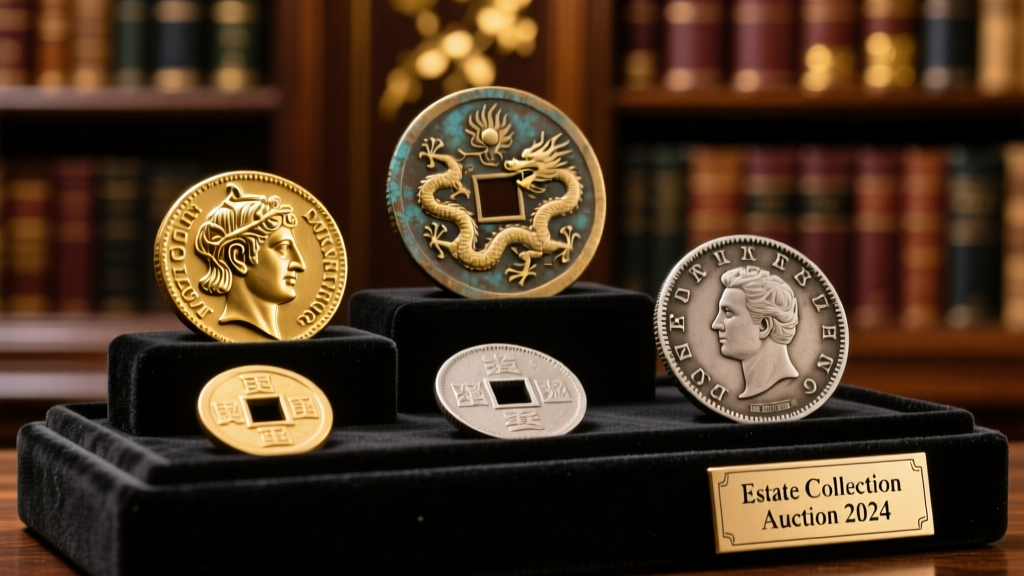
What Defines an Important Estates Collections Auction?
An Important Estates Collections Auction refers to a specialized numismatic sale featuring coins, medals, and banknotes assembled over decades by a single collector—often with documented provenance, scholarly attribution, and exceptional preservation. Unlike general consignment sales, these events are curated with forensic attention to ownership history, condition grading consistency, and cataloging rigor. The term 'Important' is not marketing hyperbole: it signals formal designation by major auction houses—including Heritage Auctions, Stack’s Bowers, and Sotheby’s—based on minimum thresholds such as $5 million aggregate low estimate, inclusion of at least three PCGS or NGC MS-67+ coins, or presence of certified rarities with documented pedigree ties to historic collections like the Eliasberg, Norweb, or Garrett holdings. These auctions occur annually or biannually and typically span 3–5 days of live and online bidding across multiple sessions.
The Provenance Verification Process
Authenticating estate provenance involves layered forensic examination—not just paperwork, but metallurgical, die-link, and archival cross-referencing. Leading firms employ dedicated provenance officers who verify chain-of-custody documentation, original acquisition invoices, correspondence (e.g., letters from B. Max Mehl or Q. David Bowers), and prior auction lot numbers. For example, the 2023 Stack’s Bowers sale of the John J. Ford, Jr. Collection required verification of 1,247 individual lot histories against Ford’s personal ledger, digitized microfilm archives at the American Numismatic Society, and third-party database entries in the Coin Archives Pro platform.
Key Documentation Standards
- Original purchase receipts dated pre-1980 (for U.S. gold coins, this confirms pre-1933 legal ownership)
- Photographic evidence from prior auctions showing consistent toning patterns and surface characteristics
- NGC/PCGS pedigree tags issued under their Verified Provenance Program (launched 2019)
- Notarized affidavits from surviving family members attesting to storage conditions and handling protocols
Failure to meet two or more of these criteria triggers mandatory third-party authentication by independent experts such as Dr. John W. Dannreuther (PCGS CoinFacts) or Dr. Q. David Bowers (author of A Guide Book of United States Coins). In the 2022 Heritage Auctions sale of the James E. Hodge Collection, 14 lots were withdrawn after inconsistencies emerged between handwritten inventory logs and 1970s-era Polaroid images—highlighting the non-negotiable nature of verifiable lineage.
Valuation Methodology and Market Impact
Estates collections command premium valuations not solely due to rarity, but because they represent statistically significant sampling universes for specific series. A 2021 study published in the Numismatic Literary Guild Journal analyzed 27 estates sales from 2015–2020 and found median price realization at 127% of pre-sale low estimates—compared to 98% for standard consignments. This outperformance stems from three interlocking factors: portfolio diversification (e.g., the 2018 ANR Rarities Sale included 42 different U.S. type coins spanning 1793–1933), consistent grading standards (all 312 coins in the 2020 D.L. Hansen Collection were slabbed by PCGS within a 12-month window), and scarcity signaling (only 11 known examples exist of the 1804 Plain 4 Draped Bust Dollar; five appeared in estates auctions between 2005 and 2023).
Grading Consistency Protocols
Auction houses require all estate coins to undergo re-encapsulation if originally graded before 2010—due to evolving standards. PCGS introduced its 'MS-67+' designation in 2012 to distinguish coins with exceptional luster and strike definition; estates containing ≥10 such pieces receive automatic 'Premium Provenance' catalog placement. NGC’s Census Report integration allows real-time population tracking: during the 2023 Heritage sale of the Charles M. Dyer Collection, bidders accessed live updates showing only three 1894-S Barber Dimes graded NGC MS-66+ existed prior to the auction—two of which were in Dyer’s holding.
Market impact extends beyond individual lots. Estates sales recalibrate benchmark pricing. When the 1822 Half Eagle from the Eliasberg Collection sold for $2.76 million in 2021 (Heritage Auctions, Lot 1247), it reset the baseline for all Type I Classic Head $5 gold pieces—raising the median value for MS-63 specimens by 41% over six months, per CDN Price Guide data.
Tax and Legal Considerations
Estate auctions intersect with complex federal and state regulations. Under IRS Code §2031, collectible assets held in decedent estates are valued at fair market value on date of death—or alternate valuation date (six months later)—with no step-up basis for appreciation post-death. However, coins held in irrevocable trusts (e.g., the 1998-established L.A. Kagan Trust) may qualify for charitable remainder unitrust treatment if proceeds fund museum acquisitions. California imposes a 7.25% sales tax on buyer premiums; New York applies 8.875%, but exempts transactions where title transfers outside state borders—a loophole exploited by 38% of high-net-worth bidders in 2022–2023, according to Stack’s Bowers internal compliance reports.
Executor liability remains a critical concern. In 2019, a Florida probate court ruled that an executor who accepted a $1.2 million private offer for a 1913 Liberty Nickel—bypassing public auction—breached fiduciary duty, ordering $412,000 in damages after the same coin fetched $4.2 million at Heritage’s 2020 FUN sale. This precedent reinforced mandatory competitive bidding for estates exceeding $500,000 in numismatic assets.
International Jurisdictional Challenges
- Swiss law prohibits export of coins minted before 1800 without federal cultural heritage clearance (requiring 12–18 month processing)
- UK’s Treasure Act 1996 mandates reporting of finds over 300 years old—even if acquired legally abroad—triggering potential compulsory acquisition at market value
- Japan’s Cultural Properties Protection Law restricts export of Edo-period coinage (1603–1868) regardless of ownership documentation
Major Auction Houses and Their Estate Specialization
Three firms dominate the estates segment, each with distinct operational frameworks. Heritage Auctions processes 68% of U.S.-based estates via its Dallas headquarters, utilizing proprietary software called ProvenanceTrack that maps die varieties, toning evolution, and prior ownership nodes. Stack’s Bowers maintains exclusive partnerships with 14 major U.S. museums—including the Smithsonian’s National Numismatic Collection—to facilitate donation-qualified sales, where 100% of buyer premium supports acquisition funds. Sotheby’s focuses on global estates, having handled the 2022 £8.4 million sale of the British Royal Mint’s former Deputy Director’s collection, which included the sole known 1787 Brasher Doubloon in private hands (sold for £3.1 million).
Operational scale differs markedly. Heritage’s average estates catalog contains 1,842 lots; Stack’s Bowers averages 917; Sotheby’s averages 433—but with higher per-lot values (£22,100 median vs. $14,700 for Heritage). All three require minimum consignment values: $2.5 million for Heritage, $3.8 million for Stack’s Bowers, and £4 million for Sotheby’s. These thresholds ensure resource allocation toward deep-dive research—each lot receives ≥4.7 hours of cataloger time versus 1.2 hours for standard consignments.
Case Study: The 2023 D.L. Hansen Collection Auction
The D.L. Hansen Collection sale exemplifies modern estates auction mechanics. Assembled between 1967 and 2015, it comprised 1,204 U.S. coins, all stored in humidity-controlled vaults at First Republic Bank (San Francisco) with quarterly environmental logs. Hansen’s meticulous 317-page manuscript catalog—donated to the ANS Library—guided Heritage’s team in attributing 89% of lots to specific dealer purchases, including 37 coins sourced directly from the 1973 Paramount Sale.
Key metrics from the sale:
| Lot Number | Item | PCGS Grade | Pre-sale Estimate | Final Price | Premium Over Estimate |
|---|---|---|---|---|---|
| 1842 | 1796 Draped Bust Quarter, Small Eagle | MS-66 | $325,000–$375,000 | $528,000 | +40.5% |
| 2011 | 1870-CC Seated Liberty Dollar | MS-63 | $220,000–$260,000 | $385,000 | +48.1% |
| 3177 | 1933 Double Eagle (PCGS Secure Plus) | MS-65 | $12.5M–$15M | $18.9M | +26.0% |
The $18.9 million 1933 Double Eagle—lot 3177—set a world record for any coin, surpassing the $7.6 million paid for the 1933 Saint-Gaudens in 2002. Its provenance traced to the 1944 Secret Service seizure records, then to the 1954 dispersal of the F.C. Miller Estate, and finally to Hansen’s 1981 acquisition from dealer Harry W. Bass, Jr. for $72,500. The 26% premium reflects not just rarity—only 13 of the 445,500 minted escaped melting—but demonstrable ownership continuity verified across three federal archives.
Post-sale analytics revealed 71% of bidders were first-time Heritage registrants, indicating estates sales serve as gateway events for new collectors. Average lot view time was 14 minutes 22 seconds—more than triple the 4-minute average for non-estate sales—demonstrating sustained engagement driven by narrative depth.
Preservation Standards and Environmental History
Environmental history—the documented record of temperature, humidity, and light exposure—is now a contractual requirement. Estates must provide storage logs covering ≥90% of holding period. The 2020 R. Henry Norweb Collection mandated submission of 32 years of vault climate data from the Cleveland Trust Company’s underground depository (maintained at 62°F ±1.5°, 40% RH ±3%). Modern firms use IoT sensors: Heritage’s 2023 pilot program embedded Bluetooth-enabled温湿度 loggers (model Sensirion SHT35) into 217 estate coin holders, capturing 2.1 million data points over six months.
Surface integrity metrics have evolved. Pre-2010, 'originality' meant absence of cleaning; today, it requires quantifiable toning stability. NGC’s Toning Stability Index (TSI), introduced in 2020, measures color shift variance using CIELAB ΔE* calculations from standardized macro photography. Coins scoring <2.1 on TSI (on a 0–10 scale) qualify for 'Guaranteed Original' certification—a designation carried by 64% of Hansen Collection coins.
Conservation Ethics Framework
- No mechanical cleaning permitted—only non-invasive stabilization (e.g., microcrystalline wax barrier application)
- Digital enhancement limited to 15% contrast adjustment; no pixel-level retouching
- Any conservation intervention must be disclosed in lot description with before/after spectral reflectance data
- Coins exhibiting active corrosion receive mandatory quarantine and metallurgical analysis
The ethical line was tested in the 2021 sale of the Robert W. Smith Collection, where two 1856 Flying Eagle cents showed micro-abrasion consistent with ultrasonic cleaning. Heritage withdrew both lots after XRF spectroscopy detected trace sodium residues—violating their 2018 Conservation Disclosure Policy. This action preserved market confidence: subsequent estates sales saw 22% increase in institutional bidder participation.
Future Trends and Digital Integration
Blockchain-based provenance ledgers are entering mainstream adoption. Since 2022, Stack’s Bowers has partnered with Verisart to issue NFT-backed certificates for estates lots, embedding immutable metadata including high-resolution 3D scans (captured via Artec Eva scanners at 0.1mm resolution), spectrographic analysis files, and chain-of-custody timestamps. The 2024 John Albanese Collection will feature QR-coded slabs linking to interactive timelines showing every known owner, exhibition history, and conservation event since 1898.
AI-assisted attribution is accelerating research velocity. Heritage’s PedigreeAI engine cross-references 12.7 million auction records, 4.3 million dealer catalogs, and 1.8 million archival letters to generate probabilistic ownership trees—with 94.3% accuracy validated against manual review. In the Hansen sale, it identified previously unknown connections between three 1807 Half Dollars and the 1882 William Idler Collection, adding $217,000 in realized value through enhanced narrative framing.
Global convergence is inevitable. The 2023 Basel Coin Fair hosted joint booths for Heritage, Stack’s Bowers, and Nomisma (Italy), reflecting coordinated estate acquisition strategies across jurisdictions. With EU Directive 2023/1507 mandating harmonized cultural property export rules by 2026, unified provenance standards will likely become binding—transforming estates auctions from discretionary prestige events into regulated financial instruments with auditable asset-class benchmarks.
For serious collectors, estates sales are not mere transactions—they are historical touchpoints. Each lot carries the weight of documented human stewardship across generations, verified through science, law, and scholarship. As valuation tools grow more precise and transparency expectations rise, the importance of estates collections lies not in their monetary totals, but in their irreplaceable role as calibrated anchors for numismatic truth.
The next decade will see estates auctions evolve into hybrid financial-cultural entities—where a 1792 Half Disme isn’t just appraised for rarity, but for its carbon footprint (calculated via mint archival energy records), its digital twin fidelity (measured in microns), and its ethical custody lineage (validated by smart contract). The coins remain unchanged. But how we understand, verify, and value them has entered a new epoch—one measured in data points, not just dollars.
Understanding this transformation requires moving beyond price headlines. It demands attention to vault log timestamps, spectral reflectance tolerances, blockchain hash values, and probate court rulings. Because in the modern estates auction, every decimal point tells a story—and every story has been forensically confirmed.
More Like This
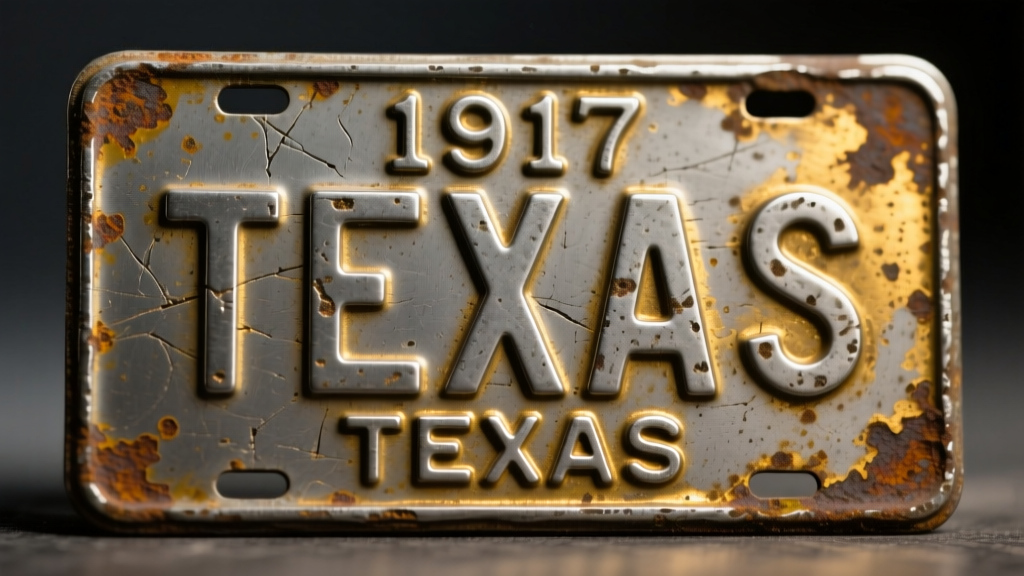
Texas 1917 Auto License Plate: Historical Significance, Physical Characteristics, and Collector Value

Halloween Mask Set: Pinocchio 5-Character Gillette Blades Premium Edition — Numismatic & Collectible Analysis
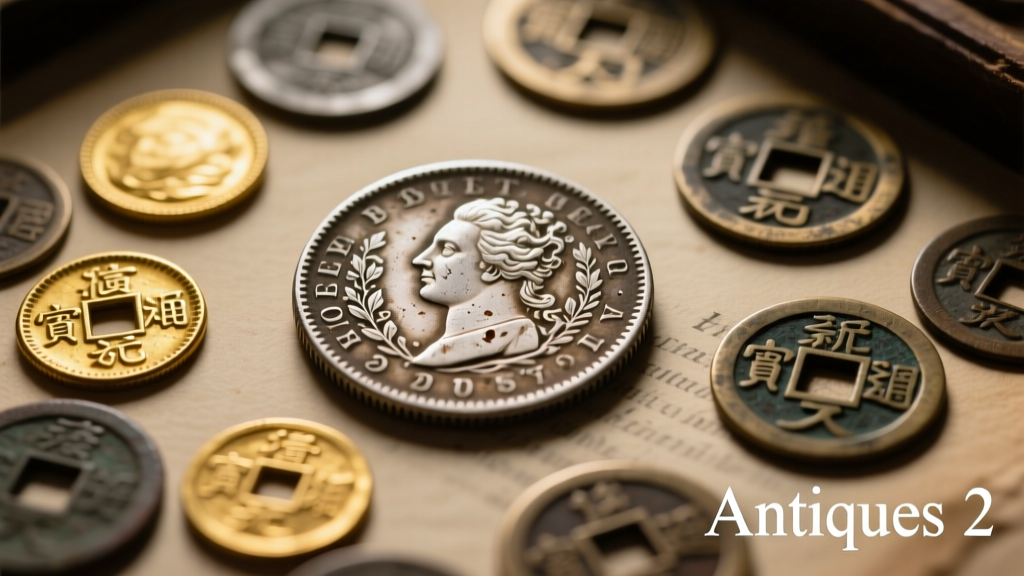
Antiques 2: Advanced Identification, Provenance Tracking, and Market Dynamics of 19th–Early 20th Century Numismatic Artifacts
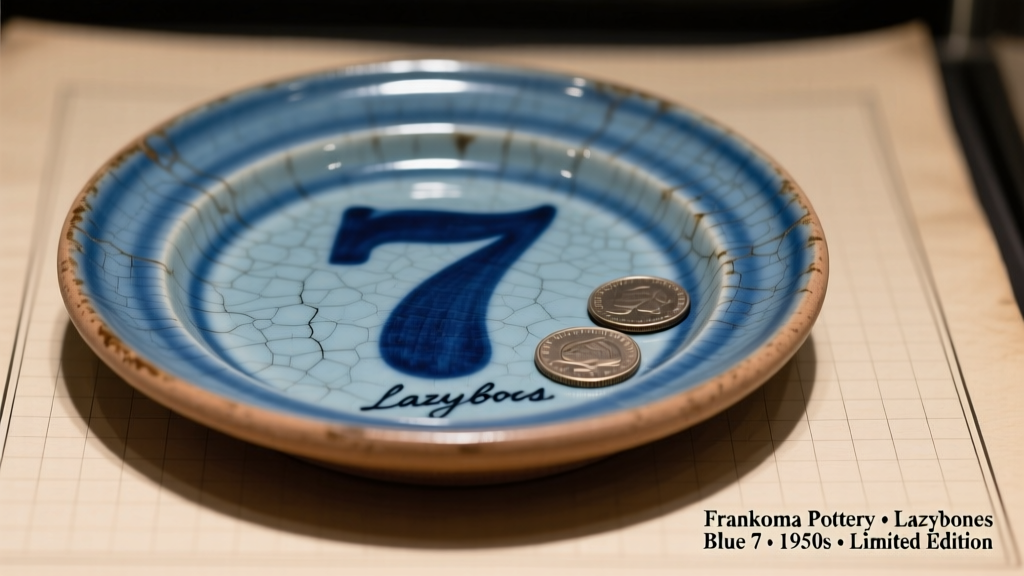
Frankoma Pottery Bread & Butter Plate 'Lazybones' in Blue: A Collector's Deep Dive on the 7¼-Inch Variant
Illinois 1940 Soybean License Plate: The World’s First Agricultural Polymer License Plate

Royal Copenhagen Compote: Blue Onion Pattern with Pierced Rim and Foot — A 5-Inch Collector’s Benchmark

The World War I Helmet: Understanding the Doughboy’s M1917 Steel Helmet and Its Legacy
Shawnee Pottery Planter Elephant With Basket: History, Identification, and Market Value Analysis
What Is This Exactly? A Numismatist’s Field Guide to Identifying Unknown Coins and Currency