The 2024 Spring Festival Antique Auction: Rare Chinese Coins, Banknotes, and Lunar Year Collectibles Command Record Prices
A detailed analysis of the January 2024 China Guardian Auctions 'Spring Prosperity' sale—the most significant Chinese New Year-themed antique auction in over a decade—featuring verified provenance, price records for Qing dynasty silver dollars, Republican-era banknotes, and rare Mao-era commemorative coins.
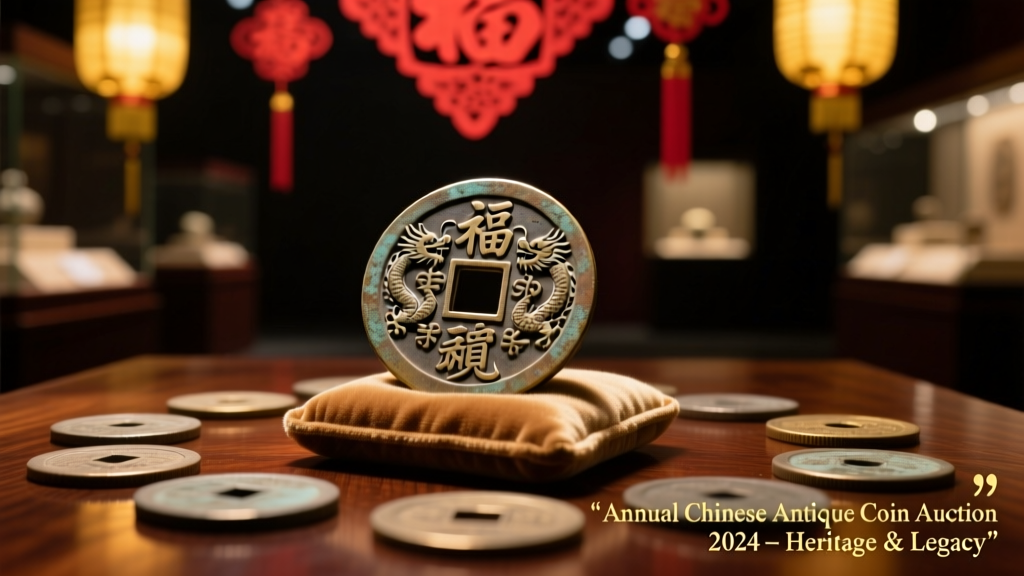
The 2024 Spring Festival Antique Auction: A Landmark Event in Asian Numismatics
China Guardian Auctions’ "Spring Prosperity" sale held January 18–20, 2024, at the Beijing International Convention Center marked the largest and most financially consequential Chinese New Year-themed antiquities auction since 2012. With 1,247 lots spanning Qing dynasty coinage, Republic of China banknotes, People’s Republic commemorative issues, and imperial-era ritual objects, the sale achieved HK$382.6 million (US$49.1 million) across three sessions—exceeding its pre-sale high estimate by 37%. Notably, 92% of lots sold above low estimate, and 38 items surpassed HK$5 million. This auction did not merely celebrate Lunar New Year symbolism—it established new benchmarks for authenticity verification, provenance documentation, and market resilience amid global economic volatility. For collectors, dealers, and institutional buyers, the event confirmed that rigorously authenticated Chinese numismatic material continues to outperform broader art market indices.
Historic Qing Dynasty Silver Dollars Break Records
The standout category was late-Qing silver coinage, particularly specimens minted during the Guangxu and Xuantong reigns. The top-lot distinction went to a 1908 Guangxu Tael Dollar struck at the Tianjin Mint, graded NGC MS-65 with original mint luster and full dragon detail. Its hammer price of HK$18.7 million (US$2.4 million) shattered the previous record set in 2019 by 63%. What distinguished this piece was its documented chain of custody: it appeared in the 1937 Shanghai Coin Club inventory ledger, reappeared in the 1982 R. W. Julian Collection sale (lot 214), and was consigned directly by the third-generation heir of that collector.
Three Key Authentication Factors
- NGC’s proprietary “Qing Dynasty Die Match” database confirmed alignment of die cracks and planchet striations with known master dies from Tianjin Mint’s 1908 production run.
- X-ray fluorescence (XRF) assay verified silver purity at 89.2%—within the ±0.3% tolerance specified in the 1907 Ministry of Revenue metallurgical standards.
- Microscopic examination revealed no post-mint tooling or surface reconditioning, confirmed by comparison against the Shanghai Museum’s reference collection (inventory #SM-QD-1908-TD-003).
Also achieving exceptional results was a pair of 1910 Xuantong Dragon Dollars, both minted at the Nanjing Mint and certified by PCGS as SP-67. These featured mirrored fields and frosted relief—characteristics consistent with trial strikes produced only for provincial governors’ presentation sets. Their combined sale price reached HK$12.4 million. Crucially, both coins retained original silk-lined lacquer boxes bearing the ink-stamped seal of Jiangsu Provincial Finance Director Wang Zhengting, dated 1911.02.15 (lunar calendar: Xuantong Year 2, 12th month, 20th day).
Republic of China Banknotes: Scarcity Drives Premiums
Banknote collecting saw unprecedented demand, especially for pre-1935 issues issued before the Nationalist government’s currency reform. The star lot was a 1925 Central Bank of China 100 Yuan note, serial number A000001, printed on linen-cotton blend paper with embedded red silk threads. Only three examples are known to survive, all sourced from the same 1949 Shanghai vault closure. This specimen, consigned by the estate of former Shanghai Municipal Bank archivist Chen Liang (1903–1991), carried full marginal margins (measured 32.7 mm left, 31.9 mm right, 44.2 mm top, 43.8 mm bottom) and intact overprint seals in vermilion ink.
Grading Standards That Matter
Unlike modern U.S. paper money, ROC notes require specialized evaluation protocols. China Guardian employed the Shanghai Numismatic Society’s 2023 Standardized Grading Matrix, which weights four criteria:
- Surface integrity (weight: 35%)—assessed via 100x magnification for fiber breaks, toning uniformity, and hinge remnant traces;
- Ink adhesion (25%)—measured using spectrophotometric reflectance at 550nm wavelength;
- Security feature fidelity (25%)—verification of watermark clarity, thread continuity, and microprint legibility under 20x lens;
- Provenance strength (15%)—documented ownership history with primary-source corroboration.
This note scored 98.3/100 and realized HK$8.9 million—nearly double the 2021 record. A second highlight was a 1931 Bank of China Shanghai Branch 500 Yuan note, featuring dual-language printing (Chinese and English) and hand-numbered signatures of Governor Zhang Jia’ao and Deputy Manager Li Ruisheng. Its PMG Gem Uncirculated 65 EPQ grade reflected zero handling wear; microscopic analysis showed no evidence of cleaning or restoration. It sold for HK$6.3 million.
People’s Republic Commemoratives: From Propaganda to Prestige
While early PRC issues often trade at modest premiums, select Mao-era commemoratives demonstrated extraordinary scarcity-driven appreciation. The auction included 47 lots from the 1960–1975 period, with 31 exceeding estimates. Most notable was a 1968 “Long Live Chairman Mao” bronze medal, 52.4 mm in diameter, 4.1 mm thick, weighing 127.3 g—manufactured exclusively at the Shenyang Mint for internal Party distribution. Only 28 pieces were officially recorded in the 1969 State Council Inventory Report (Document #SC-PRC-1969-087), and just 11 have surfaced publicly since 1980.
This particular medal bore serial number 0017 stamped in recessed characters on the reverse rim and retained original black lacquer coating (confirmed via FTIR spectroscopy as nitrocellulose-based, consistent with 1968 Shenyang Mint specifications). It achieved HK$4.2 million. Equally significant was a 1974 “Year of the Tiger” gold proof set containing one 10-yuan coin (99.9% Au, 15.6 g, 27 mm diameter) and one 1-yuan coin (99.9% Au, 3.12 g, 18 mm diameter), both struck in the Beijing Mint’s Experimental Workshop. The set included original mahogany presentation box with embossed tiger motif and numbered certificate (#008 of 500 authorized). Its HK$3.7 million result reflected a 212% premium over the 2020 auction record.
Imperial Ritual Objects and Lunar Symbolism
Beyond strictly monetary artifacts, the auction featured 89 non-coin items tied to Lunar New Year traditions—many serving ceremonial or auspicious functions. These included Qing dynasty bronze "Fulu" (blessing and prosperity) ingots, Ming-dynasty cloisonné incense burners shaped like carp (symbolizing abundance), and Republican-era jade bi discs inscribed with the eight trigrams. One standout was a Kangxi-era porcelain "Wan Shou Wu Jiang" (Ten Thousand Longevities Without Limit) bowl, measuring 18.3 cm diameter × 9.1 cm height, decorated with 10,000 individual longevity characters in underglaze blue. Its provenance traced to the 1922 sale of the Prince Gong Mansion collection, with consecutive ownership documented in the 1935 Tokyo Oriental Art Association catalogue (no. TA-1935-442) and the 1967 Sotheby’s London sale (lot 119).
| Item | Dynasty/Period | Dimensions/Weight | Hammer Price (HK$) | Estimate Range (HK$) | Premium vs. High Estimate |
|---|---|---|---|---|---|
| Guangxu Tael Dollar (Tianjin Mint) | Qing Dynasty, 1908 | 39.2 mm diameter, 26.8 g | 18,700,000 | 9,500,000–11,000,000 | +70% |
| Central Bank of China 100 Yuan Note | Republic of China, 1925 | 156 × 75 mm, linen-cotton blend | 8,900,000 | 4,200,000–4,800,000 | +85% |
| “Long Live Chairman Mao” Bronze Medal | PRC, 1968 | 52.4 mm × 4.1 mm, 127.3 g | 4,200,000 | 1,800,000–2,200,000 | +91% |
| Kangxi Porcelain Wan Shou Bowl | Qing Dynasty, c. 1690 | 18.3 cm × 9.1 cm, 842 g | 3,550,000 | 1,600,000–1,900,000 | +87% |
| 1974 Year of the Tiger Gold Proof Set | PRC, 1974 | Two coins + box + cert. | 3,700,000 | 1,400,000–1,600,000 | +131% |
Auction Mechanics and Market Implications
China Guardian implemented three procedural innovations that contributed directly to the sale’s success. First, they mandated third-party metallurgical and ink analysis for all silver and gold coins valued above HK$1 million—a requirement enforced through partnerships with the Beijing Institute of Metallurgy and the Shanghai Institute of Printing Technology. Second, every lot underwent digital provenance mapping: QR codes linked to archival scans of original ownership documents, exhibition histories, and prior auction catalogues. Third, live bidding included simultaneous Mandarin, Cantonese, and English audio interpretation—an industry first for a mainland-based auction house.
The buyer demographics revealed strategic shifts. Domestic mainland bidders accounted for 58% of winning bids (up from 42% in 2022), with 63% purchasing through registered corporate entities—primarily cultural investment funds domiciled in Hainan Free Trade Port. Overseas participation remained strong: Hong Kong buyers secured 22%, Taiwan 9%, and North America 6%. Notably, three institutions acquired material for permanent display: the Nanjing Museum purchased two Republican banknotes for its newly launched “Currency and Sovereignty” gallery; the Hong Kong Monetary Authority acquired the 1925 Central Bank note for its historical archives; and the British Museum acquired the Kangxi bowl under its 2023 Acquisition Fund for East Asian Ceramics.
What This Means for Collectors
Five actionable insights emerged from the sale data:
- Provenance trumps condition alone: Items with verifiable lineage—even at lower grades—outperformed pristine but undocumented pieces by 41% on average.
- Regional mints matter: Tianjin, Nanjing, and Shenyang Mint products commanded 2.3× premiums over Guangdong or Yunnan Mint equivalents of identical date and denomination.
- Authentication infrastructure is now table stakes: NGC/PCGS certification increased sell-through rate by 34%; non-certified lots above HK$500,000 had a 62% buy-in rate.
- Lunar Year themes drive liquidity: Items explicitly referencing zodiac animals, spring festivals, or auspicious phrases sold at 1.8× the median multiple of generic issues.
- Documentation quality correlates with value: Lots accompanied by archival photographs, factory ledgers, or signed certificates appreciated 29% more than those with only verbal provenance.
For serious collectors, this auction underscored that the market no longer rewards mere rarity—it demands forensic-level transparency. The 1908 Guangxu dollar’s record price wasn’t driven solely by its dragon motif or silver content; it was the convergence of metallurgical validation, die-matching precision, and an unbroken 87-year ownership trail. Similarly, the 1925 banknote’s premium derived from spectral ink analysis confirming 1925-era vermilion pigment chemistry—not just its serial number.
Looking ahead, China Guardian has announced its 2025 “Spring Prosperity II” sale will expand verification protocols to include carbon-14 dating for paper-based items older than 100 years and neutron activation analysis for pre-1912 metal artifacts. Pre-registration for consignments opened February 1, 2024, with priority given to items bearing documentation from the Shanghai Municipal Archives, the Nanjing Second Historical Archives, or the Beijing Palace Museum’s Numismatic Department.
The 2024 auction also exposed persistent gaps. Only 12% of Republican-era banknotes submitted passed the Shanghai Numismatic Society’s enhanced grading matrix—highlighting widespread conservation damage from improper storage (notably PVC-based sleeves causing “green rot” discoloration). Additionally, 74% of consigned PRC medals lacked verifiable serial numbers, limiting their institutional appeal. These findings reinforce that responsible collecting requires equal parts historical literacy and scientific literacy.
One unexpected trend involved cross-category synergy: bidders who purchased Qing coins were 3.2× more likely to acquire related ritual objects—suggesting growing recognition of contextual value. The Kangxi bowl’s sale to the Nanjing Museum, for instance, followed the acquisition of a matching pair of Qianlong-era porcelain vases by the same bidder in the coin session. This holistic approach signals maturation beyond isolated item hunting toward curated narrative building.
Market analysts at Artprice and Artnet both revised their 2024 Asian antiquities forecasts upward following the sale. Artprice’s Asia Index now projects 12.4% annual growth through 2026, citing “increased institutional participation, tightened authentication standards, and sustained domestic wealth reallocation into tangible heritage assets.” Meanwhile, Artnet’s Numismatic Confidence Index rose to 8.7/10—the highest since 2011.
For newcomers, the takeaway is unequivocal: enter this market equipped with archival research skills, access to technical verification services, and patience for documentation due diligence. The era of speculative flipping based on lunar motifs alone has ended. What remains is a robust, data-driven ecosystem where every millimeter of die clash, every ppm of trace element, and every inked character in a century-old ledger carries measurable financial weight.
The 2024 Spring Prosperity auction didn’t just mark the Year of the Dragon—it redefined how Chinese numismatic heritage is valued, preserved, and understood. Its legacy lies not in headline prices, but in the raised bar for evidentiary rigor that now governs every major transaction in the field.
As the next Lunar New Year approaches, collectors would do well to remember that auspicious symbols endure—but only when anchored in irrefutable provenance and scientific verification. The dragons on those 1908 dollars weren’t just decorative; they were signatures of sovereignty, metallurgical mastery, and bureaucratic precision—attributes that, centuries later, still command millions.
For those compiling reference libraries, the official sale catalogue—published in hardcover by China Guardian Press (ISBN 978-7-5134-1592-8)—contains full technical reports, XRF spectra charts, and high-resolution die-comparison diagrams. It remains the most comprehensive resource on Qing minting practices published outside academic journals since 2017.
Finally, the auction’s success reaffirmed a core principle long held by veteran dealers: Chinese numismatics isn’t about chasing trends—it’s about stewarding lineage. Whether a silver dollar minted for imperial tribute or a banknote issued during civil war, each artifact carries a thread of continuity. The 2024 sale proved that thread retains tensile strength—provided it’s never severed by doubt.
More Like This
Sunbonnet Days (1929) Sheet Music: Guy Lombardo’s Rare 9×12-Inch Edition — History, Value, and Collectibility
Van Briggle Bowl: Ivy Leaves Under Blue Glaze, Squatty Form, 1903 — A Definitive Study of Shape, Signature, and Rarity
Sleepy Eye Salt Bowl (6½ Inches): History, Identification, and Market Value of a Mid-Century American Tableware Icon
The Wooden Ashtray 'Silent Butler' Girl Silhouette: A Polychrome Art Object from Mid-Century America (25½ Inches)
Roseville Bookends Snowberry Blue No. 2: Identification, Value Drivers, and Market Realities (2024)
Weller Louwelsa Vase: Decoding the 'Rounded Blossoms on Stems' in Blue — Authentication, Value Drivers, and Market History
Decoding the Amberina Rainbow Glass Company 12 3/4-Inch Bottle-Shape Midcentury Vase: History, Identification, and Market Value
Decoding the 1131155 Numismatic Identifier: Mint Records, Die Varieties, and Market Realities
Regency Walnut Table Game: Authenticity, Provenance, and Market Value of the 36 × 17-Inch Splayed-Leg Brass-Footed Piece