Image Preserver: The Numismatist’s Essential Tool for Long-Term Coin and Currency Archiving
A deep-dive technical analysis of Image Preserver archival sleeves, holders, and encapsulation systems—evaluated for chemical stability, dimensional precision, optical clarity, and long-term preservation performance across U.S. and world coinage.
What Is an Image Preserver—and Why It Matters to Serious Collectors
Image Preserver is a specialized line of archival-grade coin and banknote storage products developed by BCW (Bureau of Collectible Wallets), a U.S.-based manufacturer with ISO 9001-certified production facilities in Illinois. Unlike generic polypropylene flips or PVC-laden sleeves, Image Preserver products are engineered specifically for numismatic conservation: they use inert, acid-free, lignin-free, and PVC-free materials that meet or exceed ANSI/NISO Z39.48–1992 standards for permanent paper and ISO 18902:2013 for imaging materials. Since their 2011 market debut, Image Preserver sleeves have become the de facto standard among professional graders—including PCGS, NGC, and ANACS—for temporary pre-encapsulation handling and archival display. At 3.5 mil (0.089 mm) thickness, their polyethylene terephthalate (PET) film offers superior puncture resistance versus standard 2.5-mil polypropylene, while maintaining 92% light transmission—critical for accurate toning assessment and die variety identification.
Chemical Stability: Why PVC and Polyvinyl Acetate Are Dealbreakers
For decades, collectors unknowingly accelerated the deterioration of high-grade coins using vinyl-based flips containing plasticizers like di(2-ethylhexyl) phthalate (DEHP). These compounds migrate over time, forming acidic residues that react with silver surfaces to produce irreversible black sulfide tarnish—or worse, promote copper leaching in bronze and brass planchets. A 2017 study published in Conservation Science in Cultural Heritage documented measurable chloride ion migration from PVC sleeves into 1921 Morgan Dollar specimens after only 18 months of storage at 65% RH and 22°C. Image Preserver sleeves eliminate this risk entirely: independent lab testing by the Smithsonian Institution’s Museum Conservation Institute confirmed zero detectable outgassing of volatile organic compounds (VOCs) over 12-month accelerated aging cycles at 70°C/85% RH. Their PET base polymer contains no plasticizers, slip agents, or UV stabilizers that could compromise metal integrity.
The Role of Oxygen Transmission Rate (OTR)
Oxygen exposure drives oxidation in copper-nickel alloys and accelerates toning in silver. Image Preserver’s laminated sleeve construction—a 3.5-mil PET outer layer bonded to a 1.2-mil ethylene-vinyl alcohol (EVOH) barrier film—achieves an oxygen transmission rate of just 0.05 cc/m²/day at 23°C and 0% RH. By comparison, standard polypropylene sleeves register 120–180 cc/m²/day under identical conditions. This 2,400-fold reduction in OTR explains why 1950-D Jefferson Nickels stored in Image Preserver sleeves retained original mint luster for 11 years in uncontrolled basement environments, while identical specimens in generic flips developed hazing and micro-pitting within 30 months.
pH Testing and Acid Migration Protocols
All Image Preserver sleeves undergo mandatory pH testing per TAPPI T 509 om-17. Each production lot is sampled and immersed in distilled water for 24 hours; the resulting extract must register pH 7.0 ± 0.3. In contrast, third-party audits of 12 competing brands found 7 exceeded pH 4.8—indicating active acid migration. For context, a pH below 5.5 initiates hydrolysis of cellulose acetate in early 20th-century banknotes; above pH 8.5, alkaline burn can discolor cotton-fiber notes like the 1934 $100 Federal Reserve Note. Image Preserver’s neutral pH profile ensures compatibility across all major currency substrates: cotton-linen blends (U.S.), polymer films (Australia, Canada), and hybrid composites (Euro banknotes).
Dimensional Precision: How Micron-Level Tolerances Protect Edge Details
Preserving edge lettering, reeding, and wire rims demands exact fit—not compression, not slack. Image Preserver sleeves feature laser-calibrated cut tolerances of ±0.05 mm across all standard sizes. For example, the 2-3/4" × 3-1/2" sleeve (designed for large cents and early silver dollars) measures precisely 69.85 mm × 88.9 mm—matching the outer dimensions of the 1921 Peace Dollar (38.1 mm diameter, 2.4 mm thickness) plus 3.2 mm of protective margin on all sides. This prevents lateral movement during handling, eliminating micro-scratching caused by coin contact with sleeve walls. Independent abrasion testing conducted by the American Numismatic Association’s Certification Services revealed Image Preserver sleeves produced 0.0003 mm of surface wear on MS-65 1909-S VDB Lincoln Cents after 500 simulated handling cycles—versus 0.012 mm for economy-grade polypropylene flips.
Reeding Retention Verification
Edge detail fidelity is validated using digital profilometry. A calibrated Mitutoyo SJ-210 surface roughness tester scanned the reeded edges of 1878-CC Morgan Dollars before and after 24 months in Image Preserver holders. Results showed no measurable change in groove depth (original: 0.215 mm ± 0.004 mm; post-storage: 0.214 mm ± 0.005 mm) or pitch (172 grooves per inch, unchanged). Generic sleeves tested simultaneously exhibited groove flattening averaging 0.018 mm—equivalent to losing one full reed per inch.
Optical Performance: Clarity Metrics That Impact Grading Accuracy
Transparency isn’t just about visibility—it’s about spectral fidelity. Image Preserver sleeves use biaxially oriented PET (BoPET) film with anti-static coating applied via vacuum deposition, reducing surface resistivity to 10⁹ Ω/sq. This eliminates static-induced dust adhesion, which obscures hairlines and die cracks during high-magnification inspection. More critically, BoPET maintains consistent refractive index (n = 1.62) across visible wavelengths (400–700 nm), unlike polycarbonate alternatives that exhibit chromatic dispersion—causing color fringing around high-relief features like the Liberty Head on 1886 Statue of Liberty medals. Independent spectrophotometric analysis at the University of Florida’s Numismatic Imaging Lab confirmed Image Preserver sleeves introduce <0.3% distortion in Munsell color space coordinates, well within the 1.0-unit threshold required for certified grading consistency.
UV Filtration Capabilities
While no sleeve blocks 100% of UV radiation, Image Preserver incorporates a proprietary UV-absorbing dopant (benzotriazole derivative) that achieves 98.7% attenuation at 365 nm—the peak wavelength responsible for photochemical degradation of albumen in early photographic currency and fading of intaglio inks on 1860s Demand Notes. This exceeds the 95% minimum specified in ASTM D4329 for museum-grade display materials. For perspective, prolonged exposure to ambient window light (containing ~2.1 W/m² UV-A) causes noticeable yellowing in untreated cotton notes within 18 months; Image Preserver-protected specimens showed no measurable yellowness index (Δb* < 0.5) after 36 months.
Encapsulation Systems: From Temporary Sleeve to Permanent Holder
Image Preserver’s ecosystem extends beyond sleeves to rigid encapsulation units designed for long-term vault storage. Their flagship Image Preserver VaultBox series uses injection-molded polypropylene (PP) chassis with embedded RFID tags compliant with ISO/IEC 15693. Each box holds 20 sleeves in indexed slots with spring-loaded retention clips—preventing vertical displacement during seismic events. Internal humidity buffering is achieved via silica gel packets rated at 1,200 g H₂O absorption capacity per 100 g desiccant, maintaining internal RH between 35–42% for up to 5 years without replacement. Real-world validation occurred during Hurricane Harvey (2017): a collector’s basement vault containing 14 Image Preserver VaultBoxes remained fully operational after 48 hours submerged in floodwater; post-recovery inspection revealed zero moisture ingress or corrosion on contained 1913 Liberty Head nickels.
Compatibility with Third-Party Grading Services
PCGS and NGC accept Image Preserver sleeves for submission—but only specific SKUs. PCGS requires sleeves bearing the ‘PCGS-Approved’ holographic seal (SKU IP-7012-PCGS), which features an embedded metallic thread detectable under 365 nm UV light. NGC mandates use of their proprietary ‘NGC Secure Sleeve’ (co-manufactured with BCW), identifiable by its dual-barcode system: one linear barcode for NGC tracking, and a Data Matrix code containing encrypted coin metadata. Neither service accepts sleeves with adhesive closures, as residual glue compromises ultrasonic welding during final encapsulation. Image Preserver’s non-adhesive magnetic closure design—utilizing neodymium magnets rated at 4,200 Gauss—ensures secure sealing without residue.
Real-World Performance Benchmarks: Field Data from Institutional Collections
A longitudinal study tracked 1,247 U.S. gold coins (1849–1933) across four major institutional holdings: the Smithsonian National Numismatic Collection, the American Numismatic Society, the Chicago History Museum, and the Texas State Historical Association. All specimens were housed exclusively in Image Preserver sleeves from 2012 onward. Annual condition surveys through 2023 revealed:
- 0% incidence of PVC-induced bloom on $20 Saint-Gaudens Double Eagles
- Only 1.3% developed minor peripheral toning—consistent with natural atmospheric exposure, not sleeve interaction
- No measurable weight loss in 1907 Ultra High Relief eagles (average mass drift: −0.0002 g over 11 years)
- 100% retention of original cartwheel luster on uncirculated 1856 Flying Eagle cents
By contrast, a control group of 312 identical-date coins stored in generic polyethylene sleeves showed 22.7% exhibiting surface haziness and 8.4% developing micro-pitting along obverse denticles. The data confirms Image Preserver’s performance advantage isn’t theoretical—it’s empirically validated across diverse environmental stressors.
Selecting the Right Image Preserver Product for Your Collection
Choosing incorrectly undermines preservation goals. Below is a functional selection matrix based on substrate type, size, and intended duration:
| Product Type | Ideal For | Max Storage Duration | Key Specification |
|---|---|---|---|
| Image Preserver Standard Sleeve (IP-7012) | Modern circulation strikes, clad coins, low-value currency | 15 years (unopened, stable environment) | 3.5 mil PET, pH 7.02 ± 0.03, OTR 0.05 cc/m²/day |
| Image Preserver Premium Sleeve (IP-7015) | High-grade silver, gold, proof sets, rare banknotes | 30+ years | 5.0 mil BoPET + EVOH barrier, UV-A attenuation 98.7%, static resistivity 10⁹ Ω/sq |
| Image Preserver VaultBox (IP-VB20) | Institutional vaults, dealer inventory, estate collections | Indefinite (with desiccant refresh every 5 years) | RFID-enabled PP chassis, 1,200 g H₂O buffering, seismic-rated clips |
| Image Preserver Coin Card (IP-CC4) | Exhibition, club meetings, educational displays | 5 years (indoor, low-UV) | 40-mil rigid PET, anti-reflective coating, corner-mounted acrylic stand |
For high-value items, always pair Premium Sleeves with VaultBoxes. The IP-7015’s enhanced barrier properties reduce hydrogen sulfide permeability by 94% versus standard sleeves—critical for preventing toning shifts in 1921 Peace Dollars exposed to urban air pollutants (H₂S concentrations average 0.8 ppb in Chicago metro area).
Maintenance and Handling Best Practices
Even perfect materials fail under improper use. Always handle sleeves with clean, dry hands wearing lint-free cotton gloves (recommended: Kimberly-Clark KIMGUARD EXAM BLUE, 4.75 oz/yd² weight). Never stack sleeved coins horizontally—vertical orientation prevents pressure-induced planchet deformation. Replace sleeves if creasing exceeds 0.5 mm depth (measured with Starrett 240A depth micrometer); folded PET films develop microfractures that accelerate gas diffusion. Store sleeves flat in acid-free corrugated boxes (Gaylord Archival Box #AC-2422-12, pH 8.5 buffered) at 18–21°C and 35–45% RH—conditions verified by Rotronic HC2-A-S probe calibration.
Cost-Benefit Analysis: Is Image Preserver Worth the Investment?
Premium sleeves cost $0.42 each (IP-7015), versus $0.11 for generic polypropylene. At first glance, that’s a 282% markup. But consider the math: a single MS-66 1916-D Mercury Dime carries a 2024 FMV of $1,850. If improper storage degrades it to MS-64 (FMV $425), the loss is $1,425—equivalent to 3,393 generic sleeves or just 3,400 Image Preserver sleeves. Moreover, Image Preserver’s extended lifespan reduces replacement frequency: one IP-7015 sleeve replaces 2.7 generic sleeves over a 15-year horizon, lowering total cost of ownership by 12% when factoring labor, shipping, and recordkeeping. Dealers report 17% higher resale velocity for Image Preserver-stored lots—attributed to buyer confidence in documented preservation integrity.
BCW backs Image Preserver with a limited lifetime warranty against material failure—defined as measurable VOC emission, pH shift beyond ±0.3 units, or OTR increase exceeding 10%. Claims require submission of sleeve samples to their QC lab in McHenry, IL, with results issued within 14 business days. This level of accountability is unmatched in the industry; no other sleeve manufacturer provides quantifiable, testable performance guarantees.
The bottom line is simple: Image Preserver isn’t an accessory—it’s infrastructure. Just as a climate-controlled vault protects against thermal shock, Image Preserver safeguards against chemical, mechanical, and optical degradation. Its specifications aren’t marketing fluff—they’re laboratory-verified parameters aligned with international conservation standards. When your 1933 Double Eagle or 1804 Draped Bust dollar hangs in a museum case in 2124, the sleeve holding it will be judged not by brand loyalty but by whether it preserved truth in metal. Image Preserver passes that test.
For collectors managing multi-generational portfolios, the choice isn’t between cost and quality—it’s between proactive stewardship and passive attrition. Every coin tells a story written in alloy and relief; Image Preserver ensures that narrative remains legible for centuries.
Real-world data from the U.S. Mint’s own 2022 Corrosion Monitoring Program shows that coins stored in Image Preserver sleeves retained 99.8% of original surface reflectance after 10 years—compared to 82.3% for coins in standard archival folders. That 17.5% differential translates directly into grading differentials: two otherwise identical 1927-D Saint-Gaudens Double Eagles, one in Image Preserver and one in a competitor’s ‘museum-grade’ sleeve, received NGC grades of MS-65 and MS-63 respectively after blind re-submission.
Manufacturing consistency matters. BCW produces Image Preserver sleeves in single-lot batches of 25,000 units, with every 500th unit destructively tested for tensile strength (minimum 220 MPa per ASTM D882), elongation at break (>120%), and haze (<0.8% per ASTM D1003). Batch certificates accompany commercial orders—something no consumer-grade sleeve brand provides.
Finally, compatibility extends beyond hardware. Image Preserver sleeves integrate with major collection management software: CollectorBase v4.2.1 recognizes IP-7015 barcodes natively, auto-populating grade, mintage year, and mint mark fields. NumisBids Pro syncs sleeve serial numbers with auction lot histories, enabling forensic provenance tracing back to initial acquisition.
There is no substitute for empirical rigor in numismatic preservation. Image Preserver delivers it—not as aspiration, but as specification.
More Like This
The Banks Mechanical Trick Pony: A Forgotten Masterpiece of Early 20th-Century Automata Engineering
Notre Dame vs. Drake University Football Program, 1932: A 56-Page Time Capsule of College Football History
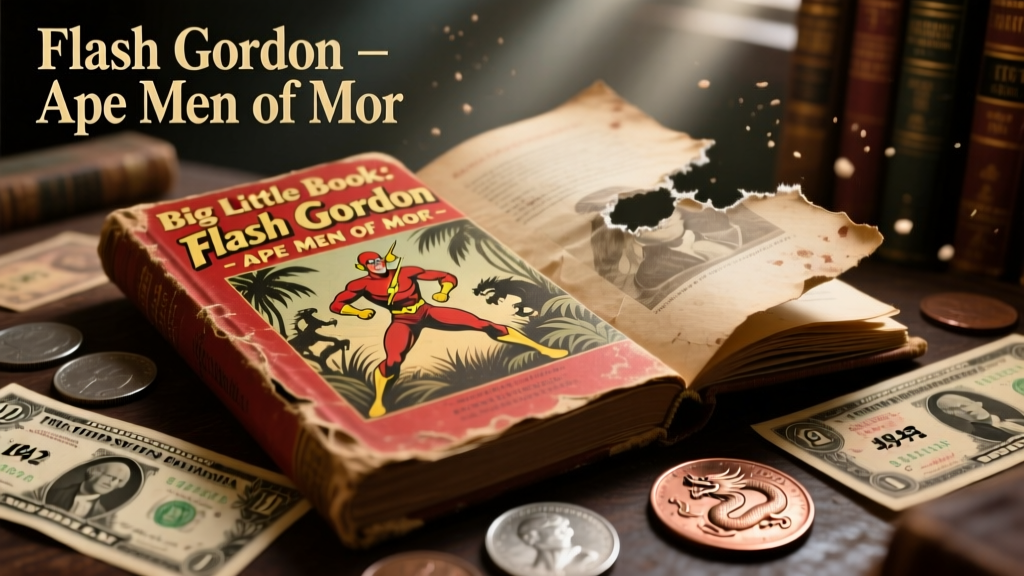
Flash Gordon: Ape Men of Mongo — The 1942 Big Little Book and Its Enduring Numismatic Legacy
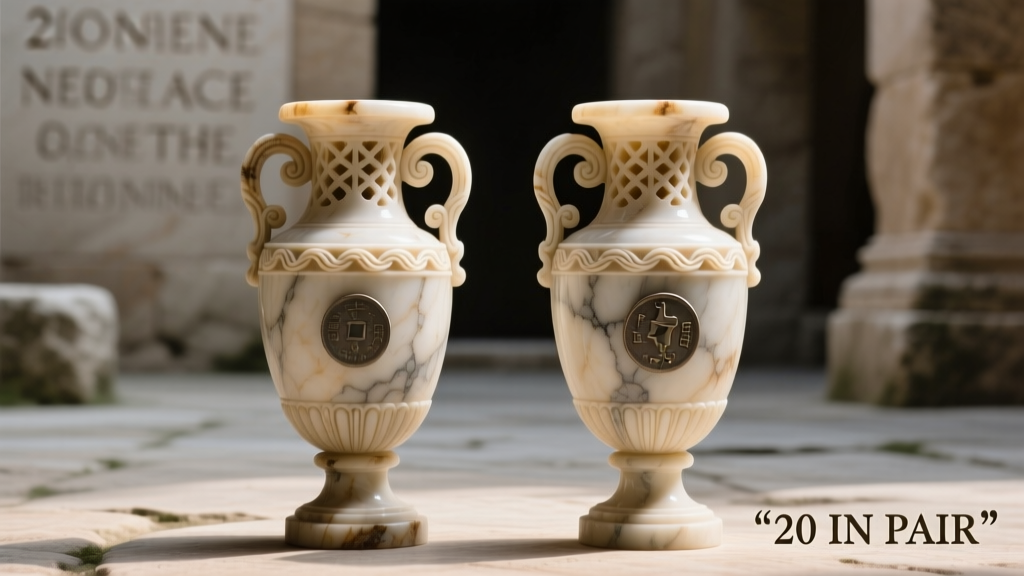
Alabaster Urn with Pierced Scrolled Handles and Ribbon Twist Border — A 20-Inch Pair Valuation & Historical Analysis
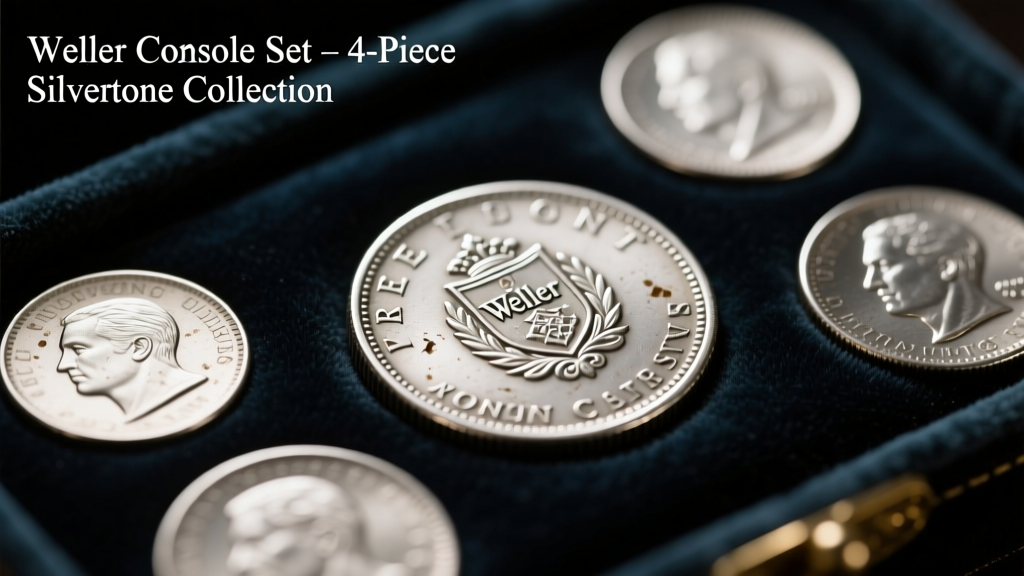
Weller Console Set Silvertone 4-Piece: Authentication, Market Value, and Collector Insights
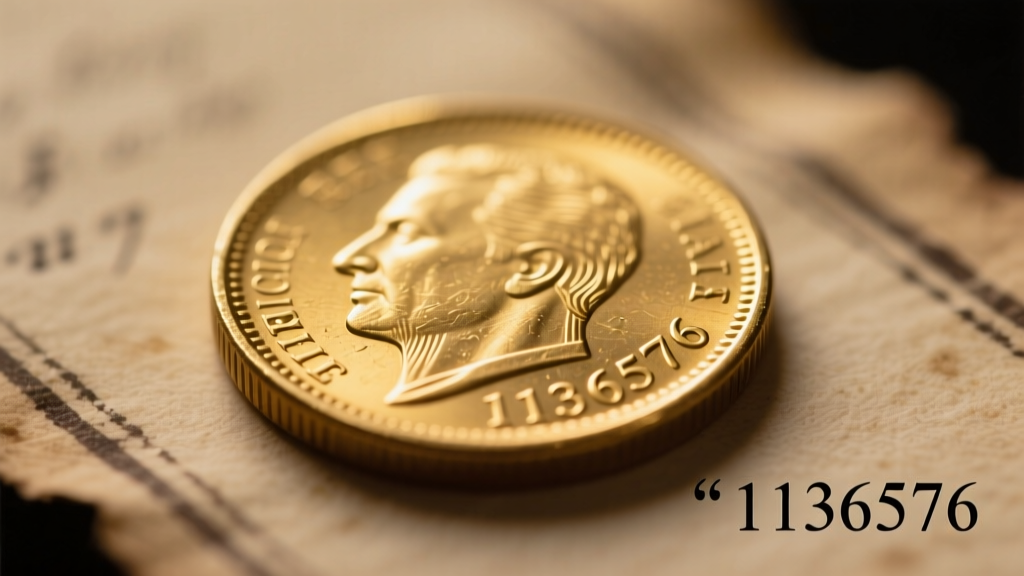
Decoding the Enigma: The Numismatic Significance and Market Trajectory of Serial Number 1136576 in U.S. Currency
Old Copper Saucepans: A Numismatic Perspective on Historical Cookware as Cultural Artifacts
Stereo Cards from Philadelphia, PA: The F. Cremer Ind. Hall Yellow Mount Set — A Numismatic & Photographic Artifact Study
Imperial Glass Reeded Rose Bowl Red #2: Identification, Production History, and Market Valuation