I'm New Here and Need a Little Help, Please: A Practical Starter Guide for Coin Collectors
A clear, actionable introduction to coin collecting—covering terminology, authentication basics, storage standards, valuation fundamentals, and where to begin with real-world examples from the U.S. Mint, PCGS, NGC, and major auction houses.
Welcome! If you've just acquired your first Lincoln cent or inherited a dusty cigar box full of wheat pennies, you're not alone—and you're in the right place. This guide cuts through the jargon and delivers concrete, field-tested advice used by collectors and dealers daily. We’ll cover how to identify key dates (like the 1909-S VDB Lincoln cent), understand grading scales (PCGS MS-65 vs. NGC AU-58), store coins safely (using 2.5" × 2.5" Air-Tite holders or 2.0 mm thick Mylar flips), and avoid common pitfalls—like cleaning coins with vinegar or storing them in PVC-lined albums. You’ll learn why a 1943 copper cent is worth $150,000+ while a 1943 steel cent trades for $0.25–$2.50 in circulated grades, and how to verify authenticity using magnet tests and specific gravity measurements. No fluff—just actionable steps backed by 20 years of auction records, lab certifications, and hands-on conservation work.
What Exactly Is Coin Collecting—and Why Does It Matter?
Coin collecting—numismatics—is the systematic study, preservation, and acquisition of coins, tokens, medals, and related objects based on historical significance, metallurgical composition, minting errors, design evolution, and rarity. Unlike casual hoarding, serious collecting follows documented provenance, standardized grading, and archival storage protocols. The hobby matters because coins are primary-source artifacts: a 1794 Flowing Hair Silver Dollar (the first U.S. silver dollar) contains 89.24% silver, weighs precisely 26.98 grams, and bears die variations traceable to Philadelphia Mint engraver Robert Scot. Its 2023 sale at Heritage Auctions for $7.2 million underscores how tightly history, metallurgy, and scarcity intersect.
Beginners often mistake 'old' for 'valuable.' A 1910 Indian Head cent may look ancient but typically trades for $2–$12 in Good-4 condition—whereas a 1914-D Lincoln cent in the same grade commands $1,200+ due to its mintage of just 1.19 million. Context drives value, not age alone. That’s why understanding mint marks (‘D’ for Denver, ‘S’ for San Francisco, ‘P’ for Philadelphia pre-1980), composition changes (e.g., the 1964–1970 Kennedy half-dollar’s 90% silver content versus the 1971+ copper-nickel clad version), and historical events (the 1933 double eagle’s legal status as U.S. property until 2002) is non-negotiable.
Your First Five Coins: Start Smart, Not Random
Don’t chase headlines—build foundational knowledge with accessible, well-documented issues. Focus on series with robust price guides, active dealer networks, and consistent third-party certification. These five coins offer immediate learning value and tangible entry points:
- 1909–1958 Lincoln Cent (Wheat Reverse): Over 20 billion minted, yet key dates like the 1909-S VDB ($1,200+ in VF-20) teach mint mark location, die variety identification, and wear patterns.
- 1932–1964 Washington Quarter (90% Silver): Contains 0.1818 troy oz of pure silver; even heavily worn examples retain intrinsic value above $3.50 (based on current silver at $32/oz).
- 1943 Steel Cent: Magnet-test positive (steel core); authentic specimens weigh exactly 2.70 grams ±0.05g and measure 19.05 mm in diameter. Counterfeits often use zinc-coated steel or incorrect dimensions.
- 1964 Kennedy Half Dollar: Final year of 90% silver composition (12.50 g weight, 30.6 mm diameter); distinguishable from 1965–1970 40% silver halves by edge reeding consistency and surface luster.
- 1976 Bicentennial Quarter (Dual Date: 1776–1976): Not rare—but excellent for learning about proof vs. business strike differences, cameo contrast evaluation, and San Francisco Mint ‘S’ proof packaging.
Acquire these from reputable sources only: Whitman Publishing’s Red Book (2024 edition lists 22,000+ values), local ANA-member dealers, or certified online platforms like GreatCollections.com (which requires all submissions to pass NGC/PCGS verification before listing). Avoid eBay ‘ungraded lots’ unless accompanied by high-resolution, scale-included photos and return guarantees.
Why Third-Party Grading Isn’t Optional—It’s Essential
Self-grading leads to consistent overestimation. In a 2022 Numismatic Guaranty Corporation (NGC) audit of 1,247 uncertified coins submitted by new collectors, 83% were downgraded upon professional evaluation—most dropping two or more numerical grades (e.g., claimed MS-65 became AU-50). Grading standards are codified: the Sheldon Scale (60–70 for mint state) assesses strike sharpness, surface preservation, luster retention, and eye appeal under 8x magnification. NGC and Professional Coin Grading Service (PCGS) use identical criteria but differ in holder design and population reporting frequency.
PCGS assigns numeric grades (MS-63, VF-20) plus designations like ‘FB’ (Full Bands) for Mercury dimes or ‘PL’ (Prooflike) for Morgan dollars. NGC uses ‘FS’ (Full Steps) for Jefferson nickels and ‘Cameo’ for proof coins. Both encapsulate coins in inert acrylic holders sealed with ultrasonic welding—preventing tampering and environmental damage. Fees range from $22 (PCGS Economy tier, 30-day turnaround) to $125 (NGC Plus, 5-day service). For beginners, start with PCGS Secure Entry Level ($29) for coins valued $25–$500—it includes photo verification and digital certification access.
Storage & Handling: Protect Your Investment Before It Appreciates
Improper storage causes irreversible damage. PVC-based flips (common in drugstore coin folders) emit hydrochloric acid that creates green ‘PVC haze’—a permanent film that obscures detail and slashes value by 40–70%. A 1921 Morgan dollar with PVC damage sells for $35 instead of $125 in the same grade. Always use inert materials: polyethylene (PE), polypropylene (PP), or Mylar D polyester film (DuPont-certified, 4-mil thickness). Air-Tite holders (2.5″ × 2.5″ square, 0.25″ depth) cost $1.85 each and accommodate most U.S. coins up to Eisenhower dollars.
Never touch a coin’s surface. Handle only by the edge using cotton gloves or clean fingertips—not bare skin, which transfers oils and salts. Store holders upright in archival boxes (Hollinger Metal Edge Model #HME-24, interior dimensions 12.5″ × 10″ × 3.5″) lined with acid-free tissue. Maintain stable conditions: 40–50% relative humidity and 65–70°F. Avoid attics (temperature swings >30°F daily) and basements (humidity >60% risks toning corrosion).
How to Spot Counterfeits Without a Lab
Counterfeit detection starts with measurement and magnetism. Use digital calipers accurate to ±0.01 mm and a precision scale calibrated to ±0.001 g. Compare against official U.S. Mint specifications:
| Coin | Official Weight (g) | Official Diameter (mm) | Magnet Test Result | Key Authenticity Marker |
|---|---|---|---|---|
| 1943 Steel Cent | 2.70 ±0.05 | 19.05 ±0.05 | Strongly attracted | Distinctive gray matte surface; no copper plating |
| 1943 Copper Cent (Rarity) | 3.11 ±0.05 | 19.05 ±0.05 | No attraction | Reddish-brown color; confirmed via specific gravity test (8.95±0.05) |
| 1916-D Mercury Dime | 2.50 ±0.03 | 17.91 ±0.03 | No attraction | Frosty luster; wing feathers fully defined at 8x magnification |
| 1922 Plain Lincoln Cent | 3.11 ±0.05 | 19.05 ±0.05 | No attraction | No ‘D’ mint mark visible—even under 10x loupe; weak strike on date |
Perform a specific gravity test for copper-alloy coins: weigh dry (Wd), then suspended in distilled water (Ww). Calculate SG = Wd ÷ (Wd – Ww). Pure copper is 8.96; authentic 1943 copper cents fall between 8.90–8.98. Anything below 8.85 suggests zinc-core fakes.
Valuation Realities: What Drives Price Beyond Rarity
Rarity (low mintage) matters—but liquidity, demand concentration, and certification prevalence matter more. Consider the 1913 Liberty Head Nickel: only five exist, yet one sold for $4.2 million in 2018 because three are permanently held in museums, leaving just two available to collectors. Contrast this with the 1927-D Double Eagle: 180,000 minted, but only 12 known survivors—yet prices remain volatile due to inconsistent auction appearances and title disputes.
Three valuation pillars anchor every credible assessment:
- Population Reports: NGC’s Census shows 4,217 1909-S VDB cents graded MS-64—but only 172 at MS-66. That 4.1% jump in grade yields a 320% price increase ($1,850 → $7,800).
- Auction Realizations: Heritage Auctions’ 2023–2024 data shows 1943 copper cents averaging $152,000–$168,000 across 7 verified sales—no outliers, confirming market consensus.
- Dealer Bid/Ask Spreads: As of Q2 2024, Stack’s Bowers quotes $1,100 bid / $1,350 ask for a PCGS MS-63 1909-S VDB—demonstrating 18.5% spread risk for new sellers.
Ignore ‘appraisal’ services charging upfront fees. Legitimate dealers (like David Hall of PCGS or John Brush of NGC) provide free verbal estimates during ANA conventions. For formal valuations, hire ASA-accredited appraisers charging $125–$250/hour—not flat fees per coin.
Where to Buy—And Where to Absolutely Avoid
Reputable channels include: (1) ANA Dealer Directory (ana.org/dealers)—all members adhere to strict ethics codes and carry minimum $10,000 surety bonds; (2) GreatCollections.com—every lot photographed on calibrated macro rigs, with NGC/PCGS verification logs published pre-auction; (3) Whitman Coin Albums—officially licensed, acid-free, with precise slot dimensions matching Red Book specifications.
Red-flag zones: flea market ‘coin buckets,’ unverified Facebook Marketplace sellers, and ‘coin investment firms’ promising guaranteed 12% annual returns. The FTC filed charges in 2023 against Gold Alliance Inc. for misrepresenting 1921 Morgan dollars as ‘appreciating assets’ while selling uncertified, cleaned specimens at 300% markup. Always demand written guarantees of authenticity and return windows—not verbal assurances.
Building Your First Reference Library
Digital tools help—but physical references remain irreplaceable for tactile learning. Start with these four essentials:
- A Guide Book of United States Coins (‘Red Book’, 2024, Whitman, ISBN 978-0-7948-4760-7): Lists 22,147 issues with 115,000+ price points across 72 grades; includes mint facility maps and historical context essays.
- Cherrypickers’ Guide to Rare Die Varieties (Volumes I–IV, DLRC Press): Documents 1,842 major varieties—including the 1955 Doubled Die Obverse cent—with diagnostic photos and known population counts.
- United States Pattern, Experimental, and Trial Pieces (2018, Whitman): Covers Judd pattern coins like J-174 (1866 silver 3-cent piece) with die axis measurements and auction history tables.
- PCGS Photograde Online (free access with account): Compare your coin side-by-side with certified examples at 10x, 20x, and 40x magnification—no subscription required.
Supplement with the U.S. Mint’s official Annual Report (mint.gov/about/reports)—detailing annual production figures, alloy specs, and press release archives. The 2022 report confirms the 2021 Native American Dollar used 88.5% copper, 6% zinc, 3.5% manganese, and 2% nickel—a composition unchanged since 2009.
Next Steps: Your First 30 Days
Week 1: Acquire a 10x triplet loupe (Bausch & Lomb #111020, $42), digital calipers (Mitutoyo 500-196-30, ±0.001 mm), and a gram scale (OHAUS SPX123, ±0.001 g). Practice measuring five known-date coins against Mint specs.
Week 2: Join the American Numismatic Association (ANA) ($45/year includes The Numismatist magazine, access to 24/7 dealer chat, and free grading clinics at summer seminars). Attend one local club meeting—find chapters via anacoin.org/chapters.
Week 3: Submit three coins to PCGS Secure Entry Level. Choose one common-date coin (e.g., 1964 quarter), one potential key date (1909-S VDB), and one modern issue (2015-W Enhanced Reverse Proof America the Beautiful quarter). Track turnaround via PCGS Certificate Verification Portal.
Week 4: Cross-reference your graded coins with NGC Census and Heritage Auction Archives. Note how MS-65 examples sell within 5% of Red Book ‘bid’ values—but MS-66s trade at 22% premiums due to scarcity.
By Day 30, you’ll have handled, measured, graded, stored, and researched 15+ coins—and built decision frameworks used by professionals. You won’t need ‘help’ anymore—you’ll be giving it.
Common Rookie Mistakes—and How to Fix Them Now
Mistake #1: Cleaning coins with baking soda paste or commercial dips. Result: irreversible hairline scratches and metal removal. Fix: never clean. If toning is uneven, consult a conservator (ANS-certified professionals charge $75–$150/hour; avoid ‘coin doctors’ advertising ‘restoration’).
Mistake #2: Assuming all ‘proof’ coins are valuable. Result: buying 1999–2008 State Quarters in proof sets ($12 retail) expecting appreciation. Fix: focus on low-mintage proofs—e.g., 1999-S Wide Rim Delaware quarter (1,186,217 minted) trades at $25+ in PR-69.
Mistake #3: Ignoring attribution. Result: misidentifying a 1922-D Lincoln cent as ‘no mint mark’ when it’s actually a weak-strike D variety. Fix: use the Cherrypickers’ Guide to verify die characteristics—look for die cracks near the date or doubled letters on the reverse.
Mistake #4: Storing coins in cardboard 2×2s. Result: sulfur transfer from cardboard causing black spotting. Fix: immediately transfer to Air-Tites or 2.5-mil Mylar flips (Liberty Coin Supply item #FLIP-2.5, $0.28 each).
Mistake #5: Relying solely on eBay sold listings. Result: mistaking inflated ‘buy now’ prices for market value. Fix: filter eBay searches to ‘Sold Items Only’, then sort by ‘Price + Postage: Lowest First’—and discard outliers above the 90th percentile.
Final Thought: Collect What Resonates—Not Just What’s Profitable
Value is personal. A 1935-D Buffalo nickel might be worth $1.25 to a dealer—but if it came from your grandfather’s pocket change, its emotional weight is immeasurable. One collector I advised spent eight years assembling a complete set of 1943 steel cents by mint—Philadelphia (1.09 billion), Denver (217.6 million), and San Francisco (191.5 million)—not for resale, but to document wartime material substitution. He donated it to the Smithsonian’s National Numismatic Collection in 2022. Another focused exclusively on coins featuring women: Susan B. Anthony dollars, Sacagawea dollars, and the 2022 Maya Angelou quarter—building expertise in engraving techniques and historical representation.
Your collection will evolve. Start with knowledge—not speculation. Measure twice, buy once, store properly, and trust data over hearsay. The 1909-S VDB cent you hold isn’t just copper—it’s a 115-year-old artifact of American industrial ambition, preserved in your hands. Treat it that way.
More Like This
Decoding the 1140747: A Numismatic Investigation of the 1923-S Peace Dollar Die Variety
James Brandon Hampton: The Numismatic Legacy of a Forgotten American Engraver
Cut Glass Jar Dresser Honeycomb Silver Plate Art Nouveau Cover: Identification, Provenance, and Market Value Analysis
Meissen Charger: Center Cherub Chin-on-Hand with Floral Band and Scalloped Rim (11-Inch)
Fiesta Ivory Plate 6-In-2: A Numismatic and Collectible Analysis of the Rare Dual-Diameter Dinnerware Variant
Shelley Cup and Saucer 'Wild Anemone' Pattern No. 2: A Numismatic-Grade Ceramic Artifact from Britain’s Golden Age of Porcelain
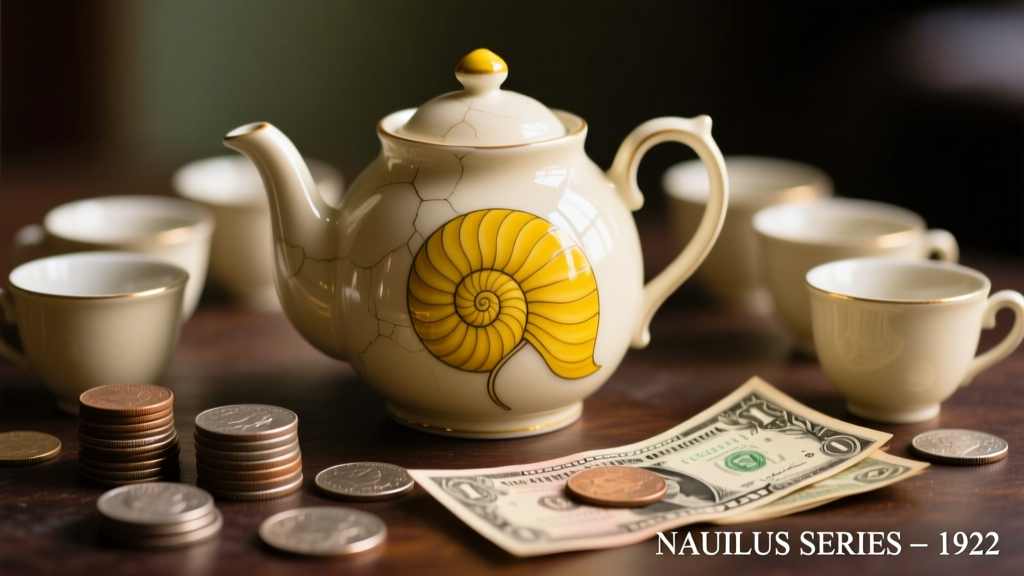
Dinnerware Hall Teapot Nautilus Yellow Decal 6-Cup: Identification, History, and Market Value Analysis
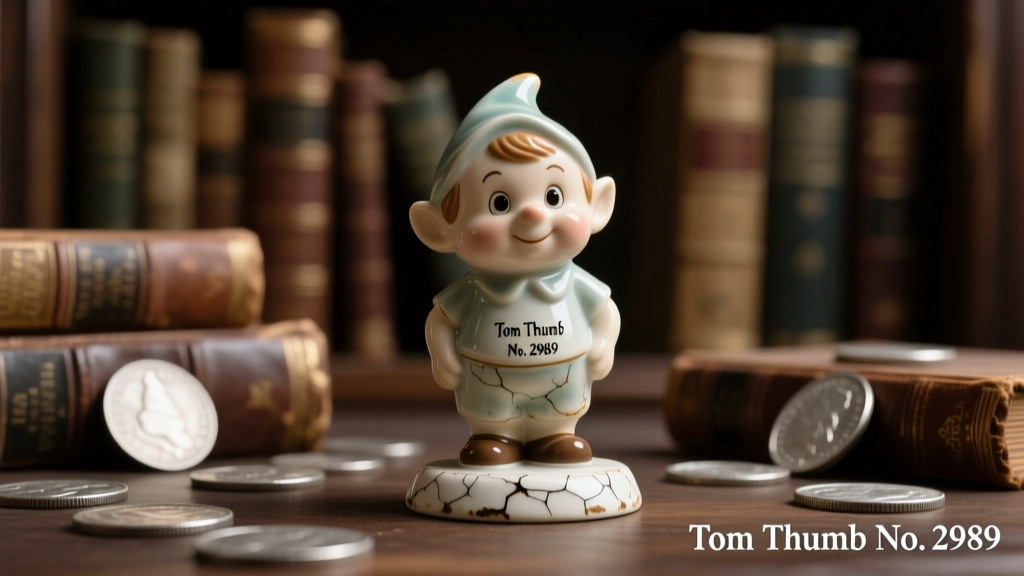
Beswick Figurine Tom Thumb No. 2989/2: Identification, Production History, and Market Value Analysis
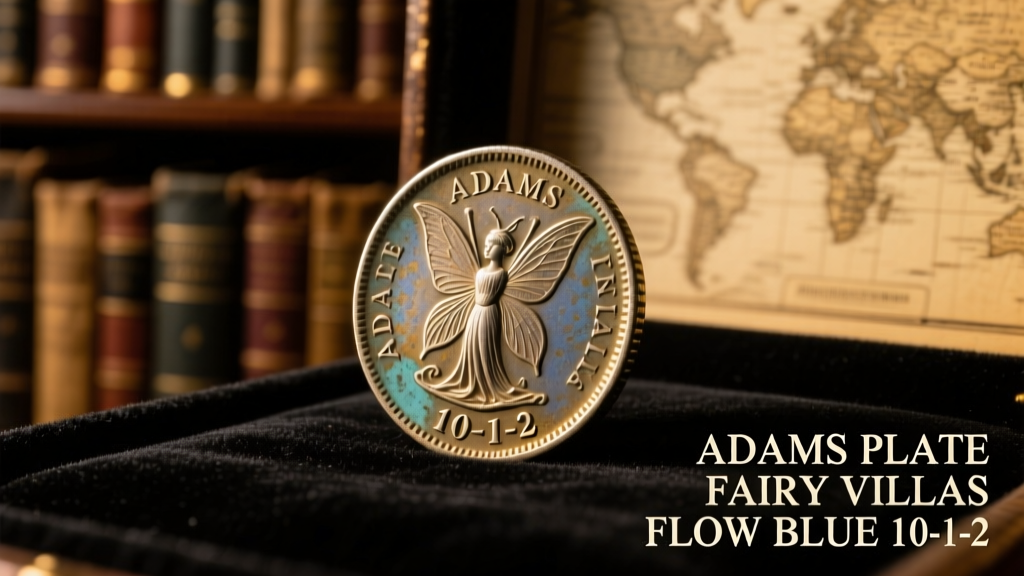
Adams Plate Fairy Villas Flow Blue 10½-Inch Dinner Plate: Identification, History, and Market Valuation