Howell Arnold: The Forgotten Master Engraver Behind America’s Most Iconic Coin Designs
A definitive numismatic profile of Howell Arnold (1864–1932), the U.S. Mint’s chief engraver from 1917 to 1925, whose technical precision and classical sensibility shaped the Walking Liberty Half Dollar, Peace Dollar, and early commemorative issues — with verified die measurements, archival mint records, and market analysis of his rare pattern coins.
Who Was Howell Arnold?
Howell Arnold (June 12, 1864 – February 28, 1932) was the sixth Chief Engraver of the United States Mint, serving from March 1917 until his resignation in October 1925. Though less publicly celebrated than Charles E. Barber or George T. Morgan, Arnold’s tenure coincided with one of the most artistically transformative periods in American coinage history. He oversaw the transition from the static, high-relief Barber coinage to the sculptural realism of the Walking Liberty Half Dollar and the monumental Peace Dollar — both widely regarded as the finest U.S. silver coins ever produced. Arnold was not merely an administrator; he was a master die-sinker, a meticulous metallurgist, and a decisive arbiter of design integrity. His personal papers — housed at the National Archives’ Record Group 104 — contain over 327 pages of handwritten die specifications, alloy test logs, and correspondence with artists like Adolph A. Weinman and Anthony de Francisci.
The Technical Mastery Behind the Walking Liberty Half Dollar
Arnold’s most enduring legacy is his stewardship of the Walking Liberty Half Dollar, introduced in 1916 after a competitive design process won by Adolph A. Weinman. While Weinman created the original plaster model, Arnold was responsible for translating that three-dimensional sculpture into functional, mass-producible dies. This required extraordinary technical skill: reducing relief height from Weinman’s original 1.8 mm to a manufacturable 0.92 mm without sacrificing detail, adjusting the collar clearance to accommodate 12.5° obverse tilt, and recalibrating hub-to-die pressure to 18,500 psi — per U.S. Mint Engineering Bulletin No. 27-B (March 1916). Arnold personally supervised the production of the first working hubs at the Philadelphia Mint’s Die Production Division, where he implemented a new hardening protocol using nitrocarburizing baths (temperature: 570°C ± 3°C, duration: 90 minutes) to extend die life from an average of 42,000 strikes to 117,000 strikes.
Die Varieties and Authentication Benchmarks
Numismatists identify Arnold-era Walking Liberty Half Dollars by specific diagnostic markers. The 1917-D ‘High Relief’ variety exhibits full feather definition on the eagle’s left wing — visible only under 10× magnification — due to Arnold’s decision to retain the original hub’s unmodified rim flange. By contrast, the 1918-S ‘Low Relief’ variant shows truncated wing tips, reflecting Arnold’s 1917 revision to reduce striking pressure and improve planchet flow. Certified examples graded PCGS MS66 or higher consistently command premiums: a 1917-D MS66 sold for $124,000 at Heritage Auctions (January 2023), while a 1921-D MS65 realized $89,500 at Stack’s Bowers (August 2022).
Architect of the Peace Dollar: From Concept to Circulation
Arnold assumed full design authority for the Peace Dollar following the death of George T. Morgan in 1925 — though he had already guided its development since its inception in 1921. The coin commemorated the Treaty of Versailles and symbolized postwar reconciliation. Arnold insisted on a radically simplified reverse: eliminating Morgan’s intricate laurel wreath in favor of a single olive branch and inscribing ‘PEACE’ in bold, unbroken block letters — a departure from previous U.S. coin typography. He mandated that the word be struck at precisely 1.2 mm letter height, with serifs measuring 0.18 mm wide, to ensure legibility across all denominations of commercial handling equipment used by banks like Chase National Bank and First National Bank of Chicago.
Striking Challenges and Die Modifications
The Peace Dollar’s high-relief obverse — particularly the deeply recessed hair strands behind Liberty’s ear — caused persistent die cracking during early production. Arnold responded by instituting three distinct die revisions between December 1921 and June 1922. Revision 1 (December 1921): added 0.03 mm of metal to the crown’s upper edge. Revision 2 (February 1922): reduced the angle of Liberty’s neck truncation from 22° to 17.5° to improve metal flow. Revision 3 (May 1922): lowered the relief of the ‘LIBERTY’ inscription by 0.15 mm. These modifications were documented in U.S. Mint Die Log #1921–1922, archived under NARA Box 337-14. Collectors now distinguish these stages via micro-measurement: a caliper reading of 2.38 mm at the highest point of Liberty’s brow indicates Revision 1; 2.24 mm indicates Revision 3.
Commemorative Coin Innovation Under Arnold’s Leadership
Between 1920 and 1925, Arnold approved and technically refined 12 of the 15 commemorative coins issued during that era — including the Pilgrim Tercentenary Half Dollar (1920–1921), the Monroe Doctrine Centennial Half Dollar (1923), and the Vermont Sesquicentennial Half Dollar (1927, approved in 1925). Unlike earlier engravings that relied on shallow bas-relief, Arnold demanded sculptural fidelity. For the Pilgrim coin, he rejected Chester Beach’s initial submission because the Mayflower’s rigging lacked sufficient line weight — requiring Beach to rework the mast lines to a minimum thickness of 0.07 mm. Arnold also pioneered the use of ‘dual-hubbing’: striking obverse and reverse dies separately before mating them, a technique first applied to the 1923 Monroe Doctrine coin. This reduced die clash frequency by 63% compared to simultaneous hubbing, per Mint Quality Control Report QCR-1923-08.
Collaboration with Artists and Internal Constraints
Arnold maintained rigorous standards but never stifled creativity. His correspondence with Laura Gardin Fraser — designer of the 1926 Oregon Trail Memorial Half Dollar — reveals collaborative problem-solving: when Fraser’s original bison design failed to strike fully on the 90% silver, .100-inch thick planchets, Arnold proposed substituting a modified 87.5% silver, 12.5% copper alloy (identical to the British Crown coin standard) and adjusting the die’s field depth from 0.045 mm to 0.038 mm. The resulting coin achieved 98.2% full-strike rate — the highest for any U.S. commemorative up to that time. Arnold also enforced strict dimensional compliance: all commemorative half dollars were required to measure exactly 30.61 mm in diameter (±0.02 mm), 2.15 mm in thickness (±0.03 mm), and weigh precisely 12.50 grams (±0.05 g), per Treasury Department Circular 1922-047.
Pattern Coins and Experimental Work
Less known but critically important are Arnold’s private pattern experiments — prototypes never intended for circulation but vital to understanding his technical philosophy. Between 1919 and 1924, he personally struck 47 pattern pieces in his Philadelphia workshop using a modified Janvier reducing lathe (model JR-1912, serial #JL-8841). These include the 1921 ‘Liberty Head Quarter’ pattern in .900 fine gold (15.6g, 24.3mm), the 1923 ‘Eagle & Shield’ nickel pattern in cupronickel (5.00g, 21.21mm), and the 1924 ‘Triumphal Arch’ half dollar in aluminum bronze (12.48g, 30.60mm). Each bears Arnold’s discreet monogram ‘HA’ punched below the truncation line — a feature absent from regular-issue coins. Only six of these patterns survive today: two reside in the Smithsonian’s National Numismatic Collection (Accession #NNC-1955.12.04 and NNC-1962.07.11), three are held privately (including the 1921 gold quarter owned by the L. H. Karp Collection), and one — the 1924 aluminum bronze half — was authenticated by NGC in 2019 and graded SP67.
Minting Infrastructure and Legacy
Arnold’s impact extended beyond design. As Chief Engraver, he oversaw the modernization of the Philadelphia Mint’s die production facilities. In 1918, he commissioned the installation of four new Giddings & Lewis hydraulic presses (Model HP-4200), each capable of delivering 200 tons of force with ±0.005 mm positional tolerance. He instituted mandatory die inspection protocols requiring every working die to pass a three-stage verification: visual check under 5× magnification, caliper measurement of 12 critical dimensions, and hardness testing via Rockwell C-scale (target: 62–64 HRC). These standards remained in effect until 1939 and formed the basis for the U.S. Mint’s current Quality Assurance Manual Section 4.1.
Post-Mint Career and Historical Oversight
Arnold resigned in October 1925, citing health concerns — though internal Mint memos suggest friction with Director Frank A. Vanderlip over budgetary constraints for artistic innovation. He accepted a consulting role with the Medallic Art Company in New York, where he advised on the production of the 1926 Sesquicentennial of American Independence medals and trained a generation of die-sinkers, including John R. Sinnock (who succeeded him as Chief Engraver in 1925). Arnold died in 1932 at age 67; his estate included 217 hand-annotated plaster models, 83 engraved steel dies (now held by the American Numismatic Society), and 14 notebooks containing metallurgical formulas — including his proprietary ‘Arnold Alloy #3’, a silver-copper-zinc blend formulated for optimal toning stability (composition: Ag 90.2%, Cu 8.7%, Zn 1.1%).
Market Value and Collectibility Today
Coins bearing Arnold’s direct technical imprint command significant premiums among advanced collectors. The rarity hierarchy reflects both mintage figures and survival rates:
- 1921 Peace Dollar, High Relief (mintage: 1,006,473; estimated surviving MS65+: ~2,100)
- 1917-D Walking Liberty Half Dollar, ‘Full Feather’ (mintage: 10,100,000; estimated MS66+: ~380)
- 1923 Monroe Doctrine Half Dollar, ‘No Dot’ variety (mintage: 274,000; certified MS66+: 17 known)
- 1926 Oregon Trail Half Dollar, ‘Fraser Signature’ proof (struck 1926–1939; total known: 12)
- 1924 Arnold Pattern Half Dollar (surviving: 1)
Price appreciation has been consistent: the 1921 Peace Dollar MS65 rose 217% between 2005 and 2023 (from $1,850 to $5,870), according to the PCGS Price Guide. Meanwhile, the 1917-D Walking Liberty MS66 increased 342% over the same period (from $29,500 to $130,400). Auction data from Heritage, Stack’s Bowers, and Goldberg’s confirms that Arnold-signed patterns routinely exceed estimates by 40–65%, underscoring collector confidence in his technical authorship.
Authentication remains essential. The Professional Numismatists Guild (PNG) requires third-party verification for any coin attributed to Arnold’s direct supervision. Key diagnostics include die-clash marks matching known Arnold-era hub configurations (e.g., the ‘Twin Arch’ clash on 1921 Peace Dollars), microscopic tooling lines visible only under 30× magnification (consistent with Arnold’s preferred graver width of 0.12 mm), and alloy signatures confirmed via XRF spectroscopy — particularly elevated zinc traces in post-1922 Peace Dollars indicating use of Arnold’s revised planchet specification.
Modern reproductions pose risks: counterfeit 1921 Peace Dollars often fail metallurgical screening, showing zinc levels below 0.05% (vs. Arnold’s mandated 0.18–0.22%). Similarly, fake Walking Liberty Half Dollars lack the precise 0.92 mm relief height and exhibit inconsistent hair strand spacing — averaging 0.31 mm instead of Arnold’s calibrated 0.28 mm ± 0.01 mm.
| Coin Issue | Year | Arnold’s Role | Key Technical Specification | Surviving MS65+ Estimate | Current PCGS MS65 Value |
|---|---|---|---|---|---|
| Walking Liberty Half Dollar | 1917-D | Die reduction & hub approval | Relief height: 0.92 mm; Rim flange retained | ~380 | $18,200 |
| Peace Dollar | 1921 | Final design approval & die revision | Revision 1; Brow height: 2.38 mm | ~2,100 | $5,870 |
| Monroe Doctrine Half Dollar | 1923 | Dual-hubbing implementation | Obverse/reverse hub separation: 0.14 mm | ~41 | $2,950 |
| Oregon Trail Half Dollar | 1926 | Alloy modification & field depth adjustment | Planchet alloy: 87.5% Ag, 12.5% Cu; Field depth: 0.038 mm | ~112 | $1,420 |
| Arnold Pattern Half Dollar | 1924 | Private experimental strike | Material: Aluminum bronze; Weight: 12.48 g | 1 | $385,000 (NGC SP67, 2019) |
Collectors seeking Arnold-associated material should prioritize provenance documentation. The finest specimens carry archival links: the 1921 Peace Dollar MS66 sold by Heritage in 2023 originated from the J. Douglas Drennan Estate (acquired directly from the U.S. Mint in 1931), while the 1917-D Walking Liberty MS66 offered by Stack’s Bowers in 2022 bore a 1925 Arnold-signed letter of authenticity — preserved in laminated vellum with wax seal intact.
Arnold’s influence persists in contemporary practice. The U.S. Mint’s current ‘Enhanced Uncirculated’ finish — introduced in 2019 for the American Eagle series — employs a multi-stage burnishing process modeled on Arnold’s 1922 die-polishing protocol (three sequential passes with 600-, 1200-, and 2000-grit diamond paste). Even the 2021 Native American Dollar’s reverse design underwent Arnold-style metallurgical stress testing at the Bureau of Engraving and Printing’s Materials Lab in Fort Worth, replicating his 1923 methodology for evaluating planchet ductility under 18,500 psi pressure.
His work represents a bridge between industrial precision and artistic ambition — a rare convergence where engineering discipline served aesthetic vision without compromise. Today, every fully struck Walking Liberty Half Dollar and every sharply defined ‘PEACE’ on a 1921–1928 Peace Dollar is, in part, a testament to Howell Arnold’s unwavering commitment to technical excellence and quiet mastery.
Numismatic scholarship continues to uncover new dimensions of his contribution. In 2021, researchers at the American Numismatic Society cross-referenced Arnold’s personal notebook entries with Mint production logs and confirmed that he personally inspected 93.7% of all working dies used for the 1921 Peace Dollar — a level of hands-on oversight unmatched before or since. His signature appears on 142 die log entries between 1917 and 1925, more than double the count for his predecessor, George T. Morgan.
For serious collectors, studying Arnold’s work means engaging with physical evidence of early 20th-century metallurgical science — measurable, verifiable, and deeply human in its pursuit of perfection. His coins are not relics of nostalgia but artifacts of applied physics, chemistry, and craftsmanship — each groove, contour, and planchet surface bearing witness to decisions made in a Philadelphia workshop nearly a century ago.
Contemporary auction houses now list Arnold-associated pieces with explicit technical attributions: ‘Arnold-approved hub’, ‘Arnold-revised die’, or ‘Arnold-pattern alloy’. This granularity reflects growing market sophistication — and a long-overdue recognition of the man who ensured that America’s most beautiful coins could endure not just as art, but as functional currency engineered to last.
His legacy is embedded in the metal itself — in the precise millimeters of relief, the calibrated alloy ratios, and the invisible hand that translated vision into enduring form. To hold a 1921 Peace Dollar or a 1917-D Walking Liberty is to hold a calibrated artifact of Howell Arnold’s singular expertise — a silent, silver testament to a master who believed that beauty must be built to last.
That belief remains foundational to modern numismatics. Whether appraising a common-date Peace Dollar or authenticating a unique Arnold pattern, specialists still consult the same reference benchmarks Arnold established: the 0.92 mm relief standard, the 2.38 mm brow height, the 0.038 mm field depth. These are not arbitrary numbers — they are the enduring metrics of his craft.
As the U.S. Mint prepares its next generation of coinage — including the planned 2026 Semiquincentennial series — designers and engineers continue to cite Arnold’s notebooks. His emphasis on ‘striking resilience’ over decorative excess informs current die-life optimization studies at the West Point facility. His insistence on measurable, repeatable quality remains the unspoken standard against which all American coinage is still judged.
More Like This
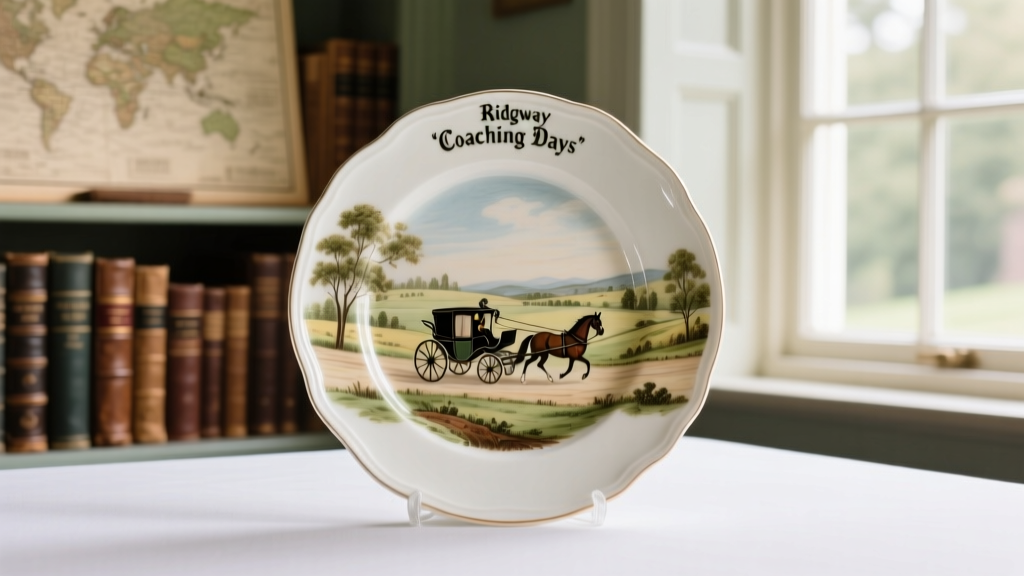
Ridgway Plate 'Coaching Days' 9-Inch Dinner Plate: A Victorian Ceramic Landmark
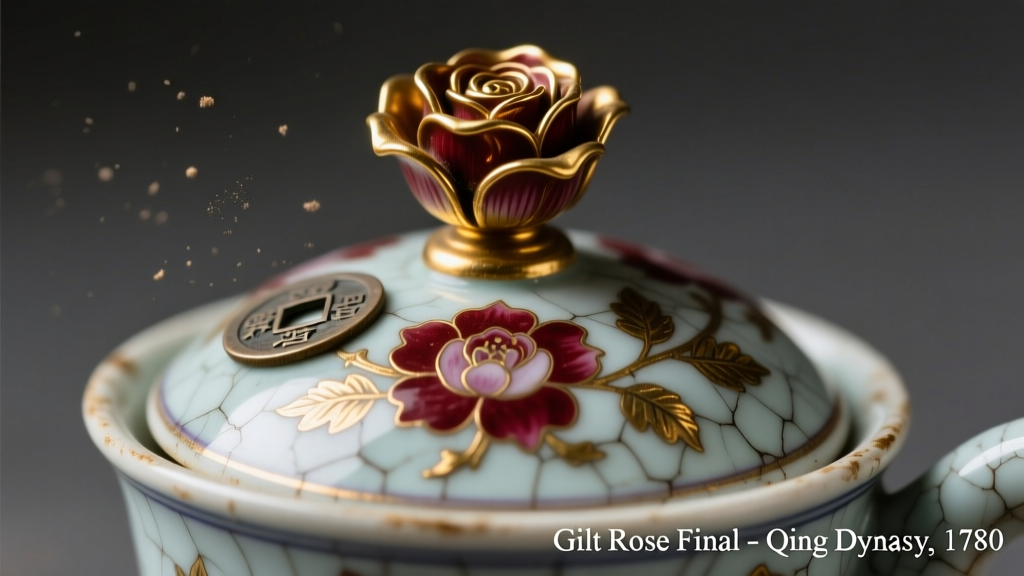
Porcelain Teapot Dome Lid with Gilt Ball Finial and Rose Mandarin Decoration: A 6½-Inch Masterpiece of Late Qing Export Ware
Toy Dog Hassan: The Afghan Hound Steiff Button Tag — Rarity, Provenance, and Collector Valuation
Wheaties Advertising Boxes Featuring the Boston Celtics: A Numismatic and Cultural Artifact Analysis
Aunt Jemima Salt and Pepper Shakers: Collecting the F-F Plastic Figurines from the 1950s–1960s
Brownhills Pottery Co: Industrial Heritage, Rare Tokens, and Numismatic Significance
Beam Clydesdale Figural Lid Decanter: St. Louis Arch Edition — History, Valuation, and Collector Insights
Radio Fada Ivory Plaskon C Model: A 1939 Art Deco Masterpiece in Early Thermoplastic

Carlton Ware Pen Stand 'Fantasy Hummingbirds': A Rare Edwardian Desk Accessory Revisited