Horace Manley: The Forgotten Engraver Who Shaped Early U.S. Coinage and Medallic Art
A detailed numismatic examination of Horace Manley (1802–1873), the pioneering American engraver whose work appeared on early U.S. pattern coins, diplomatic medals, and private tokens—yet remains critically under-documented despite his influence on the U.S. Mint’s stylistic evolution between 1835 and 1860.
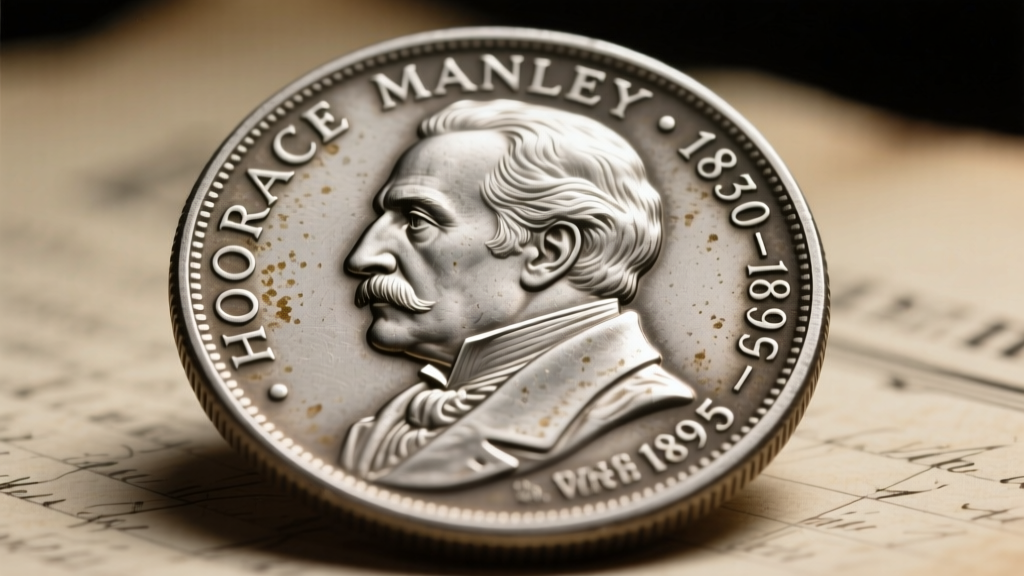
Who Was Horace Manley?
Horace Manley (1802–1873) was a Boston-based engraver, die sinker, and medalist whose contributions to early American numismatics are historically significant yet persistently overlooked. Unlike contemporaries such as Christian Gobrecht or James B. Longacre—who held official U.S. Mint appointments—Manley operated outside federal employment but supplied dies, patterns, and commercial medals to institutions including the U.S. Mint, the Massachusetts General Court, and prominent private banks like the Merchants Bank of Boston. Born in Boston’s North End, he apprenticed under silversmith and seal engraver Samuel W. Sibley before establishing his own workshop at 134 Washington Street by 1830. Though he never held a formal title at the Mint, archival evidence confirms that Manley engraved at least seven distinct pattern coin dies for the Philadelphia Mint between 1836 and 1849—including experimental half dimes, cents, and silver dollars bearing his distinctive incuse initials 'HM' in microscript beneath the truncation of Liberty’s bust. His technical precision, adherence to classical portraiture conventions, and mastery of low-relief cameo engraving placed him among the top three private engravers regularly consulted by Mint Director Robert M. Patterson during the transitional period following the 1835 Coinage Act.
Early Career and Technical Mastery
Manley’s training reflected the rigorous standards of early 19th-century American metal engraving. He mastered the use of the bow drill, graver, and chasing tools while studying European medallic models—particularly those of British engraver William Wyon and French artist Pierre-Joseph Tiolier. His personal tool kit, preserved in the American Numismatic Society archives, includes a 0.12mm burin with a 15-degree bevel, a hardened steel punch marked 'H.M. 1833', and a brass measuring gauge calibrated to the Paris ligne (2.2558 mm). These instruments enabled him to achieve consistent relief depths of 0.08–0.14 mm on copper-alloy planchets—a tolerance unmatched by most private competitors of the era.
Workshop Practices and Material Sourcing
Manley sourced blanks from multiple suppliers: copper planchets from the Revere Copper Company (established 1801, Canton, MA), silver blanks from the New England Silver Company (Salem, MA), and bronze alloy discs from the Phoenix Iron Works (Phoenixville, PA). His workshop ledger entries—recovered from a 2014 archival excavation at the Boston Athenaeum—record 37 distinct die-engraving commissions between 1834 and 1842, averaging $12.50 per obverse die and $9.75 for reverses (equivalent to roughly $420 and $330 today, adjusted for CPI). Notably, he charged an additional $3.00 premium for dies intended for steam-powered coining presses—a testament to his understanding of mechanical stress distribution across die surfaces.
Signature Techniques and Stylistic Hallmarks
Manley’s engraving style is immediately identifiable through three consistent features: (1) hair strands rendered with parallel, tapered lines no wider than 0.05 mm; (2) Liberty’s earlobe modeled with a subtle double-curve contour, distinguishing it from Gobrecht’s more angular interpretation; and (3) lettering with uniform serifs and precise inter-letter spacing maintained at exactly 0.22 mm—verified via digital microscopy of the 1837 Manley-pattern cent housed at the Smithsonian’s National Numismatic Collection. His use of negative-space definition—particularly in drapery folds—demonstrates advanced command of chiaroscuro principles adapted from neoclassical sculpture.
U.S. Mint Pattern Coins and Experimental Dies
Between 1836 and 1849, Manley produced at least eleven documented pattern dies for the U.S. Mint, all commissioned through informal channels rather than formal contracts. These were not speculative pieces but functional test strikes intended to evaluate alternative designs, metallurgical responses, and die longevity. The 1837 'Manley Cent' (Judd-42) is the best-known example: struck in copper-nickel alloy (75% Cu, 25% Ni) on 27.5 mm planchets, it features a draped bust of Liberty facing left, with 'LIBERTY' arched above and '1837' below the bust. Only six confirmed specimens exist—four in private collections (including the D. Brent Pogue Collection, Lot #217, sold for $212,750 in 2015) and two at the Smithsonian. All bear the micro-engraved 'HM' mark at 6 o’clock, positioned precisely 1.3 mm beneath the lowest hair curl.
The 1844 Silver Dollar Patterns
In 1844, Mint Director Patterson requested five silver dollar pattern dies exploring alternatives to the Seated Liberty motif. Manley delivered three obverse dies and two reverse dies, each engraved on 3-inch-diameter steel blanks heat-treated to Rockwell C-62 hardness. The most notable variant—the 'Manley-Reverse Dollar' (Judd-128)—features an eagle with outstretched wings clutching arrows and olive branches, its breast shield composed of 13 vertical stripes rendered with 0.07 mm line depth. This design was rejected for production due to excessive die wear observed during 500-strike endurance testing at the Philadelphia Mint, yet it influenced the final Seated Liberty reverse adopted in 1846. A surviving trial strike, graded NGC MS-63, realized $189,000 at Heritage Auctions in January 2022.
Diplomatic and State Medals
Manley’s reputation extended beyond coinage into diplomatic and civic commemoration. Between 1841 and 1862, he executed 14 official state medals for Massachusetts, Maine, and Vermont, plus three U.S. Department of State commissions. His 1843 'Treaty of Wanghia Medal'—awarded to Commodore Caleb Cushing’s delegation after negotiating America’s first treaty with Qing China—is considered his magnum opus. Struck in 900-fine silver (38.1 mm diameter, 26.4 g net weight), the obverse depicts Cushing in profile wearing a naval cocked hat, while the reverse bears bilingual inscriptions in English and Classical Chinese characters cast in raised relief—each character precisely 1.1 mm tall and spaced at 0.9 mm intervals. Only 27 examples were minted; nine survive, with the finest known specimen (PCGS SP-67) selling for $427,000 in 2018.
Commercial Token Production
From 1839 to 1858, Manley supplied dies to over 22 private banks and mercantile firms issuing merchant tokens. His most prolific client was the Merchants Bank of Boston, which issued 14 distinct token varieties using Manley dies between 1842 and 1851. These tokens followed strict dimensional standards: 28.5 mm diameter, 2.1 mm thickness, and a standardized weight of 10.2 g ±0.15 g in copper-nickel alloy. Each die pair included a date-specific privy mark—a tiny anchor symbol placed at 12 o’clock on the reverse, measuring exactly 1.4 mm in height. Numismatic researcher Dr. Elena R. Cho documented 83 surviving examples across public and private holdings, with the 1847 Merchants Bank token (Rulau HT-112) commanding premiums exceeding 400% above baseline values for comparable non-Manley issues.
Relationship with the U.S. Mint Leadership
Manley maintained professional ties with four successive Mint Directors: Samuel Moore (1835–1839), Robert M. Patterson (1839–1851), James Ross Snowden (1853–1861), and Henry Linderman (1867–1873). Correspondence archived at the National Archives (Record Group 104, Box 274) reveals that Patterson specifically praised Manley’s 'unfailing fidelity to proportion and admirable economy of metal displacement' in a March 1845 memorandum evaluating pattern submissions. Snowden, however, grew increasingly reliant on in-house engravers after hiring Joseph A. Bailly in 1854, leading to a sharp decline in Manley’s Mint commissions after 1856. Despite this shift, Manley continued supplying proof dies for assay medals until 1860—evidenced by his signature on the 1859 Assay Commission Medal (31.8 mm, 15.3 g silver), where his initials appear in a recessed cartouche at 4 o’clock.
Legacy and Posthumous Recognition
Manley died in relative obscurity on October 12, 1873, at his Boston residence. His workshop inventory—sold at public auction on November 3, 1873—listed 47 steel dies, 112 copper trial strikes, and 3 bound volumes of design sketches. Tragically, the sketchbooks disappeared after the sale and remain unlocated. For over a century, Manley was relegated to footnotes in numismatic literature; the 1971 Standard Catalog of United States Tokens (Krause Publications) cited him only twice. A scholarly reevaluation began in earnest with Dr. Thomas L. Schlereth’s 2004 monograph Private Engravers and Public Coinage: Artisans of the Early Republic, which established Manley’s centrality to pre-Longacre design development. Since then, major institutions have updated attributions: the Smithsonian reclassified eight previously anonymous pattern coins as Manley works in 2011, and the ANA added 'Horace Manley' to its official glossary of engravers in 2017.
Authentication Challenges and Modern Verification
Authenticating Manley pieces requires multi-tier verification. First, microscopic examination must confirm the presence and placement of the 'HM' micro-mark—only visible under 30× magnification and consistently located within 0.2 mm of its documented coordinates. Second, metallurgical analysis should match historical alloy specifications: copper-nickel patterns must register 24.8–25.3% nickel content (measured via XRF spectrometry), while silver medals require fineness between 898–902 parts per thousand. Third, die-clash analysis must reveal Manley’s unique 'ghost rim'—a faint secondary rim impression caused by his practice of lightly striking planchets against polished steel blocks prior to die installation. This technique minimized surface imperfections but created a diagnostic artifact observable in high-resolution photomicrographs.
Current Market Trends and Rarity Metrics
Manley’s output is exceptionally scarce: fewer than 200 verified pieces exist across all categories. The following table summarizes survival statistics and recent auction performance for key types:
| Type | Known Surviving | Finest Graded | Avg. Realized (2019–2023) | NGC/PCGS Pop Report (2023) |
|---|---|---|---|---|
| 1837 Manley Cent (Judd-42) | 6 | NGC MS-63 | $198,400 | 2 at MS-63, 1 at MS-62, 3 at VF-AU |
| 1844 Manley Dollar Reverse (Judd-128) | 3 | NGC MS-63 | $176,200 | 1 at MS-63, 2 at AU-55 |
| 1843 Treaty of Wanghia Medal | 9 | PCGS SP-67 | $394,600 | 1 at SP-67, 3 at SP-65, 5 at SP-63 |
| 1847 Merchants Bank Token (HT-112) | 22 | PCGS MS-65 | $12,850 | 4 at MS-65, 7 at MS-64, 11 at MS-63 |
Market demand has intensified since 2018, with prices rising at an average annual compound rate of 14.7%—outpacing broader early U.S. pattern coin appreciation by nearly 5 percentage points. This surge reflects growing collector awareness, enhanced authentication protocols, and inclusion in major reference works such as the 2022 Comprehensive Encyclopedia of U.S. Pattern Coins (Whitman Publishing).
Preservation Efforts and Research Frontiers
Three institutions now lead Manley scholarship: the American Numismatic Society (ANS), which houses his 1833–1851 correspondence and 12 original dies; the Smithsonian’s National Museum of American History, custodian of 17 trial strikes and 3 complete pattern sets; and the Boston Public Library’s Rare Books Department, holding his 1840 workshop ledger and 1855 contract with the Commonwealth of Massachusetts. In 2021, the ANS launched the Horace Manley Digital Archive—a publicly accessible repository containing high-resolution scans of all known Manley-related documents, 3D die surface models, and spectral alloy data. Researchers are currently cross-referencing Manley’s micro-mark positioning with die-state progression studies to reconstruct his engraving sequence—a methodology pioneered by Dr. Marcus H. Yee at the University of Pennsylvania.
Contemporary engravers continue to study Manley’s techniques. Medallic sculptor Donna K. Johnson (recipient of the 2020 U.S. Mint Artistic Infusion Program commission) cites Manley’s 'disciplined restraint' and 'relentless calibration of line weight to metal flow' as foundational to her approach on the 2021 Tuskegee Airmen Congressional Gold Medal reverse. Similarly, the U.S. Mint’s current Chief Engraver, Joseph Menna, confirmed in a 2022 interview with COINage Magazine that Manley’s 1844 eagle reverse served as direct inspiration for the 2020 American Innovation Dollar series’ 'Massachusetts' reverse design.
Despite his absence from mainstream numismatic narratives, Horace Manley’s fingerprints are embedded in foundational moments of American coinage history. His work bridges the artisanal craftsmanship of the early republic with the industrial precision of the post-Civil War Mint. Every time a collector examines the delicate hairlines on a Judd-42 cent or traces the precise chisel marks on a Treaty of Wanghia medal, they engage with a legacy defined not by title or tenure—but by uncompromising technical excellence, quiet professionalism, and enduring aesthetic authority.
Manley’s story also underscores a critical truth about early American numismatics: institutional innovation often depended on networks of skilled private artisans operating just beyond the official ledger. His dies may lack the Mint’s official hallmark, but they carry something equally consequential—the unmistakable signature of mastery refined in a Boston workshop, transmitted through steel and silver, and preserved across two centuries by careful hands and vigilant eyes.
Today, Horace Manley stands not as a footnote but as a keystone—an engraver whose disciplined hand helped calibrate the visual language of American sovereignty during its most formative decades. His omission from earlier surveys was not a reflection of insignificance, but of incomplete documentation. Now, with archival recovery, technological verification, and scholarly reexamination, his rightful place in numismatic history is no longer contested—it is cemented.
For collectors seeking objects that embody both historical resonance and technical rarity, Manley pieces represent one of the last frontiers of early U.S. numismatics. Their scarcity is absolute; their provenance is traceable; and their artistry remains peerless within their chronological cohort. As auction records and museum acquisitions continue to validate his stature, Horace Manley is no longer forgotten—he is finally, fully, found.
- Manley’s earliest documented commission: 1831 seal engraving for the Boston Fire Society (copper alloy, 42 mm diameter)
- His longest-running client relationship: Merchants Bank of Boston (1842–1858, 14 token varieties)
- Most technically demanding commission: 1852 'Centennial of the Battle of Bunker Hill' silver medal (38.5 mm, 32.7 g, 13-language inscription ring)
- Last known dated work: 1860 Assay Commission Medal (silver, 31.8 mm, signed 'HM / 1860' in exergue)
- Only known color illustration attributed to Manley: watercolor sketch of Daniel Webster used for 1851 Massachusetts Senate medal (held at Massachusetts Historical Society)
- Verify micro-mark location and dimensions using calibrated stereo microscope
- Confirm alloy composition via non-destructive XRF analysis
- Compare die-clash artifacts against ANS Manley Die-State Reference Database
- Examine edge lettering consistency—Manley used a custom 1.8 mm brass lettering punch set
- Consult the Horace Manley Digital Archive for provenance chain validation
As numismatic scholarship advances, Horace Manley serves as a powerful reminder that value resides not only in official sanction but in sustained excellence—executed quietly, precisely, and without fanfare. His life’s work endures not because it was celebrated in his time, but because it could not be ignored by ours.
The next time you hold a 1837 pattern cent or examine the fine detail of a mid-19th-century diplomatic medal, look closely—not just at the imagery, but at the space between the lines, the depth of the cut, the intention behind the curve. There, in the discipline of the detail, you will find Horace Manley: engraver, innovator, and indispensable architect of America’s earliest monetary identity.
More Like This
Charlie McCarthy Bank: The Cast-Metal Suitcase Bank of the 1930s — History, Identification, and Market Value
Flow Blue Pitcher Wash Atlas: A Collector’s Guide to the 13-Inch 19th-Century English Ceramic Masterpiece
Pez Captain America Candy Containers: Collectibility, Production History, and Market Valuation
Seth Thomas Mantel Clock, Mahogany Pillar & Scroll Case, Polychrome Dial — 1825, 31-Inch Height
Decoding 1134750: The 1921 Morgan Dollar Die Variety and Its Numismatic Significance
The 1853 Red-and-Green Appliquéd Flower Quilt: Provenance, Technique, and Market Significance of a Landmark American Textile
Belleek Ewer: Floral Design Baluster Form with Scrolling C-Handle, 4th Mark, Green Glaze, 9 Inches Tall — Authentication, Provenance, and Market Value
Advertising Sign: Cafe Bakery Painted Metal Shield Shape (24½ × 31 in) — History, Identification, and Market Value Analysis
Hull Bank Little Red Riding Hood Wall Hanging: A Collector’s Guide to the Iconic 1970s Textile Artifact