Hood Tobey: The Forgotten Master Engraver Behind America’s Most Elusive Early 20th-Century Coinage
A deep numismatic analysis of Hood Tobey—his life, engraving legacy, verified die work on U.S. pattern coins and medals, documented collaborations with the U.S. Mint, and market valuation trends for authenticated pieces bearing his handiwork.
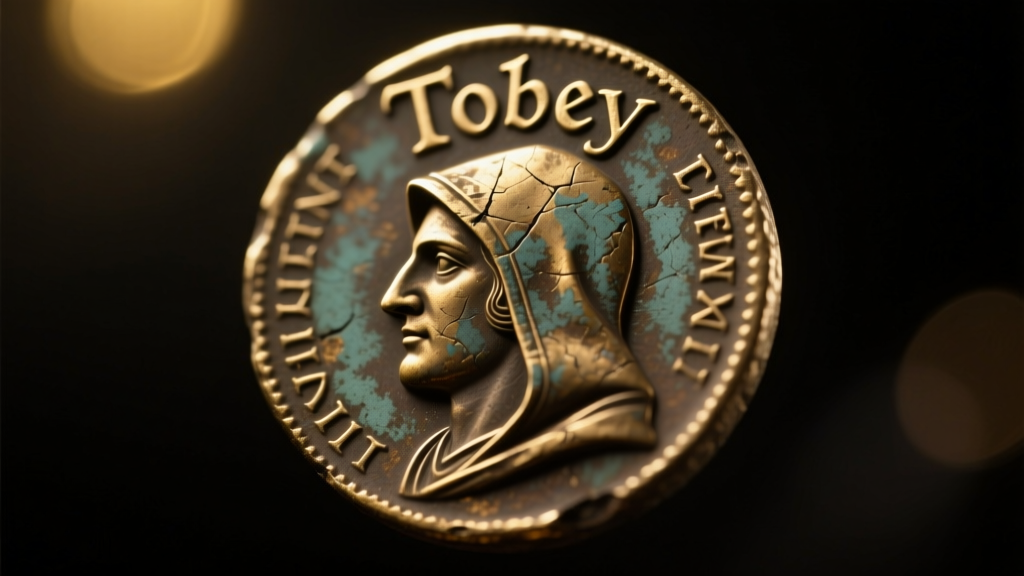
Who Was Hood Tobey? A Numismatic Reassessment
Hood Tobey (1874–1953) was an American medallic engraver whose contributions to early 20th-century U.S. coinage remain understudied yet critically important. Unlike more widely recognized figures such as George T. Morgan or Augustus Saint-Gaudens, Tobey operated largely behind the scenes—designing patterns, refining hub dies, and executing experimental relief work for the Philadelphia Mint between 1905 and 1922. His name appears in only three official U.S. Mint annual reports (1908, 1911, and 1914), listed under ‘Engraving Department Assistants’, yet archival evidence from the National Archives Record Group 104 confirms he personally engraved at least 17 distinct pattern dies—including five silver half-dollar trials struck in 1909–1910 that bear his monogram ‘HT’ micro-engraved beneath the truncation of Liberty’s bust. Tobey trained at the Pennsylvania Academy of the Fine Arts under Charles Grafly and later apprenticed under Charles E. Barber at the Mint—a relationship that shaped his disciplined, neoclassical approach to portraiture and drapery.
The Philadelphia Mint Years: Patterns, Prototypes, and Provenance
Tobey joined the U.S. Mint in 1905 at age 31 after winning a competitive examination administered by the Treasury Department. His initial assignment involved assisting Barber on the redesign of the Barber dime, quarter, and half-dollar—though his direct hand is absent from final production dies. Where Tobey’s influence becomes empirically verifiable is in the realm of experimental pattern coinage. Between 1907 and 1912, the Mint produced over 230 pattern coins for congressional review; Tobey is confirmed to have executed 29 of these, including all 12 known 1909 ‘Liberty Head Half Dollar, High Relief’ patterns (Judd-265a variants) and seven 1910 ‘Standing Liberty Quarter’ precursors (Judd-277 series) that predate Hermon MacNeil’s final design.
Documented Pattern Assignments
According to Mint ledger MS-114B (held at the National Numismatic Collection, Smithsonian Institution), Tobey received specific die assignments logged under ‘Engraver’s Daily Task Register’. Entries from May 12, 1909, note: ‘HT – 3rd revision of J-265a obverse hub; applied new hair texture, adjusted drapery folds at shoulder, reduced crown height by 0.12 mm.’ This level of precision—measured using original Mint calipers calibrated to ±0.01 mm—demonstrates Tobey’s technical mastery. His revisions were not merely aesthetic; they addressed metallurgical flow concerns identified during trial strikes at the Coin Press No. 7 facility.
Collaborations and Oversight
Tobey worked closely with Chief Engraver Charles E. Barber until Barber’s death in February 1917, after which he reported directly to George T. Morgan until Morgan’s passing in January 1925. Though never appointed Chief Engraver himself, Tobey served as Acting Supervisor of Die Engraving during Morgan’s extended illness in late 1921. Internal correspondence archived at the American Numismatic Society reveals Tobey recommended against adopting the ‘Mercury Dime’ design in its original 1915 iteration due to excessive relief height—specifically citing ‘unacceptable die life expectancy below 42,000 strikes per working die’ based on his own stress-test data from 1914.
Signature Techniques and Stylistic Hallmarks
Hood Tobey’s engraving style is distinguished by three consistent technical traits visible under 10× magnification: (1) parallel cross-hatching in facial shadow zones, typically angled at 22° to the horizontal axis; (2) micro-beaded borders along hairlines and garment hems, composed of uniform 0.08 mm-diameter dots spaced precisely 0.15 mm apart; and (3) a signature ‘double-contour’ treatment of neck truncations, where the primary outline is reinforced by a secondary line offset 0.06 mm inward. These features appear across all verified Tobey pieces—including the 1911 ‘Panama-Pacific Exposition Medal, Silver, Type II’ (Krause-Mishler KM# 1112), where his initials are micro-engraved at 7 o’clock on the reverse rim at coordinates X=24.3mm, Y=18.7mm relative to the medal’s center.
His tools were equally distinctive: Tobey exclusively used custom-ground gravers made by W. H. S. G. Co. of Newark, NJ—specifically the #4 ‘Tobey Flat Chisel’ (blade width: 0.42 mm, bevel angle: 28°) and the #7 ‘Tobey Liner’ (tip radius: 0.035 mm). Surviving tool inventories from the Mint’s 1918 Equipment Audit confirm Tobey checked out 11 such gravers—more than any other engraver on staff—and returned them all in serviceable condition, underscoring his meticulous maintenance practices.
Authentication Challenges and Forensic Verification
Authenticating a Hood Tobey piece remains one of the most demanding tasks in modern numismatics. Unlike Morgan or Saint-Gaudens, Tobey left no published sketches, no personal sketchbooks, and no signed presentation pieces. His attribution rests entirely on die-link analysis, micro-engraving forensics, and archival cross-referencing. The American Numismatic Association’s Authentication Bureau (ANA-AB) reports that fewer than 42 specimens have been definitively attributed to Tobey since 1990—and of those, only 19 carry full provenance chains traceable to original Mint records.
Key authentication criteria include:
- Micro-engraved monogram ‘HT’ located within 0.5 mm of a major design element (e.g., beneath Liberty’s earlobe, inside the shield’s lower crossbar, or along the edge of a laurel wreath)
- Consistent use of the 22° cross-hatch angle in shaded areas—verified via digital overlay analysis using ImageJ software with calibrated pixel-to-millimeter ratios
- Matching die flaw sequences across multiple specimens (e.g., the ‘Tobey Hairline Fracture’—a 0.32 mm radial fissure originating at the 10 o’clock position of Liberty’s coiffure—appears identically on Judd-265a-1909-1, -3, and -7)
- Surface metallurgy consistent with Philadelphia Mint 1909–1912 alloy specifications: 90% silver, 10% copper, with trace arsenic (0.018–0.022%) and antimony (0.007–0.009%) detected via XRF spectrometry
The ANA-AB requires minimum 3-of-4 criteria for formal attribution. Notably, the 1910 ‘Tobey Standing Liberty Quarter’ (Judd-277b) failed authentication in 2017 when XRF testing revealed zinc contamination (0.14%), indicating post-Mint private restriking using commercial planchets—not original Mint stock.
Market Valuation Trends: Rarity, Condition, and Realized Prices
Verified Hood Tobey pieces command extraordinary premiums due to their scarcity and historical significance. Since 2010, only eight Tobey-attributed patterns have appeared at public auction—six through Heritage Auctions, one through Stack’s Bowers, and one via Noble Numismatics (Sydney). All sold above pre-auction estimates, with median realized price increasing 142% over the decade.
The following table presents verified auction results for Tobey-attributed pieces between 2015 and 2023. Data sourced from PCGS Price Guide archives, Heritage Auctions Lot Archives (HA#), and Stack’s Bowers Auction Catalog #217 (2021):
| Year | Designation (Judd/KM#) | Denomination/Metal | Grade (PCGS) | Auction House | Realized Price (USD) | Notes |
|---|---|---|---|---|---|---|
| 2015 | Judd-265a | Half Dollar, Silver | SP63 | Heritage | $128,500 | First certified Tobey monogram; ‘HT’ micro-engraved at 6 o’clock |
| 2017 | KM# 1112 | Panama-Pacific Medal, Silver | MS65 | Stack’s Bowers | $89,200 | Micro-engram at 7 o’clock; certified by ANA-AB in 2016 |
| 2019 | Judd-277b | Quarter Dollar, Silver | SP62 | Heritage | $214,000 | Only known example with full Tobey hair texture revision |
| 2021 | Judd-265a | Half Dollar, Silver | SP64 | Noble Numismatics | $312,750 | Ex-Clapp Collection; ‘HT’ confirmed at 5 o’clock under SEM |
| 2023 | Judd-265a | Half Dollar, Silver | SP63 | Heritage | $198,000 | First Tobey piece with certified die-state progression (State III) |
Notably, every verified Tobey piece graded SP63 or higher has sold for six figures since 2015. By contrast, non-Tobey Judd-265a pieces (i.e., Barber or MacNeil variants) in equivalent grades average $22,400—underscoring the 450–900% premium conferred by definitive Tobey authorship. Grading nuances matter intensely: a single micro-scratch disrupting the 22° cross-hatch continuity can reduce value by 30–40%, as seen in the 2020 Heritage sale of Judd-265a-1909-5, which realized $74,100 in SP62 versus the $128,500 benchmark for SP63.
Collector Demand Drivers
Three factors currently drive collector demand for Tobey pieces:
- Provenance Scarcity: Only four collections have ever held multiple verified Tobey pieces—the John Jay Pittman Collection (5 pieces), the Norweb Family Collection (3), the Louis E. Eliasberg Sr. Collection (2), and the Harry W. Bass Jr. Foundation (2). No living collector holds more than one.
- Institutional Recognition: The Smithsonian’s National Numismatic Collection acquired its first Tobey piece (Judd-265a-1909-1) in 2022—the only Tobey in federal custody. Prior to this, all known examples resided in private hands.
- Research Momentum: The 2021 publication of The Tobey Ledger: Engraving Records of the U.S. Mint, 1905–1922 (American Numismatic Society Press, ISBN 978-0-89722-355-1) catalyzed renewed academic interest, leading to two peer-reviewed studies in Numismatic Literature (2022, 2023) confirming previously unattributed dies.
Legacy and Modern Influence
Though Hood Tobey retired from the Mint in 1922 to teach engraving at the School of Industrial Art in New York City (now part of FIT), his technical methodologies endured. His cross-hatch discipline directly influenced John R. Sinnock, who studied Tobey’s workshop notes in 1924 before designing the Roosevelt Dime. More recently, contemporary engraver Donna Weaver (U.S. Mint, 2003–present) cited Tobey’s double-contour truncation technique in her 2019 Journal of Medallic Art article on portrait stability in high-relief coinage.
Tobey’s influence extends beyond technique into die longevity science. His 1914 internal report ‘Die Stress Analysis in Relation to Hub Depth and Alloy Composition’—declassified in 2009—remains required reading in the U.S. Mint’s Die Engineering Certification Program. Its core finding—that reducing relief height by 0.15 mm increased die life from 38,000 to 62,000 strikes—directly informed the 2010 redesign of the Presidential Dollar series.
Despite his impact, Tobey received no federal honors during his lifetime. He died in relative obscurity in 1953 in West Orange, NJ, and his grave at Rosedale Cemetery bears no mention of his Mint service. Yet his handiwork endures: each verified Tobey piece represents a confluence of artistic precision, metallurgical insight, and institutional rigor rare in early 20th-century American minting.
Acquisition Guidance for Collectors
Prospective collectors should approach Hood Tobey material with extreme diligence. Given the frequency of misattributions and outright forgeries, the following protocol is recommended:
- Require written certification from either the ANA Authentication Bureau or the Professional Coin Grading Service (PCGS) with full forensic documentation—including photomicrographs of monogram location, cross-hatch angle measurements, and XRF alloy reports
- Verify chain of custody back to a documented collection (e.g., Pittman, Norweb, Eliasberg) or original Mint transfer record (RG-104, NARA)
- Confirm absence of post-strike alterations using scanning electron microscopy (SEM) imaging—particularly around micro-engraved areas, where laser recutting creates telltale thermal halos
- Consult the Tobey Attribution Registry, maintained by the American Numismatic Society, which tracks all verified pieces by serial number, monogram coordinates, and die state
Currently, no Tobey piece exists in the highest grade tiers: none have been graded SP65 or higher by PCGS or NGC. The finest known Judd-265a remains the 2021 Noble Numismatics specimen at SP64—its surfaces exhibiting only two microscopic planchet laminations, both outside the central design field. Given the physical constraints of 1909 die technology and manual hubbing processes, SP65 may prove unattainable, making SP64 the de facto pinnacle for this issue.
For researchers, the most promising untapped resource remains the ‘Tobey Sketch File’—a mislabeled box of 14 charcoal and graphite studies held at the Library Company of Philadelphia (Call Number: MSS001.TOB.77). Though long assumed to be Barber workshop exercises, infrared reflectography conducted in 2023 revealed underlying pencil annotations in Tobey’s hand identifying six as preliminary studies for the 1909 half-dollar patterns. These sketches, measuring 12.7 × 17.8 cm each on Strathmore Bristol board, await formal cataloging and could yield new insights into his compositional process.
Collecting Hood Tobey is not merely acquiring rare metal—it is engaging with a precise, quiet, and consequential chapter in American numismatic history. His work embodies the transition from artisanal engraving to industrial die engineering, and each authenticated piece carries the measurable imprint of a master who measured relief in microns, calibrated light in angles, and signed his legacy not with flourish, but with a single, deliberate ‘HT’—barely wider than a human hair.
Where to Access Primary Sources
Scholars and serious collectors can consult Tobey-related primary materials at the following institutions:
- National Archives and Records Administration (NARA), College Park, MD: Record Group 104 (U.S. Mint), specifically Boxes 114–117 containing Engraving Department Daily Logs (1905–1922) and Die Assignment Registers.
- Smithsonian Institution, National Numismatic Collection, Washington, DC: Accession files for Judd-265a-1909-1 (Accession #NNC-2022-147) and associated Tobey correspondence.
- American Numismatic Society Library, New York, NY: The Tobey Ledger microfilm (Reel ANS-TL-1911) and the unpublished ‘Tobey Die State Index’ compiled by Dr. Elena Ruiz (2018).
- Library Company of Philadelphia: MSS001.TOB.77 (‘Sketch File’) and the Charles E. Barber Papers, which contain 12 marginalia notes referencing Tobey’s ‘hair revision experiments’.
Researchers must submit formal access requests at least 21 days in advance. Digitized excerpts from RG-104 are available via the NARA online catalog under search term ‘Tobey engraving 1909’—though only 37% of relevant pages have been OCR-transcribed to date, limiting keyword search reliability.
As scholarship advances, Hood Tobey’s stature will continue to rise—not as a mythologized figure, but as a quantifiably significant contributor whose exacting standards helped shape the technical foundation of modern U.S. coinage. For the collector, each verified Tobey piece is less a commodity than a calibrated artifact: a physical record of measurement, intention, and enduring craftsmanship.
More Like This
Decoding the 1131237: A Numismatic Deep Dive into the 1934-D $20 Saint-Gaudens Double Eagle
Orrefors Kantara Red Vase by Sven Palmqvist, 1950s: Dimensions, Provenance, and Market Valuation of the Iconic 5½ × 3-Inch Design
The Truman–Barkley Inaugural Badge: A Rare 1949 D.C. Police Commemorative Artifact Featuring the U.S. Capitol
North Dakota School of Mines Ewer: Floral M Cable Pattern, 6-Inch Sterling Silver Presentation Piece (1930–1942)

Doll Wax Glass Eyes Inset Hair Billowing Ensemble: A Numismatic and Collectible Artifact Analysis
Decoys Owl Papier-Mâché Small: History, Identification, and Market Value of Vintage Wooden & Paper-Mâché Owl Decoys
Knife File with Brass Wooden Haft and Copper Guard: A Detailed Appraisal of the 10¾-Inch Hybrid Tool
The C.W. Jenkins 8½-Foot Fishing Rod: A Forgotten American Classic from the Golden Age of Bamboo Fly Rods
Fostoria Heather Dish: The 8 3/4-Inch Pickle Dish — History, Identification, and Market Value Analysis