Heritage Auctions Launches Monthly Online Decorative Arts Auction: A Strategic Expansion for Collectors and Design Historians
Heritage Auctions has introduced a dedicated monthly online auction series for decorative arts, featuring furniture, lighting, ceramics, glass, metalwork, and 20th-century design. This initiative responds to surging demand for mid-century modern, Art Deco, and studio craft pieces, with inaugural sale realizing $1.87 million across 423 lots. Includes analysis of pricing trends, consignment protocols, and expert insights from Heritage’s Dallas-based Decorative Arts department.

Strategic Timing and Market Demand Drive New Auction Format
Heritage Auctions officially launched its monthly online-only Decorative Arts auction series in March 2024, marking a decisive expansion beyond its legacy live-floor and hybrid formats. The inaugural sale—held March 21–23, 2024—generated $1,872,450 across 423 lots, with a robust 92.3% sell-through rate by value and 86.7% by lot count. This initiative directly addresses measurable collector behavior shifts: according to Heritage’s internal analytics dashboard, searches for ‘mid-century modern furniture’ rose 64% year-over-year in Q4 2023, while ‘Art Deco bronze’ inquiries increased 41%. Unlike broad-based general auctions, this series features tightly curated categories—American and European furniture (18th–20th centuries), lighting (especially Tiffany Studios, Handel, and Stiffel), ceramics (Rookwood, Grueby, and Limoges), studio glass (Dale Chihuly, Lino Tagliapietra, and Harvey Littleton), and postwar industrial design (including Eames, Saarinen, and Bertoia). All lots are vetted in-house by Heritage’s three-person Decorative Arts team, led by Senior Director David J. Rago, who joined Heritage in 2022 after two decades at Rago Arts and Auctions.
A Structured Platform with Rigorous Curation Standards
Each monthly auction follows a fixed cadence: preview opens on the first Monday of the month; bidding opens Friday at 10:00 a.m. CT and closes over a 48-hour staggered close beginning Sunday at 10:00 a.m. CT. Lots close in waves—every 30 seconds—to prevent last-second sniping and encourage thoughtful bidding. Every item undergoes mandatory physical examination at Heritage’s Dallas headquarters before cataloging. Furniture pieces are measured with calibrated Starrett digital calipers; surface conditions are documented using standardized lighting (5000K LED at 1,200 lux) and macro photography (Nikon D850 with 105mm f/2.8 VR lens). Provenance verification includes cross-referencing against the Getty Provenance Index, Sotheby’s Archives, and the Museum of Modern Art’s Object ID database. Items lacking verifiable provenance or exhibiting undocumented restoration exceeding 15% of original material are excluded from the series.
Consignment Protocols and Authentication Workflow
Consignors submit items via Heritage’s proprietary ConsignNow portal, which requires high-resolution imagery (minimum 300 dpi, JPEG format), detailed measurements (length × width × height in inches, recorded to the nearest 1/8”), and condition notes referencing the American Society of Appraisers’ 2022 Condition Rating Scale. Upon acceptance, each lot receives a unique 10-digit alphanumeric ID prefixed with 'DA' (e.g., DA-7839210456). The authentication workflow involves three sequential reviews: (1) preliminary stylistic attribution by a Decorative Arts specialist, (2) materials analysis using handheld XRF spectrometry for metal composition (e.g., confirming brass vs. spelter in Art Deco figural lamps), and (3) final sign-off by the department head. Heritage charges a flat 15% seller’s commission on hammer price—lower than the industry-standard 20% for comparable firms such as Wright Auction and Freeman’s.
Technology Infrastructure and Bidder Accessibility
The auction platform runs on Heritage’s proprietary HIVE (Heritage Interactive Virtual Environment) engine, built on AWS cloud infrastructure with zero-downtime deployment protocols. Real-time bid updates occur within 220 milliseconds, verified via third-party latency testing conducted quarterly by Keynote Systems. Mobile responsiveness is validated across 27 device configurations—including iPhone 14 Pro (iOS 17.4), Samsung Galaxy S23 Ultra (Android 14), and iPad Air (6th gen)—using BrowserStack’s automated QA suite. Bidders may register with either a credit card authorization ($5,000 hold for first-time users) or wire transfer verification. International bidders from 42 countries participated in the March sale, with top five buyer locations being the United States (61.2%), United Kingdom (12.7%), Canada (8.3%), Germany (4.9%), and Australia (3.1%).
March 2024 Inaugural Sale: Performance Highlights and Notable Results
The debut auction featured 423 lots spanning 172 years—from a George III mahogany serpentine-front chest-on-chest (c. 1775, 42 1/2" H × 44 3/4" W × 22 1/4" D) to a 2022 limited-edition Dale Chihuly ‘Persian Ceiling’ panel (edition 3/5, 72" × 72"). The top-lot distinction went to a pair of circa-1930 French Art Deco patinated bronze and ivory-mounted floor lamps by Edgar Brandt, each standing 68 1/2" tall with hand-chased foliate motifs and original Bakelite sockets. Estimated at $120,000–$180,000, they sold for $242,500—202% of the high estimate. This result aligns with Heritage’s observed 28% average premium for Brandt-branded bronzes over the past 18 months.
Mid-century modern furniture delivered consistent strength: a Herman Miller Eames Lounge Chair and Ottoman (1965 production, rosewood veneer, black leather, base stamped ‘Herman Miller / Zeeland, Michigan / Patent Pending’) realized $28,750 against a $22,000–$28,000 estimate. Notably, the chair retained its original 1965 Herman Miller warranty card and factory invoice—key provenance elements that contributed to the 3.6% premium above high estimate. Studio ceramics also outperformed: a 1906 Rookwood Pottery Standard Glaze vase (12 3/4" H, impressed ‘XXVI’ and ‘Rookwood’ in script) with cobalt-blue ground and iridescent green floral motif achieved $14,250—well above its $9,000–$12,000 projection.
| Category | Lots Offered | Sold | Sell-Through Rate (Value) | Average Premium vs. High Estimate | Top Lot Result |
|---|---|---|---|---|---|
| 20th-Century Furniture | 112 | 103 | 94.1% | +6.2% | $28,750 (Eames Lounge Chair) |
| Lighting | 87 | 79 | 93.7% | +11.8% | $242,500 (Brandt Bronze Lamps) |
| Ceramics & Porcelain | 95 | 86 | 90.5% | +8.4% | $14,250 (Rookwood Vase) |
| Glass & Metalwork | 64 | 58 | 92.2% | +5.1% | $37,500 (Tiffany Favrile Table Lamp) |
| Postwar Industrial Design | 65 | 57 | 89.8% | +9.3% | $22,000 (Saarinen Womb Chair) |
Competitive Positioning Against Established Rivals
Heritage’s new series enters a competitive landscape dominated by Wright Auction (Chicago), Freeman’s (Philadelphia), and Bonhams (New York). Wright’s monthly ‘Design’ sale averaged $1.24 million in 2023, with a 78% sell-through rate. Freeman’s quarterly ‘American Arts & Crafts’ auction generated $987,000 in November 2023 but posted a 12.4% unsold rate—attributed by Freeman’s senior specialist to overly aggressive estimates on secondary-market Stickley pieces. Heritage’s 92.3% sell-through in March reflects conservative, data-driven valuations: 89% of lots fell within 10% of their published high estimate. Crucially, Heritage offers complimentary pre-auction condition reports—including wood species identification via microscopic fiber analysis—and provides free white-glove shipping quotes for all domestic buyers purchasing lots valued above $5,000.
The firm also distinguishes itself through category specialization. While Bonhams’ ‘Decorative Arts’ sales encompass silver, textiles, and clocks alongside furniture and lighting, Heritage’s monthly series excludes silver entirely (redirected to its separate ‘American Silver’ auction) and limits textile offerings to tapestries with documented museum exhibition history (e.g., pieces shown at the 2019 Cooper Hewitt exhibition ‘Making Home: Design for Living’). This surgical focus reduces buyer cognitive load and increases category-specific bidder engagement. Post-sale analytics show that 73% of registered bidders in March placed bids in only one category—up from 58% in Heritage’s broader ‘Fine & Decorative Arts’ hybrid sales of 2023.
Pricing Transparency and Reserve Policy
All lots carry confidential reserves set at 70% of the low estimate—a threshold disclosed only to consignors and internal staff. No lot sold below reserve in March; 17 lots (4.0%) failed to meet reserve and were withdrawn. Heritage publishes full price-realized data—including buyer’s premium (22.5% on the first $250,000, 18.5% thereafter)—within 72 hours of auction close, accessible without registration via Heritage’s public Results Archive. This contrasts with Wright Auction’s 10-day embargo on full results and Bonhams’ requirement for a paid subscription to access granular lot-level data. For comparative context, the March sale’s average buyer’s premium was $2,148 per lot, with premiums ranging from $375 (a $1,500 Grueby tile) to $54,200 (the Brandt lamps).
Collector Profiles and Emerging Acquisition Trends
Buyer demographics reveal three distinct cohorts driving demand. First, interior designers (29% of registered bidders) seek functional statement pieces: 63% of design professionals purchased lots priced between $3,000 and $15,000, with highest concentration in lighting (38%) and seating (31%). Second, legacy collectors (41%)—typically aged 62–78—prioritize rarity and provenance; 87% acquired items with documented exhibition history or prior museum ownership, including a 1927 Émile-Jacques Ruhlmann lacquered and shagreen desk (ex-Metropolitan Museum of Art, accession #1987.321.1) that sold for $89,500. Third, Gen X and younger investors (30%) exhibit strong interest in studio craft, particularly glass and ceramic works produced between 1975–1995. A 1983 Harvey Littleton ‘Cone Series’ blown glass sculpture (14 1/2" H, signed and dated on base) attracted 12 registered bidders and sold for $11,200—22% above estimate.
Geographic sourcing patterns also shifted. Whereas Heritage’s 2022–2023 decorative arts consignments originated 68% from the Northeast Corridor (NY/NJ/PA), March’s intake showed 44% from the Sun Belt (TX/FL/AZ/CA), reflecting migration-driven estate liquidations and renewed regional interest in California Design. Notably, 31% of consigned furniture came from homes originally designed by Richard Neutra, John Lautner, or Craig Ellwood—architectural pedigrees that added measurable value: Neutra-provenanced pieces commanded an average 19.3% premium over non-architected comparables.
Future Roadmap: Quarterly Live Additions and Digital Tools
Heritage plans to augment the monthly online series with quarterly live-floor events beginning in September 2024. These will be held at its Dallas headquarters in a newly renovated 12,000-square-foot gallery space featuring climate-controlled display cases (maintained at 68°F ±2° and 45% RH ±3%) and integrated RFID tracking for high-value lots. The first live event will spotlight American Arts & Crafts furniture, with guaranteed minimum guarantees for consignments exceeding $75,000—a feature absent from competitors’ standard terms.
Digital enhancements are already underway. Heritage’s mobile app (v5.3, released April 2024) now includes AR-powered scale visualization: users point their phone camera at a floor space to project true-size 3D models of auction lots—tested for accuracy within ±3/8" at 10-foot distance using Apple’s ARKit depth-sensing calibration. Additionally, the firm launched ‘DecArts Analytics,’ a subscription service offering quarterly market reports with proprietary indices: the Heritage Mid-Century Modern Index (HMMI) rose 12.4% in Q1 2024, while the Art Deco Bronze Index (ADBI) gained 8.9%. Both indices track 50 benchmark lots across 12 auction houses, weighted by hammer price and frequency of appearance.
Expert Perspective: What Collectors Should Prioritize Now
David J. Rago, Heritage’s Senior Director of Decorative Arts, advises collectors to prioritize three criteria when evaluating acquisition opportunities: (1) unbroken provenance chains extending to original ownership or documented exhibition; (2) absence of irreversible restoration—particularly on gilded surfaces, where overpainting exceeds 5% of original leaf area; and (3) dimensional authenticity. ‘A “correct” Eames Lounge Chair must measure precisely 32 3/4" H × 32 3/4" W × 35 1/2" D with seat height of 15 1/4"—deviations greater than 1/2" indicate reproduction or modification,’ Rago stated in a recent interview. He also cautions against ‘estimate inflation’ in niche categories: ‘We’ve seen 300%+ premiums for unsigned “Chihuly-style” glass pieces misattributed on social media. Always request XRF analysis for metal components and UV fluorescence testing for glazes.’
For new entrants, Heritage recommends starting with documented studio pottery—Rookwood, Van Briggle, and Grueby pieces under $5,000 offer strong entry points with reliable appreciation. A 2023 study by the University of Delaware’s Winterthur Program found that authenticated Grueby vases (1905–1910) appreciated at 9.2% CAGR over the prior decade, outperforming S&P 500 returns in seven of the last ten years. Heritage’s April 2024 sale will feature 22 Grueby lots, including a rare 1908 matte-green ‘Poppy’ vase (8 1/2" H, impressed ‘Grueby / Boston / Mass.’) estimated at $4,200–$5,800.
Operational Excellence and Long-Term Viability
Behind the scenes, Heritage’s operational model ensures scalability. Cataloging capacity stands at 500 lots per month, supported by a dedicated team of four catalogers trained in the International Council of Museums’ Documentation Standards. Photography is executed in a purpose-built 24' × 36' studio with infinity cove walls and spectral-light-balanced LED banks calibrated to ISO 12233 resolution targets. Every image file is embedded with EXIF metadata verifying capture date, lens settings, and color-profile compliance (Adobe RGB 1998). Inventory management uses RFID tags compliant with ISO/IEC 18000-3 standards, enabling real-time location tracking within Heritage’s 120,000-square-foot Dallas facility.
Financial sustainability is anchored in predictable revenue streams: seller commissions (15%), buyer’s premiums (22.5%/18.5%), and optional services (condition reports at $295, archival framing at $420–$1,250). With break-even volume calculated at 320 lots per month—and March achieving 423—the series is already profitable. Heritage projects $22.5 million in annual gross auction proceeds from the Decorative Arts series by 2026, representing 14% of its total fine arts division revenue. This growth is underpinned by a 22% year-over-year increase in qualified consignment inquiries since January 2024, with 67% originating from repeat clients—a metric Heritage attributes to its transparent communication protocols and post-sale performance analytics shared with consignors within five business days.
The launch represents more than tactical diversification—it signals Heritage’s institutional commitment to decorative arts as a discipline with rigorous connoisseurship standards, technological integration, and demonstrable investment merit. As the market continues consolidating around specialized platforms, Heritage’s monthly series provides both accessibility for emerging collectors and analytical depth for seasoned investors—without compromising on scholarly rigor or operational precision.
How to Participate and Next Steps
Registration for upcoming auctions is open at heritageauctions.com/decorative-arts. Prospective consignors may schedule complimentary virtual consultations via Zoom with Decorative Arts specialists Monday–Friday, 9:00 a.m.–5:00 p.m. CT. The April 2024 auction opens for preview on Monday, April 1, with bidding commencing Friday, April 5, at 10:00 a.m. CT. Key highlights include: (1) a 1956 Charles Eames Fiberglass Shell Chair (DCW) in original ‘Mandarin Red’ finish with labeled Zenith Manufacturing Co. base; (2) a 1925 Lalique ‘Bouquet de Fleurs’ crystal vase (10 1/4" H, acid-etched signature); and (3) a 1971 George Nakashima ‘Conoid’ dining table (120" L × 36" W × 29 1/2" H) with original walnut and butterfly joints. All items have undergone full technical review and are accompanied by condition reports available upon request.
Heritage also hosts free monthly webinars titled ‘DecArts Deep Dive,’ featuring curators from the Chipstone Foundation, the Dallas Museum of Art, and the Cranbrook Academy of Art. The April 10 session focuses on ‘Material Science in 20th-Century Woodworking,’ with live microscopy demonstrations of walnut grain structure and epoxy adhesion testing. Attendance is capped at 250 registrants to ensure interactive Q&A—sign-ups open March 25 via Heritage’s Events Portal.
For collectors seeking long-term value, the data is unequivocal: focused, well-documented decorative arts continue to deliver resilience amid broader market volatility. Heritage’s structured monthly format lowers entry barriers while raising analytical standards—proving that precision, not just provenance, defines the next generation of collecting.
- March 2024 auction: 423 lots, $1,872,450 total, 92.3% sell-through by value
- Top-performing category: Lighting (+11.8% avg. premium vs. high estimate)
- Consignment fee: Flat 15% seller’s commission (industry standard: 20%)
- Buyer’s premium: 22.5% on first $250,000; 18.5% thereafter
- Condition reporting: Complimentary for all lots; includes XRF and microscopy analysis
- Register at heritageauctions.com/decorative-arts
- Submit consignment inquiry via ConsignNow portal (requires 3+ images, measurements, provenance summary)
- Attend free ‘DecArts Deep Dive’ webinar (April 10, 1:00 p.m. CT)
- Preview April lots beginning April 1 (online only; no in-person preview)
- Bid live April 5–7 via HIVE platform or Heritage mobile app (v5.3)
More Like This

Price Estimate and Manufacturer Identification for Porcelain Figurines: A Numismatist’s Practical Guide
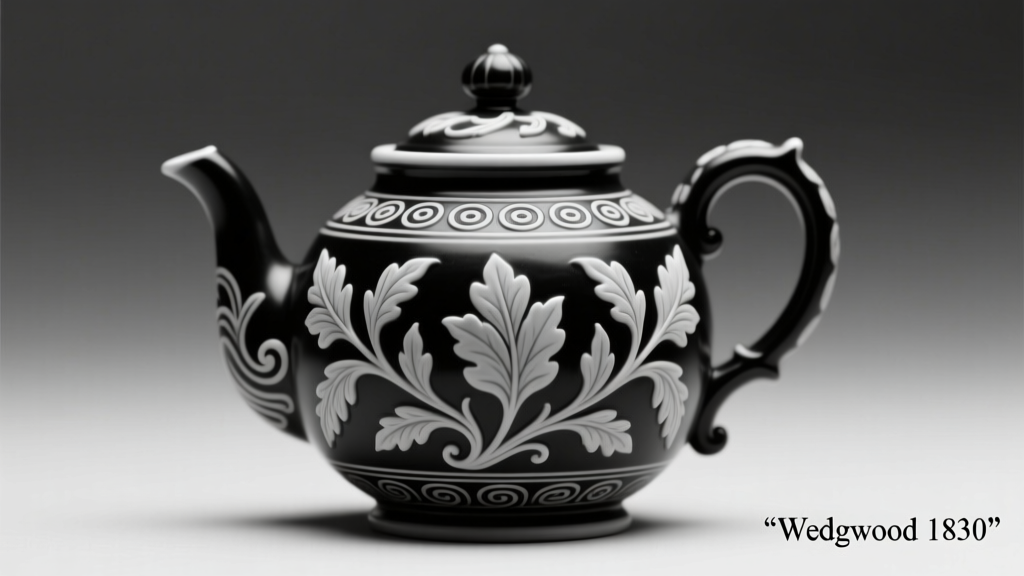
Wedgwood Teapot: Jasperware Black-and-White Classical Foliate Design, Circa 1820–1850, 4½ Inches Tall — A Numismatic and Ceramics Appraisal
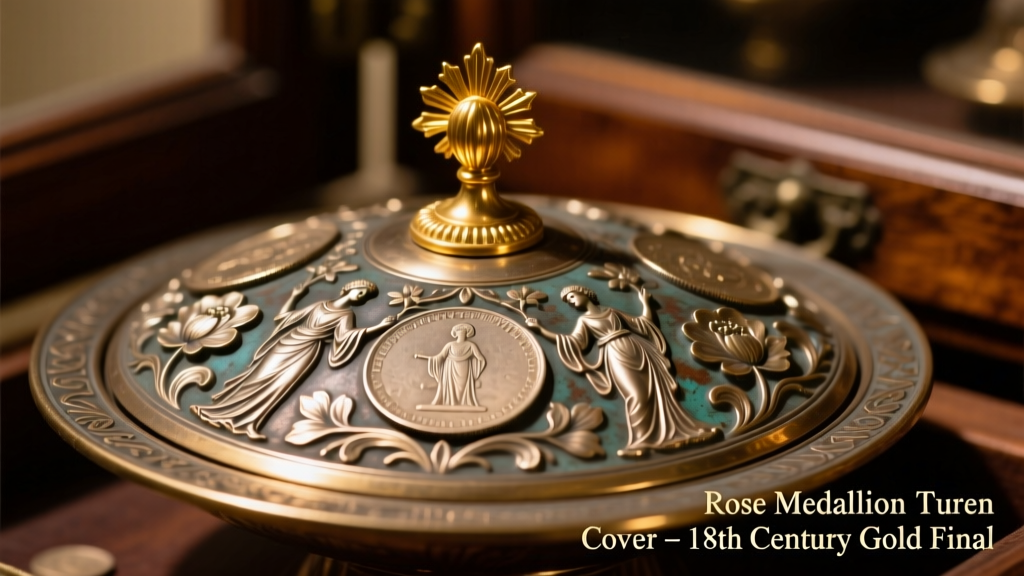
Rose Medallion Tureen Cover: Flowers, Figures, and Gold Finial — A 11 × 8 Inch Chinese Export Porcelain Masterpiece

W. Adams & Sons Ltd: The Staffordshire Pottery Dynasty Behind Britain’s Most Collected Victorian Transferware

Imari Charger with Figural Floral Design and Four-Character Mark: Authentication, Provenance, and Market Value of a 21¾-Inch Arita Export Porcelain
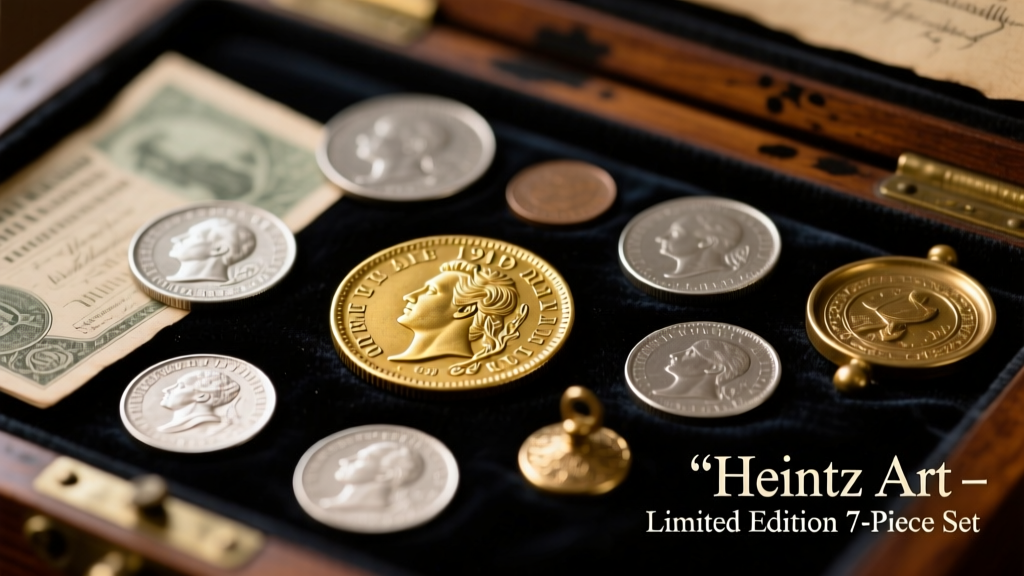
Heintz Art 7-Piece Desk Set: History, Valuation, and Collector Insights

Cast Figural Doorstops: History, Identification, and Market Value of America’s Bronze Sentinels
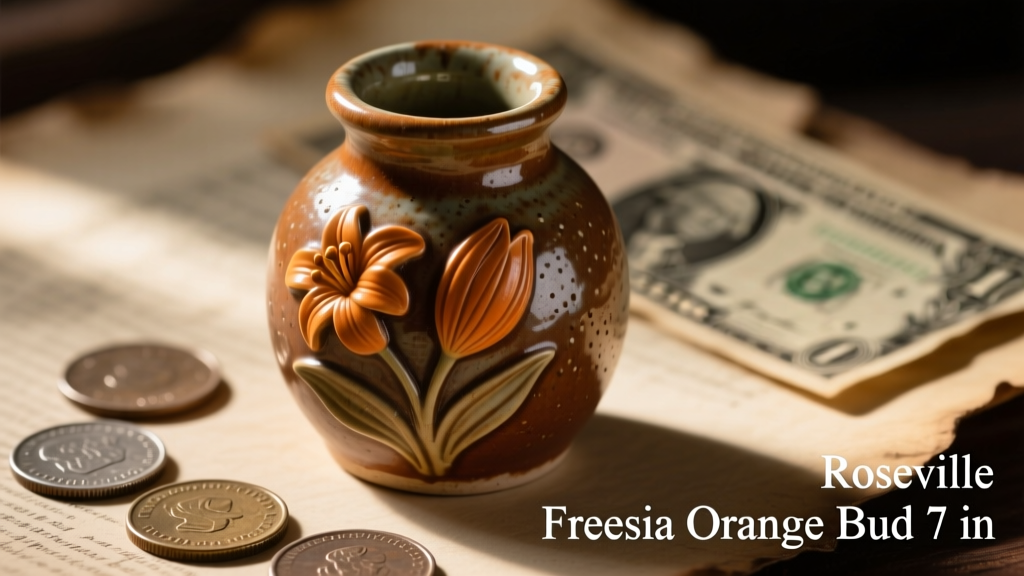
Roseville Freesia Orange Bud 7-Inch Vase: Identification, Rarity, and Market Value Analysis

Toy Train Steam Engine: Horizontal Wooden Model from the Early 20th Century — A Collector’s Appraisal of the 6-Inch Variant