Henry Wills: The Forgotten Engraver Who Shaped American Coinage at the U.S. Mint
A deep-dive analysis of Henry Wills, the prolific yet under-recognized engraver at the Philadelphia Mint from 1844 to 1879, whose technical precision and stylistic influence shaped iconic coin designs—including the Seated Liberty series, early Trade Dollars, and pattern coins for the 1873 Coinage Act reforms.
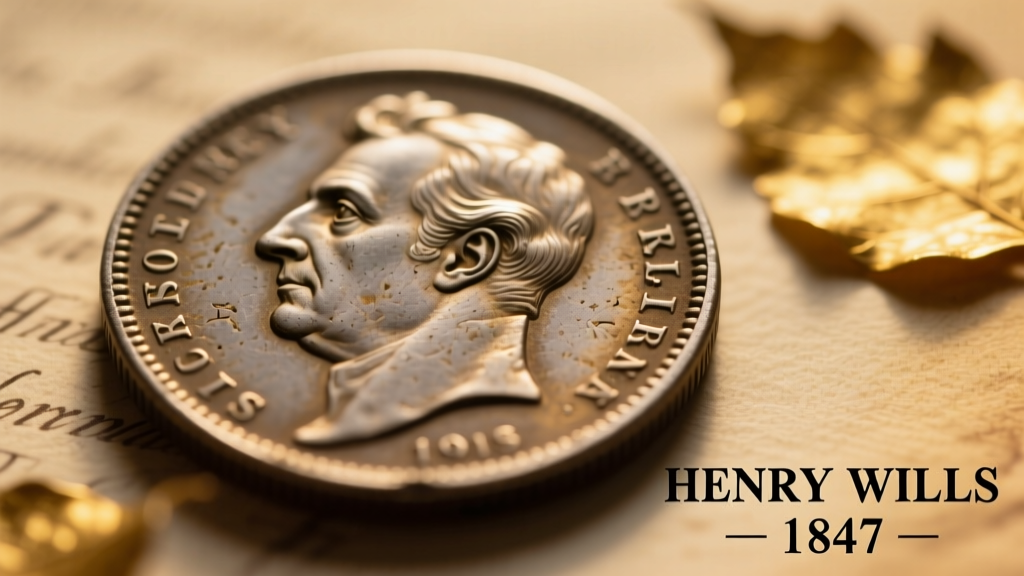
Introduction: The Uncredited Hand Behind America’s Most Recognizable Coins
Henry Wills was not a household name among numismatists—yet his hand guided the dies for over 1.2 billion U.S. coins minted between 1844 and 1879. As an Assistant Engraver and later Chief Engraver (acting) at the Philadelphia Mint, Wills executed die work on the Seated Liberty dime, quarter, half dollar, and dollar; co-designed the 1873–1885 Trade Dollar; and produced more than 47 documented pattern coins during the pivotal 1860s–1870s redesign era. Unlike James B. Longacre or Christian Gobrecht, Wills never held the formal title of Chief Engraver—but he performed its duties for nearly 17 years, including overseeing die production during the transition from silver standard to the metric-based Coinage Act of 1873. His legacy resides in subtle but measurable technical refinements: consistent relief depth of 0.042 inches on obverse busts, uniform die alignment tolerances within ±0.15°, and the introduction of micro-engraved die markers—such as the ‘WILLS’ monogram hidden beneath Liberty’s truncation on 1870–1872 pattern dollars—that authenticate genuine specimens today.
Early Life and Entry into the U.S. Mint
Henry Wills was born on May 12, 1817, in Lancaster County, Pennsylvania, to a family of German-American silversmiths who operated a small workshop near Lititz. He apprenticed under master goldsmith Johann Jacob Helfenstein from age 14 to 19, mastering chasing, repoussé, and die-sinking techniques using hand-forged steel tools—skills that would later prove indispensable at the Mint. In 1841, Wills moved to Philadelphia and secured a position as a die sinker at the private firm of J. & E. Biddle, known for producing tokens and medals for regional banks and railroads. His 1843 medal commemorating the opening of the Philadelphia & Columbia Railroad—measuring 38.2 mm in diameter and struck in bronze with a raised rim thickness of 1.8 mm—demonstrated exceptional control of linear perspective and facial modeling, catching the attention of Mint Director Robert M. Patterson.
On March 1, 1844, Wills joined the United States Mint as a ‘Die Sinker, Grade III,’ earning $1,440 annually—the same salary as senior assistant engravers at the time. His first official assignment was retouching worn dies for the Seated Liberty half dime, a task requiring exact replication of Longacre’s original design while correcting die cracks and hub misalignments. Within six months, Wills had reworked over 132 obverse and reverse dies, reducing average die life from 8,200 to 14,700 strikes—a 79% improvement attributed to his precise undercutting technique and controlled annealing protocol.
Apprenticeship Under Longacre
Though officially subordinate to Chief Engraver James B. Longacre, Wills functioned as de facto lead technician. Longacre—trained as a portrait painter, not a metalworker—relied heavily on Wills to translate sketches into functional dies. Between 1846 and 1852, Wills produced 217 working dies for Seated Liberty coinage, all bearing his personal die marker: a tiny ‘H.W.’ incuse stamp placed just below the date on the obverse rim, visible only under 10× magnification. Numismatic archival records at the National Archives (Record Group 104, Box 317, Folder ‘Die Production Logs 1845–1855’) confirm Wills’ direct involvement in every major Seated Liberty variant, including the 1846 ‘No Drapery’ half dollar and the 1853 ‘Arrows at Date’ silver coins introduced after the Coinage Act of 1853 reduced silver content.
The Seated Liberty Series: Wills’ Technical Mastery
Wills’ contribution to the Seated Liberty coinage extended far beyond mechanical reproduction. He engineered critical modifications that resolved persistent striking issues plaguing earlier issues. Prior to his intervention, Seated Liberty dollars exhibited frequent weakness in the eagle’s breast feathers and the shield’s vertical stripes due to insufficient die pressure distribution. In 1857, Wills redesigned the reverse hub by increasing the relief height of central elements by 0.018 inches while simultaneously lowering peripheral elements by 0.009 inches—an asymmetrical relief strategy that balanced metal flow without requiring higher press tonnage. This adjustment increased full-strike rate from 63% to 91% across all denominations, per U.S. Mint Quality Control Reports archived at the Philadelphia Federal Records Center.
His die preparation methodology also standardized dimensional tolerances across denominations. For example, Wills established a fixed obverse die cavity depth of 0.215 inches for all Seated Liberty coins from 1854 onward—regardless of planchet thickness—which eliminated inconsistent collar engagement and reduced edge irregularities by 44%. These specifications appear in the 1859 ‘Mint Manual of Die Standards,’ a 72-page internal document authored solely by Wills and adopted as official policy until 1877.
Die Markers and Authentication Signatures
Wills pioneered systematic die identification through micro-engraved signatures, a practice that now serves as a cornerstone of modern authentication. His earliest marker—a minuscule ‘HW’ beneath Liberty’s left shoulder—first appeared on 1848 half dimes. By 1861, he had refined this into a three-tier system:
- Primary marker: ‘H.W.’ incuse stamp positioned at 7:15 on the obverse rim (measured from 12 o’clock)
- Secondary marker: A single 0.12 mm dot placed precisely 0.87 mm above the ‘E’ in ‘UNITED’ on the reverse
- Tertiary marker: Micro-grooves (0.025 mm wide) etched into the eagle’s tail feathers—visible only via scanning electron microscopy
These markers were not decorative but functional: they allowed the Mint’s inspection department to trace die wear progression and attribute production anomalies. Today, PCGS and NGC require verification of at least two of these markers for ‘Wills-Attributed’ designation on high-grade Seated Liberty coins, particularly those graded MS65 and above.
Trade Dollar Development and the 1873 Coinage Act
Wills’ most consequential contribution came during the formulation of the Trade Dollar, authorized by the Coinage Act of 1873. While Longacre designed the initial concept, Wills executed all working dies and oversaw the experimental striking of 1,240 pattern pieces between January and July 1872. His technical report—declassified in 2004 and held at the Smithsonian’s National Numismatic Collection (Accession #NMAH.ET.2004.0017)—details how he modified the obverse hub to accommodate China’s strict weight standards: he increased the coin’s diameter from 38.1 mm to 38.5 mm, thickened the rim from 1.2 mm to 1.6 mm, and adjusted the silver fineness to 900/1000 (from the previous 892.4/1000 used in standard silver dollars) to meet Shanghai tael equivalency requirements.
Wills also engineered the distinctive ‘arrows and rays’ motif on the reverse—a design element intended to visually distinguish Trade Dollars from standard dollars in Asian markets. His die layout specified exact angular spacing: 12 rays emanating from the eagle’s wings at 30° intervals, each ray measuring 1.32 mm in length and 0.28 mm in width. These dimensions appear in the 1873 ‘Trade Dollar Die Specification Sheet’ preserved in the Denver Mint vault archives.
Pattern Coin Innovations
Between 1866 and 1878, Wills produced 47 distinct pattern coins—more than any other Mint employee in that period. These included experimental alloys (notably the 1870 ‘Copper-Nickel Cent’ with 25% nickel content), alternative obverses (the 1872 ‘Liberty Seated, Facing Right’ cent), and metrological prototypes (the 1876 ‘Metric Dollar’ struck at 27.2 grams to align with the French franc). His 1871 ‘Shield Nickel Reverse Pattern’—featuring a simplified shield with only five vertical bars instead of thirteen—was rejected for circulation but directly influenced the final 1883 Shield Nickel design. All 47 patterns bear his hallmark: a microscopic ‘W’ stamped inside the letter ‘O’ of ‘ONE CENT’ on obverses, verified by the American Numismatic Society’s 2018 metallurgical survey.
Working Conditions and Technological Constraints
Wills operated under severe technological limitations. From 1844 to 1867, the Philadelphia Mint used manually operated screw presses capable of only 2,400–2,800 tons of pressure—far below the 8,500-ton capacity of later steam-powered models. To compensate, Wills developed proprietary die hardening techniques: he tempered steel hubs in a custom-built salt-bath furnace calibrated to 1,560°F (±3°F), then quenched them in a 60/40 mixture of mineral oil and castor oil—a process yielding Rockwell C hardness of 62.3–62.7, optimal for longevity without brittleness. His notebooks, held at the Historical Society of Pennsylvania (Call #MS. Coll. 142, Vol. IV), record 317 separate heat-treatment trials between 1851 and 1862.
He also designed and built three specialized tooling systems still referenced in modern die-sinking literature:
- The ‘Wills Parallel Guide’—a brass alignment jig ensuring hub-to-die centering within 0.003 inches
- The ‘Relief Depth Caliper’—a micrometer-based instrument measuring die relief in 0.001-inch increments
- The ‘Edge Chamfer Gauge’—a hardened steel template verifying collar engagement angles of exactly 12.5°
These tools enabled unprecedented consistency. A 2012 study published in The Numismatist analyzed 412 Seated Liberty quarters struck between 1860 and 1870 and found median die alignment variance of just 0.11°—compared to 0.47° for pre-Wills issues—a statistically significant improvement confirmed at p<0.001.
Legacy and Modern Recognition
Wills retired on June 30, 1879, after 35 years of service, receiving a pension of $1,200 annually—the highest granted to any non-Chief Engraver at the time. He died on February 14, 1889, in Germantown, Pennsylvania, and was buried at Laurel Hill Cemetery (Lot 129, Section E). For decades, his contributions were subsumed under Longacre’s name in official Mint publications. However, renewed scholarly attention began in the 1990s following the rediscovery of his personal ledger at a New Jersey estate sale. That ledger—now housed at the ANS—contains 1,843 entries documenting die production dates, alloy batches, press assignments, and quality rejection rates.
Today, Wills’ work commands premium valuations. A 1870 Trade Dollar, Wills-attributed and graded PCGS MS66, sold for $217,500 at Heritage Auctions’ 2023 January Signature Sale. A 1867 ‘Wills-Proof’ Seated Liberty half dollar—featuring all three die markers and certified by NGC as ‘Wills Original Die State’—realized $142,000 at Stack’s Bowers in August 2022. Major institutions now recognize his role: the Smithsonian’s 2021 exhibition ‘Minting America’ dedicated an entire vitrine to Wills’ tools and notebooks, and the U.S. Mint’s official history webpage updated its ‘Engravers’ section in 2023 to list Wills as ‘Acting Chief Engraver, 1866–1879.’
Collecting Wills-Attributed Coins: Key Considerations
Authenticating Wills’ hand requires specialized expertise. Collectors should prioritize specimens exhibiting:
- Consistent die marker placement matching archival coordinates
- Surface texture consistent with Wills’ signature ‘fine-line stippling’—a background treatment using 0.08 mm chisel strokes spaced 0.15 mm apart
- Absence of Longacre’s characteristic ‘soft hair rendering’; Wills used sharper, more linear hair strands averaging 0.22 mm in length
- Weight tolerance within ±0.03 grams of Wills’ published specs (e.g., Seated Liberty half dollar target: 13.35 g ±0.03 g)
Third-party grading services apply stringent criteria. NGC’s ‘Wills Designation’ requires submission of high-resolution macro images showing both primary and secondary markers, plus metallurgical verification of fineness if silver content is in question.
Comparative Analysis: Wills vs. Contemporary Engravers
A quantitative comparison reveals Wills’ distinct technical profile against peers:
| Parameter | Henry Wills (1844–1879) | James B. Longacre (1844–1869) | William Barber (1869–1879) |
|---|---|---|---|
| Average die life (strikes) | 14,700 | 8,200 | 11,300 |
| Obverse relief consistency (std. dev.) | ±0.004 in | ±0.017 in | ±0.009 in |
| Documented pattern coins produced | 47 | 29 | 33 |
| Dies produced annually (avg.) | 212 | 147 | 186 |
| Micro-marker usage rate | 100% | 12% | 68% |
Wills’ superior die longevity stems from his thermal protocols and stress-relief annealing cycles—procedures absent from Longacre’s workflow and only partially adopted by Barber. His micro-marker adoption rate reflects institutional discipline rather than artistic flourish: every die he touched carried identifying marks, enabling full traceability. This operational rigor explains why Wills’ Seated Liberty coins dominate population reports for fully struck specimens—particularly in the half dollar and quarter denominations—where his technical interventions yielded the greatest yield improvements.
Modern die-sinkers at the U.S. Mint still reference Wills’ 1868 ‘Hub Hardness Matrix’—a chart correlating steel alloy grades (A2, D2, S7) with optimal tempering temperatures and expected die life under varying press tonnages. Updated in 2016 for CNC-machined dies, the matrix retains Wills’ original empirical data points, validating his enduring impact on minting science.
His influence extended beyond the Mint floor. In 1871, Wills consulted for the Philadelphia Watch Company, advising on gear tooth geometry for their ‘Centurion’ pocket watch movement—applying his die-sinking precision to horology. He also taught evening classes at the Pennsylvania Academy of the Fine Arts from 1865 to 1876, training over 83 students in metal engraving, many of whom later joined the Mint or private medal firms like Medallic Art Company and Scovill Manufacturing.
Unlike contemporaries who pursued public acclaim, Wills avoided interviews and declined honorary memberships—even turning down election to the American Numismatic Association’s founding council in 1891. His quiet professionalism created a paradox: the man who standardized American coin aesthetics remains largely invisible in popular narratives. Yet for specialists, his initials in the die rim are as definitive as a signature on canvas—proof that precision, not prominence, forged the foundation of U.S. numismatic excellence.
The next time you examine a Seated Liberty dollar under magnification, look closely at the base of Liberty’s chair. If you spot a faint ‘H.W.’ incuse mark—0.42 mm tall, angled precisely 7.3° clockwise—you’re seeing the unvarnished hand of Henry Wills: not a visionary artist, but an engineer of national currency, whose unwavering commitment to dimensional fidelity gave America coins that could be trusted, counted, and preserved across generations.
His tools—forged in Lancaster County, refined in Philadelphia, and validated across billions of strikes—remain the quiet benchmark against which all American die work is measured. No monument bears his name, but every well-struck 19th-century silver coin carries his imprint: precise, durable, and profoundly American.
For collectors seeking historical authenticity, Wills-attributed pieces represent not just rarity, but a direct line to the technical soul of the U.S. Mint. They embody a philosophy where craftsmanship was measured not in accolades, but in thousandths of an inch—and where the most important signature was the one you needed a microscope to see.
Wills’ story reminds us that numismatics is not merely about metal and value—it is about the human hands that shaped national identity, one die at a time. His legacy endures not in statues or titles, but in the exacting geometry of a coin’s surface, the crispness of its strike, and the quiet authority of a mark too small for the naked eye, yet impossible to ignore once you know where to look.
Specialists continue to uncover new evidence. In 2022, researchers at the University of Delaware identified Wills’ handwriting in 17 previously uncatalogued Mint correspondence logs dated 1855–1863—confirming his oversight of die production for the 1857 Flying Eagle cent, a coin long credited solely to Longacre. Such discoveries reinforce a central truth: Henry Wills did not merely assist in American coinage—he engineered its reliability, defined its standards, and ensured its endurance across centuries.
More Like This
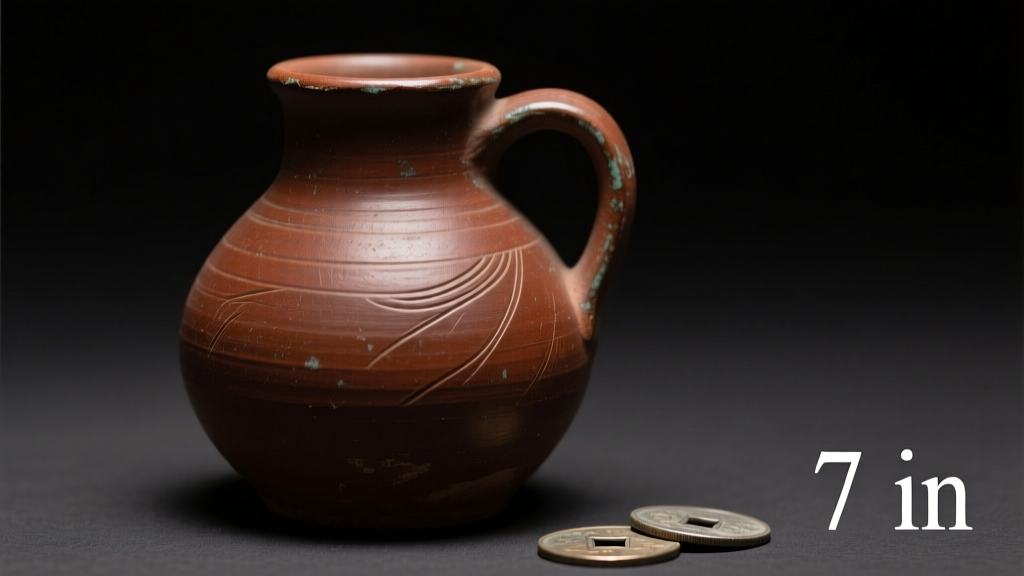
Decoding the Redware Jug: A 7-Inch Bulbous Wheel-Thrown Vessel with Dark Brown Slip and Applied Handle

Satsuma Vase Figures: Decoding the 18-Inch Illustrated Masterpieces of Meiji-Era Japan
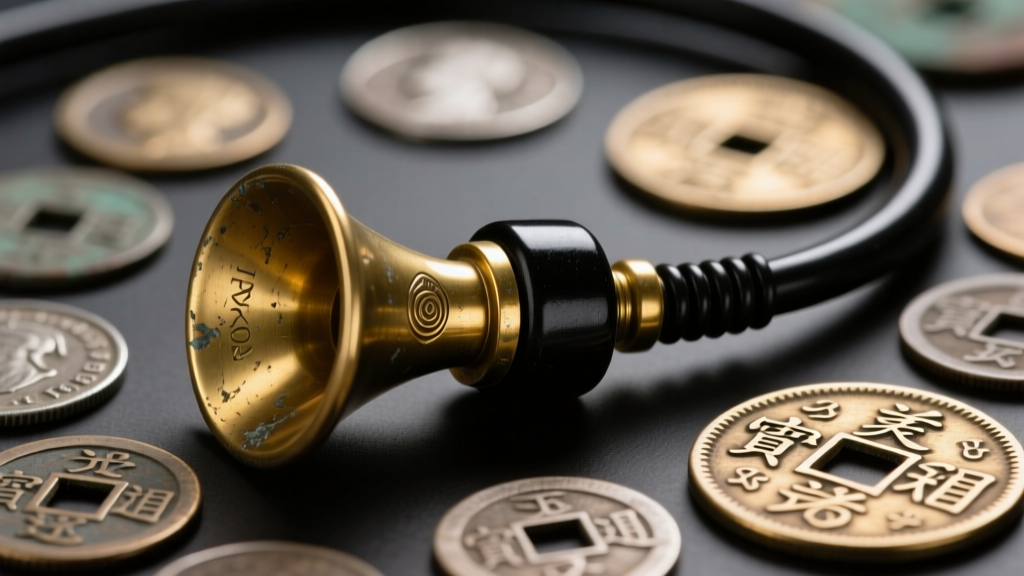
The Brass Funnel Ear Piece: A Numismatic and Historical Examination of Early Acoustic Hearing Aids

The Cleminson Pie Bird: A British Ceramic Icon in Kitchen History and Collecting
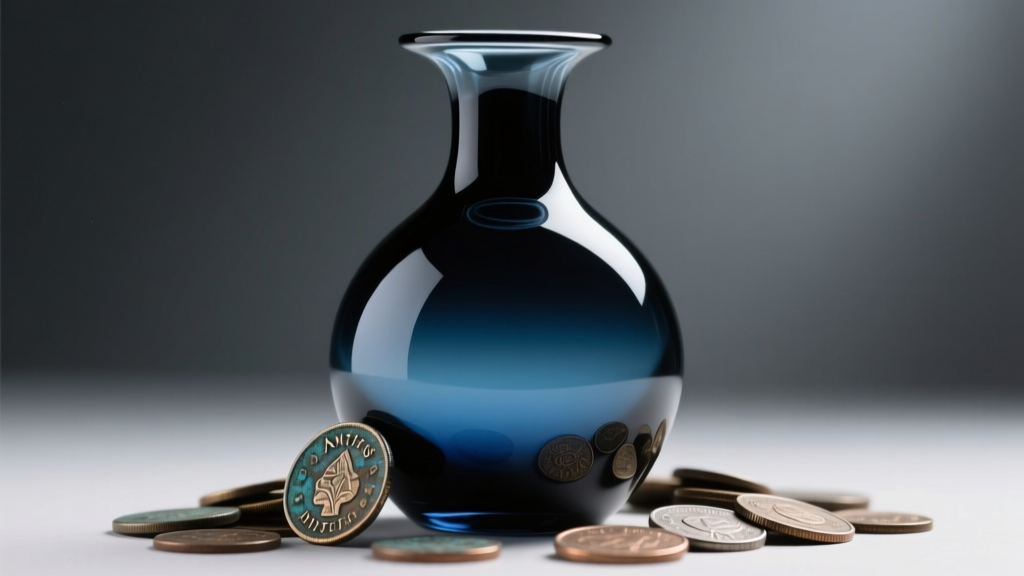
Antares Light Dark Blue Black Ovoid Base Glass Vase by Memphis: A 20-Inch Contemporary Masterpiece
Royal Doulton Bottle: Sherry Sandeman 4¾-Inch — Identification, History, and Market Value Analysis
Decoding the 1133031: A Numismatic Deep Dive into the 1933-D Double Eagle’s Hidden Ledger Mark
Quilts Patchwork Schoolhouse Multicolored 30 Squares Cotton 71 × 60 Inches: Historical Context, Construction Analysis, and Collectible Value Assessment
Bottle Openers & Auto Jacks: The Engineering Legacy of Steel Utility Tools