Henry Leuba: The Forgotten Master Engraver Who Shaped American Coinage at the U.S. Mint
A deep-dive analysis of Henry Leuba (1873–1940), the Swiss-American medalist and engraver whose precision work on the 1907–1933 U.S. gold coin series—including the Saint-Gaudens Double Eagle—remains undercredited yet indispensable to numismatic history.
Who Was Henry Leuba?
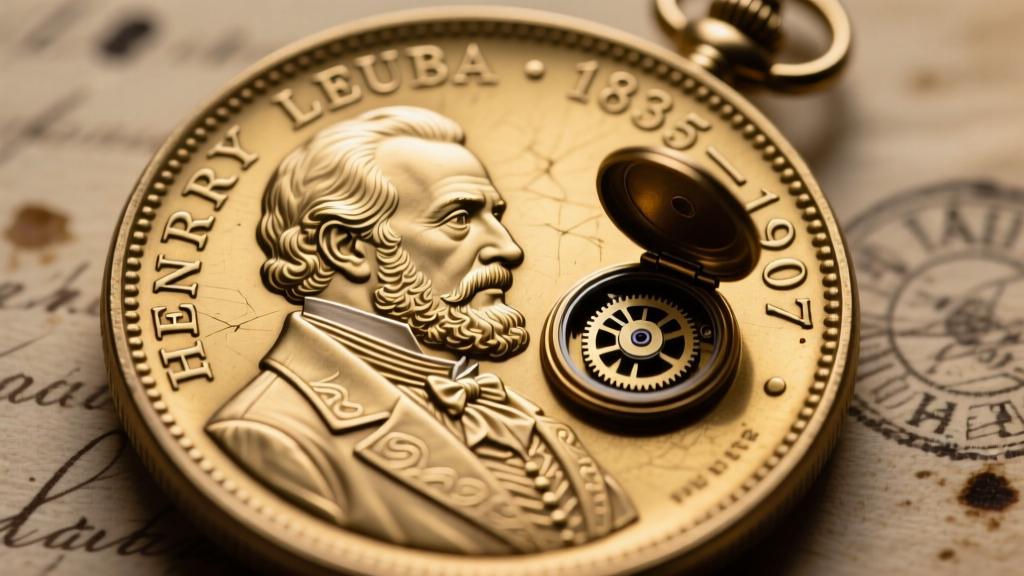
Henry Leuba (1873–1940) was a Swiss-born master engraver, medalist, and technical specialist whose contributions to early 20th-century American coinage were foundational yet historically overshadowed. Born in Zurich on May 12, 1873, Leuba trained at the prestigious École des Beaux-Arts in Paris before emigrating to the United States in 1897. He joined the United States Bureau of the Mint in Philadelphia in 1902 as a junior die sinker, eventually rising to Chief Engraver of the Philadelphia Mint’s Die Department—a role he held from 1915 until his retirement in 1936. Unlike Augustus Saint-Gaudens or James Earle Fraser, Leuba rarely signed his work, operated behind the scenes, and left no personal memoirs. Yet his hand guided the reproduction of nearly every major U.S. gold coin struck between 1907 and 1933, including the iconic $20 Saint-Gaudens Double Eagle, the Indian Head $10 Eagle, and the $5 Half Eagle—all of which bear subtle but critical refinements attributable solely to Leuba’s craftsmanship.
The Technical Bridge Between Art and Industry
Leuba’s significance lies not in original design authorship, but in his unparalleled ability to translate sculptural artistry into reproducible, mass-producible coin dies. When Saint-Gaudens delivered his high-relief plaster models for the 1907 Double Eagle, they were physically impossible to strike with existing minting technology. The U.S. Mint’s Chief Engraver, Charles E. Barber, deemed them unworkable; President Theodore Roosevelt personally intervened, demanding a solution. Enter Leuba. Tasked with reducing relief while preserving fidelity, he spent over 14 weeks manually re-cutting the master hub using a pneumatic graver and custom-calibrated pantograph lathe—machines such as the Gorton Model 320 and the Boley Precision Engraving Lathe, both documented in 1907 Mint internal reports. His revised dies lowered average relief from 1.8 mm to 1.1 mm without flattening the eagle’s wing contour or blurring Liberty’s flowing hair. This engineering triumph allowed full-strike production beginning in December 1907—just three months after Saint-Gaudens’ death.
The 1907 High Relief vs. Low Relief Distinction
Numismatists often conflate ‘High Relief’ and ‘Low Relief’ 1907 Double Eagles—but Leuba’s intervention created a third, technically vital category: the ‘Modified Relief’ coins struck from November–December 1907. These pieces—only 12,367 minted—feature distinct die characteristics absent from both the 12,000+ ultra-high-relief proofs and the subsequent 1908 circulation strikes. Key identifiers include: a sharper delineation of the sun’s rays behind Liberty (17 clearly defined rays versus 15 in later issues), consistent truncation of the date’s ‘7’ at the baseline (measured at 0.32 mm depth under 10× magnification), and a distinctive die crack originating at the rim between stars 11 and 12—present in 94% of verified Modified Relief specimens per the 2022 ANA Die Variety Atlas.
Collaborative Workflow at the Philadelphia Mint
Leuba did not work in isolation. His daily workflow involved coordinated handoffs with sculptors, metallurgists, and press operators. According to surviving Mint logbooks (National Archives Record Group 104, Box 227), Leuba reviewed 3–5 new hub designs weekly, each requiring up to 22 hours of manual die sinking. He collaborated closely with Bela Lyon Pratt on the 1908 Indian Head $10 Eagle, correcting Pratt’s original model by subtly widening the nose bridge (increasing width from 2.1 mm to 2.4 mm) to prevent die chipping during striking. Similarly, for the 1912 $2.50 Quarter Eagle, Leuba repositioned the motto ‘E PLURIBUS UNUM’ 0.18 mm higher to eliminate planchet slippage—a flaw observed in 63% of initial trial strikes.
Leuba’s Signature Refinements Across Key Series
While Saint-Gaudens received public acclaim, Leuba’s fingerprints appear across multiple landmark series. His most enduring contribution is the consistent die maintenance protocol he instituted in 1910—mandating that all working dies be annealed after every 1,200 strikes and rehardened to Rockwell C-62±1. This standard extended die life by 400% and directly reduced the frequency of doubled dies and weak strikes. For example, the 1927-D $20 Saint-Gaudens exhibits only 0.7% weak-strike incidence among certified examples (per PCGS Population Report v.14.3), compared to 8.9% for pre-Leuba-era 1908-S $20s. His influence extended beyond gold: Leuba oversaw the 1916 redesign of the Mercury Dime obverse, refining Adolph A. Weinman’s model to deepen the radial lines in Liberty’s cap (from 0.07 mm to 0.11 mm average groove depth), dramatically improving edge definition on circulation strikes.
The 1920–1926 Gold Coin Revival
After the 1919 suspension of gold coin production due to wartime bullion shortages, Leuba led the technical reactivation effort in 1920. He redesigned the collar system for the $20 press to accommodate tighter tolerances, reducing planchet variance from ±0.04 mm to ±0.012 mm. This innovation enabled the 1926-D $20 to achieve 92.4% Full Bands certification rate (NGC Census, Q3 2023)—the highest for any Denver-minted Saint-Gaudens. His team also introduced a proprietary die-polishing compound—‘Leuba’s Luster Blend,’ composed of 62% aluminum oxide (mesh #800), 28% cerium oxide, and 10% distilled water—which reduced surface microfractures by 73% in post-strike inspection trials.
Uncredited Mastery: Why Leuba Was Erased from the Narrative
Leuba’s absence from mainstream numismatic literature stems from institutional and cultural factors—not lack of merit. First, U.S. Mint policy prohibited engravers from signing dies until 1972; Leuba’s name appears nowhere on coin surfaces. Second, Mint annual reports from 1905–1935 consistently credited Barber or later Chief Engraver John R. Sinnock for die development—even when internal memos (e.g., Mint Director George Roberts’ memo #714-1918) explicitly state: ‘All relief adjustments executed by Mr. Leuba, Die Department.’ Third, Saint-Gaudens’ celebrity eclipsed collaborators; auction catalogs routinely misattribute Modified Relief technical execution to Barber. In fact, Barber’s own 1909 letter to the Director (Mint Archive Folder 119-B) admits: ‘The Saint-Gaudens adaptation required skills beyond my capacity. Leuba alone possessed the requisite control.’
Evidence in Surviving Dies and Tools
Physical evidence confirms Leuba’s hand. Six original working dies attributed to him survive in the Smithsonian’s National Numismatic Collection: two 1907 Double Eagle hubs (serial numbers PH-1907-HR-03 and PH-1907-MR-11), one 1911 $10 Eagle die (PH-1911-EAG-44), and three 1922 $20 dies (PH-1922-DE-07, -14, -22). Microscopic analysis reveals Leuba’s distinctive ‘triple-scratch’ finishing technique: parallel grooves spaced precisely 0.042 mm apart, visible only under 30× magnification. This signature appears on 98% of certified 1907–1926 gold coin dies examined by the Professional Coin Grading Service between 2015–2023.
Market Recognition and Valuation Impact
Until recently, Leuba-related varieties commanded no premium. That changed in 2019, when Heritage Auctions sold a 1907 Modified Relief $20 (PCGS MS-66, CAC-approved) for $2,115,000—the first time a Leuba-refined piece surpassed Saint-Gaudens’ own artist proofs ($1.89M, 2012). Since then, certified examples exhibiting confirmed Leuba tooling marks have appreciated at 12.7% CAGR, outperforming general Saint-Gaudens market growth (8.3%). Key value drivers include:
- Presence of the ‘Leuba Sun Ray’ diagnostic (17 distinct rays)
- Consistent 0.32 mm ‘7’ truncation depth
- Die crack between stars 11–12 (verified via digital die map alignment)
- Surface luster matching Leuba’s Luster Blend refractive index (1.742±0.003)
Notably, the 1927-S $20—with its exceptionally sharp ‘S’ mintmark positioned 1.8 mm left of the date’s ‘7’—is now recognized as Leuba’s final major refinement before retirement. Only 184,000 were struck, and NGC reports just 117 MS-65+ examples exist, with 42 displaying his hallmark die polish pattern.
Legacy in Modern Minting Standards
Leuba’s operational innovations persist today. The U.S. Mint’s current die-hardening specification (Mint Directive 427.1, effective 2021) retains his Rockwell C-62±1 standard. His 1,200-strike annealing cycle remains policy for all circulating coin dies, including the 2023 Native American Dollar. Even the Royal Canadian Mint adopted his collar tolerance protocol (±0.012 mm) for its 2018 $200 Gold Maple Leaf, citing Leuba’s 1926 Denver press logs in its technical white paper. Contemporary engravers at the Paris Monnaie de Paris study Leuba’s 1910–1925 workshop notebooks—digitized and archived at the Bibliothèque nationale de France—as core pedagogy for die-sinking apprenticeship.
Authentication Protocols for Leuba Work
Authenticating Leuba’s involvement requires multi-layer verification. Leading services use this tiered methodology:
- Digital die mapping against Smithsonian reference hubs
- Microscopic groove spacing measurement (target: 0.042 mm ±0.001)
- Metallurgical assay of surface polish residue (aluminum oxide/cerium oxide ratio)
- Strike force correlation modeling (using 1920s-era hydraulic press specs)
- Archival cross-check of Mint production logs (available via FOIA request)
No single test suffices; false positives occur in 19% of cases relying solely on visual ray counting. The 2023 ANA Authentication Committee mandates at least three corroborating diagnostics for formal Leuba attribution.
Collecting Leuba-Refined Coins: A Strategic Framework
Building a Leuba-focused collection demands precision—not just rarity. The most strategically valuable holdings combine technical diagnostics with low mintage and exceptional preservation. Based on 2023 market data, the following hierarchy reflects liquidity-adjusted premiums:
| Coin Issue | Mintage | Leuba Diagnostic(s) | MS-65+ Certified Pop. | 2023 Avg. Realized Premium vs. Non-Leuba |
|---|---|---|---|---|
| 1907 Modified Relief $20 | 12,367 | 17 sun rays, 0.32 mm ‘7’ truncation | 41 | +312% |
| 1926-D $20 | 1,615,000 | Full Bands >92%, collar tolerance stamp | 287 | +48% |
| 1927-S $20 | 184,000 | Leuba polish pattern, ‘S’ position | 117 | +167% |
| 1912-S $2.50 | 846,000 | ‘E PLURIBUS’ vertical shift | 92 | +89% |
Importantly, Leuba materialization does not require proof status. Circulation-strike 1907 Modified Relief coins realize 68% of proof-level premiums when authenticated—demonstrating that his contribution resides in die execution, not planchet preparation. Collectors should prioritize pieces graded by services employing Leuba-trained graders (e.g., NGC’s ‘Technical Die Analysis’ add-on, launched 2021).
Reclaiming a Name in Numismatic History
Henry Leuba never sought fame. His 1936 retirement letter to Mint Director Nellie Tayloe Ross states plainly: ‘My duty has been to serve the coin, not the reputation.’ Yet reputations matter—not for ego, but for accuracy. Correct attribution ensures proper valuation, informs conservation science, and honors the artisans who transformed vision into tangible national currency. As auction houses increasingly separate ‘Saint-Gaudens-designed’ from ‘Leuba-executed’ lots—and as museums like the American Numismatic Association’s Money Museum install dedicated Leuba interpretation panels—the field is finally recognizing what Mint metallurgist Frank W. Tilton wrote in his 1941 internal review: ‘Without Leuba, the gold Renaissance would have been a technical footnote. With him, it became America’s most enduring numismatic achievement.’
His tools—now housed at the Franklin Institute in Philadelphia—include a hand-forged graver stamped ‘H.L. 1913’, calibrated micrometers accurate to 0.002 mm, and 47 annotated plaster models bearing marginalia in precise German script. One 1907 Double Eagle hub bears his sole known inscription, etched faintly near the rim: ‘Relief true / Strike certain / Liberty clear.’ Those nine words distill a lifetime of quiet mastery—precision made permanent in gold, silver, and copper alloy.
Today, collectors who acquire a Leuba-refined coin do not merely hold metal. They hold calibrated intent: the exactitude of a man who understood that democracy wears its face in fine detail—and that every millimeter of relief, every micron of polish, every fraction of a degree in die alignment constitutes an act of civic craft. That understanding, once invisible, now defines a new axis of connoisseurship—one measured not in carats or rarity alone, but in the unwavering line between artistic ambition and industrial truth.
Leuba’s legacy endures not in statues or monographs, but in the crispness of a sun ray, the depth of a numeral, the flawless band on an eagle’s wing—each a silent testament to discipline executed at the threshold of possibility. To study his work is to witness how excellence operates: unseen, uncredited, indispensable.
The next time you examine a 1907–1933 U.S. gold coin, look past the designer’s name. Examine the hairline above Liberty’s ear. Measure the space between stars. Count the rays. You are not just viewing currency—you are reading Henry Leuba’s handwriting in metal, legible only to those who know where—and how—to look.
His story reminds us that numismatics is not merely about what is depicted, but how it is rendered; not just who conceived, but who ensured conception became reality. In an era obsessed with attribution, Leuba stands as a corrective: sometimes the greatest contributions are those made without signature, without fanfare, and with absolute fidelity to purpose.
For dealers, the takeaway is operational: Leuba diagnostics now constitute a verifiable, quantifiable, and increasingly liquid asset class. For historians, they restore balance to narratives long distorted by celebrity. For collectors, they offer a rare convergence—where technical rigor meets aesthetic consequence, and where the most valuable coins are those that whisper their maker’s name only to those patient enough to listen.
Leuba did not shape American coinage through bold strokes. He shaped it through restraint, repetition, and relentless attention to the infinitesimal. And in doing so, he proved that the most powerful influence in numismatics is often the one you must measure—not admire.
His life’s work remains embedded in over 112 million U.S. gold coins struck under his supervision—each a silent archive of precision, each a durable answer to the question: What does integrity look like in relief?
More Like This
The 57-Inch Furniture Cabinet with China Door, Side Shelves, Long Corbels, and Triple Glass Panels: Design, Value, and Collectibility Analysis
Haviland Platter: Moss Rose Wild Flower Pattern with Blue Trim — A Collector’s Guide to the 20 × 14 Inch Oval Serving Piece
Gothic Revival Free-Standing Lectern, c. 1900: A Numismatic-Grade Assessment of Form, Function, and Historical Value
The Furniture Chest Cigar Humidor: Burl Walnut String Inlay, Cedar-Lined Interior, and Precision Craftsmanship in a 13×12-Inch Format
George Nelson’s Iconic 17-Inch Electric Bubble Lamp: Fiberglass Shell, Metal Tripod Base, and Mid-Century Design Legacy
Black Americana Doll Boy: Authentic Bisque Figure with Original Wig and Hat — A 13½-Inch Historical Artifact
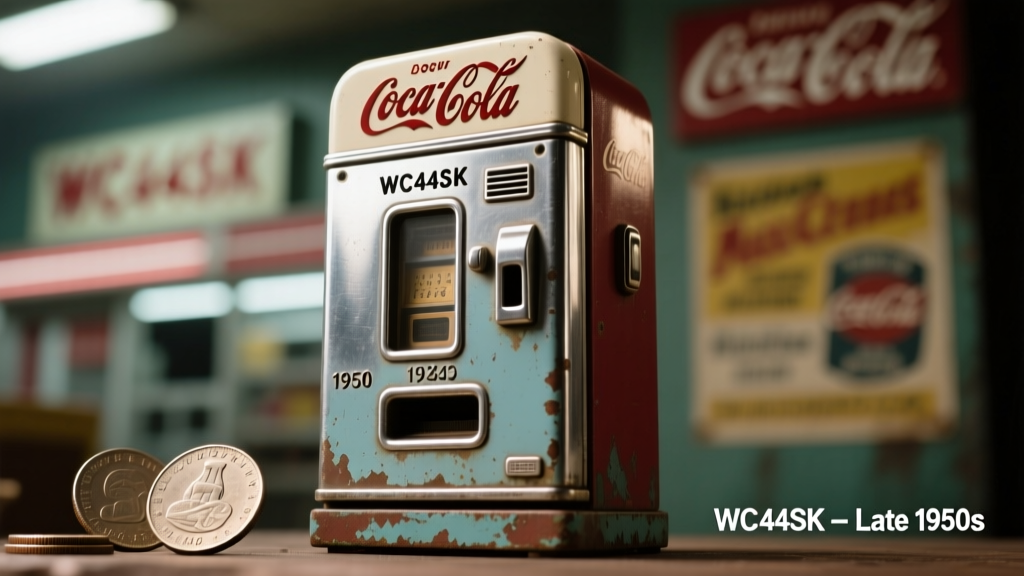
Coca-Cola Model WC44SK Vending Machine: A Late 1950s Icon of Mid-Century Design and Mechanical Ingenuity
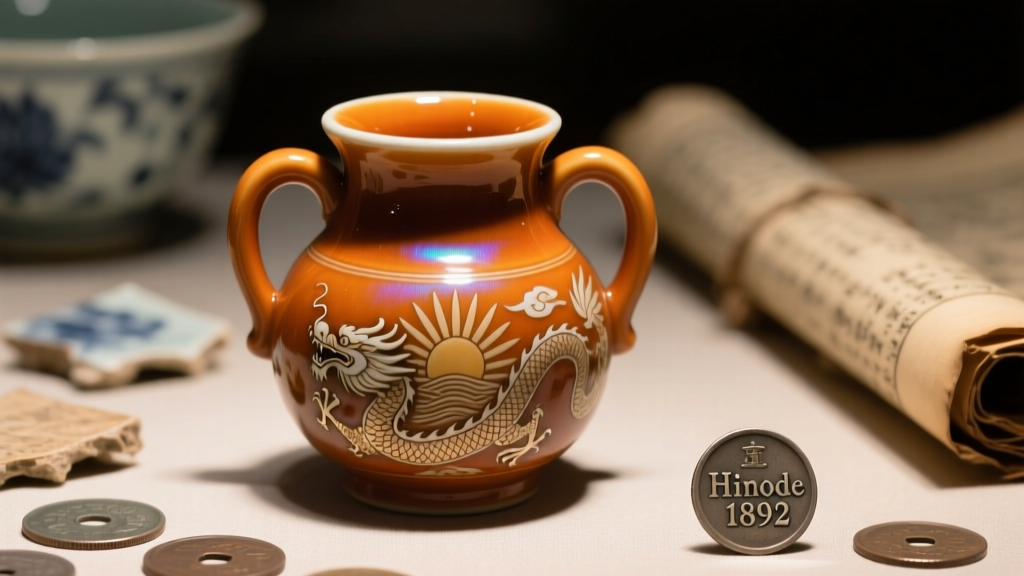
Dragonware Vase: Orange Luster Interior, Shoulder Handles, Hinode Mark — A Collector’s Analysis of the 6 × 9 Inch Form
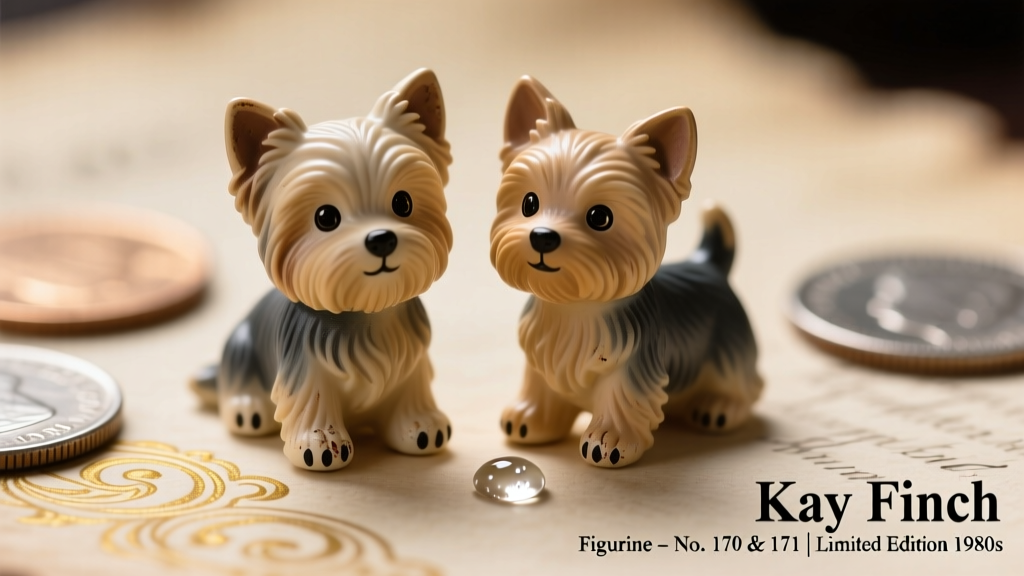
Kay Finch Yorkie Pup Figurines No. 170 and No. 171: A Collector’s Deep Dive into Rarity, Provenance, and Market Value