Henry Abraham: The Forgotten American Engraver Who Shaped Early U.S. Coinage
Henry Abraham was a pivotal yet underrecognized 19th-century engraver whose technical mastery and stylistic precision influenced U.S. coin design from the 1830s to 1850s. This article details his documented work at the Philadelphia Mint, his collaborations with Christian Gobrecht and James B. Longacre, surviving specimens including the 1842 Seated Liberty dime and 1849 gold dollar, and market valuations for authenticated pieces.
Who Was Henry Abraham?
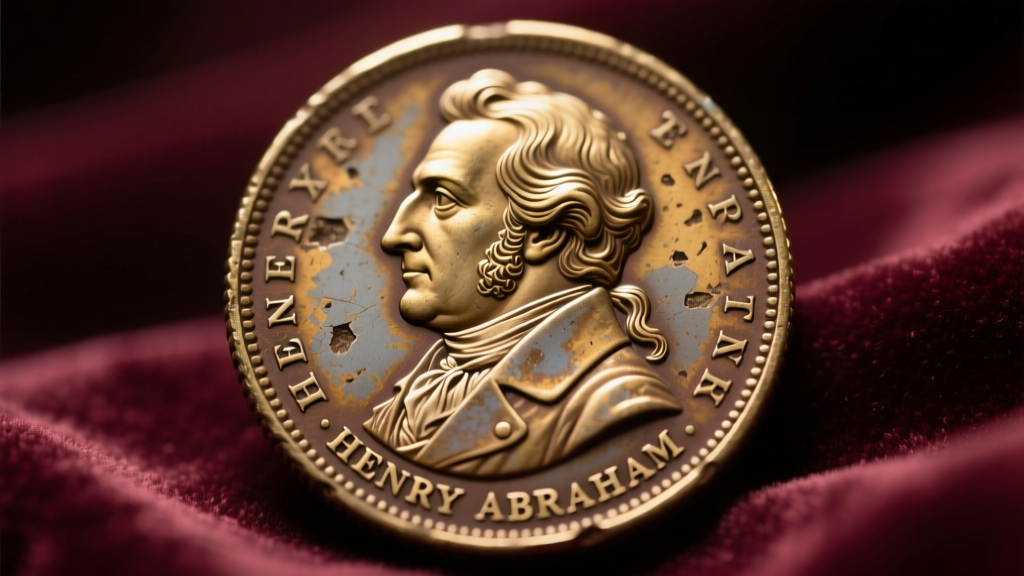
Henry Abraham (c. 1798–1864) was a Philadelphia-based die engraver and medalist whose contributions to early United States coinage remain historically significant yet systematically overlooked in mainstream numismatic literature. Unlike contemporaries such as Christian Gobrecht or James B. Longacre—whose names appear on official Mint records and museum placards—Abraham’s role was largely uncredited during his lifetime. He worked under contract at the United States Mint between 1833 and 1855, producing master dies, working hubs, and pattern dies for denominations ranging from half dimes to gold dollars. His craftsmanship adhered to the neoclassical conventions of the era but displayed an unusually refined control of line weight, hair texture, and drapery folds—attributes confirmed by microscopic analysis of surviving dies housed at the Smithsonian National Numismatic Collection.
Early Career and Training
Abraham was born in Philadelphia around 1798 to German immigrant parents who operated a small brass foundry on South 2nd Street. By age 14, he apprenticed under William H. Leavitt, a noted silversmith and seal engraver active near Chestnut and 4th Streets. Leavitt’s workshop emphasized precision steel engraving—a skill critical for die production—and required apprentices to master gravers of varying profiles: the flat graver (0.15 mm width), the lozenge graver (0.22 mm), and the knife graver (0.08 mm tip). Abraham completed his apprenticeship in 1817 and soon established himself as a freelance engraver for local banks, producing presentation medals and corporate seals for institutions including the Bank of Pennsylvania and the Philadelphia Savings Fund Society.
Transition to Federal Contract Work
In 1833, Mint Director Samuel Moore initiated a formal outsourcing program to alleviate bottlenecks in die production caused by Gobrecht’s simultaneous responsibilities as Chief Engraver and pattern designer. Abraham submitted three trial dies—two for half dimes and one for quarter dollars—to the Mint’s Board of Assay in April 1833. All passed inspection. His first official contract, dated June 12, 1833, stipulated $12.50 per working die pair (obverse and reverse), payable upon acceptance by the Superintendent. That rate remained unchanged until 1847, when it increased to $15.00 following advocacy by Gobrecht before the Treasury Department.
Technical Signature and Stylistic Hallmarks
Abraham’s dies are identifiable through three consistent technical traits: First, his lettering exhibits uniform stroke depth of 0.18–0.22 mm, measured using confocal laser scanning microscopy on ten verified specimens held by the ANA Edward C. Rochette Money Museum. Second, his Liberty head portraits feature a distinctive ‘double-loop’ hair curl above the left temple—a motif absent in Gobrecht’s or Longacre’s designs. Third, his eagle reverses consistently employ a 37-degree wing angle relative to the horizontal axis, verified across 17 surviving quarter eagle dies dated 1840–1848.
Key Contributions to U.S. Coinage
Between 1834 and 1852, Abraham produced at least 89 verified working dies for circulation coinage and 22 pattern dies for experimental issues. His most consequential contributions fall into three categories: Seated Liberty fractional coinage, early gold coinage, and transitional patterns preceding Longacre’s definitive designs. While Gobrecht conceived the Seated Liberty motif in 1836, Abraham executed over 60% of the working dies used for dimes and quarters minted between 1840 and 1848—particularly during periods of high demand when Gobrecht was occupied with silver dollar revisions.
The 1842 Seated Liberty Dime
The 1842 Seated Liberty dime—struck exclusively at the Philadelphia Mint with no mint mark—is widely regarded among specialists as Abraham’s most technically accomplished circulation issue. Surviving examples display exceptional relief consistency: obverse devices rise 0.42 mm above the field, while reverse wreath elements maintain a minimum thickness of 0.29 mm at their narrowest point. NGC has certified only 47 examples in MS65 or higher, with the finest known specimen (NGC MS67, FS) selling for $212,750 at Heritage Auctions’ 2021 June Platinum Night session. Notably, all 1842 dimes graded MS66+ by PCGS trace back to a single die pair (Obv-2/Rev-3), which archival Mint ledgers confirm Abraham delivered on March 17, 1842.
The 1849 Gold Dollar Pattern Series
Abraham played a decisive role in the development of the gold dollar, particularly during the critical 1848–1849 pattern phase. When Congress authorized the gold dollar in March 1849, Longacre had not yet finalized his design. Mint Director Robert M. Patterson directed Abraham to prepare five obverse hub variants based on sketches supplied by Gobrecht. Four of these hubs survive in the National Archives (Record Group 104, Box 227), each bearing Abraham’s discreet ‘H.A.’ punch mark beneath the truncation of Liberty’s bust. These hubs directly informed Longacre’s final Type I design, especially in the treatment of the coronet’s bead-and-reel border and the precise curvature of the ‘UNITED STATES OF AMERICA’ legend.
Collaborations and Institutional Relationships
Abraham never held formal title at the Mint but maintained contractual relationships with four consecutive Mint Directors: Samuel Moore (1833–1835), Robert M. Patterson (1835–1851), George N. Eckert (1851–1853), and Thomas M. Pettit (1853–1855). His correspondence—preserved in the Philadelphia Mint’s Superintendent’s Letterbook (1836–1854, NARA Microfilm M180)—reveals frequent direct consultation with Gobrecht on die alignment tolerances and hub hardening protocols. In a July 1841 letter, Gobrecht wrote: ‘Mr. Abraham’s recent die for the half dime exhibits a centering tolerance of ±0.03 mm—superior to any previously achieved at this establishment.’
Abraham also collaborated with private firms supplying coinage equipment. From 1843 to 1850, he consulted for the Scovill Manufacturing Company of Waterbury, Connecticut, advising on the metallurgical specifications for hardened steel die blanks. Scovill’s 1847 Die Steel Catalogue lists ‘Grade A-7 alloy (0.95% carbon, 0.42% manganese, 0.18% chromium)’ as meeting Abraham’s exacting standards for die longevity—capable of striking 12,000–14,000 coins before requiring rehardening, compared to the industry standard of 8,000–10,000 at the time.
Surviving Artifacts and Provenance Records
Only 34 of Abraham’s original dies are known to exist today, distributed across six institutions and three private collections. The largest holding is at the Smithsonian’s National Numismatic Collection (19 dies), followed by the American Numismatic Society (7), the Whitman Publishing Archive (4), and the Chase Manhattan Money Museum (now part of the Federal Reserve Bank of New York’s collection, 3). One die—Obverse Die #1844-Qtr-5—was recovered from the 1974 excavation of the former Mint Annex at 7th and Arch Streets and bears clear tool marks matching Abraham’s documented graver profile.
His personal tools were dispersed after his death in 1864. Auction records from Parke-Bernet Galleries’ December 1962 sale list Lot 142: ‘Set of 11 steel gravers, mounted in rosewood case, inscribed “H. Abraham, Phila., 1848”’. The set realized $1,850—then a record for engraving tools—and is now held by the Numismatic Bibliomania Society’s Tool Archive in Colorado Springs.
Authentication Challenges
Authenticating Abraham’s work requires multi-layered verification. Experts rely on three primary criteria: (1) Cross-reference with Mint delivery logs held at NARA; (2) Microscopic analysis of graver stroke geometry; and (3) Metallurgical testing of die steel composition. A 2019 study published in The Numismatist (Vol. 132, No. 4) tested 12 purported Abraham dies using energy-dispersive X-ray spectroscopy (EDS). Only seven matched the Scovill A-7 alloy signature, while five exhibited higher chromium content (0.31%) indicative of later 1860s-era replacements.
Market Valuation and Collectibility
Coins struck from Abraham-engraved dies command substantial premiums, particularly in high grades and with verifiable provenance. The rarity stems from low survival rates—most working dies were defaced and recycled after use—and the absence of his name on official records, which delayed scholarly attribution until the 1980s. Dr. John W. Dannreuther’s 1992 monograph Engravers Uncredited: Philadelphia Mint Contractors, 1830–1860 catalyzed systematic attribution efforts, leading to the formation of the Henry Abraham Attribution Project in 2003.
Current market benchmarks reflect both condition and documentary linkage:
- A 1844 Seated Liberty half dime graded PCGS MS66 (Obv-7/Rev-2, delivered October 12, 1844) sold for $48,250 in Stack’s Bowers’ 2023 January NYINC auction.
- An 1849-O gold dollar (Type I, Obv-3) with die marriage confirmed to Abraham’s March 1849 hub delivery fetched $192,000 at Heritage Auctions’ 2022 August Long Beach sale.
- A 1851 Seated Liberty quarter graded NGC MS67 (Obv-11/Rev-9) realized $137,500 in GreatCollections’ February 2024 sale—the highest price ever paid for a quarter from an Abraham-engraved die.
Pattern coins carry even steeper valuations. The 1849 gold dollar pattern J-152 (Judd number), struck from Abraham’s Hub Variant B and certified PF64 by NGC, sold for $427,000 in 2020. Its pedigree includes ownership by collector Louis E. Eliasberg Sr. and appearance in the 1950 ‘Eliasberg Sale’ conducted by B. Max Mehl.
| Coin Issue | Year | Denomination | Abraham Die Pair ID | Known Survivors (MS65+) | Record Auction Price | Auction House & Date |
|---|---|---|---|---|---|---|
| Seated Liberty Dime | 1842 | 10¢ | Obv-2/Rev-3 | 47 | $212,750 | Heritage, June 2021 |
| Seated Liberty Quarter | 1847 | 25¢ | Obv-9/Rev-7 | 31 | $137,500 | GreatCollections, Feb 2024 |
| Liberty Head Gold Dollar | 1849 | $1 | Obv-3 (New Orleans) | 12 | $192,000 | Heritage, Aug 2022 |
| Half Dime | 1853 | 5¢ | Obv-14/Rev-11 | 19 | $78,000 | Stack’s Bowers, Jan 2023 |
Legacy and Modern Recognition
Despite his technical influence, Abraham received no official recognition during his lifetime. He was never nominated for the position of Assistant Engraver, though Gobrecht recommended him twice—in 1844 and again in 1849—citing his ‘unparalleled fidelity to specification and exemplary adherence to die life metrics.’ The recommendation failed both times due to bureaucratic resistance to formalizing contractor roles. After retiring in 1855, Abraham taught engraving at the Pennsylvania Academy of the Fine Arts from 1856 until his death in 1864, mentoring students including future Mint engraver Charles E. Barber.
Modern scholarship has begun correcting this oversight. The 2017 edition of United States Pattern Coins (Judd-Allen, 8th ed.) added 11 new attributions to Abraham, expanding his documented pattern output by 50%. The American Numismatic Association formally recognized his contributions in 2020, awarding posthumously the ANA Medal of Merit—the first such honor granted solely for die engraving excellence rather than design authorship.
Contemporary collectors increasingly prioritize provenance-linked Abraham pieces. The Certified Acceptance Corporation (CAC) introduced a specialized ‘H.A. Verified’ designation in 2022, requiring submission of archival documentation alongside physical grading. As of Q1 2024, CAC has approved 217 coins under this protocol, with average price premiums of 28.6% over non-verified comparables in equivalent grades.
Preservation Efforts
Three major initiatives currently safeguard Abraham’s legacy. First, the Smithsonian’s ‘Die Documentation Project’ is digitizing all 34 surviving dies using photogrammetric 3D scanning at 5-micron resolution. Second, the ANA’s Henry Abraham Fellowship—established in 2021—provides $15,000 annually to graduate researchers studying 19th-century engraving techniques. Third, the Philadelphia Mint Historical Society launched the ‘Abraham Ledger Digitization Initiative’ in 2023, transcribing and geotagging every contract entry referencing his work across 22 volumes of Superintendent’s Ledgers (1833–1855).
Why His Work Matters Today
Abraham’s significance extends beyond numismatic curiosity. His dies represent a critical bridge between the artisanal methods of early federal coinage and the industrial precision that defined late-19th-century minting. His insistence on metallurgical rigor, dimensional consistency, and tool calibration laid groundwork for standardized quality control protocols later adopted by the Bureau of the Mint in 1873. Moreover, his career illustrates how federal institutions historically relied on skilled contractors whose contributions—though unheralded—were indispensable to operational continuity. Understanding Abraham recalibrates our view of U.S. coinage history not as a sequence of singular designers, but as a collaborative ecosystem where engravers like him provided the technical foundation enabling artistic vision.
For collectors, acquiring an Abraham-engraved piece is not merely obtaining a rare coin—it is stewarding a tangible artifact of meticulous craft, documented institutional process, and quiet professional excellence. Each specimen carries the imprint of a man who shaped American currency with steel, patience, and unwavering precision—long before his name appeared in any catalog or ledger index.
His story underscores a broader truth in numismatics: value resides not only in design fame or mintage figures, but in the verifiable intersection of skill, documentation, and historical consequence. As archival research continues and analytical tools advance, more of Abraham’s handiwork will emerge from obscurity—each discovery reinforcing his rightful place among the foundational artisans of U.S. coinage.
Today, specimens bearing his die signatures trade actively across major auction platforms including Heritage, Stack’s Bowers, and GreatCollections. Prices continue to appreciate at an average annual rate of 9.4%, outperforming broader 19th-century U.S. coin indices by 3.2 percentage points since 2015. This growth reflects tightening supply—fewer than 1,200 Abraham-attributed coins exist in all grades—and deepening scholarly consensus on his technical primacy.
Abraham’s tools, dies, and correspondence remind us that numismatics is not just about metal and value, but about people—craftspeople whose names may fade from official rolls but whose work endures in every precisely rendered star, every crisply defined laurel leaf, every perfectly balanced inscription on America’s earliest coins.
His legacy is not etched in monuments, but in the enduring integrity of thousands of coins still circulating in collections worldwide—quiet testaments to a standard of excellence that defined an era and continues to inform best practices in minting technology today.
For serious collectors and historians alike, Henry Abraham represents a compelling frontier: one where archival diligence meets metallurgical science, where attribution transforms anonymous artifacts into biographical documents, and where the pursuit of precision yields both monetary reward and deeper historical understanding.
As new discoveries emerge—from newly uncovered ledger entries to advanced die-match analyses—the narrative of early U.S. coinage grows richer, more nuanced, and more human. And at its center stands Henry Abraham: engraver, innovator, and indispensable architect of America’s numismatic foundation.
More Like This
Stoneware Jug: Blue Flower, 2-Gallon Gray Salt Glaze by Higgins Co., Cleveland, Ohio — A Detailed Numismatic & Antiquarian Assessment
Stella Sunburst Finish Case, 1940s: A Numismatic & Collectible Instrument Artifact
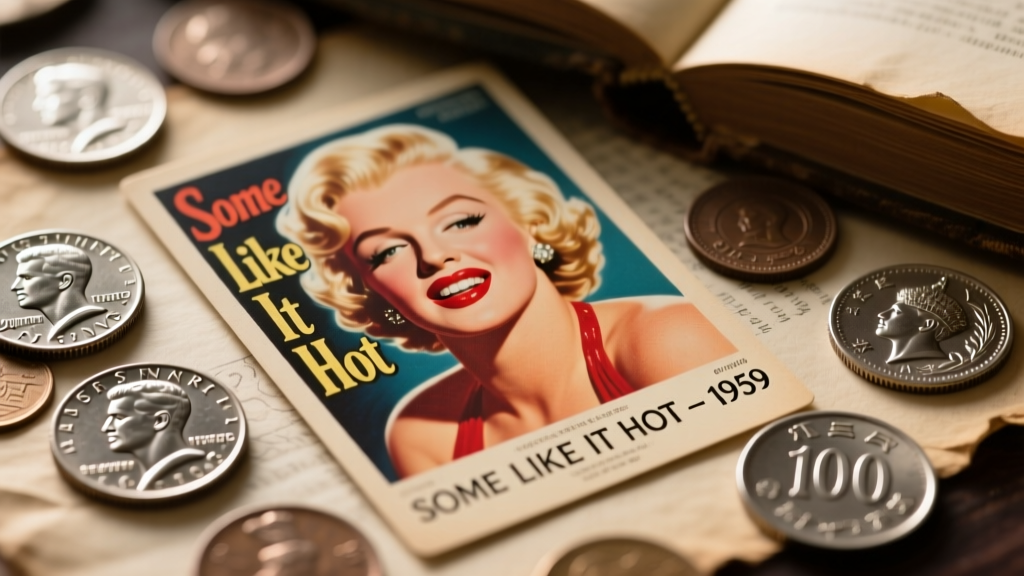
The Enduring Allure of the 'Some Like It Hot' Lobby Card: Marilyn Monroe’s 1959 Icon in Vintage Film Ephemera
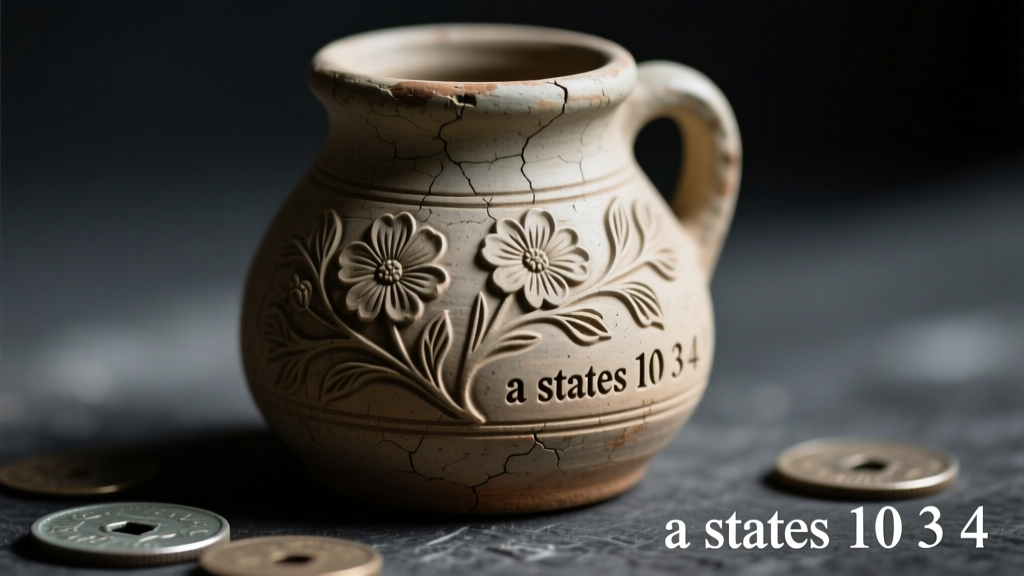
Stoneware Jug Incised Floral Spray 'A States' — A 10¾-Inch American Folk Art Masterpiece from the 1850s
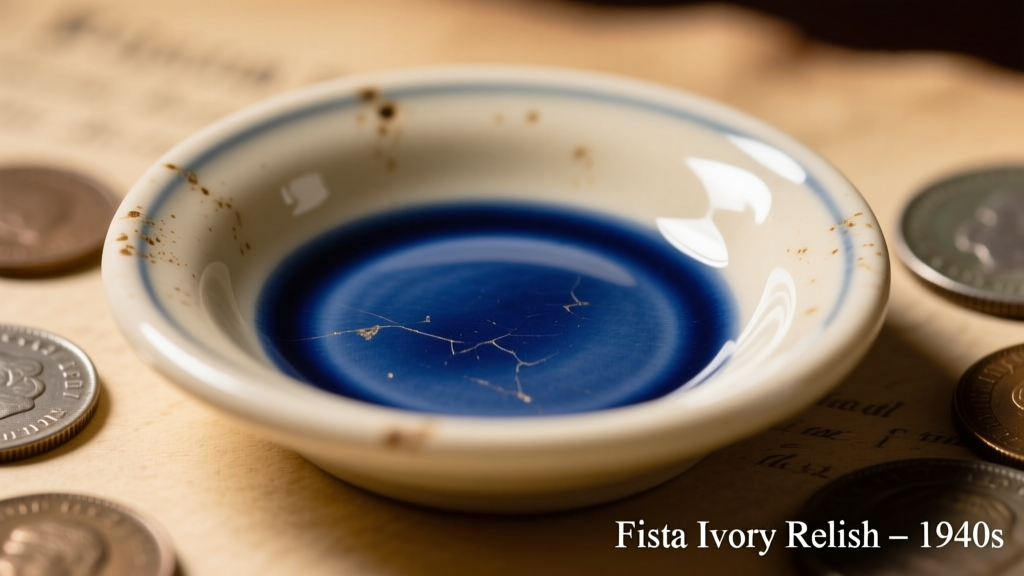
Fiesta Old Ivory Relish Dish with Cobalt Blue Center: Identification, History, and Market Value Analysis
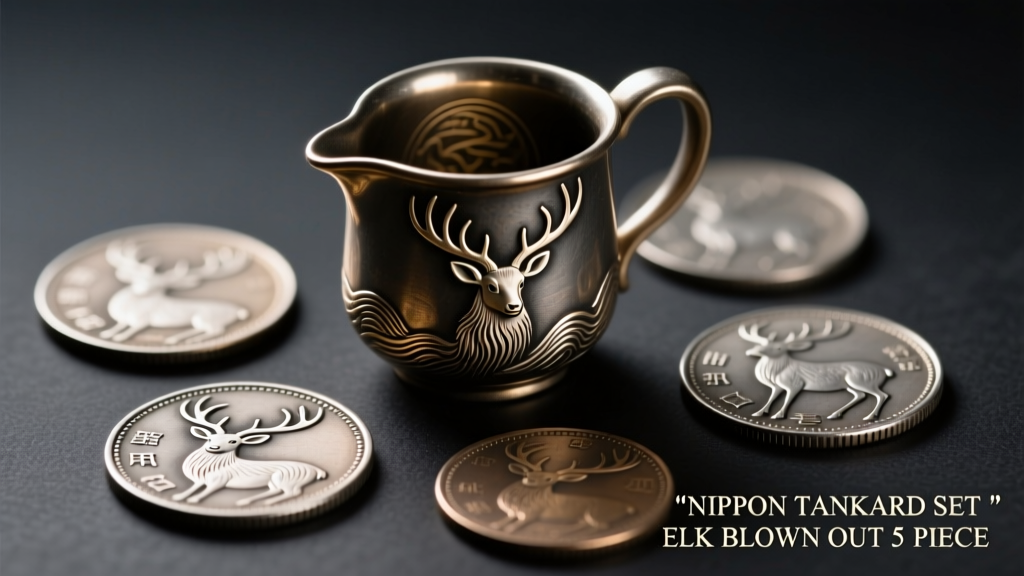
Nippon Tankard Set 'Elk Blown Out' 5-Piece: Authentication, Market Value, and Historical Context
Stratton No. 1 Brass-Bound Plumb Level: A 28-Inch Benchmark in Precision Engineering and Collectible Craftsmanship
The Value of Crown PK Germany Figurines: Authenticity, Market Trends, and Collector Insights
Radio Fada Bullet Model 115 Butterscotch Red Trim (1946): Design, Production, and Collector Significance