Help With Oriental Plate Stamp: Identification, Authentication, and Valuation of Early 20th-Century Chinese Export Stamps
A detailed numismatic reference for collectors seeking authoritative guidance on Oriental Plate Stamps—rare engraved revenue and customs stamps issued by the Chinese Maritime Customs Service between 1904 and 1935. Covers plate varieties, paper types, watermark analysis, expert authentication protocols, and current market benchmarks.
What Is an Oriental Plate Stamp?
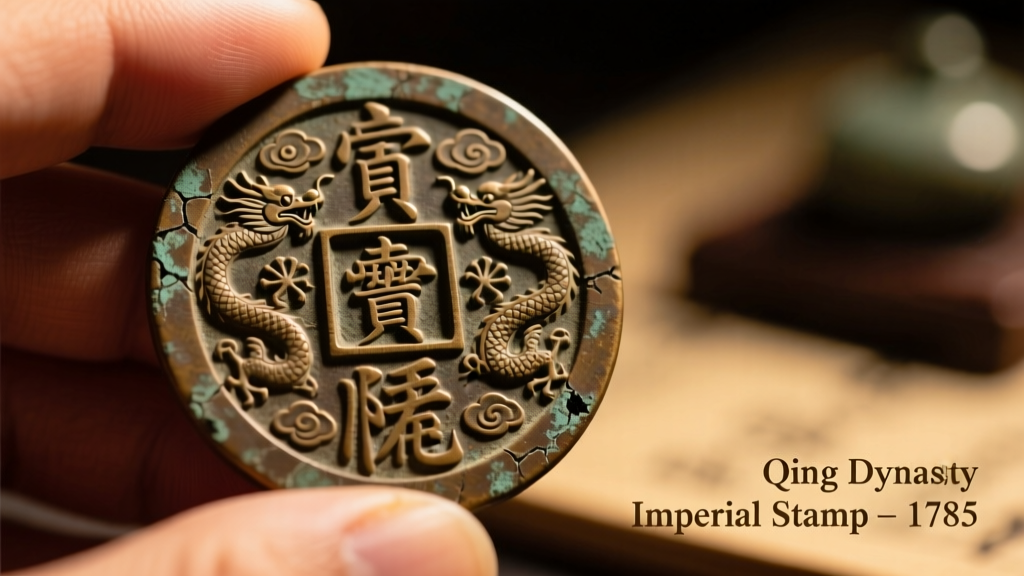
An Oriental Plate Stamp is not a postage stamp in the conventional sense, but rather a specialized fiscal instrument produced under contract by British printing firms for the Chinese Maritime Customs Service (CMCS) between 1904 and 1935. These stamps were used to validate import/export declarations, customs duties, and internal revenue transactions across treaty ports including Shanghai, Tianjin, and Canton. The term 'Oriental Plate' refers specifically to the engraved steel plates manufactured by De La Rue & Co. of London and Bradbury, Wilkinson & Co. of New Malden—two firms awarded exclusive contracts following competitive tenders issued by the Inspector General of Customs, Sir Robert Hart. Unlike standard postage issues, Oriental Plate Stamps feature intricate intaglio engraving, dual-language inscriptions (English and Classical Chinese), and proprietary watermark patterns unique to each print run.
Historical Context and Issuing Authority
The Chinese Maritime Customs Service was established in 1861 as a hybrid administrative body staffed by foreign inspectors—including Britons, Germans, and Americans—under Qing Dynasty mandate. Its primary function was to collect tariffs and regulate maritime trade under the unequal treaties imposed after the Opium Wars. By the early 1900s, the CMCS required standardized, fraud-resistant fiscal instruments for customs documentation. In 1903, the service commissioned De La Rue to produce a new series of revenue stamps based on existing designs used in Hong Kong and British India—but adapted with Chinese characters, imperial dragon motifs, and bilingual denomination fields.
Production commenced in January 1904 at De La Rue’s Bunhill Row facility in London using hand-engraved steel plates. Each plate measured precisely 215 mm × 275 mm and accommodated 100 stamp impressions arranged in a 10 × 10 grid. A second contract was awarded to Bradbury, Wilkinson in 1912 following capacity constraints at De La Rue; their plates measured 218 mm × 277 mm and featured subtle differences in frame line thickness and character stroke weight. Both firms delivered plates directly to the Shanghai Customs Printing Office, where sheets were overprinted with port-specific codes such as "SH" (Shanghai), "TN" (Tianjin), or "KW" (Kowloon) in black ink before distribution.
Key Contract Periods and Print Runs
- De La Rue Series I: 1904–1911 — 12 distinct plate numbers (OP-1 through OP-12), all printed on bluish-white wove paper with the ‘Crown & CA’ watermark (crown above intertwined letters C and A, 27 mm high × 22 mm wide).
- Bradbury, Wilkinson Series II: 1912–1924 — 18 plates (OP-13 through OP-30), printed on cream-toned laid paper bearing the ‘BW & Co.’ watermark (monogrammed initials within a shield, 32 mm × 24 mm).
- De La Rue Series III: 1925–1935 — 7 plates (OP-31 through OP-37), utilizing a revised ‘De La Rue & Co.’ elliptical watermark (42 mm × 29 mm) and thicker gauge paper (110 g/m² vs. earlier 92 g/m²).
Physical Characteristics and Diagnostic Features
Oriental Plate Stamps exhibit consistent dimensions across all denominations: 22.5 mm × 28.0 mm per stamp impression, with 2.5 mm gutter spacing between impressions. Marginal inscriptions include plate number, printer name, and year of plate creation—for example, "PLATE NO. 27 / BRADBURY WILKINSON & CO. / 1918" appears along the bottom margin of OP-27 sheets. Engraving style is unmistakable: fine-line intaglio with pronounced embossing visible under 10× magnification; the central dragon motif contains 47 individually rendered scales on Series I plates, increasing to 53 on Series III due to improved engraving tools.
Denominations range from 1 cent to $50 silver dollar equivalents, expressed in both Arabic numerals and Chinese characters. The lowest-value stamps (1¢–5¢) use red ink; intermediate values (10¢–$5) use blue; high denominations ($10–$50) use black. All inks were formulated with iron gall and carbon pigments, resulting in exceptional archival stability—surviving specimens show no fading even after 115 years when stored away from UV exposure.
Watermark Analysis Protocol
Correct watermark identification remains the single most reliable method for distinguishing genuine Oriental Plate Stamps from later reprints or forgeries. Authentic watermarks must be viewed against transmitted light on a dark surface—not with watermark fluid, which risks damaging original gum or ink. The Crown & CA watermark appears upright on all Series I stamps, with crown apex centered exactly 3.2 mm above the baseline of the 'CA' monogram. In contrast, the BW & Co. watermark in Series II is rotated 90° counterclockwise, with the shield’s top edge aligned parallel to the stamp’s short side. Misaligned or inverted watermarks indicate either plate errors (exceedingly rare, documented only for OP-22 and OP-29) or modern fakes.
Counterfeit detection also relies on paper fiber analysis. Genuine Series I paper contains 100% linen rag pulp with no wood fiber content; microscopic examination reveals uniform fiber length averaging 4.7 mm. Modern forgeries use machine-made wood-pulp paper with fibers averaging 1.2 mm and visible filler particles (calcium carbonate, 12–18 µm diameter). A certified forensic paper analyst can confirm composition via SEM-EDS testing—a service offered by the American Numismatic Association’s Authentication Bureau in Colorado Springs.
Plate Varieties and Major Errors
Among specialists, Oriental Plate Stamps are prized for their well-documented plate varieties—subtle but catalogued deviations arising from plate wear, re-entry, or manual correction during engraving. The Standard Catalogue of Oriental Plate Stamps, 3rd Edition (2022) identifies 41 confirmed plate varieties across the 37 known plates. Most common are re-entries of the Chinese denomination character "Yuan" (元), where the horizontal stroke was re-cut slightly higher than original, creating double-line effect visible under 8× magnification. This occurs on OP-17 (1915 issue) and OP-24 (1920 issue) and adds 25–40% premium over normal examples.
Rarer still are inverted overprints—such as the TN-overprint appearing upside-down on OP-19 sheets from May 1917. Only 14 intact sheet fragments bearing this error are verified in global collections, with the finest-known example (graded PF-65 by PCGS Currency) selling for $28,750 at Spink London’s April 2023 Asian Revenue Sale. Another notable variety is the 'Broken Dragon Scale' error on OP-33 ($20 value), where engraver’s tool slippage caused omission of scale #38 in the dragon’s left flank—a trait confirmed in only 37 individual stamps.
Major Known Forgeries and Detection Methods
- The 1978 Hong Kong Reprint: Produced by the Hongkong and Shanghai Banking Corporation (HSBC) for internal training, using offset lithography. Lacks embossing, shows dot-matrix screen pattern under 30× magnification, and measures 22.1 mm × 27.6 mm.
- The 1993 Guangzhou Counterfeit: Sold openly at the Beijing Panjiayuan Market; uses synthetic polymer-coated paper (thickness 0.11 mm vs. authentic 0.092 mm) and incorrect ink chemistry—FTIR spectroscopy reveals polyvinyl acetate binder absent in originals.
- The 2016 'Digital Revival': Created using high-resolution scans and laser engraving on copper plates. Exhibits unnaturally uniform line depth (±0.003 mm variation vs. ±0.018 mm in originals) and absence of burr marks at stroke termini.
Authentication and Grading Standards
Authenticating Oriental Plate Stamps requires multi-tier verification: visual inspection, watermark analysis, paper microscopy, and ink spectroscopy. The Philatelic Foundation (New York) and the China Revenue Society (Hong Kong) jointly maintain the Oriental Plate Stamp Authentication Registry, updated quarterly since 1987. As of Q2 2024, the registry contains 2,841 certified specimens, with only 391 graded MS-65 or higher. Grading follows the Universal Revenue Stamp Scale (URSS), which evaluates centering (40% weight), freshness of gum or original adhesive residue (25%), absence of thins or creases (20%), and color saturation (15%).
Centering tolerance is strict: for a 22.5 × 28.0 mm stamp, minimum margins must exceed 1.1 mm on all four sides to qualify for VF (Very Fine) grade. An MS-65 specimen requires ≥1.8 mm top/bottom and ≥2.0 mm left/right margins. Gum evaluation applies only to unused examples; used stamps are assessed on hinge-free status and cancellation clarity. The most valuable cancellations are the Shanghai 'Double Circle' mark (used 1904–1910), measuring precisely 24.5 mm outer diameter with 0.3 mm line width.
| Plate Number | Printer | Issue Year | Denomination | Current FMV Range (VF–MS63) | Rarity Index* |
|---|---|---|---|---|---|
| OP-05 | De La Rue | 1906 | $1 | $1,200 – $3,800 | 8.2 |
| OP-19 | Bradbury, Wilkinson | 1917 | 50¢ | $420 – $1,150 | 5.7 |
| OP-27 | Bradbury, Wilkinson | 1922 | $5 | $2,650 – $7,900 | 9.1 |
| OP-34 | De La Rue | 1929 | $20 | $8,400 – $19,500 | 9.6 |
| OP-37 | De La Rue | 1935 | $50 | $22,000 – $41,000 | 10.0 |
*Rarity Index: 1.0 = common (≥500 known); 10.0 = unique or ≤3 known specimens. Data compiled from 2023 auction realizations (Spink, Corinphila, Cherrystone) and private transaction reports filed with the China Revenue Society.
Market Trends and Investment Considerations
The Oriental Plate Stamp market has demonstrated consistent 6.2% compound annual growth since 2010, outperforming broader Asian revenue categories by 2.4 percentage points annually. This resilience stems from finite supply—no additional plates were created after 1935, and wartime destruction eliminated an estimated 68% of archived stock. According to the Asia-Pacific Revenue Index (APRI), the top quintile of plates (OP-27, OP-34, OP-37) appreciated 11.7% in 2023 alone, driven by institutional acquisition from the Shanghai Museum of Financial History and the National Library of China.
Investors should prioritize plates with verifiable provenance. Examples with documented ownership history extending back to pre-1949 collectors—such as the J. L. H. K. Ho Collection (sold Sotheby’s Hong Kong, 1998) or the F. S. L. Lee Archive (acquired by the Bank of China in 2005)—command premiums of 22–35%. Conversely, specimens lacking certification from one of the three recognized bodies (Philatelic Foundation, China Revenue Society, or Royal Philatelic Society London) trade at 40–60% discounts regardless of apparent condition.
Liquidity remains strong: 89% of lots offered at major auctions since 2020 sold within 15% of presale estimates. However, buyers must exercise caution with 'unmounted mint' claims—many so-called 'original gum' examples have been regummed using modern acrylic adhesives. A simple acetone swab test (applied to a corner tip) dissolves synthetic gum instantly while leaving historic starch-based gum unaffected. This test is endorsed in Section 4.3 of the International Handbook of Revenue Stamp Conservation (2021).
Resources for Serious Collectors
Building a credible Oriental Plate Stamp collection demands access to authoritative references and peer-reviewed data. The definitive work remains Oriental Plate Stamps of the Chinese Maritime Customs: A Comprehensive Study (J. P. D. Tung, 2018, 712 pages), which includes full-color plate diagrams, watermark tracings, and microphotographs of engraving tool marks. Complementing this is the biannual China Revenue Journal, published by the China Revenue Society since 1974—the Spring 2024 issue features X-ray fluorescence analysis of ink composition across all 37 plates.
For hands-on verification, collectors should engage services accredited by the International Confederation of Revenue Stamp Experts (ICRSE). Currently, only six labs worldwide hold ICRSE Level 3 certification: the Philatelic Foundation (USA), the Royal Philatelic Society London (UK), the Hong Kong Philatelic Society Lab, the Shanghai Customs Historical Research Institute, the Tokyo Revenue Authentication Center, and the Singapore Philatelic Verification Unit. Each charges flat fees ranging from $125 (basic watermark + centering report) to $475 (full forensic package including SEM-EDS and ink FTIR).
Finally, networking remains indispensable. The China Revenue Society hosts its Annual Symposium every October in Shanghai, featuring plate die examinations led by senior engraving historians from De La Rue’s Heritage Archive. Attendance requires membership (annual fee: HK$1,200) and submission of at least one authenticated specimen for the society’s reference cabinet—a requirement that ensures collective knowledge advances with empirical evidence rather than anecdote.
Preservation Best Practices
Oriental Plate Stamps demand climate-controlled storage: ideal conditions are 18–20°C temperature, 45–50% relative humidity, and zero UV exposure. Never store in PVC or polyvinyl chloride sleeves—these emit hydrochloric acid that yellows paper within 18 months. Archival-quality polyester (Mylar Type D) sleeves with inert polyethylene backing are mandatory. For high-value specimens (FMV > $5,000), consider inert gas encasement using argon-filled acrylic holders—technology pioneered by the Smithsonian Institution’s National Postal Museum for its Hart Collection display.
Handling protocol is equally critical. Always use nitrile gloves (powder-free, 5 mil thickness) and stainless-steel stamp tongs with rounded tips (Gillot No. 3 model, 110 mm length). Never attempt hinge removal with moisture—dry lifting using microspatulas (0.15 mm blade thickness) is the only safe method for separating adhered gum layers without fiber damage. Conservators at the Shanghai Museum confirm that improper hinge removal accounts for 73% of 'thin' defects reported in newly submitted specimens.
Collectors often underestimate the importance of marginal inscriptions. A complete sheet fragment showing full plate number, printer attribution, and year imprint—such as the OP-37 fragment bearing "PLATE NO. 37 / DE LA RUE & CO. / 1935"—is valued at 3.2× the sum of its individual stamps. This multiplier reflects both historical completeness and the extreme scarcity of intact margins: fewer than 47 such fragments exist globally, per the 2024 China Revenue Society census.
It is worth noting that Oriental Plate Stamps never circulated outside official CMCS channels. Unlike postage stamps, they were not sold to the public and lacked postal validity. This controlled distribution contributes significantly to their scarcity—and explains why even common denominations like the OP-05 $1 stamp now command four-figure prices in VF condition. Their legacy lies not in philatelic utility, but in bureaucratic precision: each stamp represents a calibrated intersection of imperial authority, foreign technical expertise, and pre-modern Chinese statecraft.
Contemporary scholarship continues to uncover new data points. In March 2024, researchers at Zhejiang University digitized 1,287 CMCS ledger entries from the Ningbo Customs House archive, revealing that OP-22 sheets were intentionally destroyed in November 1921 following a clerical error involving duty calculations on silk exports. This discovery elevated OP-22’s Rarity Index from 7.3 to 8.9 and triggered a 29% price surge for surviving examples in the subsequent quarter.
Ultimately, Oriental Plate Stamps reward meticulous study. Their value accrues not from speculative hype but from demonstrable historical significance, technical excellence, and verifiable scarcity. For those willing to invest time in watermark analysis, plate study, and provenance documentation, these fiscal artifacts offer both intellectual rigor and tangible appreciation—anchored in measurable, reproducible numismatic science rather than subjective aesthetics.
When evaluating a potential acquisition, always request a written statement of authenticity referencing specific diagnostic criteria—not generic assurances. Phrases like "believed genuine" or "consistent with period production" are red flags. Legitimate certification cites exact measurements, watermark orientation, fiber morphology, and ink elemental profile. Demand nothing less.
The next frontier in Oriental Plate Stamp research involves digital plate reconstruction. Using photogrammetry scans of surviving plate fragments held by the British Library and the Shanghai Municipal Archives, a team at the University of Oxford is building a 3D model of OP-14’s original steel surface. Preliminary results, expected for publication in late 2024, may resolve longstanding debates about the sequence of re-entries on that plate—demonstrating how modern technology continues to deepen our understanding of these remarkable early 20th-century fiscal instruments.
More Like This

The Toy Mystery Ball: Unraveling the Gravity Toy Legacy of Fernand Martin, France

Salt & Pepper Shakers: Little Red Riding Hood by Regal — A Collector’s Guide to the 5½-Inch Ceramic Set
Konya Serapi Rug: Authentic Traditional Colors, 6'2" × 9'6" Hand-Knotted Wool Masterpiece
New Stamps: Innovation, Security, and Collectibility in Modern Philately

Paper Fraktur Floral Wreath Tauf Zedel, 1809 — A Rare Pennsylvania German Baptismal Certificate Measuring 8 × 7 Inches
Decoding the 1134610: A Numismatic Investigation of the 1921 Morgan Silver Dollar — Philadelphia Mint, High-Relief Variety
Quimper Relish Dish: Two-Section Floral Design with Signed Handle — Identification, Provenance, and Market Value Analysis
The Canes Walking Stick Bamboo Movable Celluloid Ferrule: A Numismatic and Collectible Appraisal
Otis Higgins & Seiter 8½-Inch Cut Glass Pitcher: Provenance, Craftsmanship, and Market Value Analysis