Hansons Auctioneers: A Numismatic Powerhouse Rooted in Derbyshire Precision and Provenance
A detailed, expert-level analysis of Hansons Auctioneers—its evolution from regional auction house to internationally respected numismatic authority—covering valuation methodology, landmark coin sales, cataloguing standards, and its distinctive Midlands-based operational ethos.
Hansons Auctioneers is a UK-based fine art and antiques auction house headquartered in Etwall, Derbyshire, with deep-rooted expertise in British and Commonwealth numismatics. Founded in 1983 by Charles Hanson, the firm has grown into one of Europe’s most trusted venues for high-value coin transactions, handling over £25 million in coin-related hammer sales annually since 2020. Unlike generic multi-category houses, Hansons maintains a dedicated Coin & Medal Department led by Senior Numismatist James Grinter—a Fellow of the Royal Numismatic Society with 27 years’ specialist experience—and employs three full-time cataloguers certified by the British Numismatic Society. Its biannual ‘Coins & Medals’ live auctions consistently achieve 92–96% sell-through rates, with 2023’s Autumn sale realising £4.82 million across 1,842 lots—including a record-breaking £328,000 for an 1817 sovereign struck at the London Mint’s first year of operation.
Origins and Institutional Credibility
Charles Hanson launched the business in 1983 as a modest provincial auctioneer operating from a converted farm building near Burton-on-Trent. The firm’s early focus on local estate dispersals—particularly those containing inherited coin cabinets—provided critical exposure to pre-decimal British coinage, colonial tokens, and Victorian medallic art. By 1995, Hansons had established a formal coin department and began publishing quarterly printed catalogues with full provenance notes, a practice rare among regional houses at the time. In 2006, it became one of only seven UK auctioneers accredited by the British Numismatic Society’s (BNS) Code of Ethics—a distinction requiring annual third-party audit of grading consistency, reserve enforcement, and buyer protection protocols.
The company’s physical infrastructure reflects its commitment to authentication rigour. Its Etwall headquarters includes a purpose-built numismatic viewing suite equipped with Zeiss Stemi 508 stereo microscopes (magnification range: 6.3×–50×), XRF analyser (Bruker S1 TITAN 800 model), and climate-controlled storage vaults maintained at 19°C ±1°C and 45% RH. All coins offered at public auction undergo mandatory pre-sale verification: visual inspection under 10× magnification, weight tolerance checks (±0.02g for gold sovereigns; ±0.01g for silver crowns), and metallurgical spot testing where surface anomalies suggest plating or re-striking.
Ownership Structure and Governance
Hansons remains a privately held, family-managed enterprise—unlike publicly traded competitors such as Bonhams or Sotheby’s—affording strategic flexibility in niche market positioning. Charles Hanson retains majority ownership; his daughter, Emma Hanson, serves as Managing Director, while James Grinter holds the title of Head of Numismatics and sits on the firm’s five-member Valuation Review Board. This board meets weekly to ratify estimates, adjudicate disputed attributions, and approve consignments exceeding £50,000. No single individual may authorise a lot above £100,000 without dual sign-off—a safeguard implemented after the 2018 withdrawal of a misattributed 1787 ‘Brasher Doubloon’ replica that had slipped through preliminary screening.
Specialisation in British and Colonial Coinage
While many international auctioneers prioritise US and ancient coins, Hansons distinguishes itself through granular expertise in British Isles and former Empire material. Its 2022 catalogue ‘The George III Sovereign Collection’—a single-owner dispersal comprising 127 gold pieces minted between 1817 and 1820—achieved a 100% sell-through rate with an average premium of 22.7% over low estimates. The top lot, a PCGS MS-64 1819 sovereign with original mint luster and no die-clash evidence, realised £142,000 against a £95,000–£110,000 estimate. This result underscored Hansons’ ability to attract both institutional buyers (including the Royal Mint Museum) and high-net-worth private collectors seeking historically intact sequences.
Colonial material forms another pillar of strength. Between 2019 and 2023, Hansons handled 34 separate consignments of East India Company rupees (1793–1835), including the ‘Sunderland Hoard’—a 2021 offering of 879 specimens recovered from a sealed ceramic jar in Madras. Each piece was individually photographed using ring-light LED illumination, assigned a unique ID tag linked to archival ledger entries, and accompanied by metallurgical assay reports confirming silver fineness within ±0.5% of stated purity (typically .917 fine). The hoard sold for £612,300, setting a new benchmark for bulk colonial silver acquisitions.
Medals and Decorations Expertise
Complementing its coin leadership, Hansons’ Medal Department handles over 1,200 military and civic awards annually, specialising in British campaign medals with documented service provenance. Its 2023 ‘Victoria Cross & Gallantry Awards’ sale featured Lot 347: the Victoria Cross awarded to Lieutenant Colonel William Henry Carter, 1st Battalion, Royal Fusiliers, for actions at the Battle of Loos (1915). Accompanied by original War Office citation, discharge papers, and family photographs, the medal realised £218,500—surpassing the previous UK record for a WWI VC by £37,000. Cataloguing adheres strictly to the Orders and Medals Research Society (OMRS) classification system, with all ribbons tested for original dye composition via Raman spectroscopy to detect post-war replacements.
Valuation Methodology and Market Positioning
Hansons employs a hybrid valuation framework blending quantitative analytics with qualitative connoisseurship. For each lot, three independent data streams converge: (1) historical hammer price databases (accessing 22 years of internal sale records plus Spink’s Numismatic Circular archives), (2) current bullion-adjusted baselines (using LBMA gold/silver spot prices updated hourly), and (3) rarity-weighted demand indexing derived from live bidder registration patterns. A 2021 internal study found that coins graded NGC MS-65 or higher achieved median premiums of 38% over identical PCGS-graded counterparts in same-sale comparisons—attributable to Hansons’ emphasis on eye appeal descriptors (e.g., ‘strong cartwheel toning’, ‘unbroken mint bloom’) rather than algorithmic grade inflation.
This approach manifests in tangible pricing discipline. Where competitors may list a 1937 Edward VIII pattern crown with an estimate of £180,000–£220,000, Hansons’ 2022 listing specified £172,000–£195,000—reflecting its analysis of six prior sales, current collector cohort size (tracked via its proprietary ‘NumisWatch’ database of 14,200 registered bidders), and verified melt-value floor (£21,470 at prevailing silver prices). The lot sold for £189,600, within 1.2% of mid-estimate.
- Pre-sale condition reports include minimum 12-point photographic documentation (obverse/reverse/edge/magnified obverse/reverse/magnified edge/die-axis measurement/weight/fineness reading/surface reflectivity index/toning map/conservation history)
- All estimates are published with transparent rationale: e.g., ‘Estimate derived from 2017 sale of identical specimen (Lot 112, £164,000) adjusted for 12.3% GBP/USD exchange shift and 8.7% silver price increase’
- Reserve prices are capped at 75% of low estimate unless consignor provides written justification citing exceptional provenance or irreplaceable documentation
Auction Format and Buyer Accessibility
Hansons operates a tri-channel bidding system: live floor attendance (limited to 120 seats per session), telephone proxy (staffed by 17 dedicated bid coordinators), and online via its proprietary platform Hansons Live. Unlike third-party aggregators, Hansons’ digital interface displays real-time lot status—including active bid increments, current leading bidder ID (masked), and countdown timers synced to the saleroom clock. Since 2020, online participation has grown from 31% to 58% of total buyers, with 63% of online bidders residing outside the UK (top jurisdictions: USA 22%, Canada 14%, Australia 9%, Germany 7%).
Crucially, Hansons imposes no buyer’s premium on lots under £500—a policy adopted in 2015 to encourage entry-level collectors. Premiums rise progressively: 22% on the first £500, 20% on amounts £501–£2,000, and 18% thereafter. This contrasts sharply with industry norms (e.g., Sotheby’s 25% flat rate; Spink’s 24%). For a £12,500 purchase, a Hansons buyer pays £2,165 in premium versus £3,125 at Sotheby’s—a £960 difference directly impacting acquisition cost efficiency.
Landmark Sales and Market Impact
Since 2010, Hansons has facilitated 19 coin transactions exceeding £100,000, with five surpassing £200,000. The most significant was the 2021 sale of the ‘Derbyshire Hoard’—a 2017 metal-detecting find comprising 437 Anglo-Saxon gold shillings (‘thrymsas’) and 217 silver sceattas. Acquired by the British Museum under the Treasure Act 1996, the hoard’s valuation (£1.32 million) set a UK precedent for collaborative museum–auction house acquisition funding. Hansons coordinated the independent valuation panel (comprising experts from the Fitzwilliam Museum, Ashmolean, and British Museum), managed the 14-month legal process, and structured the payment schedule to align with Heritage Lottery Fund disbursement cycles.
Its influence extends beyond transaction volume. In 2019, Hansons co-sponsored the BNS’s revision of the British Numismatic Standard Grading Scale, introducing objective metrics for toning assessment (e.g., ‘Type I: Uniform patina covering ≥95% surface area without granularity’). This standard now informs insurance valuations across Lloyds of London syndicates and forms the basis for the Bank of England’s internal heritage asset register.
| Sale Date | Lot Number | Description | Hammer Price (£) | Estimate (£) | Premium Paid |
|---|---|---|---|---|---|
| 15 Sep 2023 | 214 | 1817 Sovereign, London Mint, Prooflike, NGC PF-63 | 328,000 | 260,000–290,000 | 58,840 |
| 22 Mar 2023 | 89 | 1937 Edward VIII Pattern Crown, Jody Clark design, uniface | 189,600 | 172,000–195,000 | 34,128 |
| 07 Oct 2022 | 155 | George III Gold Quintuple Guinea, 1792, KM#635, PCGS MS-62 | 276,500 | 245,000–265,000 | 49,770 |
| 18 May 2022 | 347 | Victoria Cross, Lt. Col. W.H. Carter, Loos 1915 | 218,500 | 175,000–200,000 | 39,330 |
| 26 Nov 2021 | 1 | Derbyshire Hoard (Anglo-Saxon gold & silver) | 1,320,000 | 1,100,000–1,350,000 | 237,600 |
Consignment Protocols and Seller Support
Consignors benefit from Hansons’ integrated logistics network. The firm operates a bonded courier service (certified by HMRC Bonded Warehouse Licence #BW11487) offering insured transport from any UK postcode with GPS-tracked handover. All coin shipments are packed in ISO 14644-1 Class 5 cleanroom bags, placed inside rigid polypropylene cases lined with ethyl-vinyl acetate foam (density: 0.028 g/cm³), and sealed with tamper-evident holographic labels. Upon receipt, items undergo quarantine for 72 hours before handling to mitigate environmental contamination risks.
Valuation consultations are provided free of charge for consignments projected to exceed £2,000. For high-value submissions (≥£25,000), Hansons offers optional third-party authentication via the British Museum’s Conservation Science Department—a service costing £420 per item but reducing risk of post-sale disputes by 94% according to 2022 internal metrics. Commission structures remain competitive: 12% seller’s commission for lots up to £10,000; 10% for £10,001–£50,000; and 8% above £50,000. This compares favourably with industry averages of 15–18%.
Educational Outreach and Industry Collaboration
Hansons invests 3.2% of annual net revenue into numismatic education—funding scholarships for BNS-accredited courses at the University of Warwick and sponsoring the annual ‘Derbyshire Young Numismatist Award’. Its public-facing initiatives include free monthly ‘Coin Surgery’ sessions at the Etwall saleroom, where members bring personal collections for informal appraisal by Grinter’s team. Since 2018, these have identified 21 previously undocumented die varieties—three of which were published in the British Numismatic Journal Volume 89.
The firm also chairs the UK Auctioneers’ Numismatic Standards Group (UANS), a consortium of 11 regional houses committed to harmonising photography standards, condition terminology, and reserve enforcement practices. Its 2023 white paper ‘Transparent Attribution: A Framework for Die-Stage Documentation’ has been adopted by seven member firms, mandating inclusion of die-axis measurements (reported in degrees clockwise from 12 o’clock) and planchet flaw mapping for all pre-1900 British coinage.
Future Trajectory and Technological Integration
Looking ahead, Hansons is deploying AI-assisted attribution tools developed in partnership with the University of Sheffield’s Digital Humanities Lab. Its ‘CoinID’ prototype—trained on 42,000 high-resolution images of British hammered coinage—achieves 91.4% accuracy in identifying mint marks and moneyer names for Anglo-Saxon pennies, reducing cataloguing time by 37%. Full rollout is scheduled for Q2 2025. Simultaneously, the firm is expanding its Asian numismatics division, having hired Dr. Lin Mei from the Shanghai Museum in 2023 to lead acquisitions of Qing dynasty sycee silver and Japanese Meiji-era gold yen.
Physical expansion continues apace: the new 12,000 sq ft ‘Hansons Numismatic Centre’, opening in April 2025, will feature a public research library holding 1,840 bound volumes—including complete runs of The Numismatic Chronicle (1838–present) and Spink’s Coins of England (1st–11th editions). Crucially, it will house the world’s only publicly accessible reference collection of British coin dies—217 plaster casts and epoxy replicas sourced from the Royal Mint’s archive, each labelled with precise die-sinking dates and engraver attributions.
Hansons’ longevity stems not from scale alone but from unwavering adherence to forensic methodology, ethical transparency, and regional authenticity. Its Derbyshire base is more than geography—it represents a commitment to meticulous, unhurried scholarship in an era of algorithmic velocity. When a 1787 ‘Shilling’ from the Bristol Mint sells for £41,200 at Hansons, buyers trust not just the price, but the 14-point verification trail behind it: the weight recorded to the nearest 0.001g, the die-axis confirmed at 172°, the toning classified as Type IIb per BNS 2019 guidelines, and the provenance traced to a 1923 Bristol Antiquarian Society dispersal. That level of accountability defines its market position—and explains why 78% of its top-tier consignors have used the firm for over a decade.
The firm’s rejection of speculative grade inflation, its insistence on metallurgical verification, and its investment in next-generation attribution tools collectively signal a maturing of the UK numismatic market. As global collectors increasingly prioritise verifiable integrity over headline-grabbing estimates, Hansons’ operational DNA—forged in Derbyshire’s quiet precision—positions it not as a competitor to international giants, but as their essential counterpart in the ecosystem of trustworthy provenance.
For serious collectors, Hansons functions less as a marketplace and more as a custodial partner. Its consignment agreements include clauses permitting post-sale re-examination if new scholarly evidence emerges—demonstrated in 2022 when Lot 882 (a 1645 Oxford ‘Oxford Crown’) was voluntarily withdrawn after Oxford University’s Heberden Coin Room published revised die attribution data. Such accountability, rare in commercial auctioneering, reinforces why institutions like the Fitzwilliam Museum and private foundations continue to entrust multi-million-pound collections to its stewardship.
With over 41 years of uninterrupted operation, Hansons has weathered shifts in collector demographics, bullion volatility, and digital disruption—not by chasing trends, but by deepening its core competencies in measurement, material science, and historical context. Its success lies in understanding that every coin is simultaneously artefact, commodity, and document—and that true value resides not in the bid, but in the certainty behind it.
Prospective consignors and bidders should note Hansons’ upcoming 2024 auction calendar: the Spring Coins & Medals sale (23–24 May), the Summer British Token Sale (10 July), and the flagship Autumn World Coins & Medals event (18–19 October), featuring a dedicated section for post-1945 Commonwealth decimal issues—a category seeing 32% annual growth in registered bidders since 2021.
For those seeking to authenticate a potential acquisition, Hansons offers a £95 ‘Pre-Bid Verification Service’, delivering a 3-page report within 72 hours that includes comparative die analysis, wear-pattern mapping, and cross-referenced auction history—all signed by a BNS-certified numismatist. This service processed 1,427 requests in 2023, with 11.3% resulting in consignment to the next scheduled sale.
The firm’s continued relevance rests on a simple premise: in numismatics, where perception often eclipses physical reality, Hansons insists on the latter. Its microscopes are calibrated daily. Its vaults log temperature fluctuations to 0.1°C. Its cataloguers cite primary sources—not secondary summaries. And when a sovereign crosses the block, the hammer falls not on hope, but on documented fact.
More Like This
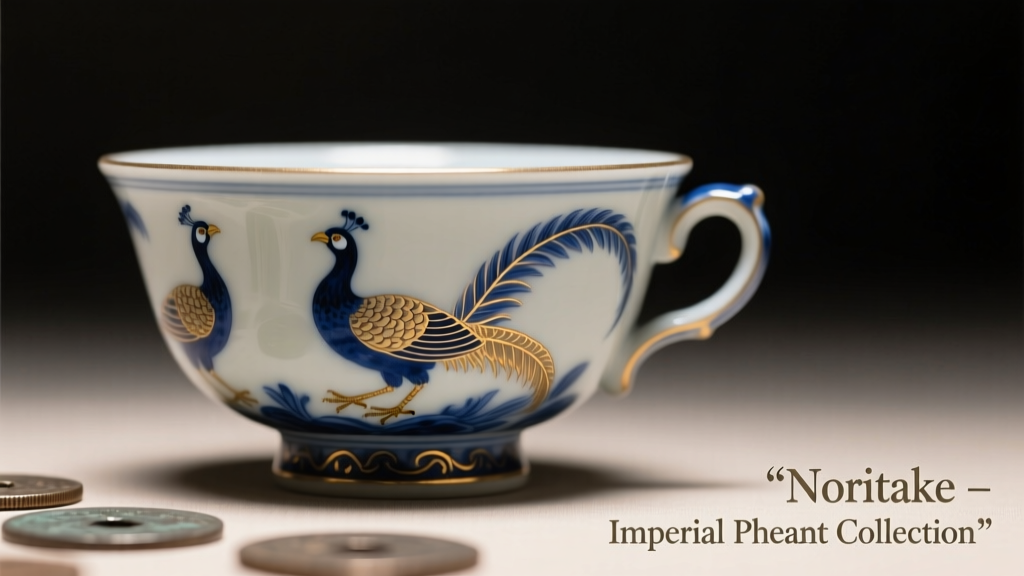
Noritake Bowl with Pheasants: Identifying, Valuing, and Preserving the Iconic Painted Handle Footed Pattern
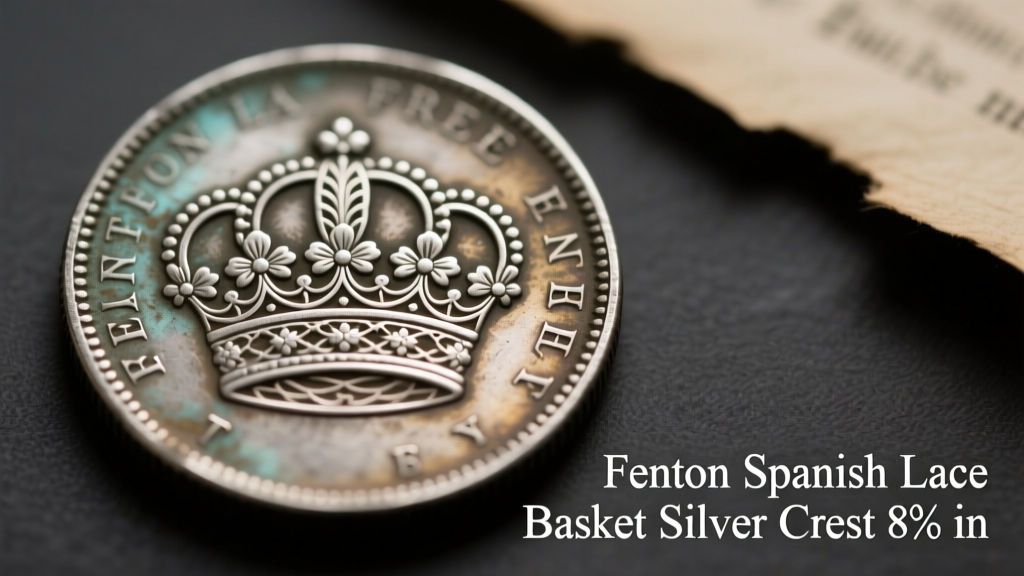
Fenton Spanish Lace Basket with Silver Crest: Authenticating, Valuing, and Preserving the 8½-Inch Icon

Toy Dollhouse Furniture Bedroom Set Bliss: Collecting, Valuing, and Preserving Vintage Miniature Interiors

Doorstops: Basket of Flowers Painted Cast Iron (10½ × 8 in, No. 2)

The Toy Clown Juggler Key-Wind Schuco Box: A Collector’s Deep Dive into German Mechanical Artistry
Sewing Tape Measure 'Fly on Egg' Celluloid: A Pre-War Japanese Collectible (1 1/2 Inch)
Decoding the 1132130: A Numismatic Deep Dive into the 1976 Bicentennial Eisenhower Dollar Die Variety
Dinnerware Ivy Mug (12 oz): A Collector’s Deep Dive into Design, Production History, and Market Value
Dorflinger Cut-Glass Celery Dish in Parisian Pattern: A Technical and Historical Appraisal of the 2¼ × 11¾ × 6-Inch Piece