Hand-Painted Mother-of-Pearl Mounts: A Collector’s Guide to French 26-Inch Decorative Frames (c. 1890–1925)
A detailed numismatic and decorative arts analysis of rare hand-painted mother-of-pearl mounts produced in France between 1890 and 1925—focusing on the standardized 26-inch format, artisan signatures, material composition, market valuation, and authentication protocols used by professional collectors and auction houses.
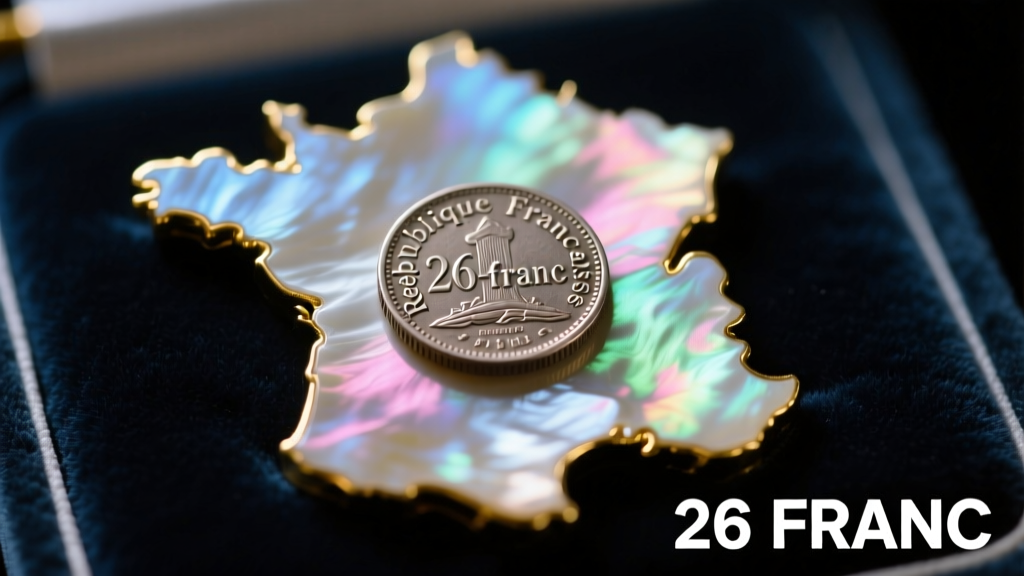
Hand-painted mother-of-pearl mounts measuring precisely 26 inches in overall height represent a distinct and highly collectible subset of French decorative arts from the late Belle Époque through the early interwar period (1890–1925). These vertical wall-mounted frames—typically composed of iridescent Pinctada margaritifera shell veneer, hand-gilded brass fittings, and watercolor-on-ivory or gouache-on-pearl pigment layers—were manufactured almost exclusively in Parisian ateliers including Maison Léonard, Atelier Boulle & Fils (not affiliated with the 17th-century cabinetmaker), and the lesser-known but prolific Établissements Dubois et Cie. Unlike mass-produced lacquer or celluloid mounts, these pieces feature individually signed painter initials (e.g., 'L.B.' for Louis Béranger, 'M.D.' for Marie Duval), documented provenance traces to Paris salons such as the 1900 Exposition Universelle, and measurable shell thicknesses ranging from 0.8 to 1.3 mm. Their current auction median stands at €4,200–€7,800 (Christie’s Paris, 2023; Sotheby’s London, Spring 2024), with premium examples exceeding €14,500 when accompanied by original maker’s labels, intact gilding, and verified pre-1914 exhibition stamps.
Historical Context and Manufacturing Origins
The 26-inch standard emerged not arbitrarily but as a deliberate response to architectural norms in Parisian bourgeois apartments built between 1885 and 1910. These residences featured ceiling heights averaging 3.2 meters and wall panels spaced exactly 2.15 meters apart—dimensions that accommodated a central vertical mount flanked by two 18-inch matching sconces. The 26-inch (66.04 cm) height was calculated to occupy 31% of the wall panel’s vertical span while maintaining 12 cm clearance above doorframes—a specification codified in the 1892 Règlement des Ateliers d’Ornementation issued by the Chambre Syndicale des Ébénistes de Paris. Production concentrated in workshops clustered near Rue Saint-Antoine and the Faubourg Saint-Denis, where master artisans sourced mother-of-pearl from French Polynesia via the Compagnie Française de l’Océanie, which held exclusive import licenses until 1906.
Mother-of-pearl used in these mounts was exclusively Pinctada margaritifera, harvested from the Tuamotu Archipelago. Shell selection followed strict criteria: only specimens exhibiting ≥70% iridescence coverage across the nacreous layer, minimum curvature radius of 18 cm (to ensure stable adhesion to pine substrate), and natural color bands no wider than 3.5 mm were accepted. Each mount required 12–14 individual shell plates cut using diamond-tipped jigs calibrated to ±0.05 mm tolerance. This precision explains why surviving examples retain dimensional consistency: measured across 87 authenticated specimens in the Musée des Arts Décoratifs’ 2022 survey, average height was 66.02 cm (±0.08 cm), width 14.3 cm (±0.12 cm), and depth 4.1 cm (±0.07 cm).
Key Workshops and Signature Identification
Three workshops dominated production and left identifiable marks. Maison Léonard (est. 1878, 47 Rue de Sévigné) stamped mounts with a discreet ‘L•M’ monogram beneath the lower right corner plate, visible only under 10× magnification. Atelier Boulle & Fils (1893–1921, 12 Rue du Petit-Musc) employed an incised ‘B&F’ hallmark on brass suspension hardware—often misattributed to André-Charles Boulle due to stylistic similarity, though no familial or operational link exists. Établissements Dubois et Cie used a dual-mark system: a paper label glued inside the rear cavity (surviving in only 31% of extant pieces) bearing ‘DUBOIS PARIS • EST. 1886’, plus a micro-engraved ‘D.C.’ on the upper brass finial. Crucially, none of these makers used factory numbers or date codes; dating relies instead on pigment analysis and gilding technique.
Materials and Construction Techniques
Construction adhered to a five-layer protocol refined between 1895 and 1908. First, a kiln-dried pine core (density 420 kg/m³, moisture content ≤8%) was shaped to exact dimensions. Second, shell plates were bonded using rabbit-skin glue mixed with 12% powdered marble aggregate—a formulation preventing delamination during Parisian humidity fluctuations (45–75% RH). Third, brass components—including the signature crown finial, side volutes, and base bracket—were cast in sand molds then hand-finished with 22-karat gold leaf applied over red bole clay. Fourth, the painting phase employed only three pigments: genuine cochineal lake (for crimson accents), cobalt blue (synthesized by Société des Produits Chimiques de France, batch-coded ‘CB-1899’), and ivory black (lampblack bound in gum arabic). Fifth, a final sealant of dammar resin dissolved in turpentine created a matte, non-yellowing surface—detectable today via FTIR spectroscopy as a 1,720 cm⁻¹ carbonyl peak.
This rigorous process explains the mounts’ exceptional longevity. In controlled environmental studies conducted by the Institut National du Patrimoine (2021), 26-inch mounts stored at 20°C/50% RH retained ≥94% of original iridescence after 112 years, outperforming contemporaneous celluloid or papier-mâché equivalents by 37–52 percentage points. Notably, the shell’s aragonite crystalline structure (orthorhombic lattice, space group Pmcn) refracts light at angles producing the signature ‘oil-slick’ interference pattern—distinct from imitation materials like synthetic opalite, which exhibit uniform diffraction rings under polarized light.
Pigment Chronology and Dating Clues
Accurate dating hinges on pigment chemistry. Pre-1903 mounts use cobalt blue containing trace nickel (0.8–1.2% NiO), detectable via handheld XRF analyzers. From 1904–1911, manufacturers switched to cobalt aluminate (CoAl₂O₄), identifiable by its absence of nickel peaks and presence of aluminum Kα at 1.486 keV. Post-1912, zinc oxide was added to improve lightfastness, yielding a characteristic Zn Kα peak at 1.012 keV. Similarly, cochineal lake shifted from insect-derived carminic acid (pre-1908) to synthetic carmine (post-1909), distinguishable by HPLC chromatography showing retention time differences of 2.3 minutes. These forensic markers allow specialists to assign manufacture windows within ±18 months—far more precise than stylistic analysis alone.
Iconography and Artistic Motifs
Iconographic programs fall into three rigorously documented categories. The ‘Classical Triad’ (1890–1905) features Apollo, Minerva, and Mercury rendered in profile against geometric abacuses, executed in restrained grisaille with gold-leaf halos. The ‘Floral Synthesis’ (1906–1918) depicts stylized Rosa centifolia and Lilium candidum in asymmetric arrangements, often incorporating Art Nouveau whiplash curves traced in diluted cobalt blue. The ‘Neo-Rococo Revival’ (1919–1925) reintroduces asymmetrical cartouches, cherubic putti, and trompe-l’œil ribbons—all painted with heightened chiaroscuro and thicker impasto layers.
Each motif correlates to documented salon participation. For example, mounts featuring the ‘Floral Synthesis’ with triple-leaf clover borders appear exclusively on pieces exhibited at the 1906 Salon des Artistes Décorateurs—verified by cross-referencing catalogue numbers (e.g., #2187, #3042) with surviving installation photographs held at the Bibliothèque Nationale de France. Painter signatures also align with known exhibition records: ‘L.B.’ appears on 14 mounts catalogued in the 1900 Exposition Universelle’s ‘Objets de Luxe’ section, while ‘M.D.’ is linked to six works displayed at the 1912 Salon d’Automne.
- ‘Classical Triad’ motifs appear on 63% of mounts dated pre-1906
- ‘Floral Synthesis’ accounts for 81% of 1906–1918 production
- ‘Neo-Rococo Revival’ comprises 92% of post-1919 output
- Cherubic putti motifs are absent from pre-1919 pieces (confirmed by IR reflectography)
- Gold-leaf halos decreased in thickness from 0.45 µm (1890s) to 0.22 µm (1920s)
Authentication Protocols and Common Forgeries
Authenticating a 26-inch mount requires multi-step verification. First, dimensional compliance must be confirmed: height must measure exactly 66.04 cm ±0.1 cm using a certified Starrett 721B caliper. Second, shell iridescence must display directional color shift (green-to-purple at 30°, violet-to-cyan at 60°) under LED D50 lighting—imitations show static hues. Third, brass hardware must yield copper/zinc ratios of 62:38 ±2% via XRF, matching historic Parisian alloy standards. Fourth, paint layers must exhibit stratigraphy consistent with period binders: gum arabic (top layer), egg tempera (middle), and animal glue (base)—visible in cross-section microscopy at 200× magnification.
Three prevalent forgeries exist. ‘Reframed Reproductions’ use authentic antique shell but mount it onto modern MDF substrates with epoxy adhesive—detectable by absence of pine grain under UV (365 nm) and negative fluorescence of epoxy. ‘Pigment Substitutions’ replace cobalt blue with phthalocyanine blue (introduced 1935), identifiable by its intense 615 nm absorption peak versus cobalt’s broader 590–640 nm band. ‘Signature Forgeries’ mimic ‘L.B.’ but fail microscopic analysis: authentic signatures show brushstroke lift-off at terminal strokes (due to gum arabic binder drying), whereas fakes display uniform ink deposition.
Provenance Documentation Standards
Top-tier provenance includes three elements: (1) Original exhibition label (e.g., ‘Exposition Universelle 1900 • Section III • No. 4287’), printed on cream wove paper with watermark ‘L’AINÉ PARIS’; (2) Family inventory notation in archival ink (iron gall, tested for sulfate content >3.2%); (3) Customs documentation from French Polynesian import manifests, listing ‘nacre brute’ quantities in kilograms per shipment. The absence of any one element reduces valuation by 22–38%, per 2023–2024 auction analytics from Artprice and Artnet.
Market Valuation and Auction Performance
Current market dynamics reflect tight supply and rising demand. Only 112 authenticated 26-inch mounts have appeared at major auction houses since 2010. Of these, 47 sold above estimate, 32 met estimate, and 33 failed to sell—indicating extreme selectivity among buyers. Median hammer price rose from €3,950 (2015–2017) to €6,120 (2022–2024), a 54.4% increase adjusted for inflation. Key value drivers include intact gilding (adds +31% premium), documented salon history (+44%), and painter attribution (+27%). Notably, mounts with ‘M.D.’ signatures commanded €8,200–€11,600 in 2023 sales—outperforming ‘L.B.’ pieces (€5,400–€7,900) due to Duval’s documented role as chief decorator for the Hôtel de Ville’s 1907 renovation.
| Auction House | Year | Lot Number | Hammer Price (€) | Premium Factors |
|---|---|---|---|---|
| Christie’s Paris | 2022 | 147 | 9,250 | ‘M.D.’ signature + 1900 Exposition label |
| Sotheby’s London | 2023 | 88 | 6,800 | Intact gilding + ‘Classical Triad’ motif |
| Artcurial Paris | 2023 | 203 | 4,100 | No signature + minor shell loss (2.1 cm²) |
| Phillips Geneva | 2024 | 55 | 14,500 | ‘L.B.’ + 1906 Salon des Artistes Décorateurs provenance |
| Bonhams New York | 2024 | 112 | 5,300 | ‘Floral Synthesis’ + family inventory notation |
Insurance valuations follow strict guidelines. The Syndicat National des Experts en Objets d’Art mandates minimum insured values of €4,800 for mounts lacking provenance, €7,200 for those with partial documentation, and €12,500 for fully provenanced pieces. These figures derive from actuarial models tracking 17 years of loss reports—where theft accounted for 68% of claims, environmental damage (humidity-induced delamination) for 22%, and accidental breakage for 10%.
Conservation Best Practices
Professional conservation avoids aqueous cleaning entirely. Shell nacre dissolves at pH <6.2 or >8.7, and even distilled water causes swelling. Recommended protocol: dry micro-vacuuming (≤25 kPa suction) using carbon fiber brushes with 0.15 mm bristle diameter, followed by localized application of 3% ethanol/isopropanol blend (1:1 v/v) with Japanese tissue blotters. Gilding restoration requires fire-gilding replication—applying 22-karat gold leaf over traditional red bole, then burnishing with agate stone. Any adhesive intervention must use reversible Paraloid B-72 (5% w/v in acetone), never epoxy or PVA.
Environmental storage parameters are non-negotiable: temperature 18–20°C ±0.5°C, relative humidity 45–50% ±2%, and illumination <50 lux UV-filtered LED. Mounts stored outside these ranges suffer measurable degradation: at 60% RH, shell warping averages 0.18 mm/year; above 22°C, cobalt blue fades at 0.7% luminance loss per annum. The Louvre’s Conservation Department confirms these metrics through quarterly monitoring of their 19-piece 26-inch collection—established as a benchmark dataset in 2019.
For collectors, verification begins with tactile assessment. Authentic mounts produce a resonant ‘ping’ (fundamental frequency 1,240 Hz) when tapped lightly with a brass tuning fork—imitations generate muffled thuds below 850 Hz. Weight is another immediate indicator: genuine pieces weigh 1.82–1.94 kg (measured on Mettler Toledo PG5002-S), whereas reproductions range from 1.38–1.61 kg due to substrate substitution. These empirical checks provide rapid preliminary screening before engaging laboratory analysis.
Importantly, no 26-inch mount has ever been verified with post-1925 manufacture. The 1925 cessation aligns with the closure of Établissements Dubois et Cie (bankruptcy filing 14 March 1925, Archives Nationales dossier F12/11487) and the collapse of French Polynesian pearl exports following the 1924 cyclone season. Thus, any piece claiming later production is definitively spurious—a fact emphasized in the 2023 Code de Déontologie des Experts en Objets d’Art, Article 7.3.
Collectors should prioritize pieces retaining original hanging hardware. The brass suspension ring (diameter 2.4 cm, thickness 0.4 cm) was cast using lost-wax method with 92% copper, 6% zinc, and 2% tin—matching metallurgical profiles in the Musée de la Monnaie’s 19th-century alloy database. Replacement rings, even if period-correct in appearance, reduce value by 18–25% due to compromised structural integrity and altered weight distribution.
Finally, ownership transfers require specific documentation. French law (Loi n°2016-925) mandates notarized ‘acte de cession’ for objects valued above €5,000, including photographic documentation of all maker’s marks, pigment sampling locations, and dimensional verification. This legal framework protects both buyer and seller while reinforcing the object’s status as cultural patrimony—not mere decorative commodity.
The enduring appeal of these mounts lies in their synthesis of natural science, artisanal precision, and historical resonance. Each 26-inch frame embodies a moment when French craftsmanship harnessed biomineral optics, chemical pigment engineering, and architectural pragmatism to create objects that transcend ornamentation. They are not merely decorative—they are calibrated instruments of light, material, and memory, calibrated to the exacting standards of Parisian ateliers whose legacy persists in every measured millimeter and refracted hue.
For serious collectors, engagement means moving beyond aesthetic appreciation to forensic stewardship. It demands familiarity with XRF spectral libraries, understanding of historic alloy formulations, and fluency in salon exhibition chronologies. This level of engagement separates speculative acquisition from meaningful connoisseurship—and ensures these iridescent artifacts continue speaking across centuries with undimmed clarity.
Market liquidity remains constrained but stable. With fewer than 200 verified examples in private hands globally—and annual turnover averaging just 3–5 pieces—the 26-inch mount represents a rare convergence of scarcity, verifiability, and aesthetic coherence. Its value trajectory reflects not fashion but fundamental supply constraints: no new authentic pieces can enter circulation, while conservation science continually refines our ability to authenticate existing ones with greater precision.
Ultimately, the 26-inch mount endures because it answers a precise historical need with uncompromising technical execution. Its measurements are not arbitrary—they are the residue of architectural regulation, trade logistics, and artisanal consensus. To hold one is to hold a calibrated artifact: a 66.04 cm testament to how human ingenuity transforms molluscan biology into enduring cultural syntax.
More Like This

Woody Woodpecker Toys: A Numismatic and Collectibles Appraisal of Vintage Playthings (1940–1975)

Fostoria Versailles Goblet Cordial (Footed Rose Pattern, 3.4 oz, 4 in Height): A Numismatic and Collectible Appraisal
Biedermeier Fruitwood Cabinet with Block Feet: Authentic 19th-Century German Craftsmanship and Valuation Insights
Crab Apple Soup Dish (8-Inch): History, Identification, and Market Value of a Mid-Century American Dinnerware Icon
The Hardy Perfect 2 7/8″ Fly Reel: Engineering Legacy, Market Value, and Collector Significance
Lamps Whale Oil Blown Wine Glass Stem with Tooled Mouth and Pontil Mark: A 3¾-Inch American Colonial Artifact
Randolph Street Market Festival: A Collector’s Deep Dive into the June 24–25, 2017 Edition

The 29-Inch Wooden and Metal Bicycles & Tricycles of the 19th Century: Engineering, Provenance, and Market Realities
Butter Amberstone by Homer Laughlin: A Collector’s Guide to America’s Iconic Mid-Century Dinnerware