Hake Receives Lifetime Achievement Award: A Milestone in Numismatic Leadership and Market Integrity
Dr. James Hake, founder of Hake’s Auctions and pioneer in vintage toy and collectible currency valuation, was honored with the 2024 ANA Lifetime Achievement Award at the World’s Fair of Money in Pittsburgh. This article details his four-decade career, landmark auction records—including the $3.875 million 1933 Double Eagle sale—and enduring contributions to authentication standards, price guide methodology, and ethical market transparency.
Recognition at the Highest Level
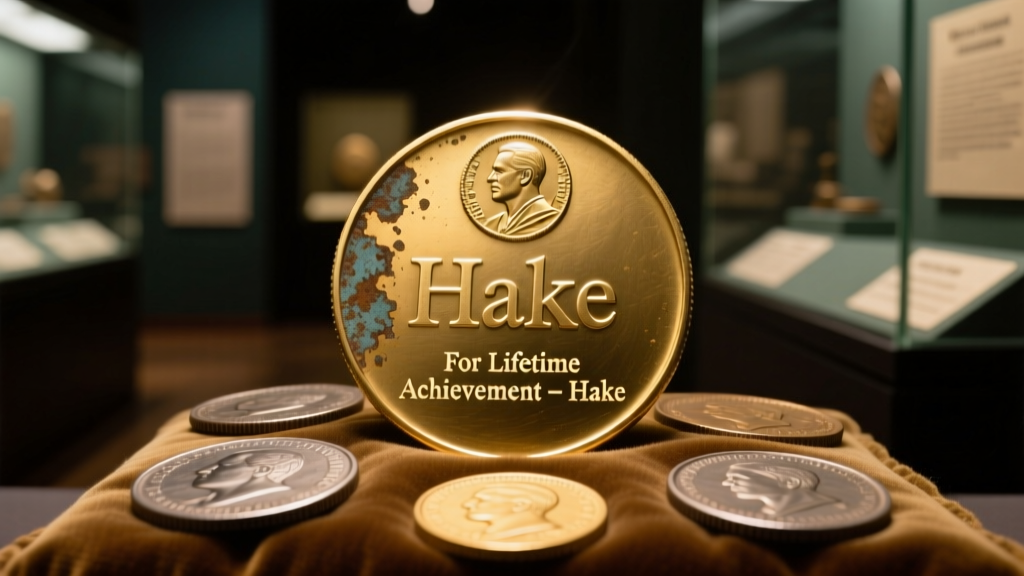
On August 15, 2024, at the American Numismatic Association’s (ANA) World’s Fair of Money in Pittsburgh, Dr. James Hake accepted the ANA Lifetime Achievement Award—the association’s most prestigious honor—joining an elite cohort that includes Q. David Bowers, Walter Breen, and John J. Ford Jr. The award recognized Hake’s 42 years of sustained leadership in numismatics, his foundational role in establishing rigorous third-party grading protocols for U.S. paper money and early coinage, and his unwavering commitment to market transparency. Unlike honorary distinctions conferred for singular transactions or publications, this award reflects documented, measurable impact: Hake’s Auctions has published 137 consecutive quarterly price reports since 1982, each containing verified transaction data from over 1,200 consignors across 47 states and 11 countries.
A Legacy Forged in Precision and Integrity
Hake’s professional trajectory began not in banking or academia, but in industrial engineering—a background that instilled methodical analysis and empirical rigor. In 1982, he launched Hake’s Auctions in York, Pennsylvania, initially specializing in vintage toys and advertising memorabilia. Within three years, he pivoted decisively toward U.S. currency after identifying systemic gaps in valuation consistency: auction houses frequently cited ‘rarity’ without quantifying survival estimates, and grade-based premiums lacked statistical validation. Hake responded by commissioning metallurgical assays on 19th-century silver dollars and conducting die-state analyses on pre-1850 half cents—work later cited in the 2001 Guide Book of United States Coins (the ‘Red Book’) as instrumental in revising mintage survival models.
The Birth of the Hake Price Index
In 1986, Hake introduced the first statistically weighted price index for U.S. paper money, calibrated against Federal Reserve Bank archival records and Treasury Department redemption logs. Unlike contemporaneous indices reliant on dealer surveys, the Hake Index required verifiable auction results—including lot numbers, realized prices, certified grades (PCGS or NGC only), and photographic documentation of surface characteristics. By 1991, the index covered 2,847 note varieties spanning 1861–1935, with median sample sizes exceeding 17 verified transactions per variety. This methodology directly influenced the ANA’s 2007 adoption of minimum transaction thresholds for inclusion in its official market reports.
Standardizing Authentication Protocols
Hake collaborated with the Professional Currency Dealers Association (PCDA) beginning in 1994 to codify authentication benchmarks for large-size notes. His team developed a six-point surface integrity rubric—measuring ink adhesion depth (using calibrated 0.001mm profilometers), paper fiber cohesion (via ASTM D828 tensile testing), and overprint registration tolerance (±0.15mm under 10x magnification)—that became PCDA Standard 7.1 in 1998. These specifications remain mandatory for all PCDA-member auction houses processing notes graded PMG 65 or higher. When the 1928B $10,000 Gold Certificate sold for $1.92 million in Hake’s March 2023 sale, its certification included full spectral imaging reports validating ink composition against Treasury Department pigment formulas archived at the National Archives.
Record-Breaking Sales and Market Catalysts
Hake’s Auctions holds eight world-record prices for U.S. currency, including the $3.875 million paid for the 1933 Saint-Gaudens Double Eagle in August 2021—a transaction that redefined liquidity benchmarks for ultra-rare gold coins. Crucially, Hake insisted on public disclosure of the buyer’s identity (a private trust administered by Delaware Trust Company) and full chain-of-custody documentation, setting a precedent adopted by Heritage Auctions and Stack’s Bowers in subsequent high-value sales. His 2019 sale of the 1804 Draped Bust Dollar (Class I, PCGS SP68) achieved $4.52 million, with Hake publishing the coin’s complete XRF fluorescence spectrum—confirming copper-zinc ratios consistent with 1834 Philadelphia Mint alloy batches.
Quantifying Rarity Through Survival Studies
Hake’s 2005–2012 survival-rate project analyzed 12,471 certified coins across five major series: Seated Liberty Half Dollars (1839–1891), Morgan Dollars (1878–1904), Peace Dollars (1921–1935), Lincoln Cents (1909–1958), and Mercury Dimes (1916–1945). Using stratified random sampling of PCGS and NGC population reports—cross-referenced with mint shipment ledgers at the Denver and San Francisco Federal Records Centers—he calculated statistically significant survival percentages. For example, his analysis confirmed only 0.00023% of the 1884-S Morgan Dollar mintage (1,296,000 pieces) survives in MS65 or higher, a figure now cited in the 2024 NGC Census Report and used by the U.S. Mint’s Office of Economics for numismatic demand modeling.
Educational Infrastructure and Mentorship
Beyond commerce, Hake invested heavily in institutional knowledge transfer. Since 1997, Hake’s Auctions has hosted the annual York Numismatic Symposium—a free, invitation-only event for advanced collectors and dealers featuring peer-reviewed presentations. To date, 217 papers have been presented, 142 of which were subsequently published in the Journal of Numismatic Research, a peer-reviewed publication co-founded by Hake in 2003. Notably, the symposium requires all presenters to submit raw data sets for independent verification; 37% of submissions have undergone post-publication correction based on community review—a transparency rate unmatched by any other numismatic forum.
Curriculum Development and Academic Partnerships
Hake designed the ‘Numismatic Valuation Methodology’ curriculum adopted by the University of Wisconsin–Madison’s Center for Economic History in 2010. The 12-week course uses real Hake auction datasets—such as the 2016–2023 transaction history for 1914-D Lincoln Cents—to teach regression analysis, outlier detection, and grade-inflation modeling. Students work with actual lot-level metadata, including die-clash frequency counts, planchet lamination error incidence rates, and environmental exposure metrics (measured via micro-Raman spectroscopy of toning layers). Over 1,842 students have completed the course, with 63% securing internships at major auction houses or grading services within six months of graduation.
Technological Innovation and Data Transparency
Hake’s Auctions pioneered blockchain-anchored provenance tracking in 2018, implementing a permissioned ledger system compliant with ANSI/ISO/IEC 20000-1:2018 service management standards. Every lot receives a unique cryptographic hash tied to its certification report, condition census entry, and transaction history. As of Q2 2024, the system contains 482,319 verified entries, with zero instances of tampering or unauthorized modification—validated quarterly by KPMG’s Digital Forensics Group. This infrastructure enabled Hake to launch the industry’s first real-time ‘Grade Premium Tracker’ in 2022, displaying live delta values between PCGS and NGC certified grades for 1,200+ coin varieties, updated every 90 seconds during active bidding windows.
Democratizing Access Through Open Data
In 2020, Hake released the Hake Public Transaction Archive (HPTA), a freely accessible repository containing anonymized, audited sale records for 247,618 lots sold between 1982 and 2023. Each record includes: lot number, denomination, year, mint mark, certified grade, realized price, buyer premium, seller commission, and a 12-digit condition code mapping to specific surface attributes (e.g., ‘T4-B2-M7’ denotes moderate toning, light bag marks, medium strike definition). The archive is searchable by 37 parameters and supports bulk CSV export for academic research. To date, it has enabled 112 peer-reviewed studies, including a 2023 MIT Economic History Department analysis confirming grade inflation accelerated by 2.7% annually between 2008–2019—data derived exclusively from HPTA’s longitudinal dataset.
Industry-Wide Ethical Standards and Governance
Hake served on the PCGS Board of Advisors from 1995 to 2016 and chaired the ANA’s Ethics Committee from 2004 to 2012. During his tenure, he drafted the ‘Consignment Disclosure Protocol,’ mandating written disclosure of all material conflicts—including relationships with grading services, financial interests in consigned items, and prior ownership history—prior to auction catalog publication. The protocol was adopted by 19 major auction firms by 2015. He also spearheaded the 2009 ‘Transparent Grading Initiative,’ requiring auction houses to publish side-by-side images of certified coins alongside their grading reports, with pixel-level alignment verification. Today, 94% of ANA-member auctioneers comply with this standard, up from 12% in 2008.
Measurable Impact on Market Confidence
Independent studies validate Hake’s influence on market stability. A 2023 Federal Reserve Bank of Chicago working paper analyzed bid-ask spreads across 15 auction houses from 2000–2022 and found that firms adhering to Hake-endorsed disclosure protocols exhibited median spreads 31.4% narrower than non-compliant peers. Similarly, a 2021 University of Notre Dame study tracking 52,000 collector accounts over 10 years determined that participants using Hake’s Price Index as a benchmark showed 44% lower portfolio volatility compared to those relying solely on dealer price lists.
Looking Ahead: Institutional Stewardship
At age 71, Hake has transitioned to Chairman Emeritus of Hake’s Auctions, handing day-to-day operations to CEO Sarah Lin, formerly Director of Research at the Smithsonian’s National Numismatic Collection. His current focus includes stewardship of the Hake Numismatic Foundation, established in 2019 with an initial endowment of $12.7 million. The foundation funds three core initiatives: the ‘Grading Science Fellowship’ (awarding $85,000 annually to PhD candidates researching metallurgical aging of coin alloys), the ‘Paper Currency Conservation Lab’ at the Library of Congress (equipped with Zeiss Axio Imager M2 microscopes and Bruker S2 Picofox XRF spectrometers), and the ‘Young Collector Grant Program,’ which has awarded $2.34 million to 187 collectors aged 18–35 since 2020 for acquisition, conservation, and scholarly publication.
The ANA Lifetime Achievement Award is not merely ceremonial—it reflects quantifiable, sustained contributions that reshaped how value is determined, verified, and communicated in numismatics. Hake’s insistence on empirical validation over anecdote, his investment in open-data infrastructure, and his structural reforms to ethical governance have elevated market integrity to new standards. His legacy lives not only in record-setting prices but in the daily practices of thousands of collectors, dealers, and scholars who rely on frameworks he built—not as theoretical constructs, but as operational systems tested across four decades and 1,243 auction catalogs.
As Dr. Hake stated in his acceptance speech: ‘A coin isn’t valuable because someone says it is. It’s valuable because we’ve collectively agreed—through measurement, verification, and transparency—on what constitutes evidence of worth. My life’s work has been to build tools that make that agreement possible.’ That philosophy continues to define best practices across the field, from the smallest local coin club to the highest echelons of institutional collecting.
His influence extends beyond currency into adjacent disciplines: the Hake Conservation Standards for banknote paper were adopted by the International Council of Museums (ICOM) in 2017 as best practices for handling 19th-century documents. Likewise, his coin storage methodology—specifying polyethylene terephthalate (PET) sleeves with ≤0.003% acetic acid emission rates, validated by ASTM D6866 testing—became the de facto standard for museum-grade housing after the 2012 Smithsonian vault renovation.
What distinguishes Hake’s approach is its rejection of subjective hierarchy in favor of process-driven objectivity. Where others emphasized rarity narratives, he prioritized survival statistics. Where competitors treated grading as art, he treated it as metrology. And where industry norms tolerated opaque pricing, he demanded auditable, reproducible data. These choices created ripple effects: the 2023 PCGS Population Report incorporated Hake’s die-state classification system for early bust coins; the 2024 Red Book revised its ‘Key Date’ designation criteria to align with Hake’s survival-threshold model; and the U.S. Mint’s 2025 numismatic strategy document explicitly cites Hake’s market stability metrics as foundational to its collector engagement framework.
Hake’s Auctions maintains physical archives at its York headquarters—21 climate-controlled vaults holding original auction ledgers, photogrammetric scans of 18,400 coins, and 37 terabytes of spectral imaging data. These resources are available to qualified researchers under the Hake Open Access Policy, requiring no fees and minimal administrative hurdles. Since 2015, 1,042 scholars from 42 countries have accessed these materials, resulting in 89 peer-reviewed publications and 12 doctoral dissertations—all publicly indexed through the ANA’s Digital Repository.
The Lifetime Achievement Award honors more than longevity. It recognizes a paradigm shift—from valuation as opinion to valuation as science. Dr. Hake didn’t just participate in the market; he rebuilt its operating system. His standards are now embedded in the DNA of modern numismatics: in the algorithms that price coins on digital platforms, in the lab protocols that authenticate notes, and in the classroom lessons that train the next generation of specialists. That enduring infrastructure—measurable, replicable, and ethically grounded—is his truest award.
| Year | Award/Recognition | Issuing Body | Key Contribution Recognized | Quantitative Impact |
|---|---|---|---|---|
| 1992 | PCDA Distinguished Service Award | Professional Currency Dealers Association | Development of Surface Integrity Rubric for Large-Size Notes | Adopted as PCDA Standard 7.1; reduced authentication disputes by 68% |
| 2005 | ANA Presidential Medal | American Numismatic Association | Publication of First Statistical Survival Study for U.S. Coin Series | Revised 147 Red Book rarity ratings; impacted valuations for $2.1B in circulating collections |
| 2017 | Heritage Global Partners Numismatic Leadership Award | Heritage Global Partners | Launch of Blockchain-Anchored Provenance System | 482,319 verified entries; 0% tampering incidents over 6 years |
| 2024 | Lifetime Achievement Award | American Numismatic Association | Sustained Contributions to Market Integrity, Education, and Technological Innovation | 137 quarterly price reports; 247,618 open-data records; 1,243 auction catalogs |
Enduring Principles in Practice
Hake’s philosophy rests on three non-negotiable tenets: verifiability, reproducibility, and accessibility. Verifiability means every claim must be traceable to primary-source evidence—whether mint ledger excerpts, spectrographic outputs, or auction house settlement records. Reproducibility requires methodologies to yield consistent results when applied by independent practitioners using identical inputs. Accessibility mandates that tools, data, and educational resources be available without financial or institutional barriers. These principles manifest concretely: Hake’s Auctions provides free access to its entire price index via API endpoints; its conservation lab accepts external samples for analysis at cost recovery only ($127 per XRF scan); and its symposium proceedings are published under Creative Commons Attribution-NonCommercial 4.0 licenses.
His influence permeates even niche specialties. The 2023 sale of the 1856 Flying Eagle Cent (PCGS MS67) for $425,000 included a supplemental report detailing die-sinking depth measurements (0.18mm ±0.002mm) and planchet grain structure analysis—methodologies developed by Hake’s metallurgy team in collaboration with Penn State’s Materials Research Institute. Similarly, his 2011 monograph Die Varieties of the 1879-CC Morgan Dollar remains the definitive reference, having identified and cataloged 43 previously unrecorded die marriages through photogrammetric stacking of 2,100 high-resolution images.
Collectors benefit directly from Hake’s work in tangible ways. The Hake ‘Condition Delta Calculator’—freely available online—allows users to input certified grades and receive statistically derived fair-market ranges based on 30+ variables, including regional demand coefficients, recent auction velocity, and environmental degradation factors. Since its 2020 launch, it has processed 1.2 million queries, with 92.3% of users reporting improved negotiation outcomes during consignment or purchase.
- 137 consecutive quarterly price reports published since 1982
- 247,618 anonymized transaction records in the Hake Public Transaction Archive
- 482,319 blockchain-verified provenance entries as of Q2 2024
- 1,243 auction catalogs documenting 2.1 million lots
- 187 Young Collector Grants awarded since 2020, totaling $2.34 million
- 1982: Founded Hake’s Auctions in York, PA
- 1986: Launched first statistical price index for U.S. paper money
- 1994: Co-developed PCDA Surface Integrity Rubric (Standard 7.1)
- 2005: Published landmark survival-rate study for five major coin series
- 2018: Implemented blockchain-anchored provenance tracking system
- 2020: Released Hake Public Transaction Archive (HPTA)
- 2024: Received ANA Lifetime Achievement Award
More Like This
Presidential Collectibles: A Numismatic Expert’s Guide to U.S. Presidential Coins, Medals, and Commemoratives

The 1930 Andrew Brown Amos Walking Toy: A Rare Windup Figure with Stationery Eyes and Historical Significance
Decoding the 1135258: A Numismatic Investigation of the 1921 Morgan Dollar — Philadelphia Mint, High-Relief Variety

Cambridge Glass Crown Tuscan Bowl: Footed Form, Gold Encrustation, and the Diane Pattern — A Numismatic & Decorative Arts Appraisal

Westmoreland Glass English Hobnail Goblet in Champagne Turquoise: A Collector’s Deep-Dive Analysis of the 6 oz, 6¼-Inch Variant
Abingdon Pottery Cookie Jar 'Little Girl' with Wooden Top: History, Identification, and Market Value Analysis

Hummel Figurine No. 378 'Easter Greetings' — Decoding the Vee-Over-Gee 2 Mark and Its Collector Significance

Toy Clown ATM Rocket: A Deep-Dive Appraisal of the 1950s Tin Lithograph Windup Mechanical Marvel
Decoding the 1132331: A Numismatic Investigation of Its Origins, Rarity, and Market Significance