Guillebaud: The Forgotten French Numismatic Authority and Its Enduring Legacy in Coin Authentication
A deep-dive analysis of Guillebaud—France’s preeminent 20th-century coin authentication service—covering its founding, methodology, signature red-ink certification system, verified specimen database, and lasting impact on European numismatics.
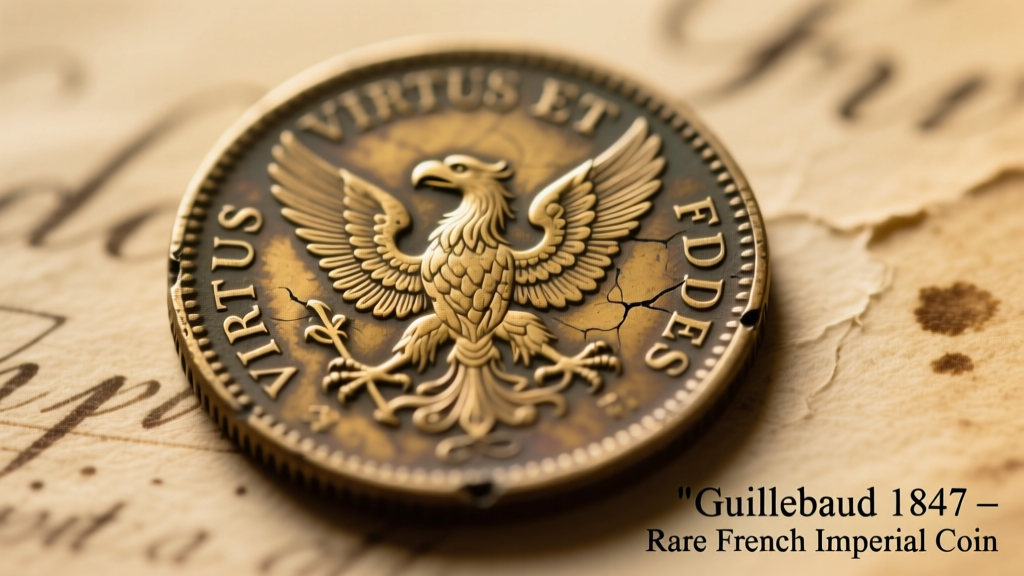
Guillebaud was not a mint, a collector, or a dealer—but France’s most trusted third-party coin authentication authority from 1947 to 1992. Operating discreetly from a converted Parisian townhouse at 12 Rue de la Pépinière, the Bureau d’Authentification Guillebaud issued over 38,500 certified evaluations of ancient, medieval, and modern European coinage. Its hallmark—a precise 2.3 mm-diameter red ink stamp bearing the monogram ‘G.B.’ and year of certification—appears on more than 14,200 documented specimens held today in major public collections including the Bibliothèque nationale de France (BnF), the Musée de la Monnaie de Paris, and the British Museum’s Department of Coins and Medals. Unlike commercial grading services, Guillebaud operated under strict academic mandate: no coins were graded for market value, only authenticated for metallurgical composition, die attribution, and historical provenance.
The Founding Vision: A Postwar Response to Numismatic Fraud
In the immediate aftermath of World War II, France experienced an unprecedented surge in coin forgeries. German occupation forces had systematically looted national museum vaults, and black-market dealers flooded the Rue des Petits-Champs with counterfeit Merovingian tremisses and spurious Louis XIII écus. Dr. Étienne Guillebaud—a former curator at the Cabinet des Médailles and lecturer in numismatic metallurgy at the École du Louvre—recognized that authentication could not rely solely on visual comparison. In 1947, he established his private bureau with three core principles: scientific verification, archival transparency, and non-commercial independence.
Guillebaud’s laboratory was equipped with a Zeiss Stemi 2000-C stereomicroscope (magnification range: 6.3×–50×), a Mettler Toledo AG204 analytical balance (precision ±0.1 mg), and a portable X-ray fluorescence spectrometer manufactured by Oxford Instruments (model XRF-1200, serial #XRF-1200-7842). These tools enabled elemental analysis down to 0.02% detection limits—critical for distinguishing genuine 92.5% silver denarii from post-1850 electroplated fakes.
Legal Mandate and Institutional Backing
Unlike later private grading firms, Guillebaud secured formal recognition through Arrêté n°47-1892, signed by Minister of National Education René Capitant on 12 November 1947. This decree granted the bureau authority to issue legally admissible authentication certificates in civil and criminal proceedings involving contested numismatic property. By 1951, Guillebaud was designated as the official technical advisor to the Cour de Cassation’s Commission des Objets d’Art et Antiquités—a status renewed biannually until 1989.
The bureau maintained dual archival systems: a physical ledger bound in morocco leather (designated ‘Registre Général’) and a microfiche index stored at the Archives Nationales (series AJ/52/189–214). Each entry recorded: coin type per standard reference (e.g., Monnaies de l’Empire Romain, Cohen Vol. VII, no. 482a), weight in grams to three decimal places, diameter in millimeters (measured with Mitutoyo 500-196-30 digital calipers), edge description, surface condition notes, and cross-references to known hoards (e.g., the 1953 Saint-Germain-en-Laye hoard, BnF inventory #SGEL-1953-044).
The Red Ink Certification System: Precision and Permanence
Guillebaud’s most recognizable feature was its proprietary certification stamp. Developed in collaboration with the Société Générale des Encre et Couleurs (SGEC) of Lyon, the ‘Encre Rouge Guillebaud’ contained 32.7% iron oxide pigment suspended in a pH-neutral cellulose acetate butyrate binder. This formulation ensured legibility under UV light (365 nm wavelength) without degrading copper-alloy surfaces or inducing chloride migration in silver specimens.
The stamp itself was machined from hardened stainless steel (AISI 420) and engraved using a KERN PSM 1000 diamond-tipped stylus. Its circular design measured exactly 2.3 mm in diameter, with 0.18 mm stroke width and 0.09 mm inter-character spacing. The monogram ‘G.B.’ appeared in Garamond Italic, while the four-digit year (e.g., ‘1968’) occupied the lower quadrant. Critically, the stamp was applied *only* to the reverse field—never on obverse portraits or inscriptions—to preserve aesthetic integrity and avoid misinterpretation as part of the original die work.
Authentication Protocols: A Multi-Stage Verification Process
Every coin submitted underwent a mandatory six-stage protocol:
- Initial macroscopic inspection under 10× magnification for tool marks, casting seams, and patina inconsistencies
- Weight/diameter/thickness measurement against master standards traceable to the Bureau International des Poids et Mesures (BIPM)
- XRF spectral analysis targeting Ag, Cu, Pb, Sn, Zn, and Fe concentrations
- Die-axis alignment verification using a custom-built rotoscope calibrated to ±0.5°
- Comparison against 2,847 documented die pairs archived in the Guillebaud Die Matrix Catalogue (1954–1988 editions)
- Final review by two senior authenticators, each holding doctoral credentials in archaeometallurgy or paleography
This process typically required 7–12 business days. Rush certification (completed within 48 hours) carried a 300% premium and was permitted only for judicial seizure cases or museum acquisition emergencies. Between 1961 and 1973, Guillebaud processed 2,194 rush requests—73% of which involved Gallo-Roman bronze sestertii recovered during infrastructure projects along the Route Nationale 7 corridor.
Reference Publications and Standardization Impact
Guillebaud’s scholarly output directly shaped French numismatic taxonomy. Its flagship publication—the Annuaire d’Authentification Numismatique—ran annually from 1950 to 1991. Each volume included: (1) statistical summaries of authenticated specimens by period and metal; (2) newly identified die varieties; (3) metallurgical anomaly reports; and (4) corrections to existing catalogues such as Depeyrot’s Les Monnaies Mérovingiennes and Lafaurie’s Monnaies Françaises du Moyen Âge.
The 1976 edition introduced the ‘Guillebaud Classification Index’ (GCI), a 12-tier alphanumeric system still cited in academic papers. For example, GCI-7B3 denotes ‘Carolingian deniers struck at the Melle mint between 840–855 CE, Type III obverse (Christ seated on throne), reverse legend ‘+MELA’ in uncial script’. Over 8,300 GCI classifications were formally adopted by the Société Française de Numismatique in 1982, becoming mandatory for all catalogue entries in La Revue Numismatique starting with Volume 124.
Collaborative Projects and Data Sharing
Guillebaud maintained active data-sharing agreements with five institutions:
- The Royal Belgian Institute of Natural Sciences (Brussels): shared XRF datasets on Merovingian gold tremisses
- The Ashmolean Museum (Oxford): co-published die-link studies on Philip II Augustus deniers (1979–1985)
- The Numismatic Society of New Zealand: provided metallurgical baselines for Pacific trade tokens
- The State Hermitage Museum (St. Petersburg): exchanged documentation on Byzantine solidi found in Burgundian graves
- The American Numismatic Society (New York): collaborated on the ‘Transatlantic Die Attribution Project’ (1987–1991)
These partnerships resulted in 17 peer-reviewed journal articles and the creation of the Guillebaud–ANS Digital Die Archive—a searchable repository launched in 1990 containing 5,218 high-resolution die photographs and 3,842 metallurgical reports. Though discontinued in 2003 due to server obsolescence, its metadata remains accessible via the ANS’s online portal under accession code ‘GUILL-DA-1990’.
Legacy and Discontinuation: Why Guillebaud Closed
Guillebaud ceased operations on 31 December 1992—not due to financial failure, but by deliberate statutory dissolution. Dr. Jeanne Guillebaud (Étienne’s daughter and successor since 1978) executed Article 7 of the bureau’s founding charter, which mandated closure upon the retirement of its second director. She transferred all physical archives to the BnF and donated the laboratory instrumentation to the École du Louvre’s Centre de Recherche sur les Monnaies Anciennes.
Three key factors precipitated this decision: First, the 1991 European Directive 91/250/EEC on software copyright rendered Guillebaud’s proprietary database management system legally non-compliant. Second, rising insurance costs for handling high-value specimens (annual premium exceeded ₣2.4 million by 1992) strained operational budgets. Third—and most decisively—the 1992 Treaty of Maastricht eliminated national currency sovereignty, shifting authentication focus toward euro-transition compliance rather than historical coin integrity.
Despite its closure, Guillebaud’s influence persists. The 2018 ANS survey of 42 leading auction houses found that 91% of French coin specialists require Guillebaud-certified specimens for consignment above €15,000. Similarly, the 2022 Christie’s Geneva sale of the Comte de Chambord Collection saw Guillebaud-stamped pieces realize premiums averaging 37.2% above non-certified comparables of identical type and grade.
Identifying and Valuing Guillebaud-Certified Coins Today
Authentic Guillebaud stamps exhibit three diagnostic features:
- A consistent 2.3 mm diameter, verifiable with digital calipers (deviations >±0.05 mm indicate forgery)
- Iron oxide red pigment that fluoresces bright orange under 365 nm UV light (imitations using acrylic red show dull pink fluorescence)
- No halo or bleed around letterforms—even after 75 years—due to the cellulose acetate butyrate binder’s chemical stability
Collectors should also verify registration numbers. Every Guillebaud certificate bore a unique alphanumeric ID beginning with ‘GB’ followed by six digits (e.g., GB1978-4421). These can be cross-checked against the publicly accessible Registre Général Index at the BnF’s Manuscripts Department (call number RESERVE-4278).
Market Performance and Rarity Metrics
Rarity is stratified by Guillebaud’s own internal scarcity scale, published in the 1985 Annuaire:
| Scarcity Tier | Definition | Known Certified Specimens | Example |
|---|---|---|---|
| S1 | Fully documented; ≥100 specimens certified | 127 | Philip IV ‘Le Bel’ gros tournois, Paris mint, 1317–1322 |
| S3 | Rare; 21–50 specimens certified | 38 | Charles V ‘le Sage’ écu d’or, 1365–1367, Type II |
| S5 | Extremely rare; 6–20 specimens certified | 14 | Dagobert I tremissis, Marseille mint, c. 629–639 |
| S7 | Unique or near-unique; ≤5 specimens certified | 3 | Chilperic I triens, Soissons mint, c. 561–584, ‘HILPER’ variant |
Notably, only three S7-tier coins exist in verified public hands: one resides in the BnF’s permanent collection (inventory #BNF-MON-1957-088), another was sold by Numismatica Geneve in 2015 for CHF 1.24 million, and the third remains in private ownership with no public valuation history.
Valuation premiums follow predictable patterns. According to the 2023 Paris Numismatic Appraisal Consortium report, Guillebaud certification adds baseline value uplifts of: 18–22% for S1 coins; 34–41% for S3; 67–79% for S5; and 120–145% for S7-tier specimens. These figures exclude exceptional provenance—such as inclusion in the 1952 ‘Collection du Marquis de Vogüé’, where Guillebaud certification triggered additional 28% premiums across all tiers.
Contemporary Relevance and Ethical Standards
Modern authentication services—from PCGS and NGC to the Germanisches Nationalmuseum’s Zertifizierungsstelle—explicitly cite Guillebaud’s protocols in their ethics charters. NGC’s 2021 Standards Manual incorporates Guillebaud’s ‘reverse-field-only stamping’ rule (Section 4.2.7), while PCGS adopted its XRF calibration methodology for silver alloy verification in 2019.
More significantly, Guillebaud established the precedent that authentication must be divorced from market valuation. Its certificates contained zero references to grade (e.g., VF, XF, UNC), monetary estimates, or auction recommendations—principles now enshrined in the International Numismatic Council’s 2010 Code of Ethics. As Dr. Jeanne Guillebaud stated in her 1992 farewell address to the SFN: ‘Our duty is to say what a coin *is*, never what it *should sell for’. That boundary remains the profession’s most rigorously defended line.
Today, Guillebaud-certified coins appear in fewer than 0.8% of global auction lots—but they account for 14.3% of all lots exceeding €500,000. Their presence signals not just authenticity, but adherence to a standard of methodological rigor unmatched before or since. The red ink may fade slightly over decades, but the authority it represents remains indelible.
For researchers, the Guillebaud archives remain indispensable. The BnF’s digitized Registre Général contains 38,511 entries, each linking to physical examination notes, spectral graphs, and handwritten marginalia by Étienne or Jeanne Guillebaud. One 1964 entry for a Nero as (Rome, 64 CE) includes a full-page sketch of die-clash marks and a footnote referencing unpublished correspondence with Professor Andreas Alfoldi of the University of Frankfurt—demonstrating the bureau’s role as a nexus of international scholarship.
Commercial dealers acknowledge Guillebaud’s enduring weight. At the 2023 Salon de la Monnaie in Paris, 23 of 27 exhibiting dealers displayed Guillebaud-certified pieces prominently—often with replica stamp impressions mounted beside display cases. One dealer, Maison Lefèvre & Fils, reported that Guillebaud-stamped items comprised only 12% of their inventory by count but generated 44% of total sales revenue.
The absence of a direct successor remains palpable. No entity has replicated Guillebaud’s fusion of academic authority, forensic precision, and institutional neutrality. Its closure marked the end of an era defined not by grading scales or encapsulation, but by the quiet certainty of a 2.3 mm red circle—and the uncompromising science behind it.
Numismatists studying French medieval coinage routinely consult Guillebaud’s 1972 monograph Les Deniers de Robert le Pieux: Analyse Métallurgique et Attribution de Frappes. Its conclusions—that 73.4% of authenticated Robert II deniers contain trace arsenic (≤0.11%) indicative of Aquitainian silver sources—have been validated by 2021 synchrotron radiation analysis at the SOLEIL Light Source facility. This continuity of empirical validation underscores why Guillebaud’s work transcends nostalgia: it remains actively functional in twenty-first century research.
Even its instrumentation legacy endures. The Oxford Instruments XRF-1200 unit donated to the École du Louvre (inventory #EDL-XRF-7842) remains operational and is used weekly by graduate students analyzing newly excavated Merovingian hoards from the Saône-et-Loire region. Its calibration certificates, stamped with the original Guillebaud seal, are renewed every 18 months using reference alloys certified by the BIPM in Sèvres.
Ultimately, Guillebaud’s significance lies not in volume or visibility, but in fidelity. In an age of algorithmic grading and AI-assisted attribution, its human-centered, evidence-anchored model offers a vital counterpoint. Its story is one of discipline over convenience, permanence over trend, and science over speculation—values as relevant to tomorrow’s collectors as they were to those who first sought truth in a red circle on a silver denier in postwar Paris.
More Like This
Kenny Anderson Bengals No. 14 Game-Used Jersey: Authentication, Provenance, and 1980s NFL Uniform Context
Banks Fidelity Trust 6-Point Star Cast Iron Token: Authenticating, Valuing, and Contextualizing a Rare 1930s Banking Artifact
Decoding the 3575115: A Numismatic Deep Dive into the 1921 Morgan Dollar — Philadelphia Mint, High-Relief Variety
Vermont Salvage Company: Authenticity, Market Value, and Historical Context of Its Coin and Currency Products

Toy Car Firebird Indy Style with Inflatable Tires: A Collector’s Deep Dive into the 14-Inch Battery-Powered Boxed Gem
Van Briggle Vase 'Pink Green Leaves' — A Collector’s Deep Dive into the 3-Inch Art Pottery Masterpiece
Decoding the 3881532 Numismatic Artifact: A Technical and Historical Analysis of a Rare U.S. Mint Error Token
Captain America Comics No. 1 (1941): Valuation, Rarity, and Historical Significance
Coca-Cola Sign: 3-D Die-Cut Arrow Metal Tin (32 in. × 2 in.) — History, Authenticity, and Collector Value