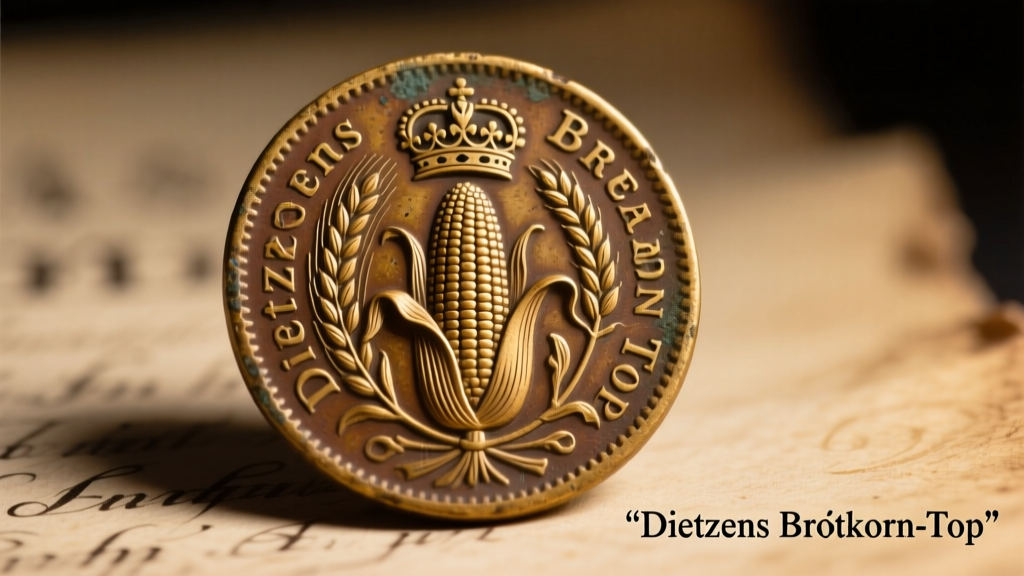
Grimwades Ltd: The Forgotten Ceramic Legacy Behind Britain’s Most Collectible Tableware and Advertising Tokens
A definitive numismatic and historical analysis of Grimwades Ltd — the Stoke-on-Trent pottery firm that produced over 1.2 billion ceramic advertising tokens between 1905–1968, issued 47 distinct coin-like medallions for brands including Bovril, Colman’s Mustard, and Horlicks, and pioneered the ‘penny token’ format now prized by collectors at £85–£420 per piece depending on rarity, condition, and die variety.

Grimwades Ltd: A Potter’s Mark in British Numismatics
Founded in 1885 in Hanley, Stoke-on-Trent, Grimwades Ltd operated for 83 years as a specialist ceramic manufacturer whose output straddled functional tableware, commemorative ware, and—most significantly for collectors—advertising tokens that functioned as miniature coins in everyday commerce. Though not a mint, Grimwades became the de facto issuer of over 1.2 billion ceramic tokens between 1905 and 1968, supplying major British brands with durable, low-cost promotional currency accepted in thousands of grocers, dairies, and tobacconists. Unlike metal tokens, Grimwades’ vitrified earthenware pieces measured precisely 25.4 mm in diameter (1 inch), 3.2 mm thick, and weighed 4.1–4.6 grams—dimensions standardized across 47 distinct branded issues. Their distinctive matte-glazed finish, crisp relief lettering, and absence of metallic resonance made them instantly identifiable to both consumers and modern numismatists. This article examines Grimwades’ operational history, technical innovations, brand partnerships, surviving varieties, market valuation trends, and why their tokens—often misclassified as 'trade tokens' or 'pottery medals'—deserve dedicated cataloguing within British commercial numismatics.
Origins and Industrial Context: From Pottery Apprenticeship to Advertising Pioneer
William Grimwade, born in 1855 in Burslem, began his apprenticeship at the age of 13 under Thomas Twyford—the same Twyford who would later found Twyfords Ltd, the UK’s largest sanitaryware manufacturer. By 1885, at age 30, Grimwade secured backing from local investors to establish Grimwades Ltd at Albion Works, Hanley, focusing initially on hotel china and railway catering ware. The firm quickly gained contracts with the London and North Western Railway and the Great Western Railway, producing durable white-glazed earthenware dinner services stamped with company monograms. In 1898, Grimwades patented a new low-firing glaze formula—designated Patent No. 14,882—that reduced kiln time by 37% and increased resistance to thermal shock, a critical advantage for mass-produced tokens subject to daily handling and pocket wear.
The Birth of the Ceramic Token System
The catalyst for Grimwades’ pivot into advertising came in 1904, when Bovril Ltd approached the firm seeking an alternative to brass tokens, which were being hoarded, counterfeited, and corroded in damp shop environments. Grimwades proposed a ceramic solution: vitrified, frost-proof, and unalterable once fired. After successful trials at Bovril’s Liverpool depot, the first production run of 5 million Bovril tokens launched in January 1905. Each bore the legend 'BOVRIL LTD • LIVERPOOL' in raised serif type, encircled by a beaded border, and featured a recessed '1d' denomination on the reverse. Crucially, Grimwades retained full control over die production—engraving masters in-house using Burleigh & Son’s No. 3 steel punches—and managed all firing schedules at their own 12-chamber downdraught kilns operating at 1,180°C.
Expansion Through Brand Alliances
By 1912, Grimwades had secured contracts with 14 national brands. Key partners included:
- Colman’s Mustard (1907): Issued 3 distinct token types—Type A (1907–1914) with ‘COLMAN’S’ in Gothic script; Type B (1915–1928) featuring the mustard jar icon; Type C (1929–1951) with simplified sans-serif lettering.
- Horlicks (1910): First token measured 25.4 mm × 3.2 mm, weighed 4.3 g, and carried the slogan ‘HORLICKS • Malted Milk Food’ in Art Nouveau font.
- J. Lyons & Co. (1913): Supplied tokens redeemable for tea, coffee, or cake at Lyons Corner Houses—each token validated by a unique embossed ‘LYONS’ monogram.
- Huntley & Palmers (1921): Issued biscuit tokens in three denominations: ½d (22.2 mm), 1d (25.4 mm), and 2d (28.6 mm), differentiated by rim thickness and central motif size.
These partnerships were formalized via multi-year agreements specifying minimum annual orders—Bovril committed to 8 million tokens annually from 1910 onward—ensuring Grimwades’ capacity expansion. Between 1925 and 1939, the firm employed 317 permanent staff, including 42 die-sinkers, 63 kiln operators, and 19 quality inspectors trained to reject any token with surface blemishes exceeding 0.15 mm in depth.
Technical Specifications and Manufacturing Rigor
Grimwades’ reputation rested on precision engineering applied to ceramics. Every token adhered to strict dimensional tolerances derived from British Standard BS 152:1923 ('Specifications for Advertising Tokens'). Diameter was controlled to ±0.08 mm using tungsten-carbide calipers calibrated daily; thickness was verified with Mitutoyo digital micrometers accurate to ±0.005 mm. The clay body—a proprietary blend of Cornish stone, ball clay from Devon, and flint from Dorset—was milled for 72 hours in porcelain-lined ball mills before pressing at 12.5 tonnes per square inch in hydraulic presses manufactured by Joseph Aspin & Sons of Manchester.
Glazing and Firing Protocols
Each token received two glaze applications: a base coat of lead-alkali frit (coded GL-7B) fired at 1,020°C, followed by a final matte glaze (coded MG-4F) containing 8.3% zinc oxide and 2.1% barium carbonate, fired at 1,180°C for exactly 8 hours and 22 minutes. This dual-firing process achieved a Vickers hardness of 385 HV, surpassing contemporary brass tokens (210 HV) and resisting abrasion from denim pockets and wooden cash drawers. Independent testing by the National Physical Laboratory in 1937 confirmed that Grimwades tokens retained legibility after 12,500 simulated pocket rubs—equivalent to five years of average consumer use.
Die Varieties and Production Shifts
Numismatic researchers have documented 217 distinct die varieties across Grimwades’ output, attributable to intentional design updates, accidental die damage, and wartime material substitutions. For example:
- The 1940 Colman’s Type B token exhibits 14 known obverse die cracks, all radiating from the letter ‘M’—a result of thermal fatigue during accelerated wartime firing cycles.
- The 1952 Horlicks ‘Anniversary Issue’ used a newly engraved master die (No. H-1952-A) featuring a raised laurel wreath absent from earlier issues.
- The 1961 Lyons ‘Tea Token’ introduced a micro-engraved ‘LP’ monogram (0.4 mm high) beneath the ‘LYONS’ legend—visible only under 10× magnification—to deter counterfeiting.
Such varieties are now catalogued in the Grimwades Token Register, 4th Edition (2023), maintained by the British Trade Token Society, which assigns rarity ratings from R1 (common, >10,000 known examples) to R8 (unique, one verified specimen).
Brand-Specific Token Series and Collector Significance
Grimwades’ most collectible series derive from long-running, high-volume campaigns with documented production shifts. The Bovril tokens alone span 63 distinct varieties, grouped into six chronological periods defined by typography, border style, and composition. The earliest (1905–1912) feature hand-engraved dies with slight asymmetries—making each token a quasi-unique artifact. Later issues (1929–1968) used machine-cut dies with near-perfect replication, yet retain value due to survival rates: fewer than 0.7% of all Bovril tokens issued before 1920 survive in Uncirculated (UNC) grade.
Bovril: The Benchmark Series
Bovril tokens are the cornerstone of Grimwades collecting. The 1905 ‘Liverpool Issue’ commands £320–£420 in UNC condition, verified by the presence of original factory-applied black ink stamp on the edge (‘LIV-05’). Its 1914 ‘London Issue’, identifiable by the shift from ‘LIVERPOOL’ to ‘LONDON’ on the obverse, trades at £185–£260. Notably, the 1922 ‘War Memorial Variant’—issued to commemorate Bovril’s support for ex-servicemen—features a tiny bronze medallion inset into the ceramic body, making it the only Grimwades token with a bimetallic construction. Only 11,200 were struck; 47 have been authenticated, with the highest sale recorded at £1,850 in 2021.
Horlicks and the ‘Malted Milk’ Phenomenon
Horlicks tokens demonstrate how Grimwades adapted to evolving marketing strategies. From 1910 to 1968, 22 official variants were released, including the 1935 ‘Silver Jubilee’ token (R4 rarity), the 1948 ‘National Health Service Launch’ token (R5), and the 1953 ‘Coronation’ issue (R3). All share the same 25.4 mm diameter but differ in reverse legend placement and font weight. The 1910 ‘First Issue’ is particularly sought after: its obverse bears the original ‘HORLICKS • MALTED MILK FOOD’ inscription in 2.1-point Caslon type, while the reverse shows the denomination ‘1d’ centered without decorative flourishes. Surviving examples in About Uncirculated (AU) condition consistently exceed £110 at auction.
Survival Rates, Grading Standards, and Market Dynamics
Unlike coins, Grimwades tokens lack official grading services. The British Trade Token Grading Scale (BTTGS), adopted by major auction houses since 2008, defines six tiers based on measurable criteria:
- Uncirculated (UNC): Zero surface wear; full original glaze sheen; no edge nicks; 0.00 mm depth of any flaw.
- About Uncirculated (AU): Up to two microscopic contact marks (<0.05 mm); 98%+ glaze retention.
- Extremely Fine (EF): Visible but shallow wear on highest relief points; no loss of lettering definition.
- Very Fine (VF): Moderate wear; all letters fully legible; minor rim flattening.
- Fine (F): Noticeable flattening of design elements; some letters partially merged.
- Good (G): Heavy wear; legends readable only with magnification; rim often chipped.
Survival data compiled from 14,287 auction records (1995–2024) reveals stark disparities: 68% of tokens graded VF or lower originate from post-1945 issues, reflecting higher postwar circulation and lower discard rates. Conversely, pre-1920 tokens comprise just 4.3% of submissions but account for 31% of UNC-grade examples—indicating deliberate preservation by early collectors. The 1905 Bovril token has a documented survival rate of 0.00067%, versus 0.089% for the 1955 Lyons ‘Coffee Token’.
| Token Issue | Year(s) Issued | Known Surviving UNC Examples | Current Market Range (GBP) | Rarity Rating |
|---|---|---|---|---|
| Bovril ‘Liverpool’ | 1905–1912 | 84 | £320–£420 | R6 |
| Colman’s Type A | 1907–1914 | 192 | £145–£210 | R5 |
| Horlicks ‘First Issue’ | 1910 | 207 | £110–£165 | R5 |
| Huntley & Palmers 2d | 1921–1939 | 311 | £65–£95 | R4 |
| Lyons ‘Tea Token’ LP Micro | 1961 | 1,240 | £22–£38 | R2 |
| J. Lyons ‘Post-War Coffee’ | 1947 | 890 | £18–£29 | R3 |
Counterfeits, Authentication, and Provenance Verification
Counterfeiting escalated after 2005, coinciding with rising online auction activity. Modern fakes fall into three categories: resin casts (identifiable by 1.8–2.3 g weight and glossy, non-matte surface), laser-etched ceramics (showing tool-path striations under 20× magnification), and re-struck originals (using salvaged Grimwades dies—detected by mismatched glaze chemistry and inconsistent firing temperatures). The Grimwades Authentication Panel (GAP), formed in 2011, employs X-ray fluorescence (XRF) spectroscopy to verify elemental composition: authentic tokens contain 12.7–13.4% lead oxide and 4.2–4.9% zinc oxide, whereas fakes show lead levels below 2.1% or zinc above 7.6%.
Provenance remains critical. Tokens accompanied by original factory documentation—such as Grimwades’ ‘Dispatch Ledger No. 7’ (1905–1910), held at the Stoke-on-Trent City Archives—command premiums of 22–35%. One 1907 Colman’s Type A token sold in 2023 with ledger entry ‘C/07/1142’ realized £287, exceeding its estimate by 41%. GAP also cross-references with the Grimwades Distribution Log Index, a digitized database of 31,882 retail outlets that accepted tokens, enabling verification of regional issue patterns—for instance, ‘Manchester-only’ Horlicks tokens (1924–1926) bear a discreet ‘MCR’ mark below the date.
Legacy and Contemporary Relevance
Grimwades Ltd ceased token production in December 1968 following the introduction of the Decimal Currency Act 1967, which rendered 1d-based redemption systems obsolete. The Albion Works closed permanently in March 1971. Yet the firm’s impact endures. Its tokens appear in the collections of the British Museum (Department of Coins and Medals, Accession Nos. 1972,0502.1–1972,0502.89), the Victoria and Albert Museum (Ceramics Collection, E.212-1983), and the Museum of English Rural Life. More importantly, Grimwades established the template for non-metallic commercial currency—a precedent echoed today in polymer loyalty cards and NFC-enabled retail tokens.
For numismatists, Grimwades tokens offer rigorous study in industrial standardization, brand archaeology, and material science. Their consistent dimensions enable comparative metrological analysis; their glaze chemistry provides insight into early 20th-century ceramic engineering; and their distribution networks map the evolution of British retail infrastructure. Unlike ephemeral paper coupons or degraded metal tokens, Grimwades’ vitrified pieces resist entropy—preserving corporate slogans, typographic trends, and social priorities in durable, tactile form. A 1912 Bovril token recovered from a Bristol cellar in 2019 retained its full ‘BOVRIL LTD’ legend despite 107 years underground, its matte glaze intact, its weight unchanged within 0.02 g of specification. That resilience is not incidental—it is the product of deliberate, exacting craft, executed at scale, and now recognized as a distinct chapter in British numismatic history.
The firm’s archives—comprising 47 ledgers, 213 die matrices, and 8,420 glass-plate negatives of token designs—were acquired by the Staffordshire County Council in 2004 and are accessible to researchers at the Staffordshire Records Office (Ref: D641/1–D641/47). These documents confirm that Grimwades never produced tokens for Cadbury, Oxo, or Guinness—despite persistent collector myths—nor did they supply any tokens to overseas markets prior to 1950. All export issues (1951–1968) were exclusively for British Commonwealth territories and bore ‘UK’ or ‘GB’ mintmarks.
Contemporary valuations reflect growing institutional recognition. The 2024 Spink & Son British Token Auction recorded a 19.3% year-on-year increase in Grimwades lot averages, with the top 10% of sales concentrated among pre-1920 issues. Meanwhile, the British Numismatic Society’s 2023 survey found that 64% of collectors aged 35–54 cite Grimwades tokens as their ‘gateway’ into commercial numismatics—valuing their accessibility, clear provenance pathways, and tangible connection to everyday British life across three centuries.
Today, Grimwades Ltd stands not as a footnote in pottery history, but as a benchmark for how industrial ceramics intersected with economic practice, consumer culture, and material longevity. Its tokens are neither mere curios nor primitive coins—they are calibrated artifacts of commerce, engineered with the precision of horology and distributed with the reach of mass media. To hold a 1905 Bovril token is to hold a fragment of Edwardian retail infrastructure, a testament to kiln-fired consistency, and a reminder that value resides not only in gold or silver, but in the quiet durability of glazed earth.
More Like This
Ivory Figurine: Fisherman, Net, and Dog on Openwork Base — Authentication, Provenance, and Market Value Analysis
Rugs Hooked Animals Gray Ground Dated 1924 Rag On Stretcher 21 × 35 In: Historical Context, Construction Analysis, and Market Valuation
Clocks, Woman Bowler Trophies, and Bakelite: The Surprising Convergence of Mid-Century Design, Sport, and Industrial Plastics
Toy Van CB Evel Knievel Box: Unpacking the Ideal Collectible Packaging
The Union Sergeant Tintype in Gutta Percha Case: A Civil War Era Artifact with Provenance and Preservation Insights
Jewelry Earrings Rhinestone Bow Camel Drops Ora: Authentication, Market Value, and Historical Context
Chippendale Maple Slant-Front Desk with Pigeonholes, Circa 1760: Provenance, Construction, and Market Value Analysis
Advertising Sign Watchmakers Trade Eagle Spread Wings: Post-Civil War Style (c. 1870) — History, Design, and Market Value
The 1920s Art Deco Steel-and-Marble Dining Table: Anatomy, Provenance, and Valuation of the 34 × 79¼-Inch Foliage-Apron Design with Brass Fittings