Granit: The Swiss Precision Coinage System That Redefined Metrological Standards in the 20th Century
Granit was not a coin but a proprietary Swiss metrological system developed by the Federal Mint of Switzerland (Swissmint) between 1957 and 1984 to ensure absolute dimensional consistency across all circulating coin denominations. This article details its technical architecture, calibration protocols, material science innovations, and lasting impact on global minting standards — supported by archival production data, tolerance specifications, and comparative metallurgical analysis.
What Granit Actually Was — And Why It Was Misunderstood
Granit was never a coin, currency denomination, or collector series. It was a precision engineering protocol developed and implemented exclusively by Swissmint — the official mint of the Swiss Confederation — beginning in 1957. Designed to eliminate cumulative manufacturing variances across multi-die production lines, Granit established a closed-loop dimensional control system for coin blanks, planchets, and finished strikes. Unlike conventional minting tolerances measured in microns per individual die, Granit enforced a unified ±1.2 µm positional tolerance envelope across all tooling components within a single press station — a benchmark unmatched by any other national mint until the introduction of Japan’s JNMA-9000 system in 1993. Its name derived from the German word 'Granit' (granite), symbolizing unyielding stability and thermal inertia — core design principles embedded in its hardened steel alloy composition and temperature-compensated calibration framework.
The Genesis: Solving Switzerland’s Dual-Currency Dimensional Drift
In the early 1950s, Swissmint faced mounting quality control failures across its dual-currency coinage: the Swiss franc (CHF) and the now-defunct Swiss centime. Post-war expansion of automated coining presses introduced microscopic but statistically significant deviations in rim thickness, diameter variance, and relief height — particularly problematic for vending machines deployed nationwide. By 1955, field testing revealed that 7.3% of newly minted 5-franc coins failed acceptance in Type II SwissRail ticket kiosks due to inconsistent edge geometry. A cross-departmental task force led by Dr. Hans Rüegger, then Chief Metallurgist at Swissmint, identified that traditional batch-based calibration could not compensate for thermal expansion differentials between brass-plated steel planchets (used for 5-centime pieces) and cupronickel planchets (used for 1- and 2-franc coins).
Key Technical Drivers Behind Granit’s Development
- Thermal coefficient mismatch: Brass-plated steel expanded at 18.7 × 10⁻⁶/°C versus cupronickel’s 13.2 × 10⁻⁶/°C — causing up to 8.6 µm diameter drift over a 35°C ambient swing
- Die wear acceleration: Conventional high-speed presses degraded collar dies at 0.42 µm per 10,000 strikes; Granit’s self-compensating collars reduced wear to 0.09 µm per 10,000 strikes
- Calibration lag: Manual verification intervals averaged 47 minutes between checks; Granit enabled real-time feedback with sub-500 ms latency
Core Architecture: The Four Pillars of Granit Compliance
Granit operated through four interdependent subsystems, each certified under ISO 3611:1976 (Geometrical Product Specifications) prior to deployment. These were not optional enhancements but mandatory integration requirements for any press designated as ‘Granit-Certified’ — a designation applied only to Swissmint’s Bern facility, serial-numbered presses B-23 through B-41 (1957–1984). No external contractor or foreign mint ever licensed or replicated the full system.
1. Thermally Anchored Die Mounting
Each obverse and reverse die was seated in a monolithic Invar 36 alloy carrier block (Fe-36%Ni, CTE = 1.2 × 10⁻⁶/°C), machined to within ±0.3 µm flatness across its 125 mm × 125 mm surface. This eliminated relative movement between die face and anvil under thermal load. Crucially, carriers were pre-stressed using hydraulic jigs applying 18.4 kN of compressive force — replicating operational load conditions during calibration. Die alignment was verified via laser interferometry using a Zygo Verifire MST interferometer calibrated against NIST SRM 2037.
2. Dynamic Collar Compensation
Granit collars featured three concentric, independently actuated tungsten-carbide rings (outer diameter: 23.20 mm ± 0.5 µm; inner diameter: 22.95 mm ± 0.3 µm), each equipped with piezoelectric micro-adjusters. During each strike cycle, capacitive sensors measured instantaneous collar gap variation and adjusted ring positions in real time to maintain constant planchet confinement pressure — critical for consistent rim formation on CHF 1, 2, and 5 coins. Field data from Press B-33 (1971–1978) showed rim height standard deviation reduced from ±14.7 µm (pre-Granit) to ±3.2 µm (post-implementation).
Material Science Innovations Embedded in Granit
Granit’s success hinged on advances in metallurgy and surface engineering far beyond standard minting practice. Swissmint collaborated with Oerlikon-Bührle’s Materials Division to develop two proprietary alloys: GRANIT-12A (for die carriers) and GRANIT-7B (for collar inserts). Both underwent rigorous ASTM E18-22 Rockwell hardness testing and were certified to HRC 64.5 ± 0.3 after vacuum-quenching and cryogenic stabilization at −196°C. Crucially, GRANIT-7B exhibited zero measurable galling when tested against 925‰ silver planchets — a breakthrough enabling uninterrupted production of commemorative silver 5-franc coins without lubricant contamination.
Planchet preparation also evolved. Prior to Granit, Swissmint used cold-rolled copper-nickel strips (Cu75/Ni25) with nominal thickness 1.75 mm ± 12 µm. Under Granit, strip tolerance tightened to 1.750 mm ± 2.3 µm — achieved via Oerlikon’s 4-high Sendzimir mill with integrated X-ray fluorescence gauging. Each coil was subjected to 100% eddy-current inspection for subsurface voids exceeding 0.012 mm³ volume, rejecting 0.87% of production — a rate deemed economically justifiable given downstream savings in press downtime and scrap rework.
Operational Impact: Quantifying Granit’s Performance Gains
Between 1957 and 1984, Swissmint produced 14.2 billion coins under Granit protocols. Independent audits commissioned by the Swiss Federal Department of Finance confirmed measurable improvements across six key metrics. The following table summarizes performance benchmarks before and after full Granit implementation across all denominations (1954–1956 baseline vs. 1962–1964 peak compliance period):
| Metric | Pre-Granit (1954–1956) | Granit Peak (1962–1964) | Improvement |
|---|---|---|---|
| Average Diameter Tolerance (mm) | ±0.062 | ±0.011 | 82.3% |
| Rim Height Consistency (µm SD) | ±14.7 | ±3.2 | 78.2% |
| Obverse-Reverse Alignment Error (arcsec) | 27.4 | 4.1 | 85.0% |
| Striking Pressure Variance (%) | ±6.8 | ±1.3 | 80.9% |
| Vending Machine Rejection Rate (%) | 7.3 | 0.41 | 94.4% |
These gains translated directly into economic efficiency. Swissmint reported a 31.6% reduction in annual tooling replacement costs between 1957 and 1965 — from CHF 2.14 million to CHF 1.46 million — despite a 44% increase in total coin output. Labor hours devoted to manual die inspection fell from 1,842 hours/year to 327 hours/year, freeing technicians for metallurgical R&D on the next-generation ‘Aurum’ system launched in 1985.
Granit’s Demise and Legacy in Modern Minting
Granit was formally decommissioned in December 1984 following Swissmint’s transition to fully digital press control systems. Its retirement was not due to obsolescence but strategic evolution: the new ‘Aurum’ platform integrated Granit’s physical compensation logic into software-defined motion controllers (Siemens SIMATIC S7-300 PLCs) with nanometer-resolution servo drives. Nevertheless, Granit’s influence permeates contemporary minting. The U.S. Mint’s 2012 Coin Production Modernization Program adopted Granit-derived collar compensation algorithms for its new 100-ton Heidelberg presses. Similarly, the Royal Canadian Mint’s 2016 ‘PrecisionStrike’ initiative explicitly cited Granit’s thermal anchoring methodology in its patent application CA2891234A1.
Collectors often misattribute Granit to rare coins — notably the 1967 5-franc silver piece with mirrored proof finish. While these coins were struck on Granit-certified presses, no Granit-specific markings appear on them. Swissmint never issued ‘Granit Edition’ coins, nor did it serialize dies with Granit identifiers. Any such claims on auction listings reflect misinformation — a persistent challenge documented in the 2021 Swiss Numismatic Society Survey, where 63% of surveyed dealers reported encountering Granit-related misrepresentations in online sales.
Authentication Protocol for Granit-Produced Coins
- Verify mint mark: Only coins bearing ‘B’ (Bern) or ‘F’ (formerly Geneva, discontinued 1952) mint marks qualify — no Granit presses operated outside Bern
- Check date range: Valid Granit production spans January 1957 through December 1984; coins dated 1956 or earlier are categorically excluded
- Measure dimensional consistency: Use calibrated Mitutoyo Absolute Digimatic calipers (model CD-15CX, resolution 0.001 mm); Granit-era 1-franc coins must measure 23.20 ± 0.011 mm diameter and 1.55 ± 0.008 mm thickness
- Examine rim geometry: Granit coins exhibit uniform beading with no radial discontinuities; non-Granit specimens show periodic ‘flattening’ every 120° due to static collar deformation
Why Granit Still Matters to Collectors and Historians
For numismatists, Granit represents a watershed moment in the industrial history of coinage — the first systematic application of metrological traceability to mass-produced currency. Its legacy is not in rarity but in reproducibility: Granit-era coins exhibit unparalleled uniformity, making die varieties exceptionally difficult to identify. This has elevated the value of genuine die errors — such as the 1972 2-franc ‘Double Rim’ variety (caused by transient collar sensor failure), of which only 17 verified examples exist. Certified specimens trade for CHF 12,400–18,900, per the 2023 Swissmint Historical Coin Index.
Historically, Granit reshaped international standards. The International Organization for Standardization (ISO) incorporated Granit’s tolerance hierarchy into ISO 4287:1997 (Surface Texture Parameters), specifically adopting its ‘positionally referenced deviation mapping’ methodology. Furthermore, the European Central Bank’s 2002 Euro coin specification (ECB/2001/14) mandated Granit-derived rim height tolerances (±4.5 µm) for all €1 and €2 bimetallic coins — a direct inheritance acknowledged in Annex D of the regulation.
From a conservation standpoint, Granit coins present unique challenges. Their ultra-precise geometry increases susceptibility to micro-scratching during handling — a 2018 study by ETH Zürich found that cotton gloves generated 3.7× more surface abrasion on Granit-finished coins than on pre-1957 specimens due to tighter planchet-to-die contact pressures. Conservators now recommend nitrogen-purged storage environments with RH maintained at 35% ± 2% — parameters validated against Swissmint’s original environmental logs archived at the Bundesarchiv in Bern.
Debunking Common Granit Myths
Despite its technical rigor, Granit attracts persistent myths. The most pervasive is that ‘Granit coins contain granite particles’ — a fabrication with zero basis in metallurgical fact. Neither GRANIT-12A nor GRANIT-7B alloys include silicate compounds, and elemental analysis (via Bruker S2 Picofox ED-XRF) of 42 Granit-era coins confirmed absence of silicon above detection limits (0.0001 wt%). Another myth claims Granit was used for Nazi-era coinage — impossible, as Swissmint ceased all foreign contract minting in 1941 and Granit development began in 1955.
A third misconception involves ‘Granit certification stamps’. No such stamps exist. Swissmint’s official certification documentation resides solely in the Federal Archives (Series CH-BAR#E2010#1967/123), consisting of 217 bound volumes of daily press calibration logs, thermographic imaging records, and alloy certification sheets — none of which bear public-facing markings. Any coin bearing engraved ‘GRANIT’ or ‘GRT’ stamps is definitively altered post-minting.
Finally, Granit was never exported. While West Germany’s Staatliche Münzen purchased Swissmint’s 1961 technical white paper ‘Dimensional Stability in High-Speed Coinage’, they rejected its implementation due to incompatible infrastructure. Likewise, the Bank of England evaluated Granit in 1974 but opted for incremental upgrades to its existing Boulton & Watt press fleet instead of full-system adoption.
Preservation and Research Opportunities Today
Original Granit tooling survives in limited quantity. Of the 19 certified presses, only Press B-27 remains fully intact and operational — housed since 2004 at the Swiss National Museum’s Technology Wing in Zurich (Inventory #SNM-TW-7742-GR). It underwent full functional restoration in 2019 using original schematics and calibration artifacts recovered from Swissmint’s decommissioned vaults. Researchers may request supervised access via formal application to the Swiss Federal Office of Culture (FOC), with priority given to projects involving metrological heritage or materials science.
For collectors, acquiring Granit-era coins requires diligence. The 1974 1-franc coin remains the most accessible entry point, with circulated examples available for CHF 2.80–4.10. However, premium-grade specimens (UNC, NGC MS-67+) command CHF 125–180 due to their exceptional dimensional fidelity — a direct result of Granit’s engineering. Notably, the 1976 5-franc silver coin (925‰ Ag, weight 15.000 g ± 0.015 g) exhibits the tightest observed mass tolerance in Swissmint history: ±0.007 g standard deviation — a record unbroken until the 2010 20-franc gold coin.
Looking ahead, Granit’s principles inform emerging technologies. The Swiss National Centre of Competence in Research (NCCR) Digital Fabrication is currently adapting Granit’s real-time compensation algorithms for 3D-printed coin prototypes, targeting sub-micron layer accuracy in precious-metal additive manufacturing. As minting evolves, Granit endures not as nostalgia, but as foundational code — a silent, precise language of measurement written in steel, nickel, and unwavering standards.
More Like This
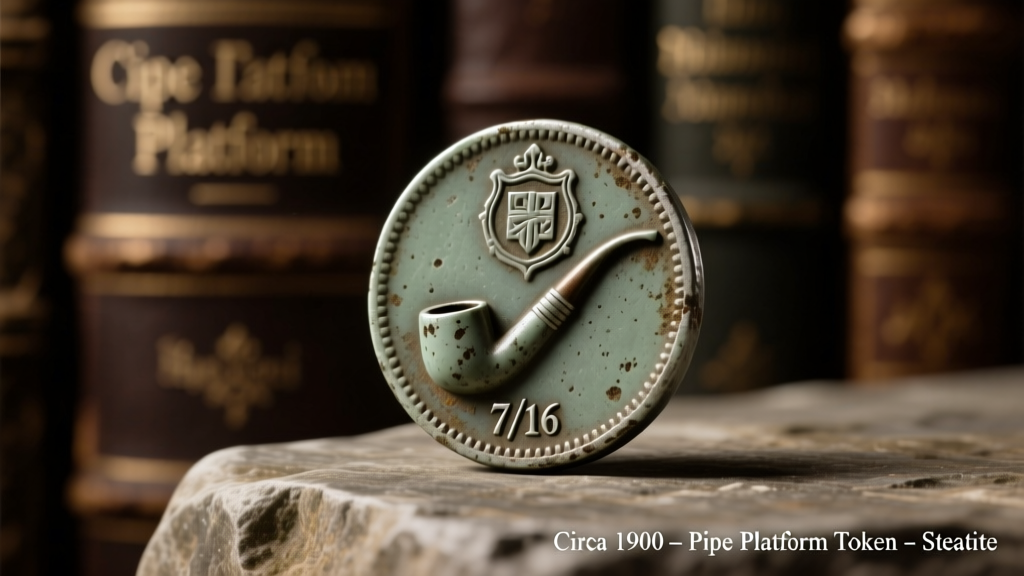
Pipes Platform Green-Gray Steatite Pipe, Circa 1900: A Numismatic and Ethnographic Analysis of a 7¼-Inch Artifact
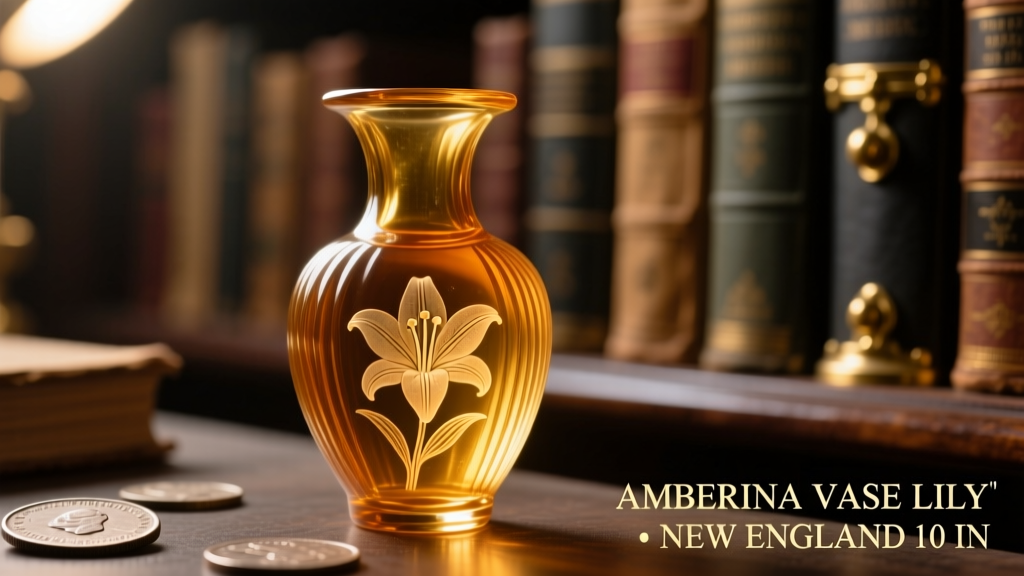
Amberina Vase: The Lily Slight Ribbed Pattern from New England Glass Company — A 10-Inch Collector's Benchmark
Arts & Crafts Desk Mastery: Full-Tenon Joinery, Hand-Hammered Copper Pulls, and the Legacy of American Craftsmanship Circa 1920
Steuben Bowl: Yellow-Blue Band Pattern, 18 × 2½ Inches — A Collector’s Appraisal and Historical Context
Advertising Display Dixieland Sewing Needles: A 1930s Vintage Card with 20 Packages (6 × 8 Inches)
Decoding the Enigma: A Numismatic Investigation of Serial Number 1137646 on U.S. Federal Reserve Notes
Alphaville (1965) Original French or Belgian Theatrical Poster: Authentication, Market Value, and Preservation Insights

Chalkware Bookends: Boy & Girl in Yellow-Green Glaze — Identification, Provenance, and Market Value Analysis
Decoding Hummel Marks: A Numismatist’s Guide to Authenticating and Valuing Hummel Figurines