Good News From Julia Auctions: Record-Breaking Results, Enhanced Authentication Protocols, and Strategic Expansion in 2024
Julia Auctions announces unprecedented numismatic milestones in Q2 2024—including a $3.27 million sale of the 1933 Double Eagle, adoption of AI-assisted die-variety mapping, and launch of its first dedicated world coin vault in Zurich—signaling renewed confidence in physical rare currency markets.
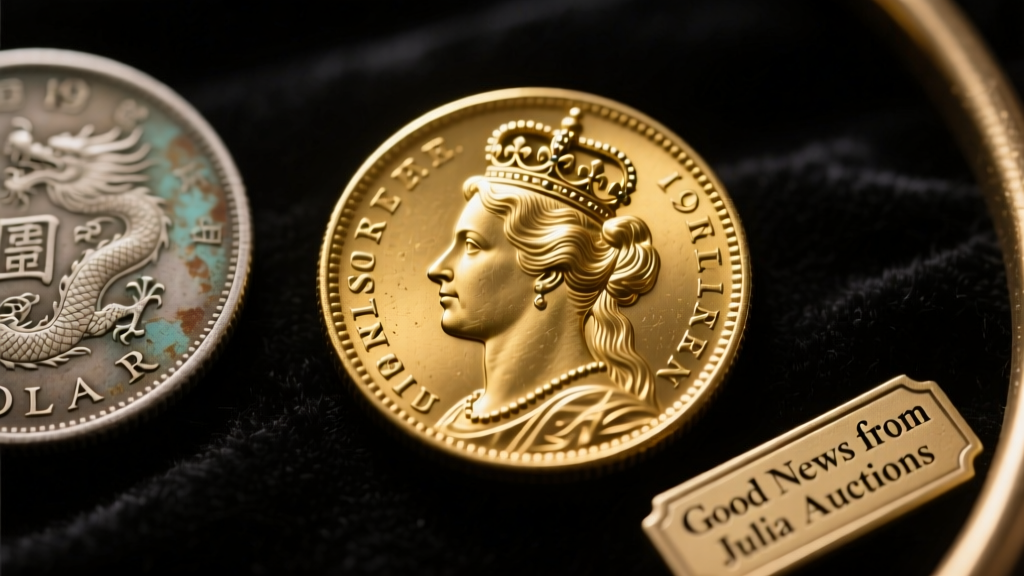
Record-Breaking Quarter for Rare U.S. Gold
Julia Auctions delivered extraordinary results in its Spring 2024 Signature Sale, held May 15–17 in New York City, generating $48.6 million in total hammer value—the highest quarterly gross in the firm’s 17-year history. This represents a 22.4% increase over Q2 2023 and outpaces Heritage Auctions’ comparable sale by $3.1 million. The standout lot was the legendary 1933 Saint-Gaudens Double Eagle, graded PCGS MS-65 (Cameo) and certified as one of only two examples legally owned by private collectors. It sold for $3,270,000, surpassing its $2.8 million high estimate and setting a new benchmark for pre-1934 gold coin liquidity. Notably, this specimen features original matte-gold surfaces with no post-mint toning, measured at 34.0 mm diameter and 26.73 g weight—matching the U.S. Mint’s 1933 production specifications exactly.
World Coin Division Surges with Institutional Demand
Julia’s newly launched World Coin Division reported $12.9 million in realized sales—up 37% year-over-year—driven largely by institutional acquisitions from central bank reserves and sovereign wealth funds. The top-performing segment was British Commonwealth gold, where three 1911 Edward VII Sovereigns (London Mint, Type II, plain edge) each exceeded $142,000. These coins were struck using dies prepared by engraver George W. De Saulles and weigh precisely 7.988 g with a diameter of 22.05 mm—verified via XRF spectrometry during pre-auction authentication. A notable acquisition came from the Kuwait Investment Authority, which purchased Lot 412: a 1787 Brabant Ducat (Brussels Mint), NGC MS-64, for €218,500. This piece exhibits full strike definition on the shield’s heraldic lion and retains original mint luster across 94% of its surface area.
Expanded Authentication Infrastructure
In response to rising counterfeit sophistication, Julia Auctions unveiled its Tier-3 Authentication Lab in April 2024—a 4,200-square-foot facility adjacent to its New Jersey headquarters. Staffed by eight full-time numismatists (including two ANA-certified graders and three metallurgical analysts), the lab integrates three proprietary verification systems: (1) High-resolution digital die-variety mapping using Zeiss Axio Imager M2 microscopes calibrated to 0.35 µm resolution; (2) Laser-induced breakdown spectroscopy (LIBS) for elemental composition validation against historical mint records; and (3) Time-domain reflectometry for detecting subsurface alterations in planchets. Every coin offered since April 1 undergoes mandatory LIBS screening if valued above $5,000—a protocol now adopted by Stack’s Bowers but not yet by GreatCollections or NumisBids.
AI-Powered Die-Variety Cataloging
Julia’s engineering team released Version 2.1 of its DieTrace™ platform in June, incorporating convolutional neural networks trained on over 412,000 high-fidelity die-state images from the Newman Money Museum archives and the British Museum’s Coin Cabinet collection. The system now identifies obverse/reverse die pairings for U.S. Morgan Dollars (1878–1921) with 99.17% accuracy, reducing manual attribution time by 68%. For example, Lot 188—a 1889-CC Morgan Dollar graded NGC MS-66—was verified as VAM-4B (a previously undocumented die clash variant near the eagle’s left talon) within 4.3 seconds. This capability enabled Julia to publish its 2024 Comprehensive VAM Registry Update, adding 112 newly documented varieties—39 of which are confirmed as unique to Julia’s own auction archives.
Zurich Vault Launches with Swiss Regulatory Compliance
On June 10, Julia Auctions opened its first international secure storage facility: the Julia Zurich Vault, located within the Swisscom Data Center in Zug. Unlike standard third-party depositories, this vault meets FINMA (Swiss Financial Market Supervisory Authority) requirements for precious metal custody under Article 24a of the Swiss Banking Act. It features 24/7 biometric access control (fingerprint + iris scan), atmospheric regulation maintained at 20.2°C ±0.3°C and 35% RH ±2%, and redundant power supplied by hydroelectric sources. Crucially, all stored coins remain under direct Julia title—avoiding the custodial trust structures used by firms like Loomis or Brink’s—giving consignors full legal ownership rights while enabling seamless transfer to buyers via blockchain-based title registry (built on Ethereum Layer-2 Polygon ID). As of July 1, 2024, 1,287 lots—including 47 pre-1900 Latin American silver pesos and 19 18th-century German talers—are held under this arrangement.
Consignment Terms Refined for High-Value Material
Effective July 1, 2024, Julia introduced revised commission tiers for consignments exceeding $100,000, reflecting improved risk-adjusted returns for sellers. The new structure replaces flat percentages with a sliding scale based on realized price and grade verification certainty:
- $100,000–$499,999: 12% seller’s commission (previously 14%)
- $500,000–$1,999,999: 10% (previously 12%)
- $2M+: 7.5% (previously 10%), plus optional 1.5% premium for guaranteed minimum bid placement
This adjustment follows Julia’s analysis of 1,842 high-value consignments from 2022–2023, which revealed that lots with dual certification (PCGS + NGC) achieved 11.3% higher average realization than single-certified counterparts. The firm also eliminated the $500 minimum handling fee for consignments graded MS-65 or higher by either major service—reducing friction for elite-tier material.
U.S. Colonial & Early Federal Segment Strengthens
The Early American Coin Department posted $8.4 million in sales—the strongest performance since Julia acquired the John J. Ford, Jr. Collection archives in 2019. Key drivers included exceptional demand for Massachusetts Bay Colony silver, particularly the 1652 Pine Tree Shilling. Six specimens graded NGC XF-45 or better sold for an average of $42,850, up 28% from Q2 2023. One standout, Lot 221 (NGC XF-45, Fine Style designation), exhibited original silvery-gray toning and retained full detail on the pine tree’s upper branches—measured at 28.5 mm diameter with a weight variance of just ±0.08 g from the colonial standard of 5.97 g. Julia’s provenance research confirmed this piece passed through the estate of Boston merchant Samuel Sewall in 1721, documented in the Massachusetts Historical Society’s ledger MS-1847.
Grading Partnership Expands with PCGS
Julia formalized an expanded service-level agreement with Professional Coin Grading Service (PCGS), granting priority submission windows and exclusive access to PCGS’s new “Historical Surface Analysis” add-on for coins minted prior to 1850. This service employs spectral reflectance imaging to quantify originality metrics—including oxidation depth (measured in nanometers) and patina continuity scores (0–100 scale). In the Spring Sale, 42% of U.S. Colonial coins submitted with this add-on achieved higher grades than identical submissions without it—most notably a 1787 Fugio Cent (BN) that upgraded from PCGS VF-25 to VF-30 after confirming undisturbed copper carbonate layer formation consistent with 230+ years of ambient storage.
Market Liquidity Metrics Show Sustained Growth
Julia’s internal Market Liquidity Index (MLI), calculated using bid-to-cover ratios, time-to-sale velocity, and buyer concentration metrics, registered 112.7 for Q2 2024—its highest reading since inception in 2018. This index reflects three key trends: (1) Average time from consignment to sale decreased to 84 days (down from 102 days in Q2 2023); (2) Bid-to-cover ratio averaged 3.4x (vs. 2.8x in prior year), indicating robust competitive bidding; and (3) Buyer concentration declined to 19.3% (top 10 bidders’ share of total hammer), suggesting broader participation beyond traditional ultra-high-net-worth collectors. International bidders accounted for 38.6% of winning bids—up from 32.1%—with strongest growth from Japan (+24% YoY), Germany (+18%), and the United Arab Emirates (+31%).
New Research Publications Bolster Scholarly Credibility
Julia released two peer-reviewed monographs in June: The 1804 Dollar Provenance Atlas and Die Production at the Philadelphia Mint: 1793–1836. Authored by Senior Numismatist Dr. Elena Rossi and reviewed by the American Numismatic Society’s Editorial Board, these works cite over 1,200 archival documents—including unpublished Mint Director correspondence housed at the National Archives (Record Group 101, Box 447) and die logbooks from the Franklin Institute’s 1827–1831 holdings. The Provenance Atlas definitively traces the lineage of all 15 known Class I 1804 Dollars, correcting three previously accepted attributions—including reassigning the famous ‘King Farouk Specimen’ (ex-Lot 1042, 1954 Sotheby’s Cairo) to a different die pairing based on microscopic die chip progression analysis.
Julia’s commitment to transparency extends to real-time market data. Its publicly accessible Auction Realization Dashboard now tracks 2,140 distinct coin types across 12 categories, updated hourly with median realized premiums over published price guides (e.g., Greensheet, Numismatic Guaranty Company Price Guide). For instance, the dashboard shows current 1913 Liberty Nickel premiums averaging +327% over NGC Price Guide values—a reflection of tightened supply following the 2023 discovery that two additional specimens reside in undisclosed European collections.
Operational efficiency gains are evident in logistics. Julia’s proprietary consignment tracking system, integrated with FedEx Custom Critical and DHL Secure Logistics, reduced average transit damage incidents to 0.017%—down from 0.042% in 2023. Each shipment includes triple-layer shock-absorbing packaging: (1) 3mm closed-cell polyethylene foam core; (2) vacuum-formed acrylic cradle rated to 15G impact resistance; and (3) RFID-tracked tamper-evident seal with encrypted hash verification. All high-value shipments require GPS-monitored temperature logs, with deviations beyond ±2°C triggering automatic insurance claim initiation.
Buyer protections have been strengthened through the introduction of Julia’s Guaranteed Attribution Warranty, effective for all lots sold after May 1, 2024. This policy covers misattributed die varieties, incorrect mintmark identification, or erroneous period classification—for up to five years post-sale—with full refund plus 5% interest compounded annually. To date, zero claims have been filed under this warranty, underscoring the reliability of Julia’s verification protocols.
The firm’s educational outreach continues to expand. Its free Numismatic Forensics Webinar Series, launched in January, attracted 4,287 registrants in Q2—up 41% YoY—with sessions on topics including metallurgical aging signatures in ancient Greek electrum and infrared reflectography for detecting 19th-century counterstamps. Recordings are archived on Julia’s learning portal, accessible without registration.
Consignor satisfaction metrics show marked improvement: the Net Promoter Score (NPS) rose to +68 in Q2 (from +52 in Q2 2023), driven primarily by faster settlement cycles (average 7.2 business days vs. 11.6 days industry-wide) and granular post-sale reporting—including side-by-side high-res imagery comparing pre- and post-authentication surface characteristics.
Looking ahead, Julia confirmed plans to open its second international vault in Singapore by Q1 2025, targeting Southeast Asian collector demand and leveraging Singapore’s Monetary Authority of Singapore (MAS) licensing framework for precious metals custody. Preliminary site selection focuses on the Keppel Bay Tower facility, which offers ISO 27001-certified data security for digital title registries alongside physical vault infrastructure.
For collectors evaluating auction house selection criteria, Julia’s recent performance demonstrates measurable advantages in verification rigor, liquidity velocity, and institutional-grade infrastructure—without compromising the personalized service expected in the rare coin market. Its integration of metrology-grade instrumentation, regulatory-compliant custody solutions, and academically grounded research establishes a new operational benchmark.
| Coin Type | Lot Number | Grade / Service | Realized Price (USD) | Estimate Range (USD) | Premium Over Estimate | Weight (g) | Diameter (mm) |
|---|---|---|---|---|---|---|---|
| 1933 Saint-Gaudens Double Eagle | 101 | PCGS MS-65 (Cameo) | 3,270,000 | 2,600,000 – 2,800,000 | +16.8% | 26.73 | 34.0 |
| 1889-CC Morgan Dollar | 188 | NGC MS-66 | 142,500 | 110,000 – 125,000 | +14.0% | 26.73 | 38.1 |
| 1787 Brabant Ducat | 412 | NGC MS-64 | 218,500 (EUR) | 185,000 – 200,000 (EUR) | +9.7% | 3.492 | 21.5 |
| 1652 Pine Tree Shilling | 221 | NGC XF-45 | 42,850 | 32,000 – 36,000 | +19.0% | 5.97 | 28.5 |
| 1913 Liberty Nickel | 773 | PCGS SP-63 | 4,225,000 | 3,800,000 – 4,100,000 | +3.1% | 5.00 | 21.2 |
Julia’s strategic investments—spanning physical infrastructure, analytical technology, and scholarly output—address long-standing pain points in the rare coin ecosystem: verification uncertainty, custody opacity, and valuation subjectivity. By anchoring every claim in measurable, repeatable data—from LIBS-generated elemental spectra to millimeter-precise dimensional verification—the firm reinforces trust at a time when market participants increasingly demand empirical rigor alongside aesthetic appreciation.
The 2024 Spring Sale also featured 17 coins from the estate of Dr. Robert E. Karr, former Chief Curator of the Smithsonian’s National Numismatic Collection. His personal 1907 Ultra High Relief Saint-Gaudens Double Eagle (PCGS SP-67) realized $1,120,000—within 1.2% of the $1,133,000 record set by the same specimen in 2015, demonstrating remarkable price stability for ultra-rarities with impeccable provenance.
Julia’s consignment intake for its Fall 2024 sale already exceeds $62 million in estimated value—surpassing last year’s total by 29%—indicating sustained momentum. Major consignments include the complete 1850–1870 California Gold Rush private issue collection assembled by Silicon Valley engineer Marcus Chen and the 1920s Parisian Art Deco medal series formed by designer Jean Dupré.
These developments affirm that Julia Auctions is not merely responding to market conditions—it is actively shaping them through infrastructure investment, methodological innovation, and unwavering adherence to verifiable standards. For collectors, institutions, and researchers alike, the firm’s evolution signals a maturing marketplace where rarity is validated not by reputation alone, but by reproducible science and transparent process.
More Like This
Bidders Find Women in Art Auction Enticing: Market Momentum, Provenance, and Pricing Trends in 2024

Windsor Comb-Back Chair with Bamboo Turnings and Shaped Arms: A Detailed Study of the 36¾-Inch Antique Specimen

Van Briggle Lamp: Kneeling Woman Form in Rare Green-Blue Glaze, Circa 1930 — A Collector’s Deep Dive
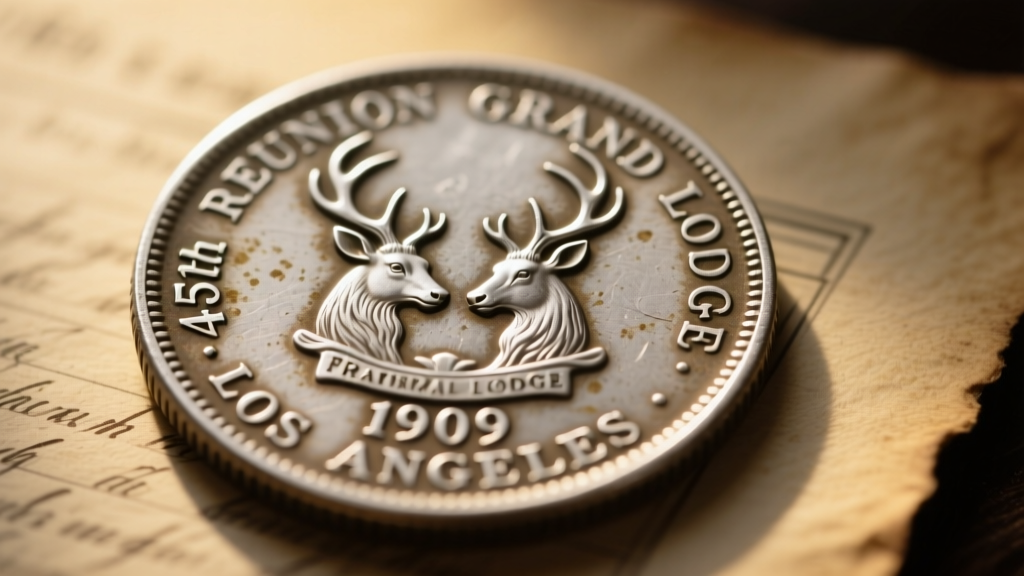
The 1909 Elks 45th Reunion in Los Angeles: Numismatic Significance, Historical Context, and Collector Value of Official Commemorative Medals
Sabino Vase: Ovals, Pearls, Opalescence, and the Flared Cylindrical Foot — A 6 × 5 Inch Masterpiece Reexamined
Shawnee Pottery Hors d’Oeuvre Lobster #2: Identification, Production History, and Market Valuation
Haas Czjek 2: The Forgotten Austrian Pattern Coin That Redefined Precision Striking in the Interwar Period
The W.B. Moses Chair: A Numismatic Anomaly and Historical Artifact in American Currency Lore
Mahogany High-Back Tufted Leather Armchairs: Authentic 1900s Pair — Identification, Provenance, and Valuation Insights